Directly-Transmitted Yang-Style Taijiquan
Phần 1
Page cover
(Cover)
Chinese Martial Arts — Taiji Series The Authentic Lineage Yang-Style Taijiquan Coaching Method By Fu Zhongwen Fu Shengyuan Fu Qingquan Tongji University Press (Back cover)
A classic masterwork handed down through the generations — Yang-style Taijiquan Yang-style Taijiquan is one of the traditional schools of Taijiquan, developed and created by Yang Lukchan (1799–1872) — a native of Yongnian, Hebei — together with his son Yang Jianhou (1839–1917) and his grandson Yang Chengfu (1883–1936), building upon the Old Frame of Chen-style Taijiquan. The Yang-style form is relaxed and uncluttered, the body method centred and upright, the movements harmonious, combining lightness with steadiness. In its practice method it proceeds from looseness into suppleness, with hardness and softness mutually assisting one another, simple and plain — and so it is deeply loved by the broad public and has spread extremely widely. The Yang-style frame has high, medium and low variations, which can be adjusted in amount of exercise according to the needs of different ages and different constitutions; thus it suits both those in good physical condition seeking to build fitness, and the physically weak seeking therapy and health preservation. This book was carefully written by Fu Zhongwen — former vice-chairman of the Shanghai Wushu Association, one of China's Hundred Outstanding Wushu Figures, and a transmitter of Yang-style Taijiquan — together with his son Fu Shengyuan (National Wushu 8th Duan) and his grandson Fu Qingquan (National Wushu 6th Duan), on the foundation of many years of teaching practice. In its writing there are many new supplements to the essentials of the movements, such as the addition of the "deflecting" application in the usage notes. In the teaching method and practice method there are fairly detailed and innovative expositions — the progressive-increase method, the mnemonic formula method, the error-correction method, and so on — all of which have been tried out in teaching practice for many years with very notable results.
This book suits Taijiquan enthusiasts for study, and can also serve teachers in universities, secondary and primary schools, teachers' colleges, physical-education units and popular training classes for carrying out Taijiquan instruction.
(Three columns at right, reading vertically) Three generations carefully transmit Master Yang Chengfu's Taijiquan methods — rules and standards not the slightest bit off A detailed account of boxing theory and boxing method, breaking down the secrets of technique — the very essence of Taijiquan Dual use for coaching — scientific fitness, cultivating the internal and training the external, armed for both attack and defence, cultivating body and nature ISBN 7-5608-2201-0 Price: 32.80 yuan (Title page)
The Authentic Lineage Yang-Style Taijiquan Coaching Method By Fu Zhongwen, Fu Shengyuan, Fu Qingquan Tongji University Press (Colophon)
Cataloguing-in-Publication (CIP) Data The Authentic Lineage Yang-Style Taijiquan Coaching Method / compiled by Fu Zhongwen et al. — Shanghai: Tongji University Press, 2000.10 ISBN 7-5608-2201-0 I. Authentic… II. Fu… III. Taijiquan, Yang-style IV. G852.11 CIP Data Approval No. (2000) No. 66623, Library of China The Authentic Lineage Yang-Style Taijiquan Coaching Method Authors: Fu Zhongwen, Fu Shengyuan, Fu Qingquan Executive Editor: Huang Danli Copy Editor: Xu Chunlian Cover Design: Li Zhiyun Publisher: Tongji University Press Distributor: Tongji University Press (1239 Siping Road, Shanghai; Postcode 200092; Tel. 021-65985622) Retail: Xinhua Bookstores nationwide Printed by: Wangting Power Plant Printing Works Format: 787 mm × 1092 mm, 1/16 Printed sheets: 18.75 Inserts: 12 Word count: 480,000 Edition: 1st edition October 2000 1st printing October 2000 Book number: ISBN 7-5608-2201-0/G·218 Price: 32.80 yuan Should this book have printing or binding defects, please apply to the publisher's distribution department for replacement. (Plate page: portrait of Grand Master Yang Lukchan)
Grand Master Yang Lukchan (1799–1872) (Plate page: portrait of patriarch yang jianhou)
Patriarch Yang Jianhou (1839–1917) (Plate page: portrait of patriarch yang chengfu)
Patriarch Yang Chengfu (1883–1936) (Plate page: portrait of mr. fu zhongwen)
Fu Zhongwen (1903–1994) (Plate page: portrait of mr. fu shengyuan)
Fu Shengyuan (1931– ) (Plate page: portrait of mr. fu qingquan)
Fu Qingquan (1971– ) (Plate page: historical photographs)
Fu Zhongwen in his youth Fu Zhongwen in the form posture Step Back and Ride the Tiger Group photo of Mr. Gong Xueping, Deputy Secretary of the Shanghai Municipal Party Committee, and municipal sports commission leaders with Fu and his son (Plate page: historical photographs)
Patriarch Yang Chengfu and Fu Zhongwen photographed together Fu Shengyuan photographed with his teacher-uncles the late Master Cui Yishi and the late Master Niu Chunming In 1934 Fu Zhongwen accompanied Patriarch Yang Chengfu to teach at the Guangzhou Municipal Government (Plate page: historical photographs)
Fu Zhongwen in middle age Fu Zhongwen with the martial-arts film star Jet Li Fu Zhongwen pushing hands with Fu Shengyuan (Plate page: historical photographs)
Fu Zhongwen teaching Fu Qingquan at age six Fu Zhongwen teaching his granddaughter Fu Zhengrong sword practice Fu Zhongwen and Fu Qingquan photographed together at the White House, USA Three generations of the Fu family photographed together in Shanghai in the mid-1980s (Plate page: historical photographs)
Three generations of the Fu family photographed together after Fu Qingquan won a competition prize Fu Zhongwen and Fu Shengyuan teaching foreign experts at Tongji University in the early 1980s Certificate (Chinese Wushu Association, November 1998, awarding Fu Shengyuan the Wushu Promotion Award) / Letter of Appointment (Chinese Wushu Association, October 1998, appointing Mr. Fu Shengyuan liaison officer of the Overseas Development Committee of the Chinese Wushu Duanwei System)
Fu Zhongwen leading Fu Qingquan on a visit to Japan in 1988 (Plate page: historical photographs)
Australian former Prime Minister Bob Hawke warmly meeting Fu and his son Mr. Xu Cai, adviser to the All-China Sports Federation, photographed with Fu Shengyuan (Plate page: historical photographs)
Fu Shengyuan awarded the Chinese Wushu 8th Duan Fu Shengyuan with American students Fu Shengyuan with German students Fu Shengyuan with Thai students (Certificate: Wushu Duanwei Certificate, Chinese Wushu Association / Wushu Sports Management Centre of the State General Administration of Sport) (Plate page: historical photographs)
Taiji Sabre Taiji Sword Fu Shengyuan instructing Ms. Li Hui, world wushu taijiquan champion Pushing hands, issuing power (Plate page: historical photographs)
Mr. Zhou Muyao, Vice Mayor of Shanghai, warmly meeting Fu Qingquan Mr. Li Jie, President of the Chinese Wushu Academy, photographed with Fu Shengyuan and his son Fu Qingquan (Plate page: historical photographs)
Fu Shengyuan and his son Fu Qingquan with Australian students (Certificate: Wushu Duanwei Certificate, Chinese Wushu Association / Wushu Sports Management Centre of the State General Administration of Sport)
Fu Qingquan teaching Australian students form practice Fu Qingquan photographed teaching in Taishan City, Guangdong — the famous overseas-Chinese home town Fu Qingquan photographed teaching in Osaka, Japan Fu Qingquan photographed with Mr. Mishiro Masahiro, chairman of the Japanese Taijiquan Friendship Association, and university students Taiji Sabre Fu Qingquan in a television-drama still Fu Qingquan photographed with Hong Kong students (Demonstration plate: Grand Master Fu Zhongwen demonstrating the Taijiquan form, frames 1–25)
Grand Master Fu Zhongwen of Yongnian demonstrating the Tai Chi Chuan form (Demonstration plate: Grand Master Fu Zhongwen demonstrating the Taijiquan form, frames 26–52)
Grand Master Fu Zhongwen of Yongnian demonstrating the Tai Chi Chuan form (Demonstration plate: Grand Master Fu Shengyuan demonstrating the Taijiquan form, frames 1–26)
Grand Master Fu Shengyuan of Yongnian demonstrating the Tai Chi Chuan form 8th Duan, Chinese Wushu (Demonstration plate: Grand Master Fu Shengyuan demonstrating the Taijiquan form, frames 27–56)
Grand Master Fu Shengyuan of Yongnian demonstrating the Tai Chi Chuan form (Inscription page) (Inscription page) (Preface, written by Chen Weiming)
Mr. Fu Zhongwen is a junior kinsman of Master Yang Chengfu of Yongnian, and received the master's transmission — in rules and standards he is not the slightest bit off. People call him an orthodox lineage of Taijiquan. He and Jianhua, and Yongnian, taught students at the Taiji Study Society without taking remuneration, and their achievements are very numerous. Now, on reaching the tenth year, they asked me to write a few words as a memento. As for carrying it forward and giving it greater brilliance — who else but Zhongwen?
Chen Weiming (Preface I, written by Xu Cai)
Giving Chinese Martial Art a Worldwide Character
Phần 2
— In Praise of Three Generations of the Fu Family
Grand Master Fu Shengyuan is the son of Fu Zhongwen, a master of his generation in Yang-style Taijiquan. Fu Zhongwen studied the Taiji art under Yang Chengfu, grandson of Yang Lukchan, founder of Yang-style Taijiquan, and won Master Yang's high regard; Yang had him attend at his side without ever leaving it, giving him instruction at all times. In later days Master Fu Zhongwen became a famous leading disciple of the master of his generation, Yang Chengfu.
In his youth Grand Master Fu Shengyuan absorbed the essence of Yang-style Taijiquan, and under his father's personal instruction practised assiduously; his Taiji skill reached the realm of purity and perfection, and he became the fifth-generation master and transmitter of Yang-style Taijiquan. Mr. Fu Qingquan received strict training from his grandfather and father from childhood; as a youth he took part many times as a professional athlete in domestic and overseas competitions and won championships, becoming the rising talent of this Taiji family. The two of them, father and son, have spread this art overseas, taking in a great number of students and disciples, and carried this great wealth of Chinese culture out to the countries of the world. Thanks to Master Fu's efforts, more and more people have gradually come to understand and take a liking to Taijiquan, and many people in every part of the world count it a joy to have the chance to become Master Fu's disciples and learn Taijiquan skill from him. Master Fu's spirit of dedication in spreading Chinese martial art to the world deserves to be honoured and praised.
(continued on the next page)
The world today has entered the information age. In this society filled with inexhaustible information and highly developed communications, people's outlooks are undergoing enormous change; in a sense the world has already become smaller and smaller, and time and distance no longer form an obstacle to exchange — which in turn has driven cultural exchange among people everywhere on earth, and thereby further advanced the spread of Taijiquan.
Chinese wushu has now become a common favourite of the peoples of the world. Taiji, as the martial art with the deepest cultural substance in Chinese wushu, has become one of the most valuable "gifts" offered to humanity, because of its function of strengthening the body and building health. It is especially suited to the middle-aged and elderly and to those extremely busy in their work, including a great many mental workers. It can be said with certainty that all those who practise Taijiquan may derive benefit from it.
The publication of The Authentic Lineage Yang-Style Taijiquan Coaching Method can, at a deeper level, provide Taijiquan enthusiasts with the experience and methods of teaching and practising. This book gives a detailed introduction to every movement, which is rare even among books of the Taijiquan kind. It is bound to become a good teacher and helpful friend to Taijiquan enthusiasts.
Grand Master Fu Shengyuan (Chinese Wushu 8th Duan) and his son Fu Qingquan (Chinese Wushu 6th Duan) have already effectively (Preface I, continued)
spread the art of Taijiquan, and we hope their enterprise achieves tremendous success! And may they continue to promote Taiji — this gem of Chinese culture — to the peoples of every country in the world, so that it may flourish and shine throughout the world!
Xu Cai September 2000 Author of Preface I Adviser, All-China Sports Federation Honorary Chairman, Asian Wushu Federation (Preface II, written by You Xuande)
The Essential Meaning of Taiji Chinese kung fu has a long history, and has long enjoyed the reputation of "Wudang revered in the south, Shaolin esteemed in the north". Yet among Chinese martial arts the one that today flourishes in every part of the world and is most beloved by people is none other than the method of Taijiquan. At a time when the central government advocates fitness for all in service of society, I was delighted to hear that my martial nephew Qingquan has a work of three-generation true transmission — The Authentic Lineage Yang-Style Taijiquan Coaching Method — about to appear; at the request of my worthy elder brother Shengyuan, I write a preface for my martial nephew Qingquan's new work, to express my joy and congratulations.
The art of Taijiquan was created in the Song dynasty by the Perfected One Zhang Sanfeng of Mount Wudang in Hubei Province, and several hundred years have passed to the present day. Mount Wudang is a famous Daoist holy site and scenic resort of China. Its long cultural accumulation gave birth to the world-renowned Wudang school of martial arts, and its Taijiquan skill in particular is celebrated at home and abroad. The Wudang martial arts took disciples with extreme strictness through the ages; in the Qing dynasty Wudang martial arts passed from within the religion out to the common people, and so took shape the internal-family Taijiquan system — the Southern School represented by Zhang Songxi, the Northern School represented by Wang Zongyue. In the course of transmission the Taiji art further developed several schools, forming an exceedingly rich cultural and artistic treasure-house of Taiji art. And of those who spread the Taiji art throughout the world, none has rendered more distinguished service than the master of his generation, the elder Mr. Fu Zhongwen.
The elder Fu and I were friends despite the difference in our ages, so I have felt deeply his quality of lofty integrity, his bearing of a mind as open as a valley, his skill brought to the point of purity and perfection, and the majestic spirit that shook the martial world. In the Republican period, bouts between different schools occurred from time to time; and because the elder Fu's skill spread widely from north to south, there were many challengers too. Many boxers and famous hands, the instant they crossed hands, were thrown more than ten feet — and were left utterly mystified by the Taiji skill of looseness, sinking, roundness and liveliness; at the same time they were moved by the elder Fu's noble martial virtue, and there was no lack of those who took him as their master. After the founding of New China, the elder Fu received the State's care and commendation and won very high honours.
Qingquan is the grandson of the elder Fu by direct transmission; taught by the family's elders, he practised martial arts from childhood alongside his father (the famous martial artist and chairman of the World Yongnian Taijiquan Alliance, Mr. Fu Shengyuan), and for a long time accompanied his grandfather Fu Zhongwen to martial-arts gatherings in many places. As a youth he won the national Taijiquan championship — truly a tiger cub of a warrior house. Because Qingquan is naturally quick and bright, diligent and hard-working, he has now reached the age of thirty, and appears all the more spirited and vigorous — truly, the waves behind the Yangtze push on those before! Keeping in mind his grandfather's unfulfilled wish, Qingquan has spared no hardship in travelling at home and abroad to transmit the Taiji art, and today his students are everywhere. Many of the students he has taught have won major prizes in competitions in various regions, and China Central Television has even filmed a special instructional series with him. (Preface II, continued)
The appearance of The Authentic Lineage Yang-Style Taijiquan Coaching Method — whether one looks at the boxing theory or the boxing frame — leaves one feeling that eye and ear are made new; it does not lose the bearing of a great master, and for professional martial artists and amateur martial-arts enthusiasts alike it has high value for reference and for collecting. It is bound to become a celebrated work spanning the centuries. If the elder Mr. Fu Zhongwen has awareness in heaven, he too will surely feel deeply comforted and rest at peace in the Nine Springs. We cherish the memory of the master of his generation, Fu Zhongwen, and we hope all the more that Qingquan will compile a series of works, so that more people may learn the true skill of traditional Yang-style Taijiquan. As a transmitter of the boxing lineage within the Wudang school, and because I have long dwelt among the mountains and wilds, these few hurried words cannot exhaust the essential meaning of the book; I trust my colleagues in the martial world will discern this. This is my preface.
Author of Preface II The Perfected One of the Grotto-Heaven, You Xuande First month of the year 2000 (Preface, written by Fu Qingquan)
Preface At the moment when the new century is about to arrive, our country stands in a great historical period in which politics, economy and culture are daily advancing and the people of every ethnic group live and work in peace; having largely satisfied their material needs, the broad masses urgently hope to master a scientific and simple method of fitness to preserve health of body and mind. At the same time, a nation's prosperity cannot be separated from the raising of its people's quality — including both physical quality and psychological quality. The aim of the fitness-for-all movement is to enable the greatest possible number of citizens to possess a strong physique and sound mind: and the most ideal method of popular fitness is none other than practising Taijiquan. Comrade Deng Xiaoping gave Taijiquan a high appraisal and wrote the inscription "Taijiquan is good!" — which fully embodies the long-standing attention paid by Party and State leaders to fitness for all and to traditional martial arts.
Taijiquan, as a science of movement and an art of bodily form, is a representative of our country's excellent traditional martial-arts culture, and a great contribution of the Chinese nation to the whole world. It can strengthen the body and build health, calm the spirit and nourish the brain; it can also cultivate the self and nurture the nature, and refine sentiment — and it contains, moreover, a rich cultural foundation and philosophical substance. Taijiquan has truly achieved the state of being enjoyed by both refined and popular tastes and suited to young and old alike; it has long been deeply loved by the people, and has already been spread throughout the world. In the course of its transmission Taijiquan developed and gave rise to many schools; among them the Yang style has all along been the most widely transmitted, and after Liberation it was taken by the National Sports Commission as the basis and adapted into competition routines more times than any other Taijiquan school.
My grandfather began at the age of nine to learn boxing by following the third-generation transmitter of Yang-style Taijiquan, Patriarch Yang Chengfu, and continued until his death in 1994 at the advanced age of ninety-one, devoting the energy of his whole life to the development and transmission of Yang-style Taijiquan, and winning the broad respect and affection of Taijiquan enthusiasts at home and abroad. My father likewise began at nine to learn boxing by following my grandfather, and before Liberation assisted him in promoting Yang-style Taijiquan. After the founding of New China he taught for more than thirty years as a professional martial-arts coach. After retiring he was invited to Australia, Europe and America and many other countries to spread Yang-style Taijiquan, and though he is now in his seventies he still spares no hardship in travelling the world, introducing orthodox Yang-style Taijiquan abroad, letting more foreign friends understand and take a liking to China's Taiji art, and contributing to friendly exchange between our country and others and to building our country's good international image. From the age of six I practised boxing with my grandfather and father, receiving formal martial-arts training from childhood. In the 1980s I became a professional martial-arts athlete, and represented the Shanghai team and the national team many times in domestic and international martial-arts competitions, achieving good results. Afterwards I too taught boxing at home and abroad for many years, and formed a set of teaching methods with distinctive characteristics. We, grandfather, son and grandson of three generations, are most willing to offer up without reservation the authentic Yang-style Taijiquan of our family transmission — better, more clearly and more accurately — to society, and to live up to the earnest expectations of the broad community of Taiji lovers (Preface, continued)
lovers. This wish, to a very large extent, brought about the publication of this The Authentic Lineage Yang-Style Taijiquan Coaching Method.
This book takes as its principal blueprint the earlier work by my grandfather and father, Yang-Style Taijiquan: Teaching Method and Practice Method (compiled by Fu Zhongwen and Fu Shengyuan, written up by Yao Minghua; Shanghai: Tongji University Press, 1st edition 1989), and was written by blending my grandfather's and father's decades of insight in practising boxing and experience in teaching boxing with my own personal experience of more than twenty years in practising and teaching boxing. It is a comprehensive summary of our three generations' — grandfather, son and grandson — understanding, practice and teaching of Taijiquan, and the latest crystallisation condensing three generations' wisdom and heart's blood. In the course of many years of teaching boxing, we have clearly realised that the efforts of a mere few people are far from able to satisfy the wish of the broad community of Taijiquan enthusiasts to learn authentic Taiji skill; this requires more people to take part in the process of practising and teaching Taijiquan, and to take part in the enterprise of its development and transmission. Therefore we have carefully collated and summarised three generations' methods, techniques and experience of teaching boxing, to provide genuine and effective help to all those who have set their hearts on the development and transmission of Taijiquan. In addition, in the course of teaching we have discovered that people generally overlook the martial-application function of Taijiquan, and many errors and deviations arise from this. In truth, Taijiquan was originally a martial art of technique and combat; only by understanding the correct application of each and every posture of Taijiquan can one grasp the essentials of Taijiquan at the root, accurately master the key points of every movement, and achieve the purpose of better fitness. Therefore another notable feature of this book is its emphasis on explaining the martial-application usage of Taijiquan, which can also more readily arouse the learning interest of young people.
The 21st century is a new century of swift development in science and technology. How traditional excellent culture may adapt to and keep pace with this change, and gain further development, is a serious question. The enterprise of Taijiquan's development and transmission faces this challenge likewise; on the other hand, while modern industry and civilisation bring people more convenience and richer material goods, they impose higher demands on people's physical and psychological quality. How to maintain health of body and mind amid an ever-faster social life and fierce competition for survival has already become a real problem that modern people must face seriously — and in this respect Taijiquan undoubtedly has many unique functions.
As one who practises martial arts, I feel deeply how broad and profound Taijiquan is; only by personally putting it into practice can one appreciate it. Science knows no boundaries; Taijiquan is still in constant development. Although this book has undergone the supplementing and perfecting of three generations, it still inevitably has omissions and deficiencies. At the start of the new century, I hope to study and compare notes together with the broad community of boxing friends and friends from all walks of life who engage in and care about the development and transmission of Taijiquan, and to strive together, so that Taijiquan may ascend another storey and bring more well-being to humanity.
Finally, I hope that the publication of this book may help more people benefit from Taijiquan and appreciate its inexhaustible charm. May humanity live more healthily and happily in the 21st century!
Fu Qingquan 1 August 2000
- Preface I
- Xu Cai Preface II
- You Xuande Foreword
- Fu Qingquan Chapter 1: A Brief History of Yang-Style Taijiquan(1)
- Chapter 2: A Detailed Analysis of the Teaching Method and Practice Method of Yang-Style Taijiquan Movements(7)
- Posture 1: Preparation Posture8
- Posture 2: Beginning Posture10
- Posture 3: Grasp the Bird’s Tail14
- Posture 4: Single Whip33
- Posture 5: Raise Hands and Step Up39
- Posture 6: White Crane Spreads Its Wings44
- Posture 7: Brush Knee and Twist Step, Left50
- Posture 8: Play the Pipa55
- Posture 9: Brush Knee and Twist Step, Left and Right60
- Posture 10: Play the Pipa65
- Posture 11: Brush Knee and Twist Step, Left66
- Posture 12: Step Up, Deflect, Parry and Punch66
- Posture 13: As If Sealing, As If Closing72
- Posture 14: Cross Hands76
- Posture 15: Embrace the Tiger and Return to the Mountain79
- Posture 16: Fist Under the Elbow84
- Posture 17: Step Back and Repulse the Monkey, Left and Right91
- Posture 18: Diagonal Flying Posture97
- Posture 19: Raise Hands and Step Up102
- Posture 20: White Crane Spreads Its Wings103
- Posture 21: Brush Knee and Twist Step, Left104
- Posture 22: Needle at the Bottom of the Sea105
- Posture 23: Fan Through the Back109
- Posture 24: Turn Body and Swing the Fist113
- Posture 25: Step Up, Deflect, Parry and Punch119
- Posture 26: Step Up, Grasp the Bird’s Tail120
- Posture 27: Single Whip122
- Posture 28: Wave Hands Like Clouds123
- Posture 29: Single Whip132
- Posture 30: High Pat on Horse133
- Posture 31: Separate Foot, Left and Right137
- Posture 32: Turn Body and Heel Kick144
- Posture 33: Brush Knee and Twist Step, Left and Right147
- Posture 34: Step Up and Plant the Fist149
- Posture 35: Turn Body and Swing the Fist151
- Posture 36: Step Up, Deflect, Parry and Punch153
- Posture 37: Right Heel Kick154
- Posture 38: Hit the Tiger, Left157
- Posture 39: Hit the Tiger, Right161
- Posture 40: Turn Body, Right Heel Kick162
- Posture 41: Twin Peaks Pierce the Ears164
- Posture 42: Left Heel Kick167
- Posture 43: Turn Body, Right Heel Kick168
- Posture 44: Step Up, Deflect, Parry and Punch170
- Posture 45: As If Sealing, As If Closing171
- Posture 46: Cross Hands173
- Posture 47: Embrace the Tiger and Return to the Mountain173
- Posture 48: Diagonal Single Whip175
- Posture 49: Part the Wild Horse’s Mane, Left and Right176
- Posture 50: Grasp the Bird’s Tail180
- Posture 51: Single Whip182
- Posture 52: Fair Lady Works the Shuttles183
- Posture 53: Grasp the Bird’s Tail191
- Posture 54: Single Whip194
- Posture 55: Wave Hands Like Clouds195
- Posture 56: Single Whip197
- Posture 57: Snake Creeps Down198
- Posture 58: Golden Rooster Stands on One Leg201
- Posture 59: Step Back and Repulse the Monkey, Left and Right205
- Posture 60: Diagonal Flying Posture207
- Posture 61: Raise Hands and Step Up207
- Posture 62: White Crane Spreads Its Wings208
- Posture 63: Brush Knee and Twist Step, Left209
- Posture 64: Needle at the Bottom of the Sea210
- Posture 65: Fan Through the Back211
- Posture 66: Turn Body, White Snake Puts Out Its Tongue211
- Posture 67: Step Up, Deflect, Parry and Punch213
- Posture 68: Step Up, Grasp the Bird’s Tail214
- Posture 69: Single Whip215
- Posture 70: Wave Hands Like Clouds216
- Posture 71: Single Whip218
- Posture 72: High Pat on Horse with Piercing Palm219
- Posture 73: Cross-Shaped Leg222
- Posture 74: Step Up and Punch to the Groin225
- Posture 75: Step Up, Grasp the Bird’s Tail227
- Posture 76: Single Whip229
- Posture 77: Snake Creeps Down230
- Posture 78: Step Up to the Seven Stars230
- Posture 79: Step Back and Ride the Tiger233
- Posture 80: Turn Body and Sweep the Lotus236
- Posture 81: Bend the Bow to Shoot the Tiger243
- Posture 82: Step Up, Deflect, Parry and Punch248
- Posture 83: As If Sealing, As If Closing250
- Posture 84: Cross Hands251
- Posture 85: Closing Posture251
- Route Chart of the Yang-Style Taijiquan Form(253)
- Chapter 3: Pushing Hands(254)
- Section 1: Fixed-Step Pushing Hands(254)
- Section 2: Moving-Step Pushing Hands(255)
- Section 3: Five-Posture Pushing Hands(258)
- Section 4: The Great Roll-Back(259)
- Chapter 4: Important Writings of Famous Taijiquan Masters(266)
- 1. A Talk on the Practice of Taijiquan (Yang Chengfu)(266)
- 2. The Ten Essentials of Taijiquan (Yang Chengfu)(268)
- 3. A Treatise on Taijiquan (Wang Zongyue)(269)
- 4. Song of the Thirteen Postures(270)
- 5. Heart Formula for Practising the Thirteen Postures (Wu Yuxiang)(270)
- 6. A Treatise on Taijiquan (Wu Yuxiang)(271)
- 7. Song of Striking Hands (Wang Zongyue)(271)
- 8. A Brief Talk on Practising Taijiquan (Fu Zhongwen)(271)
- 9. Theoretical Research on Taijiquan Is an Important Subject (Fu Zhongwen)(273)
- 10. The Key Points and Taboos in Practising Taijiquan (Fu Zhongwen)(275)
- 11. On the Medical Benefits of Taijiquan (Fu Zhongwen)(276)
- 12. On the Practice Method of Yang-Style Taijiquan (Fu Shengyuan)(277)
- 13. Key Points for Practising Yang-Style Taijiquan (Fu Shengyuan)(278)
- Postscript I (Xi Guizhong)(280)
- Postscript II (Huang Jiancheng)(282)
Chapter One A Brief History of Yang-style Taijiquan Yang-style Taijiquan originated in the middle of the 19th century (the Daoguang reign of the Qing dynasty). It is barely 150 years old, yet it has spread widely throughout the world and become an excellent method by which hundreds of millions of people strengthen their bodies and improve their health.
The founder of Yang-style Taijiquan was Yang Fukui (1799–1872), courtesy name Lushen, born into a peasant family at the southern gate of Yongnian county town, Guangping prefecture, Hebei. The custom of practising martial arts had a long history in Yongnian county, and Yang Lushen had studied Shaolin boxing since childhood. In the slack farming season he often took short-term work at a grain shop on the West Main Street of the county town. One day a ruffian burst into the Taihe Tang pharmacy next door to the grain shop and, bullying the pharmacist Chen Dehu because he was not a local, insisted on buying precious medicinal herbs cheaply; cursing as he did so, he was about to throw a punch. Chen Dehu merely raised his hand, and the ruffian at once went tumbling out into the street. Yang Lushen was astonished, and a few days later he asked Chen Dehu to teach him boxing. At first Chen Dehu always declined vaguely, but when he saw that Yang Lushen was honest and warm-hearted, he told him that he himself was from Chenjiagou, Wen county, Huaiqing prefecture, Henan; that many people there practised Taijiquan, also called "sticking-and-adhering boxing"; and that his own teacher was Chen Changxing of the same clan, whose boxing skill was second to none under heaven. Delighted at this news, Yang Lushen asked Chen Dehu to introduce him, went to Chenjiagou in Henan, and became Chen Changxing's disciple.
Under Chen Changxing's guidance Yang Lushen trained hard, regardless of cold or heat. Six years later he returned home with outstanding boxing skill. At that time many people in Yongnian county studied boxing, and one man of considerable reputation announced: "Lushen has come back from his studies — I shall have to ask him for a lesson." When the two did test each other, Yang Lushen was defeated. Unwilling to accept defeat, he set his mind on returning to Chenjiagou to study, and trained hard for another six years. When he came home again it happened to be the New Year, and the neighbours, taking the occasion of the New Year greetings, contended with him — and none could beat him. Everyone said that old Lu had really learned something this time. But in a certain Wu family of officials there, one man who had relatives at Chenjiagou and had also studied various boxing arts heard that Yang Lushen had come home and proposed a test; the result was a draw. Yang Lushen felt that he was still not good enough, and so he went to Chenjiagou a third time and studied under Chen Changxing for another three years. Chen Changxing was deeply moved by Yang Lushen's pursuit of the true transmission of Taijiquan and by his spirit in entering Chenjiagou three times. After secretly testing and examining Yang Lushen's determination to learn and the quality of his character, he finally passed on to him his whole body of true skill. Two years later Chen Changxing said to Yang Lushen: "You may go home now; this time no one will dare provoke you." The moment Yang Lushen got back to his home village everyone came to watch him cross hands with others — and somehow, with a single flick of his hand, he sent his opponent flying behind him. And so everyone said that Yang Lushen had truly "brought the goods back" — that is, he had learned real skill. (Chapter 1: A Brief History of Yang-Style Taijiquan, page 2)
Yang Lukchan entered the Chen family village three times to study boxing for eighteen years; having mastered Chen Changxing's true skill he was still not satisfied, and continued ceaselessly to delve into it and train hard, until at last he reached a level of the marvellous and the divine, and became a famous figure of his locality.
Before long, Yang Lukchan accepted the invitation of a distant relative, Wu Ruqing, to go to Beijing to teach boxing. Wu Ruqing was a jinshi of the Daoguang reign of the Qing and at that time served as a vice-director of the Ministry of Punishments. In the capital, Yang Lukchan first accompanied Wu Ruqing on a visit to the mansion of a certain wealthy man, Zhang. Zhang had begun with a small shop and was nicknamed "Little Shop Zhang", and afterwards made his fortune suddenly. The Zhang mansion was a place where officials, gentry and the rich sought their pleasure, and there too several martial-arts instructors were employed to teach a class of sons of wealthy families the practice of arms and boxing. At the banquet of their first meeting, Little Shop Zhang saw that Yang Lukchan was slight of build and somewhat looked down on him, seating him after a row of burly, broad-shouldered martial instructors. During the meal Little Shop Zhang asked: "Mr. Yang, can your soft boxing actually strike a man?" Yang Lukchan said: "My soft boxing cannot strike bronze men, iron men, or stone men; but anything born of father and mother with blood and flesh, it can strike." Little Shop Zhang said again: "Then could you have a contest with the gentlemen present?" Yang Lukchan said: "Very well; I shall get friendly with each of the masters" — meaning, exchange a few moves. So everyone present went out into the garden. When the contest began, one boxing master came straight at Yang Lukchan with a fierce air; and they saw Yang Lukchan merely put out a hand a little, and that boxing master at once fell several zhang away. Another boxing master, seeing this, said "He's no good — let me!" and came in at him too; and in no more than a single move he was seen to fly out. The remaining boxing masters dared not compete further. Little Shop Zhang was greatly astonished at the sight, and at once gave orders to lay the table again with silver vessels and to invite Yang Lukchan to the seat of honour. But Yang Lukchan saw that the host's attitude before and after were as different as two men, and thought little of it; so he rose angrily from the feast and strode off.
After the affair of the contest at the Zhang house got about, men came one after another attracted by his fame wanting to try conclusions with him, but all were defeated at his hands. And so, when Yang Lukchan was mentioned in the capital, everyone called him "Yang the Invincible". Afterwards Wu Ruqing introduced no small number of princes and young noblemen to study Taijiquan under Yang Lukchan, making this boxing art widely current in the capital, and at that time officials' households counted it an honour to be able to engage Yang Lukchan. In this way Yang Lukchan, with his two sons Yang Banhou (1837–1892) and Yang Jianhou (1839–1917), long resided in the Prince Duan mansion to teach boxing, and only in his later years returned to his home village.
Yang Banhou was Yang Lukchan's second son; from childhood he studied arms with his father, and trained a whole body of good skill. Though hot-tempered, his character was upright and unyielding. Once there came to Beijing a boxing master who had fought on the raised platforms of seven provinces and was known as "Ten-Thousand-Catty Strength", who declared he would test who was higher and who lower with Yang Lukchan. When the Yang father and son learned of this, Yang Lukchan thought it need not be attended to; but Yang Banhou said to his father: "Our shop has goods; if someone comes to buy, how can you not sell?" — meaning, we have true skill, so why can we not measure ourselves against another? So Yang Banhou went alone to agree with "Ten-Thousand-Catty Strength" on a contest at the Xisi Archway, and they set down a life-and-death pledge in writing. On the day, "Ten-Thousand-Catty Strength" won the crowd's cheers with his developed musculature, and at the same time people worried for the slight Yang Banhou, who was like a scholar. When the contest began, they saw "Ten-Thousand-Catty Strength" lunge in with one fist, and Yang Banhou dodged aside with a flicker; but when "Ten-Thousand-Catty Strength" attacked again, coming at Yang Banhou's face, they only heard Yang Banhou give a shout, and before anyone had seen clearly, "Ten-Thousand-Catty Strength" had been kicked several zhang away — and Yang Banhou had planted a separating kick in his crotch, killing him on the spot. And while people were still marvelling, Yang Banhou had already unhurriedly returned to the Prince Duan mansion. (Chapter 1: A Brief History of Yang-Style Taijiquan, page 3)
Yang Lukchan's third son, Yang Jianhou, had a boxing skill in which hardness and softness assisted one another, and was especially good at using clever force; he was also extremely devoted to the study of sabre, sword and spear. His temperament was gentle, and in competition and in martial practice he slighted no one, and so he could win every contest.
The third generation of the Yang family to study the art included Yang Banhou's son Yang Lingxiao, courtesy name Zhaopeng, who studied the art under Yang Banhou's disciple Chen Xiufeng, and afterwards studied boxing with his elder cousin Yang Chengfu, and later taught boxing in Shaoxing in Zhejiang and in Guangxi and elsewhere. Yang Jianhou's eldest son Yang Zhaoxiong, style-name Shaohou, learned boxing from childhood, was at his best at free hands, moved swiftly, and had a steady frame; he kept up training all his life. And Yang Jianhou's third son Yang Zhaoqing, style-name Chengfu, was surpassingly clever, obtained his father Yang Jianhou's personal transmission in full, had refined art and high skill, and at last became a master of his generation in Yang-style Taijiquan.
Yang Chengfu (1883–1936), under his father's instruction, buried himself in study of the art in Beijing. Only after Yang Jianhou's death did he accept an invitation to go south, teaching boxing first in Wuhan, Nanjing and elsewhere. In 1928, at the invitation of Zhang Zhijiang, he taught at the Central Martial Arts Institute in Nanjing, and later, at the invitation of Zhang Jingjiang, went to Hangzhou as dean of studies at the Zhejiang Provincial Martial Arts Institute. In 1930 Yang Chengfu settled in Shanghai and published The Complete Book of Taijiquan: Substance and Application; in 1932, at the invitation of Chen Jitang and Li Zongren, he went to Guangzhou to teach boxing, and only two years later returned to Shanghai.
While Yang Chengfu was dean of studies at the Zhejiang Provincial Martial Arts Institute in Hangzhou, there was in the institute a boxing master named Gao Shouwu who practised Taiyi boxing and consistently belittled the Yang family's Taijiquan, often speaking insolently to Yang Chengfu. One day Yang Chengfu's patience ran out and he exchanged sharp words with Gao Shouwu; Gao Shouwu took up a long spear to have it out with Yang Chengfu, and Yang Chengfu, holding a long spear, gave it but a light flick — and Gao Shouwu's spear flew out of his hand and fell to the ground. At the sight Gao Shouwu was dumbstruck, and was in an instant ashamed beyond bearing.
Yang Chengfu's temperament was gentle, his boxing skill was "a needle hidden in cotton", hardness and softness assisting one another; he had the quality of being able to open out and able to gather in, expansive and generous — and so he was admired and imitated by many. Although Yang Lukchan was Chen Changxing's transmitter, he did not cling rigidly to the old rules; he further developed the art on the foundation of the Old Frame of Chen-style Taijiquan, making it more rational and more popular, and making it suitable for old and young alike so that all could practise it — and people of the time called it "Yang-style Taijiquan". Through the unceasing study and improvement of Yang Lukchan and the two generations after him, the Yang family's Taijiquan was only formally fixed in its manual in the hands of his grandson Yang Chengfu, forming a Yang-style Taijiquan whose frame is expansive and uncluttered, whose structure is strict, whose body method is centred and upright, whose movements are harmonious, and which combines lightness and agility with steadiness.
It was precisely through the efforts of three generations of the Yang family that this traditional boxing art was promoted, developed and widely transmitted — and that Taijiquan came to have its rich and varied schools: for example, Wu Yuxiang, younger brother of Wu Ruqing, who was taught by Yang Lukchan, created Wu-style Taijiquan; Wu Yuxiang taught his nephew Li Yishe, who in turn taught Hao Weizhen, who created Hao-style Taijiquan; Hao Weizhen in turn taught Sun Lutang, who created Sun-style Taijiquan; and Quan You, taught by Yang Banhou, in turn taught his son Wu Jianquan, who created Wu-style Taijiquan. Thus it may be said that Yang-style Taijiquan is the root of Wu-style, Hao-style, Sun-style and Wu-style Taijiquan. In 1956 the National Sports Commission again took the most widely transmitted Yang-style Taijiquan and created a set of Simplified Taijiquan; the boxing manual, boxing photographs and other materials adopted at that time were provided by Fu Zhongwen. The subsequent 88-Posture Taijiquan and 48-Posture Taijiquan and so on were all compiled and created by the National Sports Commission on the basis of Yang-style Taijiquan — just as the martial-arts historian Mr. Tang Hao said: "Yang-style Taijiquan and pushing hands have made the greatest contribution and have been developed most widely." Chapter One — A Brief History of Yang-style Taijiquan, book page 4
In the 150 years of the development of Yang-style Taijiquan, Yang Lushen taught Yang Banhou, Yang Jianhou, Wang Lanting, Wu Yuxiang and others. Yang Banhou taught Wan Chun, Ling Shan, Quan You, Hou Deshan, Chen Xiufeng, Zhang Xinyi, Li Lianfang, Zhang Yintang, Jiao Liantang, Ji Laofu and others; Yang Jianhou taught Yang Shaohou, Yang Chengfu, Xu Yusheng, Liu Shengkui, Zhang Yi and others; and Yang Shaohou taught Liu Xizhe, Xu Daishan, Tian Zhaolin, You Zhixue and others. Three generations of the Yang family devoted themselves to spreading and transmitting Taijiquan, and their students were everywhere; Yang Chengfu in particular had the greatest number of disciples. Besides his sons Yang Zhenming, Yang Zhenji, Yang Zhenduo and Yang Zhenguo, he also taught his formal disciples Chen Yuepo, Yan Zhongkui, You Zhixue, Cui Yishi, Wang Xudong, Niu Chunming, Li Chunnian, Wang Jingxing, Zhang Qinglin, Guo Zirong, Chen Weiming, Jiang Tingxuan, Liu Donghan, Zhang Qinlin, Fu Zhongwen, Wu Huichuan, Tian Zhaolin, Dong Yingjie, Chu Guiting, Zheng Manqing and others.
Three generations of the one family of Fu Zhongwen, Fu Shengyuan and Fu Qingquan have all devoted themselves to the development and spread of Taijiquan. The grandfather, Mr Fu Zhongwen (1903–1994), was a native of Yongnian county, Hebei — the famous home of Taijiquan. He began to study Yang-style Taijiquan at the age of nine, and after going to Shanghai at fourteen he studied boxing under the great Taiji master Yang Chengfu for many years. He respected his teacher and trained diligently and hard; moreover, since he married the niece of Master Yang's sister, he won Master Yang's trust and true transmission. The Taijiquan authority Mr Chen Weiming called him "the orthodox line of Taijiquan". When Yang Chengfu taught boxing in Guangzhou, Nanjing, Wuhu and elsewhere, Fu Zhongwen always demonstrated on the spot and also stepped in for Yang Chengfu in contests, winning victory after victory. In order to carry forward Taijiquan and to promote the traditional martial arts among the people so as to lift the spirit of the nation and strengthen the people and save the country, Fu Zhongwen, with the great help of gentlemen such as Huang Yanfang, Ma Gongyu and Huang Jingwan, founded the Shanghai Yongnian Taijiquan Society on 1 October 1944. After the founding of New China, Fu Zhongwen took an active part in all kinds of social activities connected with Taijiquan. In 1956 he served in Beijing as a referee at the national martial-arts competition of twelve provinces and municipalities, during which he received the kindly reception and encouragement of Comrade He Long, Vice-Premier of the State Council; in 1958 he became one of the first batch of coaches of the Shanghai municipal wushu team, contributing greatly to the training of Shanghai's wushu athletes, and he led the team to outstanding results in every national wushu competition. In 1972 Tongji University invited Fu Zhongwen and Fu Shengyuan to teach Yang-style Taijiquan, and joined with the Shanghai Institute of Sports Science, the Shanghai Institute of Hypertension, Huashan Hospital and other research units in carrying out scientific tests of the health-preserving and therapeutic functions of Yang-style Taijiquan. The research proved that Yang-style Taijiquan practice, supplemented by drug therapy, is an effective method of building health, preventing illness and treating chronic diseases such as hypertension, coronary heart disease, arthritis, stomach and intestinal complaints and neurasthenia; it also improves the functioning of the heart and lungs and increases physical strength, so that the practitioner is full of energy and his study and work efficiency rise. This research result attracted the attention of the National Sports Commission and international interest — people came from Japan, Germany, Thailand and elsewhere to learn about it. During the "Cultural Revolution" Mr Fu Zhongwen suffered persecution; in 1979 his reputation was restored and he was elected vice-chairman of the Shanghai Wushu Association. In his later years he still frequently took part in the social activities of Taijiquan. In 1984 he was named one of the "Thirteen Famous Masters of Taijiquan in China"; between 1991 and 1993 he helped to organise and led teams to the First and Second China Yongnian International Taijiquan Friendship Gatherings. In 1994, at the advanced age of 91, he was invited to visit the United States, where he was warmly received; he had also visited and taught in Singapore, Japan, Australia, Germany, Italy, Switzerland and other countries in turn, powerfully promoting the spread of Taijiquan throughout the world. On 25 September 1994, Chapter One — A Brief History of Yang-style Taijiquan, book page 5
Mr Fu Zhongwen unfortunately died of illness in Shanghai at the age of 91.
Mr Fu Shengyuan (1931– ) received his father's true transmission, and is a Taiji master of high prestige both in China and abroad. Mr Fu Shengyuan began studying boxing with his father at the age of nine, and before the Liberation he was already helping his father spread Yang-style Taijiquan. After the founding of New China he attended the Shanghai sports cadres' refresher course and became the first wushu coach of the Shanghai municipal sports school, and was invited to teach boxing at Tongji, Fudan and other institutions of higher learning. During the "Cultural Revolution" he was sent down to labour in a factory, after which he returned to higher education and continued to teach wushu and physical education until his retirement. In the mid-1980s, at the invitation of Australian Taijiquan enthusiasts and others concerned, he crossed the oceans and taught Yang-style Taijiquan in a number of countries in Europe, America and Australia, and afterwards settled in Australia. Though now in his seventies, he still spares no effort for the development of the Taijiquan cause. At present Mr Fu Shengyuan is based mainly in Australia, promoting Yang-style Taijiquan to the countries of Europe and America. In 1995, in view of the rapid worldwide growth of Taijiquan, the Shanghai Yongnian Taijiquan Society, then celebrating its fiftieth anniversary, had completed its historical mission, and Mr Fu Shengyuan founded the World Yongnian Taijiquan Federation on the basis of the Shanghai Yongnian Taijiquan Society and became its chairman; in 1998 he was awarded the eighth duan of Chinese wushu, and in the same year, in recognition of his contribution to the popularisation and development of Chinese wushu internationally, the Chinese Wushu Association conferred on him the "Wushu Promotion Award".
Mr Fu Qingquan (1971– ) began practising boxing with his grandfather and father at the age of six, and received formal wushu training from childhood. In the 1980s he became a professional wushu athlete; from 1985 to 1987 he won the Shanghai Yang-style Taijiquan championship for three consecutive years; in 1988 he won the taiji-sword championship and was runner-up in Yang-style Taijiquan at the national taijiquan and taiji-sword competition; in 1989 he represented the national team in the China–Japan Taijiquan competition and won the Yang-style Taijiquan championship. In the same year he moved with his father to Australia and founded the Fu Shengyuan International Taijiquan Academy, and from 1995 he served as vice-chairman of the World Yongnian Taijiquan Federation. Because of his grandfather's death, Mr Fu Qingquan from 1997 gave up his superior living conditions and high remuneration abroad and returned to China to continue the Taijiquan cause his grandfather had left unfinished. In 1998 he was awarded the sixth duan of Chinese wushu. He is now based in China, promoting Yang-style Taijiquan to Singapore, Malaysia, Japan and other Southeast Asian countries.
Mr Fu Qingquan's Taiji movements are standardised, light and nimble, natural, combining form and spirit and full of beauty; he grasps the essence of Taijiquan deeply, and enjoys the reputation of "the young marshal of Taiji". He is not only outstanding in boxing skill but also has a set of teaching methods with striking characteristics. In teaching he is especially good at combining Taijiquan theory with practice — clear in structure, vivid in imagery and full of wit — so that people can enter the gateway of Taijiquan easily and happily. He upholds the family teaching, is optimistic and open-minded, resolves doubts and dispels confusion, and is quick-witted and experienced, embodying the style of a new generation of Taiji masters. He has taught boxing for many years in China and in Australia, Japan and other countries, always with the greatest success. In 1999 China Central Television broadcast his series of teaching films on Yang-style Taijiquan, sword, sabre and pushing hands, which met with an enthusiastic response. In Mr Fu Qingquan we see the fair prospects for the vigorous development of the Taijiquan cause in the 21st century.
Looking over the history of the development of Yang-style Taijiquan, the speed and breadth of its spread are unprecedented. This shows that Yang-style Taijiquan is indeed a good method of preventing illness and improving health, a form of physical training loved by the people and full of vitality. It may be believed that, through the common efforts and constant exchanges of the great body of Taijiquan enthusiasts, Chapter One — A Brief History of Yang-style Taijiquan, book page 6
Yang-style Taijiquan is certain to become an international sport and to make a still greater contribution to the physical culture of the peoples of the world.
(Chapter Two — A Detailed Analysis of the Teaching and Practice Methods of Yang-style Taijiquan Movements, book page 7)
Chapter Two A Detailed Analysis of the Teaching and Practice Methods of Yang-style Taijiquan Movements
Phần 3
Explanation of the Illustrations in This Book
1. The movement photographs printed in the "key points of the movement" sections of Chapter Two are all of Fu Qingquan performing the form.
2. So that readers may conveniently check the direction of each posture against the illustrations, the directions of the movements shown in the figures of this book are defined as follows: facing the reader equals south; back to the reader equals north; the reader's right side of a figure facing the reader equals west; the reader's left side equals east. Once one is proficient, or when the space does not permit, one may begin in any chosen direction — one need not start by standing facing south.
3. In order to help readers understand the whole process of the movement of the hands and feet, and their coordination with the trunk, this book has added further illustrations, so that the paths of the hands and feet at every stage of a movement and their coordination are made clearer.
4. Some movement illustrations, in the interest of continuity, inevitably end up with the figure's back to or side-on to the reader; for these, this book has added front views and side views as references for practice.
5. For some rather complicated movements whose process is not easy to grasp, this book has added illustrations to help comprehension.
Repetition of movements enables the learner to understand the process of the same movement when it is joined before and after in different ways. For example, in Grasp the Bird's Tail there is the difference between the join with the left ward-off and the join without it; left Brush Knee and Twist Step connects to Step Forward, Deflect, Parry and Punch, or to Turn Body and Throw the Fist, and the connection to Step Forward, Deflect, Parry and Punch may have the transitional movement of shifting the weight back with the left hand sinking and the right fist extending forward, or may not have that transitional movement Chapter Two, First Posture — Preparation, book page 8
— and so on, so that the learner in practice can appreciate that when the same movement (posture) is joined to different movements (postures), the manner of the join is different in each case.
Phần 4
First Posture Preparation (Yubei Shi)
Stand naturally, the feet a shoulder-width apart, the toes pointing forward (parallel); the arms hang naturally, the shoulders sunk and the elbows dropped. The head must be upright, with the intention of a suspended crown. The eyes look straight ahead (this is based on starting from a stance facing south); be relaxed, quiet and natural (see Figure 1).
1. One must "suspend the crown with insubstantial energy", "contain the chest and raise the back", "keep the coccyx centred and upright", "sink the qi to the cinnabar field", and relax the whole body.
2. Both arms must relax and hang naturally, the shoulder joints relaxed, the fingers naturally slightly curved.
3. The body's centre of gravity falls evenly on both feet, so that one "stands with the body centred and at ease".
4. The mind must be quiet and the thoughts concentrated.
1. The body is upright and natural; one must not arch the chest, protrude the belly, lower the head, lean forward, round the back or stick out the buttocks. From the crown of the head to the tailbone the body must be vertical; the whole body is relaxed and natural, with no place tense.
2. The Baihui point on the crown of the head is lightly lifted upward (as if a rope were suspended from above the head drawing it up), so that the head is naturally vertical, guarding against tipping forward or backward or leaning to left or right. The suspended-crown energy should be as if present and as if absent — one must not force the head stiffly upward.
3. The lips are naturally closed and the tip of the tongue lightly curled up, resting lightly against the upper palate. Breathe naturally, with the gradual aim of achieving abdominal breathing. The gaze looks straight ahead into the distance, and the mind is single-minded.
4. The lower body is steady and the upper body is light and nimble.
1. Error: raising the head, lowering the head, tilting the head, or tension in the neck muscles. (First Posture — Preparation, book page 9)
— and so on. This is mainly because the neck is over-strained or strained improperly, and the eyes look up, down or sideways. Correction: ① relax the neck naturally. ② the eyes should look straight ahead. ③ draw the chin slightly inward.
2. Error: arching the chest. This is mainly because one is not relaxed enough, the shoulders are tensed backward, and one uses thoracic (chest) breathing; without containing the chest it is hard to neutralise an attack. From the health point of view, arching the chest stiffens the upper body and restricts the movement of the respiratory muscles. Correction: ① relax both shoulders and bring them slightly forward to close, letting both arms hang naturally. ② breathe naturally.
3. Error: hollowing (concaving) the chest. This is mainly because one pursues "containing the chest" to excess. Correction: the shoulders should not come too far forward, nor should the belly protrude.
4. Error: rounding the back. This is mainly because "raising the back" is done improperly, which hinders "rolling energy" and "releasing energy". Correction: with the first to fourth thoracic vertebrae — the highest part of the middle of the back — the intention is to bulge and lift them, drawing slightly back and upward, rather than deliberately rounding the back.
5. Error: standing with the feet splayed outward (a "V" stance). This is mainly because one uses one's ordinary relaxed way of standing. Correction: the feet parallel; the legs straight but the muscles not tightened — that is, not standing "dead": there must be substance within emptiness and emptiness within substance.
6. Error: clamping the arms tight. This is mainly because the muscles of the shoulders and arms are too tense and the shoulders are not loosened. Correction: the armpits must be loosened, leaving a space the size of a fist; this benefits the free passage of the axillary artery and vein and of the median, ulnar and radial nerves beneath the armpit, and benefits the blood supply and nervous control of the whole upper limb.
7. Error: scattered thoughts, or fixing on one point. This is mainly because a beginner's attention is not easily concentrated, or is distracted onto some one local movement. Correction: first value the form, then value the intention, and thereafter "first the intention moves, and then the form moves", until inner and outer are united; as the practice deepens with time, one can gradually reach the advanced stages of Taijiquan described as "not in the form but in the momentum, not on the outside but on the inside" and "value the intention, not the form".
1. Repeatedly open the feet to left and right. Experience the position and direction of the feet and the relaxation and quietness of the body.
2. Check from top to bottom the correct requirements for the head, shoulders, hands, chest, abdomen, buttocks and feet. The practitioner checks each item himself, while the teacher checks from the front, (First/Second Posture, book page 10)
the side and the rear, correcting any problems found.
3. After standing relaxed, take several natural breaths, experiencing depth, length, fineness, evenness and slowness; one should gradually experience "moving the body with the qi, and making sure all is smooth and unobstructed".
4. The teacher must first establish the movement concept in the practitioner. Explain the key points and requirements of standing, so that the practitioner understands that the Preparation posture is meant to bring thought, spirit and body into the state for practising Taijiquan and to clear away distracting thoughts — that is, to put aside for the time being the things one usually thinks about too much, to devote oneself single-mindedly to the practice, and to give the cerebral cortex alternating rest. Stand well in a comfortable and reasonable position, relax the whole body, and let the qi and blood flow freely.
5. Use a heuristic method of teaching, to arouse the practitioner's enthusiasm for learning.
The student should adopt the method of natural breathing.
The Preparation posture, as its name implies, is the stance that makes one ready before practising the form. It requires that at the beginning of practice one first stand well in a natural posture, attaining "a quiet mind", "intention", "a relaxed body" and "an upright body"; intention, body and qi are to be trained together. In practice one must be quiet and relaxed, with the qi and blood flowing freely, and must pay attention to the breathing. The breathing of Taijiquan derives from the ancient arts of daoyin (guiding and pulling) and tuna (expelling and absorbing), making the movement and the breathing naturally coordinated so as to achieve "the union of spirit and form"; it further requires that the postures of every part of the body be correct. Therefore the Preparation posture must not be regarded as a simple ordinary standing; one must deeply experience the method of training in which inner and outer are united, and it must on no account be slighted.
Phần 5
Second Posture Beginning the Form (Qishi)
Beginning the Form is the stance of the preparatory movement of Taijiquan. On standing, the head must be upright, the intention must contain the suspended-crown energy, the eyes look straight ahead, the chest is contained and the back raised, and one must not lean forward or backward. The shoulders must be sunk and the elbows dropped, the fingertips pointing forward, the palms facing downward; loosen the waist and hips, and, with the toes squarely to the front and the feet planted straight, the feet are parallel and apart (Second Posture — Beginning the Form, book page 11)
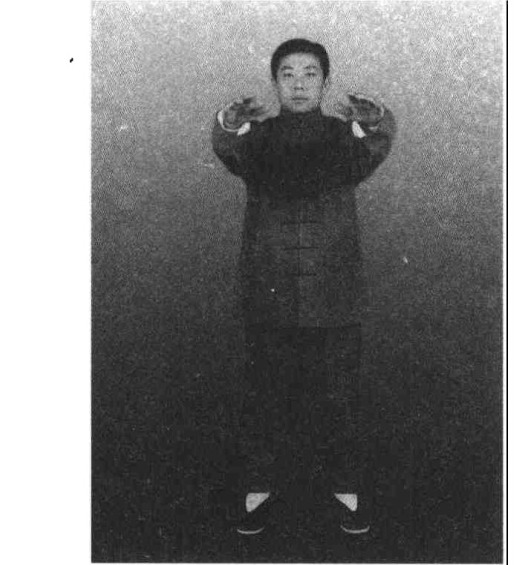
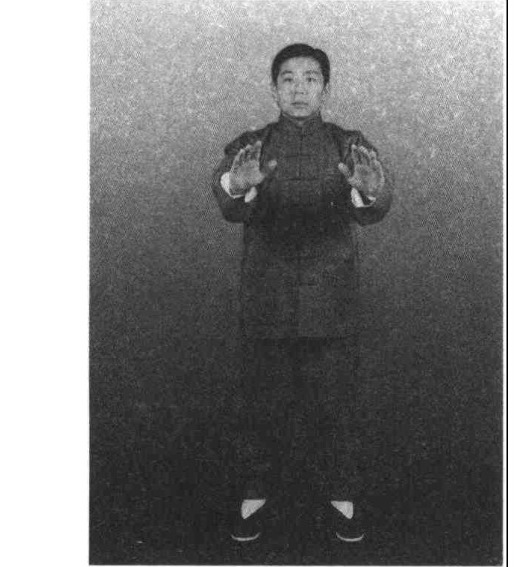
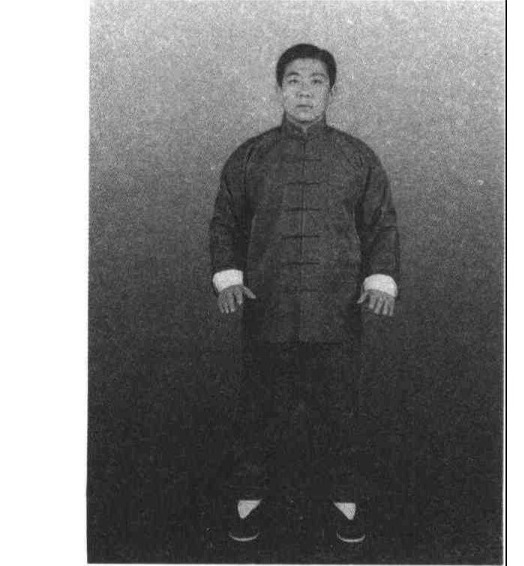
apart, a shoulder-width. In particular, one must pay attention to consolidating the spirit within, sinking the qi to the cinnabar field, and letting everything be natural without forcing. Guard my own stillness in order to await the other's movement — only thus can inner and outer be united and both the exercise and its application be complete. Many people are only too apt to neglect Beginning the Form, not knowing that this is the very root of both the training method and its application. The learner is urged to put his first attention on practising this movement well.
1. Both hands are slowly raised from in front of the body, the fingertips pointing forward, the fingers naturally slightly spread, the palms facing downward, at shoulder distance (see Figure 2).
2. When the two hands have risen to about the height of the shoulders, first sink the shoulders; then, with the elbows leading the arms and the wrists seated, press downward, drawing inward as you press down (see Figure 3).
3. Press down until the arms are about to straighten but are not yet straight (forming an arc); seat the wrists, let the elbows hang down, the fingers still pointing forward, the palms angled slightly inward toward the sides of the hips but basically facing downward and parallel to the ground, coming to rest in front of and to the sides of the hips, with the heels of the palms slightly forward of the body's centre line (see Figure 4).
4. The eyes look straight ahead.
1. Perform Beginning the Form only after the Preparation posture meets the requirements.
2. "First in the mind, then in the body": when raising the arms, first be aware of how they are to be raised, and only then raise them slowly. First put the attention on lifting the wrists; move the arms with the intention and lead the qi through to the fingers; seek stillness within movement, with the attention concentrated on the movement.
3. Consolidate the spirit within, sink the qi to the cinnabar field, let the movement be natural and do not force it.
4. All the joints of both arms must be loosened; the shoulders must be relaxed and sunk, the elbows should hang down, the wrists seated, the palms slightly extended, the fingers slightly curved, the palms naturally hollowed slightly inward and slightly curved. In this way, as days and months accumulate, the inner energy passes from the feet to the legs, to the waist, and takes form in the fingers; by this correct method of practice the inner energy arises of itself.
5. Loosen the waist and hips.
6. When pressing down, the shoulders must lead the elbows and the elbows must lead the hands.
1. When pressing down, the tip of the elbow (the olecranon) must point downward throughout. (Second Posture — Beginning the Form, book page 12)
2. The path of the hands is to sink as they draw in.
3. The palms do not move purely horizontally up and down; rather, the two palms should be angled slightly inward and the backs of the hands angled slightly outward.
4. There must be room left at the armpits — they must not be clamped shut.
5. Head, chest, abdomen and feet remain natural.
6. The arms must be light, nimble and rounded, yet at the same time extremely soft and heavy; they must not float and drift.
7. Ordinary practitioners tend to neglect the simple movement "Beginning the Form", but if the form as a whole is to have a good beginning, one must practise this movement well.
1. Error: lifting the shoulders when raising the arms. The main cause is tension in the shoulders. Correction: the shoulders must be relaxed and sunk; the shoulders must lead the elbows and the elbows must lead the hands.
2. Error: when pressing down, the tips of the elbows (the olecranon) lift sideways. The main cause lies in bending the elbows outward and pressing both palms down in a completely horizontal plane. Correction: the two palms are angled slightly inward, the forearms rotate slightly outward, and the tips of the two elbows point straight down.
3. Error: the path of the hands is wrong. The main cause is that when pressing down one does not lead the hands with the elbows. It shows as: ① pressing straight down with the arms extended. ② drawing the palms in flat first, then pressing straight down. ③ going down first, then drawing in. Correction: draw in and press down at the same time.
4. Error: not seating the wrists. The main cause is that the energy is in the palms and not in the wrists. Correction: the moment the elbows go down, seat the wrists at once, and keep them so all the way down until the arms are about to straighten.
5. Error: the arms and hands are too relaxed, floating and without strength — this is called "drifting". The main cause is failure to grasp that the inner energy passes from the feet to the legs, to the waist, and takes form in the fingers, and that the intention is not consolidated within. Correction: when raising forward, do not let the wrists droop slackly; when pressing down, seat the wrists.
6. Error: when pressing down, before the hands have reached their place one goes on to the next movement — Grasp the Bird's Tail. This lies mainly in not having a complete concept of the movement. Correction: the two hands must slowly sink until the arms are about to straighten but are not yet straight, and only then take up Grasp the Bird's Tail.
(Second Posture — Beginning the Form, book page 13)
1. Explain "let everything be natural" and "guard my own stillness": there must be no rigidity in any muscle or joint, the attention must be concentrated, and inner and outer must be united, with the intention leading the movement.
2. Demonstrate the width and height of the arms from the front; demonstrate the path of the hands and the action of the elbows from the side.
3. The teacher observes every detail of the movement from front and side, paying particular attention to "relaxation".
4. After practising the movement whole, do it in parts. First raise both arms forward to the horizontal, then press down (concentrating on improving the elbow and wrist action), and finally perform the movement whole.
5. If there are too many practitioners for the teacher to correct one by one, let the first row practise while the second row watches, then let the second row practise while the first row watches, alternating, so that the practitioners both help others by reporting what they have observed (the shortcomings present) and, through the help of others, come to understand their own errors and shortcomings and improve by comparison.
6. The teacher selects a fairly typical faulty movement, gives a pointed demonstration and explanation of it, and then demonstrates and explains the correct movement.
7. The practitioner must learn patiently and attend to improving details. First attend to improving the forward raise: do not lift the shoulders, the tips of the elbows (the olecranon) point downward, the palms angled inward. Then attend to the downward press: the elbows lead the wrists, the elbows sink, the wrists stand up, drawing inward and going downward at the same time. Press both hands down until the heels of the palms are at a position slightly forward of the body's centre line (to the outside of the groin).
8. Finally perform the continuous whole movement of raising up and pressing down.
Natural breathing is the best; beginners in particular should attend to this, for if the breathing is not smooth and one ends up holding the breath, it is on the contrary bad for health.
1. Although Beginning the Form is a preparatory movement, from the very start it is required to be different from other boxing systems: one must let everything be natural and not force it, and concentrate the mind on practising the form.
2. One must attend to the union of inner and outer and to completeness of both exercise and application, so that the nervous system is regulated and coordinated, the channels and blood vessels flow freely, the muscles and joints are exercised, health is improved and disease prevented and cured. Its application is to guard (Second/Third Posture — Grasp the Bird's Tail, book page 14)
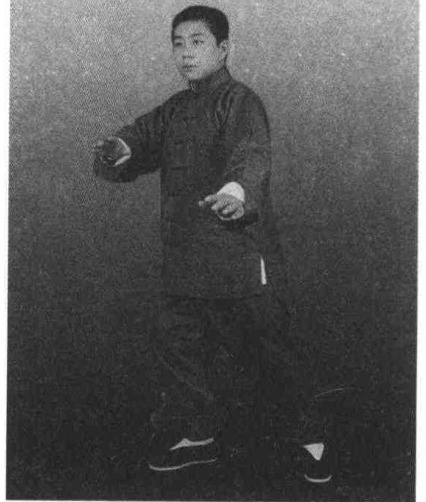
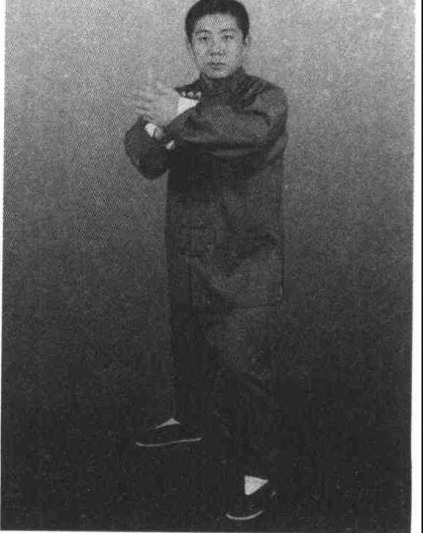
my own stillness in order to await the other's movement; after long practice one gradually attains "the other does not know me, while I alone know the other". "When the movement is urgent, respond urgently; when the movement is slow, follow slowly." Hence the relaxation of every part of the body and the consolidation of the spirit within become extremely important.
Phần 6
Third Posture Grasp the Bird's Tail (Lan Que Wei)
Grasp the Bird's Tail is the master movement of Taijiquan in which exercise and application are both complete. In pushing hands one is required to adhere, connect, stick and follow, going back and forth without leaving or breaking; the bird's tail is used as a metaphor for the arm, and it is taken as the general name for the movement. Its methods are four in number, called ward-off, roll-back, press and push, and they are also called the four cardinal hands.
1. Application From Beginning the Form: if the opponent strikes my chest from the front with his left hand, I open my right foot to the right side and settle it solid, then lift the left foot and step forward, bending the knee and settling solid, the right leg straight, forming a left bow stance with the left solid and the right empty. At the same time, bring the left hand up to the chest, palm facing inward, the elbow tip hanging slightly, and press my left wrist against the middle of the opponent's elbow-and-wrist, warding off forward and upward with a sideways energy (one must not be stiff and flat). Then the opponent's force is drawn along by me, and his position is naturally no longer stable.
2. Course of the Movement
1. The right toe turns out about 45°, and at the same time the weight shifts onto the right foot; the right leg bends at the knee and squats slightly, and the body turns right about 45°; the left leg bends at the knee and is lifted, and both hands, palms down, swing to the right with the turn of the waist, the right hand rising in an arc (right hand high, left hand low), passing above the front of the abdomen and then to the right and outside, and then turning back with a small circular grind toward the chest, the palm still facing down. The left hand moves in an arc to the right past the front of the abdomen, gradually turning to an upright palm slightly tilted up with the palm facing inward, until it meets in front of the right hand; the two arms form an arc, the elbows hanging slightly lower than the wrists, and the eyes follow the body, looking level toward the diagonal front (see Figures 5A and 5B).
2. The right leg continues to squat slightly and settle solid; the left foot steps out to the left side (toward the south), the heel landing first, the toe angled inward about 45° (the toe pointing southwest, the left toe and the right heel on one line); the weight shifts left, forming a left bow stance settled solid. As the left foot steps out the upper body turns slightly (Third Posture — Grasp the Bird's Tail, book page 15)
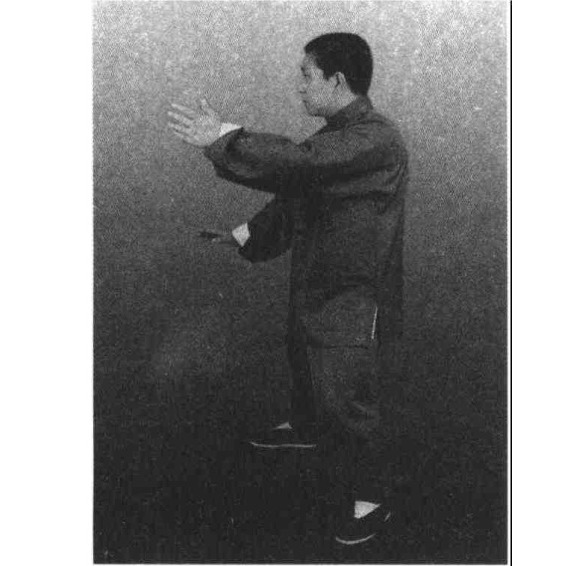
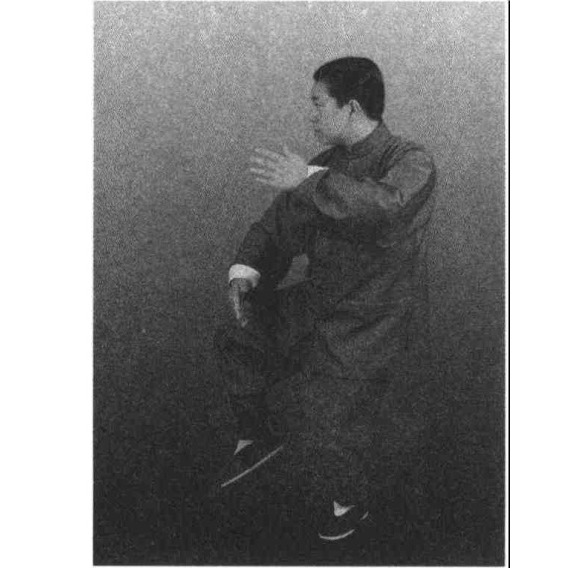
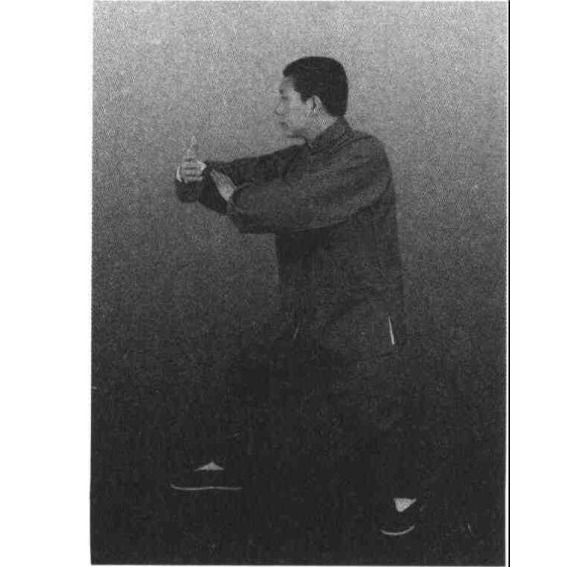
left, and after the left foot lands the upper body gradually turns right. At the same time, the left forearm, following the movement of the body, wards out first in an arc to the upper left, the left palm level with the shoulder, the wrist bent slightly inward, the point of force at the back of the wrist, the palm angled slightly upward. The right palm gathers in an arc down to the lower right to slightly above the hip, palm facing down, fingers pointing forward, wrist seated, the point of force at the outer side of the heel of the palm. At this moment the face is toward the west, the eyes look level ahead (west), but one must also be aware of both hands (see Figure 6).
1. Course of the Movement
1. The weight gradually shifts entirely onto the left leg; the waist leads the body in a slight turn to the left, and the right foot bends at the knee and is lifted; as the body turns, the left elbow withdraws slightly downward and backward, naturally carrying the left palm down to the left side of the chest; as it moves down the left arm rotates inward, the palm becoming upright with the palm facing forward, and the gaze attends slightly to the withdrawal of the left arm. At the same time, the right arm scoops in an arc to the left to the front of the abdomen, and with the scooping motion the right arm rotates outward so that the palm turns facing inward and slightly upward; both arms form arcs, and the gaze gradually turns toward the right arm and then looks level ahead (southwest) (see Figure 7).
2. The body turns slightly right (facing west); the right foot steps forward (west), the heel landing first, and then the weight gradually shifts onto the right foot until it is entirely settled; the right leg is bent and the left leg pushed straight to form a right bow stance. As the body turns, the right arm goes forward (west) and upward, the back of the right palm facing outward (the palm angled slightly upward), level with the shoulder, the elbow slightly lower than the palm; the left palm is placed slightly below the wrist joint, the right arm pushes forward, and the point of force is at the back of the wrist. The eyes look level ahead, and the gaze must attend to the forward ward-off of the right forearm (see Figures 8 and 9).
2. Key Points
1. The two legs distinguish the substantial and the insubstantial, and rise and fall like a cat walking. When the weight shifts to the left leg, the left is substantial and the right insubstantial; when it shifts to the right leg, the right is substantial and the left insubstantial. But "insubstantial" is not "empty": the momentum of movement must not break off, and room must be left for stretching and contracting at any moment; and so-called "substantial" does not mean using excessive force. In a bow stance the bend of the leg is limited to not passing the toes; beyond that is excess force. Beginners must first seek expansiveness and afterwards seek compactness.
2. In the left ward-off the left hand must use the strength of the waist; one must not move only the hand without moving the waist and legs. "Palm, wrist, elbow and shoulder, back, waist, hip, knee and foot, above and below (Third Posture — Grasp the Bird's Tail, book page 16)
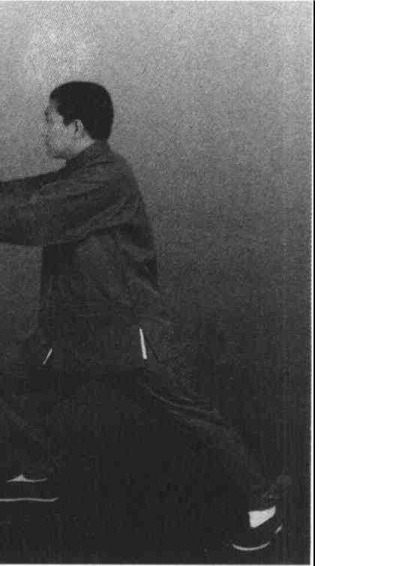
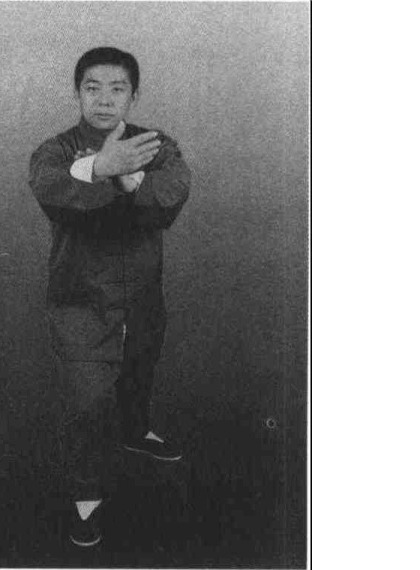
nine joints of energy, and the energy issues from the waist joint by joint." The circulation of the inner energy is brought about by the waist and spine leading the four limbs; hence the boxing treatise says, "the master is in the waist."
3. When the right ward-off goes forward, the left palm acts as supporting energy.
4. The movement must form an arc — it must not go straight back and forth — but one must not be affected, nor deliberately make large circles. One must "store energy in the curve so that there is surplus".
5. One must "when one thing moves, nothing is unmoved": waist, feet and hands must move together; one must not have the feet move while the hands do not, or the hands move while the waist does not — this is what is meant by "above and below following one another".
6. The ward-off energy of Taijiquan is extremely important: the shoulder joints must be relaxed and sunk, the elbows dropped and the shoulders sunk; the arms must be extremely light, nimble and rounded, yet at the same time extremely soft and heavy; the two arms must be "as if relaxed yet not relaxed", "hardness and softness contained within", rich in elastic and tenacious ward-off energy. After long practice one comes gradually to understand the conversion of substantial and insubstantial, to grasp adhering, sticking, connecting and following, and the quality of one's ward-off energy rises step by step.
7. One must value "seating the wrist". The wrist must not be slack and weak; once the wrist slackens, the back of the hand inevitably has no ward-off energy and one is easily seized by the opponent at the wrist and controlled — but one must not use clumsy force either.
1. Wherever the eyes turn, the neck turns also.
2. To go right, first go left; to go left, first go right. When starting the left ward-off the body turns right, and the two hands should not be lifted straight to the right but should circle round to the left front — though one must not deliberately trace circles.
3. The substantial and insubstantial must be clear. At the start of the left ward-off the right heel turns, and the right leg immediately squats down and becomes substantial while the left foot is lifted and becomes insubstantial. In the change one must take care that the waist, leg and hip change gradually and not abruptly; the leg must be sent out slowly and drawn back slowly. The left ward-off is a left bow stance, with the left leg substantial; when taking up the right ward-off one lifts the right leg and then slowly steps it forward, and before the right heel has landed the weight must not shift forward — at this time the left leg is still the substantial leg, and only thus is the substantial and insubstantial clearly shown.
4. One must value the waist as the master. The waist must lead the four limbs; one must not have the arms move while the waist does not — for example, when the left ward-off takes up the right ward-off, the waist must lead the withdrawal of the left hand.
5. One must "when one thing moves, nothing is unmoved". At the start of the left ward-off the right arm goes (Third Posture — Grasp the Bird's Tail, book page 17)
forward, to the right, and in an inner arc round to the front of the abdomen, at which moment the left hand has moved from the left to the front of the abdomen, so that the two hands meet exactly — one hand must not stop there while the other is still moving.
6. In both the left ward-off and the right ward-off, when the posture is settled the hands and the feet should both have arrived: one must not have the leg already bent into the bow while the hands have not yet reached their place — above and below should follow one another.
7. One must "keep the coccyx centred and upright". In the left ward-off the upper body must not lean to the left; in the right ward-off the upper body must not lean forward too much.
8. In the right ward-off, when the right heel lands the left palm should immediately push forward along with the right arm; it must not be too late or too quick, and the knee, leg and waist of the left foot must gradually exert force, penetrating joint by joint.
9. The crotch must be opened; the two legs must not be clamped inward to form a "pointed crotch" shaped like the inverted-V of the character for "person".
10. There must be "union of shoulder and hip": above and below in accord, the two hips corresponding to the two shoulders and moving in the same direction. For example, in the settled posture of the left ward-off the shoulder faces west and the hip joint must also face west. At the start of the right ward-off the waist leads the left hand in a slight withdrawal downward and backward, and at that time the waist and hips turn toward the southwest and the shoulders must also turn toward the southwest, the right (Third Posture — Grasp the Bird's Tail, book page 18)
When the ward-off is completed, the waist and hips turn toward the west and the shoulders must also turn toward the west.
11. The two arms must be full and rounded. At the start of the left ward-off, when the two hands come together, they must be full and rounded, not collapsed, and it is best if the two wrists are basically opposite each other; the right arm must drop its elbow (the elbow lower than the wrist).
12. In the bow stance, the knee of the front bent leg should project slightly forward of the vertical line, but must not go beyond the toes. The knee and the toes should face the same direction; the sole and heel of the rear pushing leg must be entirely on the ground, and that leg should not be straightened too much.
1. Error: when moving the arm, the upper arm is clamped tight and moves pressed against the body. The main cause is insufficient loosening of the shoulders. Correction: from the very start of swinging the arms, loosen both shoulders and leave a gap under the armpits. This benefits the free flow of the channels, qi and blood.
2. Error: at the start of the left ward-off, when the hands come together, the left arm travels fast and arrives first, waiting for the right arm's circling. The main cause is that the attention was too much concentrated on the movement of the right arm, and the too-rapid movement of the left arm was overlooked. Correction: the two arms must move evenly.
3. Error: at the start of the left ward-off, when the hands come together, the hands are either too close to the body or too far from the chest and abdomen; too close forms the two arms clamped tight and pressing on the chest, and too far makes the movement "scattered". The main cause is that the two arms do not follow one another above and below, and the shoulders do not follow the hands. Correction: the posture must be full and rounded, not slack and not shrunken; the left wrist should be below the right wrist.
4. Error: when the hands come together the hands move but the waist does not. The main cause is that the hands are not led by the waist. Correction: the hands follow the turn of the waist.
5. Error: in the left ward-off, when the left leg steps out the heel lands very heavily and the weight shifts out too early. The main cause is that the substantial and insubstantial are not clear and the right leg has not settled solid. Correction: the right leg settles solid; when the left leg extends it hangs suspended, and one must "send" the left leg to land by sitting down on the right leg, so as to step as a cat walks.
6. Error: in the left ward-off, the left bow stance is already bent forward but the two hands are still moving. The main cause is a shallow understanding of the key point "when one thing moves, nothing is unmoved". Correction: the hands and the feet must both arrive; at the same moment that the left leg bends into the bow the left arm should have warded out to its place — thus one meets the requirement. (Third Posture — Grasp the Bird's Tail, book page 19)
7. Error: in the bow stance the two feet are awkwardly placed. The main cause is that the two feet stand on one horizontal line. Correction: for the left ward-off, when the left foot steps it should come down slightly toward the rear, so that the left toe and the arch of the right foot are roughly on one line; for the right ward-off, when the right foot steps it should come down moved slightly to the right, so that the two feet have a certain lateral distance from one another and are not on one straight line.
8. Error: in the settled posture of the left ward-off the position of the two arms is wrong — the left hand too high or too low, the right hand too close to the body. The main cause is unclear intention. Correction: the opponent is striking my chest. My wrist presses between his wrist and elbow and wards forward and upward with a sideways energy. Therefore it is enough for its height to be about level with the shoulder; any higher and one's own "doorway" is opened and it is inconvenient to defend against the opponent's renewed attack. The right hand is a separating and gathering hand; if it is too close to the body there is no supporting energy, so the right hand is best placed about 30 cm in front of the hip.
9. Error: at the start of the right ward-off the left arm does not withdraw backward and the upper body does not turn slightly left. The main cause is that the waist does not lead the hands and the wrist and waist are out of joint. Correction: before moving the hands, turn the waist first, and the turn of the waist leads the withdrawal of the left hand; the left elbow hangs down, and the left palm turns to an upright palm as it sweeps aside.
10. Error: when beginning the right ward-off the left leg is not settled solid, so that the weight shifts forward too early (the right foot landing heavily and fast). The main cause is an unclear concept of substantial and insubstantial. Correction: keeping a slight bend and squat, "send" the foot out so that the right heel lands lightly — then the movement appears light and nimble.
11. Error: the direction is skewed — the left ward-off goes either southeast or southwest, and the right ward-off does not face squarely west. The main cause is that the direction of the step is not correct. Correction: I originally stood facing south; the opponent, facing north, strikes at my chest with his left hand, so my left ward-off should of course be toward the south, and not southeast or southwest. Then the opponent, on the west side, strikes at my side ribs with his left hand; I step to the west, ward out, roll back and press, and therefore the direction of the right ward-off should be due west.
12. Error: lifting the elbow in the right ward-off. The main cause is a failure to understand the downward-dropping energy of the elbow. Correction: if the elbow is lifted away from the body and juts outward, the two ribs are too much exposed, which in combat is harmful and not beneficial. But one must also attend to "the elbow not pressing against the ribs". (Third Posture — Grasp the Bird's Tail, book page 20)
13. Error: in the right ward-off the upper body leans too far forward, so that the head goes beyond the knee. The main cause is inattention to the requirement of keeping the coccyx centred and upright. Correction: above and below must be basically on one line, shoulders united with hips and withdrawing together; from the crown of the head through the trunk to the tailbone one must always keep basically to one line. Leaning forward or tipping back are both faults of body method.
1. Explain the key points to establish the concept, and demonstrate the movement whole. Lay emphasis on performing the movement on a foundation of relaxation and on clearly distinguishing substantial and insubstantial.
2. To practise skill, first practise energy; to practise energy, first practise smoothness. Therefore one should first teach the course of the movement and its requirements, first seek correctness of movement, and only afterwards practise issuing energy.
3. While the practitioners try the movement, the teacher observes the correctness of their movements from every side.
4. At the crucial points the teacher should give a spoken cue: for example, when one foot has stepped out but has not yet come down, the teacher should say, "slow — light — the heel comes down." When drawing the leg back, one should also cue "slow".
5. In teaching the footwork, one requires that the leg turn first and then lead the hip and foot, after which one advances along an arc. The arced stepping must not be affected; every movement must be observed and improved; one must not go straight back and forth or straight up and down.
6. The comparative method may be used. With several tens of people practising together, all settle one leg solid and step the other leg forward; from drawing the leg in to extending it and landing, see who is slowest, with the proviso that it be without pausing; two or three people may also form a circle and compare together.
7. Use the method of division in teaching: ① both hands swing right while the body turns and grinds the right heel — attend to fixing the direction. ② the right leg squats and the left foot is lifted, preparing to step forward-left — attend to the landing position of the left foot. ③ the right hand circles in a large circle while the left hand closes in a small circle — attend to the position of the hands and their path of movement. ④ the left foot crosses and lands — attend to the direction of the left toe. ⑤ the left hand wards up and the right hand gathers down, while the left leg bends into the bow. Practise in this order one at a time, so that the practitioner can easily understand the details of the movement; but practising only in parts easily produces discontinuity, so one must use the progressive method, joining them one by one until the whole is complete. (Third Posture — Grasp the Bird's Tail, book page 21)
8. The progressive method: its steps are as follows: (1) first do movement ①, then movements ①②, then movements ①②③; (2) at the position of movement ③ do movement ④, then movements ④⑤; (3) finally perform the complete single movement "left ward-off".
9. Combined practice with the application: two people stand facing each other (the practitioner is A, the opponent is B). A — stands facing south; B — strikes at A's chest with his left fist (the movement should be slow and without force, to prevent injury). A — at once turns right about 45°, squats on the right leg, steps the left foot out to the left, presses the wrist of his left hand between B's elbow and wrist, wards out forward and upward with a sideways energy, and gathers down with the right hand (A's hand must stay adhering to the upper ward-off, and must not strike hard), experiencing the combative meaning of the left ward-off. In this way one can correctly understand the intention of the movement and increase the practitioner's interest.
10. Auxiliary practice: ① The right leg bends at the knee and sits solid; the left knee is lifted slowly and evenly from the left rear, then slowly stepped to the left, and the left leg bends into the bow. Then return to the original position and repeat the practice. This is to experience the substantial and insubstantial and to strengthen the legs. ② The left leg sits solid, with the same requirements, and the right leg steps forward; repeat the practice likewise.
The above practices may, as needed, serve as practice to increase the amount of exercise; the number of repetitions is to be decided by the practitioner's constitution.
11. The method of emphasis: for beginners, each practice session should have a clear emphasis according to plan — for example, if substantial-and-insubstantial is the main theme, then speak more on matters relating to substantial and insubstantial and practise more of the exercises relating to it. Other requirements may be passed over for the time being and deepened step by step. Once the movements are basically mastered, then take the commoner and more prominent problems as the emphasis for further explanation and practice; one must on no account explain everything and do everything at once — after one session the practitioners mostly do not understand and cannot do it well, which dampens their enthusiasm for learning.
12. The practitioner should repeatedly do the right turn of the body at the start of the left ward-off, the squatting of the right leg, and the outward turn of the right solid foot of about 45° (not up to 90°); hence the angle of the outward turn should also be checked.
13. Repeatedly do the right turn of the body and the squat with the two hands coming together, checking that the two hands arrive at the same time, the position of the two hands, the dropping of the elbows, and so on.
14. In the movements of the left ward-off and the right ward-off, emphasise practising the clear distinction of substantial and insubstantial. For example, in practising the left ward-off, sit solid on the right leg and extend the left leg to the left, not (Third Posture — Grasp the Bird's Tail, book page 22)
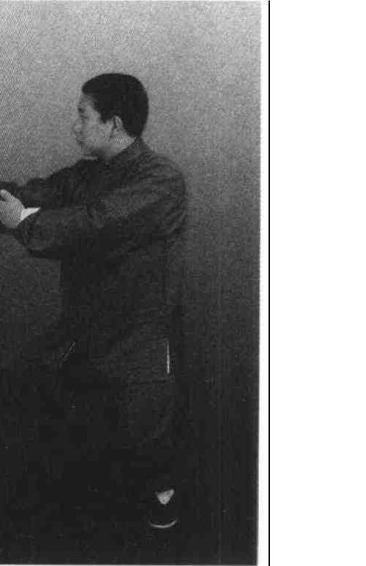
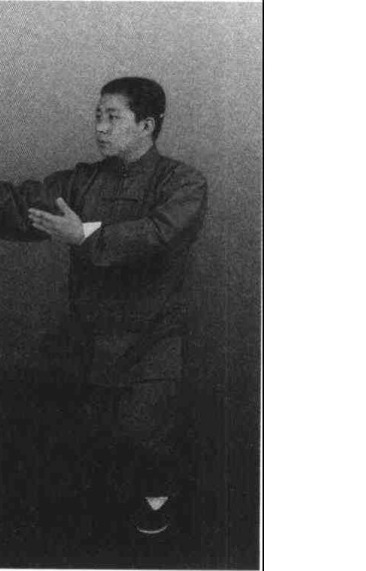
land and then draw back, then extend again; practise repeatedly, experiencing the substantial and insubstantial (the same applies in the right ward-off). The result of such practice is inevitably to strengthen the legs and thereby promote health.
15. Repeatedly perform the left foot's heel landing and its inward turn of about 45°, checking the direction of the left foot.
16. Repeatedly practise stepping out, taking care first to draw in slightly the hip root of the side that is sitting solid, so that the abdomen of that side is full and the centre of gravity stable. Then the other leg is slowly stepped out along an arc. But the knee joint must be slightly bent, preserving stored force and flexibility.
1. Application I am in the left ward-off position (facing west).
The opponent strikes at my side ribs with his left hand. I immediately draw in my right leg and step it forward to the right (west), bend the knee and set it solid, the left foot becoming insubstantial, and the body turns to the right at the same time; the eyes follow, looking level ahead; both hands circle and move out to the right front, the right hand in front with the palm facing sideways inward, the left hand behind with the palm facing sideways inward; when the right palm has turned sideways downward and the left palm upward, quickly press the side (the ulnar side) of the space between the elbow and wrist of my right arm against the opponent's right upper arm, and with the left wrist bent sideways press and adhere the wrist and palm to the back of the opponent's wrist and up the arm, toward the outer left. The whole body sits on the left leg, with the left foot substantial and the right foot insubstantial. If the opponent attacks, I roll toward my chest and to the left side; then his root force is uprooted and his body is thrown off balance accordingly.
Variations: ① If the opponent tries to withdraw his arm, I take the opportunity to press forward. ② If the opponent attacks with a shoulder stroke, I add a left step, right foot in an insubstantial stance (toe touching the ground), contain the chest, and strike the opponent's left shoulder with my right hand, so that he falls out to the left.
2. Course of the Movement
1. The body's weight gradually shifts onto the left leg, and at the same time the body turns vertically and gradually to the left; the left arm rotates inward so that the palm turns facing obliquely inward and upward; the wrist of the right arm extends slightly forward, then immediately rotates outward so that the right palm turns facing obliquely outward and downward; the two elbows slowly drop downward, and the two palms roll level to the left (see Figure 10).
2. The waist continues to turn slightly to the left, and the weight continues to shift onto the left leg, (Third Posture — Grasp the Bird's Tail, book page 23)
the left leg sits solid, forming a right insubstantial stance; but the two arms drop their elbows slightly and continue to roll left with the turn of the body; the left palm comes to rest in front of the upper left abdomen and the right palm in front of the right chest, the right hand slightly higher and the left slightly lower. At the start of the left roll the gaze first attends to the left roll of the right arm, and as it is about to end the gaze attends slightly to the left hand, and then gradually turns to look ahead (west, slightly south) (see Figure 11).
1. In the roll, the distance between the two hands must be the same as in the roll of pushing hands — that is, the right hand rests on the opponent's upper arm near the elbow, and the left hand rests on the opponent's wrist, in order to draw him in. In the rolling transformation the distance between the hands does not change, and it coordinates with the movement of the feet; this is called "the two arms being linked above".
2. In the left roll the body must always turn squarely, without leaning forward or tipping back or swaying; the key is that above and below follow one another, "neither first nor last". If one sits back too fast or too slowly, the waist and legs will come out of joint.
3. In advancing and retreating, turning left and right, one must achieve "union of shoulder and hip"; the shoulders and hips must always maintain a natural vertical relation above and below, satisfying the requirement of "basically one line above and below".
4. The two arms must roll left with the turn of the waist; the two palms must not be too far apart, but the two upper arms must not be clamped tight against the ribs either. Dropping the elbows serves to protect the ribs, and a gap about one fist wide must be left at the two armpits. The elbows not pressing the ribs leaves the arms room to circle, so that one does not trap one's own body. All subsequent movements in the form should be the same.
5. As to the direction of the roll, from its outward appearance, because the left leg is settled solid, it looks as though the two palms tend slightly downward; in fact this is due to sitting on the left leg — the correct movement should be to roll level to the left. Therefore rolling to the lower left or rolling downward are both wrong movements.
6. One must bring into play the functions of adhering, connecting, sticking and following, of not losing contact and of drawing the opponent in and making him land on nothing, and must use the wrist and palm to lead the opponent's centre of gravity.
7. One must value seating the wrist, and should generally attend to relaxed softness and flexibility. If during practice the wrist is weak and powerless, the inner energy cannot easily be poured through to the fingers, which affects the accumulation and growth of the ward-off energy of the arms, and inevitably affects the effective use of "roll", "ward-off", "press", "push" and "seize", and the effectiveness of breaking free from the opponent's "gather" and "seize" hand methods. (Third Posture — Grasp the Bird's Tail, book page 24)
1. The substantial and insubstantial must be clearly distinguished, and moreover there must be substance within insubstantiality and insubstantiality within substance. "Insubstantial" is not total emptiness, not utter absence of strength; "substantial" is not standing completely dead. One must have "yin and yang each as the root of the other" — that is, substantial and insubstantial must interpenetrate. One must know that "double-weightedness brings stagnation; a single weighting brings liveliness".
2. In the roll one must not arch the chest; contain the chest and raise the back — but one must not "cat-hunch" either (hollowing the chest).
3. Loosen the waist and hips; the waist must lead the arms; one must not move only the hands without moving the waist.
4. Above and below must follow one another: the sitting back onto the left leg and the left roll of the two arms must move together and must not come apart, one before the other.
5. In the change of hand shape when taking up the roll from the right ward-off, the palms must not turn over straight up and down; rather, the two hands must trace a small arc slightly to the right and outside and then turn back. One must be aware that after the two hands have circled, it is exactly the space between the elbow and wrist of my right arm that adheres to the opponent's left upper arm, my left wrist and palm adhering to the back of the opponent's wrist.
6. While sitting onto the left leg, the two arms begin to roll back in an arc toward the front of the body, and then gradually the waist turns and rolls level to the left and outside — one must not roll all the way back to the front of one's own body, for otherwise it is "drawing him in and letting him land solid". But neither should one send the two arms rolling to the left outside right from the start, for then one cannot get any advantage.
7. During the roll the shape of the two hands and the distance between them must not change — one must not change them up and down (left hand higher than right), front and back (shortening or widening the distance between the hands), or left and right (the left or right hand drawing close or pulling apart) — but must keep the distance between the rolling hands and the hand shape until the movement is finished.
1. Error: when beginning the change from the right ward-off to the roll, the two hands turn over straight up and down. The main cause is that one is unclear about the part of the opponent's arm to which the two hands adhere. Correction: the waist must lead the circling of the hands. The right hand goes from the back of the hand forward, turns to palm facing left, then turns to a diagonal pressing palm, and at the same time the hand extends forward-right and then turns back; the left hand turns from palm facing down to palm facing up, and at the same time the palm goes from the front to the right and then gathers back. (Third Posture — Grasp the Bird's Tail, book page 25)
2. Error: the two hands change shape during the roll. The main cause is a failure to understand the application of the roll. Correction: through "paired practice", experience why the position of the two hands should not change. Because what I roll is the opponent's left arm, one hand on the outer side of the elbow joint and slightly above it, the other on the outer side of the wrist joint — this determines the position of my two hands.
3. Error: the hands and feet come out of joint. Sometimes the left leg has already sat solid while the two hands are still moving; sometimes the two hands have already moved while the leg has not. The main cause is that above and below do not follow one another, each attending to itself. Correction: hands move and feet move; hands and feet arrive together.
4. Error: the body does not turn, and the face remains toward the west. The main cause is a failure to understand the application. Correction: I roll the opponent's left hand to the left with both hands. If I use only the strength of the two hands with the body unmoving, losing the cooperation of the waist, the result is that I draw him in and let him land solid, and the opponent's left fist strikes straight at my chest; but if the waist leads the hands, I can seize the opponent.
5. Error: the movements are not performed completely — rolling before the ward-off has reached its place, pressing before the roll is finished. The main cause is a failure to understand the application. Correction: when the opponent attacks, I must roll until the opponent's root is uprooted and his body is tilted, so of course I must roll to the full position; both excess and deficiency are bad.
1. Explain and demonstrate the application of the roll, so that the practitioner understands the concept of the movement.
2. Clarify the connections: do the circling well from the right ward-off, so that the preparatory movement of the roll is correct.
3. The teacher checks from the side that the left knee is squarely in the direction of the toes and the right knee slightly bent, then checks from the front the changes of the hands during the roll.
4. Repeatedly practise the circling of the two hands, becoming proficient in extending, circling and turning over the palms.
1. Application Following the previous posture: if the opponent draws his arm back, I immediately bend the leg and the right knee and set the right foot solid, straighten the left leg, extend the shoulder forward, and stretch and lengthen the waist, following as he retreats, the gaze also looking forward. At the same time, quickly turn over the right wrist (Third Posture — Grasp the Bird's Tail, book page 26)
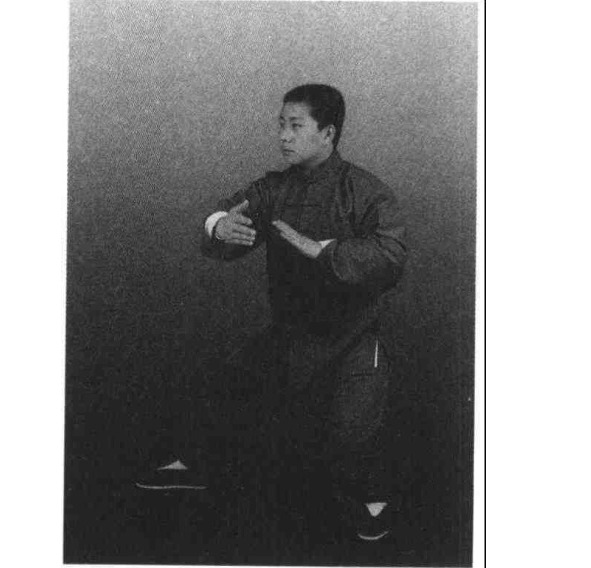
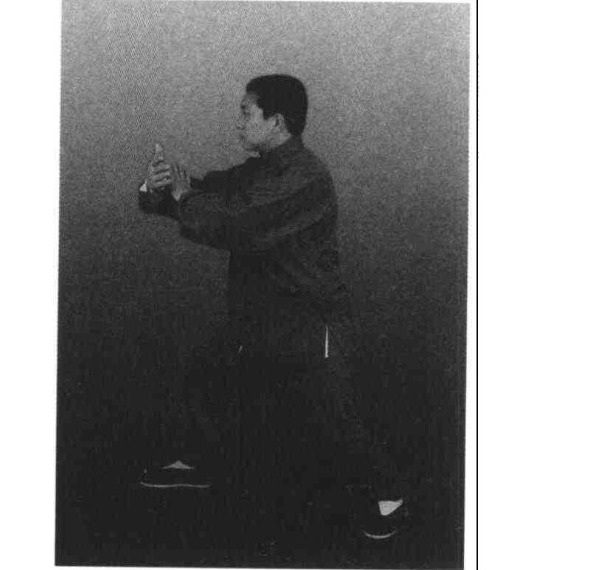
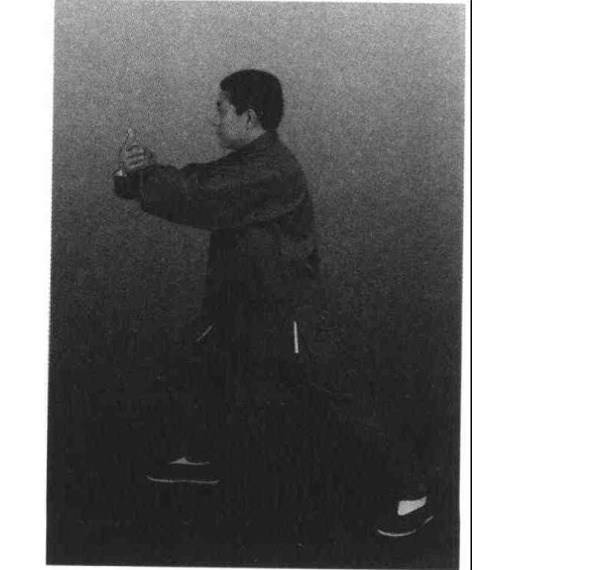
hands outward, and the heel of the left palm pressed to the inner side of the wrist joint of the right forearm; when he withdraws his arm, follow closely and press forward, the gaze directed forward.
2. Course of the Movement The body turns slightly to the right, and at the same time the weight gradually shifts onto the right leg; the right knee and leg bend into the bow and the left leg pushes, forming a right bow stance (facing west). As the body turns, the right arm rotates outward so that the right palm turns facing inward, and the left arm rotates inward so that the left palm turns facing outward, the fingers angled slightly upward; the right arm forms an arc across the chest, the elbow dropped (the right elbow slightly lower than the right wrist), and the left palm, attached to the inner side of the right forearm, presses forward (west), the heel of the left palm gradually coming close to the inner side of the pulse point of the right wrist as the press proceeds. The eyes look level ahead, and the gaze must attend to the right arm (see Figures 12, 13 and 14).
3. Key Points
1. In pressing forward the upper body should turn to the right, and the waist is the key to the turning of the upper body. "The master is in the waist, and it takes form in the fingers"; therefore, to move the hands one must first move the waist.
2. In pressing forward the upper body must not lean forward or tip back; the shoulders and hips must be opposite one another above and below.
3. The shoulders must not be hunched up but loosened and sunk. Whether the arms can be relaxed, soft and nimble depends on whether the shoulder joints can be loosened.
4. The elbows must not be raised, and the tips of the elbows must be slightly lower than the wrists; raising the elbows exposes the ribs and does not meet the requirements of combat.
5. The buttocks must not protrude; one must attend to drawing in the coccyx. If they protrude too much the head will inevitably lower and the back hunch, and one cannot achieve "the coccyx centred and the spirit reaching the crown". (Third Posture — Grasp the Bird's Tail, book page 27)
6. After the press, between the left palm and the right wrist there should be an "as if touching, as if not touching; as if relaxed, as if not relaxed" — hardness and softness contained within.
1. In going from the roll to the press, the right hand must not circle widely.
2. In the press the two hands must not be too close to the chest, or they collapse; and once collapsed, it is easy to "land solid", which causes passivity.
3. Hands and feet must arrive together: one must not have the leg already bent to its position while the hands are still pressing.
4. When the front leg bends into the bow, the knee must not go beyond the toes; beyond that it is easy to lose balance, and it is also called "excess force".
5. In pressing out one must leave surplus: the two arms must not be stretched fully straight, but are required to be curved and not straight, "storing energy in the curve so that there is surplus".
6. In the press the two hands must adhere and then press forward (as if adhering, as if not): they must not be far apart, nor pressed tightly together.
7. The direction of the press must be correct.
1. Error: the waist and hips are not relaxed and the movements are not nimble. The main cause is a shallow understanding of "the source of destiny and intention is in the waist crevice". Hence the movements appear sluggish and the arms float without strength. Correction: one must "at every moment keep the mind in the waist"; the waist and hips must be relaxed, sunk and held upright, and must turn slightly. If the waist and hips are not nimble, the waist and legs will find it hard to accord and follow one another.
2. Error: the hands move and the feet do not — the foot has already bent into the bow and the hands are still pressing. The main cause is a shallow understanding of "when one thing moves, nothing is unmoved": only if the energy passes from the feet to the legs, to the waist, and takes form in the fingers can there be pressing energy. In going forward there must be a support behind, otherwise the reactive force cannot be strengthened. Correction: hands move and feet move; hands and feet arrive together.
3. Error: raising the elbows. The main cause is failure to attend to sinking the shoulders and dropping the elbows and to keeping the two forearms level and exerting force. Correction: the two shoulders must sink, the elbows must be lower than the wrists, and the fingers of the left hand angled upward — only thus will the two elbows hang down naturally. Otherwise the two shoulders stiffen and the light and nimble energy is lost; and light nimbleness is not floating either — light nimbleness must be combined with steadiness, containing steadiness within.
4. Error: in the press the two hands are too high or too low. The main cause is a failure to understand the application of the "press". If too high, the pressing force goes upward, (Third Posture — Grasp the Bird's Tail, book page 28)
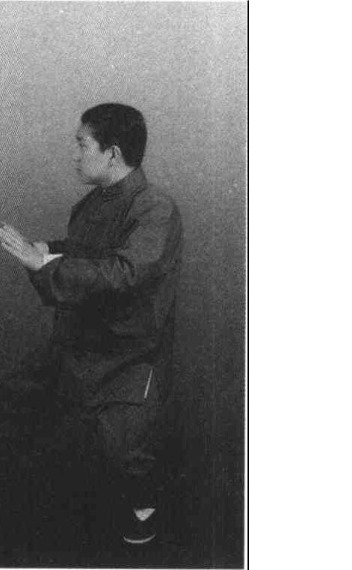
is easily neutralised by the opponent, so that the aim of the press is not achieved, and moreover the front of the chest is empty and open to the opponent's attack; if too low it is also easily neutralised. Correction: press out from the front of the chest, level and straight forward.
5. Error: in the movement from the roll to the press the arc traced is too large. The main cause is a failure to understand the application. Two hands already adhering should not release and separate. Correction: the right wrist goes slightly down and then up, and the left hand follows upward, pressing forward. One must respond urgently to urgency and follow slowly to slowness.
1. The teacher demonstrates.
2. Explain the function of the press and the course of the movement.
3. As the connections are not easily grasped, repeatedly practise the turning over of the two palms, doing the preparatory movement of the press well.
4. Practise the movement whole.
5. Repeatedly practise the change of hand shape from the roll to the press. Rotate the right arm outward with the palm turning inward, and turn the left palm facing outward, close to the pulse point of the right hand, so that the connection is clear.
6. The turn of the waist, the gradual bending of the leg and the turning over of the palms must be done together, experiencing "when one thing moves, nothing is unmoved" and also bringing above and below into accord.
7. Combined practice with the application. A — performs the roll, B — with his left arm between A's two hands; B — withdraws his arm, and A bends the right knee and straightens the left leg while turning the right wrist outward, the heel of the left palm adhering between the pulse points of my right wrist, taking the opportunity to press straight forward.
1. Application Following the previous posture: if the opponent takes the opportunity to press at me, I immediately adhere to his arm with both wrists from the left side, first using sinking energy, then lifting slightly upward, so that the opponent's pressing force lands on nothing. Immediately I then make the wrists upright, sink the shoulders and drop the elbows, contain the chest, with the weight on the left leg, and quickly receive his elbow and wrist with the centres of both palms, pressing forward and squeezing; bending the right leg and sitting it solid, extending the left leg, and the waist at the same time coordinating the forward attack, the gaze following forward too.
2. Course of the Movement
1. The right arm rotates slightly inward with the palm turning down; the left arm rotates slightly outward and the left palm becomes a downward-facing palm; it passes across the back of the right hand in a crossing brush, and immediately the two palms separate, (Form 3 Grasp the Bird's Tail, p. 29) The distance is slightly narrower than shoulder-width. Sink the wrists slightly, both palms facing down, and let the two elbows gradually sink, drawing both palms back with them; at the same time the center of gravity gradually shifts back, settling fully onto the left leg. The eyes look level ahead, and the gaze should take in the two palms as they draw back (see Figs. 15 and 16).
2. Both palms gradually rise to an upright palm with settled wrists, facing forward, and press forward to the front of the chest, pressing out level and straight, the width gradually narrowing; at the same time bend the right leg and straighten the left leg, forming a right bow stance. The eyes look level ahead, and the gaze should take in both palms pressing forward (see Fig. 17).
1. As the center of gravity gradually shifts back, the root of the right hip draws slightly back, so that the body faces squarely to the front (it must not lean to the left side).
2. Both palms draw back together with the settling-back onto the left leg.
3. At the same time both palms must draw back level with the sinking of the two elbows; the shoulders must be relaxed and the elbows sunk — the arms must not bend at the elbow or lift the elbow.
4. As they draw back the two palms move inward toward the front of the chest (the left palm slanting slightly to the right, the right palm slanting slightly to the left); just before the press goes out, both hands form upright palms, the left palm center slanting slightly toward the right front and the right palm center slanting slightly toward the left front. As the two palms press out, their centers turn slightly forward with the press, but must not turn so far that the palms face straight ahead.
5. The two palms must press forward as the center of gravity shifts forward; when pressing out the shoulders must not lift and the force must not be overdone, otherwise balance is easily lost; the arms must be bent throughout and never straight, maintaining stored potential. The two elbows must not protrude outward.
6. In drawing back and pressing out, the two hands appear from the outside to trace an upward and downward arc; this is because of the settling back and the forward bow of the leg — in fact the two hands travel essentially level, and the arc is not large.
7. One must "gather the buttocks" — that is, relax the waist and settle the hips; this is favorable to "sinking the qi into the dantian" and to "lifting the perineum."
1. The waist must be relaxed, and attention paid to keeping it straight and sunk; one must hold to the middle earth, and the middle earth must not leave its place — so first of all, relax. The upper body must not lean forward; the tailbone must be centered, the perineum lifted and the crown suspended.
2. Whether advancing or retreating, one must, as the boxing treatise says, have "baihui, zhongji and the one breath running through" — any forward lean or backward tilt fails to (Form 3 Grasp the Bird's Tail, p. 30) Requirements (continued).
3. In advancing and retreating the two hips must be upright and true, advancing and retiring together as one with the whole body. The hip joints must move in accord with the shoulders, satisfying the requirement that "hip and shoulder unite." At the same time the legs must bow in front and push back behind, with empty and full clearly distinguished.
4. One must sink the shoulders and drop the elbows. First comes relaxing the shoulders; only when the shoulders are relaxed can the elbows drop, and only when the shoulders are relaxed and sunk can the arms be relaxed, soft and nimble. Therefore, in drawing the hands back and pressing out, the shoulders must not lift and the elbows must not rise; room must be left under the armpits, and the two upper arms must not press tight against the ribs.
5. In drawing back and pressing out, the two hands must not rise and fall greatly, making the arc of their path too large — this does not meet the requirement of pressing out straight ahead. Rising and falling greatly creates disorder, and one cannot hold the opponent; the issuing force cannot be concentrated in one direction. When pressing out, the two hands should not be spread too wide laterally — about one fist apart.
1. Error: the two hands separate without first forming an overturned palm and without crossing. The main cause is insufficient understanding of how the movement travels in an arc so that the joints turn roundly and freely. Correction: in the moving posture the hand leads the elbow and the elbow leads the shoulder; therefore when the right arm rotates inward the right hand should form an overturned palm, the two hands crossing and then separating. In this way, on the contacting surface, one neither yields nor resists, and with a slight turn that avoids the solid and takes the empty one can issue force, using a lifting force to void the opponent's power.
2. Error: leaning forward when pressing out and tilting back when drawing in. The main cause is a shallow understanding of "the tailbone centered." Leaning forward loses the center of gravity; tilting back loses nimbleness and makes one easy to topple. Correction: the upper and lower must be essentially one line, and shoulder and hip must advance and retire together.
3. Error: the palm presses out flat and straight, squared to the front. The main cause is that the fingers are not relaxed and extended enough. Correction: for the beginner the fingers should be naturally extended, not pressed tight together with force nor spread apart; the palm center should slant slightly. Force should be stored in the bend and kept in reserve, otherwise one becomes stiff and cannot convey force.
4. Error: in drawing the hands back and pressing out, the arc traced by the hands is too large (in drawing back the hands sink too low). The main cause is insufficient understanding of the application. Correction: demonstrate it in paired practice. The opponent presses in from the left front; I use a lifting force to void his true strength, then both my palms adhere to his elbow and wrist, (Form 3 Grasp the Bird's Tail, p. 31) In this stage of pressing forward, large vertical arcs are not permitted; if the arms sink excessively the whole chest is exposed to the opponent. Therefore, when drawing back the heel of the palm should stay higher than the elbow, and one moves back level and straight following the opponent's pressing momentum; when pressing forward the height should correspond to the opponent's chest and ribs, so the two hands essentially keep a level to-and-fro.
5. Error: when drawing back or pressing forward the distance between the two hands is too large or too small. The main cause is a failure to understand the application. Correction: take as the standard the distance at which my two palms press the opponent's elbow and wrist (when pressing out the two thumbs are one fist apart); therefore, if too large one's own movement comes to nothing and the focus of force is not concentrated.
1. Explain the application and the movement sequence, and demonstrate.
2. Follow-along practice. (The teacher practices the form in front, and the learners follow along behind.)
3. Incremental method: ① First practice the two hands crossing and separating. ② After the hands separate, add the settling back and drawing in. ③ After the hands separate, add the settling back and drawing in, then add the forward bow and press out.
Learn one part, add a part, and link up a part, until the whole movement is learned.
4. The teacher cues with spoken commands: ① The two hands cross, palms turning down to separate. ② When one part moves, all parts move; the hands move and the waist and legs move. ③ The center of gravity shifts back, the two hands draw back, the shoulders relax and the elbows drop. ④ The left leg settles fully; the two palms face each other, at the front of the chest and not at the abdomen. ⑤ Upper and lower are essentially one line; do not lean forward or tilt back. ⑥ The intent is on the heel of the palm pressing forward. ⑦ Repeatedly practice taking the position of the squeeze and linking it to the crossing and separating of the two hands. ⑧ Repeatedly practice drawing the two hands back. Then practice sinking the shoulders and dropping the elbows, improve the relaxed shoulder and dropped elbow, press and press out, and correct the path of the hands and the changes in the shape of the hands. ⑨ Do the complete movement, improving hand-arrives and foot-arrives, with force issuing from the legs. ⑩ Practice in pairs and correct each other. The teacher sets one requirement, everyone practices to the specified requirement, and once the basic requirement is met another is substituted.... ⑪ The teacher checks the learner's strengths and weaknesses from different angles. From the front, look at the width of the two hands; from the side, look at the path of the hands in drawing back and pressing out, watch the hands move with the waist and legs, and the hands arriving (Form 3 Grasp the Bird's Tail — Technical Analysis, p. 32) ...the foot arriving.
Grasp the Bird's Tail is the master hand of taijiquan, complete in both body and application. The "Song of Striking Hands" revised by my late teacher Wang Zongyue states it clearly: "Ward-off, roll-back, press and push must be done in earnest; when upper and lower follow one another the opponent finds it hard to enter. Let him come at me with tremendous force — a touch of four ounces deflects a thousand catties. Draw him in, let it come to nothing, and issue as he closes; adhere, connect, stick and follow, neither losing nor resisting." These six lines should run through the entire taijiquan set, and they are especially applicable as the basis of the technical analysis of Grasp the Bird's Tail.
In the entire Yang-style taijiquan set, Grasp the Bird's Tail appears six times. Its movement is fundamental and typical. Push-hands likewise takes ward-off, roll-back, press and push as its basic movements; therefore this movement of Grasp the Bird's Tail must be practiced well.
1. In Grasp the Bird's Tail there are many variations of bow stance, empty stance, upright palm, upward-facing palm, downward-facing palm, and of hand and foot.
2. The footwork changes a great deal — not only the empty-full changes of moving forward and back, but also empty-full changes while supported on one leg, as when the beginning posture links to left ward-off, left ward-off links to right ward-off, one leg settles fully, one leg slowly withdraws, one leg slowly extends.
3. There are requirements within the body method; in the empty-full changes the tailbone must be centered.
4. There is the application of waist strength: "at every moment keep the mind at the waist." In Grasp the Bird's Tail the beginner is very prone to leaning forward and tilting back, and to failing to do relaxed, sunk and straight properly; when the waist strength is right, one can strengthen the issuing of force.
5. There must be not only ward-off, roll-back, press and push but also adhere, connect, stick and follow; not only striking but also neutralizing; one may neither resist nor lose contact. Therefore the demands on intent are very high.
6. Points of force: ① In left ward-off, at the radial side of the left forearm near the wrist and at the outer side of the right wrist (the right hand is an opening force). ② Right ward-off is at the wrist on the radial side of the right arm. ③ Roll-back is at the right forearm near the wrist; the left hand carries ward-off force, and the force point is on the outer side of the forearm (the ulnar side). ④ Press is mainly at the heel of the left palm, with the right hand as backing. ⑤ Push is at the heel of the palm.
7. The question of empty and full in the waist and legs: whether front empty and back full, front full and back empty, left empty and right full, or left full and right empty, in emptiness there must be fullness, and in (Form 3 Grasp the Bird's Tail — Technical Analysis / Form 4 Single Whip, p. 33) ...there is emptiness within fullness. Emptiness is not total void or limp weakness, nor may fullness stand too dead. Empty and full must interpenetrate and shift imperceptibly. Only when empty and full are nimble and natural can one advance and retreat freely; therefore one demands that they appear and hide by turns. The legs must have "intent and qi that change nimbly, so that there is the delight of roundness and liveliness"; "wherever one fails to find the moment or the position, the fault must be sought in the waist and legs."
The leg bearing most of the body's weight is called full, the other empty. The shifting of empty and full in waist and legs is close to isometric exercise. One leg supports with great effort, and so those who practice taijiquan long have very strong leg muscles, walk and climb stairs lightly, and greatly improve their health. For beginners and the elderly or weak, the stance may be taken higher at first to reduce the amount of exertion, and later, as the constitution strengthens, it may gradually be lowered to increase the exertion.
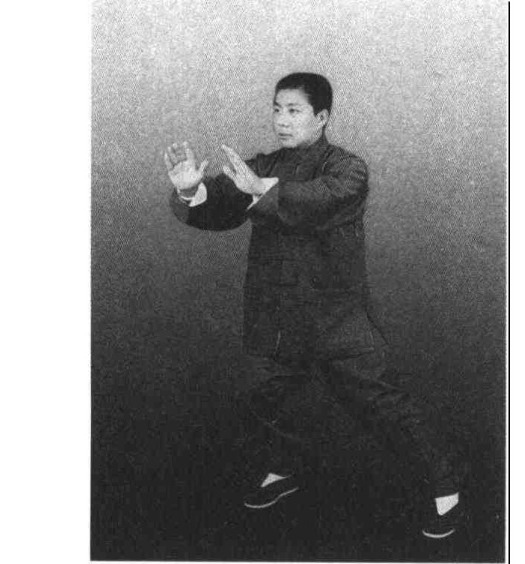
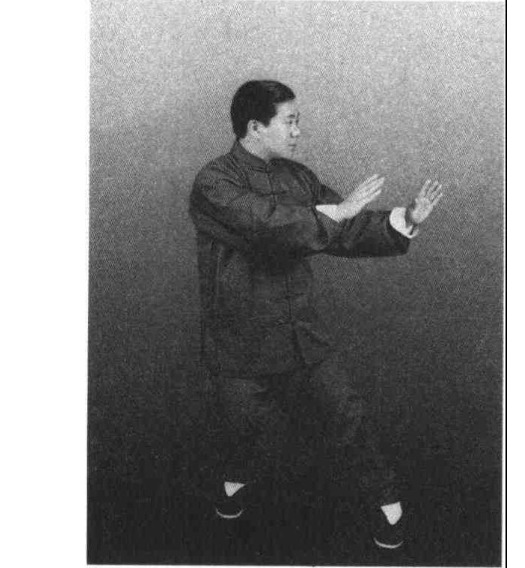
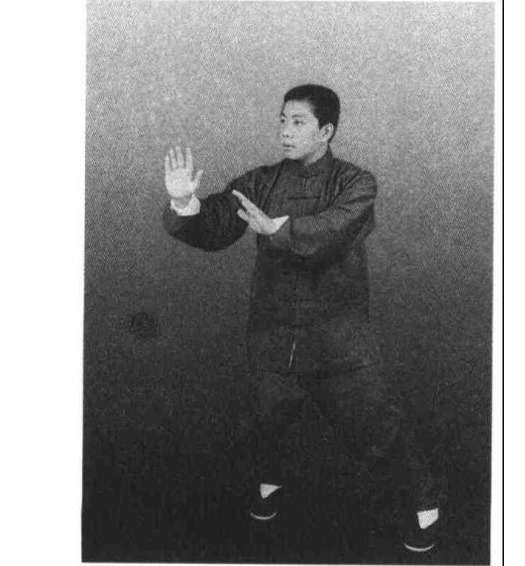
Phần 7
Form 4 Single Whip
If the opponent strikes at me from behind, I immediately raise the tip of my right foot slightly, turn left and settle fully, raising both hands level with the shoulders with palms facing down, and let them swing to and fro left and right with the waist; when the two hands swing to the right oblique, the five fingers of the right hand gather to form the hook hand. The body turns to the left rear, wheeling about to the back; the left foot lifts and steps out to the left; bow the left leg and bend the knee to settle fully, straighten the right leg; at the same time the left hand passes inward before the face, turning as it goes, and extends a palm out to the left, the palm center slanting outward, relaxing the waist and hips, pressing toward the opponent's chest, sinking the shoulders, dropping the elbows and settling the wrist. The gaze follows forward — the hand arrives, the eyes arrive, the foot arrives.
1. The weight is still on the right leg; the body turns left (about 135°) to face southeast, while the tip of the right foot lifts slightly and the body pivots on the right heel, the toes turning inward as far as possible, then settling. At the same time the two elbows sink slightly and bend a little, and the two hands, as downward-facing palms, sweep left with the body through half of a flat ellipse, both palms at shoulder height. The gaze follows the turning of the body, looking level; the hand arrives and the eyes arrive, and the gaze takes in the right hand (see Figs. 18 and 19).
2. After the body has turned to about 135° (facing southeast), the body (Form 4 Single Whip, p. 34) ...then turns right about 70° (toward the southwest), and the two palms sweep with the body, the two arms passing before the chest to the right oblique front (southwest) through another half of a flat ellipse, both palms at shoulder height. The eyes follow the turning and shift level; the gaze must take in the right palm (see Fig. 20).
3. The weight is on the right leg; the left leg lifts, and the left foot steps out along a natural arc nearer to the inside. At the same time the body continues turning slowly right, and the right arm gradually extends obliquely to the right, the tips of the five fingers drooping and gathering as it extends to form the hook hand; the left arm extends slightly forward, the left palm center facing inward, the fingers near the right wrist (see Fig. 21).
4. The body turns slowly left, the right hook hand continues to relax the shoulder and extend right, and at the same time the left foot steps out to the left (east), touching down heel-first, then settling the whole sole as the weight shifts left. Bow the left leg and push back the right leg, forming a left bow stance. At the same time the left palm passes before the face (no more than 30 cm from the face) and moves left; as the left arm rotates inward, turn the palm center to face forward and slant slightly, pushing out slowly, obliquely and levelly toward the left (east). The eyes look level at the leftward shift, following the left palm to the left; the gaze must see the left palm pushing left, and when the movement is completed the two arms should be spread about 135° apart (see Figs. 22 and 23).
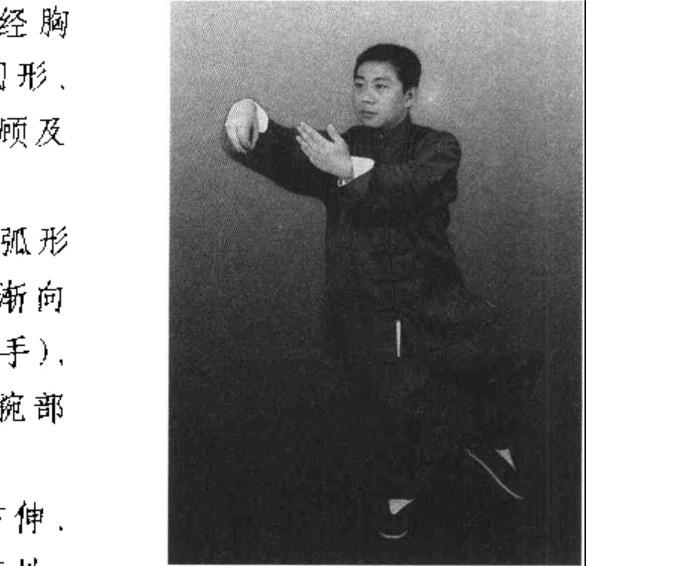
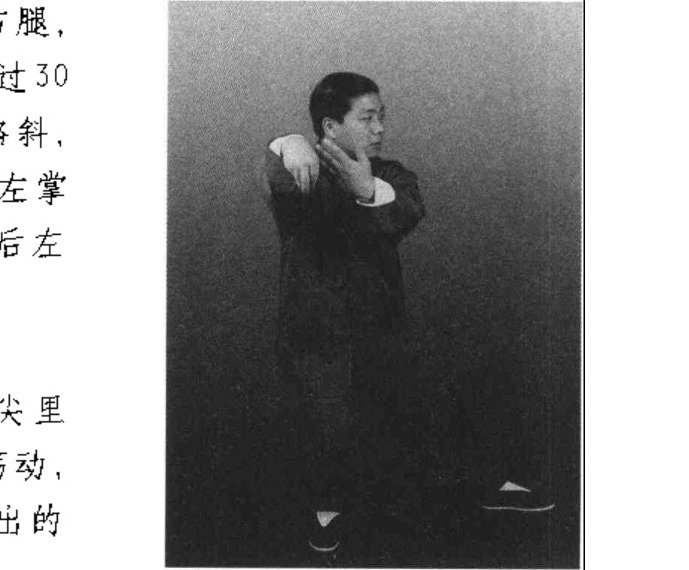
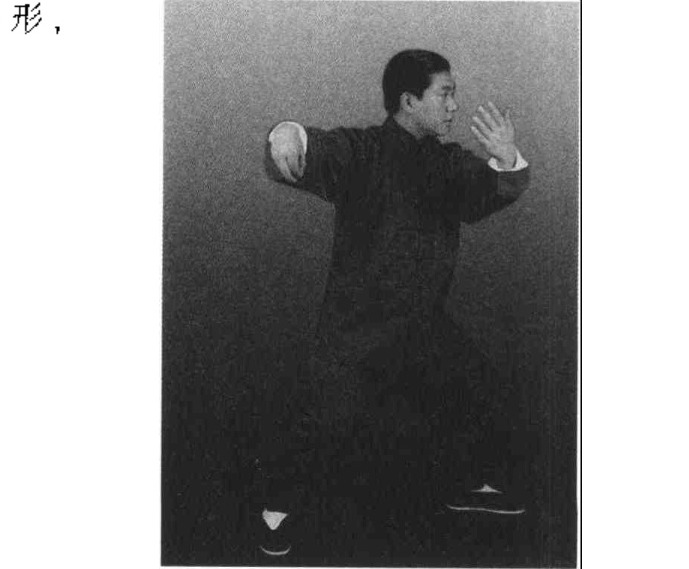
1. Turn the waist and hips to the left; the right foot pivots on the heel, and the toes must turn inward fully; the weight is still on the right foot, and the two hands swing left or right with the waist. The upper body must be upright, and must not lean forward or tilt back. As the left hand pushes out to the left front, the right hook hand slowly extends obliquely to the right.
2. The two palms sweep a circle to the left or right — it is a flat ellipse, (Form 4 Single Whip, p. 35) The two elbows hang down (elbows lower than the wrists); the two arms must be linked to each other, not loose and scattered; the front hand goes out and the rear hand follows, at equal distances. The hands turn with the waist, and the two arms must bend and extend roundly and livelily as the palms sweep; when the two palms sweep outward the arms must not be straight, and when they sweep inward one must slightly settle the wrists while dropping the elbows, hollow the chest and turn the waist.
3. In the settled posture the two hands and two feet must have the sense of drawing to and linking with each other above and below. The left arm and the left leg must point in the same direction and be aligned above and below; the knee must not pass beyond the toes; the wrist joint of the right hook hand must be bent, the five fingers gathered and drooping, and vertically opposed to the tip of the right foot.
1. The two arms sweep the circle, and the movement must be led by the waist — the waist is the key to the turning of the upper and lower limbs.
2. In the extending and retracting of the arms through the circle one must be relaxed, soft, round and lively. To achieve this, one must first of all have the shoulder joints relaxed and sunk, and the beginner in particular should start from "relaxing." Leave room under the armpits; do not press the upper arms tight against the ribs; one should gradually reach "loosened, my force not bent," with elasticity.
3. One must "sink the shoulders and drop the elbows," not hunch the shoulders and lift the elbows; both the left arm that sweeps the circle and the right arm that forms the hook hand must have the elbow lower than the wrist.
4. When the two hands begin to sweep the circle and the waist leads the right foot to turn inward, the weight must be on the right foot, the full leg; the weight must not shift (to the left foot and then back to the right).
5. In sweeping the circle the body turns from west to southeast, then back to south slightly toward the west; the turn must not be too large, or one will "scatter."
6. After sweeping the circle, the left hand comes near the right wrist with the palm center facing inward, and as the body turns the two hands shift left; after passing due south, the left hand, as it shifts, turns the palm outward, forming a side palm, and pushes out obliquely and levelly forward (east), while the right hand moves back in translation 45°.
7. After sweeping the circle, the left foot lifts and takes a step forward-left (east); the left leg, once lifted, must step forward immediately — it must not be drawn back near the inner ankle of the right foot before stepping out.
8. In the settled posture the right hook hand should be slightly higher than the shoulder; the left knee bows forward and the right leg pushes back, but the right leg must not be straightened completely; the left hand and the left (Form 4 Single Whip, p. 36) ...the tip of the foot vertically opposed. The direction of the left toe is squarely east.
9. The right foot must turn inward fully, more than 90°.
10. During the movement the body's center of gravity must not rise and fall abruptly; in particular, when the right foot turns inward the center of gravity must not rise.
1. Error: the right foot turns inward insufficiently, making it difficult for the left foot to step toward east. The main cause is a failure to relax the waist and turn the hip. Correction: the big toe of the right foot must lead the force; the toe points and the hip loosens — so the foot leads the knee and the knee leads the thigh, and when the inward turn is complete the left leg can step smoothly.
2. Error: the body rises and the weight shifts left. The main cause is an unclear concept of empty and full. Correction: with the tip of the right foot slightly raised, pivoting on the right heel, begin from drawing in the root of the right hip and let the right knee turn left in line with the right toe. Do not push off the right leg; the right leg must bend, and the turning of the waist and hips drives the right foot to turn inward.
3. Error: the two hands do not sweep a circle but go straight back and forth, or the two hands rise and fall too greatly. The main cause is an insufficient understanding of the application. Correction: they must be raised level with the shoulders and swing to and fro to form a turning momentum; therefore the arms must be bent and not straight. If the rise and fall is too great, it is hard to gain the turning momentum; so there is some rise and fall, but it should be fairly small.
4. Error: the hand shape is poor when sweeping the circle — some hold it taut and stiff, some let it sag limply. The main cause is insufficient attention to the requirements for the palm. Correction: the empty and full of the palm must accord with the empty-full changes of the movement as a whole. The boxing treatise says, "Its root is in the foot, it issues from the leg, it is governed by the waist, and it takes form in the fingers... always it must be one complete breath of qi" — therefore, as they swing left and right, the fingers too must convey force, and so they may not be left limp; but neither may a stiff force be used.
5. Error: lifting the elbows when sweeping the circle. The main cause is a shallow understanding of the downward-sinking force of the elbow. Lifting the elbow obstructs the sinking of the shoulder and affects the breathing. Correction: relax the shoulders and drop the elbows, so that the elbow is lower than the wrist.
6. Error: in sweeping the circle, the turning of the waist and the turning of the hands and feet are not in accord; the turning of the hands and feet is divorced from the turning of the waist, and in some cases only the hands move and the waist does not. The main (Form 4 Single Whip, p. 37) ...cause is a shallow understanding of "the waist as sovereign." Correction: the waist is the key to the turning of the upper and lower body. Only when the waist strength is applied correctly can the strength of the whole body be concentrated at one point. If the hands move and the waist does not, the hands and waist are severed, and the internal force of taijiquan cannot be conveyed to the hands; there can be no turning momentum in the left-right swinging. Therefore, one must "at every moment keep the mind at the waist."
7. Error: the right hook hand is placed too far open; in the settled posture the two arms are almost 180° apart. The main cause is that the right hand moves back too far and the waist turns right too much, with the result that the chest is thrust out. Correction: the right hook hand should move slightly to the right, but still come to rest on the southwest diagonal.
8. Error: the left hand turns its palm too abruptly when pushing out. The main cause is a shallow understanding of hand technique: in taijiquan the palm, in extending forward, extends with rotation and gradually unfolds — it does not rise straight up and drop straight down, nor go straight forward and straight back; and because the force travels from the spine and back, through the shoulder and elbow, to the palm and pushes forward, if the palm is turned abruptly the force cannot be conveyed. Correction: turn the palm as it moves, keeping the fingers essentially slanting upward.
9. Error: when the left hand moves and pushes out, the palm is too far from or too close to the body. The main cause is an insufficient understanding of the application. Too far and it scatters; too close and it collapses. When the opponent strikes from behind me, my left palm presses toward his chest. If the hand is too far, one scatters before anything else; if the hand is too close, my arm is already bent and close to the body — how can I then exert my force? Correction: the left hand must be no more than 30 cm from the face.
10. Error: when the left foot steps out to the left front, the two feet stand on a single straight line. The main cause is insufficient turning of the waist, insufficient inward turn of the right foot, and insufficient opening of the hips, which makes one stand unsteadily. Correction: the right foot must turn inward fully; on the basis of the body's left turn, open the hips and extend the left leg to the left and slightly back — thus there is a proper lateral distance between the two feet. In the entire taijiquan set, whatever the direction or angle, there is never a case of the two feet standing on one straight or transverse line.
11. Error: when the left foot steps out the weight shifts left too quickly, and the left heel lands fast and heavily. The main cause is unclear empty and full and insufficient leg strength. Correction: the step must be like a cat walking. The right leg settles fully, the left leg lifts slowly and lands slowly; when the left heel touches down the weight should still be on the right foot, and only then shift slowly out. (Form 4 Single Whip — Technical Analysis, p. 38)
1. The teacher explains and demonstrates (with emphasis on distinguishing empty and full).
2. Breakdown method: ① Led by the waist, the tip of the right foot lifts slightly, and the right foot turns inward pivoting on the heel — foot, knee and waist must turn together. ② Sweep the circle. Where the hands move and the direction in which they settle. ③ The left hand moves and pushes out; get clear on the timing of the palm's turn. ④ Lift the left leg and step out to the left front with the turn of the body; strive to settle the right leg fully. ⑤ Check the settled posture.
3. Incremental method: ① Turn the foot in. ② Turn the foot in and add the circle sweep. ③ Turn the foot in, sweep the circle, and add the two hands settling into place. ④ As above, add lifting the left leg, turning the body, shifting the left hand, and stepping the left leg. ⑤ As above, add turning the palm and bowing the leg. ⑥ Complete practice.
4. Cue summary: ① Turn the foot in (the right foot must turn in somewhat more). ② Oblique-front hook hand (reminding of the position of the two hands). ③ Bow step, turn the waist, turn the palm (reminding of the position of the left hand).
5. As a group, practice the right-foot inward turn repeatedly, requiring the waist and knee to turn.
6. As a group, have the left hand push forward with the turning of the waist while the right hook hand gradually extends and shifts right, experiencing "when one part moves, no part is still."
7. As a group, settle the right leg fully, lift the left leg and step left with the turn of the body, landing lightly, experiencing the clear distinction of empty and full; the teacher may praise whoever distinguishes them more clearly.
8. As a group, have the left foot step out at various angles as the body turns; beginners may be asked to extend as far to the left rear as possible to compare whose turn is greater, and then the correct landing position is required.
1. The movement requires a change of forward direction, altering it by 180° (from west to east).
2. In the push of Grasp the Bird's Tail, the right bow stance has the right leg full and bears most of the body's weight; in linking to Single Whip, the form requires turning on the full leg. Empty and full are clearly distinguished, so the load on the leg is heavy. Because the load is heavy, repeated practice strengthens the leg muscles and thereby strengthens the constitution.
(Form 4 Single Whip — Technical Analysis / Form 5 Raise Hands and Step Up, p. 39) 3. After the right leg turns inward, the left leg lifts, forming a one-legged support on the bent right leg, with the whole body weight borne by the right leg. When, after the left leg steps and the heel lands, the weight shifts, poor control of the right leg easily causes the left heel to land quickly, so that the requirement of stepping like a cat walking cannot be met, and there is inevitably interruption and tension.
4. The "Single Whip" movement involves a change of direction and at the same time the movement of hands and feet; the beginner easily gets confused, so one must be clear about the direction of the movement and the coordination of upper and lower, so that the movement is continuous without break, upper and lower follow one another, and empty and full are clearly distinguished.
5. When the two hands begin sweeping the circle they must be laid level; attend to the shifting of empty and full — relax where it should be relaxed and tighten where it should be tightened; hard and soft must complement; it must accord with the momentum of the turn.
6. Changes in the lower limbs easily disrupt the movement of the upper body. Note that when the head turns it must be upright; when sweeping the circle do not lower the head; when lifting the left leg do not tilt the face up; when turning in any direction the head must not lean or slant left or right, but be naturally level. The facial muscles must be relaxed and natural, the lips lightly closed, the breathing natural, the ears quietly listening behind and taking in both sides. Therefore, in training the Single Whip movement one must see that every part of the body conforms to the requirements of taijiquan, and that hand, eye, body and step are coordinated.
7. Many students beginning taijiquan report knee pain after practice, lasting months or half a year at a stretch. This is because Yang-style taijiquan turns by grinding on the full foot: if, when turning, the knee and the foot are not on one line, but the knee forces an inward turn to drive the grinding of the foot, then the knee precedes and the foot follows, and over long, excessive stretching this causes chronic injury to the tendons and ligaments on the inner side of the knee, producing pain. Therefore the beginner must take care that in the full-foot grind the knee turns together with the foot.
Phần 8
Form 5 Raise Hands and Step Up
If the opponent strikes from the right side, I turn my body from left to right, the left foot turning inward and the body turning right; the right foot lifts and steps forward, heel landing with the toe suspended in the air, and the whole body sits on the left leg. Hollow the chest and raise the back, (Form 5 Raise Hands and Step Up, p. 40) ...relax the waist, the eyes look forward, and at the same time the two hands are raised and brought together inward — this is a closing force, the right hand in front and the left behind, the two palm centers facing each other left and right. When the two hands are raised and link up with the opponent's elbow and chest, one must store the momentum and await the opponent's change. If the opponent advances, I roll back; or one may turn the right palm center upward and close the left palm onto my right wrist to press out — there is likewise a resemblance in body method and step method to the press.
Variation: if the opponent steps up, one may also neutralize his incoming fist to the right and urgently use the right hook hand to strike upward at his chin.
1. The weight is still on the left foot; the tip of the left foot, pivoting on the heel, turns inward about 15°–30° and settles, the left leg settling fully; the body gradually turns right, the right hook hand becomes a palm, and the two arms drop their elbows (see Fig. 24).
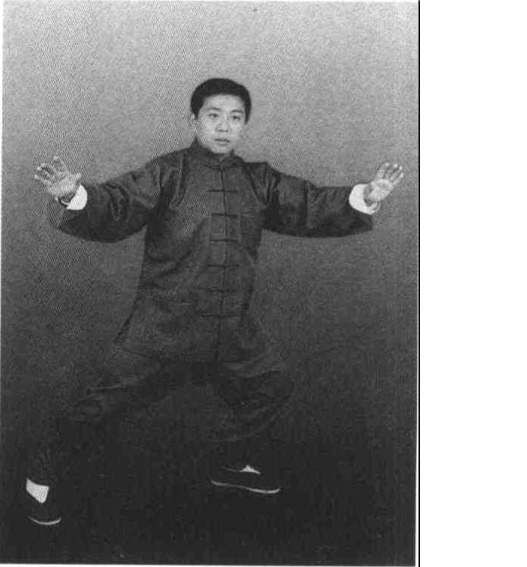
2. The right leg lifts and comes down one step in front of the left foot, landing heel-first with the toe naturally raised a little, the right knee bowing slightly to form a right empty stance. At the same time the two palms close forward, the right palm in front, fingertips at brow height, palm center facing left, an upright palm with settled wrist; the left palm behind, fingertips at chest height, palm center facing right and slanting slightly downward, squarely opposite the right elbow joint, the upper body turning slightly left. The gaze looks forward level past the right palm, forming the raise-hands posture (see Figs. 25 and 26).
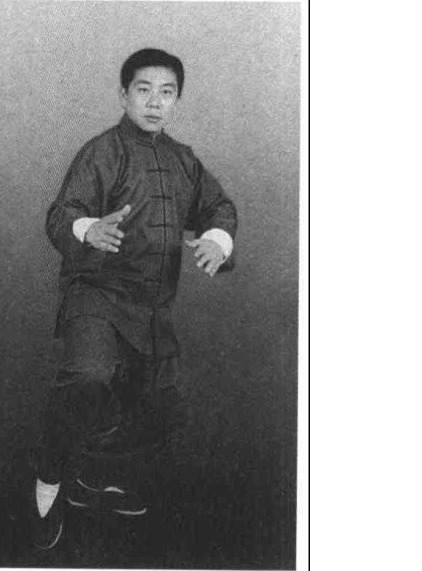
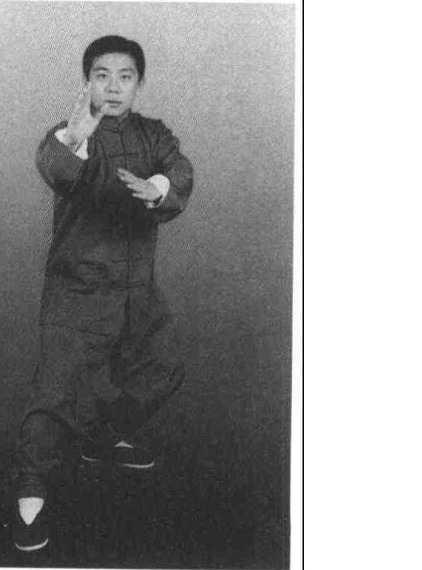
1. Raise Hands and Step Up is a closing force; the movements of foot and hand must be coordinated and in accord.
2. As the right hook hand becomes a palm and the two hands close inward, when the two arms open, the two shoulders must be relaxed and the elbows dropped.
3. When the left foot turns inward the waist and hips must be relaxed, the body must stay upright, and the buttocks must not protrude.
4. The right heel touches the ground as an empty point, with the toe raised very slightly — it must not be tilted too high; the right knee must bow slightly and not be straightened — one must achieve emptiness but not total void.
5. When the two arms close, the chest must not squarely face the front; the upper body turns slightly left — only so does it meet the requirement of the application: storing the momentum and awaiting the opponent's change.
6. When the two palms begin closing inward, the right hand sinks slightly and, moving forward, (Form 5 Raise Hands and Step Up, p. 41) ...and then rises slightly. In the settled posture the left tiger's mouth faces the bend of the right elbow, the left fingers are level with the right arm, and the left hand is about one fist's width or a little more from the right arm. If the two hands are too close, roll-back is hindered.
7. The two feet must not be on a single straight line.
1. Lifting the right foot and stepping forward must be light and nimble; this requires relaxing the waist and hips. In moving the foot and bringing the leg out, first draw the root of the left hip inward and settle the weight firmly on the left leg.
2. Raise Hands requires that upper and lower follow one another: the tip of the right foot squarely faces the front, the fingers of both hands must also point to the front, and the line of sight looks to the front; even the chest and abdomen must turn with the hands and feet, so that the movements of above and below, left and right, are in accord, strengthening the gathering and closing force of the whole body, so that upper and lower follow one another and one breath of qi runs through.
3. In linking from Single Whip to Raise Hands the elbows must drop and the two palms settle their wrists; they close as they move forward — the two arms must not first draw inward and close and then go forward, nor must the two arms go forward too early.
4. As the right leg lifts the knee and steps forward, the two arms close as they move forward.
5. One must hollow the chest, but must not form a hunchback.
6. The right foot must not first come near the inner ankle of the left foot and then go forward; rather, after the right leg lifts forward it steps forward in a natural arc.
1. Error: unclear empty and full. The main causes are, first, that in linking from Single Whip and turning the left foot inward, the weight easily shifts right and forms double-weighting; second, that the left leg is not settled fully when the right leg steps forward, so the weight shifts forward. Correction: "double-weighting causes stagnation." The shifting of empty and full between the two legs must be clear; the upper body must be nimble, and the lower body must be made stable. Therefore, when the right leg steps forward, only the heel may land lightly, and the weight must sit on the left leg. Therefore one should practice the full-foot turn often, sinking as one turns.
2. Error: the movements of hand and foot are separated. Commonly the right foot has already landed while the two hands are still extending forward. The main cause is that upper and lower do not follow one another. Correction: foot arrives as hand arrives — thus hand and foot are one force.
3. Error: the two elbows prop outward and lift up, protruding outward away from the body. (Form 5 Raise Hands and Step Up, p. 42) ...The main cause is failure to attend to the requirement that the elbow not leave the knee. Correction: the elbow should unite with the knee. When linking from Single Whip the upper body begins to turn right, and one should immediately relax the shoulders and drop the elbows; if the two elbows are too exposed, this is harmful and in no way beneficial in combat.
4. Error: the position of the two hands — high or low, inner or outer — does not meet the requirement. The main cause is insufficient understanding of the application. Correction: the requirement of Raise Hands is that one's own two wrists connect with the opponent's elbow and wrist; this makes clear the reason for the requirements that the right hand is in front and the left behind, the right hand slightly higher and the left slightly lower, and the front-to-back distance between the two hands about one forearm. For this, one may use the opponent's elbow and wrist to correct the position of one's two hands.
5. Error: in the settled posture the upper body leans too far forward — this is called "cat's waist." The main cause is the loss of a centered, upright stance. Correction: Raise Hands is a storing of momentum to await the opponent's change; in order not to let the body become slack and lose its center one must hollow the chest and raise the back, and keep the tailbone centered. Thus one can roll back when retreating and press when advancing. If the two hands extend too far forward and the weight moves forward, one brings passivity upon oneself.
6. Error: in the settled posture the upper body squarely faces the front. The main cause is a shallow understanding of the application. The movement of Raise Hands is to await the opponent's change; if I squarely face him and the opponent attacks straight ahead, I have no way to draw him in, and if he is drawn straight in he easily lands on me. Correction: the body must be slightly oblique.
1. Explanation (with emphasis on empty and full) and demonstration (with emphasis on the full-foot turn).
2. Mnemonic: turn the waist and turn in the left foot; the weight stays on the left; Raise Hands is a closing force; hand and leg go out together. Breathe naturally, store the momentum and await his movement.
3. In pairs, one attacking and one defending, experience the position of the hands; in groups of several, watch each other and correct errors.
4. Key-point cues: ① When turning the body and turning in the left foot — the weight must not change. ② When the body has turned to face south — the right hook hand becomes a palm, the elbows sink, and the two hands travel in an arc. ③ When the right leg steps forward — land lightly, hand and foot arriving together.
5. Incremental method: ① Turn the left foot inward and turn the body to the south. ② (Form 5 Raise Hands and Step Up — Technical Analysis, p. 43) Turn the left foot inward and turn the body to the south. The right hand becomes a palm and the two elbows drop. ③ Turn the left foot inward and turn the body to the south, the right hand becoming a palm and the two elbows dropping; lift the right leg forward and bring the two hands inward and forward, raised and closed.
6. To deepen the understanding of empty and full and to train the leg strength, repeatedly turn the left foot inward and settle the left leg fully, and repeatedly lift the right leg and step forward into a right empty stance.
7. In the position of the right empty stance, repeatedly practice lifting and setting down the right leg, experiencing the slightly bent knee and the light, nimble foot.
8. To deepen the understanding of the path of the hands and of their position in the settled posture, repeatedly practice the raising and closing of the two arms inward and forward, beginning from the left upright palm and right hook hand.
1. The whole movement is supported on the left leg, so the load on the left leg is fairly heavy.
2. The movement requires the waist to move, the hands to move and the feet to move, and the gaze to move with them; if one place does not move, there is disorder. Therefore, when turning the waist and turning the body to the right (to the south), at the same time the right hook hand must become a palm, the elbow sink slightly, the right knee lift, and the eyes look forward — upper and lower following one another.
3. In this movement, when the waist turns to the south it is easy to thrust out the chest, and when the hands close inward and extend forward it is easy to cave in the chest. If the chest is thrust out, the qi presses against the chest, the upper is heavy and the lower light, and the heels tend to float. A caved-in chest is unfavorable to breathing; a hollowed chest favors neutralizing force. The boxing treatise says, "the two arms are linked to each other," and "the whole crux lies in the transformation within the chest and waist." Therefore a hollowed chest is the "storing of momentum" of the chest; with a hollowed chest one can raise the back, and with a raised back the force can issue from the spine.
4. The right leg must step forward light and nimble; "light and nimble" means not using stiff force — once stiff force intrudes, the turning is no longer nimble. Therefore in practicing the form one must practice the union of light and sunk, and the mutual complement of hard and soft. In this movement, in the right leg's forward step one must first draw the root of the left hip inward and settle the left leg firmly; in changing from full to empty attend to nimbleness, in changing from empty to full attend to steadiness, so that the right leg's forward step involves the whole body within and without. One must attend to "both light and sunk, hard and soft contained within," storing and not issuing, with skill and force-power given equal weight.
(Form 6 White Crane Spreads Its Wings, p. 44)
Phần 9
Form 6 White Crane Spreads Its Wings
Linked to the preceding posture. If the opponent strikes with both hands from the left side of my body, I quickly withdraw the right foot, lift it and step forward across, the toe slanting slightly (toward the southeast), bending a little and settling fully as the body turns left (to the south) together with the right foot, while the left foot moves to the front (east) and touches down on the toe. At the same time the left palm center closes onto the inner side of the right arm at the elbow, sinking slightly; the right hand then rises to open up above the right forehead, the right palm center facing up and outward, and I use my right hand to lift the opponent's left hand upward. The left hand hurries downward, opening out from the left side down to beside the left hip, palm center facing down — and so the force of the opponent's two hands is dispersed and broken by me.
1. The weight is still on the left foot; the waist and body turn slightly left, the root of the left hip draws slightly inward, and the right foot lifts. At the same time the left elbow withdraws to the left rear, and as it withdraws the arm rotates inward so that the palm center turns downward; the right palm likewise, with the turning of the body, comes down from the front and moves in an arc to the left front beneath the left hand, and as it moves the arm rotates outward so that the palm center turns upward. The gaze attends slightly to the withdrawal of the left elbow, then turns to look level ahead (see Figs. 27 and 28).
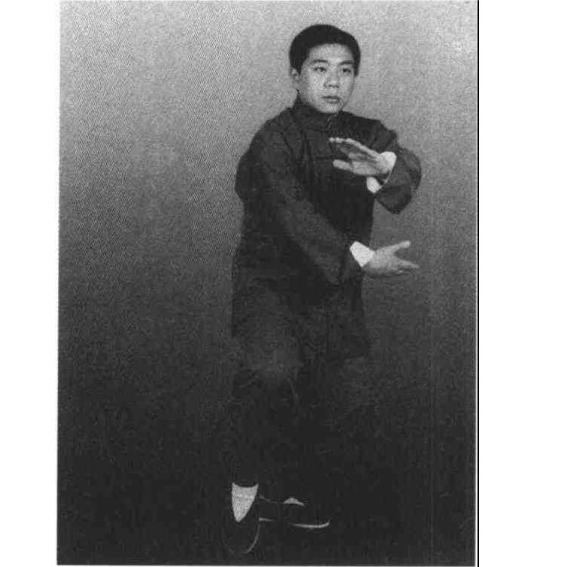
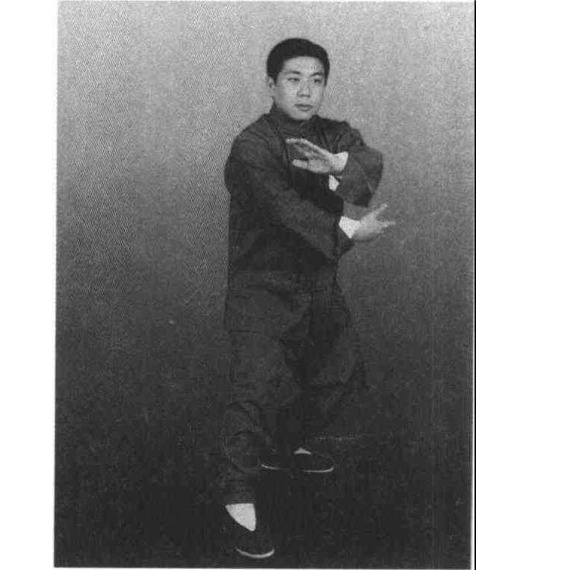
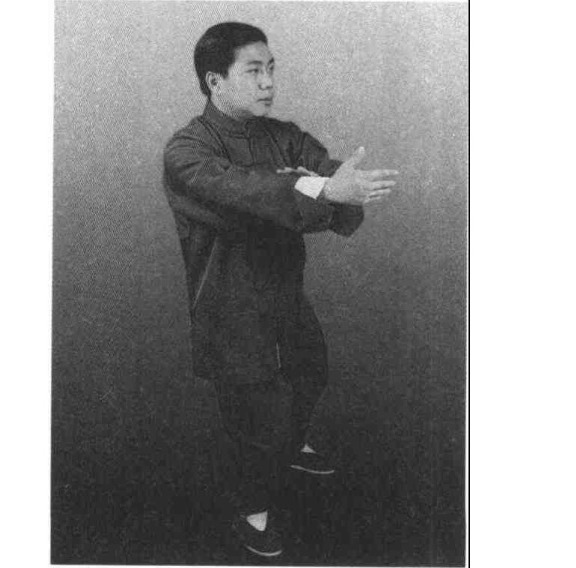
2. The right foot comes down in place, still forward of where it was, landing heel-first, and then the toe settles at about 45°. The waist gradually turns left, the weight gradually shifts entirely onto the right leg, and the right leg bends at the knee and settles fully; at the same time as the waist turns and the step is taken, the right arm rises to the front of the upper abdomen, the left palm clinging to the inner side of the right forearm (facing (Form 6 White Crane Spreads Its Wings, p. 45) ...southeast), with the eyes attending to the right arm (see Fig. 29).
3. The body turns slightly left, the left foot lifts a little and moves to the front of the body (east), touching down lightly on the toe, and the left knee bows slightly; at the same time the right palm rises, and as it rises the arm rotates inward so that the palm center turns outward (the fingers slanting upward), while the left palm likewise falls in an arc to beside the left hip, palm center facing down with settled wrist, fingertips pointing forward. The eyes attend slightly to the right palm rising, then look level forward, but the gaze must also take in the two palms. (See Figs. 30A and 30B.)
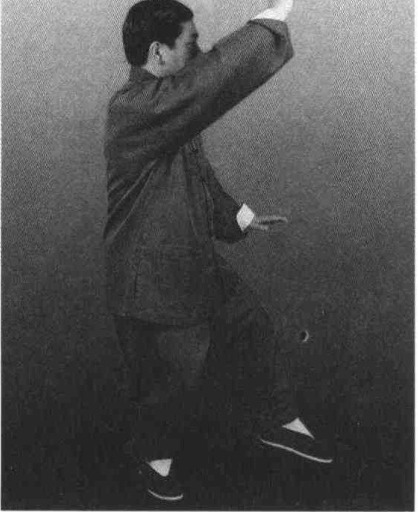
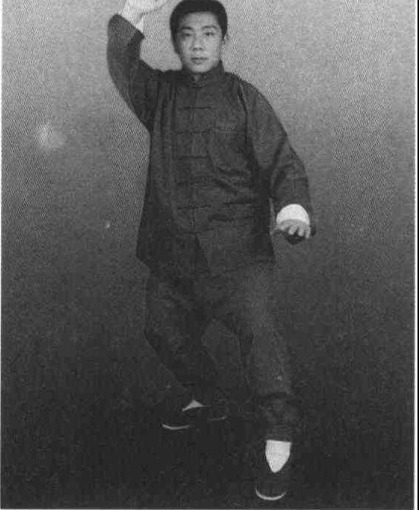
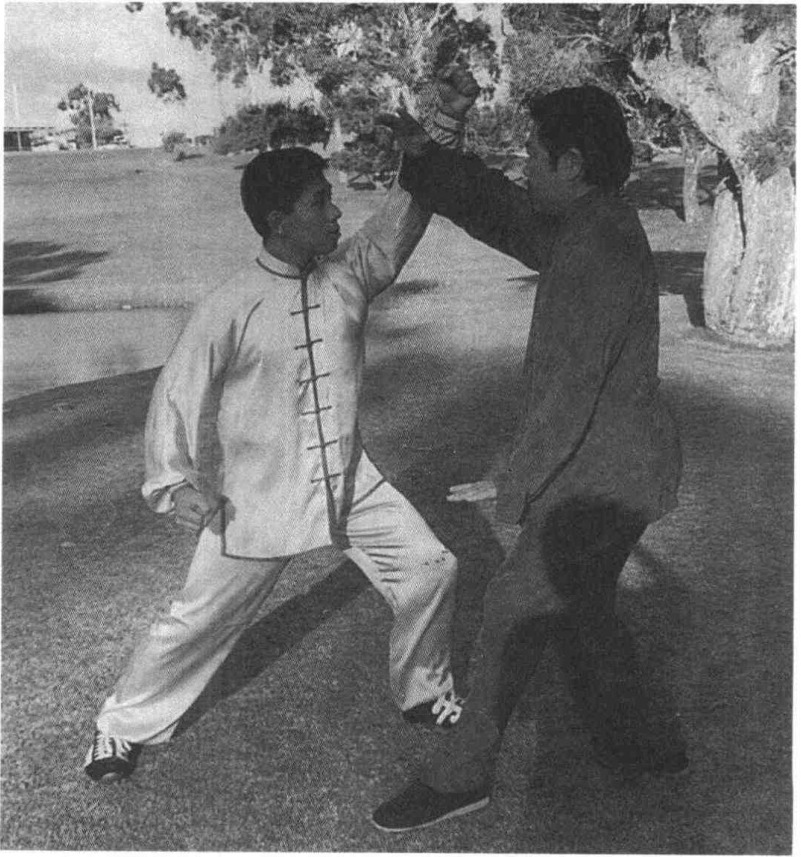
1. The lifting of the right leg, the withdrawal of the left elbow, and the sinking of the right arm must all take place at the same time. The head must not be lowered, the body must not lean forward or tilt back, and the root of the left hip must draw inward — only then is upper and lower shown to be in accord.
2. There must be an upward spirit, but the right leg must still sit down and draw up the waist, so that there is the sense of upper and lower drawing apart and the limbs and body being stretched long. But note: the abdomen must not be thrust out. With the top of the head leading upward the spirit is raised, and with the qi sunk and the hips settled the lower body is steady.
3. When the posture is settled the two arms must form an arc, but the elbows must not be bent up straight; although the right palm is above and before the right forehead, the elbow must not be raised nor the shoulder hunched, (Form 6 White Crane Spreads Its Wings, p. 46) ...but relax the shoulders, drop the elbows and settle the wrists. The body must still be centered and upright; it must not lean forward or tilt back, nor thrust out the chest or protrude the buttocks.
1. Empty and full must be clear. When the right foot withdraws and steps forward again, the weight is entirely on the left leg, and the left leg must settle fully. When turning left and the left leg lifts and steps forward, the weight is entirely on the right leg, and the right leg must settle fully; the shifting of the weight must not be too fast.
2. The waist is the axle, driving the rotation of the four limbs. When, with the waist's left turn, the left elbow withdraws to the left rear, the waist must lead the hands; one must not move only the hands without the waist.
3. The left leg's forward touch on the toe must be empty and must not bear the body's weight.
4. The right hand rises and the left hand presses down; there must be a sense of division, but the two hands are not unconnected — it is not shown in outer form, but intent suffices: use intent, not force.
5. When the two hands separate one must draw up the waist and stretch apart by opposition, lift the perineum and suspend the crown; it is not that the body goes upward, but there is a feeling of extension.
6. The right palm naturally slants upward; it must not be a horizontal palm — a horizontal palm requires lifting the elbow.
7. One must do the hollowing of the chest and raising of the back well; it is not a caving in of the chest with tension drawn inward, but the chest must feel broad and comfortable, the chest muscles relaxed, which favors the movement of the diaphragm. The beginner must take care not to thrust out the chest, but also must not hunch the back.
1. Error: when the right hand falls from the front, the left hand halts and does not move. The main cause is failure to withdraw the left hand. Correction: both hands must move.
2. Error: when lifting the right leg the upper body bends forward. The main cause is the wish to relieve the left leg that maintains the body's center of gravity, resulting in protruding buttocks, or a bent waist with caved chest and lowered head. Correction: the upper body must still be upright; attend to the tailbone being centered. The step must change with the body; if the body slants it loses balance. If, in the transitions of advance and retreat, empty and full are unclear and the lower body is unsteady, balance is lost and the body slants. Therefore the stance must be centered and comfortable, with upper and lower essentially on one line. (Form 6 White Crane Spreads Its Wings, p. 47) 3. Error: the right leg steps forward abruptly and lands hard. The main cause is that the weight shifts forward too early, losing lightness and nimbleness. Correction: the left leg must sink slightly, the position of the weight on the left leg must not move, and the right leg extends slowly forward — thus it can land lightly.
4. Error: in the settled posture the two legs press tight together. The main cause is that the lateral distance of the left foot is insufficient; it should move a little to the left. Correction: the root of the hip should be relaxed and held round.
5. Error: in the settled posture the head is lowered and the waist is bent like a cat's. The main cause is insufficient attention to empty-leading top-of-head energy. Correction: the baihui point on top of the head lifts gently upward, the head is naturally upright, and the body is then not apt to lean forward or tilt back; but one must not push rigidly upward, forming a stiff straightness.
6. Error: the left arm presses tight, the fingers not pointing forward. The main cause is that the shoulder is not relaxed. Correction: the shoulder must be relaxed; leave a fist's width of space under the armpit, and the left hand must settle its wrist.
1. Explanation and demonstration (with emphasis on the movement and position of the hands), building an overall concept.
2. Group follow-along practice. Practice the two directions as two separate segments, so as not to add to the learner's difficulty of having to learn the movement and change direction at the same time.
3. The teacher observes the errors present from different positions: from south to north, watching the movement of the two hands; from east to west, watching the position of the two hands, the upward spirit, and so on.
4. Use various methods to correct, and through repeated drilling gain improvement while also strengthening the constitution.
5. Paired practice with the application: ① A — strikes with both palms from B's left side. ② B — beginning from the Raise Hands posture, withdraws the right leg and steps forward across, turns the body left, separates the two hands, the right hand rising and the left going down, separating A's two palms.
Practice repeatedly, exchanging roles, to experience the combative meaning of the movement.
6. Movement commands (for beginners): ① Withdraw the right foot and close. ② Step the right foot out in place. ③ The body turns from south to east. ④ Step the left foot out to the east. ⑤ The right hand rises and the left hand goes down; the two hands separate. ⑥ Pull up above and sit down below. (Form 6 White Crane Spreads Its Wings — Technical Analysis, p. 48) 7. Repeatedly practice withdrawing and stepping out the right leg; note that the upper body must not lean forward or tilt back, the step must be like a cat walking, and the landing must be light. The right leg must be "sent" by the sinking of the left leg. On landing the sole slants inward about 45°. Experience this repeatedly and practice repeatedly.
8. Linking from Raise Hands into this movement: the upper body turns slightly left, the left elbow withdraws to the left rear, the right hand goes from front to down, and at the same time the right leg lifts. Practice repeatedly so that one posture links to the next without pause.
9. The beginner must repeatedly practice the right leg stepping forward with the rear heel landing first and the sole slanting inward about 45°, so as to understand this and prepare the foot well for the turn of body afterward, so that the later movements are not awkward.
10. With the right leg settled fully, practice putting the left leg out from the side to the front of the body and back from the front to the side. At that time the root of the right hip draws slightly inward and sinks, while the muscles of the left hip and leg relax, allowing the left leg to move nimbly.
11. Repeatedly compare the position of your own two hands in the settled posture, and correct each other. Do not let them be too open, too high or too low.
1. This movement is a separating movement, so when the practitioner separates the two hands up and down the intent must be clear; of course it should be intent, not force.
2. The settled posture is a left empty stance, but it must not be so empty as to be utterly without strength, nor so full as to stand utterly dead.
3. In taijiquan practice the elbow must at all times have a downward-sinking force. In White Crane Spreads Its Wings the right arm is raised above the shoulder, yet the internal force of the elbow is still downward-sinking. Therefore the right hand must not be a horizontal palm — a horizontal palm requires lifting the elbow.
4. In practicing this movement the stance easily rises. When practicing the whole set, the high, medium or low stance fixed at the beginning must thereafter be kept at a single height, and must not rise and fall erratically.
5. Practicing the White Crane movement easily produces disorder, and one fails to make upper and lower follow one another. Taijiquan says that one must achieve: "the body moves, the waist moves, the feet move, and the gaze also moves with them — only thus may it be called upper and lower following one another." But the beginner, in linking from Raise Hands to White Crane Spreads Its Wings, often has the right leg withdraw, the right hand withdraw, the two hands closing before the body, while the right foot is still (Form 6 White Crane Spreads Its Wings — Technical Analysis, p. 49) ...not yet stepped forward — thus a break is formed. From the point of view of application: the opponent strikes with both hands from my left side; my right hand sinks and rises with him, lifting and drawing up to open out above the right temple, while the left hand hurries downward, performing the functions of adhere, connect, stick and follow. In dividing his force it neither opposes nor breaks off, leaving him utterly without leverage, so that his force is dispersed and broken and he is controlled by me. Therefore my movements of hand and foot must make upper and lower follow one another, continuous without break; and the right hand must close and rise with him, and the body too turns east as the right foot steps out, with the gaze arriving before the hand. Thus it meets the requirement of the boxing treatise: "its root is in the foot, it issues from the leg, it is governed by the waist, and it takes form in the fingers; from foot to leg to waist, always it must be one complete breath of qi" — and so upper and lower follow one another without disorder.
6. When this posture is settled, most people cannot produce the "spirit." It is either a nodding head and caved chest, or a thrust-out chest and protruding buttocks. The difficult point is training the "intent." The movement should have an upward spirit: the spirit must be raised, one must feel a force at the top of the head pulling upward and a force in the lower abdomen sinking downward, as though the body were stretched long by two forces; in outer form the stance is extended, and in spirit it is empty, numinous and natural — then the movement meets the requirement.
7. In practicing taijiquan one must value "relaxation" — that is, loosening and being natural. The mouth and abdomen must not hold the breath; the breathing is deep, slow, soft and even. The four limbs, waist and legs must not use strong force; the whole body relaxes, and the spirit relaxes with it. Relaxation is loose and natural comfort, but it is not slackness. The beginner easily uses force; with long, repeated practice the stiff force is gradually eliminated, the movement becomes loose, relaxed and natural, and one gains "the delight of roundness and liveliness." At the same time, when training loose and relaxed and natural, the number of open capillaries in the muscles increases, making the blood vessels throughout the body free-flowing — especially as regards venous blood, for through the alternate tightening and loosening of the muscles the blood is urged back to the heart; the alternation of tension and relaxation also relaxes the blood vessels, favoring a lowering of blood pressure. Therefore, when the two hands close and the left leg settles fully, the other limbs must relax; when the right leg goes out and settles fully, then the left leg and other limbs must also relax. Thus tension and relaxation in alternation achieves loose, relaxed naturalness, coordinated breathing and free-flowing blood.
8. "The spirit is the commander, the body the servant." In practicing the form one must value the inner and outer being in accord, and value opening and closing. In opening, not only do the hands and feet open, but the mind opens with them (Form 6 White Crane Spreads Its Wings — Technical Analysis / Form 7 Brush Knee and Twist Step (Left), p. 50) ...in closing. The inner and outer must be unified into one breath of qi. There must first be inner movement, and the outer form then moves with it. Therefore one practices "training intent," "training qi" and "training the body" at the same time. The boxing treatise says, "All of this is intent, not outside" — showing that it lays particular stress on "intent." Therefore, in practicing White Crane Spreads Its Wings, the closing and separating in consciousness must be combined with the movement, the breathing, and the gathering and extending in the movement; inner and outer must be in accord, and one must value the role of "intent" — only thus can the movement be practiced well and health improved.
Phần 10
Form 7 Brush Knee and Twist Step (Left)
Linked to the preceding posture. If the opponent strikes from my left side at the middle and lower levels with hand or foot, I sink my body downward, placing the force temporarily on the right leg; the left foot then lifts and steps forward, the left knee bends and settles fully, and the right leg straightens accordingly. At the same time the left hand turns up to the front of the right chest and goes outward-left and downward, brushing aside the opponent's hand or foot; the right hand at the same time, as an upward-facing palm, hangs down and turns straight back to the right rear side, rotating up to beside the ear and settling its wrist, the fingers seemingly open yet not open and seemingly closed yet not closed, palm center facing forward, sinking the shoulders and dropping the elbows, relaxing the waist and hips, pressing toward the opponent's chest. Every part of the body and hands must form a single force, and the intent too extends forward — thus one gains power.
1. The waist turns slightly right, the root of the right hip draws inward, and at the same time relaxing the right shoulder and sinking the right elbow naturally drives the right palm to rotate outward so that its center faces inward, falling in an arc; passing beside the hip the right arm rotates outward so that the palm center gradually turns to slant upward; at the same time the left palm, with the turning of the waist, comes from the lower left forward and upward, the base of the palm at the height of the upper abdomen, and moves in an arc to the right with the palm facing down (the two hands moving in crossing arcs, one upward and one downward). The eyes follow the turning of the waist, looking level forward, and the gaze must take in the right palm (see Figs. 31 and 32).
2. The left leg lifts, and the upper body continues to turn slightly right; with the turning, the right palm moves in an arc up to the right oblique angle, the palm slanting upward. The left palm continues in an arc to the right, falling to the front of the abdomen (nearer the right), the palm still facing down. The eyes attend slightly to the right palm, then shift to attend to the direction of the left palm (see Fig. 33).
3. The left foot comes down forward (east), touching the ground lightly with the heel, (Form 7 Brush Knee and Twist Step (Left), p. 51) ...as the weight gradually shifts onto the left leg the whole sole settles gradually, bow the left leg and push back the right leg, forming a left bow stance. At the same time the body gradually turns left, and the left palm, with the turning of the body, moves downward and forward in an arc, brushing past the left knee in an arc to beside the left hip (the left oblique front). The right palm likewise turns left with the body, moving in an arc upward, passing beside the right ear and pushing out forward (east). The eyes attend to the direction of the left palm brushing past the knee, then look level forward, and also attend to the right palm pushing forward (see Figs. 34 and 35).
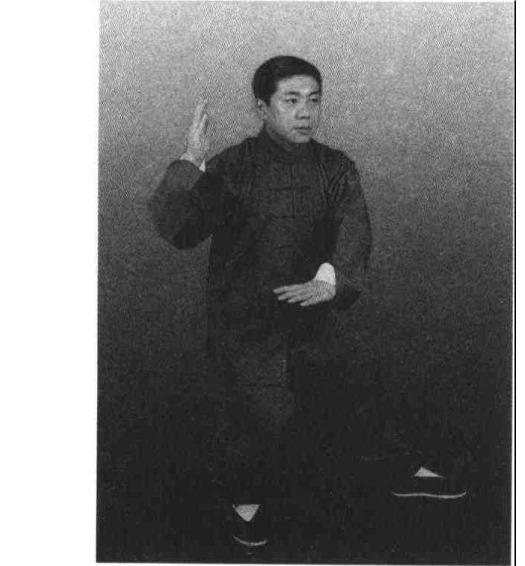
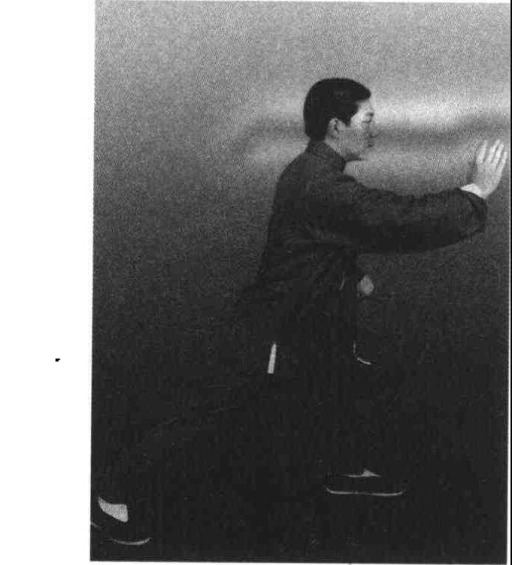
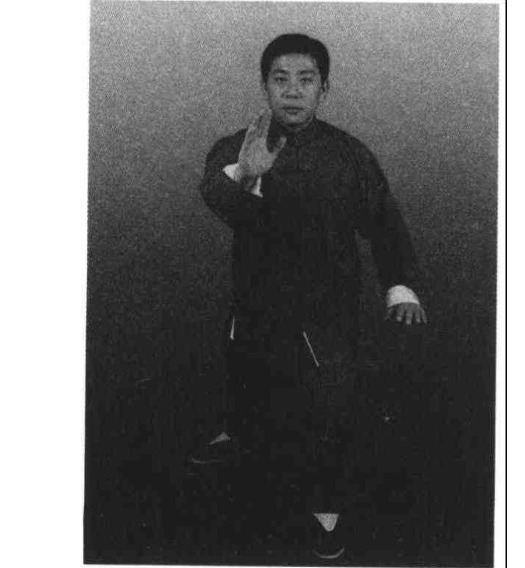
1. When the waist changes from turning right to turning left the body must not sway; otherwise the upper body will lean forward or tilt back or lean to the side, which does not meet the requirement of "the tailbone centered."
2. When stepping forward the upper body must also be upright, for the ordinary practitioner, in the course of the step, having only the crouched leg as support, will tend to push the buttocks out in order to balance the body — which does not meet the requirements of "gathering the buttocks" and "the tailbone centered."
3. Moving the right palm from below to the right upper position must be in accord with the lifting of the left foot; the body turning left and changing into the bow step must be in accord with the right palm's push out; the whole movement of Brush Knee and Twist Step must be done coordinated, round, full and soft, and must not be halting or angular.
4. When the right shoulder relaxes and sinks downward, the right shoulder must not end up lower than the left (the two shoulders must be level — and this applies throughout the whole set).
5. The arm that brushes the knee must form an arc and avoid being straight. In pushing out the right palm it must rotate slightly as it goes out, but at the settled posture the palm center must not squarely face the front but slant slightly left, nor may the left palm center squarely face the ground but must slant slightly inward; both palms must settle their wrists.
6. In the settled posture everything must arrive at the same time: one hand must not already be in place (halted) while the other is still moving, nor may the foot arrive while the hand has not. When the movement begins both hands must move; the upper hand must not move forward while the lower hand is still halted.
7. Thought and outer form must be in accord, inner and outer as one; advancing and retreating must have a certain atmosphere, with extension and compactness combined; it must not be wooden or disorderly.
(Form 7 Brush Knee and Twist Step (Left) — Requirements / Common Errors, p. 52) 1. Sink the right elbow while the right arm rotates outward, the right palm turning inward; otherwise one falls into stiffness. And in thought one must sink with the elbow.
2. The right elbow sinks and the left palm arcs upward, and this must move together with the slight right turn of the waist, meeting the requirement that "when one part moves no part is still." The right palm moves up at the right oblique angle, and the left palm falls in an arc to the front of the abdomen (palm facing down); at the same time, when the left leg lifts, one hand must not move while the other does not.
3. The right arm must not shift back at too great an angle — toward the southwest, slightly west, suffices. The turn of the body must not be too much; the front of the body turning toward the southeast, slightly south, suffices.
4. The left leg comes down forward, touching lightly with the heel first; then the body slowly turns left: the left hand brushes, the right hand slowly pushes out, and the left leg bows out — all must begin together and end together in place, only thus can upper and lower follow one another.
5. When the left leg lifts and draws inward it must not come too near the inner ankle of the right foot; rather, draw it in naturally, then extend it naturally forward and step down, achieving a step like a cat walking.
6. When turning the waist the upper body must not sway; the legs must be steady and the waist relaxed.
7. In brushing one must settle the wrist, turn the waist, and let the waist lead the hands, with elbow and wrist moving together.
8. In stepping the left leg forward the upper body must not lean forward or tilt back; the right leg that bears the body's weight must settle fully. The advancing left leg must first lift the thigh, storing force in the knee, carrying up the heel with the toe hanging naturally; then, from bent to extended, it steps out slowly, the toe changing from hanging down to slightly tilted up, the heel landing lightly first, and then the sole and the toe landing, all settling firmly.
9. The two feet in the bow stance must have a somewhat wider lateral distance (slightly narrower than shoulder-width); they must not stand on one line — only thus can one stand steadily in the settled posture.
1. Error: the right elbow sinks, but the right arm does not rotate outward and the right palm does not turn inward. The main cause is a failure to understand the extending, retracting, winding and coiling function of the sinking elbow. Therefore the movement goes straight back and forth, and the elbow easily moves away from the body and protrudes outward, exposing the ribs. Correction: taiji is ward-off force; the movement
Phần 11
VII. Technical Analysis (Seventh Posture, Left Brush Knee Twist Step — continued)
Walk the spiral: therefore the palm must rotate outward, the wrist turning and the upper arm rotating, with the elbow sinking downward.
2. Error: the right hand moves while the left hand does not. The main cause is that attention is concentrated on the right hand and the principle "when one part moves, every part moves" is neglected. Correction: the mind must be single-minded before there can be "a quiet mind directing the intention": as the right hand moves downward, the left hand must move upward at the same time, and the waist moves slightly as well.
3. Error: turning the body too far to the right — as much as 90° (the body facing south). The main cause is that the physiological and martial significance of the waist's degree of rotation is not clear. If the waist axis rotates too far, the movements of the body and limbs overshoot, so that shoulders and hips no longer match above and below. Excessive twisting of the waist takes the body off its central uprightness and easily causes breath retention. If the opponent strikes from the front while I face sideways, how can I observe his attack? So from the standpoint of martial application it is also wrong. Correction: turn about 75°, the body facing southeast-by-south, the eyes never leaving the hands, right first and then left. The method is: stop after rotating and check the degree of the turn.
4. Error: during the rotation the left hand is held against the chest, which makes the body shrink and the posture incomplete. The main cause is inattention to the requirement "relax and open so that my strength is not bent". Correction: leave room under the armpit, about the space of one fist, so the arm has room to turn and one does not trap oneself.
5. Error: the right hand, striking forward, is not drawn back to pass by the ear before going out, but is pushed sideways, far away from the shoulder. This exposes the ribs, scatters the movement, fails the martial requirement, and prevents the parts of the hand and body from combining into a single strength. The main cause is a lack of understanding of the application. Correction: the right palm moves back along an arc so that the palm passes the ear and pushes straight forward.
6. Error: when the left hand brushes the knee, the wrist is slack and the fingers hang. The main cause is insufficient attention to seating the wrist; this prevents the internal strength from reaching the fingertips and leaves the wrist powerless. Correction: lead the wrist with the elbow, seat the wrist, and brush the knee with a level palm.
7. Error: the two feet stand on a single line. The main cause is that the hip joints are not opened, so waist and legs do not look after each other. Correction: when the left leg steps forward it should shift slightly to the left, so that the lateral distance between the two feet is a little less than shoulder width; the width can be checked when the posture is settled.
than shoulder width, and the width can be checked when the posture is settled.
8. Error: in brushing the knee only the hand moves and the elbow does not. The main cause is a lack of understanding of the application. Correction: the waist should lead the elbow and the elbow lead the hand; only thus can the requirement of pouring in strength be met.
9. Error: in the left-hand brush over the knee, the arc drawn is too large or too small. The main cause is that the requirements of the application have not been deeply felt. Correction: the path of the hand should be horseshoe-shaped; it must not be too far from the knee, nor pressed against the abdomen.
Phần 12
VI. Teaching Method and Practice Method
1. Explain the course of the movement, its application and its essentials. Demonstrate from every angle in order to build up a concept of the movement.
2. Use comparison to improve the lateral distance between the feet in the bow stance: (i) with the two feet on a single line, apply a push laterally and make them move. (ii) with the two feet about shoulder-width apart, apply a push of the same magnitude laterally and compare the stability of the body. The conclusion follows: standing on a single line, the muscles of waist and legs cannot easily exert force, the support is small and the body topples easily.
3. To master "when one part moves, every part moves" well, divide the practitioners into groups of 2–3 and have them watch one another to see whether the two hands move at the same time and whether the two hands arrive at the same time.
4. Practice for distinguishing substantial and insubstantial. As a group, support on the right leg, lift the left leg, extend it slowly forward, lift it slowly again, then set it down lightly … repeat; rest and relax, then repeat again, so that the practitioners fully experience substantial and insubstantial. They may also work in groups of 2–3, watching one another's degree of substantial/insubstantial and its merits and faults.
5. When practising the joining of shoulder and hip, the turning of the waist and hip and the bowing of the leg, the hips and shoulders must advance together, matched above and below, maintaining "the tailbone centred and upright".
6. Repeatedly perform the left bow stance, the left-hand brush over the knee, and the right-hand push, experiencing the correct brushing action and the simultaneous arrival of the two hands.
1. In this movement one must first do the brush-knee-and-push-palm well, especially the brush over the knee. Ordinarily the brush is done with the hand alone; but in fact, when the opponent strikes with hand or foot, if my brush lacks strength it cannot sweep aside the opponent's hand or foot.
Therefore the brush is not done with the hand alone: the strength of the elbow must be added, and further still the strength of the waist. For this reason the brushing action is one in which the waist leads the elbow and the elbow leads the hand.
2. The forward strike of the right hand is made together with the brush, so that the parts of the body do not move singly but combine into a single strength; hence hand and foot should arrive at the same time.
3. Tai chi chuan sets store by quietness, relaxation, uprightness and roundness, by evenness, ease, lightness and steadiness. Therefore, in practising the form one must first put aside distracting thoughts, concentrate the spirit, relax inside and out, so that blood and breath flow freely, the body is centred and upright and the movements are even. Hence, when one begins to practise, the teacher brings these basic requirements forward step by step, so that the practitioner masters and grasps them one stage at a time.
Eighth Posture: Hand Strums the Lute (Shou Hui Pi Pa)
Phần 13
I. Application
Continuing from the previous posture. Suppose the opponent uses his right hand to strike my chest; I immediately hollow the chest and bend the right knee, sitting solidly upon it. The left foot is then lifted and drawn back, then the heel touches down, gathering and storing the momentum. At the same time the right hand withdraws, closes and sinks, passing round beneath the opponent's wrist — that is, I stick my wrist to his wrist and, with the right hand, gather and close the inside of his wrist, plucking and pulling it down to the lower right. The left hand at the same time closes and draws up from the front left, sticking and adhering the palm and wrist to his elbow in the shape of one cradling a lute, carrying out a left rending and a right plucking. This method stores my own momentum in order to watch for his change; therefore is called Hand Strums the Lute.
Phần 14
II. Course of the Movement
The whole weight gradually shifts onto the left leg; the right foot lifts slightly and comes down essentially in its original place (slightly forward), the ball of the foot touching first; the whole weight gradually shifts onto the right leg and the body gradually turns right about 45°; the left foot lifts slightly and goes back and then forward, again coming down essentially in its original place, heel touching down with the toes slightly raised and the knee slightly bowed, forming a left empty stance. At the same time, the left palm, following the turn of the body, lifts forward along an arc, the arm rotating slightly outward as it lifts so that the palm faces right, the index finger level with the eyebrows. The right palm likewise follows the turning body slightly upward, then withdraws downward and back, the arm rotating slightly outward so that the palm faces left, coming to rest inside the left elbow, the right thumb level with the left elbow; the two palms face each other from front to back, the chest angled toward the front as though cradling a lute, the eyes looking level ahead past the left palm (see the figures on this page).
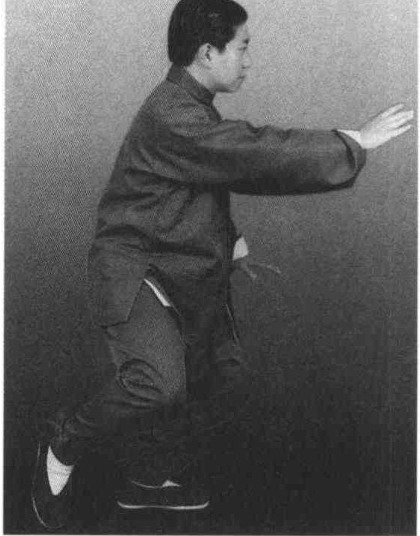
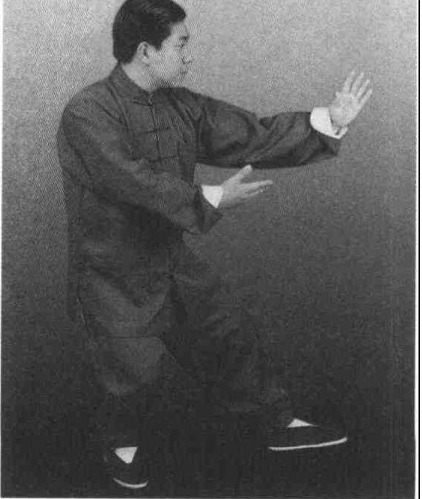
1. In changing from Brush Knee Twist Step into Hand Strums the Lute, the right foot repositions slightly forward as it comes down; whether the weight moves forward or settles back, the upper body must be upright, never leaning forward or backward; the requirement "tailbone centred and upright" must be met — this increases the power of the downward pluck.
2. The right leg sits solid; the left hand lifting diagonally, the right hand withdrawing, and the left foot drawing back must all be carried out together with the turning of the waist.
3. When the right palm withdraws, the waist is the axis and one must relax the shoulder, drop the elbow and sink the wrist, drawing back joint by joint, letting the body lead the hand; one must not withdraw the right palm first while the waist, shoulder and elbow remain unmoving.
4. Before drawing the right hand back it should sink slightly; after drawing back it closes forward and inward, the palm held upright with a slight outward slant.
5. After the left hand has lifted diagonally upward it should draw in slightly toward the front of the body, then close forward.
6. The left foot extending forward and stepping down must be carried out together with the closing of the two hands.
1. Substantial and insubstantial must be clear. The whole weight shifts onto the left leg; the right leg lifts slowly and comes down slightly forward; the weight slowly shifts back, sitting solidly on the right leg; the left leg lifts and is set down lightly forward. All the above movements require one leg to support, sitting solid and steady, before the other leg can be nimble — only thus is there no double-weighting.
2. The crotch must be both rounded and hollow; it must not be pinched into the sharp inverted-V of the character for "person"; the hip roots must be opened and spread.
3. The elbow does not leave the ribs, and the elbow does not stick to the ribs. Therefore the elbow must not be raised, nor sunk so far that it presses against the ribs; room must be kept under the armpit.
Phần 15
V. Errors That Are Easy to Make, Their Causes, and How to Correct Them
1. Error: the upper body leans forward or backward. The main cause is that when the weight moves onto the left leg and the right leg lifts, the left leg is not yet sitting solid; in order to keep the body balanced, the body is tipped forward. Again, when the weight sits on the right leg and the left leg steps forward, the right leg is not solid and the right hip root has not drawn in and rotated slightly downward; to keep balance the body falls backward. Correction: whether lifting the rear leg or stepping the front leg, the body must be straight and correct — from the crown of the head through the trunk to the perineum it must always form a single line, achieving "above and below essentially one line".
2. Error: the centre of gravity rises and falls too much. The main cause is that when the right leg lifts the left leg straightens, and when the left leg is set down the right leg sits too deep. Correction: when lifting the right leg, sit steady on the left leg, lift the thigh slowly, store strength in the knee, carrying the heel up; let the ball of the foot touch first, then the heel. When stepping the left leg, sit solid on the right leg, first lift the thigh, store strength in the knee, and let the knee go from bent to extended, extending slowly, the heel landing. The key is that the leg that is sitting solid must not perform an extending action, otherwise the body's centre of gravity will rise.
3. Error: the front and rear feet land on a single line, so that the body does not stand steadily. The main cause is an insufficient grasp of the idea of a stable lower body. Correction: after the feet are placed, check whether the lateral distance between them meets the requirement. This also widens and rounds the crotch, which helps blood and breath to flow freely and makes the change from substantial to insubstantial nimble.
4. Error: in the settled posture the upper body faces directly front. The main cause is an insufficient understanding of the application. This posture requires a left rending and a right plucking; facing directly front makes it inconvenient to issue force, does not accord with the folding strength of tai chi chuan, and easily leaves one unable to advance or retreat and inflexible in body when attacked. Correction: turn the body right about 45°, so that it faces the front obliquely; hence, when the left hand lifts diagonally and the right hand withdraws, this should be coordinated with the turning of the body.
5. Error: the path along which the hand moves does not meet the requirement. For example, some closing too near and extending too far forward, some closing with the position overshot, some with a closing but no extending action, some with the two hands too low or too high, some with the right hand between the wrist and elbow of the left arm, some with the right hand between the shoulder and elbow … The main cause is an insufficient understanding of the application. Correction: the opponent strikes my chest with his right hand; my right wrist sticks to his right wrist and my left hand sticks to his upper arm. Therefore the left hand should be a little higher than the right, and the front-to-back distance between the two hands should be about the length of one forearm.
Phần 16
VI. Teaching Method and Practice Method
1. Explain the path and position of the hands, and demonstrate (front view and side view).
2. Practise together as a group following the leader.
3. Broken-down practice: (i) from Left Brush Knee Twist Step into Hand Strums the Lute, sit solid on the left leg while the right leg lifts and steps back; the weight shifts back, and one experiences substantial and insubstantial (lifting slowly, stepping down slowly). (ii) Sit solid on the right leg, lift the left leg and step out; the left heel lands lightly, and one experiences substantial and insubstantial. (iii) One may repeat the practice both landing and not landing the foot, training the left leg and the right leg alike.
4. Mnemonic: the weight moves forward, lift the right leg, the right foot steps back a half step; the weight moves back, lift the left leg, left rend and right pluck, Hand Strums the Lute.
5. Comparison method: working in groups of 2–3, or standing in two facing rows, sit solid and support on one leg while the other leg lifts and extends forward without landing; compare how long the position is held, and compare how many times the leg can be drawn back and re-extended. In the other leg, compare lifting the leg as the weight moves forward, and stepping the right foot down as the weight moves back. This both gives a feel for substantial and insubstantial and strengthens the legs; but the number of repetitions and the time must be set according to age and constitution, with the principle of never holding the breath.
6. Progressive method: (i) the right leg lifts and steps down, the weight moving from forward to back, the two hands sinking and lifting slightly. (ii) To the above, add the left hand lifting diagonally and the right hand withdrawing. (iii) To the above, add lifting the left leg. (iv) To the above, add the two hands extending forward and closing, and the left leg stepping forward and landing. In practice the movement may be simplified — consolidate each bit as it is learned, which makes practice easier.
7. Paired application drills: A — strikes B's chest with his right fist; B — from Left Brush Knee Twist Step takes up Hand Strums the Lute, but without the rending or the plucking (when proficient, a slow, light rending and plucking may be added).
8. Practise repeatedly: the left hand lifts diagonally, the right hand withdraws, then the two hands close forward again, experiencing the path along which the hands travel.
Phần 17
VII. Technical Analysis
1. In this movement support on a single leg is very important; therefore the practices concerned with clearly distinguishing substantial and insubstantial should be done often.
2. In this movement my two wrists stick to the opponent's elbow and wrist, storing my momentum in order to watch for his change — "if he does not move, I do not move; if he moves but slightly, I move first." Left rending and right plucking are issued following me. Therefore, in practising the form one must have "a quiet mind directing the intention", striving to achieve "the intention moves, the form follows". Hence one must "in posture after posture keep the mind weighing the intention" and never treat the movement as simple and so do it carelessly.
3. In moving forward and back one must maintain the body's centre of gravity well; the hands and feet must be well coordinated, matching above and below, neither first nor last. As the right leg lifts slightly, the right hand relaxes the wrist and turns the palm downward; the left hand must be in front, and in this way balance is easily maintained and the centre of gravity steady.
4. The left leg or the right leg half-squats, bearing the whole body's weight — this makes considerable demands on the quadriceps at the front of the thigh. At first there will be a slight trembling and a slight swaying of the upper body; but after repeated practice the strength of waist and legs increases and this no longer occurs, and meanwhile the constitution is strengthened.
5. That no part, inside or outside, is unrelaxed is a principle. First the muscles and joints: in this movement the elbows easily press against the ribs, whereas there should be an empty space under the two armpits and the elbows should not stick to the ribs. This lets the channels flow freely and blood and breath be harmonious, and then further allows the central nervous system and the internal organs to relax at the same time. This method of training, relaxing the whole body inside and out and joining inner and outer, benefits health and disease prevention and also meets the requirements of martial application.
6. Whether advancing or retreating, leave room to spare. The right leg steps essentially down in its original place; one must not step too far, otherwise the left foot cannot be drawn back slightly and the storing and gathering of momentum is impaired.
7. Note that double-weighting makes one sluggish, while weighting to one side makes one nimble. In the settled posture the right leg is substantial and the left leg insubstantial; if the left leg lands bearing too much weight, double-weighting results and turning can no longer be nimble.
Ninth Posture: Left and Right Brush Knee Twist Step
Phần 18
I. Application
See the Seventh Posture, Left Brush Knee Twist Step (the Right Brush Knee Twist Step is the same with the directions reversed).
1. Left Brush Knee Twist Step: the waist turns slightly right, the right hip root draws in slightly, the left leg lifts and the whole weight gradually shifts completely onto the right leg. As the waist turns, the right shoulder relaxes downward and the right elbow sinks, naturally carrying the right palm down along an arc past the side of the right hip; as it descends the arm rotates outward so that the right palm gradually turns face up. At the same time the left palm, following the turning of the waist, moves forward and inward past the right chest and the front of the abdomen, descending along an arc; as it moves the left arm rotates inward so that the palm turns face down. The eyes follow the turning waist, shifting level ahead, with the gaze attending to the right palm (see the three figures at the foot of this page). The above movement is the same as the earlier Left Brush Knee Twist Step (see the corresponding figures in the Seventh Posture, pp. 51–52).
2. Right Brush Knee Twist Step: (i) The waist gradually turns left; with the left foot pivoting on the heel, the toes turn out about 45°. As the body turns, the left palm moves gradually along an arc to the left and back, the arm rotating outward so that the palm turns face up; at the same time the right palm, following the turn of the body, moves from the front inward and along an arc down to the left, the arm rotating inward so that the palm turns face down. The eyes follow the turn of the body, shifting level ahead, with the gaze attending to the left palm (see the fourth figure on this page). (ii) The whole weight gradually shifts onto the left leg, the right foot lifts and moves forward, and the body continues to turn slightly left; as the waist turns, the left palm moves along an arc up to the left diagonal, and the right palm continues to descend along an arc to the left.
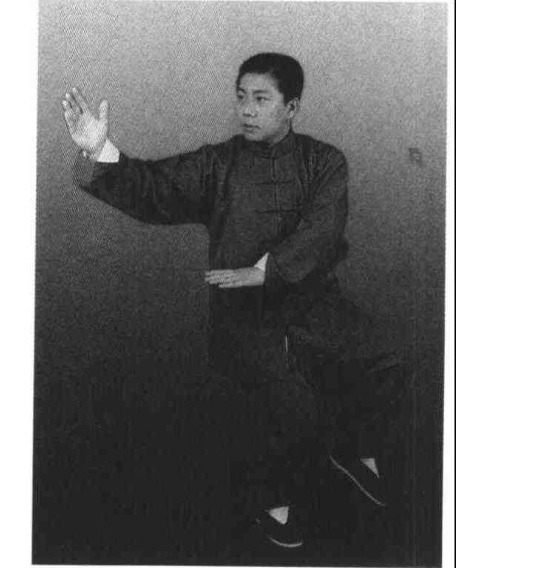
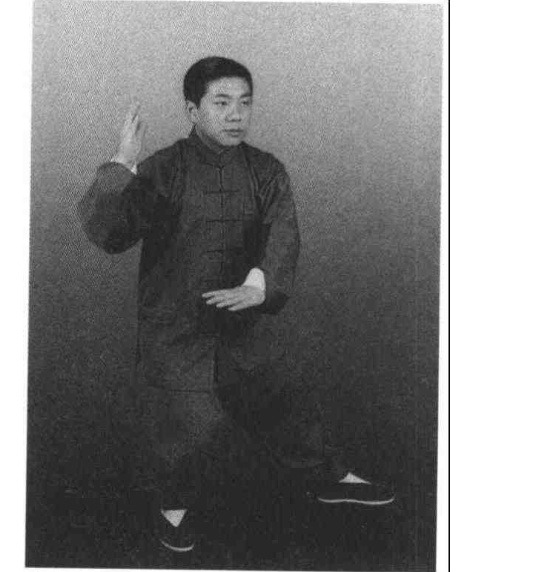
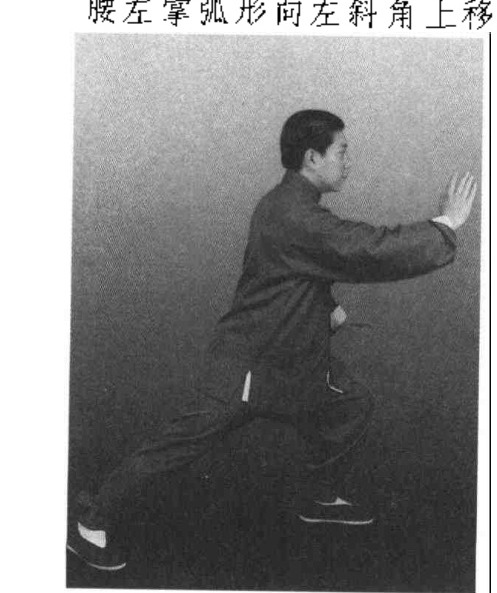
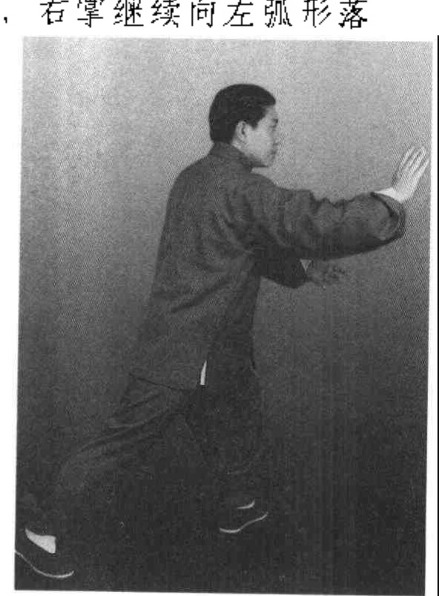
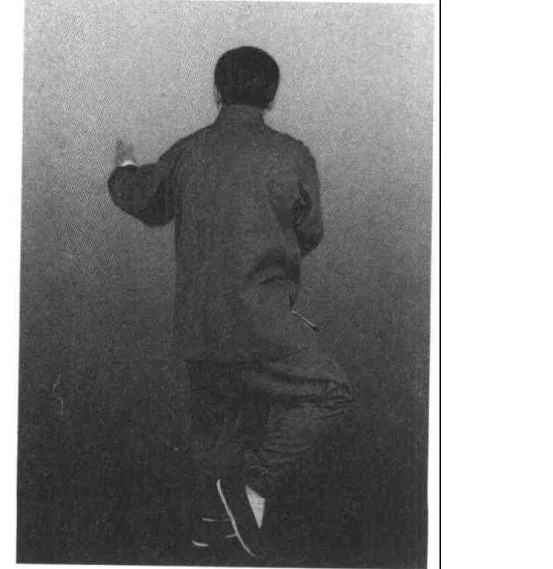
in front of the abdomen; the gaze attends briefly to the left palm and then shifts to the right palm (see the figure on p. 60). (iii) The right foot lands forward, heel first; as the weight gradually shifts onto the right leg until the whole foot is set down, the body gradually turns right at the same time, bowing the right leg and pushing back with the left, forming a right bow stance. At the same time the right palm follows the turning body downward, brushing past the front of the right knee in a horseshoe shape to beside the right hip; the left palm also continues upward along an arc as the weight moves forward and the body turns right, pushing forward past the side of the left ear. The moment the eyes see the right palm brush past the knee they look level ahead, the gaze attending to the forward strike of the left palm (see figures 43 and 44).
3. Left Brush Knee Twist Step: the movement is the same as the Right Brush Knee Twist Step, simply with left and right reversed (figures 45–48 on this page; they repeat, left-right reversed, the movements shown in figures 33, 34 and 35 of the Seventh Posture).
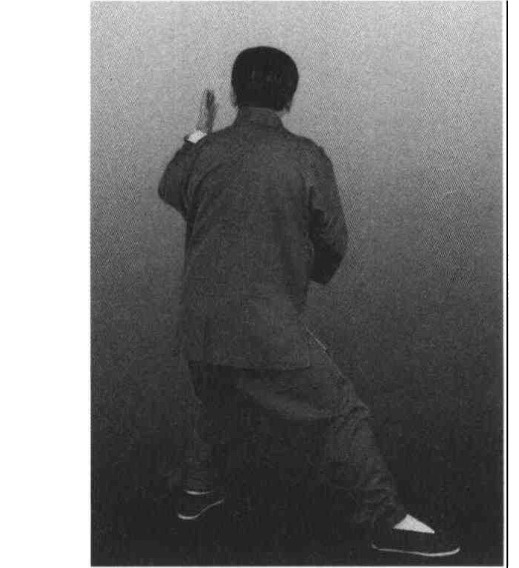
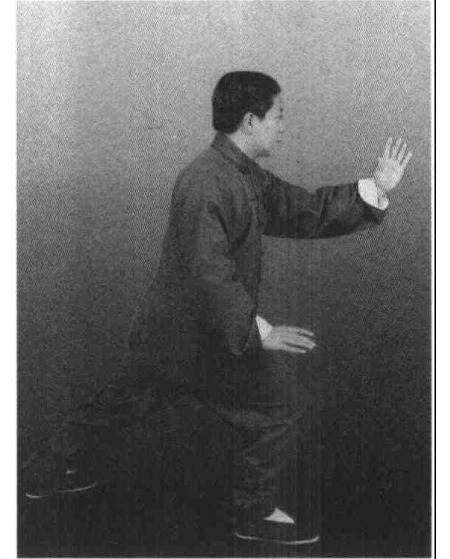
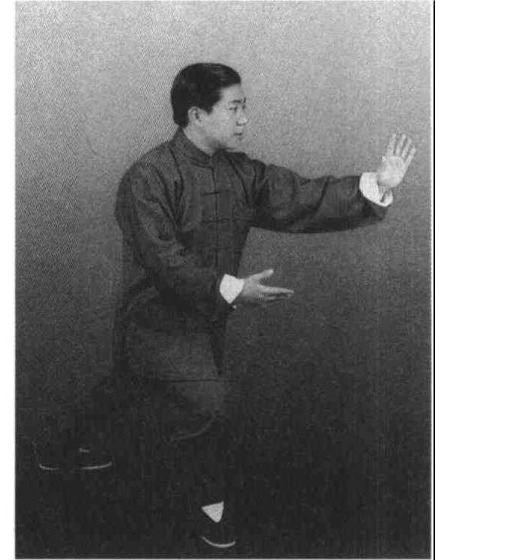
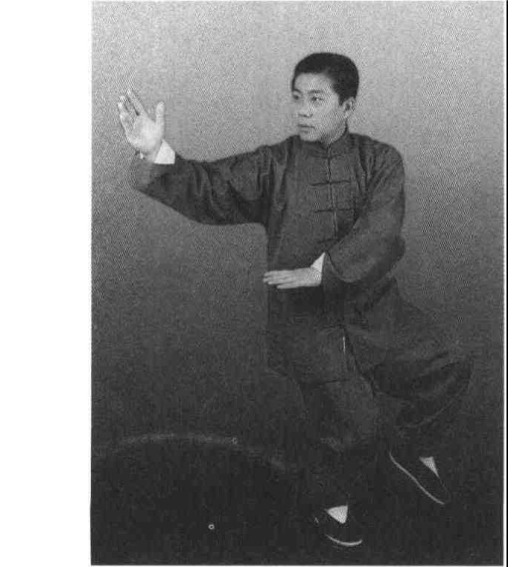
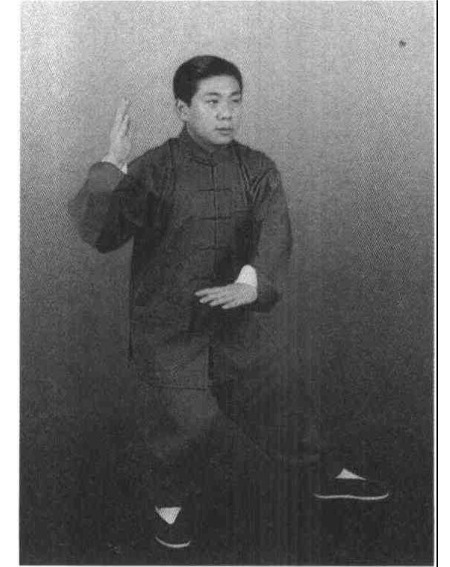
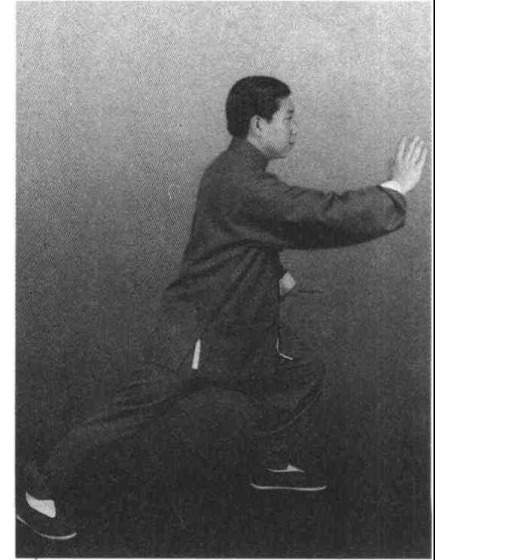
Phần 19
III. Essentials
1. The essentials are the same as those of the earlier Left Brush Knee Twist Step.
2. In practising the Yang-style form, the front and rear feet of the bow stance must not stand on a single line, because this easily produces instability of the centre of gravity and an awkward feeling; the rear foot and the front foot must both be separated laterally (by about the width of the shoulders). Hence, whenever one steps forward or steps back (as in Step Back to Repulse the Monkey), one should take care that the landing position is somewhat opened out, so that it appears steady — "only so can one, advancing or retreating, gain the opportunity and the position."
3. In changing from left bow stance to right bow stance, the footwork requires: in advancing and retreating, in changing, substantial and insubstantial must be clearly distinguished; when the left is insubstantial the right is substantial, when the left is substantial the right is insubstantial; in advancing and retreating the body and waist must change along with it. The knee of the substantial leg must be made more stable, yet without losing its nimbleness; the standing posture must be extremely stable, the step light and nimble, striving to "step as a cat steps", never double-weighted and sluggish; the foot must land light, nimble and steady, never swaying.
4. The turning of the waist must lead the hands. When the two hands are about to finish moving to the left (or right) diagonal rear, one should turn the waist to lead one hand in brushing and the other in striking forward, embodying "the ruler is in the waist" and "power issues from the spine".
5. In going from the Left Brush Knee to the Right Brush Knee, as the right hand moves the left hand must turn at the same time, achieving "when one part moves, every part moves".
6. In brushing, the waist leads the elbow, the elbow leads the wrist, and the wrist must seat downward.
7. The front foot faces squarely in the direction of advance (east); the rear foot is at a slant. In taking up the next brush knee, first turn the waist and turn the toes outward; then the position of the leg is in order.
1. The change of the bow stance requires substantial and insubstantial to be clearly distinguished. Taking the change from Left Brush Knee Twist Step to Right Brush Knee Twist Step as the example: the right foot lifts lightly, moves forward, and extends slowly forward; before the right heel lands, the left leg must bear the whole weight of the body — only thus can the substantial and insubstantial of the legs be distinguished.
2. The palm that strikes forward must rotate: that is, in the course from back to front the wrist must turn, advancing in a spiral.
3. In the turning of the upper body the substantial and insubstantial lie in the waist, and secondarily in the chest; the alternation of drawing in the left and right waist creases is used to distinguish substantial and insubstantial. If the turn is insufficient, the two arms that of the movement is restricted; if the turn is too much, "scattering" results.
4. In the linking of "left–right–left" brush knee, there must be no pause: the moment one settled posture is reached, one blends fluidly into the next brush knee; yet one must not go into the next brush knee before the hand has arrived and the knee has bowed fully.
Phần 20
V. Errors That Are Easy to Make, Their Causes, and How to Correct Them
1. Error: turning the body too much. The main cause is that shoulder and hip do not form a vertical line; in turning left and right, shoulder and hip should stay aligned vertically above and below. If the body turns too much the shoulders turn too much, which destroys the correctness of the body and produces an awkward feeling. Correction: the direction in which the line joining the two shoulders points is also required to be the direction of the two hips.
2. Error: in going from Left Brush Knee into Right Brush Knee Twist Step, the left hand has not turned over but merely moves as an upturned palm slanting back and up. The main cause is that in initiating movement one does not lead the elbow with the hand and the shoulder with the elbow. Correction: "the upper arm follows the wrist, the wrist follows the palm", forming a circle at every point. Therefore, when the right hand moves the left hand should turn palm upward, moving along an arc up to the left diagonal.
3. Error: in going from Left Brush Knee into Right Brush Knee, the right hand moves while the left hand halts and does not move. The main cause is a shallow feel for "when one part moves, every part moves". Correction: as the waist turns and the right hand moves inward, along an arc down to the left, the left arm must rotate outward so that the palm turns face up and moves to the left and back.
4. Error: one leg has not yet sat solid when the other leg steps out, and the weight moves forward too quickly, producing double-weighting, and the movement is also not even. The main cause is weakness in the supporting leg, and the hip root on the supporting side not drawing in slightly, so that the leg has not sat steady. Correction: only after the supporting leg has sat steady may the forward-stepping leg extend slowly, and before it lands the weight must not shift forward.
5. Error: the three brush-knee twist steps have no settled posture that is "as if stopped yet not stopped"; instead the two arms go on drawing arcs forward without pause. The main cause is a shallow understanding of continuity and roundness-and-liveliness. Every posture has a beginning, a continuation, a turn and a close; once a posture is complete, it must close at every point. Correction: every settled posture must have a moment of "as if stopped yet not stopped", so that the spirit gathers and concentrates; only thus can the conditions for the next posture be created. Therefore, in link- ing, both falling short of and overshooting in roundness-and-liveliness are incorrect.
6. Error: the two eyes always stare fixedly straight ahead. The main cause is a shallow understanding of "the eyes follow the hands as they turn, and the light glances in all four directions". That is to say, hand arrives and eye arrives, and to look ahead is right; but one must not stare blankly ahead. Correction: the eyes must turn with the principal hand or foot, achieving "eye arrives where hand arrives".
Phần 21
VI. Teaching Method and Practice Method
1. Explain (laying stress on the lateral distance between the feet and on "when one part moves, every part moves") and demonstrate.
2. At each settled posture, stop and check the lateral distance between the feet. Have groups of 2–3 check and correct one another; one may also practise as a group and stop to check oneself.
3. Paired application drills: in pairs. A — strikes B's middle and lower body from the front with fist or foot; B — sinks the body down, sits solid on one leg, steps the other leg one step forward, one hand parries A's hand or foot aside and the other presses toward his chest. Left-right-left, three times in succession.
4. Progressive method — from Left Brush Knee Twist Step into Right Brush Knee Twist Step: (i) repeatedly turn the left toes outward. (ii) While the left toes turn outward the left palm turns up, the right hand draws back along an arc to the left, the weight moves forward and the right leg lifts. (iii) As above, the two hands continue moving, the right leg extends slowly forward and the heel lands lightly, while the left hand moves diagonally back and up and the right hand moves down. (iv) As above, bow the right knee into a right bow stance, while the right hand brushes the knee and the left hand pushes and presses forward.
Improve one section, add one section, like going up a staircase — one more step up from where you already are, until the whole movement is learned and mastered.
5. Supplementary practice: with the two hands hanging naturally, do the bow stance forward step repeatedly, to improve the ability to command substantial and insubstantial, strengthen the legs, and thereby improve health.
6. In practice one should repeatedly perform the linking of left and right brush-knee twist steps.
1. The three brush-knee twist steps cover both left and right directions, which benefits the balanced development of the body and its all-round activity.
2. Beginners, faced with movements that are identical but reversed in direction, very easily get muddled, so the right brush-knee twist step should be practised more.
3. The three brush-knee twist steps should embody what the Treatise on Tai Chi Chuan says: "The long form is like the great Yangtze and the ocean, ever flowing without cease." Each must follow on from the last, round, lively and continuous, with no pause (and so it should be with every movement in the whole set).
4. In the three steps forward, the rear leg goes from lifting to extending forward to landing lightly, all carried out evenly and slowly; this not only exercises the muscles of the straight supporting leg but, through the bending and extending of the forward-stepping leg, also exercises the muscles of thigh and calf and the muscles of waist and hip.
Tenth Posture: Hand Strums the Lute The explanation of the movement is the same as for the Eighth Posture; see figures 49 and 50 in the left-hand column (the same as figures 36 and 37 of the Eighth Posture).
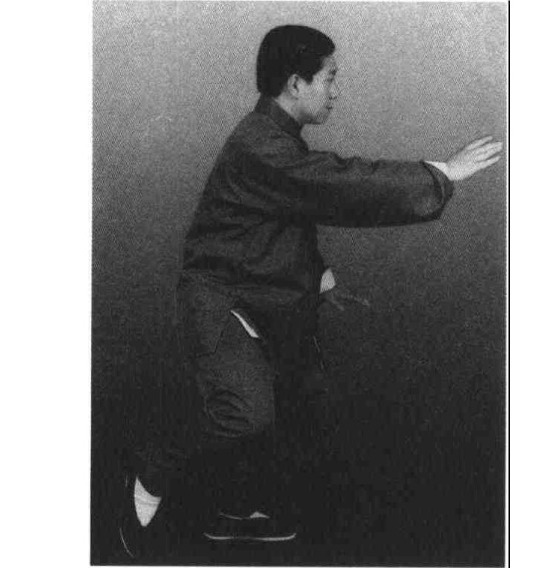
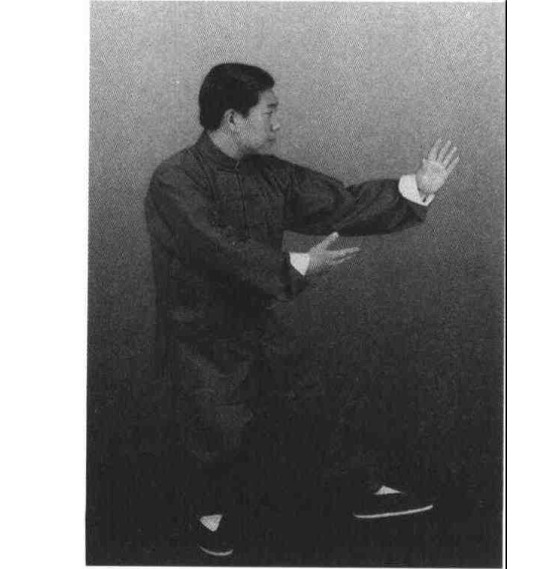
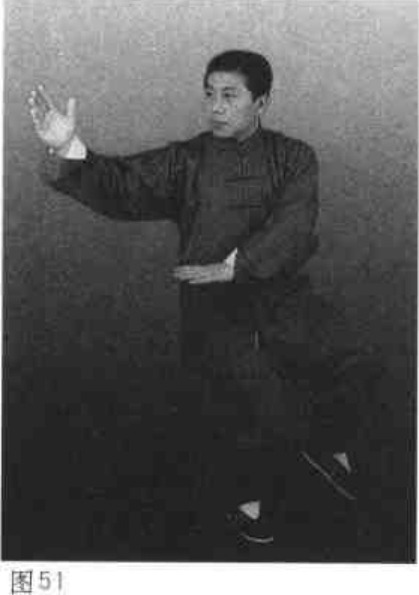
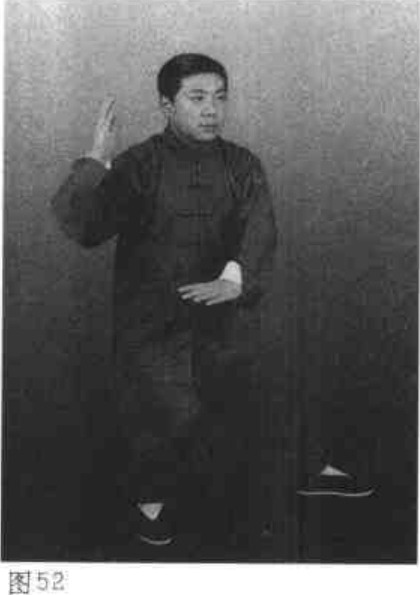
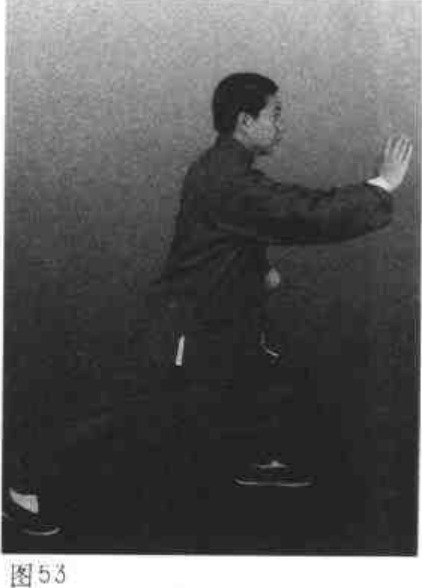
(This page also carries an unnumbered close-up photograph of the hand: the palm rotated outward, the four fingers spread, the thumb drawn in — the seated-wrist palm shape. It bears no printed figure number, so it receives no figure note.)
Eleventh Posture: Left Brush Knee Twist Step The explanation of the movement is the same as for the Seventh Posture; see figures 51–53 at the head of this page (the same as figures 33–35 of the Seventh Posture).
Twelfth Posture: Step Forward, Deflect, Parry and Punch
Phần 22
I. Application
Continuing from the previous posture. If the opponent strikes with his right hand, I immediately opens the left foot slightly to the left side and the waist accordingly turns left; the left hand then turns over backward to beside the left chest, the palm slanting downward. The right hand, wrist turned down, follows the turning body to the front of the left ribs and closes into a fist; turning the wrist, the waist turns right and the right fist follows the rotation to below the right ribs — this is called the "ban" (deflecting). At the same time the right foot lifts and is set down solidly to the right side; the waist and hips relax and sink, and my left hand brushes the opponent's right arm across to my left, whereupon the left hand strikes forward flat and straight with the side of the palm — this is called the "lan" (parrying). The left foot at the same time lifts and steps out one pace into a left bow stance, and the right fist, in unison with the action of waist and legs, punches forward — this is called the "chui" (the punch). The whole subtlety of this punch lies in neutralizing the opponent's right punch: first using my right wrist to stick to his right wrist and deflect it from above the left ribs to below the right ribs. At this point, fearing that the opponent may withdraw his arm and change step, I immediately send my left hand straight forward, following the step, containing an opening strength. When parrying his right hand, I at once drive my right fist at the opponent's chest, so that he has no time to evade and must be struck by me. Hence the whole subtlety of this punch lies in the correct method of the "deflect" and the "parry".
The slanting variation: if the opponent's right palm strikes with especially great force, I take advantage of his momentum and, listening to his strength (high, low, left, right), follow it at random — my right arm deflects to the right, my left hand parries his right forearm to the left, and I then strike him hard with my right fist.
Phần 23
II. Course of the Movement
1. The body gradually turns left, the left toes turn out 45°; the weight then gradually moves forward onto the left leg, the right heel leaves the ground and the step begins. As the waist turns, the right palm moves naturally along an arc down to the left, as low as the ribs, changing into a fist as it moves, and the right arm rotates inward so that the fist faces down; the left palm also moves slightly back as the waist turns. The gaze attends to the right hand moving down, but one must not bow the head (see the first figure in the left-hand column).
2. The whole weight gradually shifts onto the left leg, the right leg lifts and moves forward; at the same time the right fist goes along an arc to the left past the front of the left ribs and up to the front, and the left palm draws an arc upward (no higher than the chest), the arm rotating slightly inward into an upright palm as it arcs, so that the palm slants to the right. The gaze attends briefly to the right fist, then turns level ahead (see the second figure in the left-hand column).
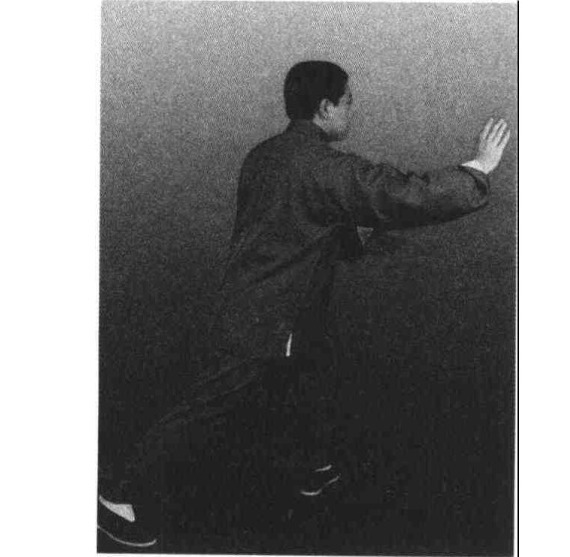
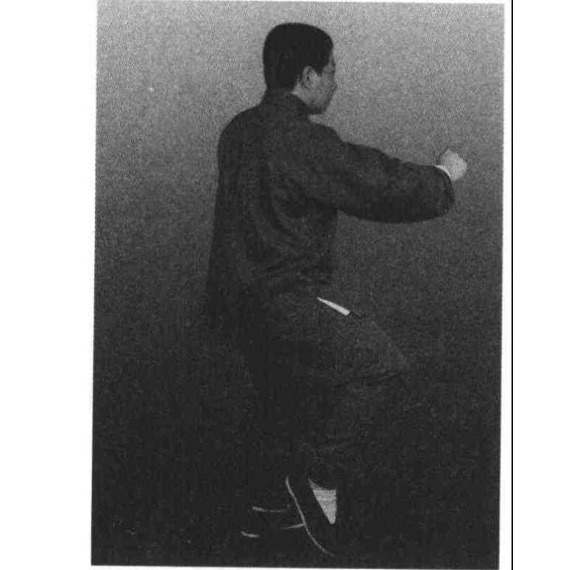
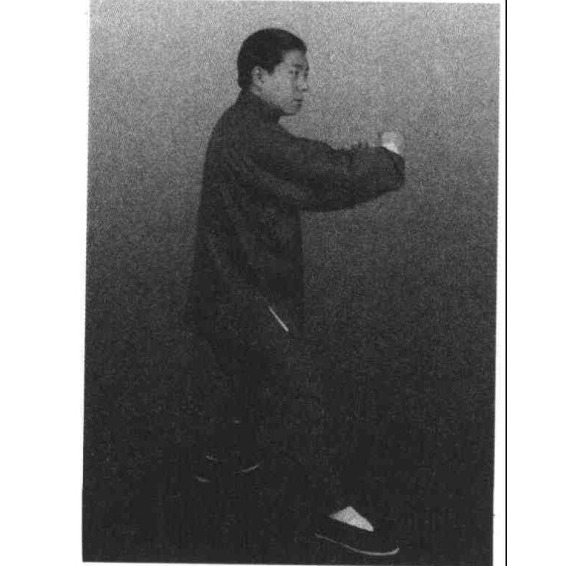
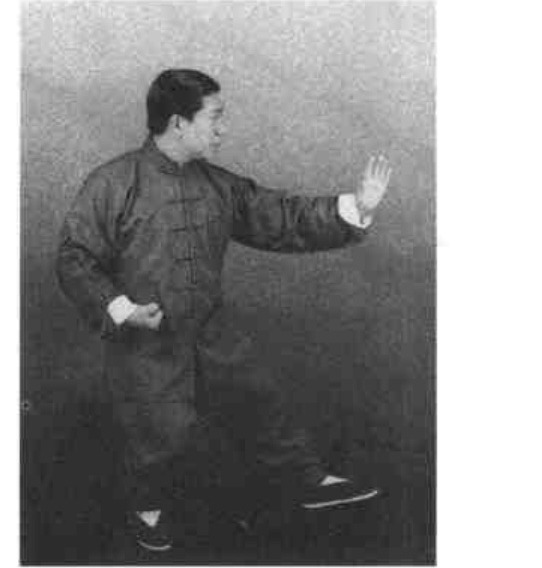
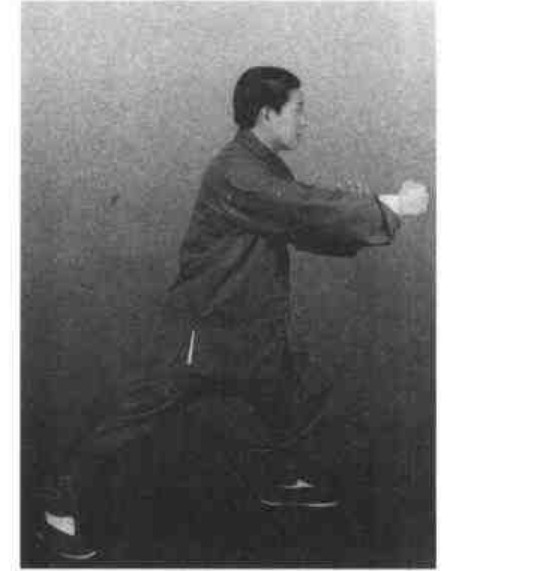
3. The body gradually turns right (to face east); the right foot steps out one pace to the right front (slightly toward the southeast), heel touching down first with the toes turned out, At the same time the right fist deflects out forward and to the right past the chest, the arm rotating outward as it deflects so that the fist centre gradually turns over and the fist eye faces up. The left palm closes in toward the right hand, its heel resting against the inner side of the right wrist; as it deflects out the two hands are about level with the shoulders. Immediately the ball of the right foot is set down solidly, the whole weight gradually shifts onto the right leg, the left leg lifts and moves forward, and the waist gradually turns right at the same time. As the waist turns the right fist gradually draws back along an arc to the right, the right arm rotating outward so that the fist centre gradually turns up; the left palm likewise follows the turning waist and parries forward past the right inner side (see the first and second figures in the left-hand column).
4. The left foot steps one pace forward, heel touching down first; at the same time the body continues to turn right, and as it turns the left palm continues to strike forward flat and straight (with the side (This page also carries an unnumbered wide photograph: Fu Zhongwen in a light practice suit demonstrating the deflect-and-parry posture from the front, with the left hand pressing the right wrist. It bears no printed figure number, so it receives no figure note.)
of the palm upright), the right fist drawing back along an arc to beside the waist with the fist centre facing up (the two hands drawing apart, one forward and one back) (see the first figure on this page).
5. The weight then gradually shifts onto the left leg until the whole foot is set down; the left leg bows and the right leg pushes back, forming a left bow stance. At the same time the body gradually turns left, and as the waist turns the right fist punches forward, the fist eye gradually turning to face up; the left palm draws back slightly toward the chest, seating the wrist, the fingertips slanting upward and the palm facing right, moving to a point on the middle of the right forearm nearer the wrist, as if touching yet not touching (see the second figure on this page).
Phần 24
III. Essentials
1. In the successive steps forward, one must "step as a cat steps", and the speed must be even, matching above and below. The body must be straight and correct, never slanted, never leaning forward or back.
2. The right foot steps to the right front; this step is required to be rather wider than an ordinary step, but one must avoid the upper body tipping to the right as the right foot steps.
3. The movements of the four limbs must turn with the waist. The right palm arcing to the left and down is precisely the turning of the body to the left. The right fist arcing and deflecting forward is precisely the turning of the upper body to the right; the right fist punching forward is precisely the moment when the upper body turns left and the left leg bows while the right leg pushes back.
4. When the right fist deflects out it must not be too far from the body, and care must be taken not to raise the elbow.
5. In punching out one must "let the fist issue from the heart" — that is, not extend it at random but strike with deliberation, so that inner and outer are as one.
6. In parrying, hand and foot must arrive together, matching above and below.
7. The fist must be closed naturally and firmly, not clenched with force (and so with the whole set), but it must not be a hollow fist either.
1. At the point where the punch lands (the settled posture) the back of the fist must form a straight line with the forearm; it must not be bent inward or turned outward, otherwise the wrist is easily injured when a resisting force strikes it.
2. Substantial and insubstantial must be clearly distinguished. The left foot must turn out and sit solid before the right leg is gradually lifted and brought forward; at the moment the right heel lands the weight is still on the left foot, and the weight must then be moved forward slowly — in this way the step will not drag weight with it.
3. The head must be straight and upright and must have the lifting strength — that is, the spirit runs through to the crown; but the head and neck are not exerted strongly, it is not a hard pushing upward, and forcing the neck makes blood and breath not flow freely; hence one must naturally "let the nape lift the crown".
4. In the parry the left hand is in front and the right fist behind, in opposite directions but answering each other; one must achieve "drawing apart and lengthening, seeking the straight within the curved".
5. The deflect is a circling movement along an arc — "one marvellous hand makes one tai chi". Within this circle there must be both yielding and firm, both insubstantial and substantial, firmness and yielding aiding each other, substantial and insubstantial interpenetrating — it is not a circle suddenly drawn in the middle.
Phần 25
V. Errors That Are Easy to Make, Their Causes, and How to Correct Them
1. Error: when deflecting, the right fist circles down in too big a loop. The main cause is an insufficient grasp of the martial requirement of the "deflect". Correction: the action should use my right wrist to deflect the opponent's right wrist from the left ribs across to the right ribs; so the right elbow should be the pivot and the fist should go down to the left, passing from between the left ribs, turning the wrist as the waist turns right, over to below the right ribs.
2. Error: the fist and the waist fall out of step — in the "deflect" only the hand moves and the waist does not, and in punching out the waist is not used to drive it either. The main cause is insufficient attention to "at every moment keep the mind at the waist". Correction: one must carefully experience "palm, wrist, elbow and shoulder, back, waist, hip, knee and leg — nine joints above and below, and every joint issues from the waist". Hence raising a hand or stepping a leg must all be driven by the waist; the movement of the hand alone cannot neutralize an incoming punch.
3. Error: in the "deflect" the right fist goes from the lower left forward, and before the movement is finished the right arm is drawn back. The main cause is an insufficient understanding of the application. With the opponent's right fist striking straight forward, if my deflecting movement goes from the lower left forward, then the opponent's right fist is still in front of my body and I am still under attack. If I then deflect to the right, the opponent's right fist is beside my body, and because the straight-striking fist has been carried left and then right by me, its strength is neutralized by me, creating the conditions for my own forward attack. Correction: the deflecting movement should go from between the left ribs to below the right ribs.
4. Error: the deflecting movement is too low. The main cause is a failure to understand the application. Because the opponent's punch comes at the chest and ribs, if I circle in front of the abdomen I do not accord with the actual situation of the neutralization. Correction: the right fist and left hand should be about level with the chest.
5. Error: hand and leg fall out of step — in the "deflect", the "parry" and the "punch" there is no support from the legs. The main cause is inattention to the actions of the lower body here. Correction: within advancing there must be a supporting-back. The feet must be as if rooted in the ground, the base steady; only then is the fist powerful and can the lower body gain the opportunity and the position.
6. Error: the fist or palm is carried too far from the body when striking. The main cause is insufficient attention to storing the momentum. Correction: if fist or palm passes too far beyond the knee, the stability of the centre of gravity is easily lost and the strength becomes rigid and interrupted. Therefore one must note that "strength is stored in the bent so that there is a surplus"; in punching or pushing out the palm one must not straighten the arm and extend it far.
7. Error: the centre of gravity rises and falls too much. The main cause is poor command of the substantial and insubstantial of the two legs. Correction: stepping a leg out or drawing a leg back must both be done while one leg is sitting solid; in this way substantial and insubstantial become clear and the rise and fall small.
Phần 26
VI. Teaching Method and Practice Method
1. Explain, and demonstrate. After demonstrating the movement as a whole, break it down into deflect, parry and punch so that the concept of the whole movement is clear.
2. Mnemonic for the movement: turn out the foot and close the fist, raise the right foot; turn the body and join the hands in an arcing deflect; sit solid on the right leg and draw apart in the parry; left leg bows and right fist punches, arriving together.
3. Practise the whole movement as a group.
4. Take the three actions — deflect, parry and punch — separately, and learn them one by one.
5. Progressive method: (i) turn the left toes outward, the left hand goes back and the right hand down to the left. (ii) As above, lift the right foot and sit solid on the left leg. (iii) As above, bring the right leg forward, the right fist arcing forward and up and deflecting to the right, the left hand moving up to the right to near the right wrist, the right leg stepping out forward with the right heel landing. (iv) As above, continue turning the body right, the left hand parries out, the right fist draws back to the waist, the left leg steps out and the heel lands. (v) As above, bow the left leg, the body turns slightly left, the left hand draws back slightly, the right fist punches forward, and the left hand rests at the right elbow and wrist.
Once a part of the preceding movement has been basically mastered, then add the following part — practise the two parts together, and so on; finally, practise the movement in its entirety.
6. Paired application drills: (i) A — stands upright and strikes forward with his right fist; B — from the position of Left Brush Knee, steps out with the right foot and uses the deflecting method to carry A's right fist from the left across to the right. (ii) A — steps back; B — steps out with the left foot and strikes straight forward with the left palm. (iii) A — steps back; B — bows the left leg and punches straight out with the right fist. This makes the actions of deflect, parry and punch vivid and concrete.
7. Observe from different angles to find and correct errors: (i) from the front, watch the turning out of the foot and the closing of the fist. (ii) From the left side, watch the height and distance of the deflect and the position of the left hand. (iii) From the front, watch the lateral distance of the right foot. (iv) From the right side, watch the height of the drawing-apart palms in the parry, and that the right fist withdraws without exposing the elbow. (v) From the side, watch that bowing the leg and punching out arrive together.
8. Students help one another.
9. Practise more: sitting solid on the left leg, slowly lifting the right leg and stepping out to the right front (east, slightly toward the south), a little wider than an ordinary step.
Phần 27
VII. Technical Analysis
1. This movement requires two steps forward, while the hands are in unceasing motion; hence it makes high demands on clearly distinguishing substantial and insubstantial and on a stable lower body. For this reason one must take care that one leg sits solid while the other moves lightly and nimbly.
2. The actions of deflect, parry and punch must be closely coordinated with the turning of waist and hips; use intention, not force — but the intention must be brought to bear.
3. The movement must be continuous. Let there be no defect, no hollow or protruding place, no interruption: the three actions are finished in a single breath.
Thirteenth Posture: Apparent Close-Up (Ru Feng Si Bi)
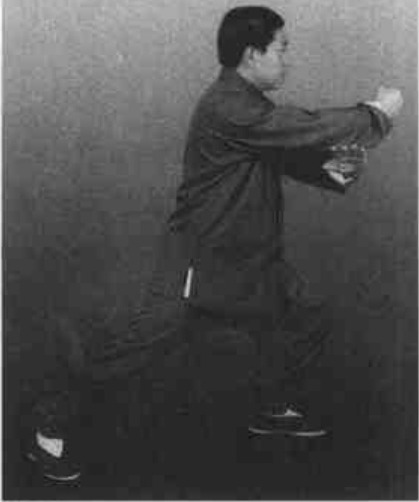
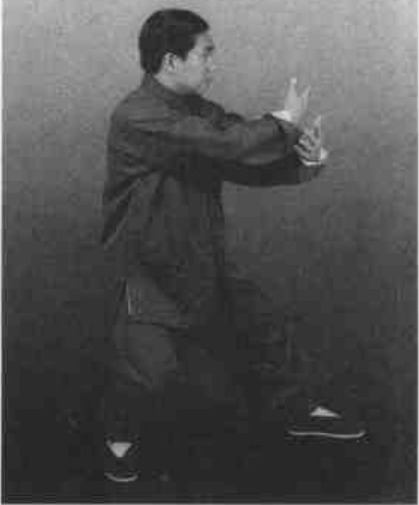
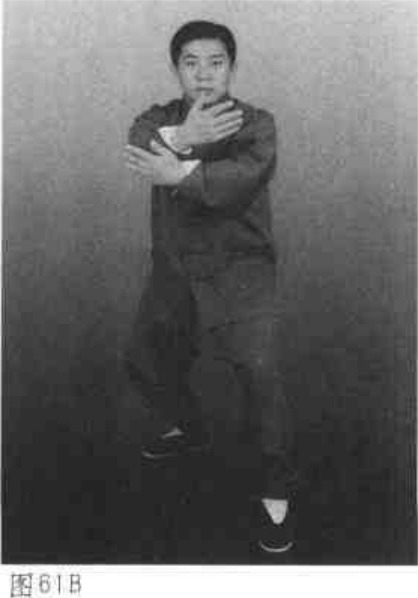
Continuing from the previous posture. If the opponent grasps my right fist with his left hand, I immediately raise my left hand and pass it under my right elbow, sticking the palm to the elbow to guard the arm, and parry away toward the opponent's left wrist. If the opponent changes hands to press in, I then open out my right fist, drawing and folding it inward toward my breast until the two palms face inward and cross at a slant, forming a slanted cross like a sealing bar, so that the opponent cannot enter — as though closing a door. This is called "as if sealing" (ru feng). At the same time, hollowing the chest and sitting the hips, the two hands then separate, changing so that the two palms are about to press and hold his elbow and wrist, so that he can neither escape nor neutralize, as though his door were shut and could not be opened — this is called "as if closing" (si bi). Then, swiftly using a long strength, pressing outward with the press posture, the eyes looking ahead, the strength of the waist also joining in the attack, The left leg bends and sits solid, the right leg straightens with the hip; they combine into a single strength and strike at the opponent — this too is a closing method. Variation: if my right fist is grasped, the right hand sinks down and I then step in with a shoulder-lean.
Phần 28
II. Course of the Movement
1. The right leg bends and the weight gradually shifts back onto the right leg; at the same time the left palm extends forward past the right elbow, along under the forearm, the arm rotating outward as it extends so that the palm faces up, then rotating inward so that the palm turns inward. The right fist becomes a palm, the elbow sinking, and draws back inward; as it draws back the arm rotates outward so that the palm also turns inward. The two arms cross, the right arm inside, the fingertips slanting up, the two palms and fingers level with the shoulders, forming a slanted cross shape. The gaze attends to both palms (see the figures 60 and 61 at the top of the right-hand column).
2. The weight continues to shift back; sit solid on the right leg (the left leg must not straighten completely). The two palms separate to left and right, a little wider than the shoulders, and as they separate the two arms rotate inward, gradually turning the two palms over until they face each other (see the first figure in the left-hand column).
3. The weight gradually moves forward; the left leg bows and the right pushes back, forming a left bow stance. At the same time the two palms press out forward, and as they press the two arms continue rotating inward so that the palms turn to face obliquely forward, the wrists slightly below shoulder height. The gaze must attend to the forward press of the two palms (see the second figure in the left-hand column).
1. The two arms should draw back and close as the body sits back. When the two arms cross, one must avoid the shoulders hunching or lifting; the shoulders must sink and the elbows hang, and room must be kept under the armpit, about enough to hold a fist. But the elbows must not protrude or lift outward, nor may they be withdrawn behind the body, so that one does not trap oneself.
2. In sitting the weight back, relax waist and hips and sit solid on the right leg; one must not fail to shift the weight back while merely drawing the arms in and tilting the body back, nor bend forward while pressing out. Whether sitting back or bowing forward, the upper body must stay straight and correct with the tailbone centred and upright. When the weight moves forward and back, note that chest and abdomen advance and retreat together, neither first nor last; then the body method stays centred and upright and the upper body will not tip forward or lean back.
3. The drawing back and the pressing out of the two hands are essentially horizontal, backward and forward; the elbow has a sinking action, but the hand does not sink down.
1. One must be able to keep the arms relaxed, soft and rounded while extending, contracting and turning the circle.
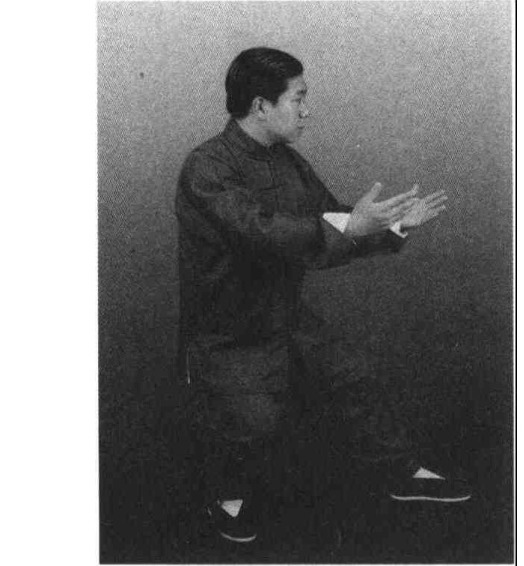
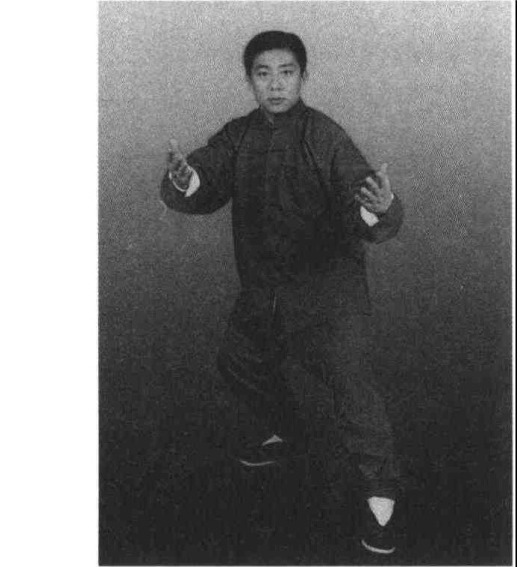
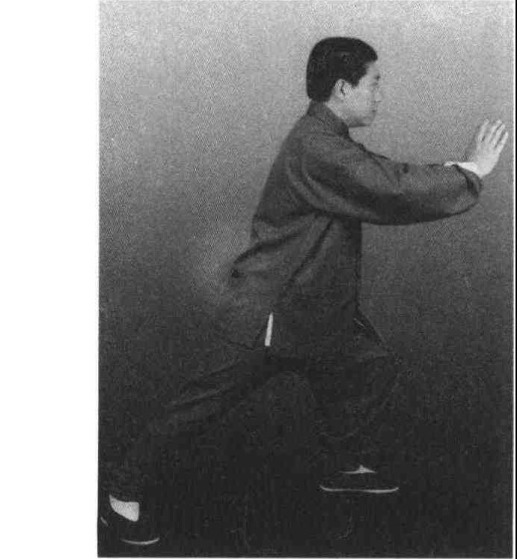
The key lies in whether the shoulder joint can be loosened; hence the requirement "sink the shoulders and hang the elbows" must be approached from the notion of "relaxation".
2. Sink the shoulders and hang the elbows, but also note that "the elbow does not stick to the ribs", so that the arm has room to turn; note that one must "relax and open so that my strength is not bent".
3. In advancing and retreating, shoulder and hip must stay aligned above and below, advancing and retreating together; then one will not behave like a rowing boat, with the seat unmoving while only the body tips forward and leans back.
4. The movement must be completed: do not separate the two hands before the slanted cross has formed.
5. As the hands move, the feet must at the same time sit slowly back. When the hand presses home, the foot is also required to bow home.
Phần 29
V. Errors That Are Easy to Make, Their Causes, and How to Correct Them
1. Error: the legs move while the hands do not, or the hands move while the legs do not. For example, at the start, as the left hand passes to below the right ribs and the right fist becomes a palm, the foot does not move at all. The main cause is insufficient attention to "when one part moves, every part moves". Correction: the moment the two hands above begin to move, the weight below must shift.
2. Error: the two hands cross for too long, held close against the chest, producing "inviting in and letting it land". The main cause is a shallow understanding of the application. The cross was originally formed to prevent the opponent's hand from entering, holding the intention of sealing; but if I myself bring the two hands close against my chest, then of course his pressing hand also lands on my body. Correction: the two hands must keep a certain distance from the chest, so that even when the opponent presses in I still have room to turn.
3. Error: when the two hands draw back the chest is hollowed and the shoulders tense and draw in. The main cause is failing to distinguish a hollowed chest from a contained chest. Containing the chest means the chest feels broad and at ease, which aids breathing, and the two shoulders close slightly forward. Hollowing the chest is a tense drawing in, which is bad for the neutralizing strength of the two hands. Correction: the shoulder joints must relax, the two shoulders close slightly forward, the chest broad — but one must not puff out the chest either.
4. Error: in moving the two hands forward and back, the rise and fall is great. The main cause is pursuing an outward "roundness and liveliness" while neglecting the requirements of the application. Correction: the two hands should move essentially level and straight. Because of the step type changes, the two hands seem to move up and down; only thus is it favourable for sealing the opponent's elbow and wrist so that he cannot escape or neutralize, and favourable for my own pressing out.
5. Error: on the forward press the fingers become stiff, or else collapse limply. The main cause is insufficient attention to the requirements of an upright wrist and relaxed, extended fingers. Correction: both pushing out and drawing back the palm should be chiefly natural and extended; one must not clench the fingers tight or spread them with force. The wrist joint must be round and lively, and on the forward push the heel of the palm should apply a slight force.
6. Error: in the forward bow the left knee goes beyond the toes — this is called "overshooting the strength". The main cause is a subjective belief that this makes the movement fuller, whereas in fact it makes the change-over sluggish. Correction: the knee joint may go slightly forward of the vertical line of the lower leg, but it must not pass beyond the toes.
7. Error: the left leg bows first while the two palms are still slowly pressing forward, so that hand and foot do not arrive together. The main cause is a shallow understanding of the application. "Issuing strength requires above and below to match, and then one goes forward invincibly." If the foot arrives but the hand does not, above and below do not match; such a press has only the strength of the hand and cannot make the strength rise from the heel. Correction: hand must arrive with foot; the pressing hand requires the coordination of a forward bow and a backward push. Hence, within advancing, there must be a supporting-back.
Phần 30
VI. Teaching Method and Practice Method
1. Explain, and demonstrate.
2. Practise together as a group, following the leader.
3. From the front, check the distance between the separated hands; from the left side, look at the point where the left hand passes the right elbow; from the right side, look at the amount the two hands rise and fall as they move forward and back.
4. Mnemonics for the movement: (i) thread through, cross, turn over, press; (ii) parry, seal, close, press.
5. The successive positions of the two hands as they move should be practised section by section, so that the student has a clear understanding of the requirements of the movement.
6. Paired application drills: A — takes up the settled posture of Step Forward, Deflect, Parry and Punch; B — stands upright and grasps A's right hand with his left. A — parries forward with his left hand from below the right elbow; B — steps up with the left foot and, changing hands, presses forward with both palms. A — the two hands cross at a slant, then separate, holding down B's elbow and wrist and pressing out with a long strength.
Phần 31
VII. Technical Analysis
1. Although this movement has no stepping, sitting back and bowing forward make high demands on the beginner's tailbone being centred and upright. Therefore one must earnestly practise shoulders and hips advancing and retreating together.
2. The sealing and closing movement travels a short distance and changes fast; a moment's inattention and the movement is easily performed perfunctorily. Hence the requirements on relaxing the shoulders, containing the chest and holding the wrist upright are high.
3. Practising tai chi chuan requires quiet: one must set aside distracting thoughts and be calm and even in temper. At first one thinks only of the method of the movement, the direction, the angle and so on, and easily loses one thing while attending to another; after long practice the movements become skilful and the mind gradually quiets of itself. This exerts a very good regulating effect on the cerebral cortex and is of good use in preventing and treating various chronic diseases and strengthening the constitution.
Fourteenth Posture: Cross Hands (Shi Zi Shou)
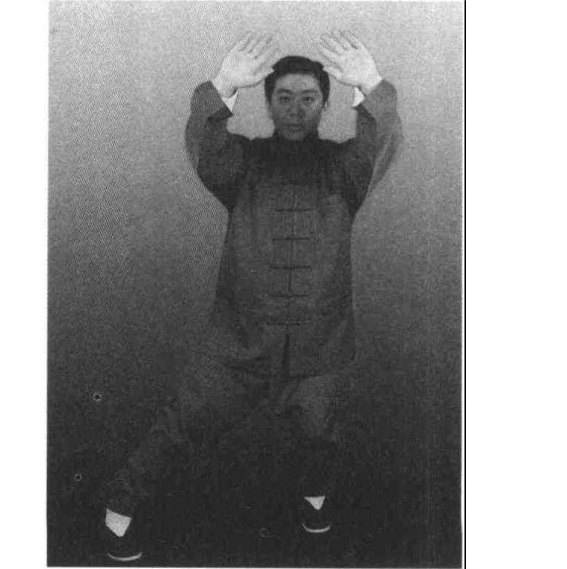
Continuing from the previous posture. If the opponent comes at me from my right side, from above downwards, I immediately open out my right arm upward and wide to the right, and the body turns right at the same time, while the left foot turns in to the right. The two hands separate from above and then join from below, forming a cross shape. The whole body sits on the left leg; the right foot is immediately lifted and drawn back half a step to the left, the two feet planted flat as in the Opening Posture. This is an opening energy and a closing energy. When I use opening energy to separate the opponent's hands, I guard against the opponent seizing the opening to strike at my chest, and so I at once make the two hands into a closing energy. At this moment the palms face inward, pinning the opponent's arm. If the opponent presses in with both hands, I use both hands to separate his arms from the inside out to left and right, palms up or palms down, either will do. But when the cross hands are formed, the knees and waist must at the same time relax somewhat and sink down a little, and then the force coming from the opponent is of itself scattered and broken.
Phần 32
II. Course of the Movement
1. The body turns right, and at the same time the left toes turn in (facing south), sitting firmly on the left leg. As the waist turns and the elbows bend, the two hands move to the right (south) until they reach in front of the forehead (see the first figure on this page). They stop about two of the practitioner's fists from the forehead. As they move the two arms rotate slightly inward so that the palms face forward and the arms form a ring. Following the turning of the waist, the gaze passes between the two palms and looks level ahead.
2. The centre of gravity gradually shifts entirely to the left leg; the right heel leaves the ground first and the whole foot lifts, drawing in to the left, touching down toes-first toward the south (shoulder-width), then the whole foot gradually presses flat; at once the centre of gravity shifts right, the two legs gradually straighten, and at the same time the left toes lift slightly and the two knees bend slightly, forming a feet-apart stance. At the same time the two palms separate, each descending from left and right, passing in front of the abdomen; the right palm on the outside joins and crosses and arcs upward to in front of the collarbone, the left wrist about three fists' distance from the chest. As the two palms move down to below shoulder height, the two arms rotate outward as they move so that the palms gradually turn to face inward. The eyes first follow the arcing of the two palms, and when the two arms are about to cross they look level ahead (see the second and third figures on this page).
1. As the left toes turn in and gradually press flat, the two hands move with the turning of the body (toward the south), arcing upward as they move.
2. The right foot gradually lifts off the ground and steps down; the centre of gravity gradually shifts to the right leg. It should be like a see-saw, one end rising as the other falls; the two feet must not share the body's weight equally (double weighting).
3. As the two hands move up, the mind must attend to the point of energy — the ulnar side of the two wrists.
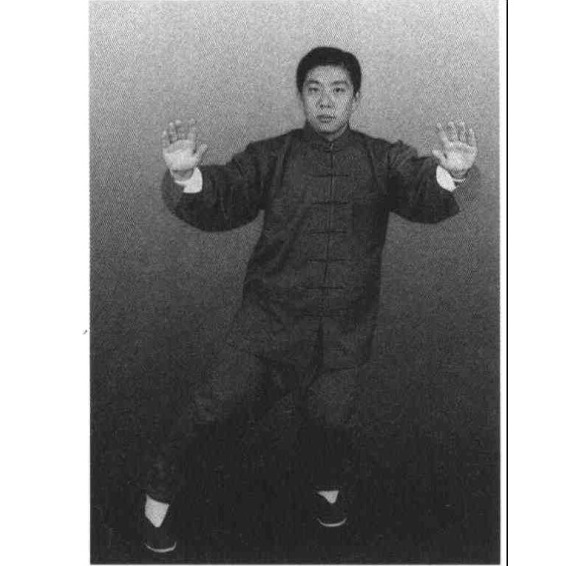
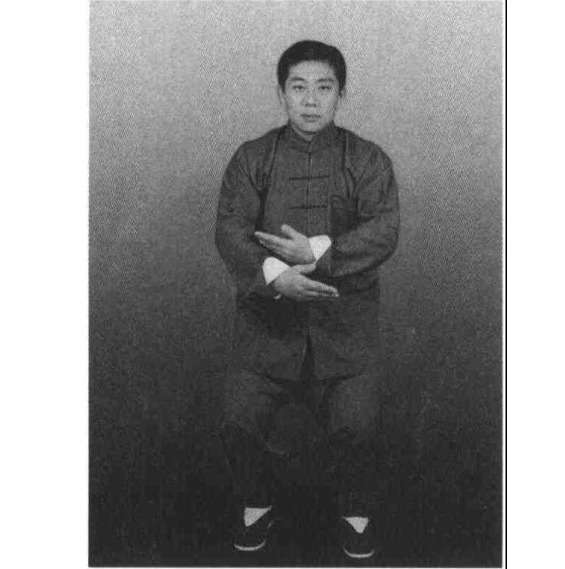
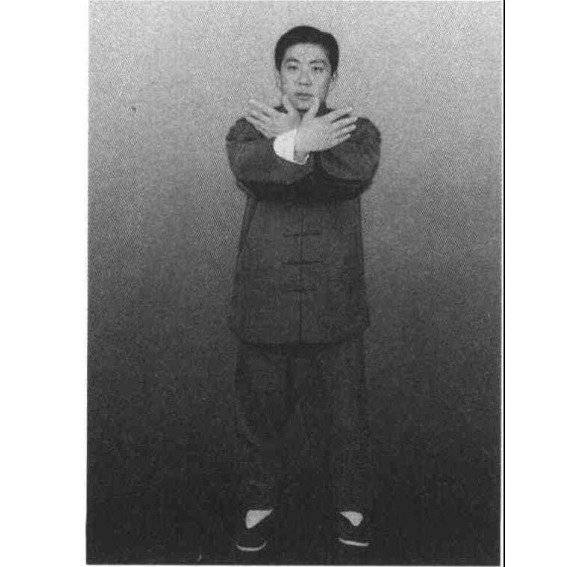
4. As the two hands move down, the left leg must sink, and at the same time "send down" the right leg.
5. When the two hands cross in front of the chest they must go slightly upward and outward, until the heels of the two palms are level with the shoulders, so that the movement is rounded and possesses ward-off energy.
6. The whole Cross Hands movement must have upper and lower accompanying each other: the hands' and feet's movements should begin at the same time and end at the same time, and must be coordinated.
7. When the two legs rise, the body must be upright and every part must relax.
Phần 33
IV. Requirements
1. When the left toes turn in and you sit solidly on the left leg, the waist and the crotch must be relaxed and mobile and the hip joints loosened; then waist and legs can follow each other.
2. Sit solidly on the left leg, draw the hip root slightly inward, rotate and sink; the right leg slowly lifts. When the right leg approaches the left leg, relax the left waist and knee somewhat and let the body sink down a little; the left leg must not sit so solidly as to be completely rigid.
3. As the two hands move up, the fingers are about level with the head.
4. As the two hands move down, the two elbows must not hang from above but form a full arc; the heels of the two palms must not drop below the waist.
5. When the cross hands are formed, the two arms must make a ring; relax the shoulders and sink the elbows; do not shrug the shoulders or lift the elbows.
1. Error: the two palms rise too high. The main cause is an unclear grasp of the application of "separating". When I use opening energy to separate the opponent's hands, if the two hands are too high my own chest is left empty. Correction: the height of the two hands should not exceed the head by much.
2. Error: the right foot steps down, but not by bending the left leg to "send" it down. The main cause is tension in the hip root. Correction: after the right leg lifts, loosen the left hip root. First squat down on the left leg, while the right leg slowly descends. This is a strenuous way of practising; long practice can develop the muscles of waist and legs and make the step light and quick.
3. Error: hand and foot fall out of step — only the hands move while the feet do not, and the movement is broken. The main cause is failure to meet the requirement that upper and lower accompany each other. Correction: hands up, right foot lifts; hands down, right foot steps down; the two feet rise and the two hands go up.
4. Error: double weighting of the two feet at the settled Cross Hands. The cause The main cause is that most people take the section as finished — this is a resting movement. Correction: like a see-saw, when the right foot is solid the left foot must become empty; one foot does the work, not two feet sharing the weight — only then is there no double weighting. Otherwise the two feet stand dead, which is unfavourable for flexibly taking up the next movement.
Phần 34
VI. Teaching and Practice Methods
1. Explain (with emphasis on double weighting) and demonstrate.
2. The group practises along, with emphasis on the coordination of hand and foot movements.
3. Students observe and correct one another, e.g. the height of the hands and the "sending" down of the right leg.
4. Each person senses the solidity and emptiness of the two feet, and compares and experiences double weighting.
5. Paired practice using the application: A — takes up the settled posture of Sealing and Closing; B — strikes down from above on A's right side. A — at once turns the left toes in and arcs the two hands upward to separate; B — presses with the right hand on A's chest from the front. A — moves the two hands down to join and form the cross and move it up, pinning the opponent's arm. The two then exchange roles.
6. Practise the linkages: ① as the press of Sealing and Closing is ending, in the moment between seeming to stop and not stopping, at once connect the right turn of the body, the turning in of the left toes and the moving of the two arms to the right. ② as Cross Hands ends, in the moment when the two hands seem to stop and yet do not, at once connect the turning in of the left toes, without allowing a pause, so that the link is round and lively.
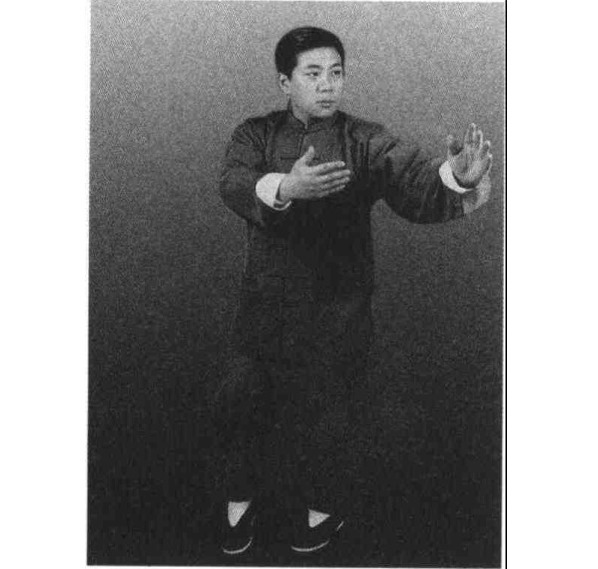
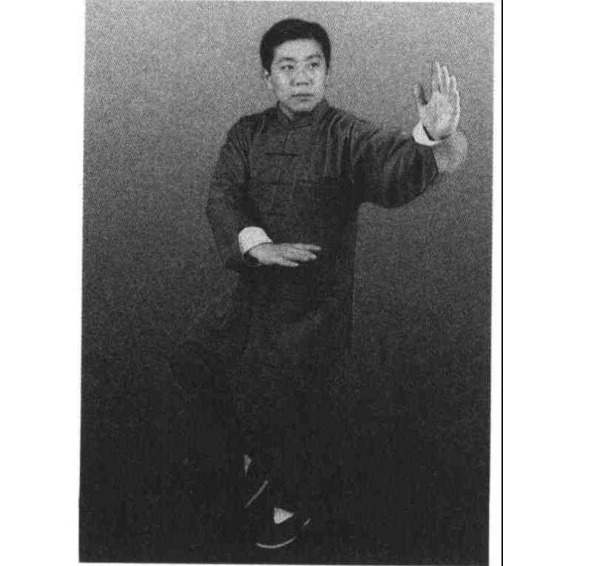
Fifteenth Posture: Embrace the Tiger and Return to the Mountain (Bao Hu Gui Shan)
Continuing from the previous posture. If the opponent closes in and strikes at my right side or from behind me, and there is no time to tell whether he is using hand or foot, I hastily turn my waist to the right, separate the two hands, step out with the right foot, bend the knee and sit solidly, the left leg straightening; the right hand, following the turning of the waist, intercepts toward the opponent's waist and then embraces back, while the left hand hastily follows forward to press. So the right hand first intercepts with the waist and then withdraws as an upward-facing palm, as in making the Embrace-the-Tiger posture. If the opponent's hand and foot are very fast and I fail to embrace him, but only deflect or press him out, and he then changes to strike with the left hand, I ward him back with the "unfold" energy; hence the unfold, squeeze and press movements of Grasp the Bird's Tail are appended below.
1. The left toes turn in about 90° and press flat; the left leg gradually bends at the knee and squats down, and as the centre of gravity shifts onto the left leg the right foot gradually lifts (heel leaving the ground first); at the same time the body turns right about 135°. As the waist turns, the left palm withdraws downward from in front of the chest, the arm rotating inward to arc to the left, and is raised level with the left shoulder with the palm facing south-west; the right elbow sinks and naturally carries the right palm down, rotating inward as it moves so that the palm turns to face down. The eyes first attend to the raising of the left palm to the left, then turn right to look level ahead (see the first two figures on this page).
2. The right foot steps out diagonally to the right front (north-west), touching down heel first; as the centre of gravity gradually shifts onto the right leg the whole foot comes flat, the right leg bows and the left leg pushes, forming a right bow stance; the body continues to turn right. As the waist turns, the right palm continues downward, passes in front of the waist and gathers to the right side of the body, while the left palm goes from left upward past the left ear and strikes forward with the turning of the waist. The eyes attend slightly to the right palm embracing to the right, then look level ahead, and then attend to the left palm's forward strike (see the third, fourth and fifth figures on this page).
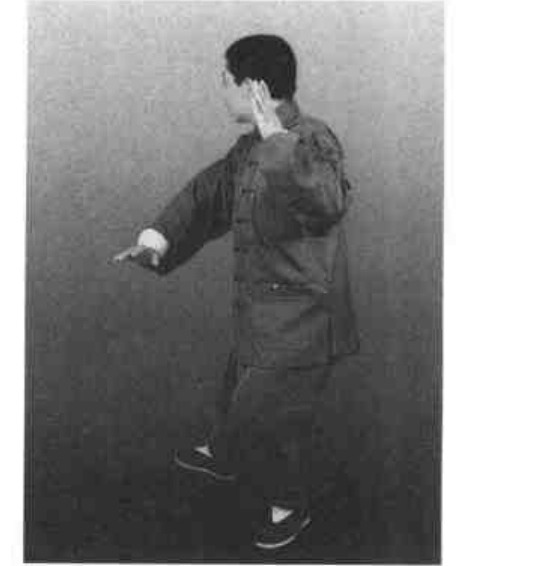
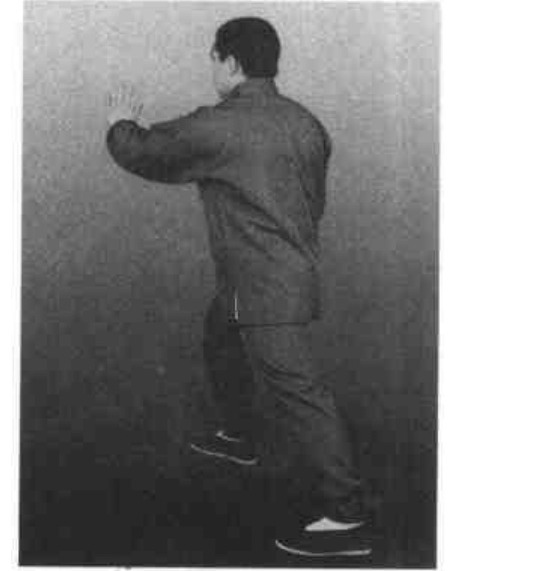
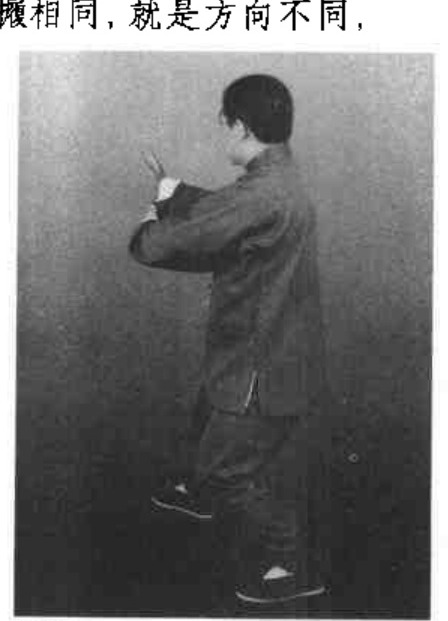
1. The centre of gravity gradually shifts to the left leg and the waist gradually turns left; at the same time the left elbow sinks and the left arm rotates outward so that the palm faces inward and slantingly upward; the right palm arcs forward from the right side of the body and, passing inside the left hand, is raised in front of the left palm, the palm slanting downward.
2. The movement is the same as the unfold of Grasp the Bird's Tail, only the direction differs, This movement goes from the north-west diagonal toward the south-east, whereas the earlier Grasp the Bird's Tail unfolds from west toward east (see the first two figures on this page).
3. The squeeze movement (see the third and fourth figures on this page).
4. The press movement (see the fifth and sixth figures on this page).
Phần 35
III. Key Points
1. The Embrace-the-Tiger movement turns from the Cross Hands, which face south, to face north-west behind and to the right; therefore the left toes must turn in fully, the waist turn and the stepping out of the right leg must be complete, and it must reach the true diagonal.
2. The right leg travels a direction of about 135°; therefore the left leg must sit solid and the waist and hips must be fully loosened so that the right leg moves fully with the turning of the waist.
3. The right hand embraces to the right rear, so its height is higher than in Brush the Knee — about level with the waist.
4. In linking Cross Hands into Embrace the Tiger and Return to the Mountain the two feet must not double-weight. The right heel steps down, the left toes lift slightly and turn in first, and at the same time the sole of the left foot presses flat and the right heel at once lifts.
5. After the right leg has stepped out and pressed flat, if you feel the turn is insufficient or awkward, you may let the sole of the left foot stay on the ground and rotate the heel outward.
1. As the left toes turn in, this must be coordinated with the squatting, the turning of the waist and the movement of the two arms; upper and lower move together, otherwise it does not accord with the principle "one part moves, no part is still".
2. After the waist turns right, the diagonal position in which the right leg steps out must be accurate, so that the left palm's strike goes in the north-west direction.
3. The toes must turn in properly. For the outward splaying and inward turning of the toes bear on the accuracy of the whole movement. In Embrace the Tiger and Return to the Mountain, if the left toes turn in insufficiently the strike direction comes out too far west, or if the right foot is forced to step out too far north, the hips are opened too wide and the two feet end up in an awkward, unstable stance. So the movement of the toes and the movement of the whole body are mutually related and mutually constraining; a moment's inattention makes the whole movement incorrect.
4. Solid and empty must be clear. After the waist turns right, the right leg must, in stepping out, be required to touch down slowly and lightly.
5. In the unfold of Embrace the Tiger, the right hand's forward extension and the left hand's withdrawal of the welcoming palm must happen at the same time as the centre of gravity slowly shifts back; otherwise the foot moves while the hand does not, or the hand moves while the foot does not — not "one part moves, no part is still".
Phần 36
V. Errors Easily Committed, Their Causes, and Their Correction
1. Error: double weighting at the very start of the movement, as the left toes turn in and the body turns. The main cause is an unclear conception of the movement. Correction: when the left toes turn in, most of the centre of gravity must be on the left foot; the left toes turn in and press flat, and the right heel lifts off the ground at once. In this way it is both light and free of double weighting.
2. Error: the turning of the waist and the movement of the two hands fall out of step — a commonly committed — the error of moving the hands without turning the waist. The main cause is a shallow grasp of the principle "the lord is in the waist, expressed in the fingers … it must always be one complete breath of energy". Correction: one must understand that the waist is the key to the turning of the upper and lower body, and therefore moving the hands requires turning the waist — that is, the waist must lead the hands. So in Embrace the Tiger the body does not first turn to face north-west and only then move the hands; rather the hands move as the waist turns, and the hands must arrive where the waist arrives.
3. Error: the direction in which the right foot lands when stepping out to the right rear is wrong; usually the angle of travel is insufficient. Then the direction of the hands' press comes out too far west. The main causes are that the left toes do not turn in enough and the hips do not open enough. Correction: the left toes must turn in as fully as possible. But often, because the two feet are placed too close together in Cross Hands, the left foot cannot turn in fully. Therefore correct the two feet of Cross Hands: the lateral distance should be about shoulder-width.
4. Error: during the unfold, hand and foot are poorly coordinated. One way is that the foot does not move and only the hands move — the right hand forward, the left hand back, the two hands moving while the feet do not. The other is that the centre of gravity shifts back quickly and sits entirely on the left leg, so that in the unfold there is only hand movement and no foot movement. The main cause is a shallow understanding of the application of the unfold. Correction: as the right hand goes forward and the left hand withdraws, the two legs must move slightly together and the centre of gravity gradually shift back.
Phần 37
VI. Teaching and Practice Methods
1. Explain the course of the movement, its key points and its application.
2. Demonstrate: ① the movement as a whole. ② broken down, with emphasis on Embrace the Tiger and the preparation for the unfold.
3. Use contrast: compare the differing heights of the hands in Embrace the Tiger and in Brush the Knee and Twist the Step.
4. Study the passage from Embrace the Tiger into the unfold as a focus: first demonstrate and compare the movement of hands-without-feet and of feet-without-hands, let the students observe the results of the two errors, and then demonstrate and study the correct movement.
5. After the Embrace-the-Tiger posture the right hand extends forward, and this varies from person to person; the teacher should break it down for practice — in extending the right hand forward one must "hold the palm upright", that is, slightly — has a slanting palm spiralling forward.
Sixteenth Posture: Fist Beneath the Elbow (Zhou Di Kan Chui)
Phần 38
I. Application
Continuing from the previous posture. On discovering the opponent striking from behind, the movement is like the Single Whip body-turn studied earlier and may be applied by reference. As the body is about to turn back to the front, the left foot plants flat straight to the front (east); the right foot then steps out half a step diagonally to the right front. When the right foot sits solid, the left foot lifts and lands on the heel with the toes raised. The two hands are level with the shoulders, and the body turns left along with them; at this moment I use my left wrist to meet the opponent's right wrist flat on the outside and push it aside to the left. When he loses his centred balance I drop the fingers of the left hand, approach his wrist and wind a small circle inward; the right hand at the same time goes left to meet his left hand and stick and join from above, so that both his hands are in an unfavourable position and he has lost the direction in which he wants to exert force. I then take my left wrist and press down his right wrist, and the right hand hastily forms a fist and turns to beneath the left elbow, tiger's mouth upward, storing strength in order to issue it wherever an opportunity offers.
A side variation: if, at my fist-beneath-the-elbow, the opponent uses his right hand to press slantingly on my left hand from my right, I take the opportunity to loose the right step and use the right hand to pluck the opponent's right wrist.
1. The waist turns left; at the same time the right toes turn in as far as possible and press flat, the left foot is empty, the two elbows sink slightly and bend a little, the two palms dip slightly, level with the shoulders, and with the turning of the waist wipe round half a flat ellipse to the left (the body turning from north toward south-west), the gaze following the turn of the body and looking level ahead, reaching the left slightly before the left palm arrives there, but the gaze must also attend to the right hand (see the first figure on this page).
2. The body slowly turns right and the two palms, slightly outward, wipe round with the turning of the body inward past the front of the chest, arcing right through another half flat ellipse (body and arms turning from south-east toward south-west), the gaze shifting level with the turn of the body and also attending to the two palms (see the second figure on this page).
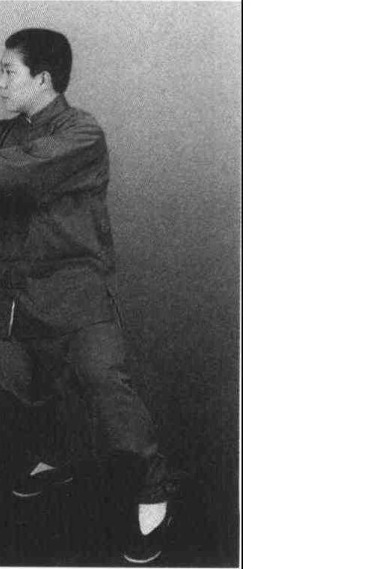
3. The centre of gravity is still entirely on the right leg; the body slowly turns left and the left leg lifts and steps out toward the left rear (due east). With the turning of the body the left arm rotating outward so that the palm turns to face inward, translates in an arc to the left, and the right palm follows closely, also translating in an arc to the left, so that the right hand holds its palm upright and the palm turns to face left. The two elbows sink slightly and bend a little so that the two hands face each other at a distance. The gaze attends to the left palm moving left (see the first two figures on this page).
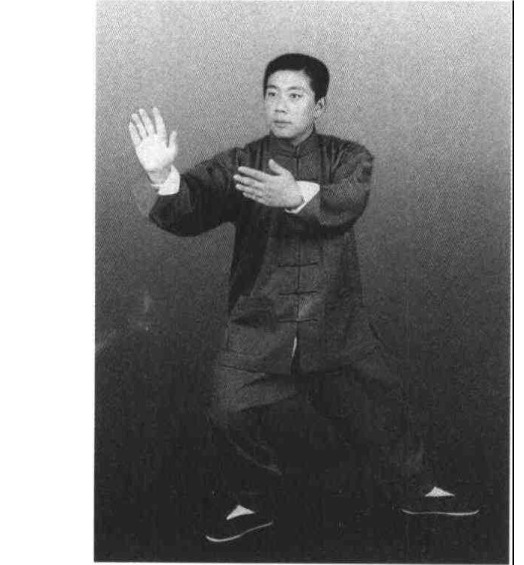
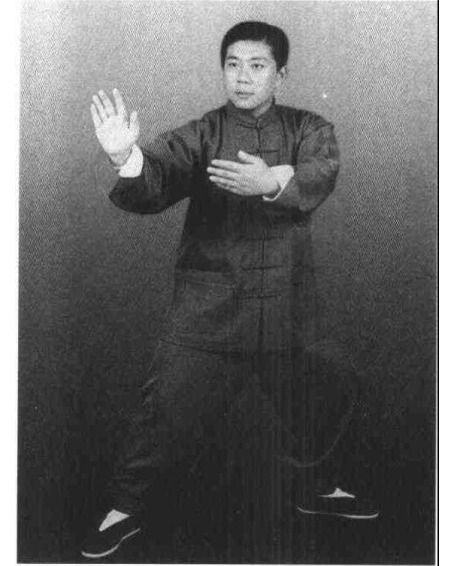
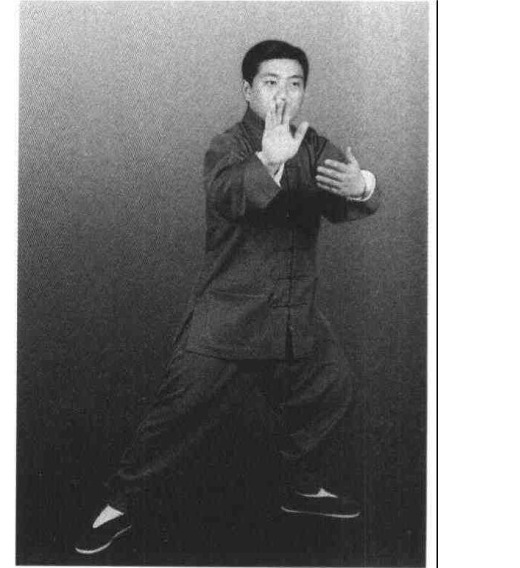
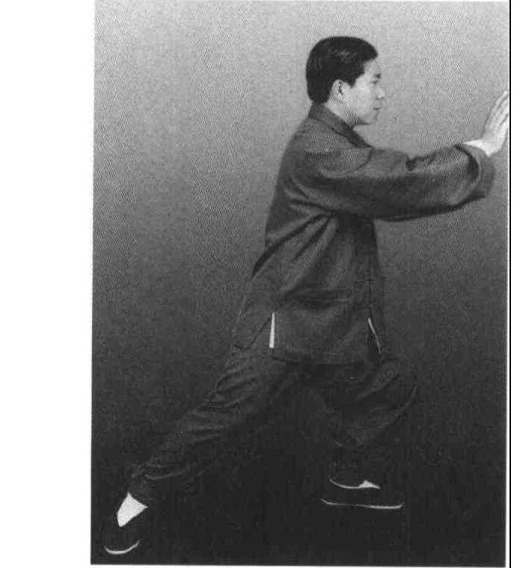
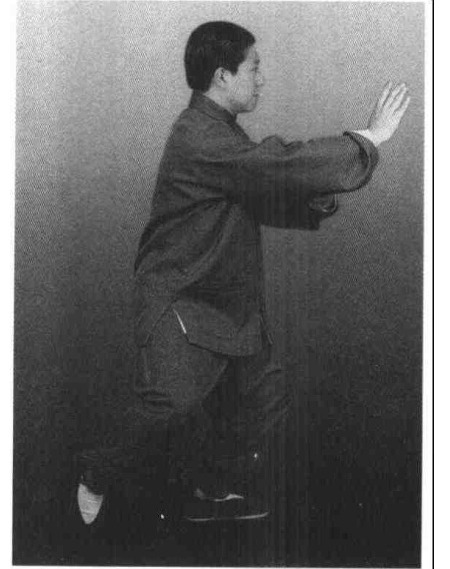
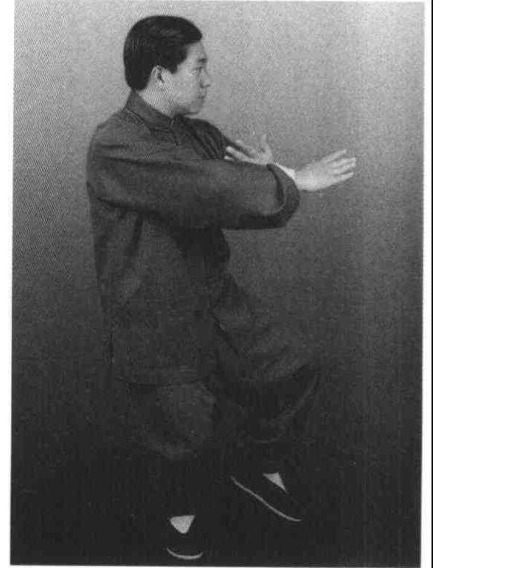
4. The left foot comes down to the left (east), touching down heel first, and the centre of gravity gradually shifts entirely onto the left leg. With the turning of the body the two palms translate in an arc to the left, and the left arm rotates inward as it moves so that the two palms turn to face down. The right leg lifts, shifts slightly forward and comes down, and the centre of gravity at once moves onto the right leg. When, with the turning of the body, the left palm has moved to slightly left of the front of the body it arcs down to the left. The gaze first attends to the left palm moving left, and when the right palm is about to arrive in front of the chest, to the right palm (see the third, fourth, fifth, sixth and seventh figures on this page).
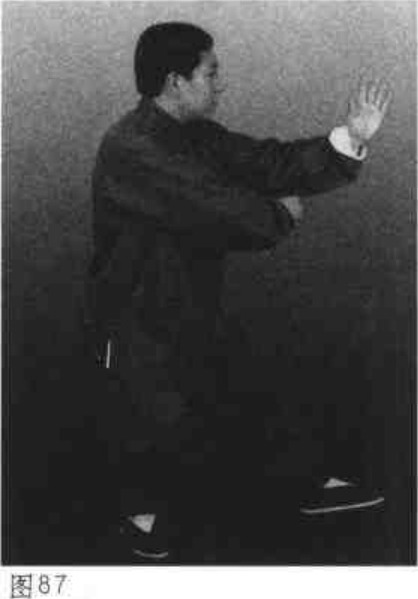
5. The centre of gravity shifts entirely to the right leg; the left foot lifts a little, moves slightly forward and comes down, touching down on the heel with the toes slightly raised; the body continues to turn slightly left. The left palm goes from the left downward and inward, passes inside the right forearm, and turns and pierces forward and up, palm facing right, the index finger level with the eyebrows and aligned with the tip of the nose; the right palm passes to the left outside the left palm, covering and grasping to form a fist, which is placed beneath the left elbow, the eye of the fist upward, and the upper body turns slightly right. The eyes attend a little to the left palm circling down to the left; when the left palm is about to pierce out past the inside of the right arm they look level ahead, but the gaze must still attend to the piercing out of the left palm (see the eighth figure on this page).
Phần 39
III. Key Points
1. Solid and empty must be clear. The right toes turn in fully and the right leg bears the whole body's weight; only then can the left leg lift light and nimble.
2. The arms turn with the waist. It is through rotating the waist and turning the spine that movement is transmitted from the turning of the wrist and the turning of the upper arm to the tips of the hands. Therefore the movement of the arms must be as the boxing theory says, "the lord is in the waist" — one must not move only the arms without moving the waist.
3. It must proceed according to "when one part moves, no part is still; when one part is still, no part moves" and to the requirement of unbroken continuity — without corners, without pauses, rounded and coordinated. In the two movements of lifting the right foot and slightly lifting and setting down the left foot, the hands move as the feet move. Just as the settled posture of the hidden fist beneath the elbow is completed, the opportunity for the left-right opposing brace arises at this moment of seeming to stop and not stopping, and not as something joined and again broken; for the old force is spent and the new force not yet born, and this is the moment when one is most easily taken by an opponent seizing the opening.
4. The two feet must not double-weight; they must rise and fall in turn like a see-saw. When lifting the right foot or lifting the left foot, one leg must bear the body's weight.
5. When the two palms translate to the left, the right palm must not lie flat or swing down but must sit the wrist and stand upright; and the left hand must go forward while the right hand follows, at an equal distance.
6. In the settled posture the left knee must naturally bend slightly and the two shoulders must not shrug. The two arms form an arc and must not be held straight. The waist and hips must be relaxed, and the chest must not face the front squarely but turn slightly toward the right-front diagonal, while the two arms still face straight to the front (east), and the left palm must sit the wrist.
7. When the two hands translate eastward, the back of the left hand faces outward and the right palm faces left and outward; when the body turns to face the front (east) the left hand goes down first and the right hand goes forward afterwards — not both downward at the same time, because at this moment I use my left wrist to meet the opponent's right wrist flat on the outside and push it aside to the left, while the right hand goes to the left hand to meet his left hand; each has its own purpose.
Phần 40
IV. Requirements
1. Particular attention must be paid to the stepping: advance and retreat, and the transitions of solid and empty must be distinct. When the two arms begin to translate to the left, the right leg is solid and the left leg must be empty. When the body turns to the front, the left leg is solid and the right leg lifts easily; when the centre of gravity moves onto the right leg the left leg is empty and the landing step must be steady — the change of solid and empty is gradual, not sudden.
2. One must "let the hands follow the movement of the feet, and the feet follow the movement of the hands", with "upper and lower accompanying each other".
3. One must take the waist as the axis; the strength of the waist must be used appropriately, and only then does it aid the body's balance. The waist must not sway away from centre; therefore the body must not lean forward or backward.
4. When the right toes turn in, the right is solid and the left is empty; the centre of gravity should not shift left.
5. The movements of the hands must be clear. When the two hands swing level the distance between them is about 20 centimetres; too large or too small is incorrect.
6. The fingers should be slightly curved but must not be stiff. If the fingers are too curved, it is hard to carry the intent through to the fingertips; if they are too straight, that is stiffness. The intent must reach the fingertips, with the pads of the fingers exerting a very slight force; with long practice this makes the qi and blood flourish in the fingers.
Phần 41
V. Common Errors, Their Causes, and How to Correct Them
1. Error: the right foot is not turned in sufficiently, so the waist and hip cannot turn to the left fully. Main cause: the hip-root is not adducted enough and the knee is twisted too much, with too little foot-turning. Correction: lift the ball of the right foot slightly; the foot follows the knee and the knee follows the waist, so that the right sole turns in no less than 90°.
2. Error: when turning the foot in and turning the waist, the centre of gravity shifts left, producing double-weighting. Main cause: there is no right-fullness, and so no left-emptiness. The movement then cannot rotate freely, cannot gain power, and cannot keep a stable centre. Correction: the body's weight must settle fully on the right leg; during the turn the centre of gravity does not move — turn on the full right leg. The waist must be straight and the central axis must not sway, so that the upper body does not lean to one side. The waist-gap governs the two legs: on the solid side of the waist-gap, the leg below is also solid. Hence the left waist-gap must be empty.
3. Error: as the waist turns left and the left foot lifts and steps back to the left, the centre of gravity shifts left too quickly, destroying the principle of "uniform tempo in every movement." Main cause: the right foot is not fully turned in and the hip-root is not opened; added to that, at the moment the right foot turns in the centre of gravity is wrongly shifted left, so the right leg cannot exert its normal supporting power. The left leg is therefore forced to land quickly to gain support. Correction: turn the right foot in fully; the right knee stays under the centre of gravity without shifting; open the hip-root, and let the left leg step slowly.
4. Error: the two hands move left too high or too low. Main cause: insufficient attention to the application. The left hand meets the opponent's left hand flat, and the right hand connects with his left hand; if my hand is too high or too low it does not meet the requirement of "connecting." Correction: the proper height is with both hands level with the shoulders.
5. Error: after the body turns square (to the east), both hands press down at the same time. Main cause: insufficient attention to the application. The left hand should first push out to the left and then circle down in a small arc; the right hand then goes left-and-back, forming a fist that is carried lightly beneath the left elbow. Correction: the left hand goes down first while the right hand is still moving forward; the two hands must not press down simultaneously.
6. Error: moving the hands without moving the waist, so that upper and lower are disconnected. Main cause: there is no whole-body consideration governed by the waist — it is a tree without roots. Correction: when the hands go forward they must have a sinking, root-driven quality; the soles of the feet take the force, and as the waist and legs move forward the two hands move in the same direction.
7. Error: at the set position the upper body faces squarely to the front. Main cause: a shallow understanding of storing power. Correction: the body should be turned to the side. If the body faces squarely forward, the right fist that has turned in beneath the left elbow loses the stored impulse to strike at the ready, and the chest is also compressed, which obstructs the free flow of qi and blood.
Phần 42
VI. Teaching Method and Practice Method
1. Explanation (with emphasis on turning the foot in and on the movement of the two hands).
2. Demonstration of the whole movement.
3. Progressive-addition method:
- ① Begin from the set position of Grasp the Sparrow's Tail / Embrace the Tiger and Return to Mountain, making a good link; immediately turn in the right foot while the two arms shift level to the left and to the right, arriving at the forward-right diagonal.
- ② As above, then continue: the back of the left hand turns outward, the right hand forms a vertical palm; the left leg lifts, the upper body turns left, and the left leg steps forward with the heel landing first; the two arms follow the waist and transfer to the front of the body. Once ② is grasped at a basic level, join it to ①.
- ③ Shift the centre of gravity forward; the two hands move forward with the waist; the centre of gravity gradually moves onto the left foot; the right leg lifts slightly; the left hand turns to a downward palm. Once grasped at a basic level, join ①②.
- ④ Shift the centre of gravity back; the right foot shifts slightly to the right and comes down, seating the right leg; the left hand circles in a small arc inside the right arm and threads out; the right hand forms a fist and is placed beneath the left elbow; the left foot lifts and comes down slightly forward-left, heel landing first. Once grasped at a basic level, join ①②③.
- ⑤ The complete movement. Note: in the progressive-addition practice, take particular care that the movement is unbroken and continuous, with no place where it halts.
4. Paired practice combining the application:
- ① A — takes the set position of Embrace the Tiger and Return to Mountain (facing northwest); B — comes out from behind A (the east); A — turns the body left, seats the right leg, and shifts the two hands level to the left and right; turning the body left, A steps the left foot out to the front (east), meets B's right wrist level with his own left wrist, pushes out toward B's right, then drops and, clinging to B's wrist, circles inward in a small arc; the right hand meets B's left hand and adheres to it from above. ② A's left wrist rolls B's right wrist, while A's right hand turns
…the fist turns to beneath the left elbow, waiting there at the ready, or immediately strikes forward.
5. Mnemonic: turning left, turn in the right foot; both hands shift level as the body turns; left hand horizontal, right hand vertical palm; turning left, step out the left foot; the rear foot is reset; the front foot lifts and comes down again; the left arm circles in a small arc; the right fist hides beneath the elbow.
6. The student should first concentrate on training emptiness and fullness: the right foot turned in fully, the right leg seated solidly, the centre of gravity not shifting left. Lift the left foot toward the rear-left (east); the right leg must be steady, the hip must be open; as the body turns square, the right knee must follow the direction of the toes and must not twist inward. The body turns about 45° + 180°; so if the right foot is not turned in fully and the lower body is not stable, turning the body square is difficult. Hence emptiness and fullness must be practised repeatedly.
7. Turning the waist, shifting the centre of gravity, and the movement of the hands — these three are "upper and lower following one another," and may be practised separately (practising only the waist turn, only the weight shift, only the hand movement). This lets the beginner learn the movement rather quickly; but take care: separating is for the sake of joining, and in the end the upper and lower must follow one another. Fortunately, in the later stage of this movement the body turns slightly right, the left foot lifts slightly and comes down again, and at the same time the left palm threads out and the right palm becomes a fist — so that upper and lower do follow one another, rather than each going its own way.
Phần 43
VII. Technical Analysis
1. In this movement one must first be clear about the change of direction. From the set position of Embrace the Tiger and Return to Mountain, where the body faces northwest, the two arms shift level first toward the southeast and then toward the southwest, and finally move to the east — and to this are added the changes of step of the two feet and the differing actions of the two hands… The movement is thus fairly complex. One must therefore concentrate on the progressive-addition method of learning: be clear about the direction, be clear about the movement, and climb as if going up stairs, one step at a time — firmly fix each part as you learn it, and only then add the next.
2. In this movement the body's weight is alternately supported on one leg. It looks like an alternation; but because the movement is slow, with one leg supporting and the other lifted clear for a long time, the actual time under static load is considerable. The demands this makes on the strength of the muscles of the waist, hips and legs are high. And precisely because of this, the muscles concerned are very well trained.
3. After the right foot is turned in and the right leg seated solidly, the left leg is empty and the left hip is relaxed. The leftward turn of the waist carries the two arms in a level shift to the left; at this moment the two shoulder-joints are required to line up level with the two shoulders, striving to achieve "shoulder and hip joined together." Therefore …the demands on the opening and relaxing of the hip-joint are very high; otherwise, with so large an angle of rotation, how could the movement be completed smoothly?
4. The burden carried by the full right leg is very great. It is like the movement of the trunk and branches of a great tree: because the root and limbs are as firm as a great root and a deep root, it stands steady and unmoving — and so this is a very demanding form of training.
Seventeenth Posture: Step Back and Repulse the Monkey, Left and Right (Zuo You Dao Nian Hou)
Phần 44
I. Application
Continuing from the preceding posture: if the opponent uses his right hand to grip my left wrist or forearm tightly, and with his left hand supports the fist beneath my elbow, then I am first constrained by him and cannot execute my movement. At this moment I turn my left fist over upward, and with a sinking energy relax the waist and hip, withdrawing it back-left, while the left foot also steps back one pace, bending the knee and seating it solidly, and the right foot becomes empty. The opponent's grip is then lost at once. At the same time, the right hand separates to the rear, and at the instant he loses his grip I press forward swiftly. Although this posture takes one step backward, it can still repulse the opponent's energy — hence it is called "Repulse the Monkey." In this movement, take care to relax the shoulders and sink the elbows.
1. The right hip-root draws in slightly; sit firmly on the right leg; the left leg lifts slightly with the toes hanging naturally; the body turns slightly right. At the same time the left palm drops slightly and extends slightly forward; the right fist becomes a palm, drawing from beneath the left elbow past the front of the abdomen, curving down-and-across to the side of the right hip; as it draws, the right arm rotates outward so that the palm gradually turns upward. The gaze follows the forward extension of the left palm (see the figures on this page).
2. The centre of gravity gradually shifts entirely onto the right leg, and the body continues to turn slightly right; the left foot slowly lifts and draws in past the inside of the right ankle. At the same time the right palm continues to arc up to the rear and slightly right until it is level with the shoulder, the palm facing slanting upward. The left arm gradually rotates outward so that its palm faces slanting downward. The gaze follows the rearward lift of the right palm (see the figure on this page).
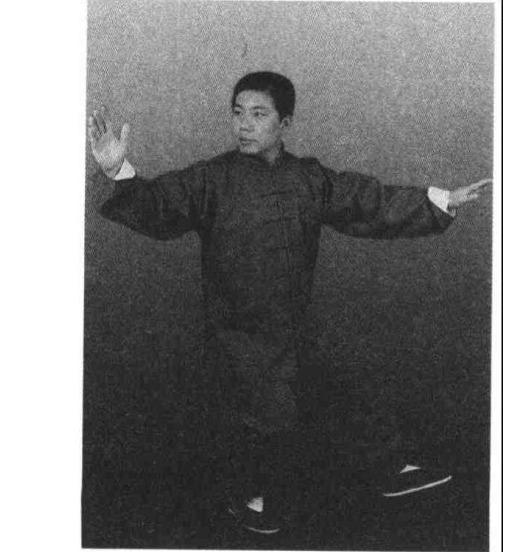
3. The body gradually turns left; the left foot steps back one pace, touching down first with the toes; as the centre of gravity gradually shifts onto the left leg the foot comes down flat (the foot set at a slant, toes pointing northeast). The right toes then turn to the front (east). At the same time, as the body turns, the right palm arcs slightly upward, drawing in past the side of the right ear and pushing out forward; the left palm turns palm-up and arcs back to draw in beside the left hip. The upper body turns about 90°, to the northeast, while the face still looks forward (east). The gaze follows the turn and looks level before it; the gaze must also take in the forward push of the right palm (see the figures on this page).
The movement is the same, with the directions reversed (see the figures on this page).
The movement is the same: the corresponding figures are as for the left-hand instance already described above.
Phần 45
III. Key Points
1. A characteristic of this movement is the step backward. To keep the body balanced the lower body must be stable, and so when stepping back there must be a certain lateral distance; the two feet must therefore not be placed on a single line.
2. When one leg lifts and prepares to step back, the other leg must support; it must not rise or straighten up, and must still preserve the same height of the body's centre of gravity as in the original empty stance — that is to say, in the course of practising the form the centre of gravity must not rise and fall too much.
3. The chest must be contained and the back raised, the sacrum centred and upright; there must be no leaning forward or backward. When stepping back, in order to land slowly one easily tends to lift the upper…
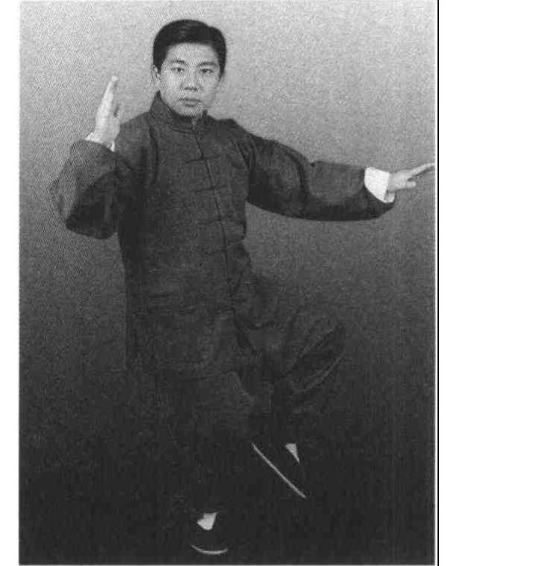
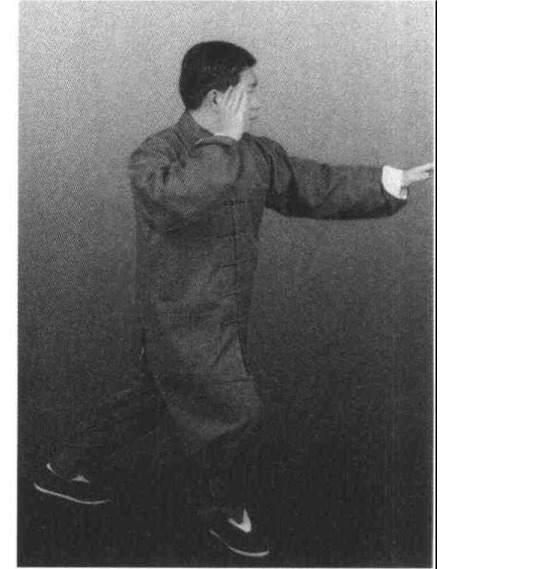
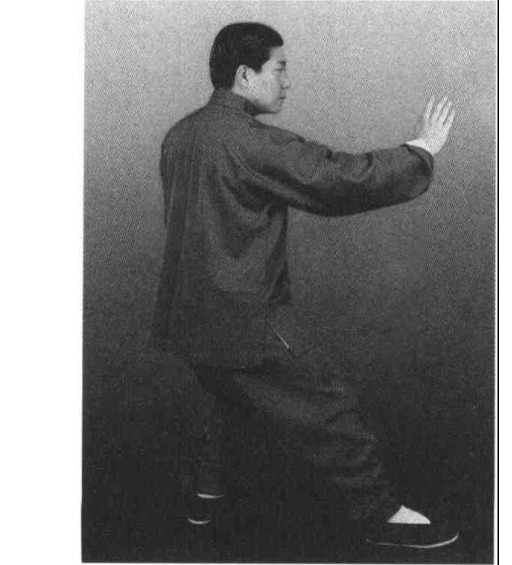
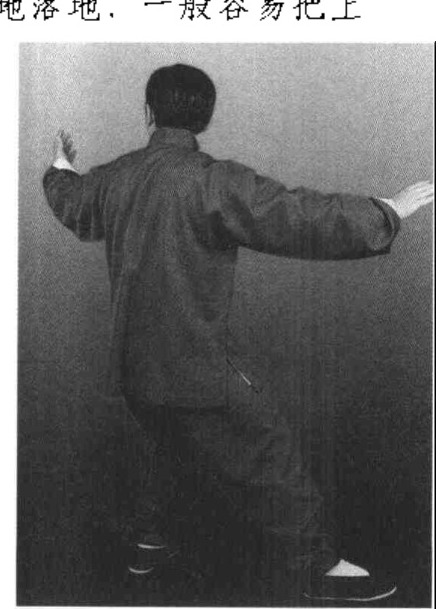
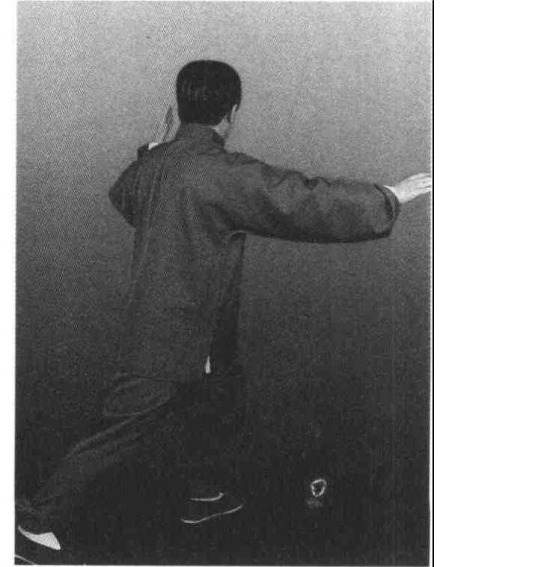
…leaning the body forward to obtain balance. After the centre of gravity has settled back, when the two hands exchange front-and-rear before the body, it is easy to let the body pitch forward. One must therefore attend to the body method: the two shoulders and the two hips must advance and retreat together, neither leading nor lagging, so that from the crown of the head through the trunk down to the perineum point there is always a straight line. The Boxing Treatise says: "Baihui and Zhongji are threaded through by a single qi."
4. The two hands must exchange before the body, one going back and the other forward, moving without pause; neither hand may halt at the side of the body. Beginners, attending too much to the hand that extends rearward and to other actions, let the hand at the front very easily halt motionless. Both hands must therefore move evenly and unbrokenly; when one thing moves, nothing is unmoving.
5. When a palm draws back it must pass by the side of the hip; beginners often carry the hand too high and should alter this so that it passes by the side of the ribs. Otherwise the arm and elbow become an angle smaller than a right angle and no longer form an arc — it looks awkward rather than broad and comfortable, and the shoulder is also lifted.
6. For the front foot to step back, one must first lift the thigh, storing power in the knee, raising the heel with the toes hanging naturally; then slowly extend back, touching down lightly with the toes and the ball of the foot first, and then letting the heel come down firmly. Only thus is the requirement "stepping as a cat walks" embodied. Moreover, because the time supported on one leg is lengthened, the burden on the supporting leg is increased, which better trains the strength of the legs.
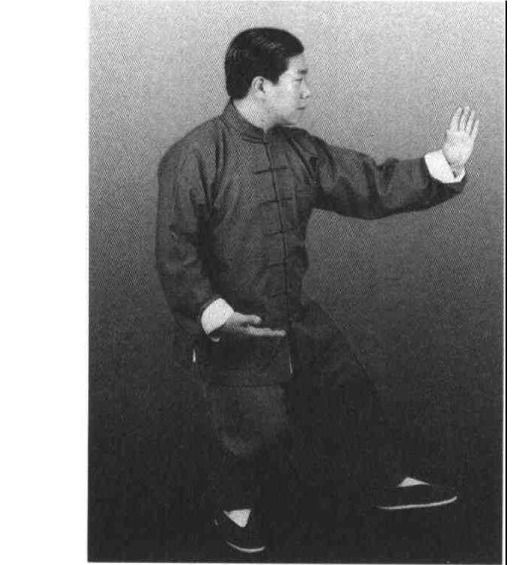
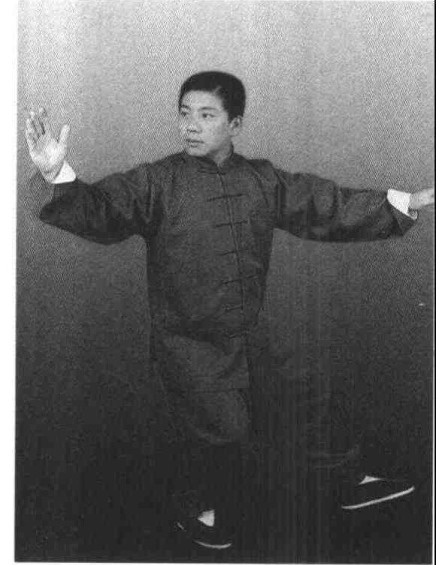
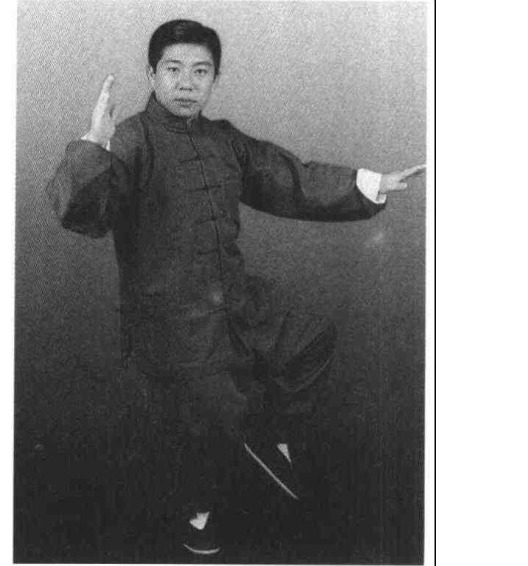
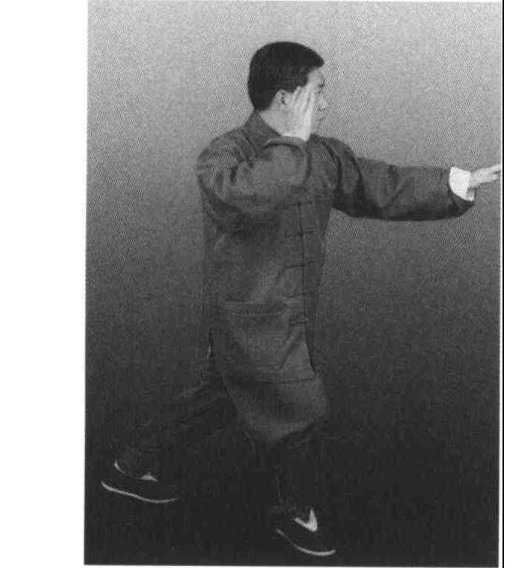
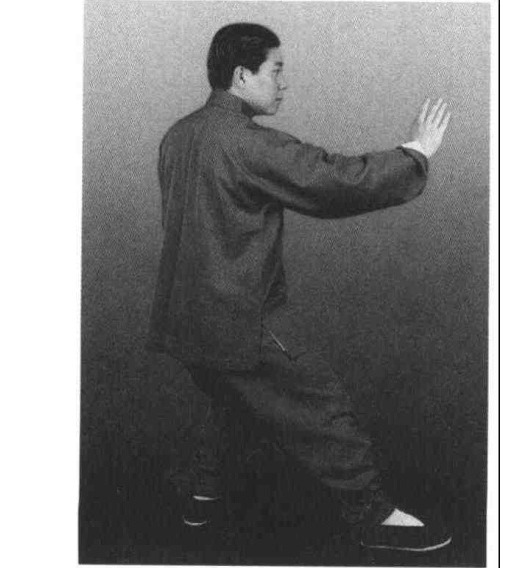
7. Step Back and Repulse the Monkey, left and right, may be done three times each (in a single set of the form …the Repulse the Monkey occurs twice), or it may be done five or seven times each, but the number must be odd (five is generally appropriate). In addition, Cloud Hands should correspondingly be done three, five or seven times; otherwise, at the closing posture one cannot return to the starting place.
8. The gaze alternates its attention to the movement of the hands.
Phần 46
IV. Requirements
1. The shoulders must sink and the elbows hang. In Taijiquan, on the premise of relaxing the shoulders, "sinking the shoulders" is required; only with sunk shoulders can there be lightness and nimbleness. If the shoulders can relax, the whole arm's extending, contracting and coiling can be natural, lively and utterly un-sluggish, and after long practice one reaches the mutual tempering of firmness and suppleness.
2. The two shoulders must be level; the shoulder of a gathered arm must not be low while the shoulder of a forward-pressing arm is high, nor the reverse, for this destroys the uprightness of the body method.
3. When stepping back, with one leg supporting, the body must be stable and must not sway; it must be as firm as a great tree that cannot be shaken.
4. The waist rotation must be neither too large nor too small; turning to the two diagonals is the proper measure. For the body to face squarely forward and move only the arms without turning the waist is certainly wrong; but when the arms extend to the rear diagonal and the body has turned through some 90°, with the two arms almost straight front and back at some 180°, that is too much and does not meet the requirement of the application.
5. There must be "uniform tempo in every posture" and "unbroken continuity." The rearward-travelling foot must not land too fast, nor may the front leg lift too fast; it must be even, rising and falling slowly, using intent and not force, unbroken from beginning to end, returning again to the start, cycling without end.
6. Beginners at the front hand often turn it over too fast, producing the phenomenon of one hand halting while the other is still moving. Since the requirement is that when one thing moves nothing is unmoving, both hands should be in motion.
1. Error: the body sways when stepping back. Main cause: the knee of the full foot is not stable, and the movement of the rearward-extending leg drags at the full leg, causing sway. Correction: the waist and hip must relax and sink, the buttocks drawn in slightly, the leg muscles steadying by force so that the knee-joint is stronger and the sole presses the ground more evenly and firmly; the lower body is then stable. Alternatively, if the shoulders are not relaxed, the movement of the arms drags at the upper body and disturbs its central uprightness, which also causes sway. 2. Error: when stepping back the two feet land on a single line. Main cause: a failure to understand the application. With the two feet on one line the base of support is small, and the slightest movement makes the already awkwardly placed legs unable to steady the centre of gravity — how then could one possibly neutralize and attack well? Correction: when stepping back the lateral distance between the two feet should be about the width of the shoulders.
3. Error: the two arms open out too widely, forming one arm forward (east) and one arm back (west), with the angle between the arms reaching 180°, which looks scattered. Main cause: an insufficient understanding of the circular movement of Taijiquan. If the arms open out too widely the movement becomes straight back-and-forth, and there is no longer "a marvellous hand whose every move is a taiji." Opening the arms too widely also drives the waist-axis to rotate too far; in combat this gives the opponent a gap — that is, it offers him an opening to attack.
4. Error: the front hand halts while the rear hand moves. Main cause: insufficient attention to "when one thing moves, nothing is unmoving." Correction: (taking Right Repulse the Monkey as the example) the left palm extends slightly forward and slowly rotates the arm outward so that the palm faces slanting down; then it slowly draws back… Meanwhile the right palm arcs up to the rear-right diagonal beside the right ear, and the left arm rotates almost "in place," with little visible change of shape. In fact, at this moment the shoulder, elbow and wrist joints and other parts of the body are all in motion; and as the right arm moves from below up and back, the two hands have precisely completed the preparatory action of the left hand drawing back and the right hand pressing forward — so that it is not one arm moving and one arm halting.
(The photograph at the foot of this page shows Fu Zhongwen demonstrating push-hands; it carries no figure number.)
…It is the same with the action of the foot: here too, when one thing moves nothing is unmoving. As the waist moves and the hands move, the foot below should at the same time slowly lift; as the right hand presses and the left hand draws in, at the same moment the left leg settles solidly and the right foot turns in exactly into place (facing squarely forward).
Phần 47
VI. Teaching Method and Practice Method
1. Explanation and demonstration (with emphasis on emptiness and fullness).
2. Breakdown method (taking Right Repulse the Monkey as the example):
- ① First do the backward step. The right leg supports steadily and the left leg slowly lifts; the waist and hip must relax and sink, so that as the left leg travels from front to back the movement is even and does not drag the body into swaying. The teacher should lead the student to keep the waist "straight" and lifted. The teacher checks, and students check one another, on the lightness of the left leg's lift and backward step and on the lateral distance.
- ② On the exchange position of the two hands front and rear — left hand forward, right hand beside the ear — as the body settles back the left hand draws in and the right hand presses forward; and while the hands move, the right toes slowly turn in to square. The teacher checks, and students check one another, on the coordination of hand and foot.
- ③ The set position. The left leg is full (the knee not past the toes), the right leg is empty (the right knee slightly bent), the body turns slightly left, the left hand palm-up beside the hip, the right hand pressing forward in an arc (vertical palm), shoulders relaxed and elbows sunk, chest contained and back raised, sacrum centred and upright. Although the set position is a brief moment, that moment must certainly be present and must not be slurred over; one may pause in it for inspection.
3. Auxiliary practice: the right leg is full; slowly lift the left leg — extend it back; the ball of the front foot lands lightly — the heel comes down lightly until the whole foot is firmly planted. This may be repeated, and the legs may be alternated. The number of repetitions and the speed may be set according to each person's strength; after finishing, do relaxing exercises.
4. Movement mnemonic: turning left and raising right, lift the left foot; the body turns, the hands move, the leg moves slightly; the left leg must land to the rear light and nimble; left draws in, right presses, then settle back steady; hand and foot must be full and round and easy; the centre of gravity must not rise and fall;
5. Students should value the training of the legs and equally value the training of the hands, observing in one another the sinking of the shoulders and the hanging of the elbows during the movement of the hands.
1. This movement is a backward step, so it trains muscles different from those used in stepping forward, and is all the more effective for training the body.
2. In stepping back it is comparatively difficult to "step as a cat walks." With one leg extending rearward, before the foot lands one must keep the other, supporting leg steady and the body unswaying, and land lightly and slowly — the demands this makes on every part of the body are very high. And the more one requires the rearward-extending leg to be slow and nimble, the higher the demand; the lower the stance and the longer the step, the harder it is to lift the front leg; and the farther the rearward leg extends, the longer the movement takes, so that the muscular burden on both the supporting leg and the extending leg is greater. Hence long practice in a fairly low stance is very effective for increasing the strength of the waist and legs and for health.
Eighteenth Posture: Diagonal Flying (Xie Fei Shi)
Phần 48
I. Application
Continuing from the preceding posture: if the opponent strikes at my upper body from my right side, or presses with force between my right arm and wrist, I take the opportunity to sink and close downward, storing energy; at the same time I step out with the right foot, bend the knee and seat it solidly, and split the right hand out toward the upper-right corner, striking diagonally with an opening energy, as if flying out diagonally. The intent of the palm's delivery should also accord with the requirement of this movement.
Slanting variation: if the opponent presses my right upper arm, I contain the chest and relax the hip, first neutralizing his pressing energy; the left foot lifts and steps quickly down, the right foot lifts and is then put down, and the two hands first ward off and then press.
1. The centre of gravity gradually shifts entirely onto the left leg; the right leg lifts, and at the same time the waist turns slightly right. The left arm slowly rotates inward; the left palm-up hand, as it arcs up and to the right, turns over into a downward palm, the arm bent and placed before the left chest, the hand about level with the shoulder, the arm forming an arc, the elbow slightly sunk. The right palm, from the front, goes down and across the front of the abdomen, arcing down-left; as the right arm shifts, it rotates outward so that the palm faces upward, joining with the left palm above and below. The gaze takes in the left palm's arc (see the figures on this page).
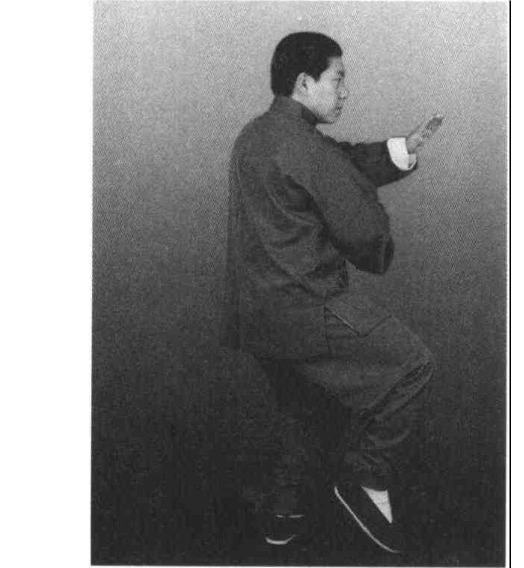
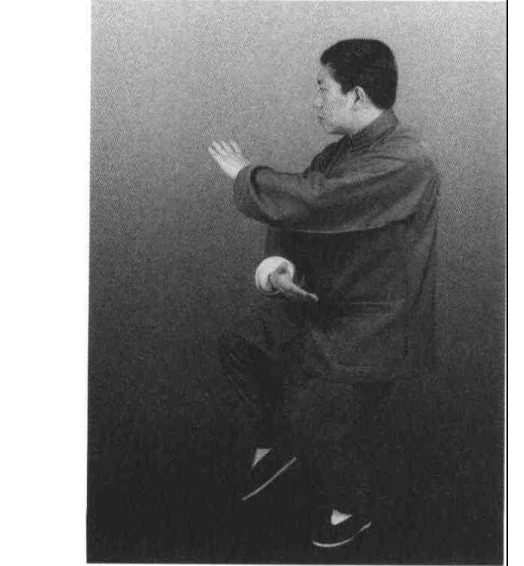
2. The body continues to turn right; the left leg seats solidly and the hip opens; at the same time the right foot steps out toward the rear-right (south). The heel lands first; as the centre of gravity gradually shifts onto the right leg the whole foot settles firmly. Bow the right leg and push back with the left, forming a right bow stance. As the body turns, the right palm, using the ward-off side, wards out toward the upper rear-right, the palm facing slanting upward, at about the height of the forehead; the left palm arcs down-left …plucks down, at about the height of the hip, the palm facing down. The left foot pivots on the heel as the body turns, the sole turning inward. The gaze follows the turn of the body, looking level as it turns; the gaze must also take in the right palm's outward plucking (see the figures on this page).
Phần 49
III. Key Points
1. The right leg slowly lifts and turns right with the waist, the body centred and upright, laying the foundation for the step to the rear-right.
2. In stepping the right foot to the rear-right, the body's balance is comparatively hard to control. Beginners tend to pitch the body forward, to lean crookedly, and to land heavily (the boxing proverb says: head bowed and back hunched — the boxing art is not high). The waist must both turn nimbly and stay "straight"; only with the central axis unbent can one support all eight directions. Hence one must sit solidly on the left leg, relax the waist and hip, and let the right leg, as the waist turns, gradually step out to the rear-right — only then will it look light and nimble.
3. When the right palm plucks out to the upper rear-right, the energy must arise in the foot, issue from the leg, be governed by the waist, and pass through the spine and back, from shoulder to elbow and elbow to hand, taking form in the fingers. Struck out with every joint threaded through, body, hand and step coordinated, arriving all as one — neither first nor last; the hand and the rest of the body must not be disconnected. One must attain "upper and lower following one another" and the requirement of the energy path; at the same time the right arm must not be fully straightened.
4. Because for beginners the supporting leg is not easily made stable, the body is not easily kept "straight," and the waist and hip are not easily relaxed, the movement is not easily controlled and the waist and leg actions tend to halt or go too fast. Hence the movement must change gradually and not abruptly, and the knee-joint of the supporting leg must be kept steady.
5. Because the stepping method is always best when advance and retreat are convenient, the stance is steady, and the hip-root is opened, when the waist turns and the right hand strikes out to the upper right, the left foot must plant and its front sole turn inward.
1. The movement must be done in one continuous breath, not broken up.
2. The waist must relax, sink and stand upright; no pitching forward, no tilting, no swaying.
3. The landing position of the right foot must be correct; it must not be too small, for if too small the waist becomes awkward.
4. The right leg must land lightly and nimbly.
5. The hand that plucks out to the upper right must turn with the waist.
Phần 50
V. Common Errors, Their Causes, and How to Correct Them
1. Error: after the right leg lifts, in the course of stepping out to the rear-right the leg does not travel by way of an arc. Main cause: an insufficient understanding of the requirement of spiral, arcing movement. Correction: in Taijiquan every movement's rise and fall, rotation, opening and closing, emptiness and fullness is constituted by arcs. Above, it is the turning of the wrists and the turning of the upper arms, taking form in the fingers; below, it is the turning of the ankles and the turning of the legs, reaching to the tips of the toes. The hip must urge the knee and the knee urge the foot. The right leg lifts and steps forward as the body turns — it must not first be brought stiffly in beside the inside of the left ankle and only then stepped out; rather it must arc out to the front-right as the body turns. Of course, withdrawing the leg straight sideways is also not good.
2. Error: after the right leg lifts it simply stops moving, and only after the body has turned does it step out to the rear-right. Main cause: an insufficient understanding of the requirement "when one thing moves, nothing is unmoving." Correction: at the same moment the right leg lifts, the waist and hip should gradually turn right; as they turn, the right leg, lifting, arcs out to the rear-right. The waist is turning, the hands are moving, and the right leg too is ceaselessly changing — attaining the gradual transition from opening to closing and closing to opening, from full to empty and empty to full.
(The photograph at the foot of this page shows Fu Zhongwen demonstrating push-hands; it carries no figure number.)
3. Error: when stepping out the right leg the upper body pitches forward and topples sideways. Main cause: in order to lighten the load when stepping out the right leg, because the left leg's support is weak, one borrows a forward pitch and sideways topple to keep balance. Correction: first of all the waist must be kept straight — that is, the central axis must not bend — so that all the weight above the waist is borne by the waist and legs. In addition, the leg strength must be increased so that the supporting leg is steady.
4. Error: the right hand plucks out to the upper right by moving the hand alone, without coordinating with the turning of the waist and hip and the extending and pressing of the left leg, so that upper and lower are disconnected. Main cause: a shallow understanding of "upper and lower following one another." Correction: as body, hands and legs go forward, the crotch energy must sink, the soles of the feet take the force, and the inner energy turns up from within the crotch, penetrating the spine and back and shooting straight out to the palm and fingers. Within going forward there must be a bracing behind; only thus will the right hand not be grasping at empty air.
5. Error: the left leg sits dead and unmoving. Main cause: the movement is not full and rounded, but wooden. Correction: when the waist turns, the left leg should carry a sinking intent and the waist and hip must be relaxed.
Phần 51
VI. Teaching Method and Practice Method
1. Explanation, demonstration, building the concept.
2. Teach by highlighting the difficult point. The difficulty of Diagonal Flying is the action when the right leg lifts and, as the body turns, steps out to the rear-right: either the body is not upright, or the landing is very heavy. This should therefore be taken as the key point and this barrier broken through:
- ① Explain clearly the requirements of the correct movement and demonstrate it repeatedly.
- ② Break through by stages.
A — The right leg lifts and draws back slightly; as the body turns, the left hand moves to the upper right and the right hand to the lower left; while the two hands join above and below, the right leg extends slightly to the rear-right. At this moment hold the correct requirements — the upper body upright, and so on — laying the foundation for the movement to follow; this part can generally still be managed. B — The body continues to turn right and the right leg continues to extend to the rear-right. As the suspended right leg goes on extending, the weight thus carried away from the support point continually increases, and so too do the demands on the muscles of the waist, back, hip and knee. Hence the beginner, wishing to keep the movement slow and nimble but lacking the strength, is forced to bring the right heel down quickly and heavily. Thus the requirement "stepping as a cat walks" is not attained. To overcome this difficulty the only way is …to strengthen the training of the muscles of the waist and legs; in time, as the muscles grow strong, the step becomes nimble. Hence, in practising the form one should repeatedly perform the lifting and stepping of the leg as the body turns.
3. The teacher inspects, and learners, in groups of two or three, inspect one another on: ① whether the body pitches forward, leans back or topples sideways; ② whether the turning of the waist and hip is full; ③ whether the right leg, when stepping out to the rear-right and landing, is heavy or light.
4. On the basis of having practised the earlier requirements well, then progressively resolve the details.
5. Paired practice combining the application: A — takes the set position of Repulse the Monkey. B — stands at A's right side and strikes down from above with the right hand, or presses between A's right arm and wrist. A — takes the opportunity to sink; the two hands join above and below; sit solidly on the left leg and step the right leg out to the rear-right; at the same time the right hand splits out and plucks toward the upper-right corner. The two then exchange roles.
6. Attention must be paid to stability of the lower body: one must practise the left leg's solid seating well, and repeatedly practise the left leg's steadiness during the waist-and-hip turn, the leg lift, and the step.
7. When the right foot lands, begin the two-way even division. One must practise well the energy arising from the foot and reaching the elbows and hands through the waist and back. Repeatedly experience this, so as to attain "upper and lower following one another."
8. The teacher should observe the changes in each part of the learner's body at every stage.
Phần 52
VII. Technical Analysis
1. The body moves from a northeast-facing position to the south, a shift of about 135°. Since the left foot is fixed, the left knee tends somewhat to the northeast, while the right leg steps toward the west-southwest; hence as the two legs open out, the actual angle approaches 180°. Thus not only are the demands on the left leg's support extremely high, but the lifting and moving of the right leg also makes it extremely hard to train the upright centring of the upper body's sacrum. It requires that the left hip be adducted and seated solidly, the lower body steady, the waist relaxed and sunk; the central axis must on no account bend — only then can the inner energy support all eight directions, and only then will there be no left-right crookedness nor forward-and-backward pitching.
2. In outward form Diagonal Flying is the right palm plucking out to the upper rear-right; at a glance it seems to be only the action of a hand. But unless the energy arises in the foot, issues from the leg, is governed by the waist, passes through the spine and back, and goes from shoulder to elbow and elbow to hand, threaded through joint by joint, one cannot attain the requirement of the application nor the better …requirement of training the body. Therefore, after the right foot lands, one must begin the release of energy from the foot, reaching gradually upward to the wrist and fingers.
Nineteenth Posture: Raise Hands and Step Up (Ti Shou Shang Shi)
Phần 53
I. Application
The same as the Fifth Posture, Raise Hands and Step Up, above.
The waist and hip sink slightly; the centre of gravity shifts forward and is placed entirely on the right leg; the left foot lifts slightly and comes down a little forward (essentially in place); the centre of gravity then gradually shifts back until it rests entirely on the left leg. The body turns slightly left; the right foot lifts slightly and comes down essentially in place, landing on the heel, the toes slightly raised and pointing forward, the knee slightly bowed, forming a right empty stance. At the same time the right arm rotates inward; as the elbow sinks and draws inward, the right palm gradually turns downward and slants down; the left palm arcs forward and upward; the two palms close toward the chest. The right palm is in front, the fingers at about the height of the midpoint between the eyebrows, palm facing left, a vertical palm; the left palm's fingers are at about the height of the chest, palm facing right (slightly downward), squarely facing the right elbow-joint. The waist turns slightly left. The gaze passes over the right palm and looks level forward. See the figures on this page (the last of which is the same posture as shown in the earlier Fifth Posture).
1. The centre of gravity moves forward and back, but the body must not rise and fall greatly; it must be steady.
2. From the beginning to the end of the whole movement, the waist and hip and the upper and lower limbs must all begin at the same moment and finish at the same moment.
The learner must understand that although the Nineteenth Posture and the Fifth Posture are both Raise Hands and Step Up, the linkage is different. In teaching and learning, the linking process must be made clear.
All other points are the same as for the Fifth Posture.
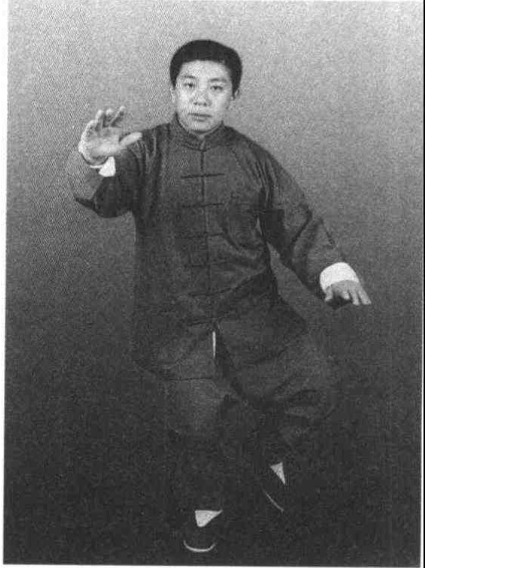
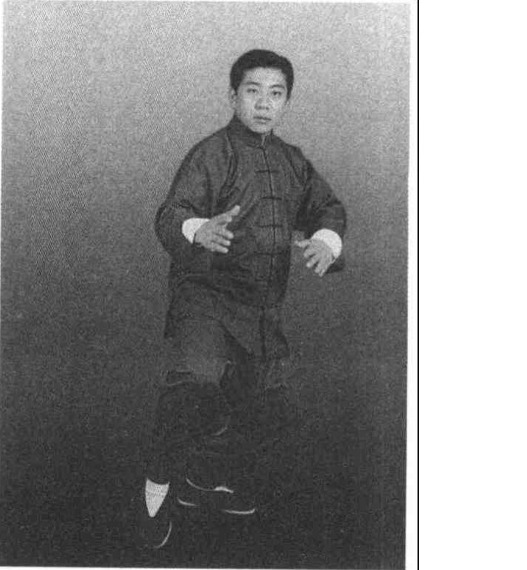
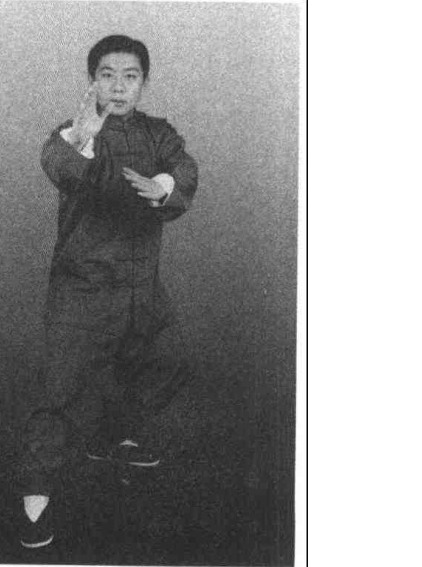
Twentieth Posture: White Crane Spreads Its Wings (Bai He Liang Chi)
The application, the movement sequence, the key points and all other aspects are the same as for the Sixth Posture, White Crane Spreads Its Wings. See the figures on this page (which correspond to those of the Sixth Posture).
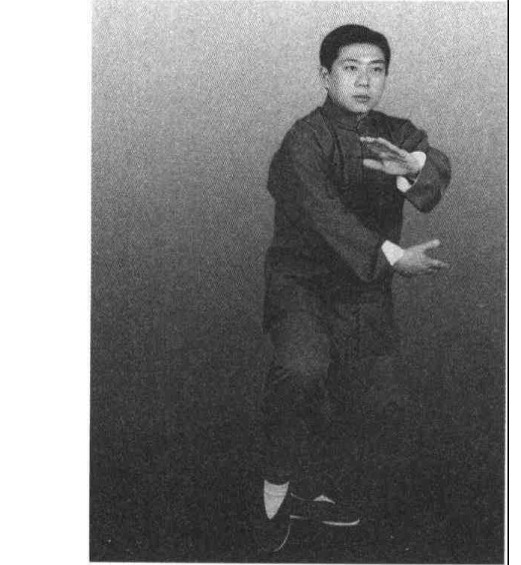
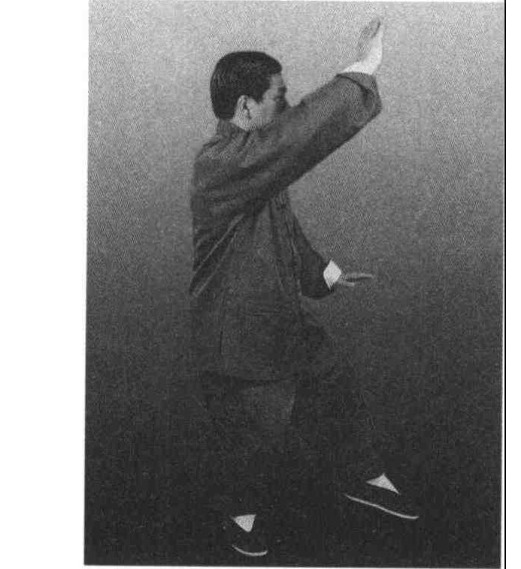
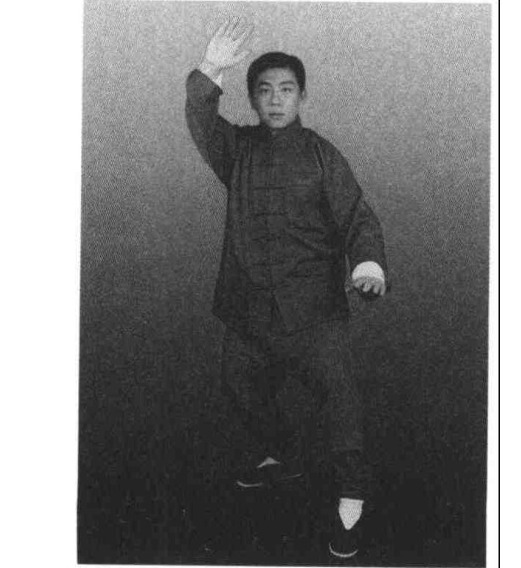
Twenty-First Posture: Brush the Knee and Twist Step, Left (Zuo Lou Xi Ao Bu)
The application, the movement sequence, the key points and all other aspects are the same as for the Seventh Posture, Brush the Knee and Twist Step, Left. See the figures on this page (which correspond to those of the Seventh Posture).
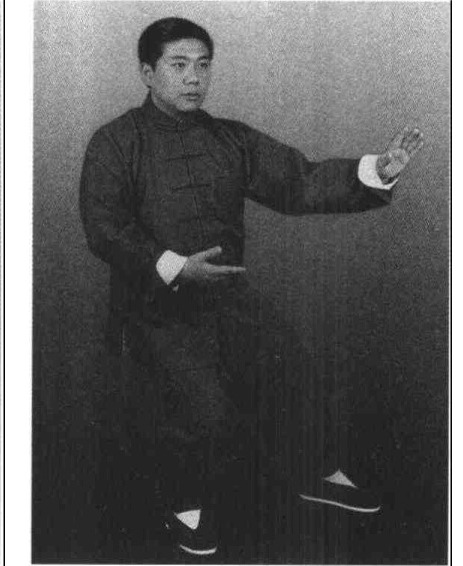
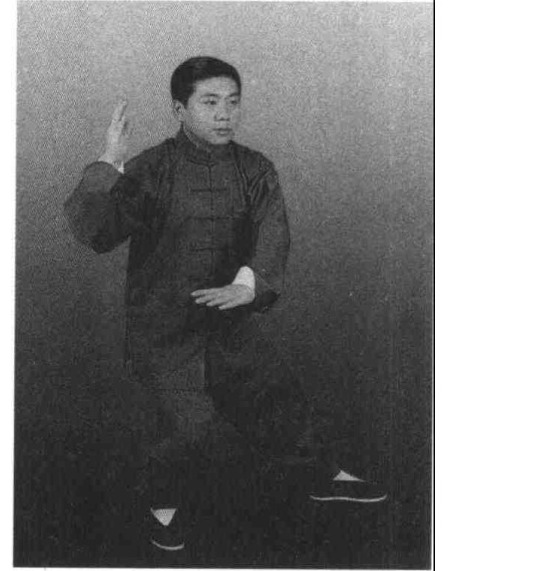
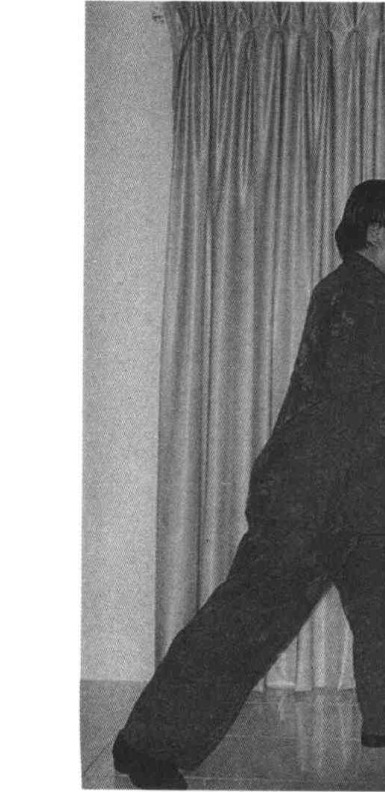
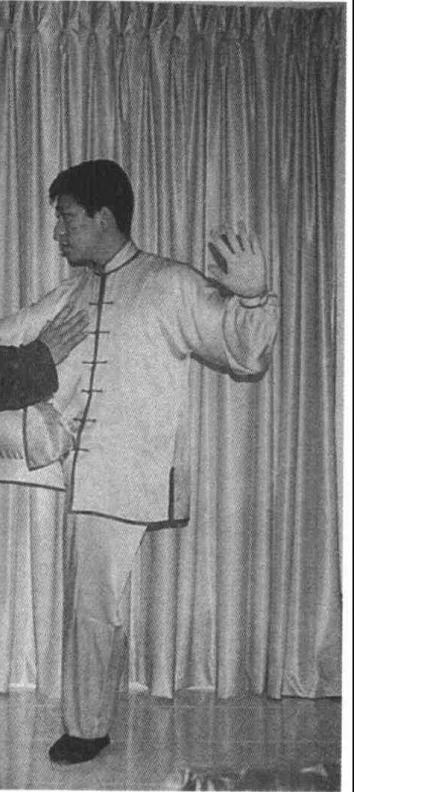
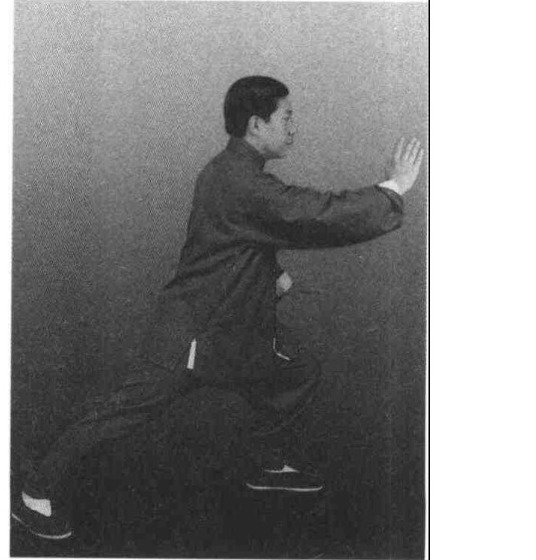
Twenty-Second Posture: Needle at the Bottom of the Sea (Hai Di Zhen)
Phần 54
I. Application
Continuing from the preceding posture: if the opponent uses his right hand to pull my right wrist, I bend my right elbow, sit on my right leg and turn my waist, drawing my right hand back. At the same time the left hand goes left and the left foot is drawn back with it, touching the ground with the toes. If the opponent still has not let go, and instead wishes to press his advantage further and attack me, I let my right wrist go slack in the direction of the movement, fold at the waist and sink down, the gaze looking forward, the fingertips hanging down, as if searching for a needle at the bottom of the sea. At this moment, though the opponent means to pluck or to attack me, his incoming force is a single straight force; he does not expect that, checked by my one fold, his root-force snaps by itself — and I take the opening to strike him.
If the opponent uses his right hand to pull my right wrist, I immediately sit on the right leg, bend the right elbow and turn the waist to the right, drawing the right hand back; the left foot is at once drawn back, touching the ground with the toes. The purpose is to break free of the gripped right hand: taking the seated right leg as the base, using the turn to change the direction in which he pulls me, using the outward rotation of the right arm and the leftward turning of the palm to alter the opponent's grip, and using the drawing back of the left leg to increase the distance of withdrawal and to make attack and defence easier.
1. The centre of gravity gradually shifts entirely onto the left leg; the right foot lifts and comes down a little forward (about a foot or a little more). At the same time the right arm rotates outward so that the palm faces left, and turns from a vertical palm with a seated wrist into a flattened one; the right hand sinks slightly and the left hand shifts slightly forward and sinks (see the figures on this page).
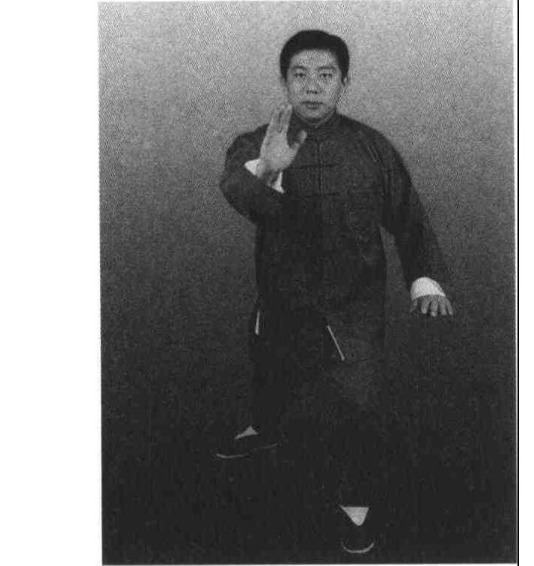
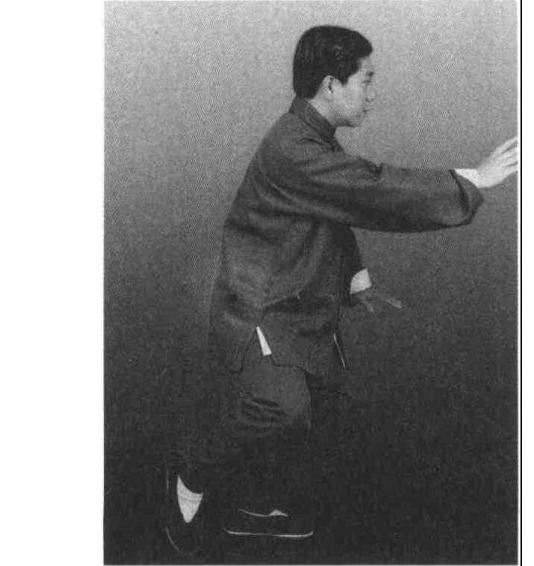
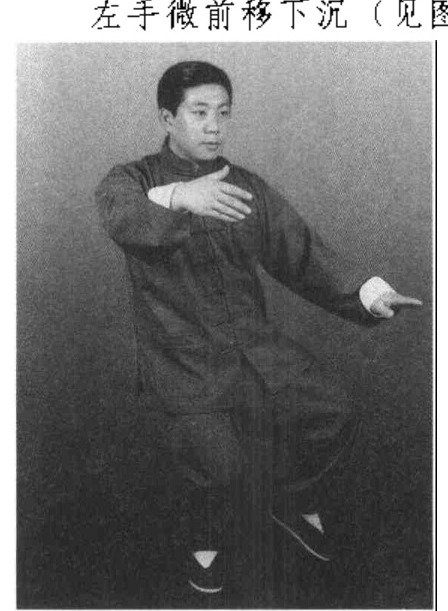
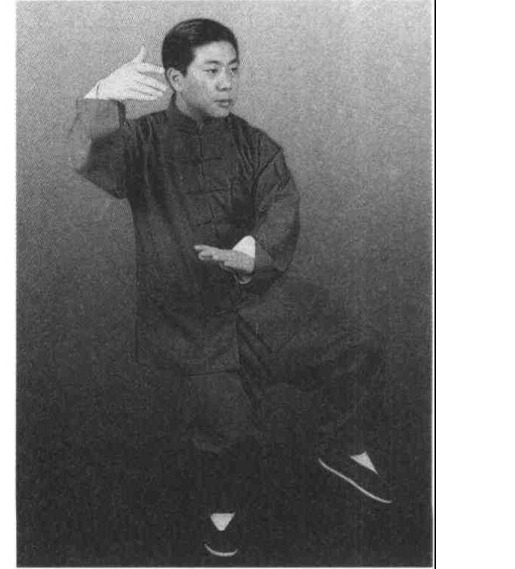
2. As the centre of gravity gradually shifts back until it rests entirely on the right leg, the left foot lifts, the waist turns slightly right, the right elbow bends and the right wrist draws in and back; the two hands rise slightly with the shifting of the centre of gravity. The gaze takes in the drawing back of the right wrist (see the figures on this page).
3. If at this moment the opponent still has not let go, and instead wishes to press forward and attack me in the same direction, I fold at the waist and sink down, changing the direction of his force. Therefore the left foot draws in slightly and comes down, touching the ground with the toes, forming a left empty stance; the waist turns slightly left, the right leg sits solidly, the left hip-root adducts, and the waist folds and sinks. At the same time the right palm, with the turning and folding of the waist, drives forward-and-down; the left palm arcs down to rest beside the left hip. The eyes look forward; the gaze must take in the right palm's downward drive (see the figures on this page).
Phần 55
III. Key Points
1. As the centre of gravity moves forward and back, the two hands sink slightly and rise slightly; but the upper body still maintains "the sacrum centred and upright."
2. When the left foot lifts and comes down after drawing in slightly, and the upper body folds at the waist and sinks, the right leg must gradually squat, the left toes merely touching the ground in emptiness, and the centre of gravity must be borne entirely by the right leg.
3. When the right wrist draws inward and back, one must guard against shrugging the shoulder and lifting the elbow.
4. When the right palm, having drawn back, drives up, forward and down, its arc must accompany the squatting of the right leg and the folding of the waist, and the shoulder must urge the elbow and the elbow the hand, driving down with every joint threaded through.
5. In folding the waist, the neck and the waist-and-back must be kept in a single straight line; one must not bow the head or hunch the back. One must attend to the uplifting energy and the sinking of qi, threading one qi through above and below.
6. While driving down, the eyes look before the right palm, but the head must not be raised.
7. One must practise well "when one thing moves, nothing is unmoving." If the right palm has a drawing-back action, the left palm must likewise move forward and back with the centre of gravity and act together with the turning of the waist; one must not move only the right hand and not the left. The two arms must not be fully straight; they must be slightly bent.
8. When the right arm draws back the waist turns slightly right; when the waist folds and drives down it must turn slightly left. One must not move the hand alone without moving the waist; one must meet the requirement "the waist is the governing authority."
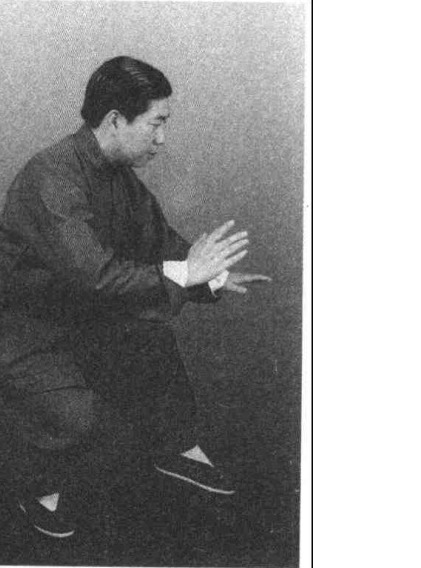
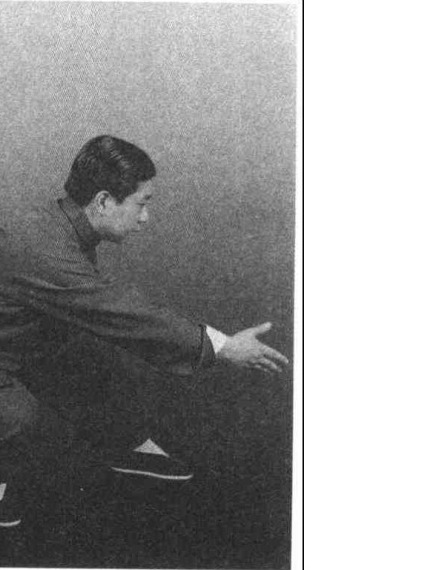
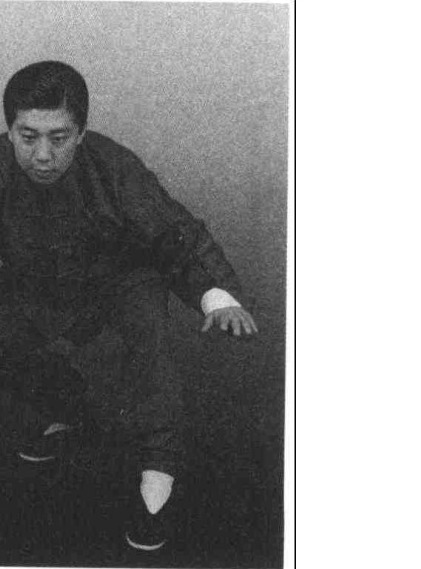
1. When folding at the waist and sinking, the neck and the waist-and-back must keep a single straight line; the buttocks must not protrude — protruding buttocks easily twist the arms and impair "the sacrum centred and upright."
2. After the sole of the right foot lifts, it must be set down with the palm of the foot at a slant; thus the lower body is easily made stable.
3. When folding at the waist and sinking, the right must be full and the left empty; otherwise one's own stance is unsteady and one is easily dragged about by the opponent.
4. The right hand's downward drive must seat the wrist; it must not be slack and powerless.
5. When folding at the waist the head must follow naturally, neither raised nor lowered; otherwise the qi and blood are made to flow poorly.
Phần 56
V. Common Errors, Their Causes, and How to Correct Them
1. Error: the right hand does not bend at the arm when drawing back. Main causes: ① attending to the foot and neglecting the hand; ② insufficient understanding of the application. In the action of bending the arm there are sinking and turning actions, and the distance the held point must travel is increased, which readily snaps the opponent's root-force. Correction: when the right hand draws back, one must at the same time shift the centre of gravity back, turn the waist right, and bend the arm.
2. Error: when the left foot comes down, it is not "sent down" by the squatting of the right leg; instead the right foot sits motionless and the left foot comes down by itself. Main cause: insufficient understanding of the application. If the right leg does not squat, then to sink and break free of the opponent's wrist-grip one can only rely on the strength of the hand, or at most of the waist and abdomen, and cannot bring the strength of the whole body into play.
(The photograph at the foot of this page shows Fu Zhongwen and Fu Shengyuan demonstrating push-hands; it carries no figure number.)
Correction: the right leg sinks to "send" the left foot down, and at the same time the right leg bears the whole body's weight as it squats.
3. Error: lowering the head and rounding the back. The main causes are: ① the right leg lacking the strength to squat. ② a shallow understanding of "the tailbone centred and upright". ③ a shallow understanding of the application. With the head lowered and the back rounded one cannot see the opponent's movement and cannot know him; how then can one attack and defend? Only by practising with the tailbone centred and upright can one be calm and comfortable. A rounded back and hollowed chest is a sickly posture and is unfavourable to breathing. Correction: the crown of the head, the trunk and the perineum must form one straight line.
4. Error: when turning the waist right to draw the right hand back, the turn is too wide — approaching 90° to the right. The main cause is a subjective pursuit of expansiveness, which results in scattering. Correction: the turn should be slight.
Phần 57
VI. Teaching and Practice Methods
1. Explain and demonstrate (with a student as assistant, demonstrating the backward raise and the sinking).
2. Mnemonic: shift forward and sink slightly, then raise; turn the waist and bring the arm back, sinking down; the right leg solid and the left leg empty; fold at the waist, draw in the buttocks, and look ahead.
3. Group practice: ① while the centre of gravity shifts forward and back, observe the alternation of solid and empty in the two feet; one may support on one leg and lift the other, holding it off the ground for the moment and then slowly setting it down, to deepen the experience of solid and empty. ② in the left empty stance, squat slightly on the right leg while the left leg lifts empty and does not touch down, to strengthen the right — the solid leg — and deepen the experience of solid and empty.
4. Those of weak constitution should not squat deeply on the right leg; the stance may be higher, to reduce the amount of exertion.
5. The focus of teaching may be placed on folding at the waist and sinking, on improving the solidity and emptiness of the legs, on drawing in the buttocks, and on correcting such faults as lowering the head, rounding the back and crooking the spine.
6. In the course of practising the form the student must be brought to understand the application. The Needle at the Bottom of the Sea is not only the application of the right arm thrusting down; before it there is also the movement of drawing the right arm back, and in this way one gains an understanding of the whole process.
7. Whole-form practice, improving the movement of the two hands. The centre of gravity shifts forward, the body rises slightly, and the two hands rise slightly with it, forming the left empty stance. The right leg squats, the right hand thrusts down, and the left hand presses down. Practise repeatedly, experiencing the requirement of "when one part moves, no part is still".
8. Paired practice using the application: A — performs Brush the Knee and Twist the Step, and offers the right wrist to be gripped by the partner, B. A — shifts the centre of gravity back, turns the body slightly right, and draws the right arm back, feeling the strength of the backward draw, then thrusts the right arm down and lowers the centre of gravity, and so on, to experience the application of Needle at the Bottom of the Sea and to feel how one snaps B's root strength. Practise repeatedly and exchange roles.
Phần 58
VII. Technical Analysis
1. The first difficulty of Needle at the Bottom of the Sea lies in the squat of the left empty stance. For it makes high demands not only on the quadriceps and other muscles of the front of the thigh, but also — because the upper body folds forward, the left leg hangs empty and the body's centre of gravity shifts forward — on the muscles of the waist and back and the gluteals. Hence a good many muscles are brought into play, which raises the training effect. At the same time, because the upper body bends forward, it squeezes and massages the internal organs of the chest and abdomen, which is a great help in strengthening the constitution.
2. The characteristic of Needle at the Bottom of the Sea is that it folds the body forward, and in the whole of the Yang-style form this is rather conspicuous. Bending forward, lowering the head, bending the waist and crooking the back — this loses the upward energy of the empty collar and loses the containing of the chest. But in a correct fold-and-sink, although the bend at the waist is large, one still maintains "the crown point, the central pole, one breath running through"; for although this is a deviation within centredness, the inner energy is still centred and undeviating. Therefore the head must follow naturally — one must not lower the head, must not protrude the buttocks, and must draw the buttocks in.
Twenty-third Posture: Fan Through the Back (Shan Tong Bei)
Continuing from the previous posture. If the opponent again strikes with his right hand, I hastily raise my right hand from in front upward until it is beside my right temple, and at once turn the palm outward, using it to support the strength of the opponent's right hand; the left hand at the same time comes up in front of the chest, bursts open with the palm, and drives straight at the opponent's ribs, sinking the shoulders, dropping the elbows, sitting the wrist and relaxing the waist. At the same time the left foot steps forward, the knee bends and sits solid, the toes pointing forward. The gaze follows the left hand forward, and the right leg's hip and waist extend and send the strength out. Its energy issues from the back; the two arms open out, so that the fan opens through the back.
1. Sitting solidly on the right leg, the waist straightens as it turns right, and the left foot lifts and moves back; at the same time the right palm is raised from in front of the body, rotating inward as it rises so that the palm faces right and the fingers slant downward; the left palm is raised from beside the left hip up to in front of the chest, its palm also facing right, the fingers slanting upward. When the right arm has been raised to the height of the chest, the gaze must attend to the right palm's rising (see the first two figures at the right-hand side of this page).
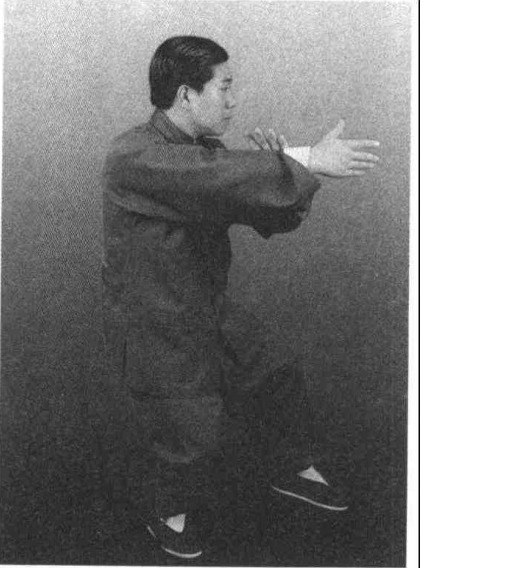
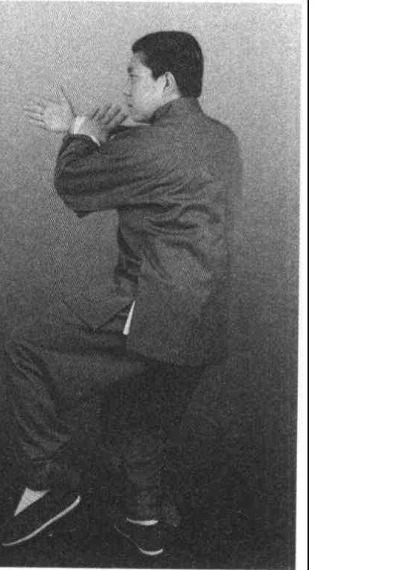
2. The left leg lifts and steps forward a pace, touching down heel first, the toes pointing forward; as the centre of gravity gradually shifts onto the left leg the whole sole presses flat, the left leg bows and the right leg pushes, forming a left bow stance; at the same time the right arm continues to rotate slightly inward and bend at the elbow, and the right palm arcs outward to support, the left palm moving right to come close to the right forearm; the right hand is drawn back to the right side of the forehead, no higher than the crown, and the left hand strikes forward, the fingers no higher than the eyebrows. The eyes look level ahead, and the gaze attends to the left palm's forward push (see the third figure at the right-hand side of this page).
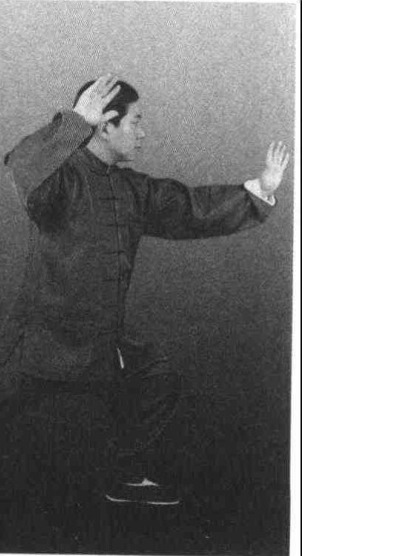
Phần 59
III. Key Points
1. The linking of the movements is very important. Once the right arm of Needle at the Bottom of the Sea has thrust down into place, the upper body must rise, the left leg draw back and the two arms be raised; there must be no pause anywhere. Inside and outside, above and below, left and right, front and back must be coordinated; upper and lower accompanying each other, done in one breath — only then does one gain the opportunity and the advantage.
2. The difficulty of Fan Through the Back lies in doing the slow forward step of the left leg well while supported on the right leg alone, and in requiring an even speed and a clear distinction of solid and empty. The right hip root must draw in, the right abdomen be full, and one must sit steadily on the right leg; then the left leg slowly advances a pace. Hence beginners find this movement hard to do well: they usually fail to control the centre of gravity, so that the left leg lands quickly, or the right leg straightens; this fails to meet the requirement of unbroken continuity and of stepping like a cat, and also produces the error of the centre of gravity rising and falling violently. Therefore attending to the stability of the right leg is of great importance.
3. In changing from the right empty stance into the left bow stance, the left leg bowing forward, the right leg pushing back, the left palm pushing forward and the right palm supporting upward — these four movements must be as one. In this way, while the upper frame is set, the left palm drives straight at the opponent and one achieves the effect of attacking where he is empty.
4. The right palm's upward support must sink the shoulder and drop the elbow; do not shrug the shoulder or lift the elbow, for lifting the elbow exposes the ribs. The left palm's push must sit the wrist, and the palm must not face squarely forward.
5. In the course of the movement the arms are often easily held straight, which does not accord with the requirement "strength is stored in the bends and has surplus" — the movement should leave room for extension, and one should be storing power everywhere and able to release power everywhere. Therefore, throughout the whole set of tai chi chuan movements, neither the two arms nor the two legs may be straightened or held rigid.
6. In the movement one must not throw the chest out; throwing the chest out does not accord with the requirement of "containing the chest and raising the back". For the right hand's support and the left arm's level push both require the strength to issue from the spine. The function of containing the chest is to favour the dissolving of energy, and the function of raising the back is to favour the rolling and releasing of energy; in combat they are related as storing and issuing, each transforming into the other.
7. One must "keep the tailbone centred and upright, and support the eight directions": never allow any part of the body to slacken and lose its centre, and however the limbs may turn and change, from the crown of the head to the perineum there is always one line. When the left leg steps, the body must not lean forward or backward, nor tilt to left or right; one must both have upper and lower accompanying each other and keep upper and lower essentially one line.
Phần 60
IV. Requirements
1. As the body straightens and the left foot is drawn back, one must sit solidly on the right leg, not lower the head or stoop, and not sway the body from side to side.
2. At the same time as the upper body straightens, the left foot, left hand and right hand — together with a slight turn of the waist to the right — must all move together.
3. The right palm must turn as it rises; by the time it has risen to shoulder height the elbow joint should already be hanging down. The left palm, raised to beside the right forearm, should be no higher than the shoulder; otherwise the left palm will not be driving straight forward.
4. The left foot steps forward, touching down heel first, and is required to be light and slow.
5. In stepping the upper body must not fall forward or lean back; the tailbone must be centred and upright.
6. The waist is the key to the turning of the upper and lower limbs. In issuing the left palm, the waist turns slightly right, the leg bows, the leg pushes, the waist wrings, and finally the palm is issued. If the strength of the waist is used appropriately it reinforces the issuing of power and concentrates the whole body's force at one point.
7. The left leg steps forward and only after the heel has landed does the left hand push forward.
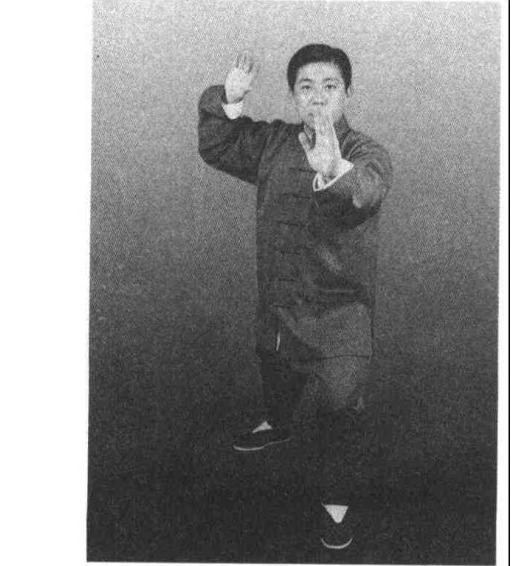
1. Error: the left leg steps forward and lands fast and heavily. The main cause is that the upper body has not been raised and the body — the body's centre of gravity has moved far from the support point of the right foot; the moment the left foot is lifted empty, the body rushes forward, so the left foot has no choice but to land heavily and in haste. Correction: the upper body must be raised and kept upright, "containing the chest and raising the back", and the body's weight placed entirely on the right leg, so that the lower body is first made stable. Then the left leg is slowly stepped out, and in this way one can be light and nimble.
2. Error: when the movement begins, only the hands and feet move and the waist does not turn. The main cause is that the practitioner has not deeply grasped that "the waist is the key to the turning of the upper and lower limbs", nor deeply experienced the change of the whole body's movement and the transmission of energy to every part of the limbs. Correction: from the very start of the movement the waist must lead the hands and feet. Hence "in the change of solid and empty one must be attentive".
3. Error: the left leg has bowed into place but the two hands are still moving. The main cause is an insufficient understanding of the application. "Within going forward there must be a bracing behind." When body, hands and leg go forward, the crotch energy sinks, the sole takes the weight, and the force passes through the spine and reaches the palm and fingers to shoot straight. Hence where there is forward there must be backward; this is what must be done well to reinforce the reactive force. Correction: the hands must arrive, the feet must arrive and the eyes must arrive.
4. Error: the right elbow lifts as the right hand rises. Some lift the elbow above the shoulder; some let the elbow stick out far from the body. The main cause is a shallow understanding of the requirement to "sink the shoulders and drop the elbows". A lifted elbow point is a lifting energy; it both hinders the sinking of the shoulder and affects the sinking of the breath, and exposes the ribs too much. Correction: the elbow must always be slightly bent and carry a downward-sinking energy, and the right elbow must be lower than the right palm.
Phần 61
VI. Teaching and Practice Methods
1. In group practice, bring out the common errors and faults.
2. Mnemonic: sit solid on the right leg, its root unmoving; the two hands gradually rise as the body straightens; lightly step the left leg out, the eyes looking forward; the left drives while the right supports — a fan through the back.
3. Paired practice using the application: A — takes up the posture of Needle at the Bottom of the Sea. B — strikes straight at A with the right hand from the front. A — at once straightens the upper body and, as the left foot steps forward, raises the right hand to support B's hand beside the right temple, and at once drives the left hand from the chest to strike B's left ribs. The two exchange roles.
4. The emphasis of this movement must be placed on the supporting leg — the right leg. Sitting solidly on the right leg, the body straightens as it turns right, and the left foot lifts and moves back. At this moment the right leg must not straighten: that is, one must keep the right leg bent while doing the movement, so that the right leg is close to an isometric exercise. Gradually master the method of threading energy into the lower limb — the sacrum must sink powerfully, the girdle vessel be fully filled, the strength of the buttocks be threaded through to the heel, and the energy of the right foot be as if wound into the ground. In this way, only when the right is solid can the left be empty, and only then can the left leg step light and nimble; the body will naturally not sway.
Twenty-fourth Posture: Turn the Body and Swing the Fist (Zhuan Shen Pie Shen Chui)
Phần 62
I. Application
Continuing from the previous posture. If the opponent strikes with his hand at my back or at my ribs from behind, I immediately shift the left foot slightly and sit solidly, the right foot becomes empty, and I turn the waist so that the body turns to face the front (from east toward south); at the same time the right hand forms a fist and is held for the moment at the left ribs, with the left palm slanting upward, joining to protect the left corner of the forehead. The body continues to turn right (toward west), and at the same time the right fist circles upward and swings out, meeting the opponent's hand, and with a sinking energy sits firmly at the side of the right ribs, while the left hand, from the left side, darts at the opponent's face. In this way the opponent loses the measures of attack and defence he ought to have.
1. The body slowly turns right (toward south), and at the same time the left toes turn in, the left leg sits solid, and the right foot becomes empty. With the turning of the body the right palm arcs down. It forms a fist and is held for the moment in front of the left ribs, the elbow bent and the arm across, the fist's centre facing down, while the left palm is drawn back, arcs up and is placed above and in front of the left corner of the forehead. The gaze attends slightly to the right hand's arc, then looks level ahead (see the figure at the left-hand side of this page).
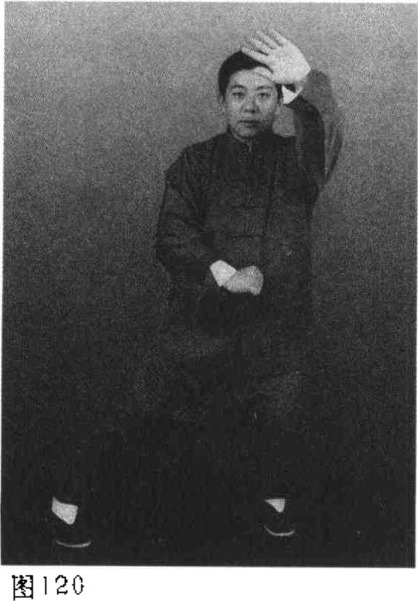
2. The body continues to turn right (toward west), the centre of gravity shifts entirely onto the left leg, and the right foot lifts; the left palm, with the turning of the body, at the same time arcs from the right downward, passes outside the right forearm and comes down level with the right elbow, while the right fist circles upward (slightly higher than the left elbow). The eyes follow the turning of the body, looking level ahead and attending to the movement of the two hands (see the first figure at the right-hand side of this page).
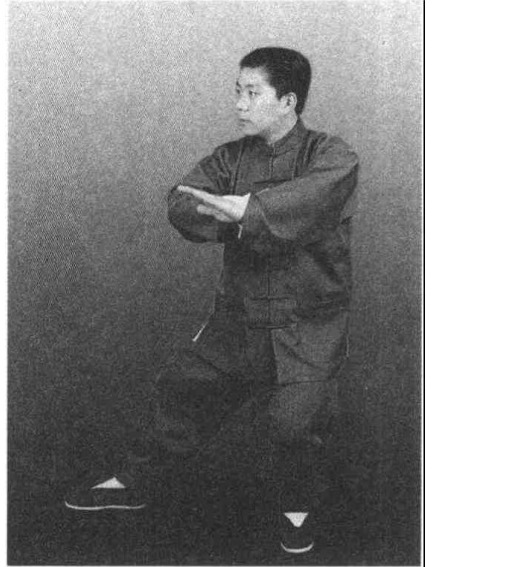
3. The right foot comes down forward (slightly to the right), toes pointing forward, touching down heel first, and at the same time the right fist swings out forward. As the centre of gravity shifts onto the right leg and gradually comes entirely flat, the right leg bows and the left leg pushes, the left heel pivoting on the ground, forming a right bow stance. At the same time the body continues to turn right and the right fist, with the turning of the body, continues to arc down and swing out, then is drawn back to the side of the waist, the fist's centre facing up; the left palm continues to circle past the left side of the chest and pushes forward above the inside of the right forearm. The eyes look level ahead, and the gaze must first attend to the right fist's swing out and then to the left palm's forward push (see the second and third figures at the right-hand side of this page).
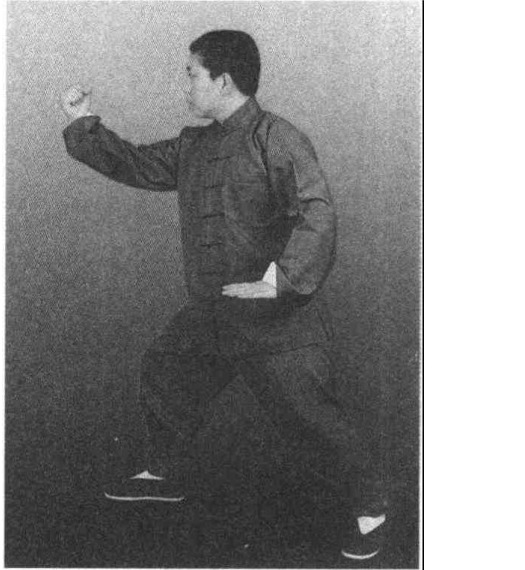
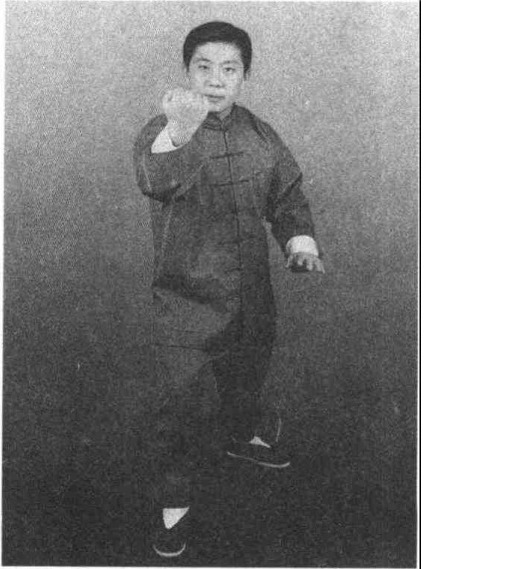
Phần 63
III. Key Points
1. "The thousand changes and ten thousand transformations are moved by me; the two feet of the lower body fix the foundation." If the foundation is not stable, one cannot keep one's balance. Therefore the right leg, in stepping out, must be placed slightly to the right; the two feet must on no account stand on one line, which would make the body sway. Hence one must make the lower body firm in order to gain freedom in the upper body.
2. The right toes must point straight ahead; they must not splay outward or turn in, for the direction the toes point bears on how far the hip roots are opened and on the amount of exertion. If the right toes turn in, then the opening of the hip roots is affected, the two hip roots form a pinched inverted V, and the body too will be off to the left instead of facing squarely forward.
3. As the waist and hips turn, the left foot must be turned in with the turning; that is, turn the foot as you turn the body. The boxing theory says "the lord is in the waist" and also "the waist is the axle of the cart, the breath like the wheel". The waist, then, is the key to the turning of the upper and lower body; if the central axis does not bend, the body will not sway.
4. When turning the waist the buttocks must not protrude but be drawn in — this is "drawing in the buttocks". If the waist is not drawn in and not upright, the buttocks easily protrude, and this adversely affects both "the spirit threading through the crown" and "strength issuing from the spine".
5. The movements of the two hands must be "clear". The right hand uses a fist, the left hand uses a palm, and the right hand's stay at the front of the left ribs is temporary (held for a moment). It swings out in the instant of seeming to stop and not stopping; after swinging out there is still a sinking energy — this is the plucking energy used in secret. The left hand closes and guards in front of the left forehead, then arcs downward and strikes out from in front of the left chest. When the two hands circle, the left hand is outside and the right fist inside. All these movements must be clearly understood from the application and must not be left vague.
6. The right leg is lifted and steps straight forward; do not draw it back close to the left ankle and then step across.
Phần 64
IV. Requirements
1. When the left foot turns in and the body turns, the body must be straight, the posture steady, the left leg solid and the right leg empty; otherwise one is unstable and cannot make the attacking and defending movements.
2. The movements must be linked without a break. Each movement is at the point of seeming to stop and not stopping; the breath moves gradually and the inner energy is then poured in fully. The opportunity for the next posture arises of itself. Therefore, although the direction the body faces is changing, the movements of hands and feet must be unbroken.
3. The left foot must turn in fully (past 90°); otherwise, when the right leg steps forward (toward west), the crotch opens too wide, which makes the left leg's support unstable and the direction in which the right leg lands hard to control — not only awkward, but losing the bracing strength behind.
4. During the turn one must not tense and exert force; it should be "use intent, not force". Tai chi chuan must be practised from looseness into softness; attend to relaxing the waist — do not press down hard on it, lest it hinder the freedom of the waist's rotation.
5. The fist that swings out must not swing too wide or too narrow. Too wide easily raises the shoulder and makes the movement slack; too narrow does not meet the requirement of the application.
1. Error: the movement pauses after turning right. The main causes are: ① the left foot is turned in without the waist leading it, so the turning is awkward and the attention is on the leg, which causes the upper body's movement to pause. ② the right fist's temporary stay at the left ribs is not deeply understood — that in the midst of seeming to stop and not stopping, the right fist immediately circles up and swings out. Often, after the two hands have arrived in position, all movement stops and only the right leg's drawing back remains. ③ a shallow understanding of the pattern of continuous liveliness and symmetrical coordination. Correction: as the body turns and the left foot turns in, with the left hand guarding above and the right hand staying temporarily at the left ribs, the body turns right without pause and the two hands circle — at the same time the right foot lifts. Do it unbrokenly.
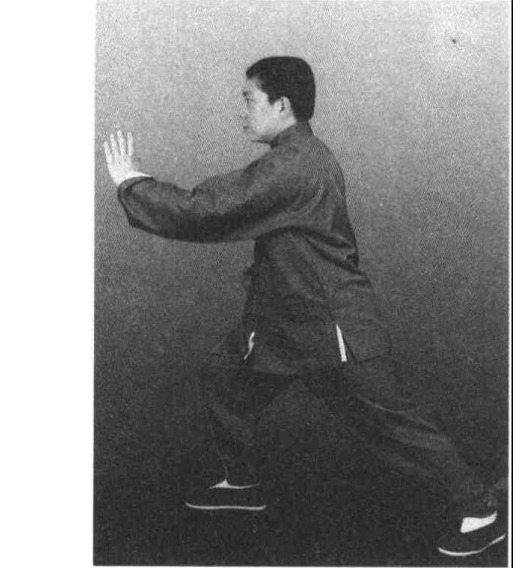
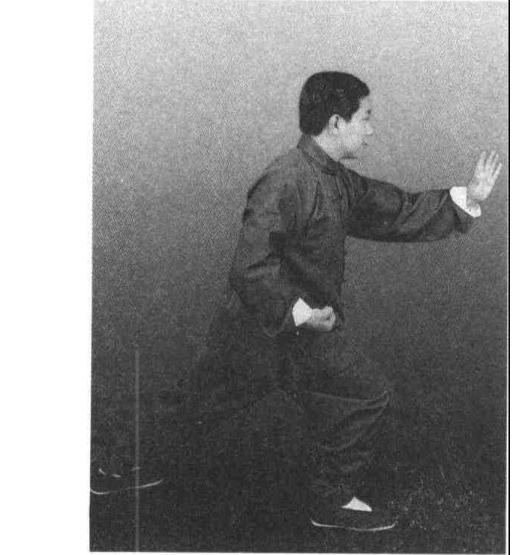
2. Error: the two hands lift the elbows. The main cause is that the left shoulder uses force and the right elbow leaves the ribs. Correction: the elbows must always be slightly bent and carry a sinking energy. When the left hand is raised to the front of the left corner of the forehead the elbow ends up higher than the shoulder, but the inner energy of the elbow is still falling and sinking. If the elbow point is raised, that is a lifting energy, and it does not accord with tai chi chuan's "sink the shoulders and drop the elbows". If the right elbow lifts, the ribs are exposed and are easily attacked. Lifting the elbows inevitably hinders the sinking of the shoulders and also affects the sinking of the breath.
3. Error: after the turn, the right leg is drawn back and then steps out too far. The main cause is a shallow experience of the application. Correction: it should be lifted slightly and at once step forward, so that when the right fist swings out and meets the opponent's arm, and sinking energy is used, there is firm support.
4. Error: when the left hand strikes forward it is not hand-arrives-with-foot-arrives; usually the right leg has already formed the bow stance while the left palm is still extending forward. The main cause is a shallow understanding of "when one part moves, no part is still; when one part is still, no part moves" and "within going forward there must be a bracing behind". Correction: when the hand and fist are striking forward and applying force, there must be firm support from the left leg. When the left palm arrives, that is precisely when the bow stance is completed — hand arrives, foot arrives — and this meets the requirement of combat. When body, hands and leg go forward, the inner energy turns up from the crotch, passes through the spine and back and shoots straight out through the palm and fingers, and the waist and the spine's gate of life must brace behind; the palm presses forward with far-reaching intent and long energy, while the back of the hand still has the intent of drawing in and bracing behind. If the foot has arrived while the hand is still moving, this does not accord with the principle of upper and lower accompanying each other; hence the hand must arrive when the foot arrives.
5. Error: protruding the buttocks while turning the body and the foot in. The main cause is failure to attend to drawing the buttocks in, the waist not being relaxed, sunk and upright. Correction: one must "draw in the buttocks" — that is, not stick the buttocks out but draw them in naturally. This stabilises the lower end of the spine, helps increase the spine's flexibility and the elasticity of the back muscles, and prevents the back from being bent and crooked.
Phần 65
VI. Teaching and Practice Methods
1. Focused broken-down practice: ① after turning the body (toward south), check the degree of the foot's turning in, whether the buttocks are protruded, and the position of the two hands. ② after continuing to turn the body (toward west), the place where the right foot lands and the circling movement of the two hands. ③ the coordination of the left palm's forward strike with the bow stance.
2. The demonstration should also include a front-facing mirror demonstration, for with the back to — the learner cannot see the teacher's arm movements, especially the right arm; when the two arms circle, one should also demonstrate one arm at a time separately, and finally the two hands circling together. This makes it easier for the learner to understand.
3. Mnemonic: turn the foot in after first loosening the hips; the right fist and left palm come together; face south, then turn west; the right swings out, the left palm issues.
4. First practise the direction and the positions of the hands' and feet's movements, and only then learn "looseness" and "evenness", so that the movement has neither fast nor slow, nor pauses.
5. Paired practice using the application: A — takes up the settled posture of Fan Through the Back. B — strikes straight from behind A. A — turns the body and turns the foot in, lifts the right foot and steps forward (toward west), the right fist swings out and meets B's hand, sits firmly at the side of the right ribs with sinking energy, and drives the left palm quickly at B's face. The two exchange roles, experiencing the swing, the sink and the strike.
6. Practise repeatedly the turning of the body and the turning in of the foot, to raise the quality of the straight body and the "drawing in of the buttocks".
7. Practise repeatedly the support on the left leg, with the right leg lifting lightly and stepping out slowly, to raise the left leg's capacity to bear the body's weight and thereby strengthen the constitution.
8. Practise the arm movements repeatedly. When the right fist swings out, attend to using the elbow as the axis, not the shoulder. Using the shoulder as the axis draws too large an arc and produces "scattering". When the two arms circle, be clear that the left hand is outside and the right fist inside.
Phần 66
VII. Technical Analysis
1. The swinging-body fist is an attack-and-defence method against a strike from behind: turning the body and swinging the fist dissolves and defends, and the issuing of the palm is used to attack.
2. The left foot turns as the solid leg, which makes high demands on relaxing the waist and hips. If one cannot let the waist lead the movements of hands and feet, one will stick the buttocks out and lower the head and bend the waist. Hence the demands on the turning of the solid left leg are very high.
3. Under the guidance of intent, the movement is required to be light and unhurried, neither slow nor rushed, and throughout the course of the movement to keep the posture correct everywhere, so that the movement is correct: above, the two arms are linked, and below, the two legs accompany each other. Only then does the turning avoid stiffness and slackness.
4. After turning the body to the rear, the right fist is placed at the left ribs and the left hand closes and guards the left corner of the forehead; there must be a closing energy and a sense of guarding. In the previous posture, Fan Through the Back, the right ribs are exposed — if the opponent attacks from behind he will strike either the ribs or the head. So in turning the body hurriedly without knowing his intent, one hand guarding the forehead and one hand's fist staying at the ribs (in fact the right elbow guarding the ribs) meets the requirements of combat and also the requirements of opening and closing and of storing the posture. Therefore the two hands must on no account be dropped at random. Once moved, one must concentrate wholly and continually use intent to guide the correctness, continuity and roundness of every movement. Throughout the movement, the opening and closing, the solid and empty, and the turning and changing of the inner and the outer must seek upper and lower accompanying each other, inner and outer as one, intent arriving and energy arriving, and every movement in accord with method.
5. When the right fist swings out, what position should the right foot be in for it to be reasonable? There are generally two: one is that the right foot has been lifted but not yet stepped out and the right fist has already swung out — this is a mere form and is empty, because on one leg's support neither the swing nor the sink has any power. The second is that the right knee has already bowed out while the right fist has not finished swinging — by then one is already too close to the opponent, which is unfavourable to sinking, one cannot use the whole body's strength, and the left palm's strike is powerless. Therefore the correct way is: when the right fist swings out the right foot has already stepped out, and when the left palm issues the right knee has just bowed into place — hand arrives, foot arrives — in accord with the requirement of the application.
6. "Looseness". If the movement is practised badly, especially at the moment of turning the body, turning the foot in, lifting the leg and stepping, one tenses very easily. In practising tai chi chuan the whole body must loosen, without a hair's-breadth of clumsy force to stagnate in the sinews, bones and blood in between, binding oneself; only then can one change lightly and nimbly and turn freely and smoothly, with breath and blood flowing, poured through day after day and circulating the whole body — which is of the greatest benefit to improving health.
Twenty-fifth Posture: Step Forward, Deflect, Parry and Punch (Jin Bu Ban Lan Chui)
Phần 67
I. Application
The same as the twelfth posture, "Step Forward, Deflect, Parry and Punch".
1. The centre of gravity gradually shifts back onto the left leg, and at the same time the body turns slightly left (from east toward south-east); the left elbow sinks with the turning of the body, and the left arm, as it sinks, rotates outward so that the palm gradually turns to face up; the right arm gradually rotates inward and the right fist extends forward and up past the upper side of the left palm, the fist's centre facing down. The gaze attends to the right fist's forward extension (see the first two figures at the left-hand side of this page).
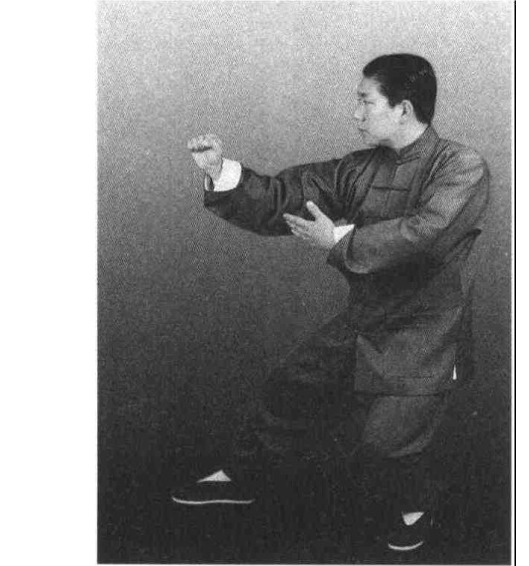
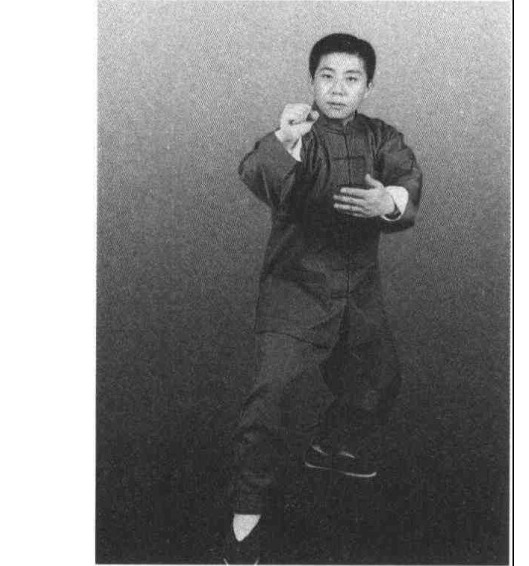
2. The centre of gravity continues to shift back, sitting solidly on the left leg, and at the same time the body continues to turn left; the two hands ward to the left with the turning of the body, the right hand arcing slightly down and the left hand arcing slightly up (see the third figure at the left-hand side of this page).
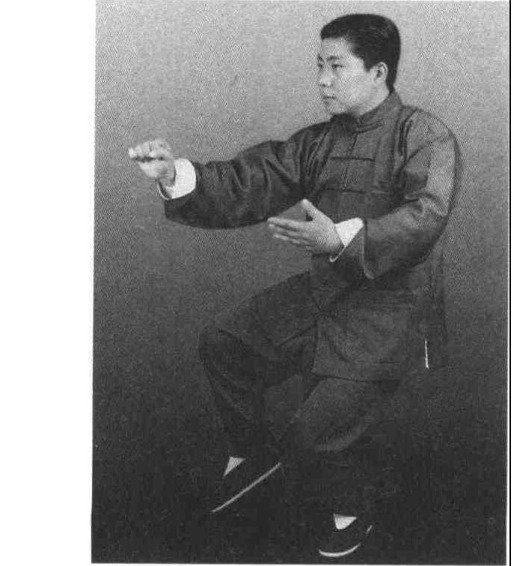
3. The right leg is drawn back, and at the same time the body turns right; the right fist arcs down from the right front, passes in front of the abdomen and circles to the left, the fist's centre turning to face down; the left hand arcs from the left upward (no higher than the shoulder), rotating inward as it arcs so that the palm turns to face slantingly down-right. The eyes attend slightly to the two hands' arcing circle, then look level ahead (see the fourth and fifth figures at the foot of this page).
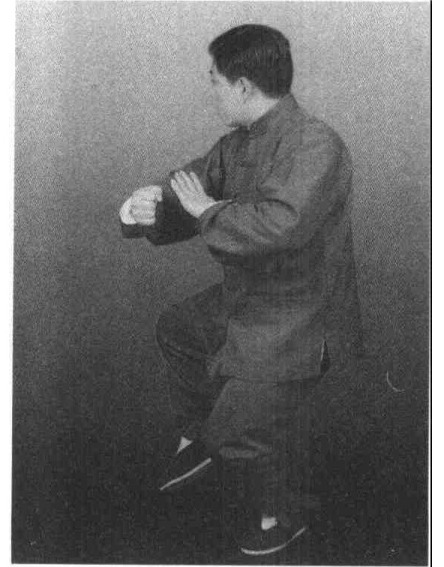
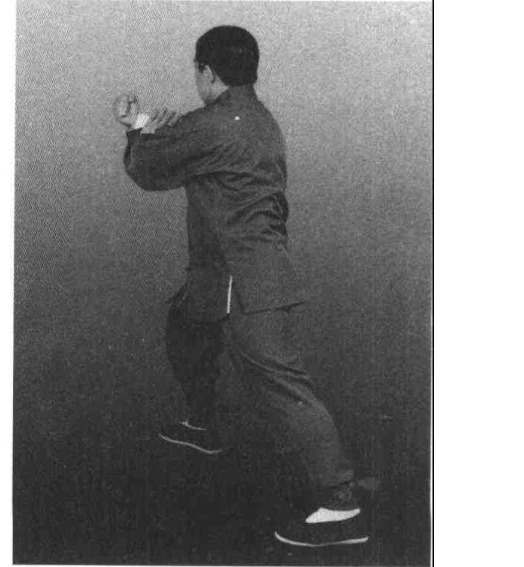
4. The following movements are the same as the twelfth posture, "Step Forward, Deflect, Parry and Punch", only the direction is reversed: the former goes east, this one goes west (see the first three figures at the foot of this page).
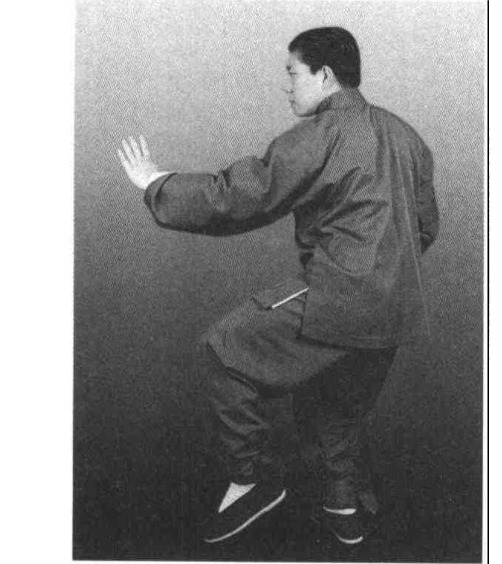
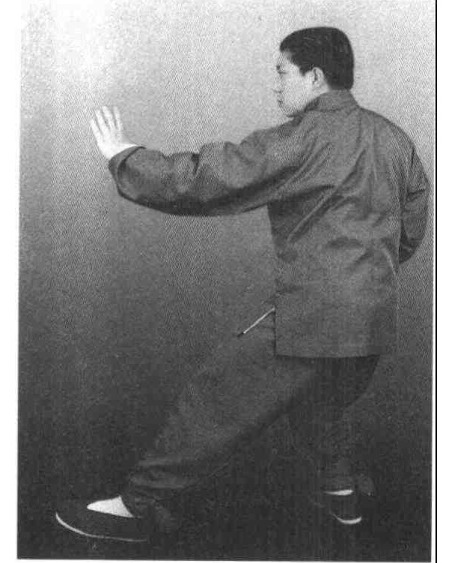
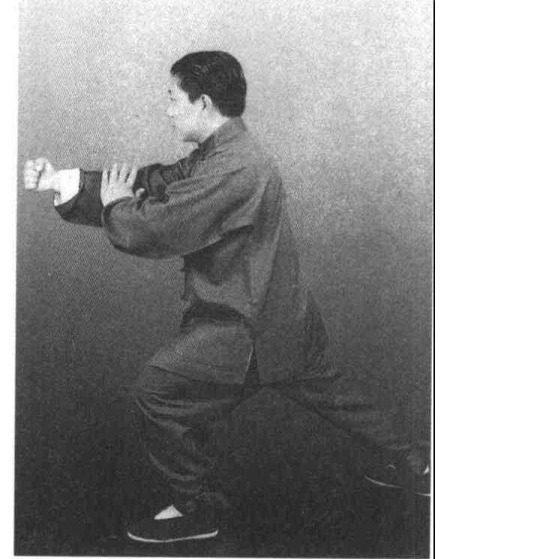
Phần 68
III. Key Points
The same as the twelfth posture, "Step Forward, Deflect, Parry and Punch".
Twenty-sixth Posture: Step Up and Grasp the Bird's Tail (Shang Bu Lan Que Wei)
The same as the third posture, Grasp the Bird's Tail.
The body gradually turns left, the left toes splay outward and press flat, and the centre of gravity gradually shifts entirely onto the left leg, while the right leg is lifted and brought forward; at the same time the left elbow sinks as it draws back to the left, naturally carrying the left palm in an arc to in front of the left side of the chest; the right fist changes to a palm, goes from the front downward, and scoops in an arc to the left to in front of the abdomen, rotating outward as it scoops so that the palm turns to face slantingly up-left and joins with the left hand, both arms forming arcs. The eyes attend slightly to the left forearm, then turn to look level ahead in front of the right arm (see the figures on this and the following two pages — the same as the plates of the third posture).
The remaining movements are the same as the third posture, Grasp the Bird's Tail (except the left ward-off). (This page is a full-page plate sheet with no running text. The nine photographs below are the continuous illustration of the movements of Step Up and Grasp the Bird's Tail.)
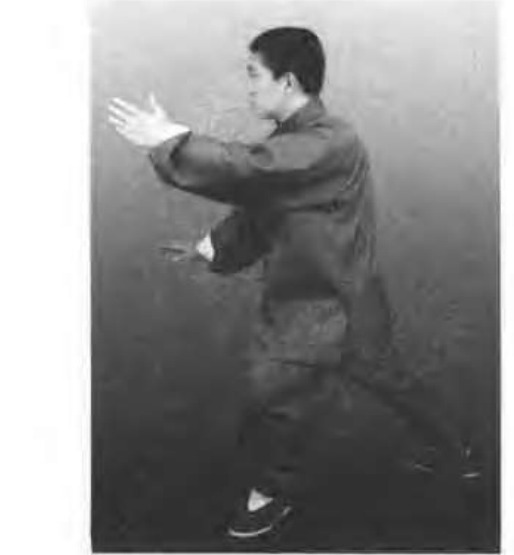
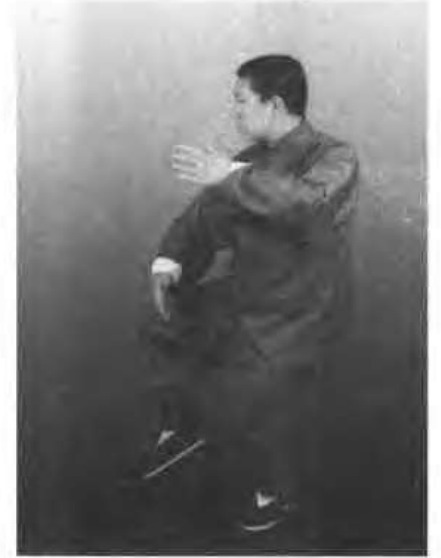
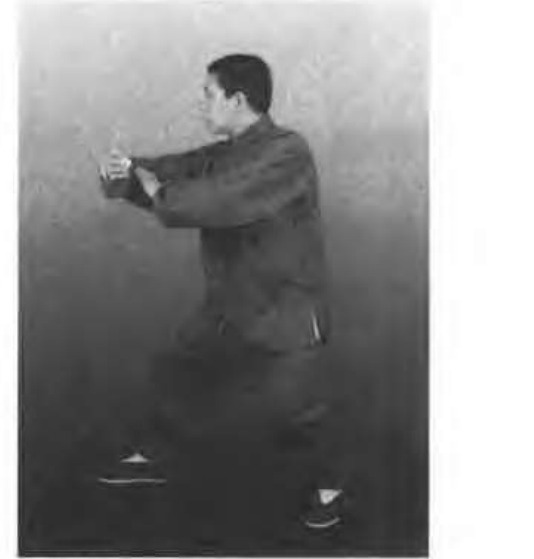
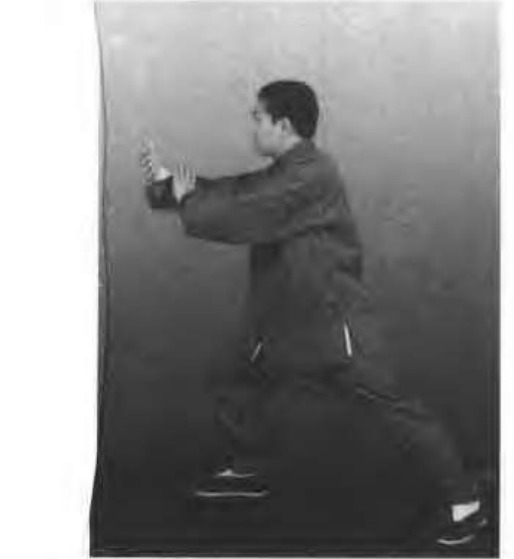
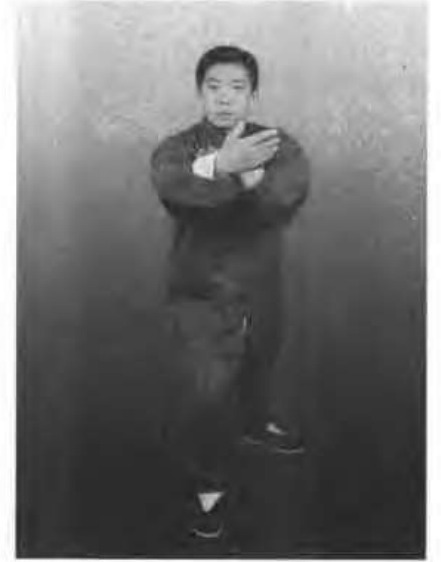
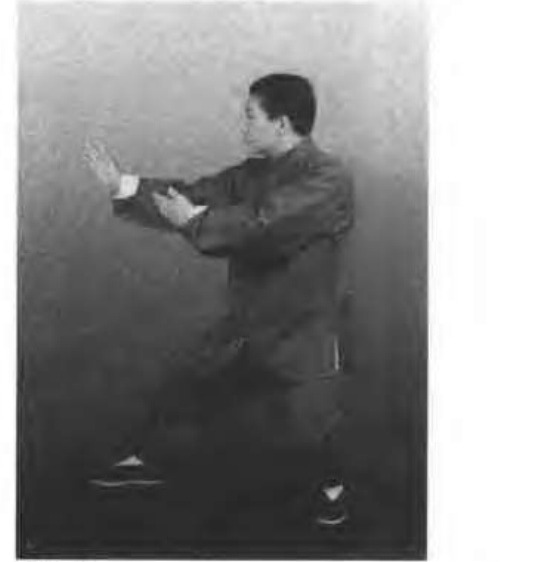
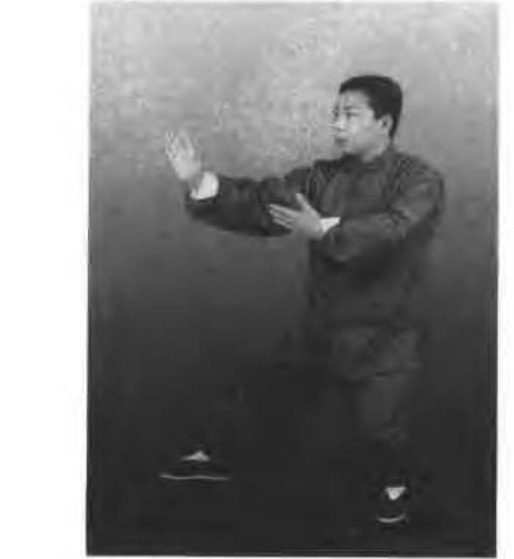
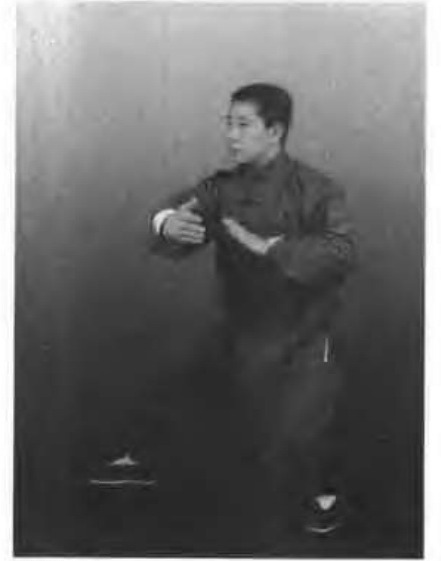
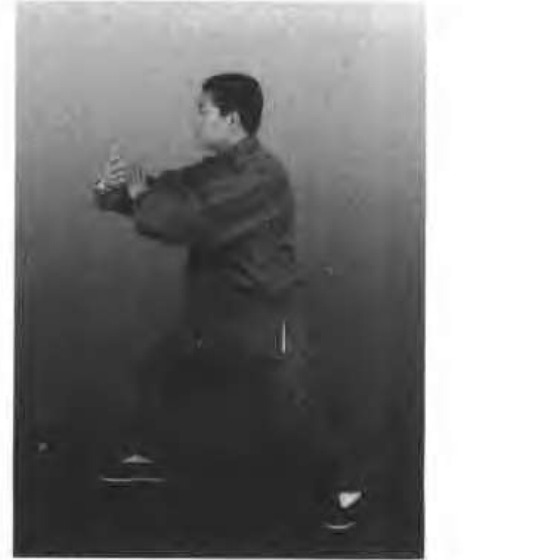
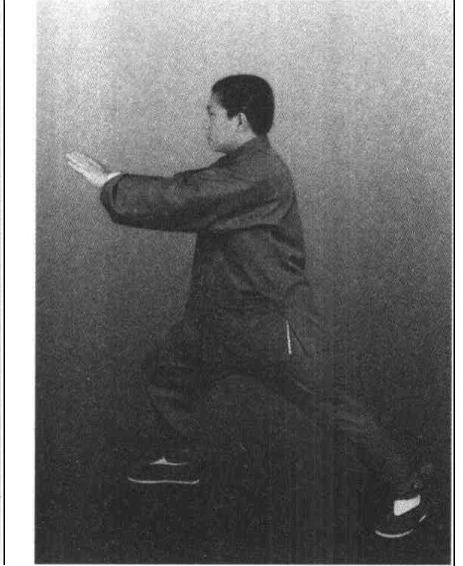
(There is also on this page a photograph of the push-hands application, which carries no figure number.)
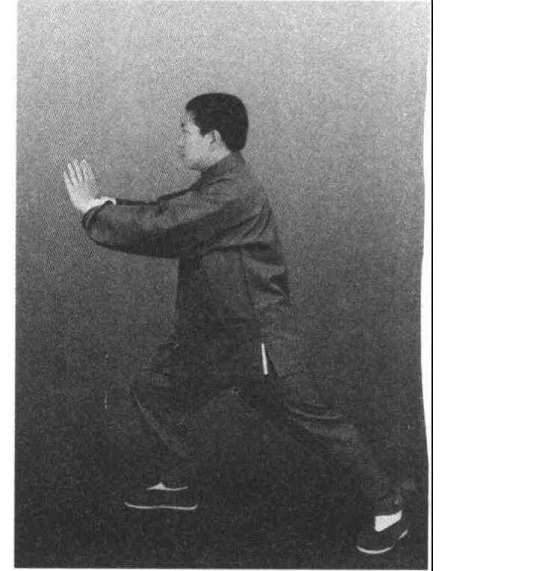
Twenty-seventh Posture: Single Whip (Dan Bian)
The same as the fourth posture, Single Whip. See the figures on this and the following pages (the same as the plates of the fourth posture).
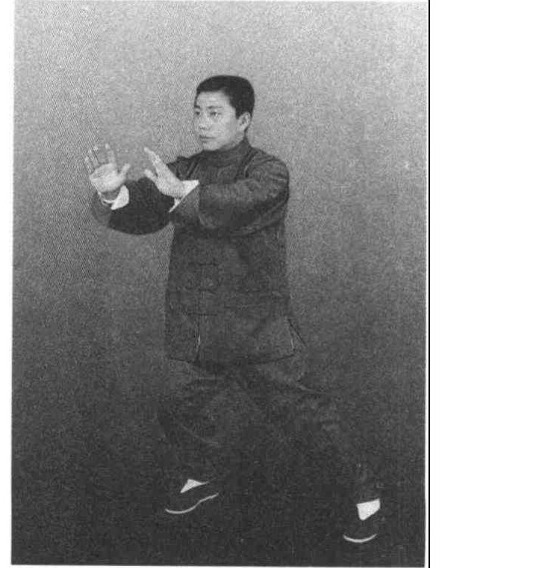
(The body text of this page follows on from the twenty-seventh posture, Single Whip; the upper half holds six further plates of Single Whip — three in the upper row, and three in the lower row, all continuing the Single Whip sequence.)
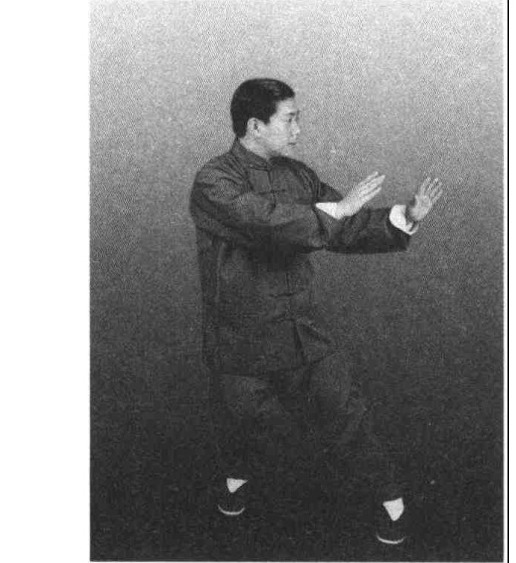
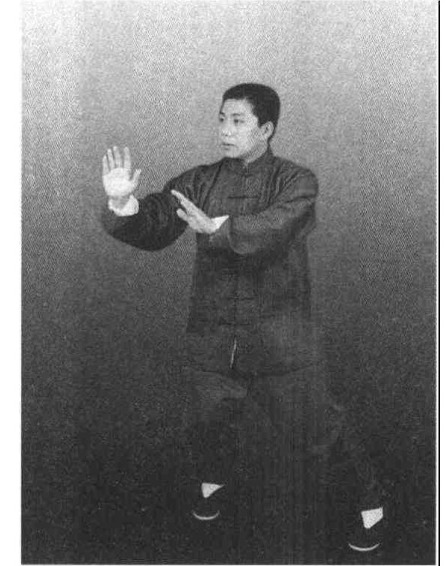
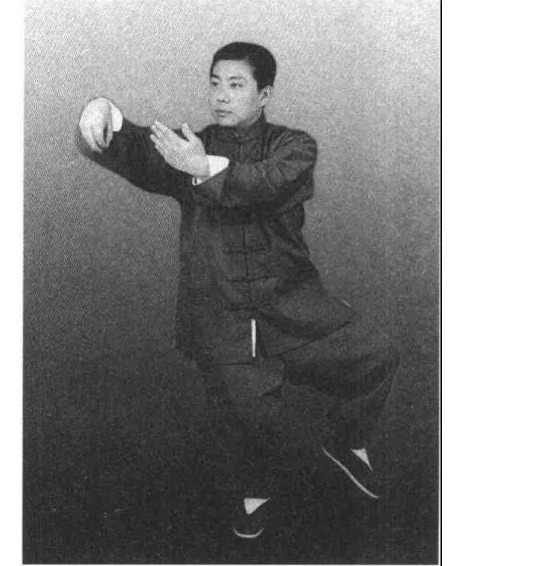
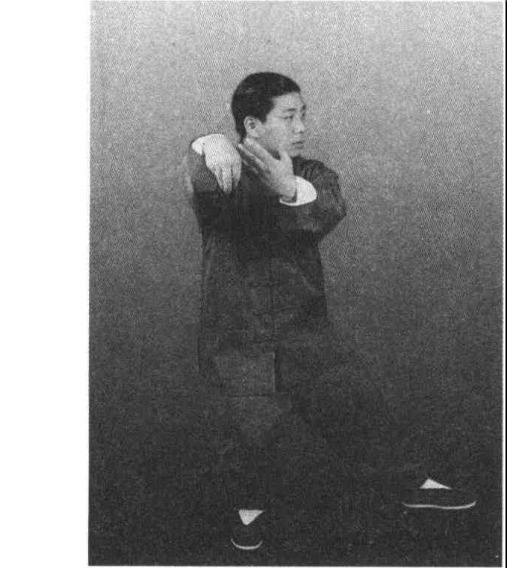
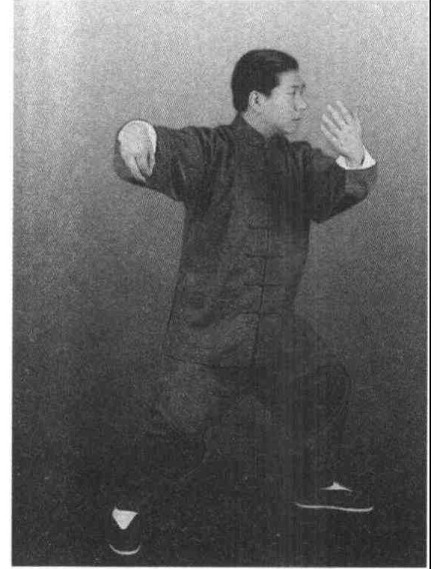
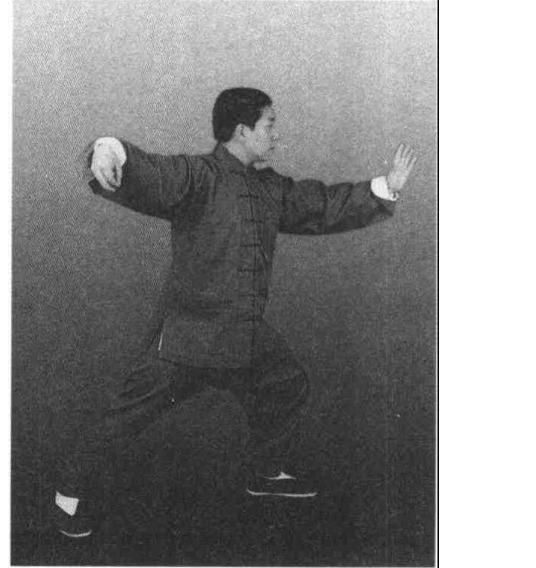
Twenty-eighth Posture: Wave Hands Like Clouds (Yun Shou)
Phần 69
I. Application
Continuing from the previous posture. If the opponent attacks my chest or ribs with his right hand from the right of my front, I immediately lower my right hand with the palm facing inward, and join the upper side of my wrist (the radial side) to the lower side of the opponent's wrist (the ulnar side), warding from the left upward and rotating to the right; then I turn it downward and move it across to the left, drawing one great circle, like white clouds drifting in the sky, without a break. The left hand at the same time lowers, palm facing down, with the same intent as the right hand. The body also turns with the right wrist, and the gaze follows the wrist, attending as it turns.
the hand and chest turning, the gaze following the wrist as it turns, attending as it turns.
The right foot moves half a step to the left from the right rear side and settles firmly, and the left foot at once steps out one step to the left, the weight shifting left into a horse-riding stance (for an instant). At this moment the two hands have arrived exactly opposite the chest and navel, and then the right foot again becomes empty and moves half a step further in to the left, and the second movement continues. But when changing from empty to full and back in the interwoven turning, there must never be any intent of concavity, convexity, interruption or discontinuity. The subtle use of this posture lies entirely in turning the waist and hips: because the turning can draw along the opponent's root strength, one turns the hand out in response. The learner should savour and grasp this carefully.
The slanting application: when the opponent thrusts straight in with his right palm or right fist, I ward with my right hand, and at the same time immediately hollow the chest and sink onto the back leg, turning the waist and sinking downward to neutralize the force of his incoming energy; then I may use Shoulder or Elbow, or attack out with Press.
Phần 70
II. The Course of the Movement
1. Turn the waist slightly to the right without changing the weight; turn the left toes inward and set them down firmly, toes pointing forward. At the same time the left palm, following the turning of the body, bends the arm slightly and sinks the elbow, palm facing down, and moves naturally and very slightly to the right. The right hook hand changes into a palm and arcs down from the right, moving across horizontally at the bottom of the arc to the front of the right abdomen. The gaze attends to the right palm as it moves down (see the first figure at the right-hand side of this page, the second figure at the right-hand side of this page).
2. The weight gradually shifts entirely to the left leg; the right foot lifts and draws in towards the left (the heel leaving the ground first), the body turns slightly left, and the left palm follows the waist's turning. At the same time it transports out to the left (with a slight arc), and as the arm turns inward the wrist is held upright so that the palm slopes downward and gradually turns to face down. The right palm, following the turning of the body, travels in an arc from the lower right across the front of the abdomen to the left, and as it travels the arm turns outward so that the palm faces inward, and it gradually travels up to the left to near the left wrist. The gaze shifts as the body turns, looking level ahead, and it must attend to the right palm travelling left (see the third figure at the right-hand side of this page).
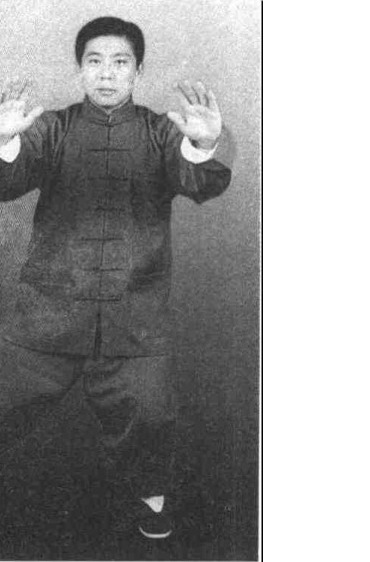
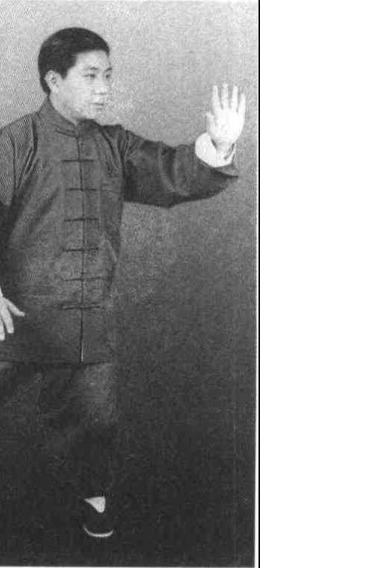
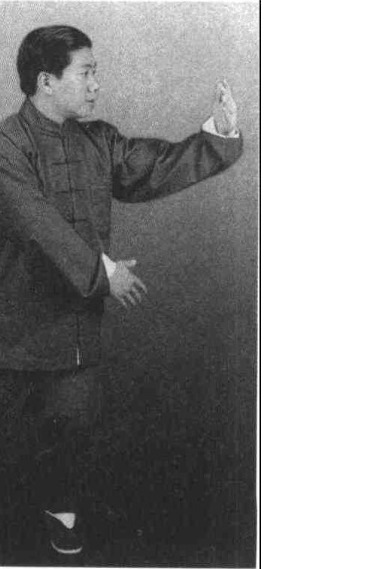
3. The left leg continues to squat down and "sends" the right leg down (the right foot half a step towards the left), the toes touching the ground first, and as the weight gradually shifts right the whole foot is set down firmly; the two feet are about a shoulder's width apart, parallel and facing forward, and the left foot at once becomes empty. At the same time the body turns slightly right. The right palm, following the waist's turning, travels in an arc from the left upward and to the right (the fingers level with the shoulder), the palm still facing inward. This is joining the upper side of my right wrist to the lower side of the opponent's wrist, rotating from the left downward and then upward again, using the strength of the turning waist and hips to turn out to the right, so as to draw along the opponent's root strength. The left palm at the same time arcs down from the left and towards the right, and as it travels the arm turns slightly outward so that the palm gradually turns to face inward (slanting slightly upward). The two hands have travelled up and down to exactly opposite the chest and navel, the right hand above and the left hand below. The gaze accompanies the turning of the body, attending to the right palm travelling right (see the first figure at the left-hand side of this page).
4. The weight gradually shifts entirely to the right leg; the left foot lifts (the heel leaving the ground first) and the body continues to turn slightly right, and at the same time the right palm, following the turning of the body, arcs to the right and downward, and as it travels the arm turns inward so that the palm gradually turns to face down. The left palm, crossing the front of the abdomen, continues to travel to the upper right, drawing near to the right wrist to the right. The gaze attends to the right palm travelling right (see the second figure at the left-hand side of this page).
5. Repeat from the start of movement two. The left foot strides half a step across to the left, the toes touching the ground first, and as the weight gradually shifts left the whole foot is set down firmly, toes pointing forward; at the same time the body gradually turns left, and the left palm, following the turning of the body, continues from the right upward past the face (the fingers level with the eyebrows), travelling to the left. This is joining the upper side of my left wrist to the lower side of the opponent's wrist, rotating from the left downward and then upward again, using the strength of the turning waist and hips to turn out to the left, so as to draw along the opponent's root strength (the application is the same as for the right hand). The right palm continues to travel in an arc from the right downward and to the left, and as it travels the arm turns slightly outward so that the palm gradually turns to face inward (slanting slightly upward) and travels to the front of the abdomen. The two hands have travelled up and down to exactly opposite the chest and navel, the left hand above and the right hand below. The gaze shifts as the body turns, looking level, and must attend to the left palm travelling left (see the third figure at the left-hand side of this page, the fourth figure at the left-hand side of this page).
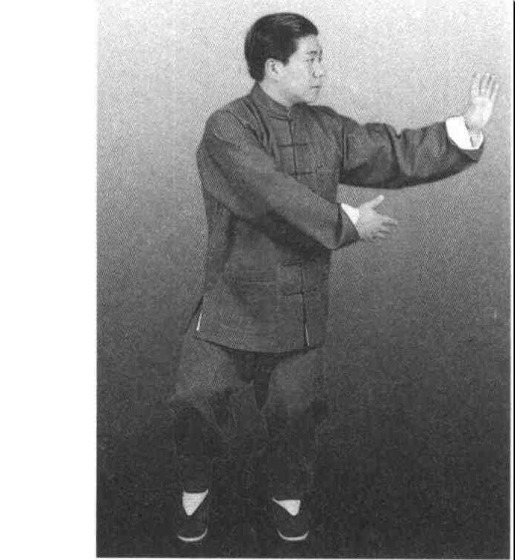
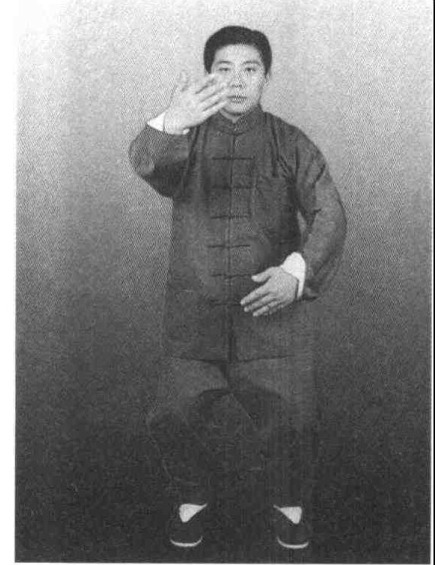
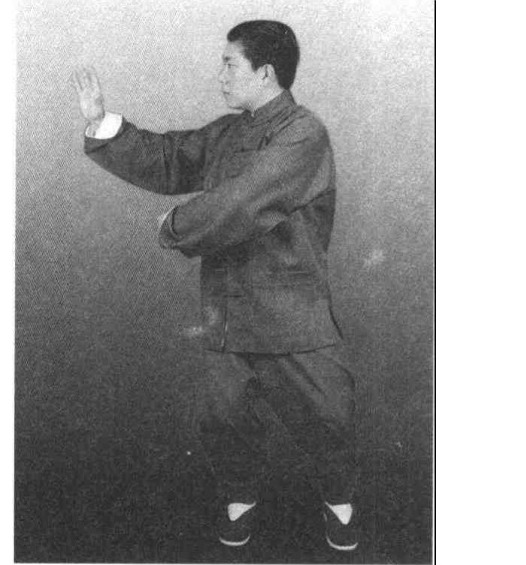
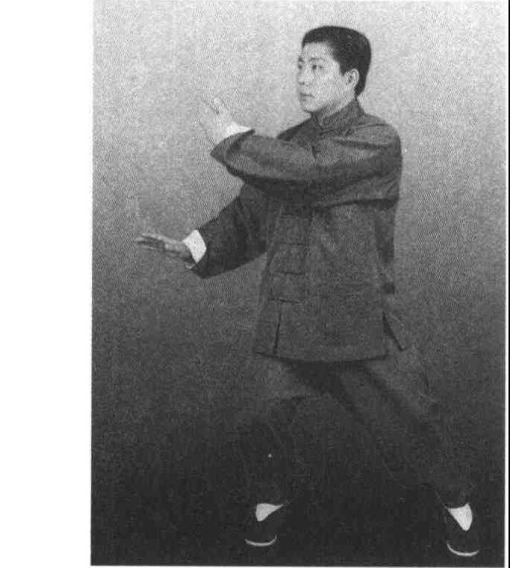
6. The weight gradually shifts entirely to the left leg; the right foot lifts to the right and towards towards the left (the heel leaving the ground first), while the body continues to turn left and the left palm continues to travel in an arc from above, downward to the left. As it travels the arm turns inward so that the palm gradually turns to face down. The right palm, following the turning of the body, continues across the front of the abdomen to the left, and travels in an arc from below upward to near the left wrist. The gaze attends to the left palm travelling left (see the first figure of the six at the foot of the next page).
7. Repeat the movement: the three plates at the foot of the next page repeat, in order, the third, first and second plates at the sides of this page.
8. Repeat movement three: the three plates at the foot of the next page repeat, in order, the third and fourth plates at the left-hand side of this page and the first plate of the previous repetition; and the three plates at the head of the following page plus the plate at its left-hand side again repeat the earlier plates in turn. In order to increase the amount of exercise, "Wave Hands Like Clouds" may also be done as three, five, or seven movements.
But the number must be odd, and "Step Back and Repulse the Monkey" must likewise be done three, five, or seven times accordingly. Otherwise, when one comes to the closing and gathering up, one will not be able to return to the original place.
Phần 71
III. Essential Points
1. "Wave Hands Like Clouds" requires unbroken continuity, with intent and without force. One "Wave Hands Like Clouds" must follow another, endlessly continuous, going round and round without end. What the boxing treatises say — "like the long Yangtze and the great sea, rolling on and on without cease, threaded through as one breath" — means exactly that there must be no place of pause in the middle of the movement.
2. The two feet must not be double-weighted — that is, the two feet must not bear the body's weight on the ground at the same time. As soon as the heel of the descending foot has set down firmly, the other foot's heel must immediately leave the ground, rising and falling in turn like a see-saw, so that the two feet alternate without ever pausing.
3. The circling of the hands must take the turning of the waist and hips as its foundation: the waist is like an axle, the four limbs like wheels. The waist is the key to the turning of the upper and lower body, and it plays the principal role in the changes of the whole body's movement, in adjusting and steadying the centre of gravity, and in driving the jin power out to every part of the limbs. Therefore the turning must take the waist and spine as its axis and turn slowly; one must not swing about at random, the upper body must not lean or slant, must not stoop forward or lean back, and one must maintain "the tailbone centred and upright."
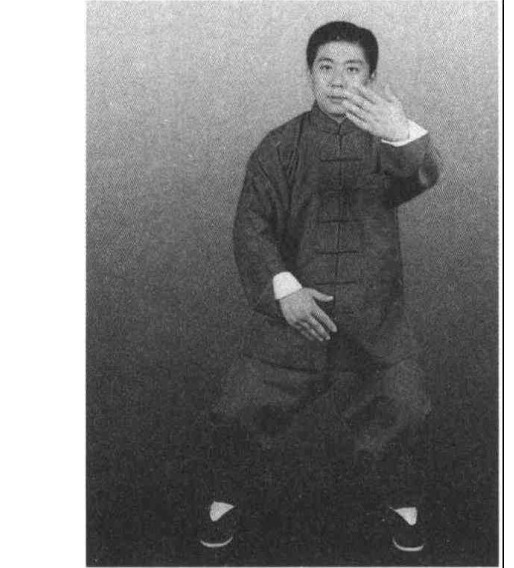
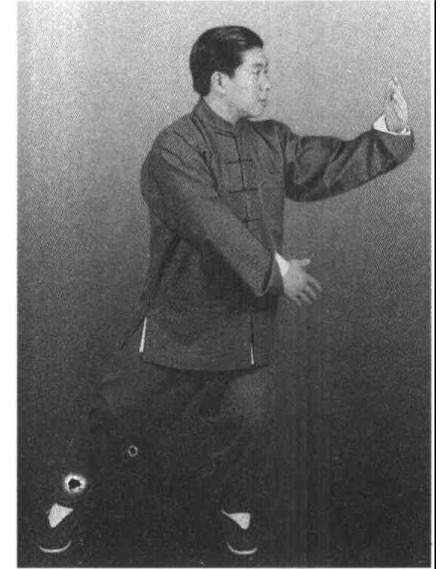
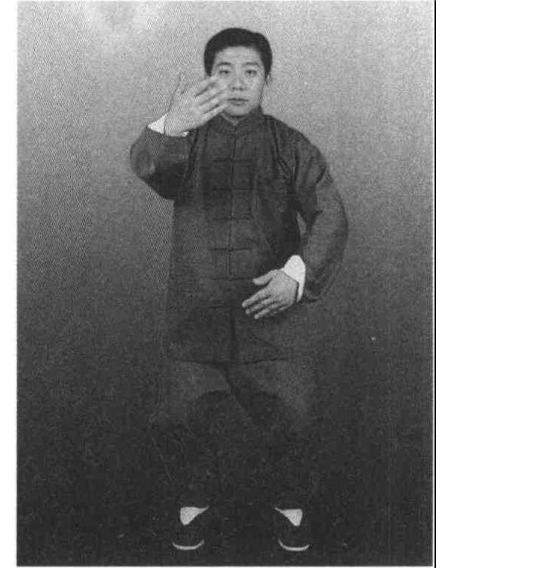
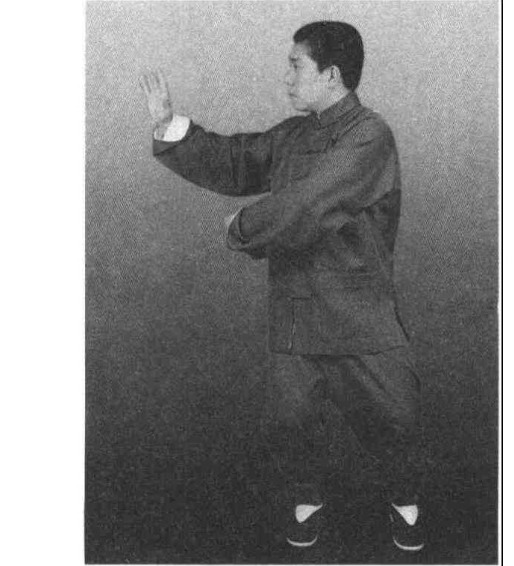
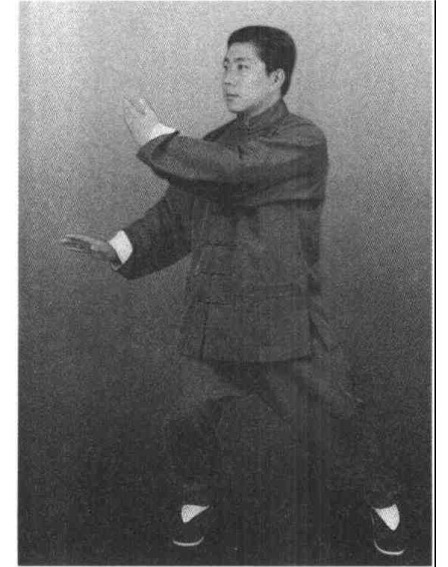
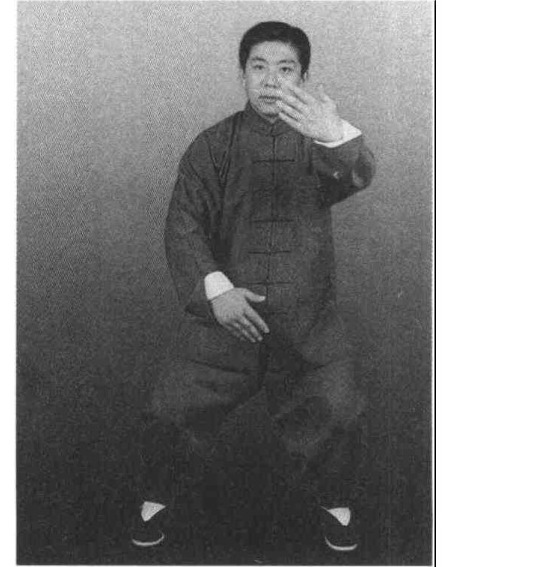
4. The two arms must travel with the waist: turning left, the left hand's upward scooping leads; turning right, the right hand's upward scooping leads. When the left hand leads, the right hand follows; when the right hand leads, the left hand follows — one up, one down, one left, one right, closely coordinated better still.
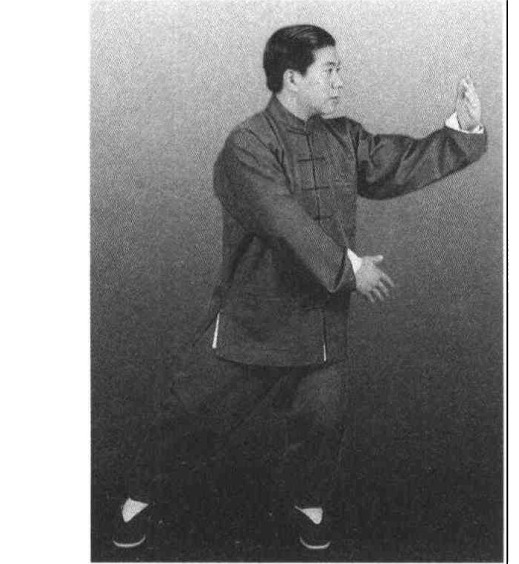
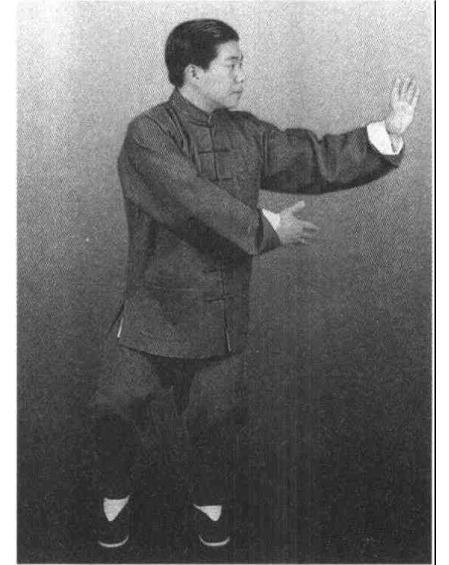
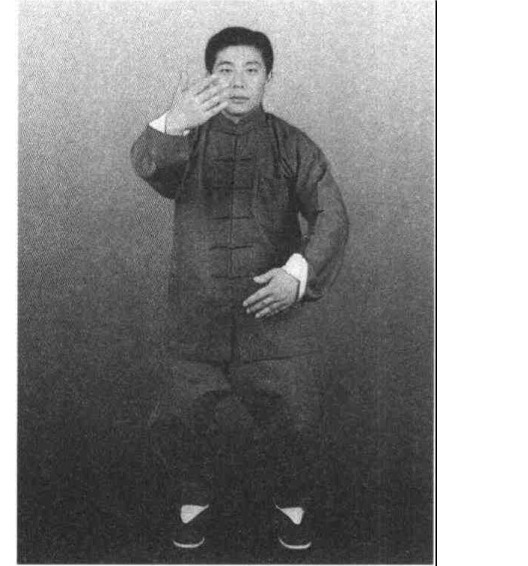
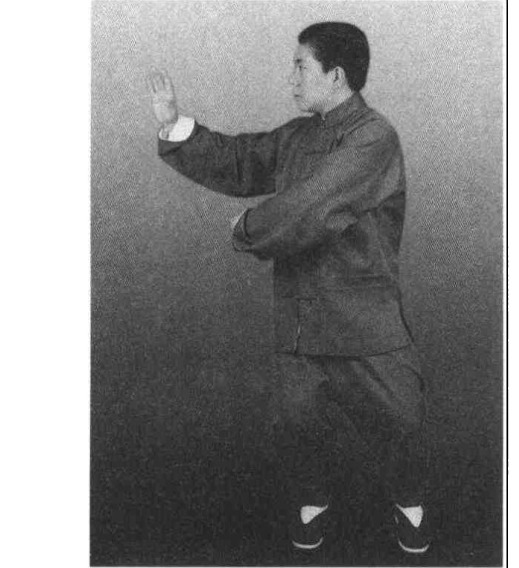
Twenty-ninth Posture: Single Whip (Continuing from the twenty-seventh posture, Single Whip; both the application and the course of the movement are identical.) (See the figures on the following pages.)
circling without scattering or stagnating; when the turn reaches the top the elbow must not lift, and the forearm must ward loosely and keep circling. The two arms must maintain their arcs.
5. There must be "evenness from form to form". When the left leg steps out the movement must be slow and set down lightly; when the right leg lifts it must rise slowly and draw in towards the left, to a shoulder's width, and must not be sometimes fast and sometimes slow.
6. Every movement of Yang-style Taijiquan is constituted by a circle — hence the saying, "a marvellous hand is one movement, and one movement is a taiji." Within this circle are contained the two forces of yin and yang: there must be softness and there must be firmness, emptiness and fullness, firmness and softness assisting each other, emptiness and fullness interpenetrating. The carrying out of its movements always has the appearance of drawing circles and travelling along arcs; it never goes straight out and straight back — this too is a characteristic of Taijiquan. "Wave Hands Like Clouds" is a typical movement of this kind, and it plays an important part in raising the standard of the techniques of "continuous adhering and following" and "drawing in to make the opponent fall into emptiness."
Phần 72
IV. Requirements
1. The circling of the hands must be led by the waist, and the waist and hands must not come apart. When the opponent uses his right hand to strike my chest or ribs from the right of my front, my right wrist receives his wrist, turning up and over from below, to the left and then to the right; this must be coordinated with the turning of the waist and hips for the power to be obtained.
2. The two feet stand parallel, about a shoulder's width apart, neither too wide nor too narrow, and the two feet must not turn into the inward splay or the outward splay. The feet are the foundation of the stance forms and the stepping methods; if the foundation is unsteady, then at the least deviation the stance forms and stepping methods are certain to go awry.
(This page carries one unnumbered push-hands photograph at the foot; it has no figure number and no caption.)
3. There must be no double-weighting, for double-weighting makes one sluggish. The left foot supports while the right foot lifts and draws in towards the left; when the right foot squats down and the right heel drops, the left heel must lift at the same moment, otherwise it is double-weighting.
4. When the two arms circle they must not be straightened but must form an arc, and the distance from the body must be appropriate. If the arms are too far from the body they will be strained straight; if too close they will "deflate".
5. The two hands must have ward-off jin; they must not go slack, but neither may they use stiff force.
6. The movements must be continuous — this is the requirement of "Wave Hands Like Clouds" that stands out most. The circling of the hands must be like white clouds moving across the sky, without a break.
7. The shoulders must be relaxed, but not relaxed to excess such that they become "empty" or "loose".
8. The hand circling below must embody the action requirement of "scooping".
Phần 73
V. Common Faults, Their Causes, and How to Correct Them
1. Fault: "double-weighting", that is, the two feet bearing the weight at the same time. The principal cause is an insufficient grasp of the clear division of empty and full. "When one side is heavy it follows; when double-weighted it is sluggish. One constantly sees those with several years of pure practice who cannot transform, and in every case they end up being controlled by others: the fault of double-weighting has not been understood." Therefore one foot must be on the ground bearing the whole body's weight, so that the empty foot can be light, nimble and lively. Correction: as the right heel sets down, the left heel must leave the ground at the same moment.
2. Fault: the foot moves sideways while the two hands move up and down, and the beginner's body tends to keep facing straight forward (south) without the waist and hips turning. The principal cause is that the movements of the limbs do not take the waist as their guiding principle and as their hub. If the waist is used properly it helps both to maintain the balance of the whole body and to keep the circulation of internal jin full and concentrated. Otherwise, the movement that moves the hands without moving the waist is a tree without roots, and internal jin cannot travel from the waist and spine out to the limbs — whereas the whole subtle use of "Wave Hands Like Clouds" lies in turning the waist and hips. Otherwise, when my wrist joins the opponent's wrist and turns up and over, it will appear powerless. But the waist must not turn too far either: some turn the waist and hips so much that they reach 90°, almost turning to due east or due west, and thus the body and limbs are thus overdone, which on the contrary gives the opponent a chance to attack. Correction: as the two hands and waist and hips turn the body, it is best to take an oblique angle a little to the east, or towards the south-west.
3. Fault: the two feet turning into the inward or outward splay. The principal cause of the inward splay of the two feet is that when the left foot steps out sideways the heel is pressed out too far; the outward splay comes from the left foot stepping out to the left without the heel pressing slightly outward, while the right foot, drawing in to the left, is not properly set straight. The direction the toes point governs how far the hip joints open and how great the amount of exercise is; therefore the outward turning and inward drawing of the toes, and the leftward and rightward turning of the heels, must all be clear and orderly in their empty and full, principal and subordinate. Correction: in "Wave Hands Like Clouds" the toes of both feet should point straight forward. Take special care that when the left foot steps out to the left, after the ball of the foot has landed you must let the left heel gradually press out towards the left, pressing and setting down as you go until the whole sole is firmly planted; in this way the toes will point straight forward and the requirement of the two feet being parallel will be met.
4. Fault: the movement is uneven, sometimes fast and sometimes slow, which is especially obvious when the left foot is about to land after stepping out to the left and when the right foot has just lifted. The principal cause is that when the strength of the legs and of the waist and hips is insufficient the speed suddenly increases, and thus the whole movement becomes uneven in pace. The movement must, within its continuous and threaded arc, be complete and rounded, neither hurried nor sluggish, neither concave nor convex, with no defects and no sharp corners. The changes must be light, nimble and lively, so that emptiness and fullness can interchange and turn. Correction: practise more to strengthen the leg power step by step, and take care that when the left leg steps out the right leg is set solid, and when the right leg lifts the left leg is set solid; only when empty and full are clearly divided can the movement be light and nimble.
Phần 74
VI. Teaching Method and Practice Method
1. Explain the essential points. 2. Demonstrate the movement; demonstrate the application. 3. First practise it broken down; then immediately follow with whole-movement practice, alternating fast practice and slow practice. 4. The two hands hang loosely. The two feet stand a shoulder's width apart, in a half squat. The left foot lifts and steps out to the left, and the weight gradually shifts onto the left foot. The right leg lifts and draws in to the left, setting down at a shoulder's width; the weight gradually shifts onto the right foot, the left foot lifts and steps out to the left … practise in this continuous way to master the leg movements well — empty and full, the two feet parallel and pointing forward, the centre of gravity not rising and falling, and so on.
5. The two feet stand a shoulder's width apart, in a slight squat, the right hand above and the left hand below. The left hand moves in an arc from below to the right, upward and to the left, while the right hand turns its palm outward and moves from the right downward, turning the palm inward and travelling across the front of the abdomen to the left (palm facing inward). Immediately afterwards the left palm turns outward, and from the left it turns downward and inward and travels across the front of the abdomen to the right, while the right hand goes upward and to the right. At this moment the two hands are again one above and one below in front of the body, returning to the starting position — that is, one movement of "Wave Hands Like Clouds" is completed. Practise continuously in this way to master the hand movements well — the path of the hands, the direction the palms face, the height of the hands, when to turn the palm, and so on.
6. Whole-movement practice must follow on closely, otherwise a split will form; one should follow the teacher's movements at a slower pace, one movement at a time, and so learn.
7. The improvement of empty and full may be undertaken once whole-movement practice is basically mastered. The left leg is set solid and the right leg lifts; when the right leg, having drawn in to the left, is about to land, the left leg must "send" the right leg down. When the left leg steps out to the left, the right leg must be firmly set solid, and the weight must not be moved before the left heel has landed.
Phần 75
VII. Technical Analysis
1. "Wave Hands Like Clouds" should be performed as 3–5 continuous movements. Its distinguishing feature is "unbroken connection", threaded through movement after movement, so that at the moment of seeming to stop and not stopping, the opportunity for the next movement arises of itself. Therefore there must be no place of pause; the inside and outside, above and below, left and right, front and back must be coordinated as one, so that above and below follow each other and "one breath runs through". For this reason the movement of "Wave Hands Like Clouds" must be continuous, rounded and lively.
2. "Wave Hands Like Clouds" makes high demands on the two hands: it requires that "the whole movement depend on the two hands turning without leaving the centre line." The left hand governs the left half of the body and the right hand the right half, with the nose and navel as the centre line between them, so that even in the circular turning the movement does not leave the centre line. The arms must be relaxed, soft, rounded and lively, with firmness and softness assisting each other; they must rotate along arcs — across and straight, with and against, rising and falling, extending and withdrawing must all travel along curved lines — and they must turn with the waist and hips, and the two hands must not be allowed to go slack.
3. This movement should be done 3–5 times, and throughout those 3–5 movements the frame must not be sometimes high and sometimes low — that is, the centre of gravity must not rise and fall. The stepping out of the feet and the lifting of the right leg must both be light and nimble, and this requires that throughout the whole movement the centre of gravity stay always on one level, without rising or falling. If the centre of gravity rises and falls, it will lead to uneven pace in the movement.
attend to the gradual change when empty and full interchange.
4. The gaze in "Wave Hands Like Clouds": the beginner tends to watch the palm as it turns, which is of course wrong. But some simply look straight ahead, which is also wrong: the method of the eyes is to follow the movement of the principal hand while looking level ahead. The gaze must first look ahead in the direction one is intending to go, and then the body method, hand method and step method follow.
Twenty-ninth Posture: Single Whip
Phần 76
I. Application
The same as the fourth posture, Single Whip.
The body continues to turn slightly right, and the weight gradually shifts entirely onto the right leg; the left leg lifts. At the same time the right palm, following the turning of the body, extends slightly to the right oblique, and as it extends the arm turns inward so that the palm gradually turns to face down, and the five fingers droop and gather together to form the hook hand; the left palm continues to travel to the upper right, drawing near the right wrist. The gaze attends to the right palm travelling right, and attends to the left palm travelling left (see the figure at the right-hand side of this page).
The movements that follow are the same as movement four of the fourth posture, "Single Whip"; see the three figures in the bottom row of this page (the same as the plates of the fourth posture).
The essential points and so on are all the same as those of the fourth posture.
(This page carries four plates in all: one at the right-hand side of the body text, and a bottom row of three.)
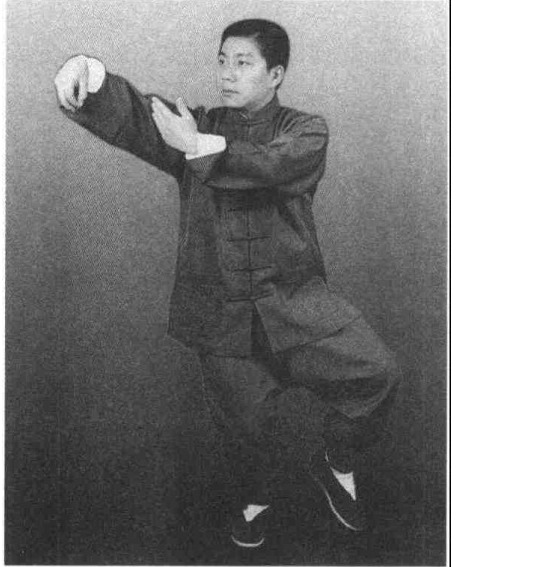
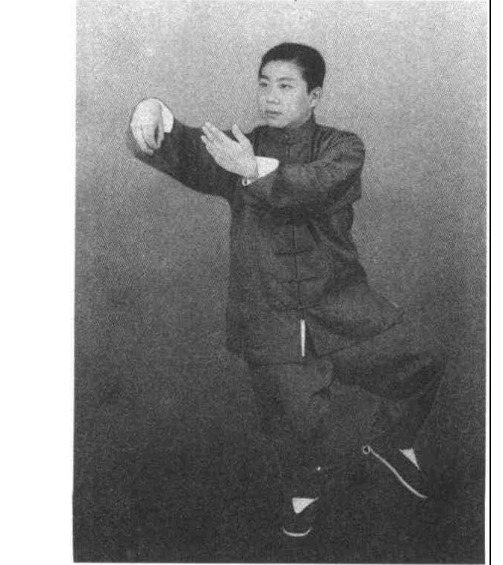
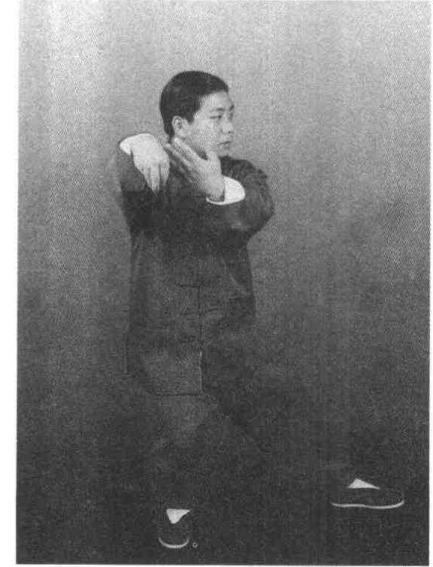
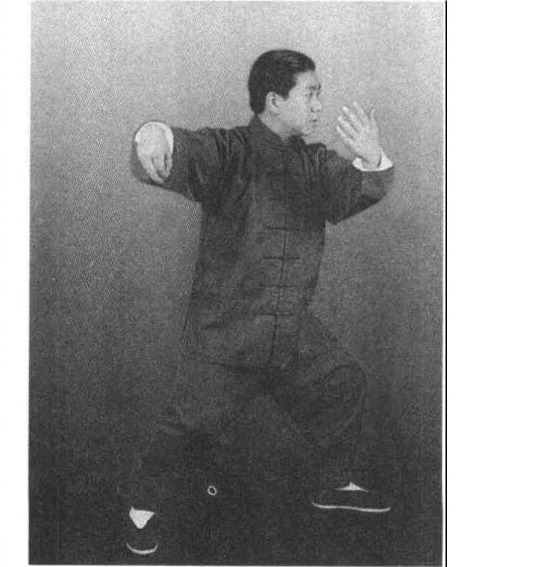
(The left-hand column of this page holds three plates, stacked top to bottom, showing the course of this posture.)
Thirtieth Posture: High Pat on Horse (Gao Tan Ma)
Phần 77
I. Application
Continuing from the previous posture, Single Whip. If the opponent's left hand passes over my left wrist, I at once loosen the left wrist slightly, palm facing up, and fold his wrist down and gather it back towards my breast. At the same time the left foot is drawn back, the toes touching the ground, the waist relaxed and the chest hollowed, the right knee slightly bent and set solid; then the right hand is turned round from the rear, upward and forward, and the palm probes towards the opponent's face. The eyes look forward, the spine is slightly raised, with the intent of probing and extending forward.
1. The weight gradually shifts to the right leg; the left toes lift naturally as the weight moves back, the chest is hollowed and the back raised, and at the same time the right hook hand changes into a palm, the right elbow bends, and it moves in an arc to the front of the right shoulder; the left arm rotates outward so that the palm gradually turns to slant upward. The gaze attends to the turning over of the left palm (see the first figure in the left-hand column of this page).
2. The weight shifts entirely onto the right leg; the left foot is drawn back and set down half a step inward, the toes touching the ground, and the right leg at the same time gradually straightens up (the knee still slightly bent), forming a high left empty stance; the body gradually turns slightly left (facing east), and as the body turns the right palm arcs forward, passing slightly to the left over the upper side of the left wrist. The fingers point obliquely to the left front, the palm facing down, at eyebrow height; the left palm arcs down under the lower side of the right wrist and withdraws to the front of the upper left abdomen, the fingers pointing obliquely to the right front, the palm facing up. The eyes look level ahead, and the gaze must attend to the right palm probing forward (see the second and third figures in the left-hand column of this page).
1. The weight gradually shifts to the right leg, which must be set solid, and the left hip joint gradually draws inward to lead the left leg up. At this moment the upper body must not stoop forward or lean back.
2. As soon as the left foot has left the ground and is drawn back, the right leg gradually straightens up; at this moment the spine is relaxed and sunk, upright; the breath sinks to the lower abdomen and the crotch jin sinks down; the power at the sole of the foot seems to take root in the ground; and the point at the crown of the head must naturally be lifted, with the sense of rising to the heavens. This is the practice of "empty the collar, lift the crown, sink the breath to the elixir field" and "lift the crotch and carry the crown".
3. The knee joint of the right leg is bent and not straight; the sole of the foot is set flat and solidly on the ground, its power seeming to take root in the ground, while the power rises from the heel and the intent turns upward.
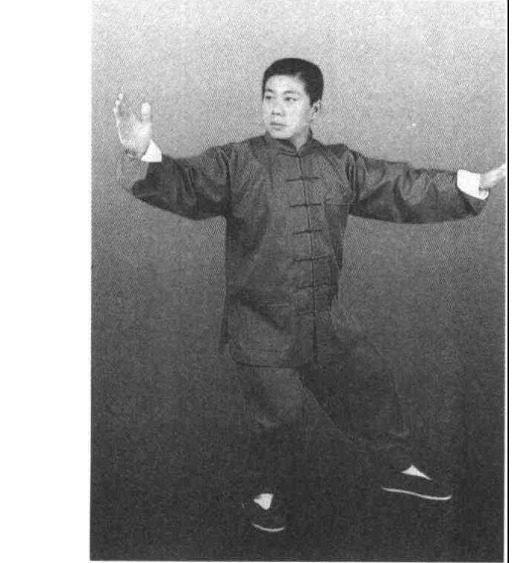
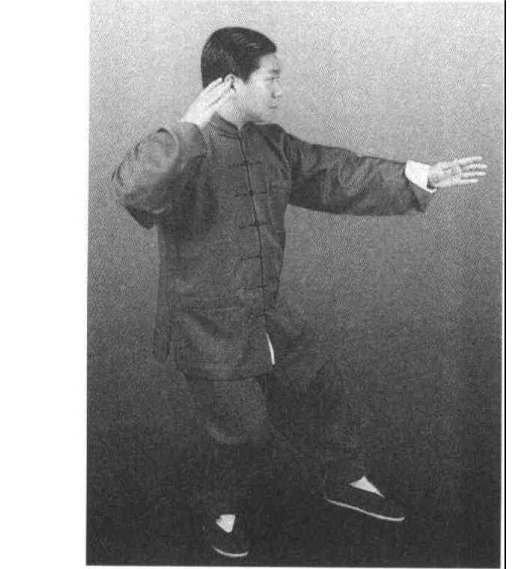
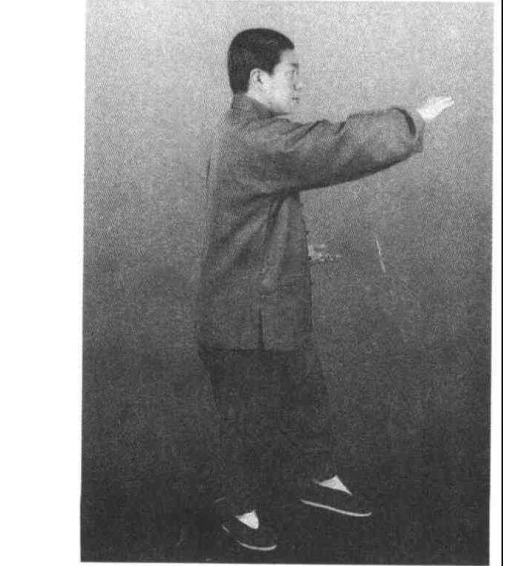
4. The right arm extends forward, the intent far-reaching and the jin long, the elbow joint bent and not straight — this is used to strengthen the arm's sinking jin. The foot jin presses down and the hand jin issues forward: this has the meaning of the two hands and two feet lengthening against each other, seeking straightness within the curve.
5. When the right arm probes forward the shoulder must not be shrugged; the shoulder must be relaxed and sunk. In this way the arm's extending and withdrawing, winding and coiling can follow one's intention.
6. When the right hand probes forward the fingers must not point forward, otherwise the meaning of "seating the wrist" is lost.
7. The waist must be lifted, but not lifted stiffly upward, otherwise the flexibility of the waist's rotation will be affected; nor may the chest be thrust out or the back arched.
Phần 78
IV. Requirements
1. When the left foot is drawn back the right leg must be set solid; the sole of the left foot must not scrape the ground as it is drawn back.
2. After the left foot has been drawn back it must not be fully straightened, nor may the right knee be fully straightened. The knee must be slightly bent and the right leg set solid.
3. When the right hand probes forward, the chest must be hollowed and the back raised, with the intent of advancing — but this is not shrugging the shoulders.
4. "The source moves in the waist and spine, the jin penetrates to the four extremities." Both the upper and lower limbs must carry jin. The left hand gathers back towards the breast and the right hand seats the wrist and probes forward, lengthening against each other; both must strive to issue from the spine and reach the fingers. The shoulders relax downward and the elbows drop; the elbow joint is bent and not straight.
1. Fault: the left foot is not drawn back but scraped and dragged back along the ground. The principal cause is that the body's weight does not shift back far enough — that is, the right leg is not set solid and the weight is between the two feet. Correction: shift the weight fully back, bend the right leg slightly and set it solid, first lift the thigh and store the jin in the knee, and then slowly draw the left leg back; in this way it will not scrape the ground.
2. Fault: the left hand is too high or too low. The principal cause is that in probing forward with the right hand to attack the opponent — which is easy for people to understand — one pays little attention to the fact that the left hand, palm facing up, is drawn back beside the upper abdomen; and so the hand's height, and its position front and back, have nothing to go by and it is placed at random. One should first know that it is gathering back towards the breast, and that "towards the breast" is neither beside the hip nor in front of the chest; then the position of the left hand will be understood without being said.
3. Fault: the movement pauses. When Single Whip is followed by High Pat on Horse, the right hook hand has already changed into a palm, the left palm already faces up, and the weight has already moved back; and here, in preparing to exert force to lift the left leg, one often pauses. The principal cause is that when the jin breaks the intent breaks too, and the strength of the waist, hips and legs is insufficient. Correction: the intention must from the first command the movement without a break; in this way there will be no pause, and "when yin reaches its extreme it gives rise to yang, and when yang reaches its extreme it gives rise to yin", and "yin and yang are each the root of the other." In addition the right leg must be set solid, and one must attend to lifting the leg rather than dragging the foot.
4. Fault: when the right hand probes forward the upper body stoops forward too much. The principal cause is that one fixes too much attention on the forward-probing action of the right hand and forgets that there is also the gathering action of the left hand: if the upper body stoops forward too far, the right hand may go out, but the gathering of the left hand has its effect reduced — and this does not accord with the application. Therefore one must "keep the tailbone centred and upright." As the boxing proverb says, how can the body form and the lifting of the crown be dispensed with? Correction: probe forward, but without stooping forward or protruding the buttocks.
5. Fault: the right palm issues slack and without power. The principal cause is an insufficient grasp of the palm methods of Taijiquan. Correction: the distinguishing feature of the palm methods of Yang-style Taijiquan is that the fingers are relaxed and extended, the thumb slightly bent and separated from the index finger, the other four fingers neither tense nor slack, each joint slightly curved, and the wrist seated. "In moving the breath and conveying the jin there must be no point however small that is not reached" — the jin must penetrate to the five fingers. But of course, using too much force and tensing the palm and fingers into stiff jin is also wrong.
Phần 79
VI. Teaching Method and Practice Method
1. A mnemonic: sit back and lift the leg, the front foot empty; gather with the left and probe with the right, the eyes looking before them.
2. The difficulty of this movement lies in the large bow stance of Single Whip.
(This page carries one unnumbered push-hands photograph at the foot; it has no figure number and no caption.)
To make the weight shift from the left leg to the right leg, and the left foot become empty and be drawn lightly and slowly back, is very far from easy; therefore in practising this movement the emphasis must be placed on the key point of changing from the bow stance to the empty stance.
3. The height to which the right arm probes out must be taught according to the application. The right palm probes towards the opponent's face, and therefore the palm's height should be a little above the shoulder — level with the shoulder or below the shoulder would not meet the requirements of the application.
4. In teaching the body method there should be a slight raising of the spine, with the intent of probing and extending forward, but this must not be overdone: overdone, it produces a forward stooping of the upper body and loses the upright centring of the body. In teaching, one must follow the characteristics of the body method of Taijiquan and value centredness, ease and comfort, lightness, nimbleness and roundness, and calm steadiness — while of course also guarding against thrusting the chest out.
5. In teaching, one must attend to the upper and lower following each other: if the foot moves first and the hand afterwards, then the opponent's attacking left hand will either attack forward or escape backward; if the hand moves first and the foot afterwards, not only is the distance moved small, but the waist power will also be misapplied and the force hard to concentrate — and then the effect of gathering will not be produced. Therefore in teaching one must emphasise the upper and lower following each other, and make the left hand, the right hand and the drawing back of the left foot move together.
6. Compare correct and incorrect movements, so that through this vivid teaching the student can deeply grasp the application and understand the meaning of the movement.
7. Paired practice based on the application: A — takes up the settled posture of Single Whip. B — passes his left hand under A's left wrist and flicks it from the inside towards the right. A — at once loosens the left wrist slightly, palm facing up, folds the wrist down and gathers it back towards the breast, while the right knee bends slightly and is set solid, the left foot is drawn back, and the right hand probes forward. Practise repeatedly, then A and B exchange places and practise, savouring the application of the movement.
Phần 80
VII. Technical Analysis
1. In this movement the distance the weight travels is comparatively large, and the left foot is far from the support of the right foot; to lift the left foot with the support of one foot (the right) requires very great strength in the muscles at the front of the foot and elsewhere. Practised repeatedly in this way, it both trains the strength of the right leg to bear the body's weight and to control and balance the centre of gravity, and trains the strength of the muscles concerned in lifting the left leg.
2. In performing the Single Whip movement that precedes High Pat on Horse, if the centre of gravity is low and the step large, then performing High Pat on Horse makes the leg power work still harder and the amount of exercise still greater, which imposes too heavy a burden on the elderly and the weak; and so some practitioners find they cannot lift the left leg and it turns into a dragging back. Therefore the elderly and the weak may take a higher frame when practising.
3. In the settled posture the right leg must not be straightened: straightened it becomes a dead stance, and a dead stance loses the opportunity.
Thirty-first Posture: Part the Wild Horse's Mane to Left and Right (Zuo You Fen Jiao)
Phần 81
I. Application
Continuing from the previous posture. If the opponent uses his left hand to receive my right wrist as it probes out, I at once use my right wrist to press down on the opponent's left elbow, dropping the elbow and sinking the shoulder, and at once ward the opponent's left arm back towards the left; at the same time my left hand sticks to the opponent's left wrist, palm facing down, covertly using the gathering jin. The left foot at the same time steps out half a step forward and to the left and is set solid, the waist leans obliquely to the left, and then the right foot is lifted and, with my toes and the instep of the foot, kicks straight and level at the opponent's left ribs; at the same time the two palms stand on edge and separate level with the shoulders to left and right, so as to match the action of parting the foot. The eyes follow the right hand, the chest is hollowed and the back raised, and the settling power is of itself sufficient; then the opponent's posture can no longer be directed by himself.
The left part-the-foot movement has the same application, in the opposite direction.
1. The weight gradually shifts entirely onto the right leg, the right leg gradually squats down, the centre of gravity descends and the left foot lifts, and the body turns slightly left with it (facing north-east). At the same time the right palm, following the turning of the body, turns inward in an arc to the right, and the left palm wipes forward in an arc to the left; the gaze attends to the right palm wiping to the right (see the first two figures in the left-hand column of this page).
2. The left foot steps forward (to the north-east), the heel touching the ground first, and then the weight gradually shifts onto the left foot, the left leg bending and the right leg pushing straight to form a left bow stance. As the body turns right (to the south-east), the left palm wipes a circle inward from the left, forward and to the right, passing under the lower side of the right arm, and the left arm comes to a rounded, crosswise bend. The left (The left-hand column of this page holds three plates, stacked top to bottom, showing the course of this posture.)
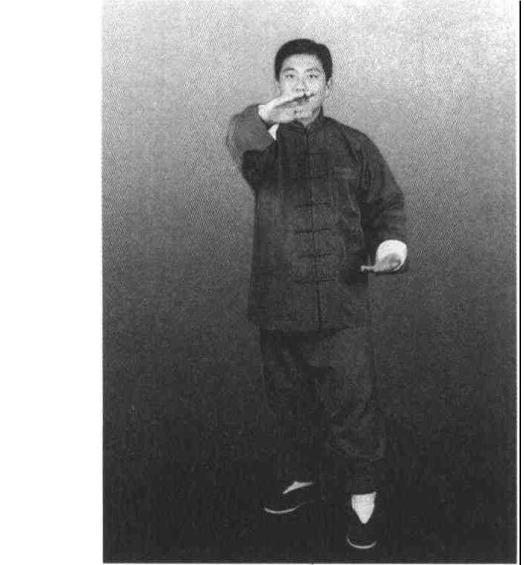
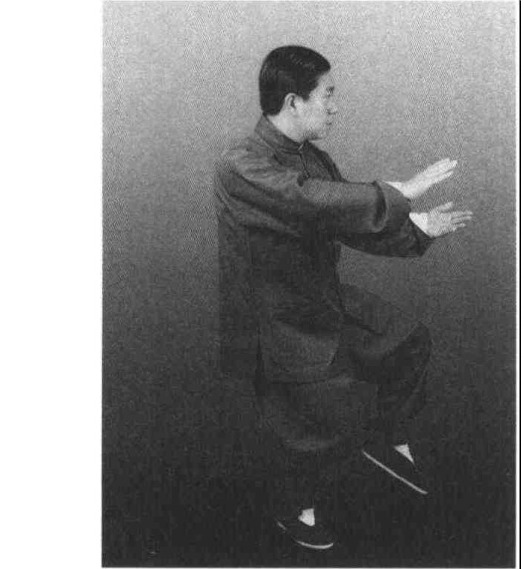
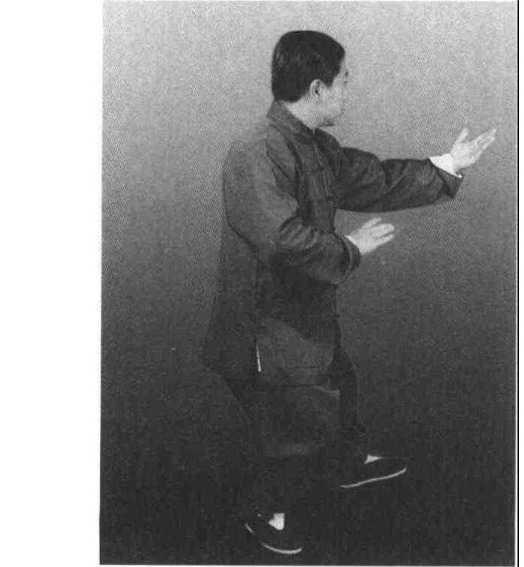
The palm is held crosswise in front of the chest (beside the right elbow), the palm slanting inward and upward; the right palm wipes a flat circle from the right inward to the left over the upper side of the left arm, that is, probing out to the right front, standing the palm, the palm slanting to the left front, the fingertips slanting upward. The gaze attends to the right palm wiping, turning and probing out (see the first figure in the right-hand column of this page).
3. The weight gradually shifts entirely onto the left leg; the body turns left with it (facing north-east) and the right leg is lifted forward; at the same time the left palm moves in an arc forward and upward, palm facing inward, and the right palm scoops in an arc from the right downward to the outside of the left palm, and as it scoops the arm turns outward so that the palm turns to face inward. The two hands cross, the left palm inside. The gaze attends to the crossing of the two palms (see the second and third figures in the right-hand column of this page).
4. The left leg gradually straightens up (the knee still slightly bent); the body turns right (facing south-east) and the right foot parts out to the right oblique front (south-east), the instep naturally drawn level, at hip height; at the same time the two palms separate to the left, both palms slanting outward, the fingertips upward, the two palms at about shoulder height. The gaze attends to the right palm as it parts out, and looks level to the right past the right palm (see the first figure in the left-hand column of the next page).
1. The left foot gradually squats down and the right foot comes down (the weight still entirely on the left foot), and the body turns slightly right; at the same time the left palm, with the elbow bent, draws near the chest and wipes from the inside towards the right, and as it wipes the arm turns inward so that the palm gradually turns to face down; the right palm wipes from the right front towards the left, and as it wipes the arm turns outward so that the palm gradually turns to face up (see the second figure in the right-hand column of the next page).
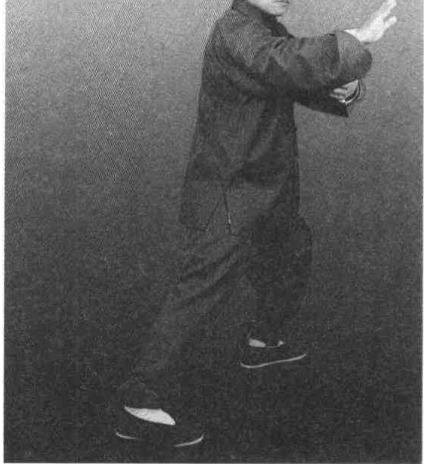
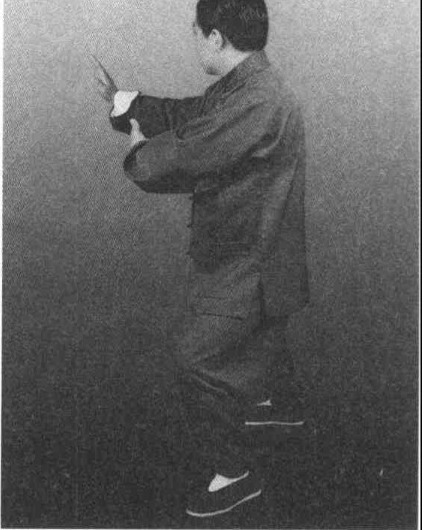
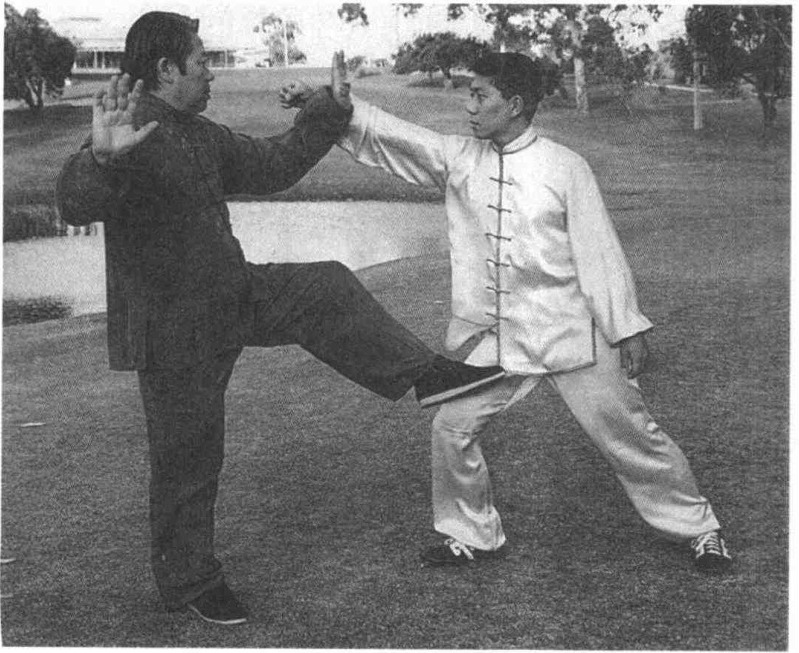
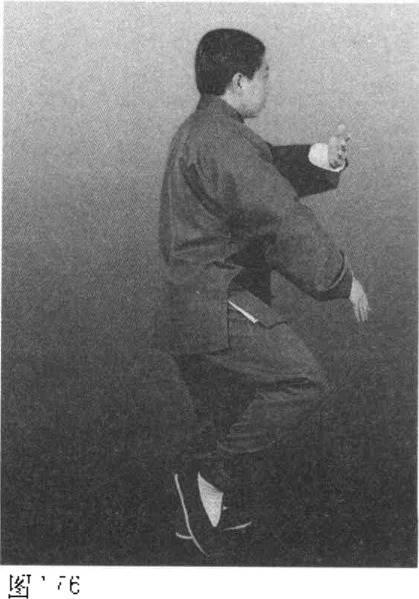
2. The right foot steps forward (to the south-east), the ball of the foot touching the ground first, and then the weight gradually shifts onto the right leg, the right leg bending and the left leg pushing straight to form a right bow stance. The body turns left (to the north-east); at the same time the right palm wipes and turns from the right, forward and to the left, passing under the lower side of the left arm, nearly a full circle, and the right arm comes to a rounded, crosswise bend with the right palm held crosswise in front of the left chest (beside the left elbow), the palm slanting inward and upward; the left palm wipes a flat circle from the left inward to the right over the upper side of the right arm, that is, probing out to the left front, standing the palm, the palm slanting to the left front, the fingertips slanting upward. The gaze attends to the left palm wiping, turning and probing out (see the first two figures in the left-hand column of this page).
3. The weight gradually shifts entirely onto the right leg; the body turns right with it (facing south-east) and the left leg is lifted forward; at the same time the right palm moves in an arc forward and upward, palm facing inward, and the left palm scoops in an arc from the left downward to the outside of the right palm, and as it scoops the arm turns outward so that the palm turns to face inward. The two hands cross, the right hand inside. The gaze attends to the crossing of the two palms (see the third figure in the left-hand column of this page and the first figure in the right-hand column of the next page).
4. The right leg gradually straightens up (the knee still slightly bent); the body turns left (facing north-east) and the left foot parts out to the left oblique front (north-east), the instep naturally drawn level, at hip height. At the same time the two palms separate to the left, both palms slanting outward, the fingertips upward, the two palms at about shoulder height. The gaze attends to the left palm as it parts out, and looks level to the left (see the second figure in the right-hand column of the next page).
Phần 82
III. Essential Points
1. In the first part-the-foot the body must turn to four directions, the face must also turn to four directions, and the eyes must likewise follow the turning of the body to look in four directions.
(This page carries two unnumbered photographs at the foot; they have no figure numbers and no captions.)
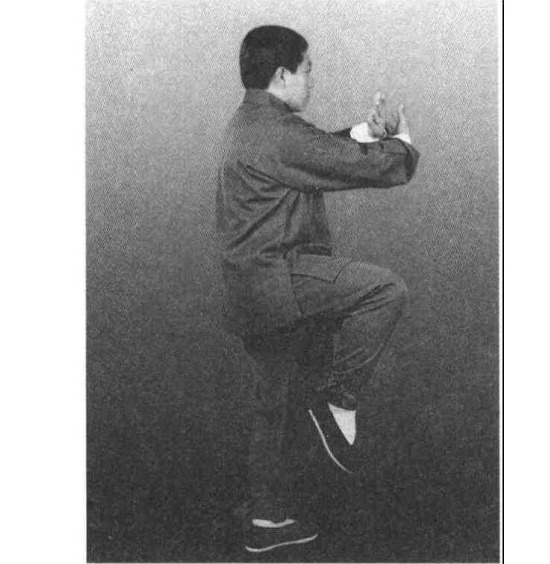
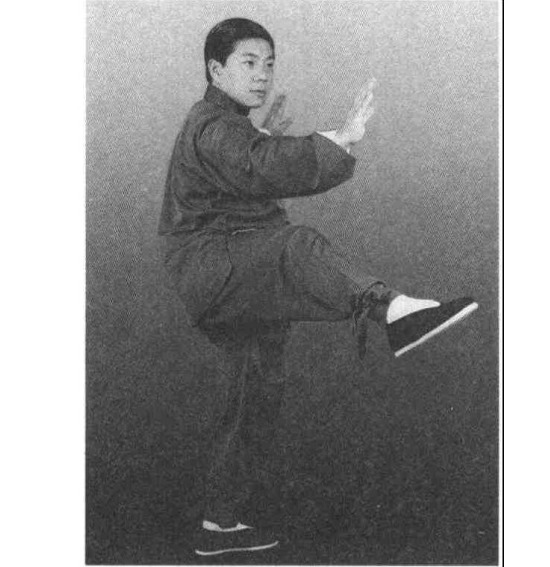
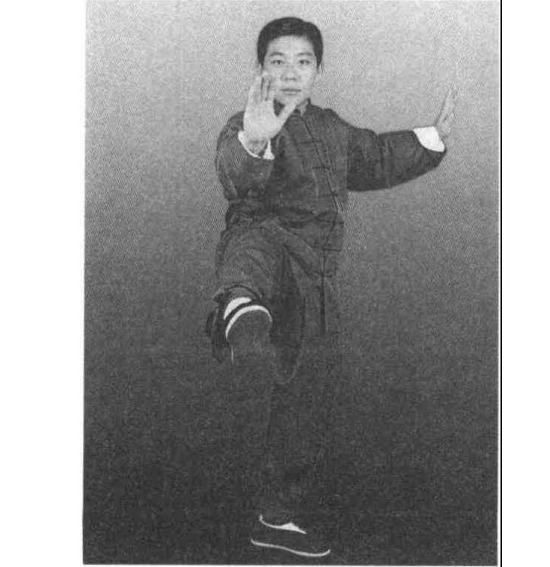
2. In the second part-the-foot, the right foot parts to the south-east and the left foot parts to the north-east.
3. When the two hands grind and turn, the front hand must carry jin through wrist and elbow: the hand circles and the elbow circles too; the arm must form an arc, the elbow slightly sunk, and the circle must be even. When the right arm probes out after wiping and turning it too must not be straightened, and the turning of the waist must lead the hands to move.
4. The left foot steps up, facing north-east, and the waist turns to the north-east; only then does one straighten up.
5. In parting the foot one must lift the knee before extending the leg.
6. When the two hands separate the arms must form arcs, the elbows slightly sunk (the elbow lower than the wrist) and the palms higher than the shoulders (but the shoulders must not be shrugged).
7. When the two palms enfold, cross and gather, they must follow the straightening of the supporting leg and shift softly upward and outward; only then is there lightness and steadiness. If the two palms are already crossed and motionless when the left leg straightens, a sluggish quality will appear. When enfolding, the wrists of the two palms must not bend limply, and the two arms must arrive at the same moment, forming the cross, in readiness to part the foot.
8. When the two hands grind and turn, the elbows must sink and the wrists be seated (the whole form requires "seating the wrist" in every movement); the wrist strength must not be weak, nor may the wrists collapse slackly, otherwise the internal jin will be prevented from reaching the fingers, and the use of ward-off, roll-back, press and push will be affected.
9. The right hand probing out is to press down the opponent's left elbow (taking the right part-the-foot as the example). The right hand wards from the right downward and the left hand covertly applies the gathering jin downward; this must be coordinated with the turning of the waist and hips and with sinking jin, and must not be slack.
10. When parting the foot the body must be stable, and must not stoop, lean back, tilt or lean sideways; there must be "empty the collar and lift the crown" and "sink the breath to the elixir field" — only then is it easy for the body to keep its balance.
11. In the settled posture of the right part-the-foot, the left leg (the supporting foot) must not be straightened, and must not stand utterly dead; otherwise it can neither regulate nor support the steadiness of the body's centre of gravity, nor obtain the opportunity and the position.
12. In going from the right part-the-foot to the left part-the-foot, first make the left leg bend and squat so that the centre of gravity descends; in the course of sitting back on the leg the right leg first comes down and then steps to the oblique direction (towards the south-east). At that moment neither the hands nor the feet may pause: one must "let the foot follow the hand's movement, turning as if divinely."
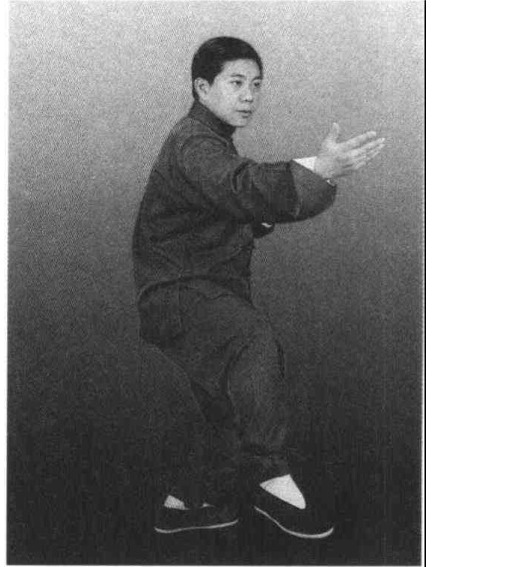
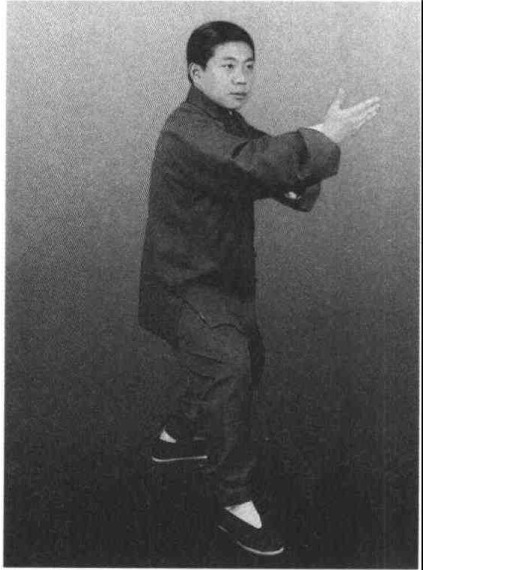
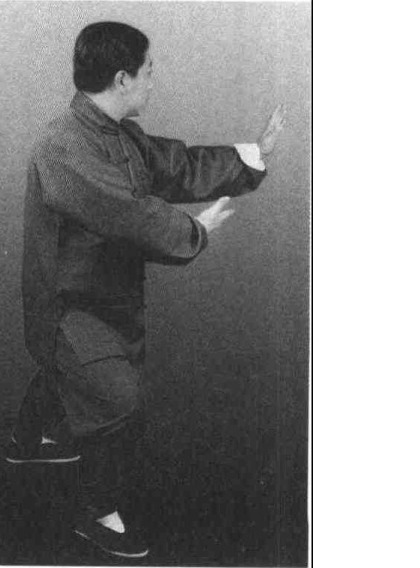
Phần 83
IV. Requirements
1. The direction of the left and right parts-the-foot must be correct: the right part-the-foot towards the south-east, the left part-the-foot towards the north-east.
2. In the right part-the-foot the directions of the right foot and the right hand must agree and must arrive at the same time; the left part-the-foot has the same requirement as the right.
3. The grinding and turning of the hands must be clear and must not be vague, and the intent of the movement must be strong.
4. Going from High Pat on Horse into the right part-the-foot, one should first lower the centre of gravity, bend the right leg and set it solid, and only then step the left leg to the left oblique angle (north-east). At the end of the right part-the-foot, coming to the left part-the-foot, the stepping must be light and nimble, and so one must first bend the left leg and lower the body's centre of gravity, and only after the left leg is set solid step the right leg to the right oblique angle (south-east), so as not to produce heaviness and sluggishness.
5. There must be "when one part moves, no part is unmoving". In the right part-the-foot, at the same moment that the right leg bends and squats and the centre of gravity descends, the right hand grinds and turns from the front to the right and inward and the left hand grinds and turns from the left outward, and the left foot lifts and becomes empty — all must move together; the hands must not move while the foot is still, nor the foot move while the hands are still.
6. In going from the right part-the-foot to the left part-the-foot there must be no pause: one must "let posture follow posture, movement thread through movement", "when the jin breaks the intent does not break", and the internal jin keeps on circulating.
7. Whichever foot parts, the gaze should be fixed in that direction.
1. Fault: the direction of the movement is not correct. The principal cause lies in unfamiliarity with the application. The opponent meets my right wrist, probing out, with his left hand from the front; I ward the opponent's left arm back to the left, and at the same time step my left foot half a step forward and to the left — and at that moment the opponent is to the right front of me, so that the direction of my parted foot becomes the south-east oblique, and not some other direction. Correction: the direction of the toes of the supporting foot must be reasonable and natural, pointing to the north-east; then, on the basis of turning the waist and hips, the right part-the-foot can proceed smoothly to the south-east.
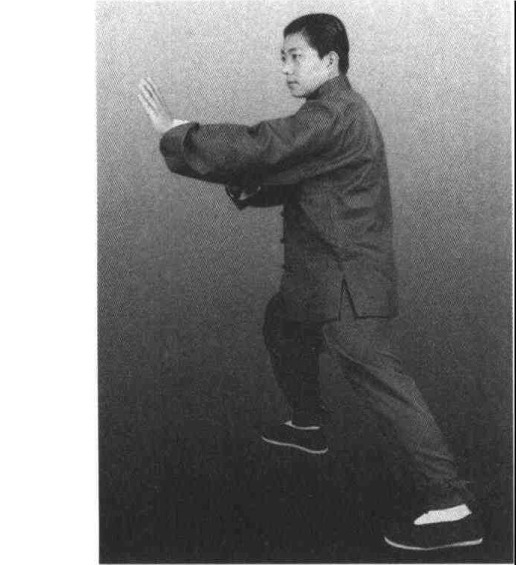
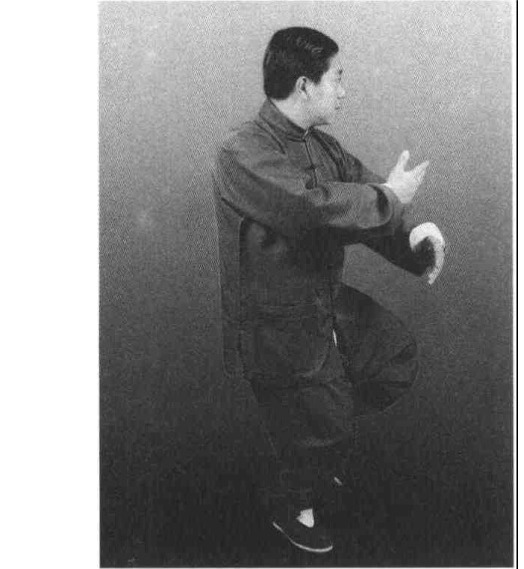
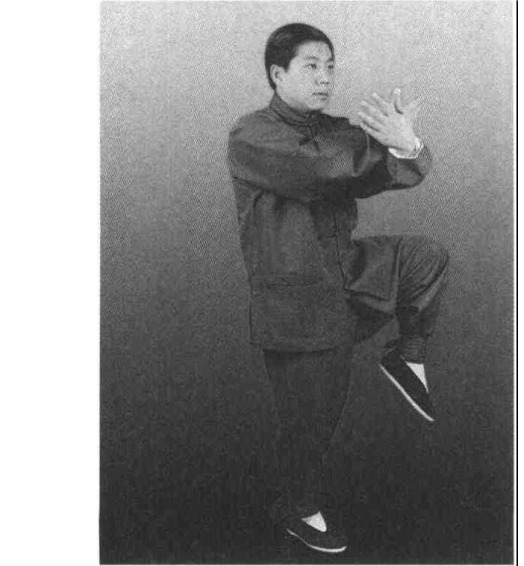
2. Fault: the parted foot is too high or too low. The principal cause is a lack of understanding of the application. I ward the opponent's left arm and at the same time my left hand gathers downward under the opponent's left wrist, so that the parts of him left open to my attack are only the middle and lower — and so a straight, level kick at the opponent's left flank is the more appropriate. Correction: since it is the flank that is being kicked, being higher than the waist or lower than the knee are both unreasonable. Of course the elderly and weak, and those who are dizzy and unsteady on their feet, may lower the requirement — lifting the foot only a little will do.
3. Fault: the gaze is fixed in one direction only and does not follow the movement. The principal cause lies in an insufficient grasp of the method of the eyes. Correction: the gaze must follow the movement of the principal hand and look level ahead, so that in practising the form the eyes arrive, the body arrives, the hands arrive and the step arrives, all together, "spirit and form united as one". Wherever the intent wants to go, the gaze must go with it; the eyes must follow the turning of the principal hand and look ahead, while of course also attending to above and below and to both sides. The neck must turn with the gaze; in this way "the mechanism lies in the eyes, and the enemy's disposition is known at once", and in martial terms one can see through the opponent's movement. The turning of the gaze, and its extension and far-seeing, are also good for restoring and strengthening the eyesight; therefore in a single part-the-foot the gaze must turn to four directions, and accumulated day after day in repeated training this is most beneficial to the health of the eyes.
4. Fault: when the two hands grind and turn they are either stiff or collapsed. The principal cause is that the intent of the pairs is unclear. The hand methods of Taijiquan abhor stiffness and sluggishness, and require firmness and softness to assist each other. Correction: in moving, lead the elbow with the hand and the shoulder with the elbow; the arm must be nimble, round and turning, the shoulder relaxed and sunk. To prevent the wrist from collapsing slackly one must attend to "seating the wrist". If the wrist is slack and powerless the hand will necessarily have no ward-off jin; therefore when grinding and turning, the front hand must carry jin through wrist and elbow, and the elbow too must circle. This keeps the ward-off jin from being lost, and one achieves neither stiffness nor collapse.
5. Fault: when parting the foot, the waist twists, producing a slanting and stooping or leaning of the upper body. The principal cause is an insufficient recognition that the waist is the key to the turning of the upper and lower body. Correction: the Treatise on Boxing says, "the waist is the great banner" — likening the waist to the great standard of the central army, which stands upright. Therefore when performing the right part-the-foot, as the left foot steps up and one faces the north-east, the waist and hips must turn to the north-east, so that shoulder and hip are joined; and when parting the foot to the south-east the waist and hips turn with the movement — and then there will be no twisting of the waist and no slanting of the upper body.
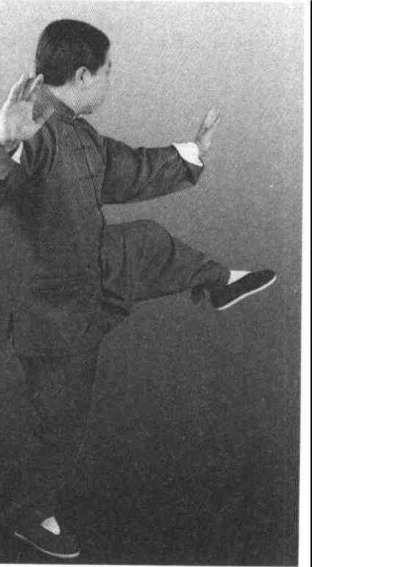
6. Fault: when parting the foot the leg kicks out straight. The principal cause is an insufficient understanding of the application. Correction: to kick the leg one must first lift the leg (the knee), first concentrating the force at the knee joint, and then let the motive force travel joint by penetrating through to reach the tip of the foot, so as to strengthen the issuing of power.
7. Fault: when parting the foot the two hands separate to left and right too low or too high. The principal cause is an insufficient understanding of the application. Correction: as the foot parts, the two palms stand on edge and separate in arcs to left and right level with the shoulders — this is chiefly to take advantage of the momentum of the parted foot, and is not a press-and-strike attack. The arms must be arc-shaped, the palms higher than the shoulders, and the shoulders must not be lifted, so that one's own settling power is sufficient and the opponent cannot hold himself up.
Phần 84
VI. Teaching Method and Practice Method
1. Mnemonics (taking the right part-the-foot as the example): (1) The hands — the right hand from outside inward, the left hand from inside outward; the two hands open and then close; the right hand presses obliquely forward; the arcs issue level with the shoulders. (2) The feet — the right leg squats and the left leg is empty; the left foot goes out obliquely forward; the heel lands first; the weight shifts to the left; the right foot rises slowly; remember the direction firmly.
2. Difficult points (taking the right part-the-foot as the example): (1) The grinding and turning of the two hands is unclear — one may use the method of breaking it down: with the feet and the direction unchanged, practise the right hand alone, circling from outside to the right and inward, then change to the left hand going left, outward and to the right, then practise the two hands together, and finally issue the right palm to the south-east after the grinding and turning. Once that is basically proficient, then add the foot movements and the change of direction. (2) The facing is unclear — stepping the left foot out one faces north-east, and issuing the right palm one faces south-east; practise repeatedly, first mastering the two hands' grinding and turning and the changing of the two directions, which is the difficult point and must be made clear. Then, having learned it, turning left to brush-the-knee-and-twist-the-step one faces north-east, and when parting the foot one faces south-east — and in this way the turning and changing of directions is easily made clear.
3. Joining: in going from High Pat on Horse into the right part-the-foot, one must first squat the right leg and sink the body; and in going from the completed right part-the-foot into the left part-the-foot, one must likewise first squat the left leg and "send" the right leg down, stepping out to the south-east oblique, while coordinating the hand movements. If the joining is poor, the quality is certain to be low; therefore in teaching one must specially bring out the practice of the joinings, and through repeated practice achieve continuity, roundness and liveliness.
4. The direction of the placed foot must be practised repeatedly and pointed out clearly. In the right part-the-foot, the left foot steps out to the left oblique, that is to the north-east; in the left part-the-foot, the right foot steps out to the right oblique, that is to the south-east. Going beyond or falling short will make the part-the-foot awkward or the stance unsteady.
Phần 85
VII. Technical Analysis
1. This movement is comparatively complex: it includes the two hands each moving in different directions, and at the same time the movement of the feet, the rising and falling of the centre of gravity, the repeated changing of direction, and support on one leg — all of these changing at the same moment. It is therefore rather hard to learn; but its very difficulty tends rather to arouse the practitioner's keen interest.
2. When parting the foot the movement of the hands is not placed at random: beyond taking advantage of the momentum of the parted foot, it also serves to confuse the opponent's line of sight and to scatter his attention. Because the right hand and the right foot strike out at the same moment and in the same direction, the opponent's gaze first meets the hand nearer his face, and so the hand's movement bemuses his attack and defence, which favours the true attack of my foot below — and this embodies the subtle use of now appearing, now hiding, and of the interchange of empty and full.
3. Once this movement is basically learned, the level of skill depends chiefly on whether the support on one leg is steady; technically one must attend to two things: (1) The supporting leg must be set down solidly and stand steady, bent and not straight, so that the lower body is stable. (2) The parting leg must not be lifted too fast — if fast, the body is easily pulled along. One should first lift the knee, and then at the same slow speed continue to part the lower leg, so as to avoid losing balance.
4. The speed at which the two hands separate must agree with the parting of the leg, and the movements must be coordinated.
5. The body must be "centred, upright, at ease and comfortable"; one must not wrongly resort to leaning back and the like to keep the body's balance.
Beyond all the above, the most crucial thing is to persevere in practising over months and years, to strengthen the power of the legs and of the whole body's muscles, and to raise one's skill unceasingly, so that the support on one leg becomes steady.
Thirty-second Posture: Turn the Body and Kick with the Heel (Zhuan Shen Deng Jiao)
Continuing from the left part-the-foot. If the opponent strikes with his right hand from behind me, I at once turn my body to the left, hollow the chest, raise the back and relax the waist, and above all make a good "empty the collar and lift the crown"; the left leg hangs raised, and as the waist turns the toes, of themselves hang down of itself. After the turn, the right foot is set firm, and the left foot at once kicks with the heel at the opponent's abdomen, the toes drawn up. As the two hands turn with the waist they close from outside inward, and as the left foot kicks out the two palms stand on edge to left and right and separate level with the shoulders; the gaze looks away in the direction of the left fingertips, and with the root power established the opponent will certainly fall back before the leg.
Phần 86
II. The Course of the Movement
1. The left foot comes down, the left knee staying raised, and with the right heel as the axis the body at once turns to the left rear through about 180°; as it turns the two palms close inward and gather and cross in front of the chest (the left palm outside), and the eyes follow the turning of the body, looking level ahead (see the first figure in the left-hand column of this page).
2. The left leg kicks slowly out to the left (west) with the heel, the toes pointing up; at the same time the two palms separate to left and right. The right leg gradually straightens up as the left foot kicks out, but the right knee stays slightly bent. The gaze attends to the left palm as it separates, and looks level ahead past the left palm (see the second figure in the left-hand column of this page).
1. When turning, the body must always maintain "above and below essentially one line", and the body's centre of gravity must not depart from the point of support.
2. When turning to the left the whole body's movements must be coordinated: the gaze looks to the left, the right arm swings left, the left arm withdraws and swings left, the left leg withdraws and swings left, and the head turns together with the turning of the waist and hips. The waist is the key to the turning of the upper and lower body, but the cooperation of other aspects must not be slighted.
3. When turning, the right leg sinks slightly downward so that the centre of gravity descends and the lower limbs are made stable. When kicking, the right leg straightens up again, but still does not straighten fully.
4. When kicking the body must be steady, and must not stoop, lean back, tilt or bend; the leg must kick out slowly, taking the heel as the point of application, without sudden change, and must not use rapid movements.
1. When turning, the upper body must not stoop forward or lean back, nor slant to left or right.
2. When turning, the left foot must not touch the ground.
3. After the turn the direction must be correct.
4. After the turn one must not kick the foot only after the movement has paused.
5. The movement must be even, and must not be sometimes fast and sometimes slow.
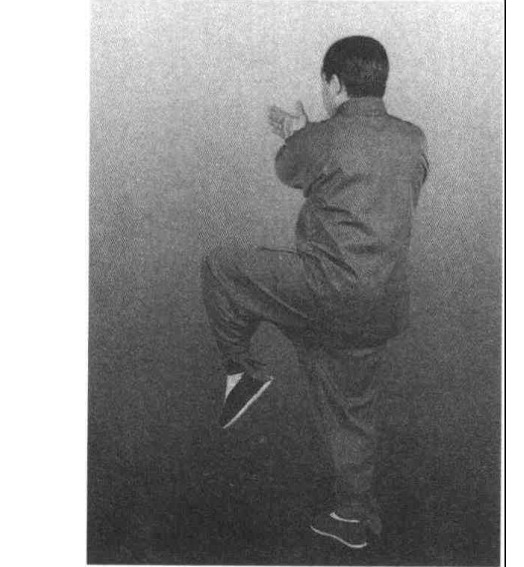
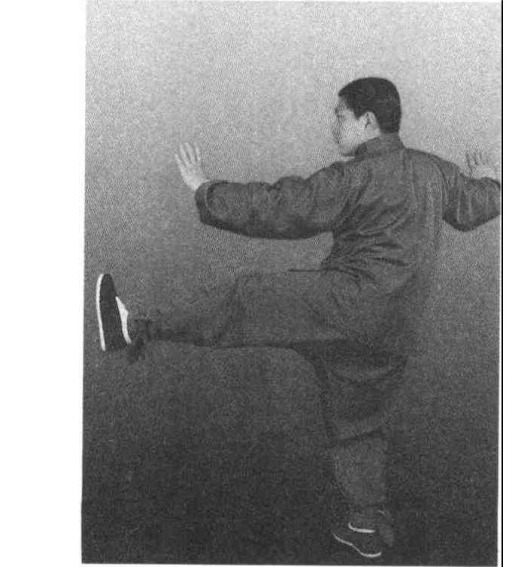
6. When the two hands cross they must be full and not collapsed, and the elbows must not be lifted so as to expose the ribs.
7. In the settled posture there must be the three joins (the hand joined with the foot, the elbow with the knee, the shoulder with the hip).
Phần 87
V. Common Faults, Their Causes, and How to Correct Them
1. Fault: on turning the body one stands unsteadily, so that the body slants or even the left foot touches the ground. The principal cause lies in not having grasped the correct position of the body's centre of gravity, and in poor control of the force of the turn. Correction: the waist and hips and the four limbs cooperate to produce a force turning to the left, and the turn must be made just right; besides applying the force properly there must also be a braking action. Therefore after the turn the right leg sinks, the left leg draws slightly inward, and the setting down of the right sole and, most fundamentally, the control of the waist and hips' turning, give one not only the ideal angle of turn (the direction needed) but also a light and nimble turn.
2. Fault: the direction of the turn is incorrect. The principal cause is paying insufficient attention to the application. When the opponent strikes with his right hand from behind me, my direction of attack and defence should be behind the position of "Part the Foot to Left and Right" (west) for it to accord with the requirement. Correction: after the left part-the-foot the movement is 45° + 90°, about 135° in all — that is, from the north-east turning to the west (the direction of the heel kick).
3. Fault: the left leg swings with the leg straight. The principal cause is wanting to use the force of the swung leg to turn the body, which loses the application's meaning as a heel kick, and in any case makes the direction of the turn hard to control. Correction: one must (This page carries one unnumbered push-hands photograph at the foot; it has no figure number and no caption.)
stand with the left leg raised and turning.
4. Fault: when kicking the leg the position of the two hands is poor. The principal cause is that the beginner concentrates too much on turning and on keeping balance. Correction: the arms separate at shoulder level — the left hand forward (west), the right hand oblique (north-east). If the two hands separate to 180° they scatter, which inevitably produces a thrust-out chest, and moreover the front of the chest is then too open and easily attacked.
Phần 88
VI. Teaching Method and Practice Method
1. A correct turning action is the key to this movement, and so it must be practised and savoured repeatedly. On the basis of practising each detail broken down, then practise the whole repeatedly.
2. The teacher should explain the turning as the key point and demonstrate it.
3. Two directions must be made clear: first, when the two hands cross the body faces the north-west; second, the kick goes to the west.
The distinguishing feature of this movement is the turn, and the technical key point and difficulty is likewise the turn. The turn is carried out while supported on one foot, and therefore the key lies in the centre of gravity. As soon as the human body makes a movement the centre of gravity changes; the direction in which the centre of gravity moves is always the same as the direction in which the body moves, and the greater the weight and distance moved (as with the left leg in this movement), the greater the distance the centre of gravity travels. After the body has turned in the left heel kick, the right foot supports alone and the left leg hangs raised on the left side, so that the centre of gravity necessarily shifts left; and the beginner very easily becomes unsteady and sets the left foot down, or leans the upper body right to balance — which does not accord with what the boxing treatise says: "the hundred meeting-point, the central pole, one breath threading through." In sum, the technical key of the left heel kick is the turning, and to turn well is to use well the turning of the waist and hips and the appropriate coordinated movement of hands and legs.
Thirty-third Posture: Brush the Knee and Twist the Step to Left and Right (Zuo You Lou Xi Ao Bu)
The same as the ninth posture above, Brush the Knee and Twist the Step to Left and Right.
In going from the left heel kick into the join with the left brush-the-knee-and-twist-the-step, one must do well the The whole of this page is taken up by the posture photographs, arranged in three rows across the page. There is no running text on this page.
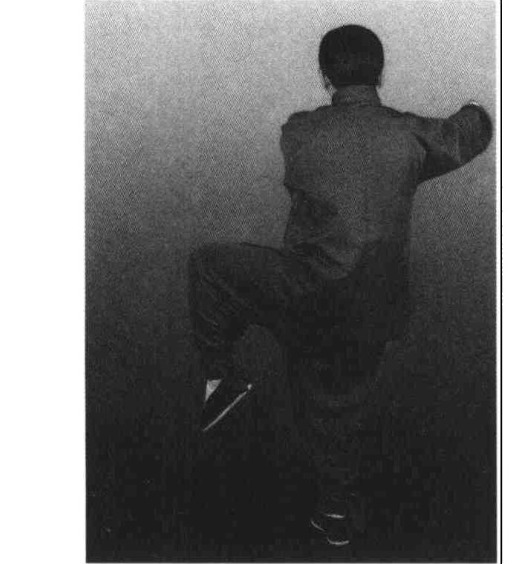
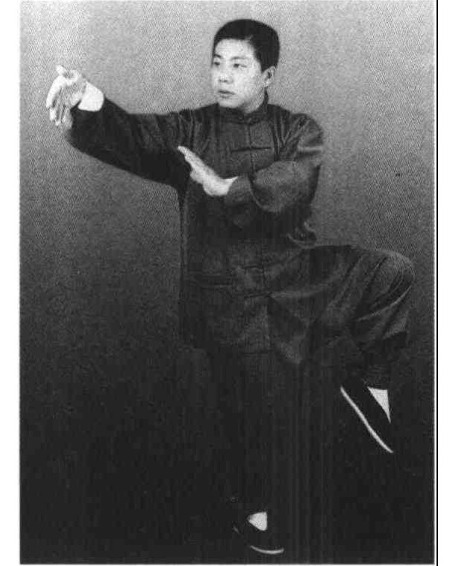
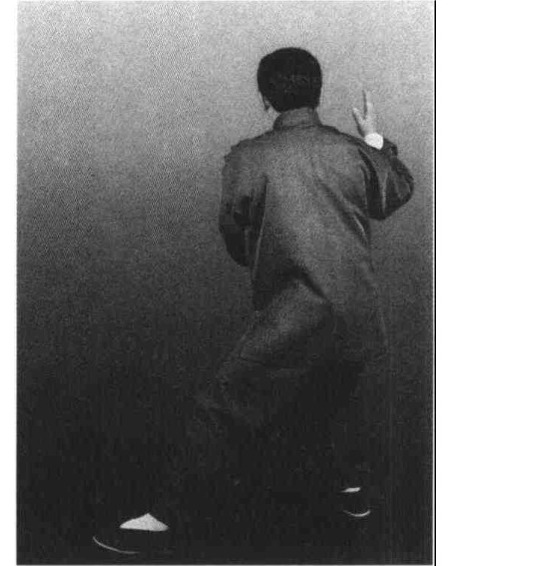
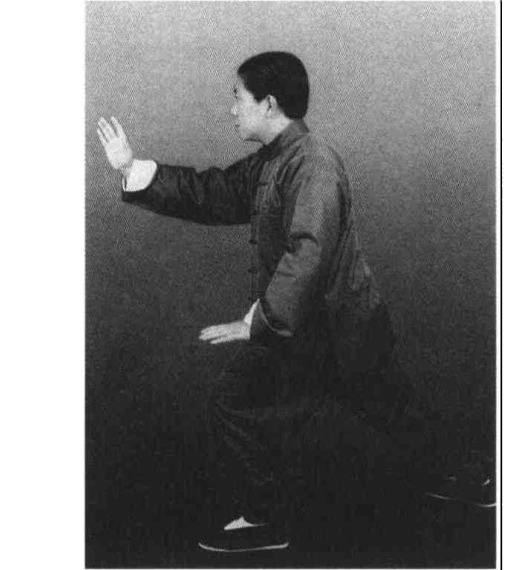
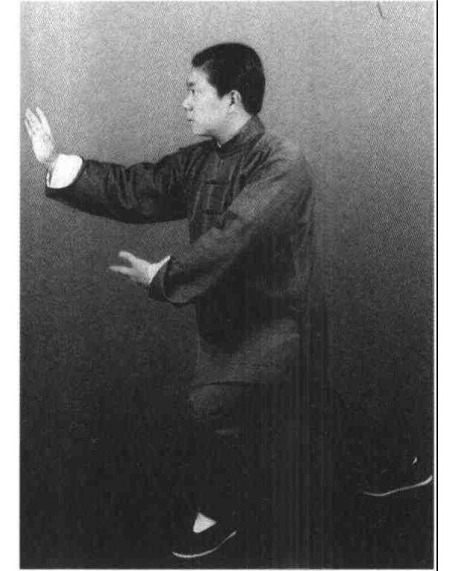
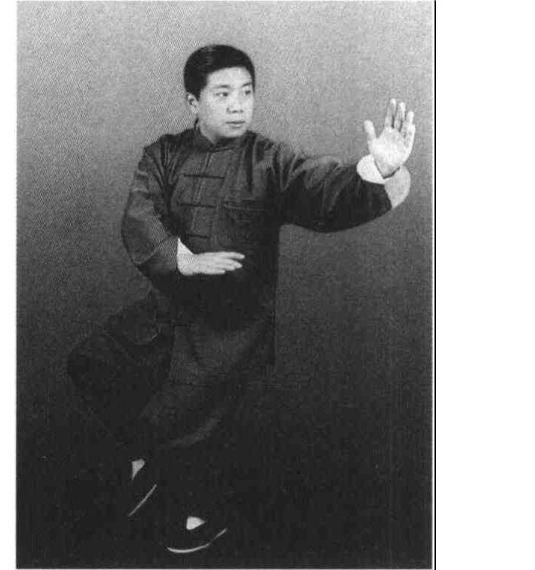
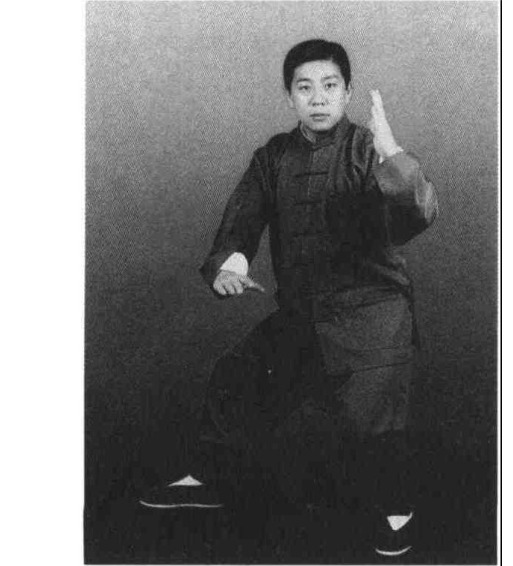
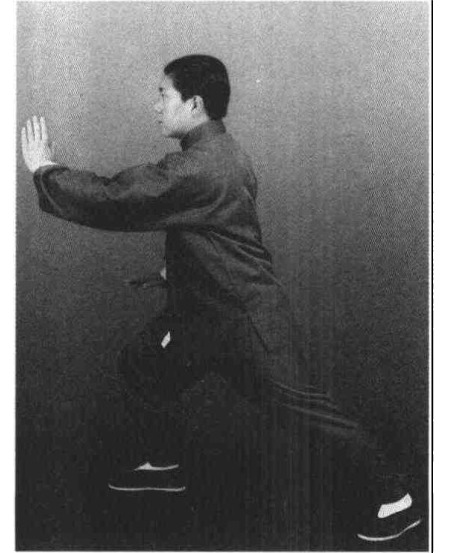
The movement of the preceding figure: the right leg continues to sink, the right palm arcs to the side of the right ear, the left arm arcs back in to the front of the abdomen, then continues downward and to the left (see the second figure on this page). The other movements are the same as the ninth posture, "Brush the Knee and Twist the Step to Left and Right", only the direction is reversed (see the remaining figures on this page and on the next).
All the points — the key points and the rest — are likewise the same, only the direction is reversed.
Thirty-fourth Posture: Step Forward and Plant the Fist (Jin Bu Zai Chui)
Phần 89
I. Application
Joining from the preceding posture. If the opponent again kicks in with his left leg, I use my left hand to brush away from the left along the line of his leg; he is then certain to lunge to the left, and I at once take a step forward with my left foot in pursuit, bending the left knee and settling solidly, and my right hand immediately closes into a fist and strikes down at his waist or his shin — either will do. This is called "planting the fist". At that moment the right leg is straightened, the waist and hips sink down into a flat curved form, the chest is contained, the gaze is forward, and one must above all take care to guard one's own central ground.
1. The body turns gradually to the right, the right toe turns out and settles flat, the centre of gravity gradually shifts onto the right leg, and the left leg is lifted forward; at the same time the right palm turns downward, parallel with the ground, moves to the side of the body, turns over to the right and rear, closes into a fist, and comes to the side of the right waist; the left palm, as the body turns, goes from the front to the right, arcs down and brushes across the front of the right chest, the gaze attending to the left palm's downward brush (see the first two figures on this page).
2. The body continues to turn slightly right, the left leg takes a step forward, the heel landing first, and as the centre of gravity gradually shifts forward the whole sole of the left foot settles flat; as the left leg bends and the right leg extends into the left bow stance, the body gradually turns left, the waist and hips sink, and as the body turns the left palm continues to arc downward, brushing past the front of the left knee up to the side of the left knee; the right fist at the same time strikes down and forward, slightly below knee height, the gaze forward, the eyes attending to the right fist as it strikes out (see the figures further on this page).
1. The brushing of the knee should be done at the moment the left heel has already landed and the weight is shifting forward and the left knee bending; it should not be done before the left foot has landed, nor after the left bow stance is already made. The bow must arrive, the brush must arrive, the fist must arrive — all three must arrive together.
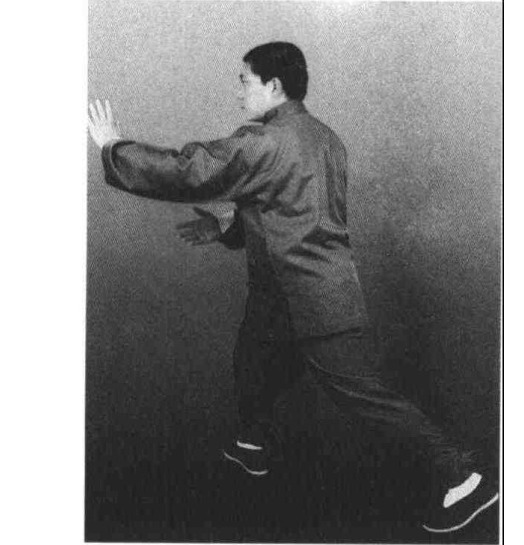
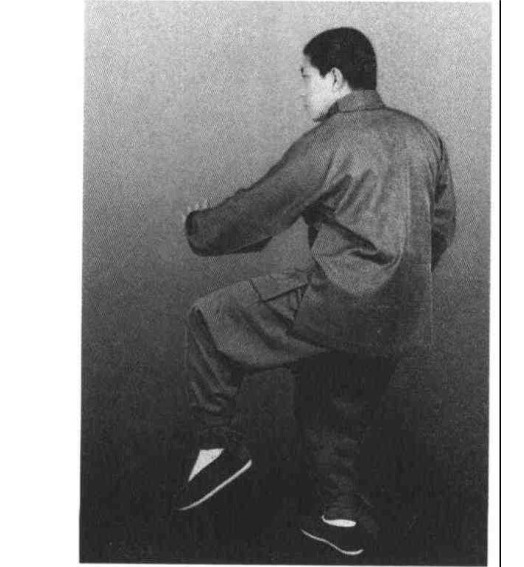
2. Before the right fist strikes forward and down, take care that the body stays upright; as the right fist strikes down the upper body inclines forward with the waist folding, and the waist and hips sink — but when the waist folds, the head and neck and the waist must still be kept in one straight line (the cervical, thoracic and lumbar vertebrae essentially forming one straight line). Do not drop the head or hump the waist; maintain "the hundred meeting-point, the central pole, one breath threading through".
3. The eyes look forward past the right fist; do not raise the head, and do not lower it either.
4. The two elbows should be slightly bent, never straightened; the left palm should have the wrist seated.
Phần 90
IV. Requirements
1. The left leg is lifted and steps forward; the movement must be even, not now fast and now slow.
2. From the moment the body begins to turn right, both left and right hands must move together; take special care that the left hand does not pause.
3. The body should not turn right too far (it should not face north).
4. Once the whole set of movements is fairly proficient, the amount of exercise should be gradually increased. One way is to lower the height of the hip-joint, bringing the knee nearly level with the hip, so that the muscular load on the waist and legs is increased.
The centre of gravity should be kept at one level, the body neither rising nor falling abruptly, and one should not cut corners by borrowing force. When the movement changes, the hip-joint draws in and lowers, and the body stays centred and upright; in this way the leg strength can be increased, and as the amount of exercise rises the constitution is further strengthened. Naturally, a practitioner whose health does not for the time being permit it must not drop too low all at once, lest he become over-tired.
5. The fist should not be gripped too tightly, nor yet left wholly slack so that it is an empty fist.
6. Do not drop the head or hump the waist.
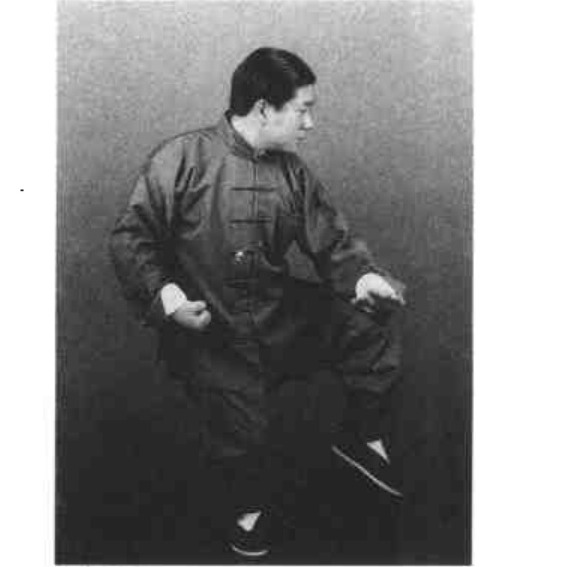
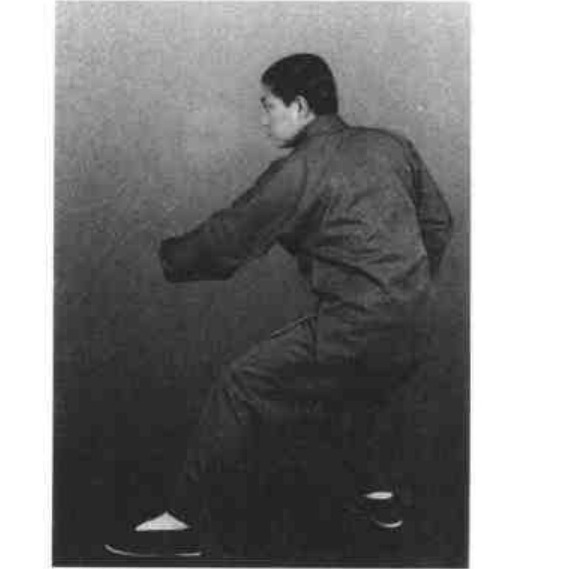
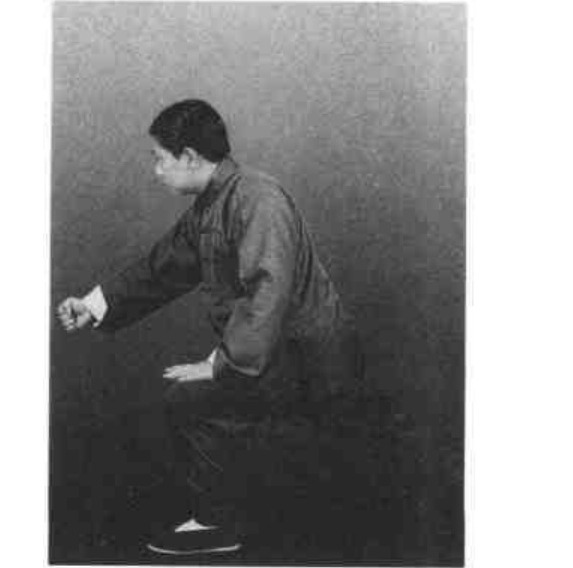
Phần 91
V. Faults, Their Causes, and How to Correct Them
1. Fault: the fist comes out too high, striking down from in front of the chest and beside the shoulder. The principal cause is that one has traced an empty circle. Correction: the fist should come out from the side of the waist and strike forward and down.
2. Fault: the eyes look downward. The principal cause is that one attaches too little importance to the application, mistakenly supposing that the eye should see the point the fist strikes. Correction: the gaze should attend to the right palm, but the main thing is that the eye must observe the opponent's changes — and so it should not look down.
3. Fault: the right hand closes into a fist well before it has reached the waist. The cause is a failure to understand the application. Correction: as the boxing saying has it, "Going out the hand is open; meeting a man it becomes a fist." The right hand should therefore close into a fist only just as it arrives at position.
4. Fault: the upper body bends forward and the head drops. The principal cause is neglecting the requirement of "above and below essentially one line". Correction: the body method should be centred and true; though the bend of the waist is large, one must still keep "the hundred meeting-point, the central pole, one breath threading through" — avoid bending the waist and rounding the back.
Throughout the whole of the Yang-style set there are few movements in which the upper body bends forward; Step Forward and Plant the Fist is one of them. Its distinguishing feature is the outward inclination of the upper body. How is one to understand the operation of "the tailbone centred and true" in this movement? It is a matter of understanding the difference between being centred and true without deviation, and the deviation of the centred and true. In practising the form there must be extension and contraction; sometimes the bend of the waist is very great, but so long as the principle of "the hundred meeting-point, the central pole, one breath threading through" is still maintained, it is still permitted. This is what is called "the deviation of the centred and true" — the inner strength is still centred, true and undeviating. And so one must not bend the waist and round the back, must not drop the head and stoop.
Thirty-fifth Posture: Turn the Body Over and Thrust Out the Fist (Fan Shen Pie Shen Chui)
Joining from the preceding posture. If an opponent again strikes from behind with his fist, I turn my body over from the right towards the rear, settle solidly on the left foot, raise the right leg forward and set it down half a step, and at the same time raise the right fist and thrust it out to the rear and to the front, the back of the fist sinking downward — either taking control of the opponent's elbow, or secretly using the plucking energy. Either will do.
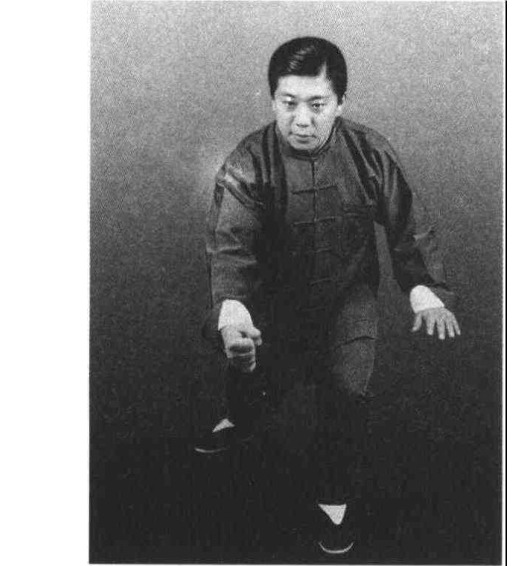
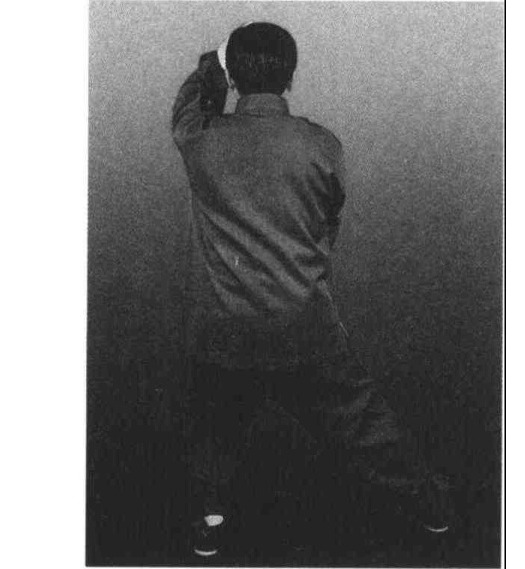
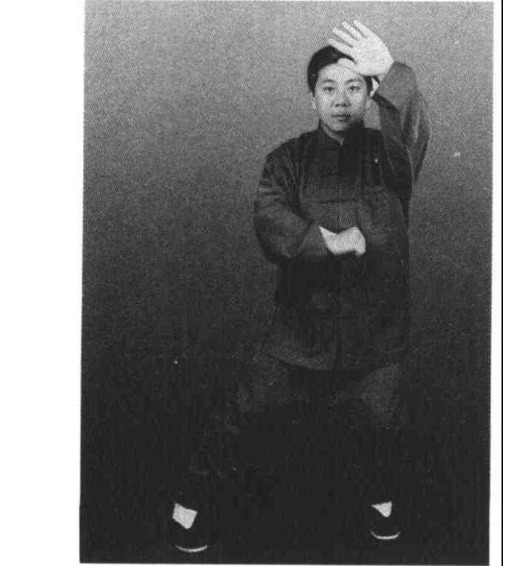
At the same time, the left hand follows the right fist and strikes out with the fist at the opponent's face to assist the thrusting momentum of the right fist; the body must advance with the movement — in this way one gains the advantage.
Phần 92
II. The Course of the Movement
1. The body straightens and turns right, and at the same time the left toe turns in and settles flat; as the body turns the right fist is raised, the elbow bent and the forearm brought horizontally across to the front of the left ribs, the centre of the fist facing down; the left palm arcs up from the left to a point above and in front of the left temple, the face towards the north. The eyes follow the turning of the body and shift in level gaze, the gaze attending to the movement of the two hands (see the first figure on this page).
2. The subsequent movements are the same as the twenty-fourth posture, "Thrust Out the Fist", only the direction of the form's route is reversed (this movement goes towards the east) (see the later figures on this page).
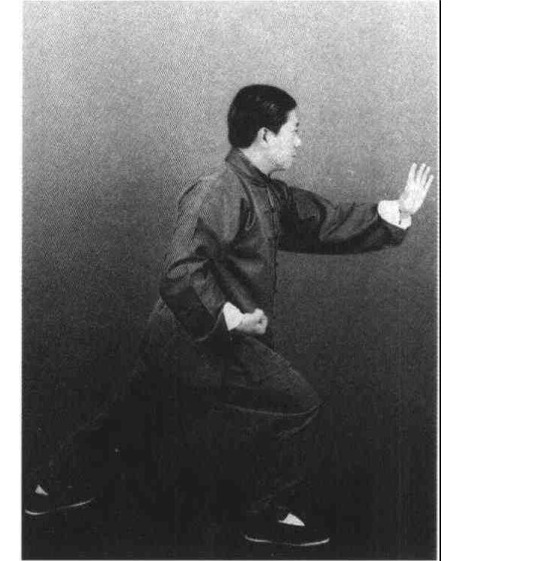
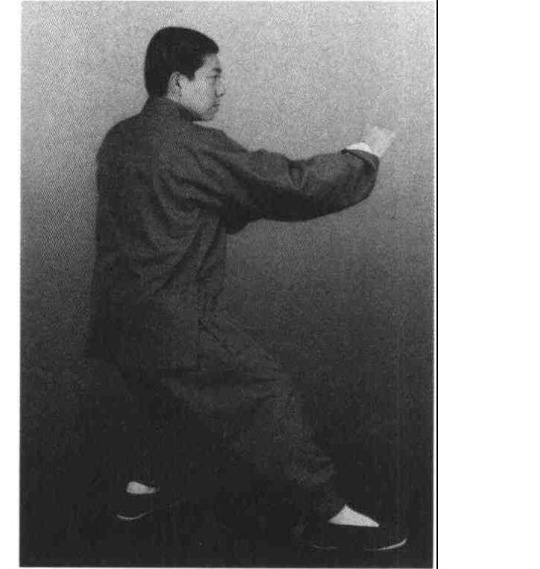
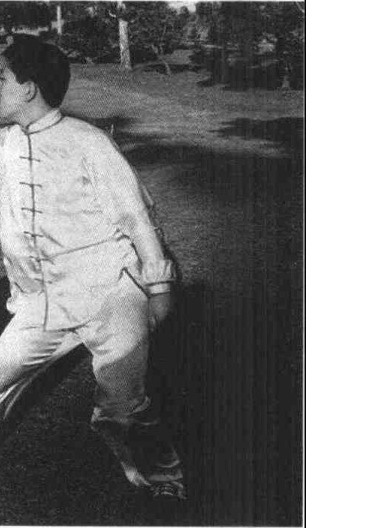
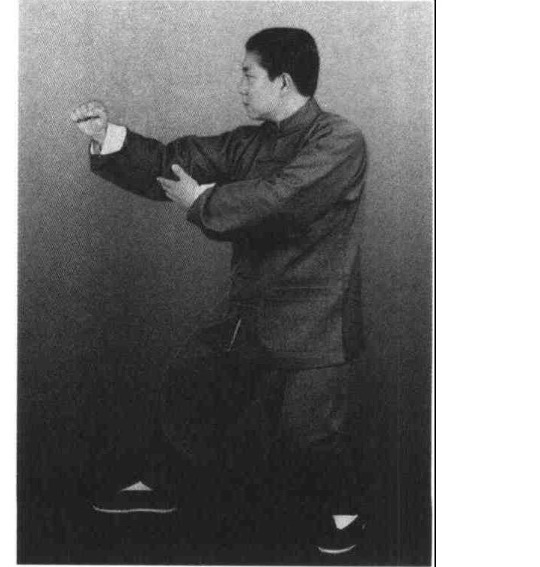
(There is also a push-hands photograph at the foot of the left column of this page; it is unnumbered and carries no caption.) …the figures on the previous page).
Thirty-sixth Posture: Step Forward, Deflect, Parry and Punch (Jin Bu Ban Lan Chui)
The same as the twenty-fifth posture above, "Step Forward, Deflect, Parry and Punch", but the direction of the form's route is reversed. See the figures on this page (the same as the earlier set of five).
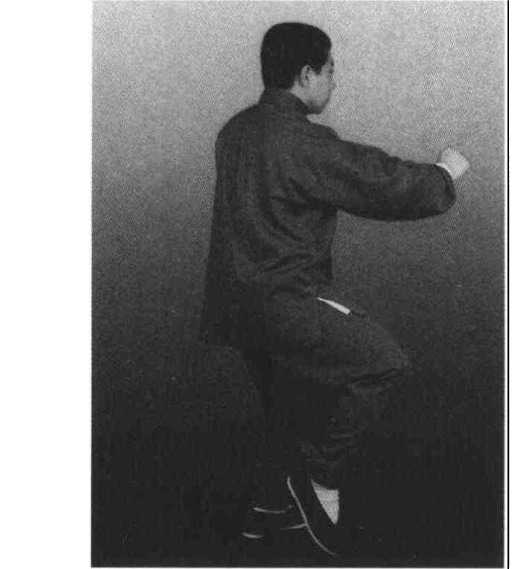
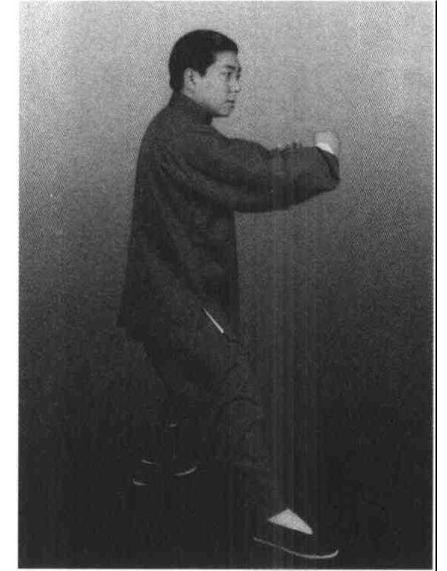
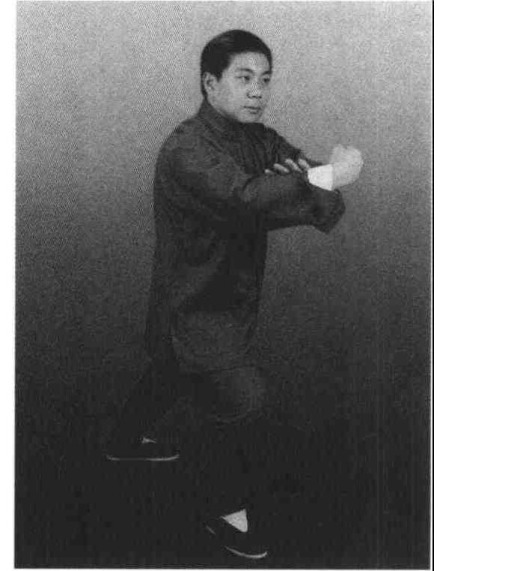
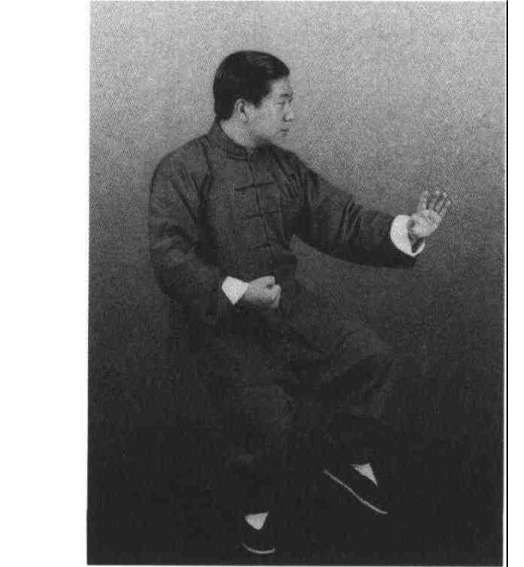
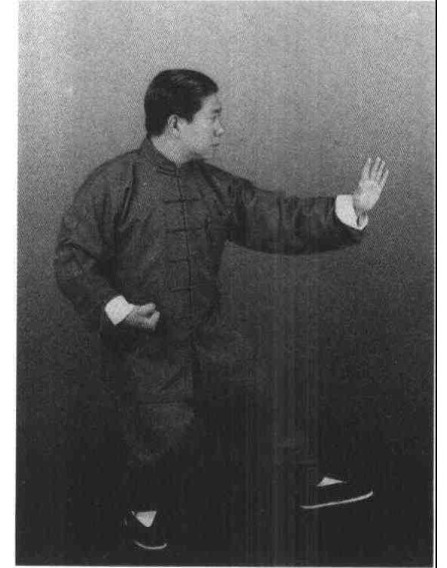
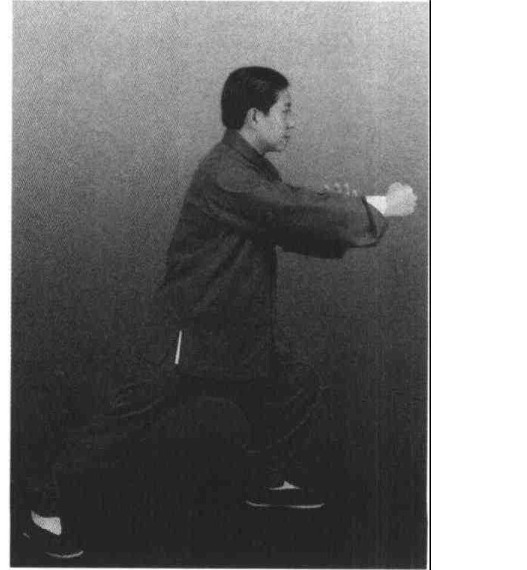
Thirty-seventh Posture: Right Heel Kick (You Deng Jiao)
Phần 93
I. Application
Joining from the preceding posture. If the opponent uses his left hand to push my right arm away to the left, I at once follow the momentum and coil my right wrist under his wrist, and use my right hand to ward him off from right to left; at the same time the left toe turns out and settles flat, the body also turns slightly left, and I kick out straight ahead (to the east) with my right foot; the body turns from the left back to facing the front, the two hands separate in proportion to the foot, and the waist and hips sink.
Another application: when the opponent's left palm has been stuck by me and he strikes straight in with his right hand, I quickly ward it off to the left with my left hand and then kick out with my right foot.
1. The body gradually turns left, the left toe turns out and settles flat, the left knee bends slightly and the left leg settles solid, the centre of gravity gradually shifts entirely onto the left leg, and the right leg is lifted forward. At the same time the left palm, as the body turns, moves to the left, forward and up. As it moves, the arm rotates outward so that the centre of the palm turns inward; the right palm changes and, from the right front, goes downward and scoops in an arc to the left, and as it scoops the arm rotates outward so that the centre of the palm turns inward and it clasps with the left palm, the two crossed before the chest with the right palm outside. The eyes look level to the front toward the right, the gaze attending to the clasping of the two palms (see the first two figures on this page).
2. The right foot continues to be lifted and is slowly kicked out straight ahead with the heel (to the east), the toe pointing up; as the right foot kicks out the left leg gradually straightens, the knee still slightly bent, and at the same time the two palms separate to left and right. The gaze attends to the right palm as it separates, and looks level to the right past the right palm (see the third figure on this page).
1. The right heel kick should take the heel as its point of application.
2. In the heel kick the body must be stable — no leaning forward, no leaning back, no tilting. The whole body must be relaxed, the centre of gravity steady, the movements harmonious and coordinated, the chest broad and comfortable, the abdomen full, the centre of gravity lowered, so that the lower limbs are firm and the upper limbs agile, and the body is kept essentially in one line from top to bottom.
1. The turning of the waist to the left, the turning out of the left foot, the movement of the two hands and the lifting forward of the right leg must all be carried out at the same time. Because when I ward off the opponent's left hand to the left, the support of the waist's strength is necessary if the power is to reach every part of the limbs.
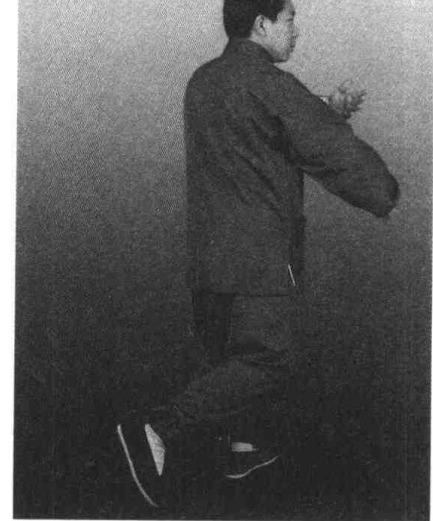
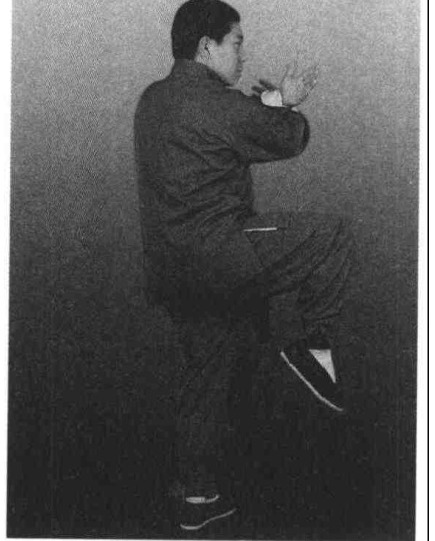
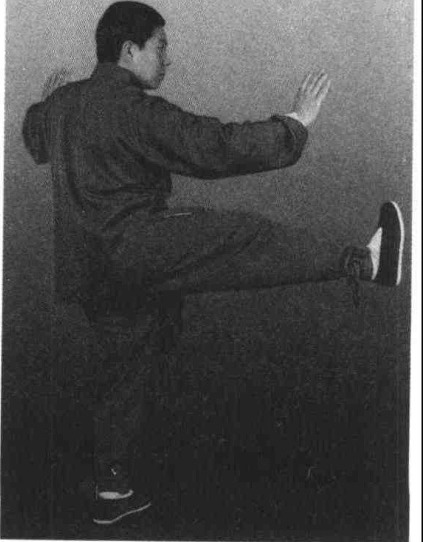
2. When the right foot kicks out, the left leg that supports the whole body's weight must not be straightened completely, and the two separated arms must not be straightened completely either. "Strength is stored in the bent." And so the joints of the four limbs are required to be bent, not straight.
3. The direction of the kick must be exact: it must kick towards the right side (the east), because the opponent is at my right front.
Phần 94
V. Faults, Their Causes, and How to Correct Them
1. Fault: the direction of the kick is inexact — it goes either too far left or too far right. The principal cause is that the left foot is withdrawn too far left, or not far enough. Correction: the left foot should be withdrawn to the left by about 45°; in the early stages of practice this must be checked and corrected repeatedly.
2. Fault: the separation of the two hands is out of proportion to the foot, with various errors of height, lowness, width, narrowness and speed. The principal cause is an insufficient understanding of the application in which the separation of the two hands is matched to the foot. Correction: the fingers should be raised to about eyebrow height, the right hand in the same direction as the right foot, the left hand on the left rear oblique — the foot must arrive and the hand must arrive.
3. Fault: when the two hands cross and clasp they are too close to the chest, which is called "collapsed", and in some cases the two hands are slack and without strength. The principal cause is insufficient attention to the hand method. Correction: the wrists should be seated and the palms comfortable, the two arms full — in this way breathing is smooth, and after long practice one can lead the hands with the body and lead the body with the hands, turning in circles along the momentum, which benefits both health and the martial application.
4. Fault: the direction of the body's turning is wrong — when the left foot turns out to the left, the upper body does not turn and still faces forward (east). The principal cause is a failure to understand the application. I use my right wrist, following the momentum, to ward the opponent's left wrist away to the left; if the waist's strength is used correctly, the whole body's strength can be concentrated on one point, whereas if the hand and waist are disconnected and one wards off with the strength of the hand alone, that does not meet the martial requirement. From the point of view of health, if the waist and hips are stiff and unmoving one cannot exercise the muscles of the waist and back, and there is a lack of the internal massaging effect on the internal organs. Hence the boxing treatise stresses, "At every moment keep your mind on the waist." Correction: the waist is the key to the turning of the upper and lower body; when warding off to the left the waist must turn left at the same time.
(There is also a push-hands photograph at the foot of this page; it is unnumbered and carries no caption.)
…concentrated on one point. If the hand and waist are disconnected and one wards off with the strength of the hand alone, that does not meet the martial requirement. From the point of view of health, if the waist and hips are stiff and unmoving one cannot exercise the muscles of the waist and back, and there is a lack of the internal massaging effect on the internal organs. Hence the boxing treatise stresses, "At every moment keep your mind on the waist." Correction: the waist is the key to the turning of the upper and lower body; when warding off to the left the waist must turn left at the same time.
Phần 95
VI. Teaching Method and Practice Method
1. The teacher must observe the movements of every part of the body from the front and from the side.
2. The emphasis must be placed on the stability of the heel kick; this must be practised over and over.
3. Paired practice following the application: A — performs Step Forward, Deflect, Parry and Punch; B — uses his left hand from the front to push A's right arm to the left; A — follows the momentum and coils his right wrist under B's wrist, uses his right hand to ward B's left wrist away to the left, kicks out straight ahead with the right foot, and the two hands separate. The two then exchange places and practise again.
4. Progressive method: (1) The left hand shifts level to the left, the right hand arcs slightly downward and to the left, and the two hands clasp (cross) before the chest, the palms facing inward. (2) The same again, adding the turning of the left foot to the left, the lifting of the right leg, the face toward the north-east. (3) The same again, adding the kicking out of the right leg straight ahead (to the east) and the separation of the two hands.
1. The distinguishing feature of this movement is that one foot stands alone while the other is lifted and kicks out; the difficulty lies in how to stand firm. And so the standing foot must have the knee joint bent and not straightened, the sole flat and firmly on the ground, its strength as though wound into the earth, so that the strength rises from the heel and the intention turns upward, while the spine is relaxed, sunk and upright, the sacrum stable and strong, the breath sunk into the lower abdomen, the crotch strength sinking down, and the hundred meeting-point on the crown of the head always lightly leading upward. This is "the empty leading of the crown, the breath sunk into the cinnabar field", the practice of lifting the crotch and threading to the crown, and it has the effect of drawing and lengthening from above and below. The lower frame must be practised so as to keep steady amid change, firm as the root of a great tree that cannot be shaken. To this end one must constantly readjust the centre of gravity in much practice, and so gradually master the correct position of the centre of gravity and attain stability standing on one foot.
2. The right heel kick transforms and attacks at once; and so in one's awareness one must not slur over the movement of the hands, but must have a clear purpose in their movement, so that the movement of the hands will not be scattered and strengthless.
3. In kicking the leg one generally tends to use force and kick out fast. According to the requirement of "the ten essentials of Taijiquan", the whole set of form movements should use intention and not force. And so in the right heel kick the leg should first be lifted with the force concentrated at the knee joint, the ligaments of the hip drawn open, and the leg kicked out gently and slowly. In practising Taijiquan the whole body must be loosened, not permitting the slightest clumsy force to lodge between the sinews, bones and blood vessels and so bind oneself; only then can one be light, nimble, changing, round and free. If instead of using force one uses intention, then wherever the intention goes the breath arrives; thus the blood and breath flow and pour in daily, circulating through the whole body without ever stagnating. Practised long and long, one obtains true inner strength.
Thirty-eighth Posture: Left Beat the Tiger (Zuo Da Hu Shi)
Phần 96
I. Application
Joining from the preceding posture. If an opponent strikes from my left front with his left hand, I at once set my right foot down level with the left, and both hands turn to the left side with the body; the left foot steps out obliquely to the left, the knee bends and settles solid, the right foot becomes empty, forming the left bow stance, the face towards the side square. The two hands at the same time swing as fists, and as they descend they close to the left; I use my right palm to grip the opponent's left wrist and pluck it down to the left, bringing it opposite the region of the heart, while my left fist turns over upward from the outside to the left, comes to the side of the left corner of the forehead, the centre of the fist facing outward, and strikes swiftly at the opponent's head — or I may strike his back with the right fist. This posture advances by retreating, suddenly opening and closing the embrace with a fierce intent; hence it is called Beat the Tiger.
1. The left leg gradually squats and the right foot descends. At the same time the left palm, from the left, passes across the front of the forehead and arcs level to the right, and as it moves the arm rotates outward so that the centre of the palm gradually turns inward; the right palm at the same time shifts slightly downward, and as it moves the arm rotates inward so that the centre of the palm gradually turns down. The gaze attends to the right palm (see the first figure on this page).
2. The left leg continues to squat, and the right foot comes down beside the left foot, the distance between the feet slightly narrower than the shoulders; the toe touches the ground first and the centre of gravity gradually shifts onto the right leg, the whole sole of the right foot settles flat, and the left foot is then lifted. As the centre of gravity shifts onto the right leg the two palms continue to move to the lower right, the left palm passing the right…
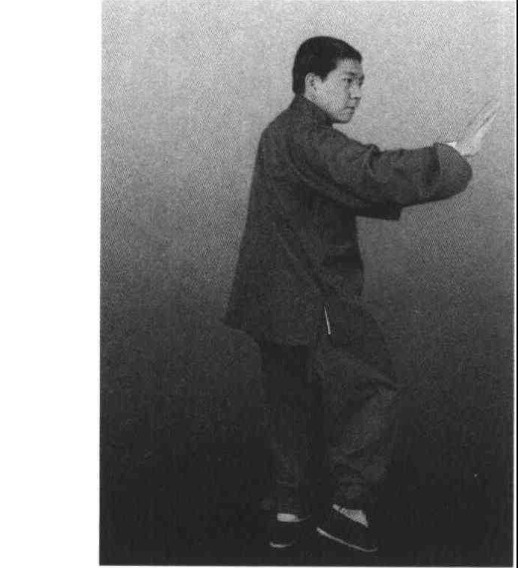
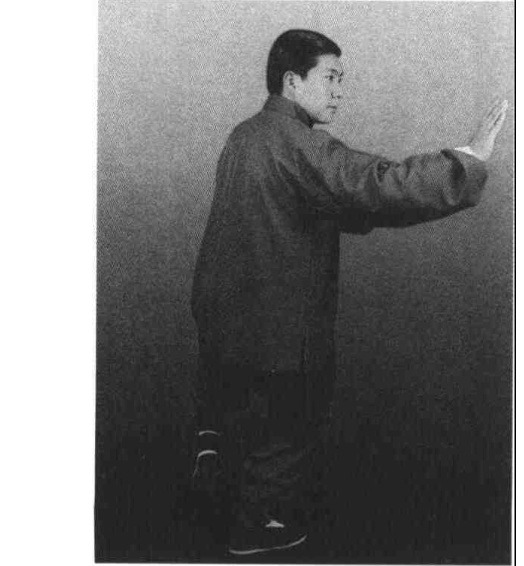
…beside the upper arm, and as it moves the left arm continues to rotate outward so that the centre of the palm turns up; the two hands are slightly lower than the shoulders, the eyes look level to the front, the gaze attending to the two palms (see the second figure on this page).
3. The right leg continues to squat, the body turns left (to the north-by-west), and the left foot steps out obliquely to the left rear, the heel touching the ground first; as the centre of gravity shifts onto the left leg the whole sole settles flat, the left leg bends and the right leg extends, forming the left bow stance. As the centre of gravity moves and the body turns, the left palm, from the right chest and in front of the abdomen, passes in an arc up past the front of the left knee, tracing a curve from the lower right upward (the reverse brush of the knee), and stops above and in front of the left temple (closing into a fist just as it arrives). As the left fist arcs up from the left, the left arm turns with the body and the right arm bends slightly; the right palm moves level from the right, passes across the front of the chest to the left, and the right arm is bent at the elbow and laid horizontally in front of the upper abdomen; as it moves the right arm gradually rotates slightly outward so that the centre of the palm gradually turns obliquely down; as the right palm reaches the front of the chest it changes from palm to fist, the eye of the fist facing obliquely left, the centre of the fist facing obliquely down, so that the eyes of the left and right fists are essentially opposed above and below. At the same time the upper body turns slightly right; the gaze first attends to the left hand, and when the left fist is about to arrive above and in front of the left temple it looks level to the front (see the remaining figures on this page and on the next).
Phần 97
III. Key Points
1. When the right foot comes down after the right heel kick, the left leg must "send" it — that is, the left leg slowly bends its knee and squats, so as to control the right leg's landing gently and slowly; only thus does one meet the requirement of lightness and steadiness. At the same time, the lowering of the centre of gravity accords with the application in which the right hand plucks the opponent's left fist down to the left side.
2. When the left foot steps to the left rear the upper body must be upright, and the body method must be "centred, true and undeviating". In practising the form, whether advancing, retreating, turning left or turning right, and whatever the transformations of the limbs' movement, from the crown of the head through the trunk down to the perineum there must always be one straight line.
3. In stepping the left leg, pay attention to the exchange of full and empty between the two legs: the right leg must be settled solid before the left leg is slowly stepped out, so that the movement is steady, extended, centred and true, with no unsteadiness anywhere.
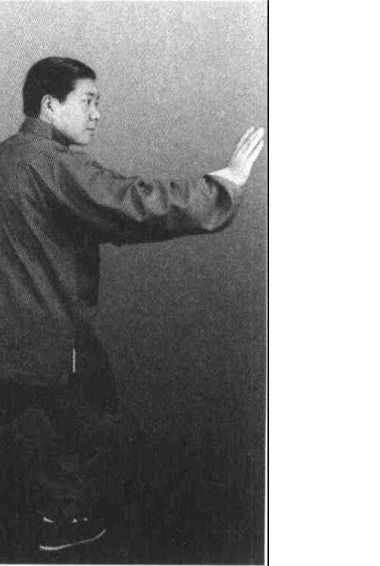
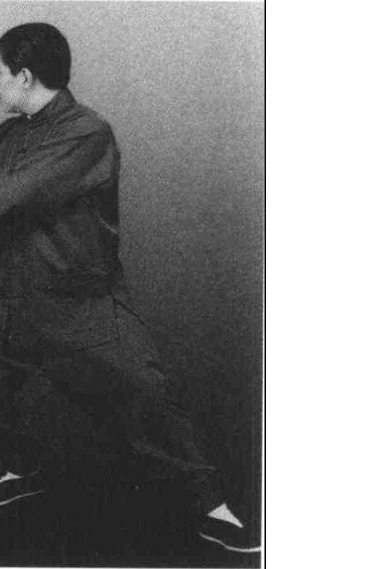
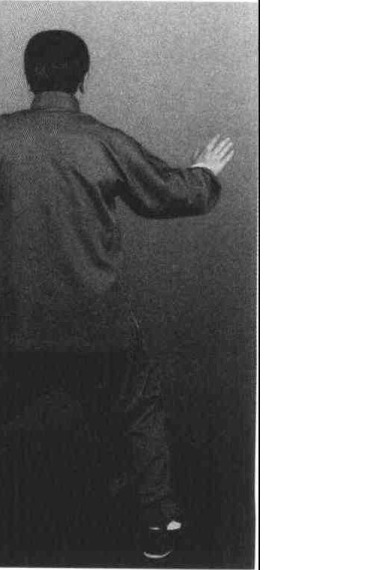
4. The movement of the two hands must follow arcs; there must be no angular corners. The arcs of Taijiquan's movements are the outward form that is necessarily present when the inner strength spirals and revolves; they are the technique of "sticking, connecting, adhering and following" and of "drawing in and dropping into emptiness", and this …accords with the application in which the two hands swing as fists, closing as they descend to the left and plucking down to the left side.
5. In the settled pose of Beat the Tiger the two arms should be full in their arcs; in the left Beat the Tiger, for instance, the right fist should be held somewhat away from the body.
Phần 98
IV. Requirements
1. The two palms close into fists only as they arrive at position.
2. The left foot in the left Beat the Tiger and the right foot in the right Beat the Tiger land on two oblique angles — the former to the north-west, the latter to the south-east. The direction must be correct.
3. The knee must arrive and the fist must arrive; it is not acceptable for the knee to have arrived in the bow while the hand is still tracing its arc. Above and below must keep each other company.
4. The level gaze shifts from the south-east to the north-west (in the right Beat the Tiger, from the north-west to the south-east).
1. Fault: in joining from the right heel kick, the right foot comes down and treads, but the left leg does not sink. The principal cause is a shallow apprehension of the application. Correction: as the right leg comes down the left leg should bend its knee and squat, the right leg brushing the ground, and the left leg steps out to the left rear — only thus does one meet the requirement of advancing by retreating. Moreover, lifting the right leg while bending the left puts a considerable load on the muscles of the left leg; if the right leg comes down and the left leg does not sink, the training effect is very much less.
2. Fault: the hands are not led by the waist — the hands move while the waist does not. The principal cause is a shallow understanding of how the inner strength is driven through…
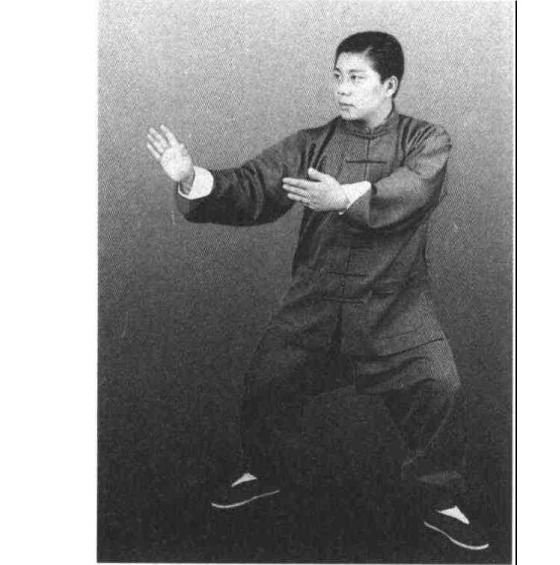
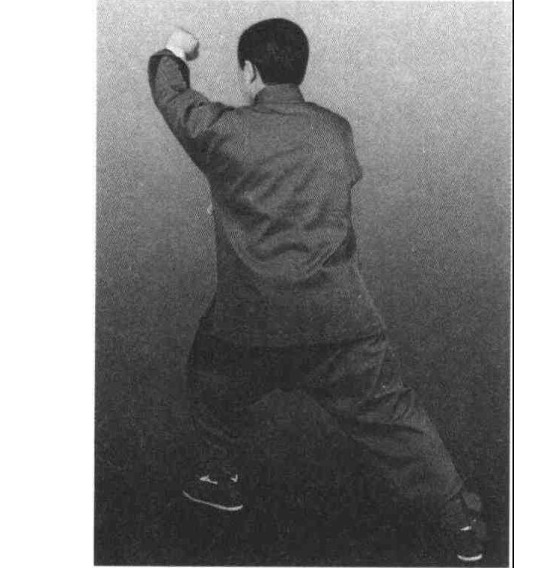
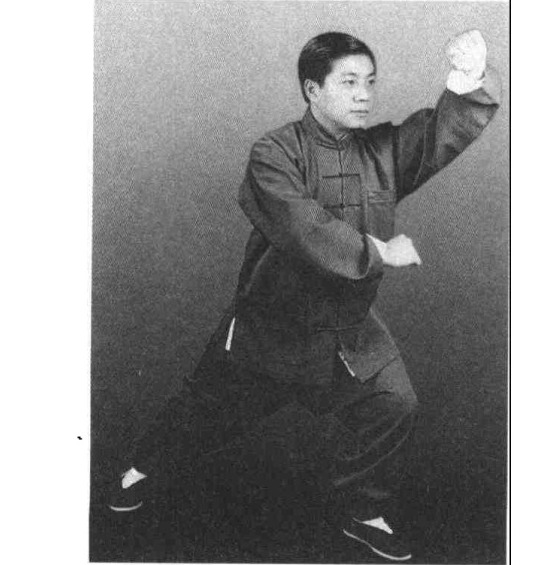
…to the tips of the four limbs, and that the waist strength, used well, can augment the issuing of power. Correction: one must understand that the key to the turning of the upper and lower limbs is in the waist; the waist should lead the hands.
3. Fault: in the settled pose the direction of the two fists' eye is wrong, and their high and low positions are wrong. The principal cause is an insufficient understanding of the requirement for closing the fist. Correction: at the point where the fist comes out and lands, the fist and the forearm should form a straight line, so that the wrist is not easily injured when it meets resistance. And so in the left Beat the Tiger the right fist is below and slightly oblique, its eye facing obliquely inward; the left fist's eye faces obliquely right, its centre facing obliquely outward. The left fist, at the front of the left forehead, should be higher than the head; the right fist, below, should be in front of the upper abdomen.
4. Fault: the direction of the foot's movement is wrong. The principal cause is an insufficient understanding of the application. Correction: the direction in which the toe lands bears on whether the hip-joint is tight or open, and thus affects the body method. In joining from the right heel kick into the left Beat the Tiger, as the left leg sends the right leg down, the right toe is oblique (towards north-by-east), and when the left foot is lifted and steps to the left and right its toe faces obliquely north-west.
Phần 99
VI. Teaching Method and Practice Method
1. The teacher should observe the practitioner's movements from every direction — for instance from the front, to see the height and spacing of the two fists, and from an oblique angle, to see the direction of the stepping.
2. Help the practitioner quickly settle the direction of the foot and the facing of the body. One may make no demands on the two hands at first, practising the direction of the stepping repeatedly, and only then practise the stepping with the hands and feet coordinated. In the settled pose of the left Beat the Tiger the left foot is at an oblique angle towards the north-west, the body faces north-by-west, and the right foot is oblique.
(There is also a push-hands photograph at the foot of this page; it is unnumbered and carries no caption.)
…while the right foot is oblique towards the south-east and the body faces south-by-east.
3. Practise repeatedly the movement in which the left leg "sends" the right leg down, to deepen the apprehension of full and empty and to strengthen the legs.
4. Paired practice following the application: A — settles into the right heel kick. B — strikes at A with his left hand from A's left front. A — brings the right leg down and squats the left leg, changes the standing foot, steps the left foot to the left rear, uses the right leg to grip B's left wrist and plucks it down to the left side, and the left palm turns over upward from the outside, becomes a fist and strikes B's head. Apprehend the application of the two hands' movements, then exchange places and practise.
5. Progressive method: (1) The left leg squats and "sends" the right leg down. (2) The same, plus stepping the left leg. (3) The same, plus the movement of the two arms. (4) The settled pose (left Beat the Tiger). (5) The left toe turns in, the right leg is lifted, the two fists change to palms. (6) The same, plus stepping the right foot. (7) The same, plus the movement of the two arms. (8) The settled pose (right Beat the Tiger).
6. Guidance: for instance, why one must step to left and right — so that the learner understands the application of advancing by retreating.
Thirty-ninth Posture: Right Beat the Tiger (You Da Hu Shi)
Phần 100
I. Application
Joining from the preceding posture: if an opponent strikes from my rear right with his right hand, I at once lift my right foot and turn the waist to the right front, step the right foot out to the right side, bend the knee and settle solid, the left leg becomes empty forming the right bow stance, and the two hands at the same time turn in a circle to the right and then close into fists, forming the right Beat the Tiger. The application is the same as the left Beat the Tiger.
1. The left toe turns in and the left leg settles solid, the right foot is gradually lifted with the heel leaving the ground first, and the body gradually turns right. At the same time the two fists change to palms, the left palm sinking slightly with its centre facing down; the right arm rotates outward so that the centre of the palm turns face-up and moves to the front of the left upper arm. The gaze first attends to the left palm, then follows the turning of the body in a level shift (see the first figure on this page).
2. After the right foot is lifted, the body continues to turn right, then steps forward (to the south-east), the heel touching the ground first, and as the centre of gravity gradually shifts…
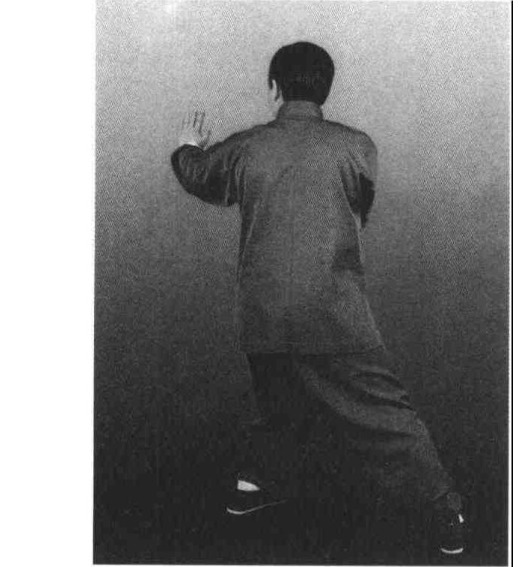
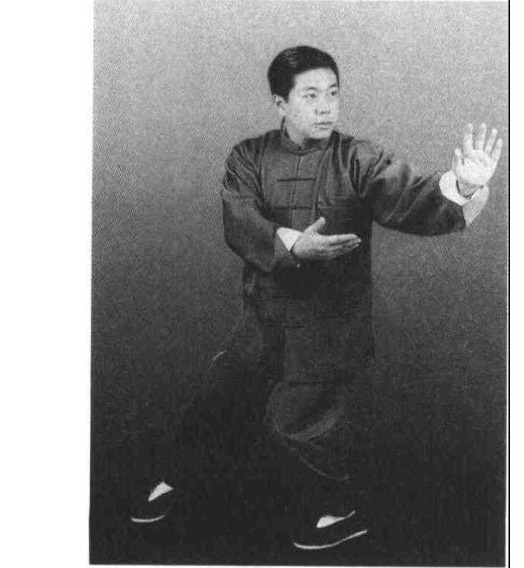
…onto the right leg until the whole sole settles flat, the right leg bends and the left leg extends, forming the right bow stance. As the body turns and the centre of gravity shifts forward, the right palm, from in front of the left upper arm, goes down past the top of the right knee (the reverse brush of the knee) and arcs up to the right; as it moves the right arm rotates inward so that the centre of the palm gradually turns outward, and it stops above and in front of the right temple (changing to a fist). The eye of the fist faces obliquely left, the centre of the fist obliquely outward; the left palm at the same time moves level as the body turns (lower than the shoulder), the elbow bent and the forearm laid across in front of the upper abdomen, the centre of the palm facing obliquely down, the eye of the fist facing obliquely inward. The eyes look level to the front (see the first two figures on this page).
Phần 101
III. Key Points
1. The turning in of the left foot, the changing of the two fists to palms and the turning of the waist with the lifting of the right leg must all begin together; when one thing moves, nothing is unmoved.
2. The left foot must be turned in sufficiently.
Fortieth Posture: Turn the Body Back and Right Heel Kick (Hui Shen You Deng Jiao)
The same as the thirty-seventh posture, the right heel kick, save that the direction of the joining is slightly different.
1. Pivoting on the ball of the left foot, the heel grinds inward and settles flat, the body gradually turns left, and the centre of gravity shifts onto the left leg. At the same time the two fists change to palms and shift level to the left as the body turns; the right palm arcs down and to the right, and the eyes follow the turning of the body in a level shift (see the last figure on this page).
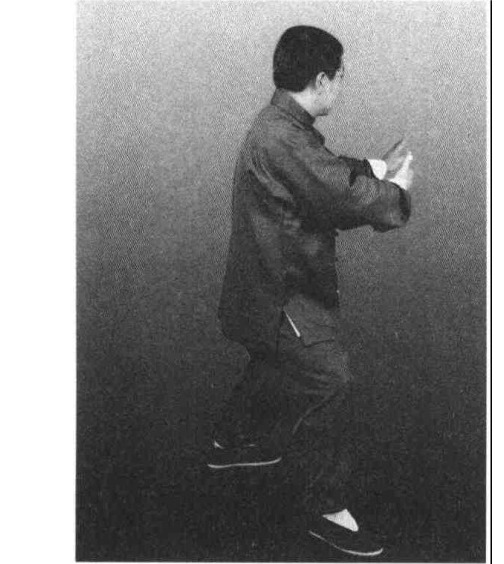
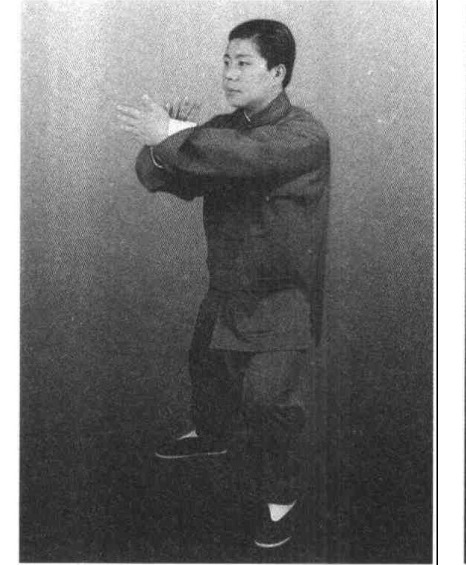
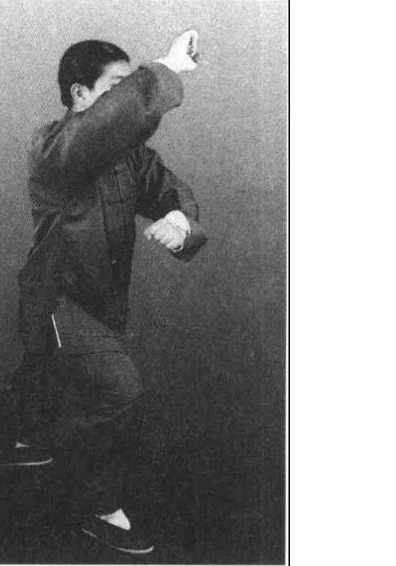
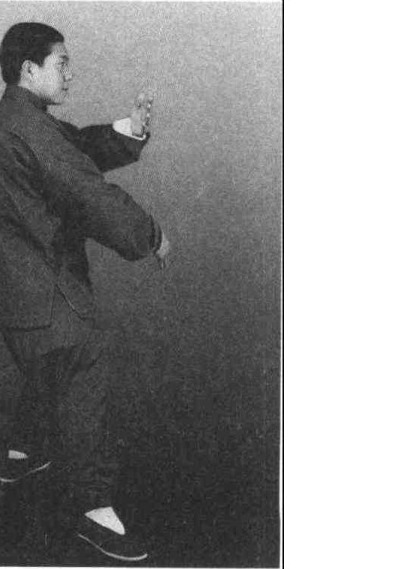
2. The centre of gravity gradually shifts entirely onto the left leg, the body continues to turn left, and the right foot is drawn back. At the same time the left palm reaches slightly upward to the left front, and the right palm goes down, passes in front of the abdomen to the left, and clasps and crosses with the left palm before the chest (facing north), the left palm inside and the right palm outside, the centres of both palms facing inward. The gaze attends briefly to the left palm as it reaches up, then turns to look level to the front, as in the first figure on this page (the same as an earlier figure).
3. The same as the right heel kick, as in the second figure on this page (the same as another earlier figure).
Phần 102
III. Key Points
1. The left heel grinds inward, so that the left toe points north-by-slightly-east; only then does it not interfere with the kick.
2. The movement of the two arms must be led by the turning of the waist. The boxing treatise says, "The master is in the waist"; and so the turning of the waist should gradually lead the turning of the four limbs.
1. When the centre of gravity shifts onto the left leg the body method must be centred and true; the upper body must not lean forward or backward.
2. The direction of the movement must be exact: when the two palms clasp and cross, the body must turn to face north, and only at the kick does it turn to the east.
The rest is the same as the right heel kick.
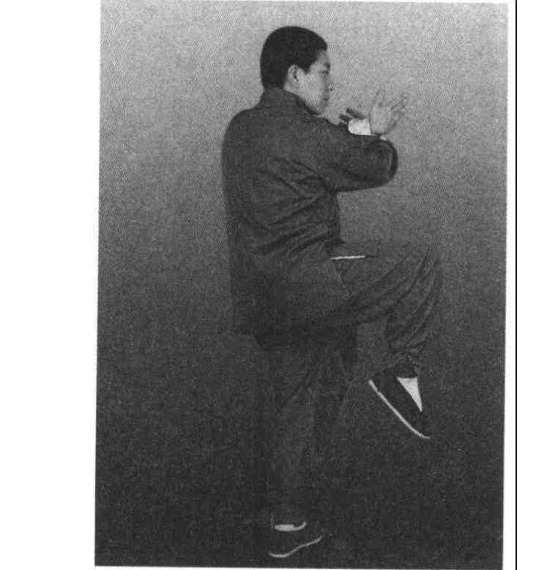
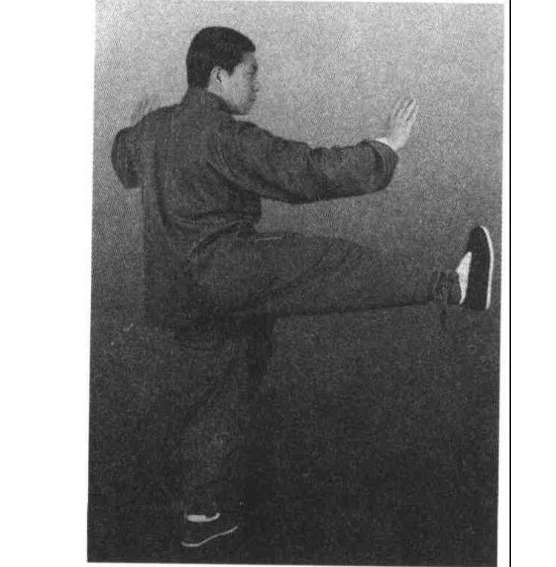
(There is also a close-up photograph of the foot at the middle of the right-hand side of this page; it is unnumbered and carries no caption.)
Forty-first Posture: Twin Peaks Pierce the Ears (Shuang Feng Guan Er)
Phần 103
I. Application
Joining from the preceding posture. If an opponent strikes with both hands from the right side, I at once move my left toe slightly to the right and stand firm. The right foot at the same time swings round to the right side, the knee is lifted, the toe hanging down. The body at the same time turns to the right cardinal oblique angle (towards the south-east). I quickly bring the backs of both hands from above downward, separate the opponent's two wrists to left and right and pin them, and at once close both hands into fists and drive them from below upward at the opponent's two ears with the tiger's mouths facing each other. The right foot at the same time descends forward and becomes solid; and it is best if the body carries a slight intention of attacking.
1. The right foot comes down, the right knee is lifted, the toe hangs down relaxed, and pivoting on the ball of the left foot the body turns right through 45° (towards the south-east). At the same time the two palms, as the body turns, arc from left to right and move before the chest, and as they move the elbows bend and the two arms rotate outward so that the centres of the palms face obliquely inward and up, the two elbows hanging down, the two arms forming arcs, and the two palms a shoulder's width apart. The eyes look level as the body turns, the gaze attending to the two palms' downward movement (see the first figure on this page).
2. The left leg gradually squats, the right leg steps forward one pace (to the south-east), the heel touching the ground first, and as the centre of gravity gradually shifts onto the right leg the whole sole settles flat; the right leg bends and the left leg extends, forming the right bow stance. At the same time the two palms go from the front downward, separate past the two sides of the right knee to left and right, and then converge upward from below; as they move the two arms rotate inward, and on reaching the upper front the two palms close into fists, the arms forming pincers, the two fists slightly higher than the head, their two tiger's mouths facing obliquely down at each other. The eyes look level to the front, the gaze attending to the two fists (see the remaining figures on this page and on the next).
1. When the body turns it must be centred and true; it must not lean forward or backward.
2. After the turn the left leg squats and the right leg has a slight intention of lifting upward; this makes it easier to draw in the hips. The loosening of the shoulders, the sinking of the elbows, the lifting of the leg and the drawing in of the hips must all be done together.
3. In stepping the right foot forward, the left leg must first be settled solid and the root of the right hip drawn in; then the left leg gradually squats and the two hands reach downward at the same time as the knee extends, and the right leg steps forward under control, the upper body still kept upright, and the speed of the step must be even.
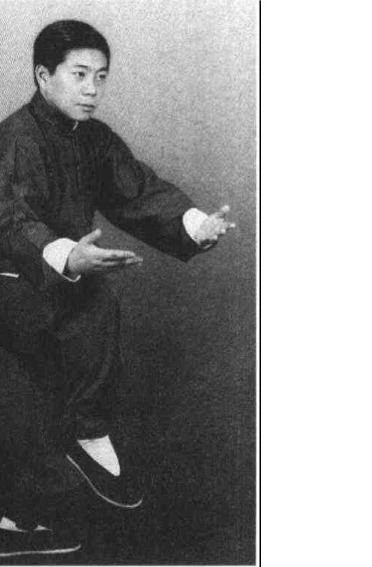
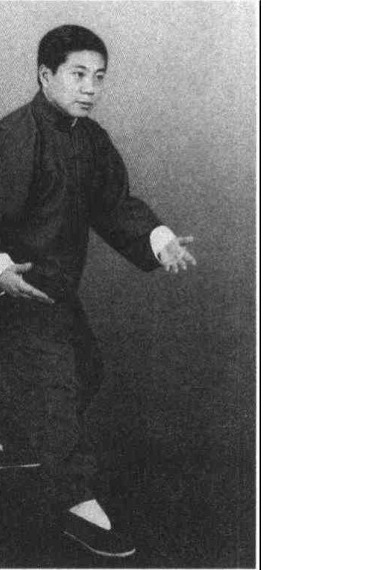
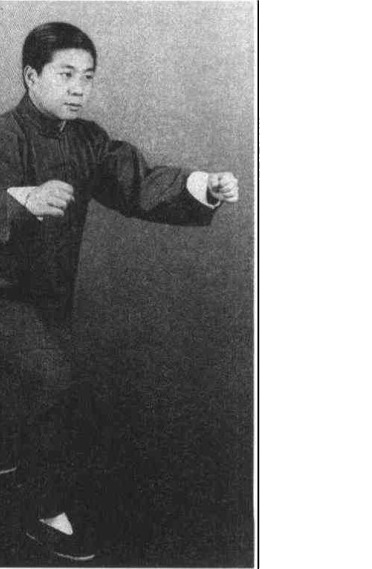
4. The two palms should close into the two fists only when the elbows are hanging and the palms have turned from below upward. The driving through of the two fists with the tiger's mouths facing each other must be coordinated with the right bow stance; the width between the two fists should be about one tiger's mouth (about 20 cm).
5. Sink the hips, sink the breath, loosen the shoulders; when the two palms have come down level with the knee, the two elbows sink to lead the two palms' descent — the two palms must not descend by themselves. Use the strength of the whole body, so that the backs of the palms descend steadily, calmly and cleanly.
Phần 104
IV. Requirements
1. The turning of the body to the right must be steady.
2. After the body has turned right the left leg must be settled solid, and the stepping out of the right leg must be light and nimble — it must not come down in a rush.
3. The fists should not be gripped too tightly, nor yet be wholly slack and strengthless; they should be such that they cannot be forced open, and cannot be broken up when struck.
4. The whole movement must be continuous and without pauses. The requirement is that after the body has turned towards the south-east the left foot immediately squats and the two palms are drawn back and moved down — and one must not let the other movements pause in order to keep the centre of gravity steady. In martial terms, immediately after the turn one must separate the opponent's two wrists, struck in from the right side, to left and right; and if the movement pauses at that moment, one will be struck on the body by the opponent's fist.
5. When the two fists drive through with the tiger's mouths facing each other, the arms must not be straightened; they must still keep their arcs, and the body must not lean forward and reach out.
1. Fault: the direction of the right turn is not exact (it is not towards the south-east). One principal cause is poor control, making the angle of the turn too small or too large. The second is a shallow understanding of the application. The opponent strikes from the right side, and so after the turn one should face the right-hand side (the south-east). Correction: the turn should be practised repeatedly, checking after each turn whether the direction is right, with particular attention to the angle through which the left foot grinds; after much practice one gradually achieves controlled rotation.
2. Fault: after the turn the left knee does not bend and the body does not sink. The principal cause is a failure to understand the application. If one tries with the backs of the two hands alone to separate and pin the opponent's two wrists to left and right, one's strength is necessarily limited; but if the sinking strength of the body and the two elbows is added to the two hands, then the strength…
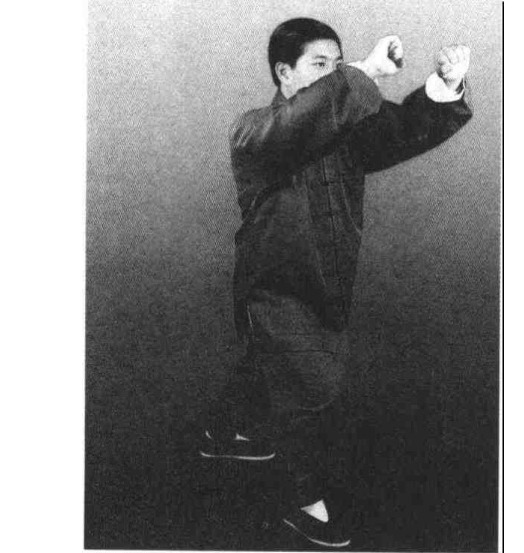
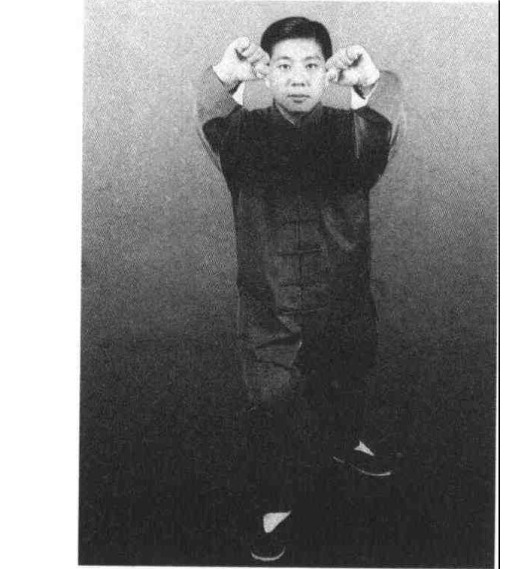
…is greater. Correction: after the turn the left leg must squat and the two elbows sink to lead the two palms' descent.
3. Fault: the stepping of the right leg forward is sluggish and heavy. The principal cause is that the root of the left hip has not been drawn in and the left leg has not been settled solid. Correction: "Movement originates in the waist and spine, and strength runs through to the four tips" — and so the waist's hollow governs the two legs. If stepping is to be light and nimble, the left and right waist hollows must alternately draw and exchange in order to distinguish full from empty; when full and empty are clear, the left leg seems able to coil its root into the ground. In this way the right leg's stepping forward becomes light and nimble.
Phần 105
VI. Teaching Method and Practice Method
1. The emphasis of the teaching should be placed on the rotation supported on one foot, feeling out the coordination of the turning of the waist and hips, the lifting of the knee and the grinding turn of the left foot, so that the rotation is steady.
2. Teaching mnemonic: turn, sink, extend, strike.
3. The difficulty of this method lies in the bending and sinking of the left leg; this requires leg strength and must be practised long. While strengthening the legs one also masters the technique, and thereby strengthens the constitution as well. In practice the teacher must remind the practitioner that the upper body must be straight and the central axis must not bend.
4. Paired practice following the application: A — performs the right heel kick; B — strikes at A with both hands from A's right side; A — turns the body right, the right leg swings round, the two hands go from above downward, separate and pin B's two wrists to left and right, and immediately drives the two fists hooking at B's two ears. The two then exchange.
5. Progressive method: (1) First practise the turn alone, requiring the correct direction, the lifting of the leg and the moving of the two hands before the body. (2) The same, plus the squatting of the left leg, the right leg stepping forward with the heel coming down, and the two hands separating to left and right at the level of the knee. (3) The same, plus the shifting forward of the centre of gravity and the two hands hooking upward at the front.
6. Of the beginner one should require only that the movements be correct. Of the long-term practitioner one should require lightness and nimbleness. The boxing treatise says, "With a single movement, the whole body should be light and nimble", and "In every posture, move lightly, stop silently, and drive it only with intent and meaning." Only by using little strength and practising "lightly" can the movements become more and more nimble, and gradually attain to the highly sensitised "spirit" that is "unable to bear even a feather added".
1. This movement is a turn performed supported on one foot, pivoting on the ball of the left foot. Because the angle of the turn is not great, and both the two arms and the right leg can play a part in driving and checking it, it can generally be accomplished fairly well.
2. The squatting of the left leg and the stepping forward of the right leg are not easy to do well. Because in squatting supported on one leg the load on the quadriceps and so on is considerable; yet the two hands merely come down and separate, with little effect on the steadiness of the centre of gravity. But to step the right leg out lightly and nimbly requires the loosening of the right hip, and this is not easy to do well. Long practice can open the root of the hip, and then the turning of the waist and legs becomes nimble and the stepping light and broad.
Forty-second Posture: Left Heel Kick (Zuo Deng Jiao)
Phần 106
I. Application
Joining from the preceding posture. If an opponent strikes at my left flank, I quickly use my left hand to stick to his right arm and ward it off from the inside outward. The right foot shifts slightly to the right in place, and the left foot at the same time is lifted forward and kicks at the opponent's abdomen. The rest is the same as the thirty-second posture, Turn the Body and Heel Kick.
1. The body turns slightly right, the right toe turns out and settles flat, the centre of gravity gradually shifts entirely onto the right leg, and the left foot is lifted forward. At the same time the two fists change to palms and separate in arcs to left and right, then go down, pass in front of the abdomen, and clasp and cross before the chest, the left palm outside; as they move the two arms rotate outward so that the centres of the palms gradually turn inward. The gaze first attends to the two palms as they trace their arcs, and when the two arms are about to cross it turns to look level to the left (see the first two figures on this page).
2. The left foot is slowly kicked out to the left (the east) with the heel. At the same time the two palms separate to left and right, and the right leg gradually straightens as the left kicks out, though the knee remains slightly bent. The gaze attends to the left palm as it separates, and looks level to the front past the left palm (see the third figure on this page).
3. The rest is the same as the right heel kick, only the direction is reversed.
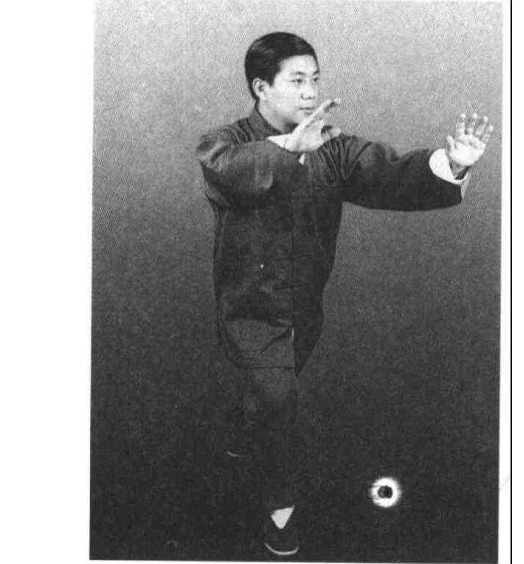
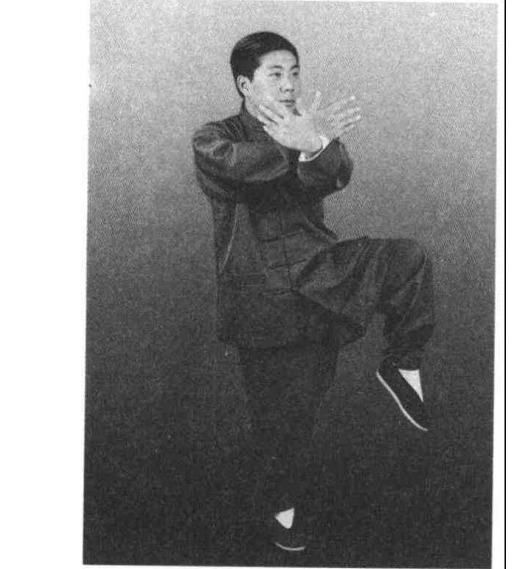
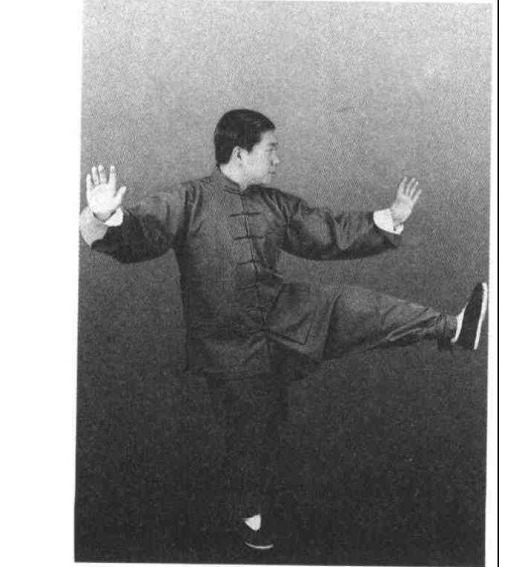
Forty-third Posture: Turn the Body and Right Heel Kick (Zhuan Shen You Deng Jiao)
Phần 107
I. Application
Joining from the preceding posture. If an opponent strikes from the left behind, I pivot on the ball of my right foot and turn my body to the right and rear, and as the body turns the left foot is drawn back and suspended to the right, then comes down and settles solid with the toe pointing forward (north). At this moment the ball of the right foot is the pivot of the whole body's turn. The two hands close and are gathered before the body; I quickly use my right wrist to stick to the opponent's elbow and wrist, and from above downward cut it out to the left side. At the same time the right foot is lifted and kicks at the opponent's ribs and abdomen, and the left and right hands separate to left and right accordingly.
1. The right heel leaves the ground, and pivoting on the ball of the right foot the body turns rapidly to the right and rear. At the same time the left foot, as the body turns, swings from left through front to right rear, and after the turn comes down beside the inner side of the right ankle, the toe touching the ground first; as the centre of gravity gradually shifts the whole sole settles flat, and immediately the left leg squats slightly and the right foot is lifted. At the same time the two palms, as the body turns, arc from left and right and clasp and cross before the chest, the right palm outside, the centres of both palms facing inward, the face towards the north. The eyes follow the turning of the body in a level shift, the gaze attending to the clasping of the two palms (see the figures on this page and on the next).
2. The rest is the same as the right heel kick.
1. The turn must be just right: too much or too little and the direction will be wrong. And so it must be controlled. Therefore the left foot and the crossing of the two arms must cooperate with the waist in doing the turning well.
2. In the instant of steadiness after the turn, the right leg squats and "sends" the left leg down to settle solid; then the right heel kick is made.
3. In turning, the direction is fixed by the right heel landing correctly.
4. The clasping and crossing of the two hands must begin at the same time as the turning of the body, and be completed at the same time.
5. The rest is the same as the right heel kick.
1. The rotation of the waist must be relaxed, sunk and upright — not swaying. To use the leg to swing is to be loose and disconnected.
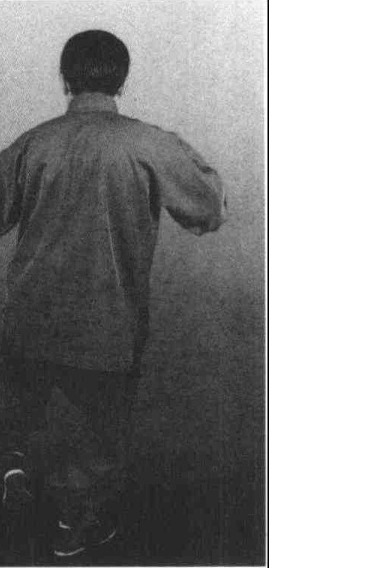
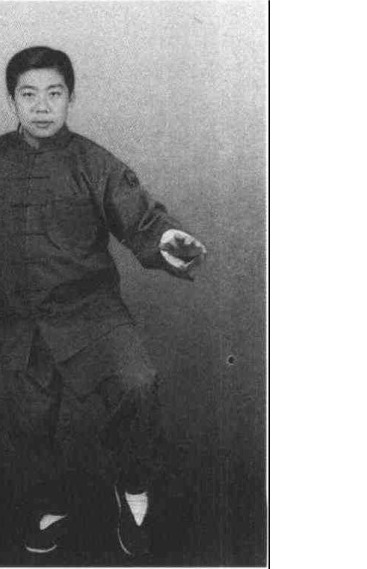
2. After the turn the angle must be correct and the body must face north. The kick goes due east.
3. The rotation must be light, nimble and natural, and the movements neither hurried nor slow.
Phần 108
V. Faults, Their Causes, and How to Correct Them
1. Fault: swaying after the turn, or an unsteady stance. The principal cause is a failure to attend to relaxation and the use of stiff force instead. In turning, some do not relax the waist and hips, some swing the left leg through too great an arc, and some have poor control of the suspended turning of the left leg. Correction: the tailbone must be centred and true, the waist and hips relaxed, and there must be control over the landing position of the right heel and over the left knee.
2. Fault: the left foot comes down too fast, destroying the evenness and roundness. The principal cause is poor management of the centre of gravity — in order to keep balance and avoid falling, the left leg is landed too early. Correction: after the turn the right heel should land slowly; then the left leg is suspended and lifted, the right leg squats slightly, and only then does the left leg gradually come to the ground.
1. For the elderly and the weak the requirement for the rotation may be lowered and the left leg held lower.
2. The difficulty of this movement lies in the rotation, and so the emphasis of practice should be placed on the rotation. No demands are made on the two hands; building on the preceding movement, the left knee is lifted in turning, remains lifted after the turn, the right leg sinks, and only then does the left foot slowly come to the ground.
3. Mnemonic: release — the left leg is let down and suspended; land — the left leg descends and settles; turn — the waist and hips turn the body round; rise — the left leg rises slightly; sink — the left leg squats; kick — the right leg kicks out; close — the two hands cross before the chest.
In Turn the Body and Heel Kick the body rotates through nearly 360°; the preceding left heel kick goes to the east, and in Turn the Body and Heel Kick the body turns and then the right foot goes to the east. In both cases the direction of the kick is east — only the direction of the turn and the leg are changed. The key lies in the rotation to the right and rear. The requirement for the rotation is first that it be steady, and second that it be exact (that is, the direction after the turn must be exact). And so the technique of Turn the Body and Heel Kick must first be analysed in terms of the rotation. All things…
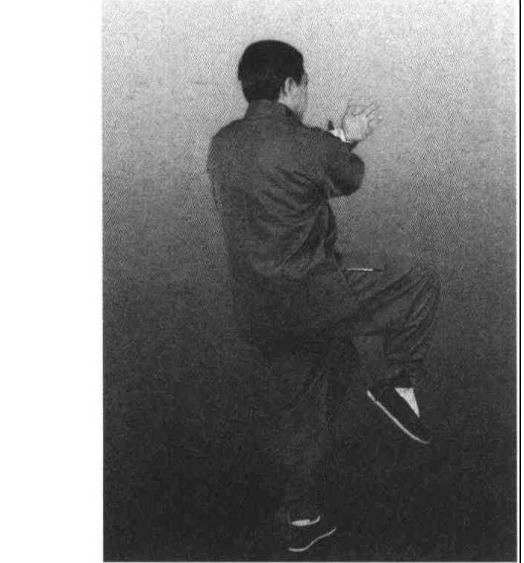
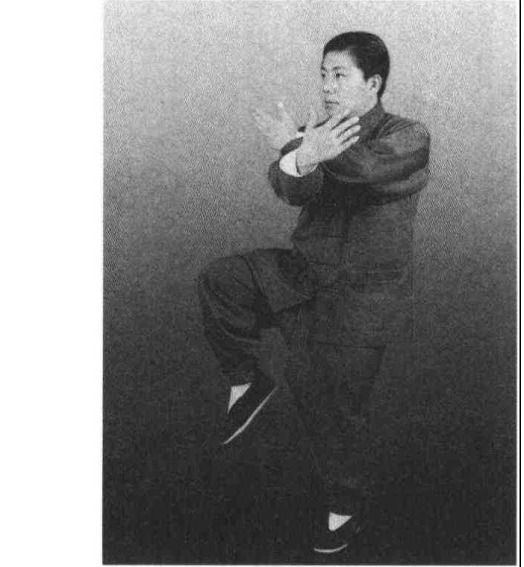
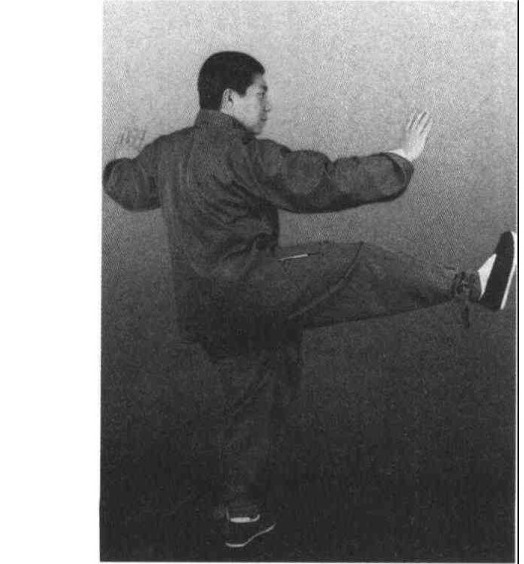
…can only move in a circle when acted upon by centripetal force; and so the swinging of the arms and legs must not go straight to and fro. The driving force of the rotation must come from the waist and hips. When the rotation is done well, the subsequent bending of the right leg to "send" the left leg down, and then the right heel kick, are not hard to do.
Forty-fourth Posture: Step Forward, Deflect, Parry and Punch (Jin Bu Ban Lan Chui)
Phần 109
I. Application
The same as the twelfth posture, Step Forward, Deflect, Parry and Punch.
The left leg gradually squats, the right leg descends and the knee is lifted, and the waist turns slightly right; at the same time the right palm closes into a fist and arcs from the right downward and to the left across the front of the abdomen, the centre of the fist facing down; the left palm sinks slightly as the left leg squats, then arcs slightly upward from the left (the fingers no higher than the shoulder), and as it traces its arc the centre of the palm faces obliquely down-right. The gaze attends to the right fist's arc to the left, then gradually looks level to the right (see the first two figures on this page).
All the remaining points are the same as the twelfth posture, Step Forward, Deflect, Parry and Punch. See the remaining figures on this page and on the next (the same as an earlier set of five).
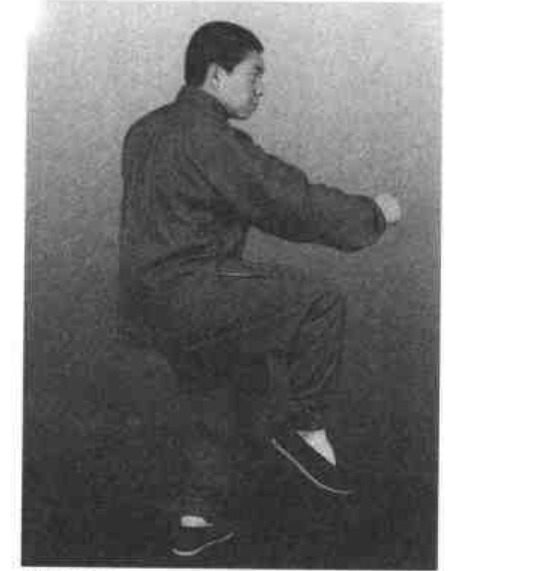
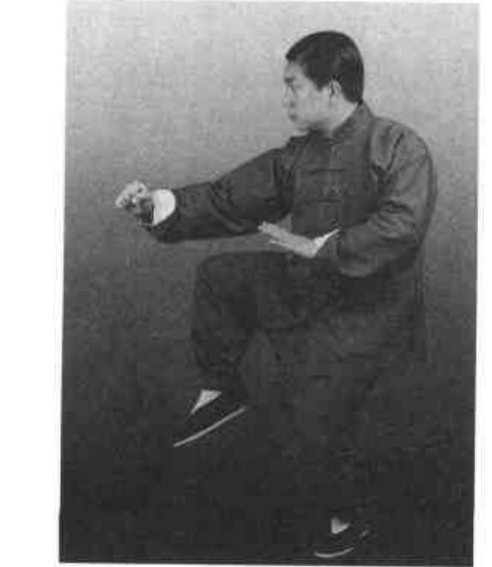
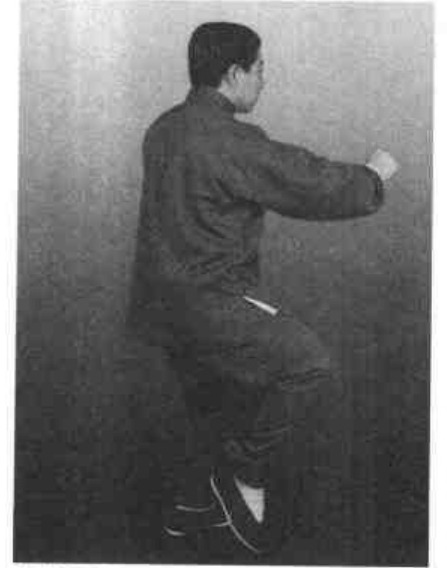
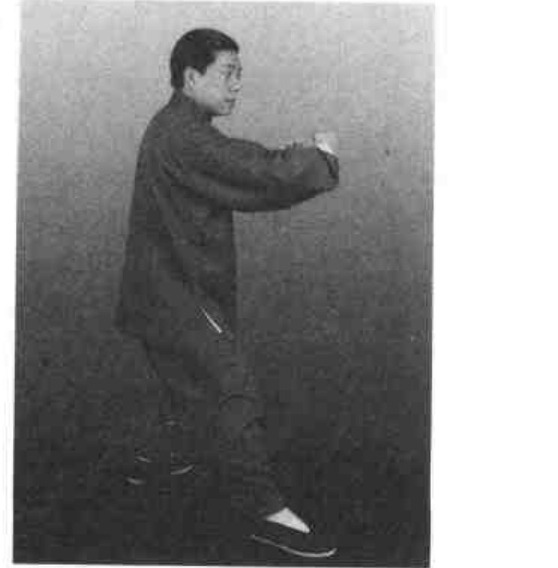
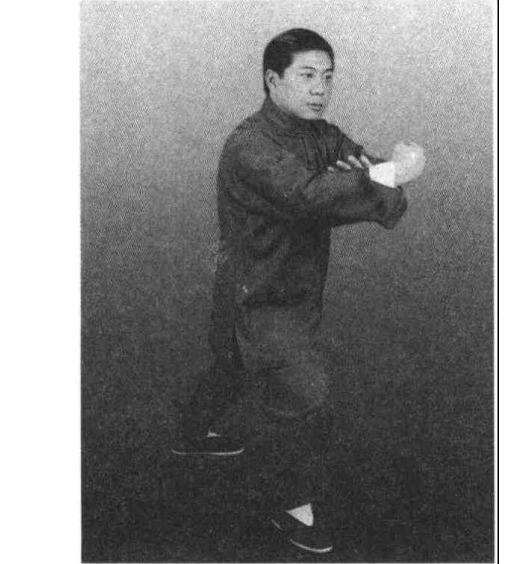
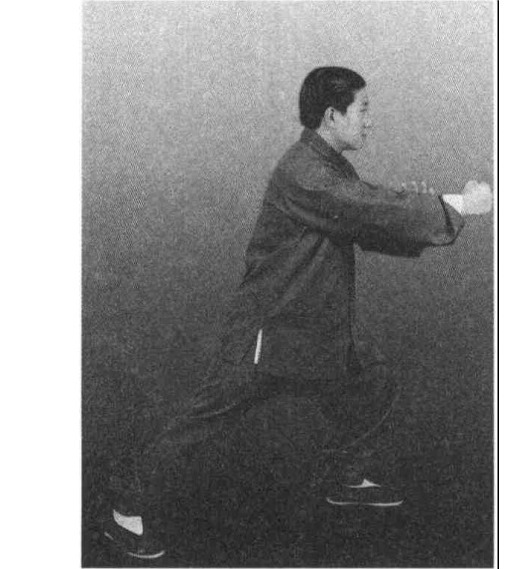
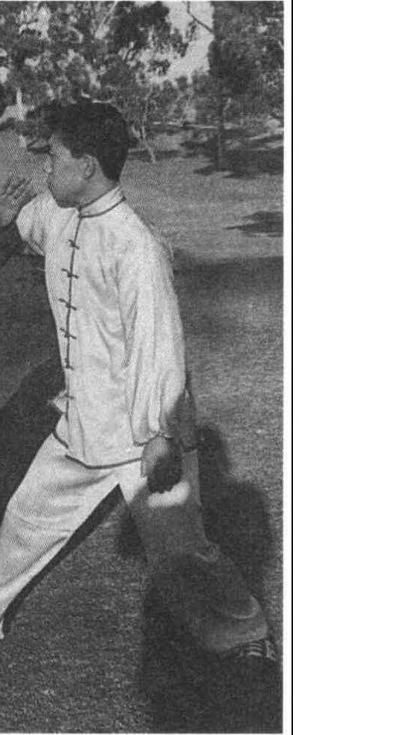
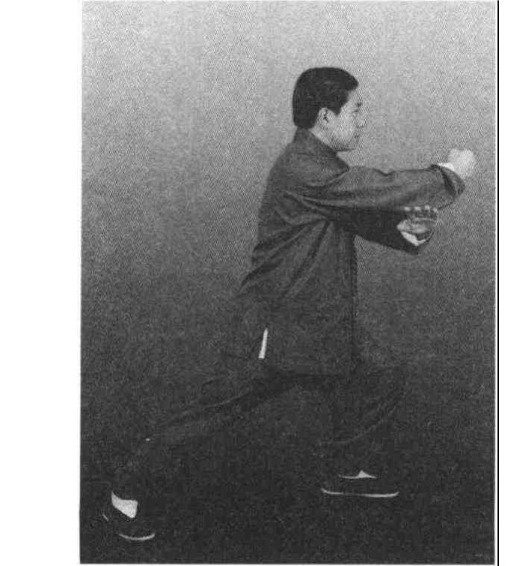
(There is also a push-hands photograph at the middle of the right-hand side of this page; it is unnumbered and carries no caption.)
Forty-fifth Posture: As If Sealing, As If Closing (Ru Feng Si Bi)
All the points are the same as the thirteenth posture, As If Sealing, As If Closing. See the figures on this page and on the next (the same as an earlier set of four).
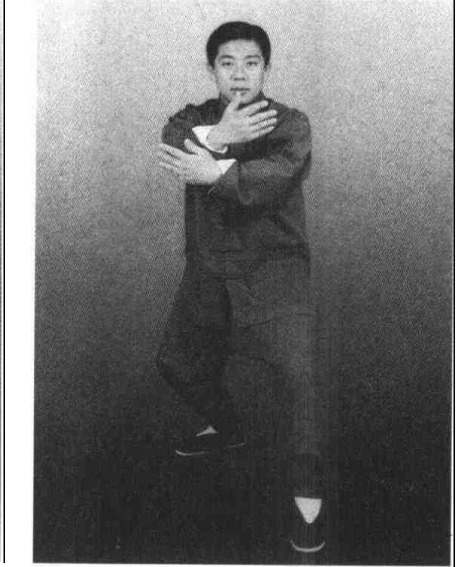
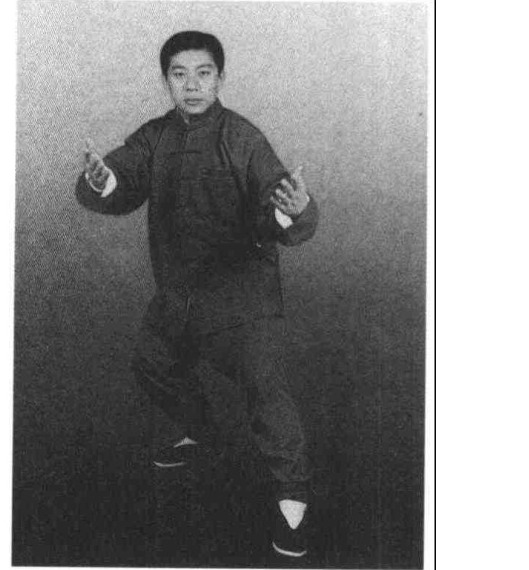
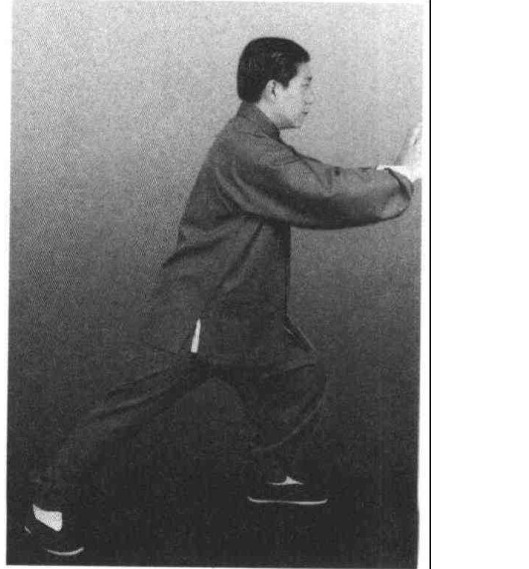
(There is also a push-hands photograph at the lower left of this page; it is unnumbered and carries no caption.)
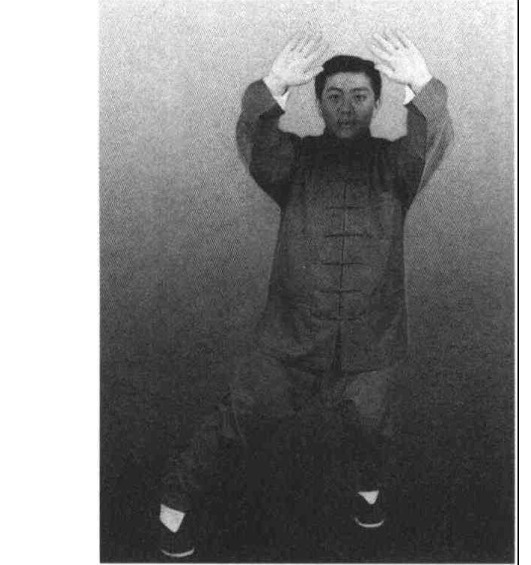
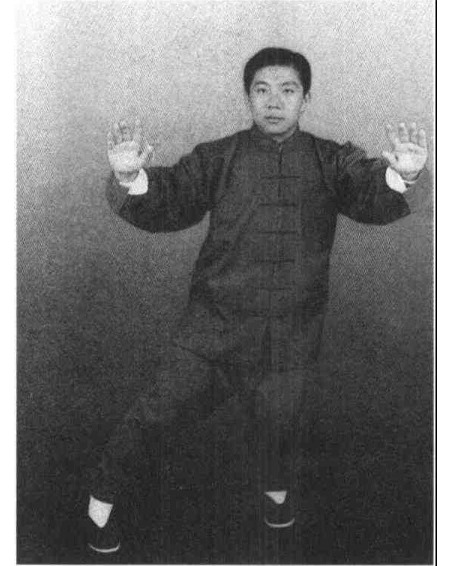
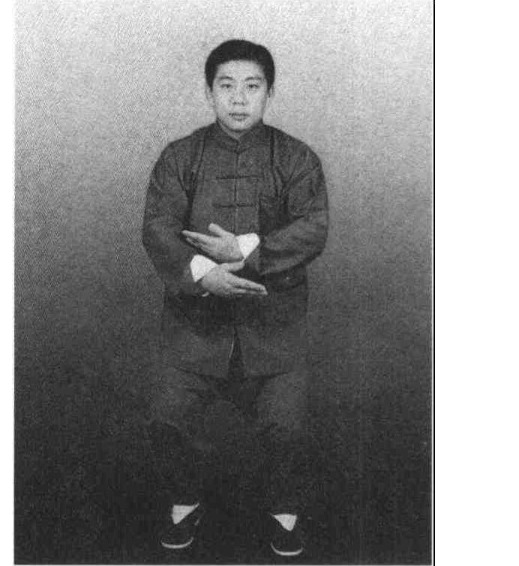
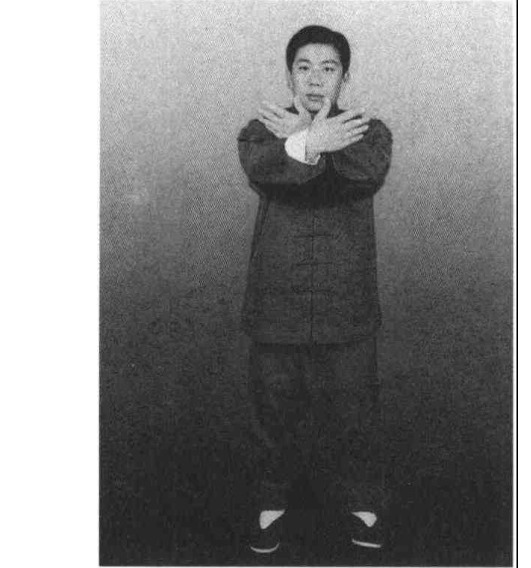
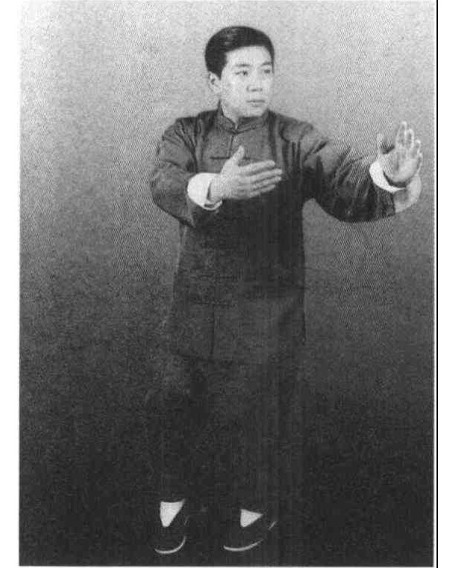
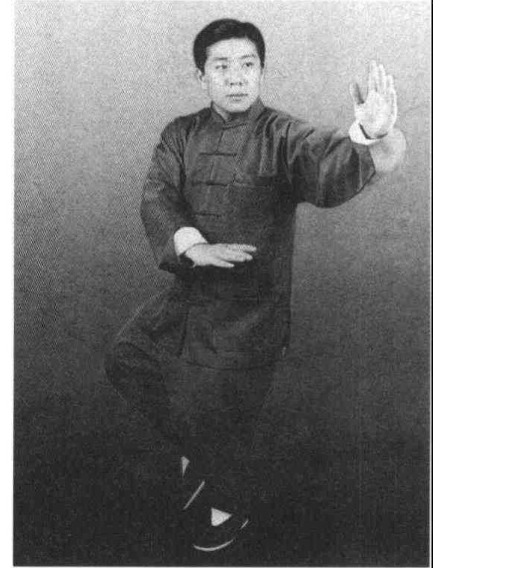
Forty-sixth Posture: Cross Hands (Shi Zi Shou)
All the points are the same as the fourteenth posture, Cross Hands. See the first four figures on this page (the same as an earlier set of four).
Forty-seventh Posture: Embrace the Tiger and Return to the Mountain (Bao Hu Gui Shan)
All the points are the same as the fifteenth posture, Embrace the Tiger and Return to the Mountain. See the remaining figures on this page and on the next (the same as an earlier set of ten). The whole of this page is taken up by nine posture photographs, arranged in three rows of three across the page. There is no running text on this page.
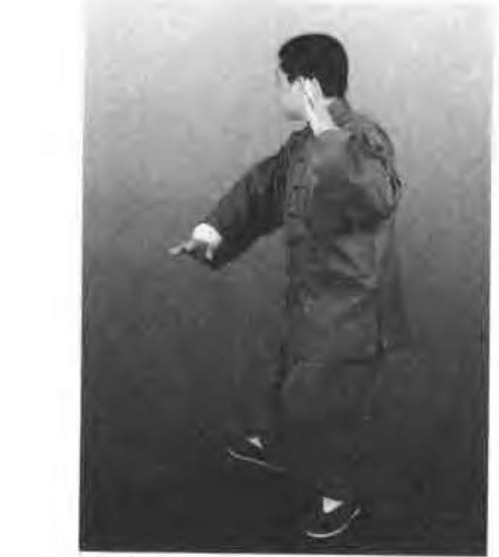
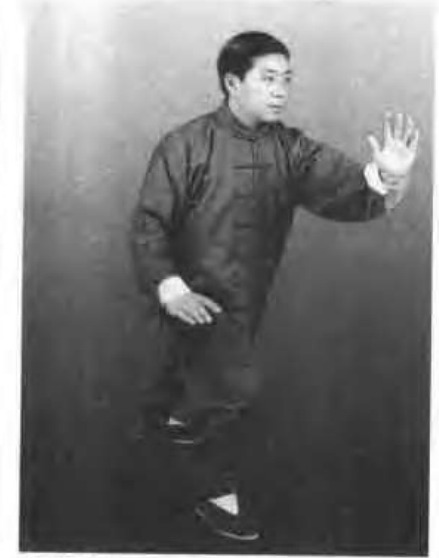
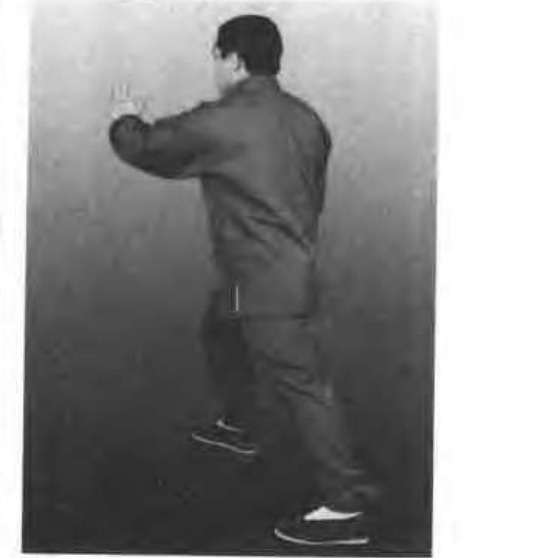
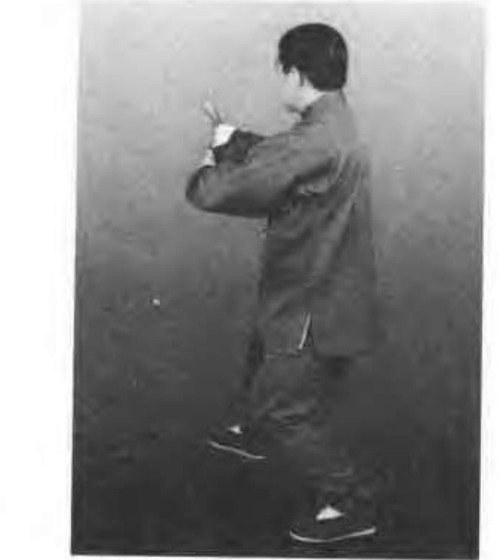
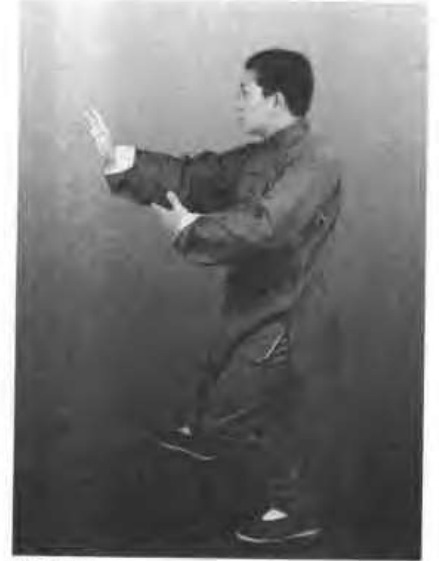
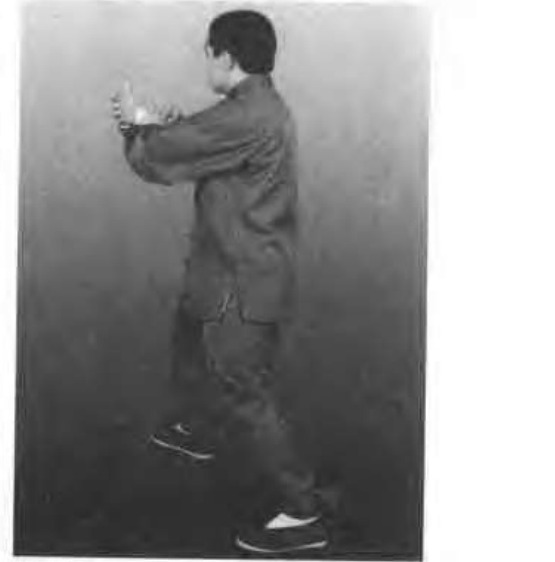
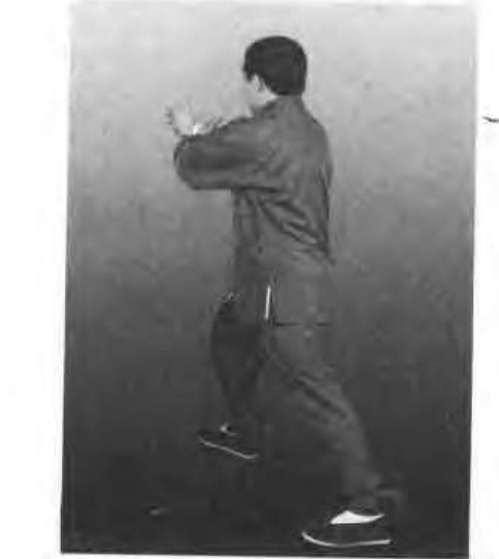
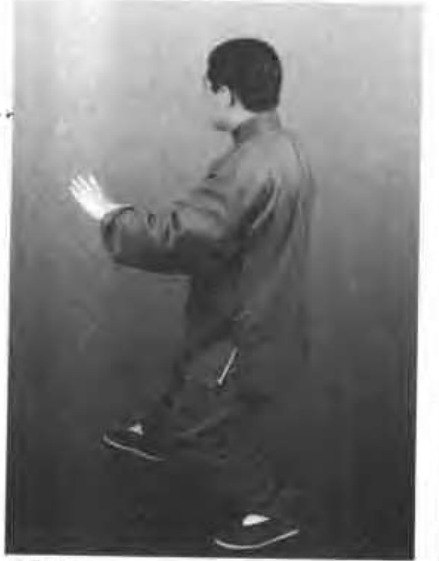
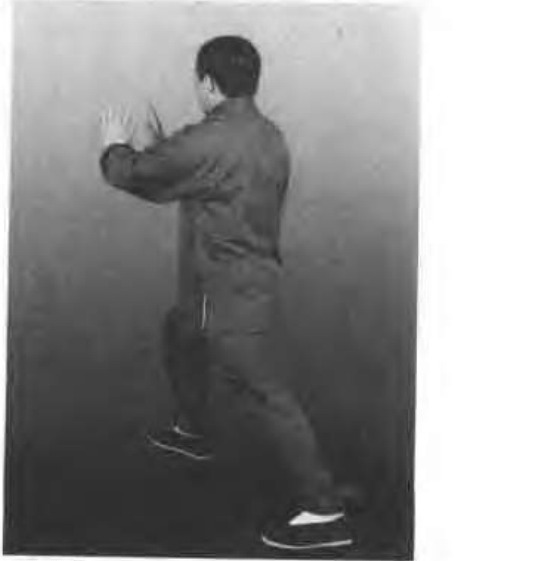
Forty-eighth Posture: Diagonal Single Whip (Xie Dan Bian)
All the points are the same as the fourth posture, Single Whip; the differences are as follows:
1. The direction of the settled pose of this single whip is obliquely forward-left (the south-east), whereas the single whip of the fourth posture goes to the east.
2. The diagonal single whip begins facing the north-west and moves through 180° to the south-east. The single whip of the fourth posture begins facing west and moves through 180° to the east.
3. All the other points are the same as the fourth posture, Single Whip (see the figures on this page).
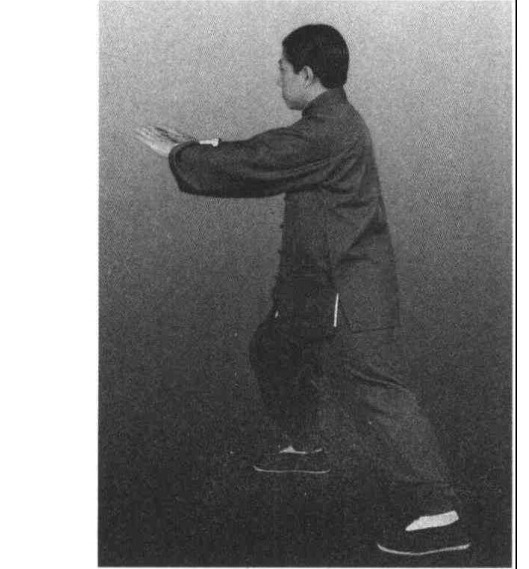
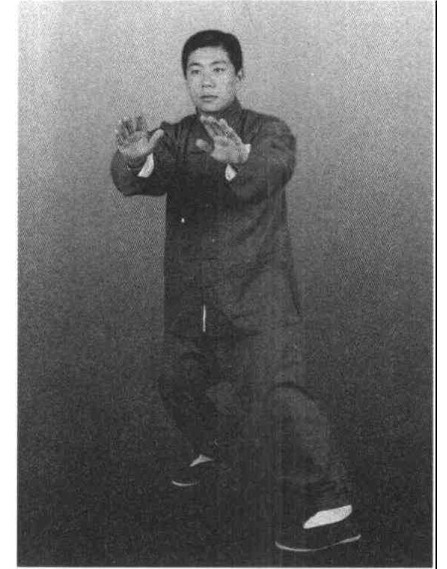
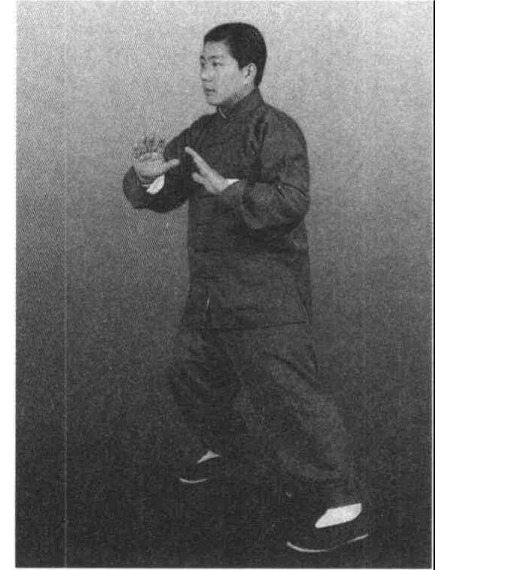
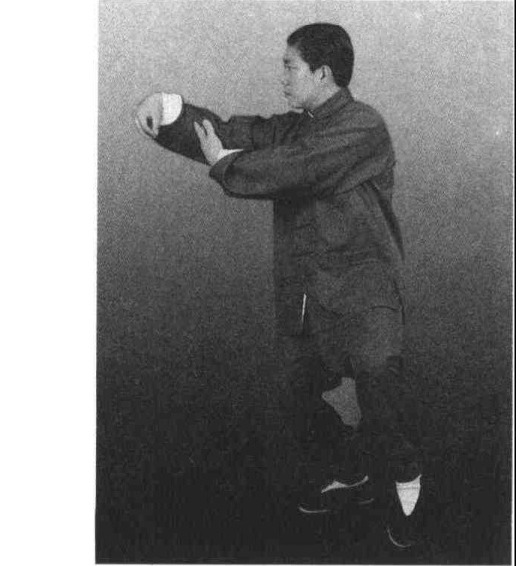
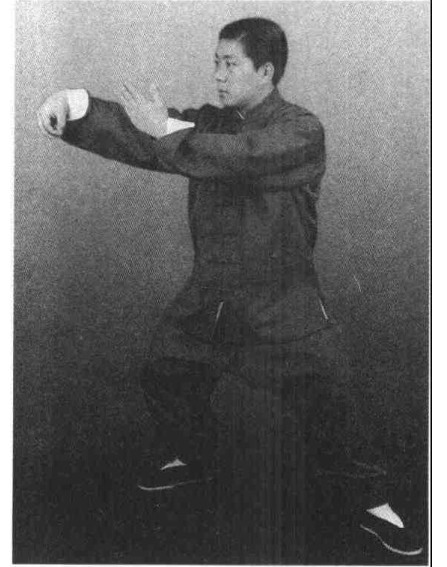
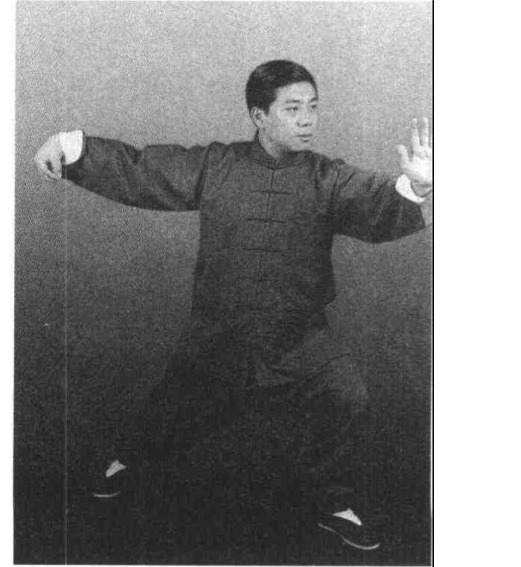
Forty-ninth Posture: Part the Wild Horse's Mane to Left and Right (Zuo You Ye Ma Fen Zong)
Phần 110
I. Application
Joining from the preceding posture: if an opponent uses a press from the right side to press my right arm, I at once turn my body to the right and move my left foot also to the right, drawing the right heel back to form the empty step. Then I use my right hand to stick to the opponent's left wrist and relax slightly to the left, and use my left hand to ward off his right wrist. At the same time I quickly bring the right foot up, bend the knee and settle solid, straighten the left leg, and at once use my right forearm to separate into the opponent's armpit; his root strength can then be plucked up by me, and his body will lean back. At this moment the left hand should also separate slightly to the rear, using sinking strength to assist the right hand's force (to assist the momentum of the right hand).
Another application is this: if an opponent strikes at my right chest with his right fist, I use the left Part the Wild Horse's Mane to ward his hand out with my left hand, and then strike out with a press.
1. The body turns slightly right, the left toe turns in and settles flat, the centre of gravity gradually shifts entirely onto the left leg, the left leg settles solid, and the right foot is lifted and drawn back (facing west). At the same time the left palm, the elbow bent, arcs to the front of the left chest, the palm facing obliquely down; the right hanging hand changes to a palm and scoops from the right downward and to the left in an arc to the front of the abdomen, and as it scoops the arm rotates outward so that the centre of the palm turns obliquely up and joins with the left hand, both arms forming arcs. The gaze attends to the left palm (see the first figure on this page).
2. The body continues to turn right, facing west, and the right foot slowly steps forward, the heel touching first; as the centre of gravity gradually shifts onto the right leg and the whole sole of the right foot settles flat, the right leg bends and the left leg extends, forming the right bow stance. At the same time the right palm, its centre facing obliquely up, arcs out with the radial side of the forearm to the upper right front as the body turns, the fingers at eyebrow height; the left palm plucks down in an arc to the side of the left hip. The gaze attends to the right palm as it separates, and reaches the right front slightly before the right palm does, the face towards the south-west (see the second figure on this page).
1. The body turns slightly right (facing north-west), the right toe turns out and treads flat, the centre of gravity gradually shifts entirely onto the right leg, the right leg settles solid, and the left leg is lifted forward. At the same time the right palm, as the body turns, arcs with the elbow bent to the front of the right chest…
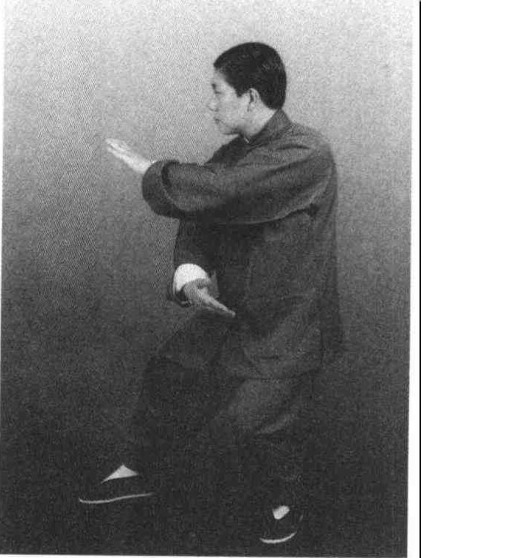
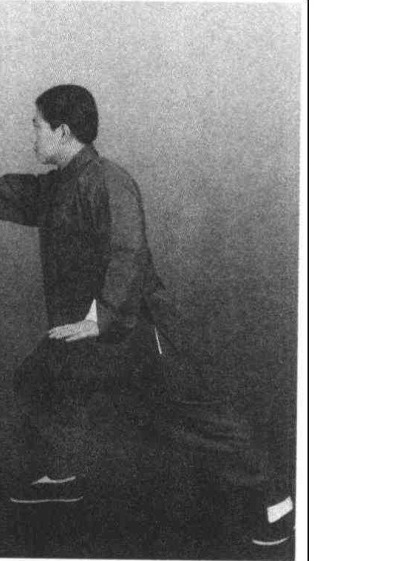
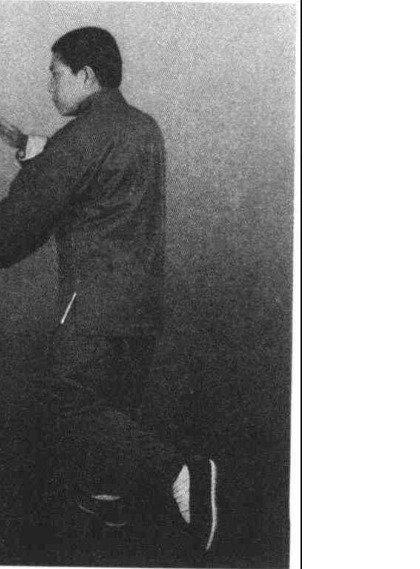
…and as it moves the arm rotates inward so that the centre of the palm gradually turns down; the left palm scoops in an arc to the right to the front of the abdomen, and as it scoops the arm rotates outward so that the centre of the palm turns obliquely up and joins with the right palm, both arms forming arcs. The eyes follow the turning of the body in a level shift, the gaze attending to the right palm (see the first two figures on this page).
2. The body continues to turn gradually left (facing west), the left foot steps forward, the heel touching first; as the centre of gravity gradually shifts onto the left leg and the whole sole settles flat, the left leg bends and the right leg extends, forming the left bow stance. At the same time the left palm, its centre facing obliquely up, arcs out with the thumb side of the hand to the upper left front as the body turns, the fingers at eyebrow height; the right palm plucks down in an arc to the side of the right hip. The gaze attends to the left palm as it separates, and reaches the left front slightly before the left palm does, the face towards the south-west (see the remaining figures on this page).
3. Thereafter the left and right Part the Wild Horse's Mane are identical in movement, only the direction changing again and again (once to the left, once to the right), as in the further figures on this page and on the next (the same as earlier figures).
Phần 111
III. Key Points
1. Whether the right or the left hand separates, the power is issued from the waist. The Boxing Treatise stresses, "At every moment keep your mind on the waist", and "The nine joints above and below — the strength issues from the waist at every joint." When the waist's strength is used correctly it can concentrate the whole body's strength on one point; and one must thread from shoulder to elbow to hand, joint by joint, issuing outward. The separation of the hand and the turning of the waist and the bow stance must also be coordinated. The strength must go from the foot to the leg, to the waist, and take form in the fingers: its root is in the foot, its master in the waist. When I separate into the opponent's armpit I must pluck up his root strength; if I use only the strength of the hand, that is far from enough.
2. The bow stance of Part the Wild Horse's Mane is a little wider than the ordinary bow stance, but not as much as a 45° oblique angle. If the lateral distance of the bowed-out foot is small the stance is unsteady and one cannot give strength to the separating hand.
3. The toe of the bowed-out leg must be in the same direction as the knee.
4. Whether closing or splitting, the shoulders must sink and the elbows hang.
5. The route of the separating hand is first forward, then outward (the right hand to the right, the left hand to the left).
6. When the left and right Part the Wild Horse's Mane is repeated many times (three, five or more), although the movements alternate left and right they must be continuous; and so each posture must carry on from the last, with no dividing pause.
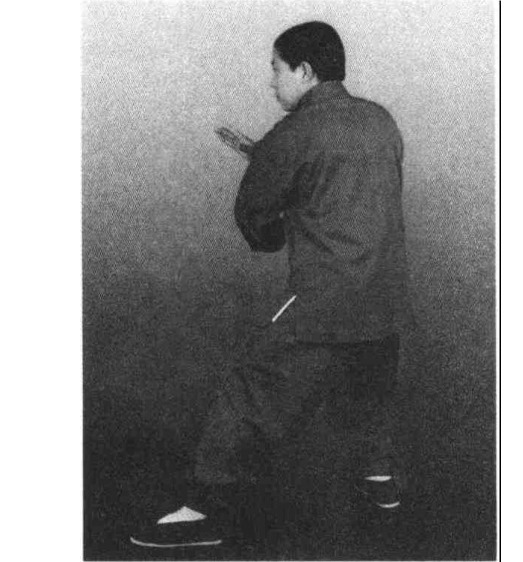
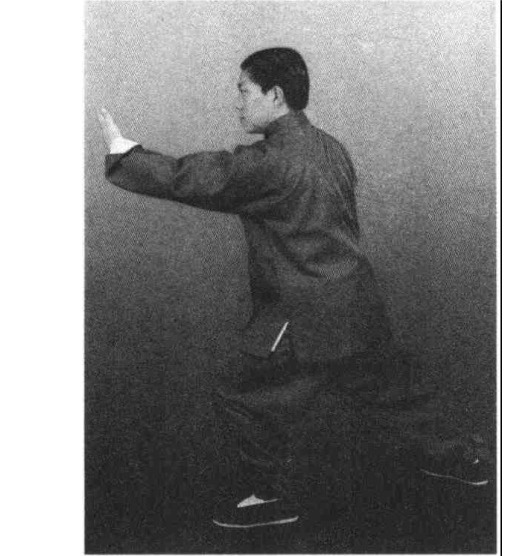
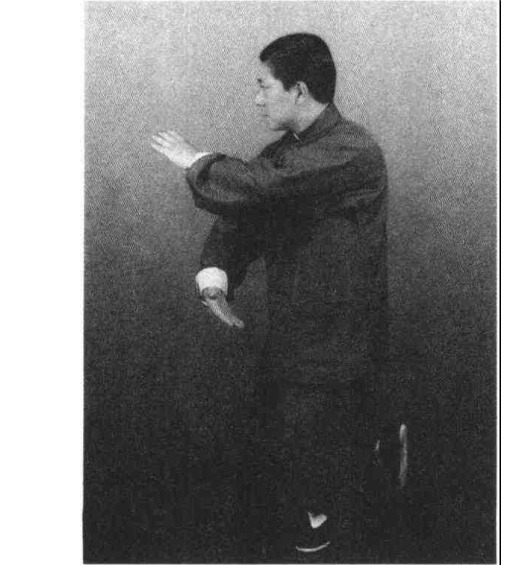
Phần 112
IV. Requirements
1. Empty and full must be clear. The body, the hands and the steps are all to be distinct, and the internal and external conversions of empty and full must also agree. That is why internal and external, above and below, left and right, front and rear are all to be clearly distinguished as empty or full. The sinking of the lower limb is the key to the body's steadiness; therefore the first thing to attend to is the clear distinction of empty and full in the two legs. The more finely the empty and full of the two legs is distinguished, the more the feeling of the movement improves step by step. Beginners must make the full foot grind and a single foot be solid, and only then may the other foot be slowly lifted and slowly sent out; before the heel has landed, the centre of gravity may not change.
2. In left and right Part the Wild Horse's Mane there must be no pause between one posture and the next. It is to be threaded through, one posture succeeding another, connected and lively. But one must also avoid the fault of the hands and feet not having arrived in place — that is, of the movement not being complete — before going on to the next movement.
3. In advancing, the two feet are not to be in one line; the toe of the front foot is to face square to the front.
4. Opening out and drawing together must be combined.
1. Error: the two hands make a large circle, so the direction is not correct and the direction at the settled posture is unclear. The main cause is a poor grasp of the method of use. Take the right Part the Wild Horse's Mane as the example: the opponent attacks me from my right side, I step forward with the right foot and separate the right hand downward into his armpit. If my right hand describes a large circle, then when the hand arrives it is not under the opponent's armpit but in front of his head, and the possibility of "separating" is lost. Correction: it must first go forward and then outward, the fingers no higher than the eyebrows — only then can it separate into his armpit and pluck up his root strength.
2. Error: the turn of the body is too great, giving a loose and scattered appearance. Take the left Part the Wild Horse's Mane as the example: if the right foot is wrongly opened out to as much as 90°, so that the right toe points north, then when stepping up on the left one feels a pull in the right leg and a great awkwardness, and it also interferes with the left foot's stepping forward correctly. The main cause is an insufficient understanding of the method of use. Correction: the right foot should be opened out to about 45°.
3. Error: the two hands do not follow an arc but go straight out and straight back. The main cause is an inadequate understanding of Tai Chi's characteristic — circular motion…
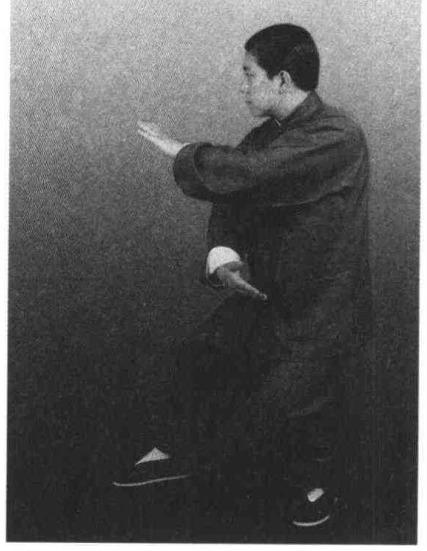
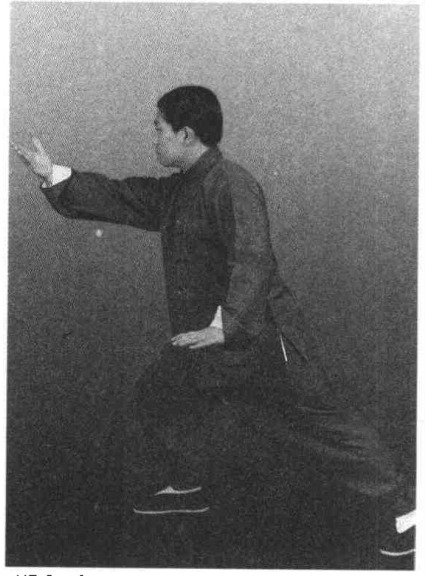
…deeply. Tai Chi has a movement, and that is a circle; "a marvellous hand is one Tai Chi". It contains the two forces of yin and yang revolving and transforming. Correction: one must "have the straight within the curved" — every place a curve, every place a straight line, the unification of the curved and the straight; one must be able at any moment to transform the arc into a straight line and so strike.
4. Error: in the movement the stepping foot lands with a heavy sound, and empty and full are unclear. The main cause is that the supporting leg has not sat solid. Correction: besides the empty-full conversion of the stepping method, the waist and hips must also be brought into coordinated conversion, so that the stepping is light and nimble.
Phần 113
VI. Teaching and Practice Methods
1. The mnemonic (taking the right Part the Wild Horse's Mane as the example): the right hand plucks and the left hand wards; ward, brush and strike; the left is solid and the right is empty, stepping slowly; the right hand plucks down and separates forward into the armpit; you receive my root strength and I myself pluck it up.
2. The learner must keep raising the standard of bow-stance advancing. Besides the empty-full distinction of the step already learned, one should also practise "even movement" and "unbroken continuity".
3. Use discussion to correct details, for example: ① How does the body turn — is there a turn when closing? ② Why must the arm first go forward and then outward?
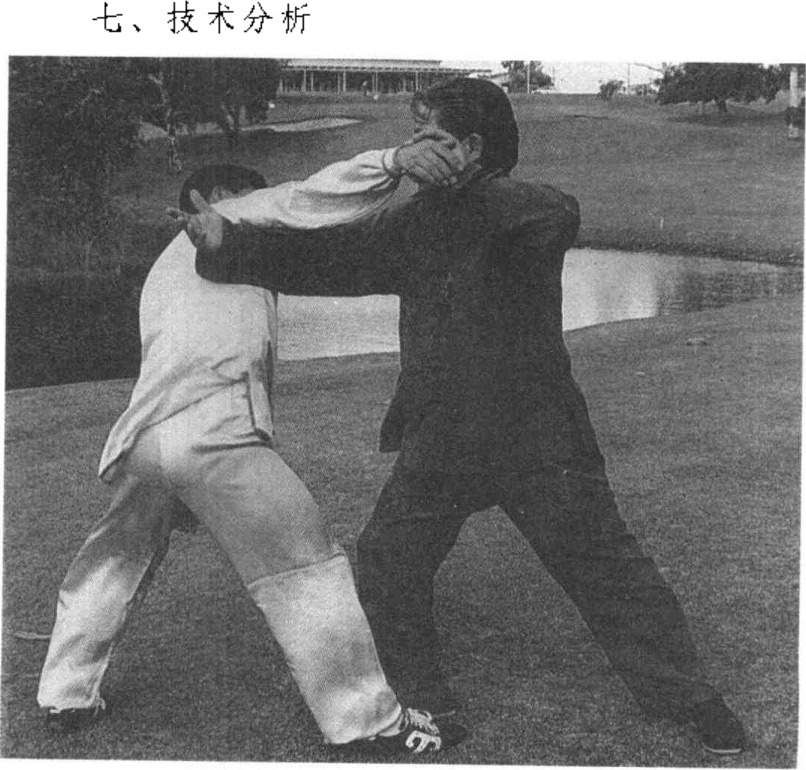
When using it one must step up with the right foot in good time, the right knee sat solid, the left leg extended, and separate the right forearm downward into the opponent's armpit. Why "in good time"? The important meaning here is that the victory lies in seizing the initiative of advancing; if one does not step up in good time, then either the opponent steps up towards me, or one fails to follow up the advantage. If one does not act promptly one loses the opportunity. But in practising the form one must still step forward slowly.
Phần 114
Posture Fifty — Grasping the Bird's Tail
Same as Posture Three, Grasping the Bird's Tail.
The body turns slightly right, the centre of gravity gradually shifting entirely onto the right leg, the left leg lifted from the ground. At the same time the right elbow draws back, and as it draws back the right arm rotates inward so that the centre of the palm turns down, arcing to the front of the chest, the right elbow slightly lower than the wrist; the left palm likewise arcs to the front of the abdomen, and as it moves the arm rotates outward so that the centre of the palm turns up. The two palms join, the left foot steps to the left side, the heel touching first, the foot turned out obliquely, the toes pointing south-west, the left leg bent and the right leg extended forming the left bow stance (the left foot slightly behind and to the right of the right foot). As the left foot steps to the left, the body turns slightly left; as soon as the left heel has touched the ground the body immediately turns gradually right; at the same time the left elbow sinks, the left arm arcs out to the upper left, the left palm at shoulder height, the wrist slightly bent, the centre of the palm facing obliquely up…
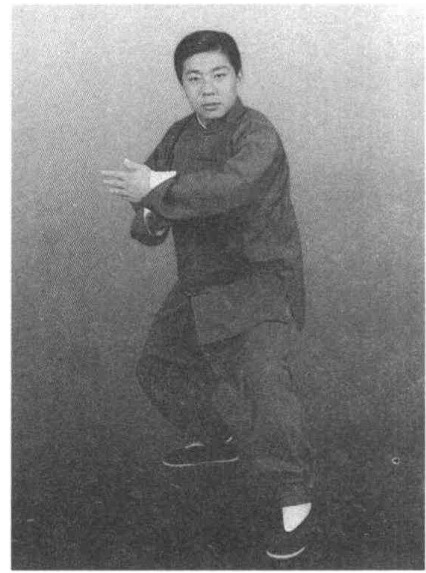
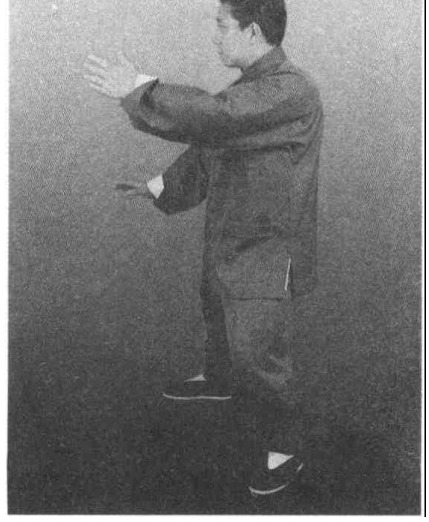
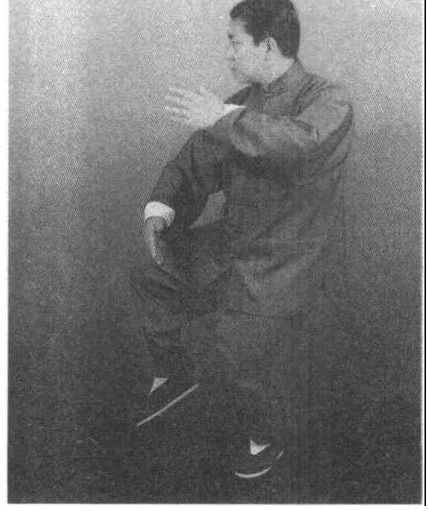
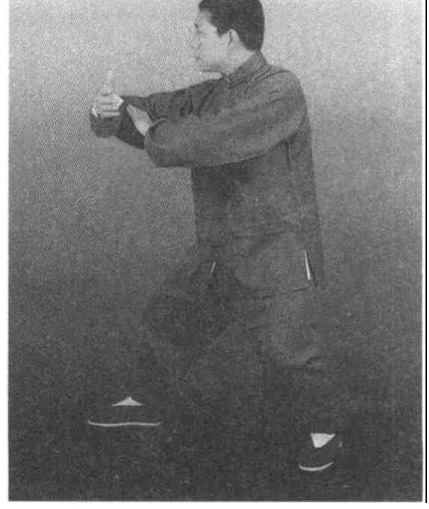
This page is taken up entirely by the posture photographs of the Grasping the Bird's Tail sequence, arranged in three rows of three; there is no running text. The plates continue the movement from the previous page and carry forward into the next.
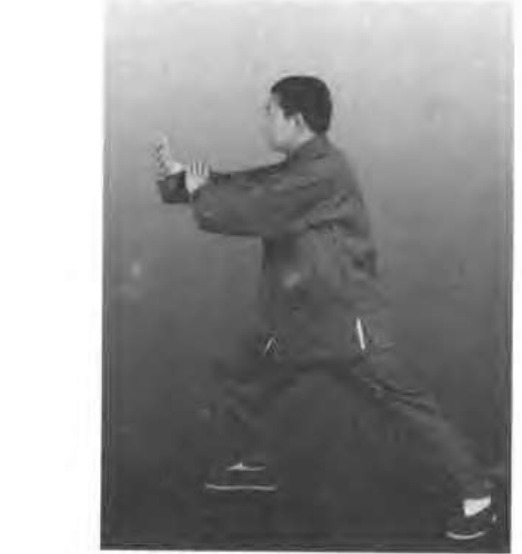
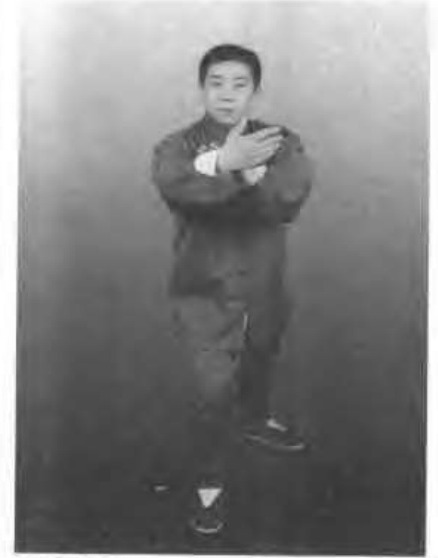
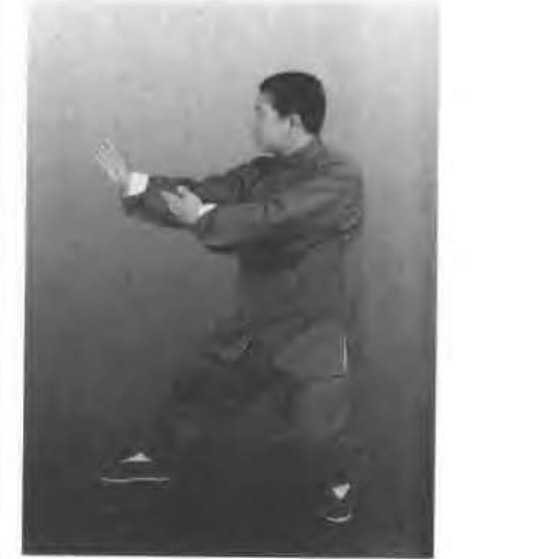
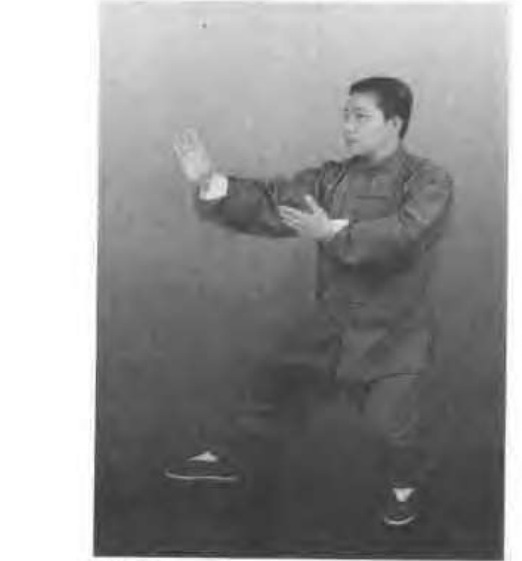
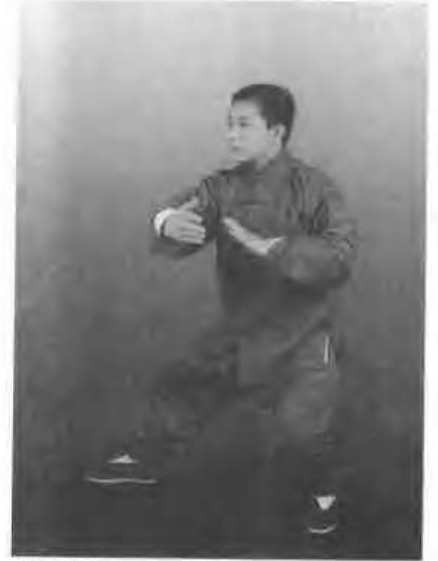
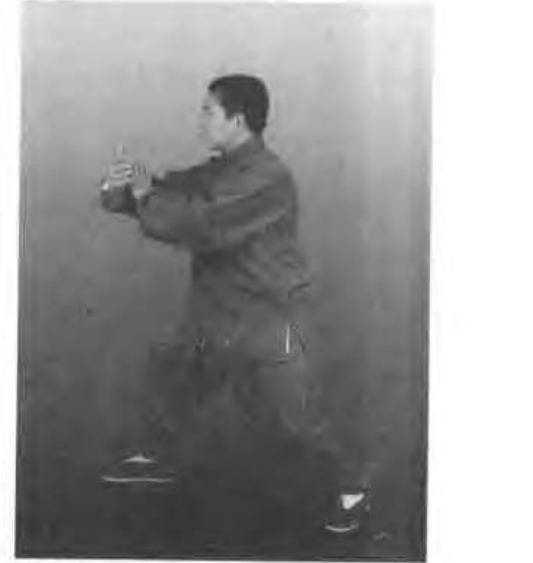
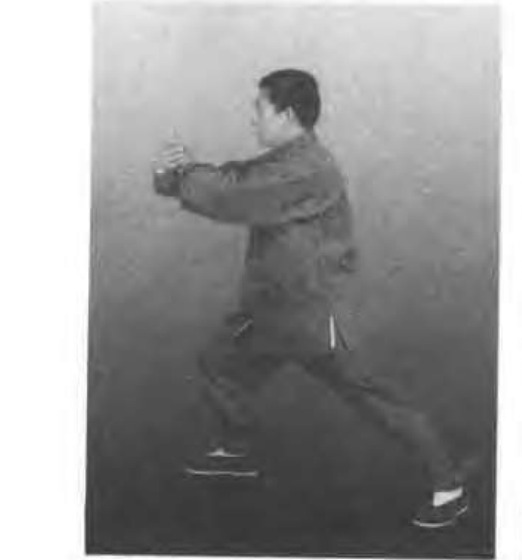
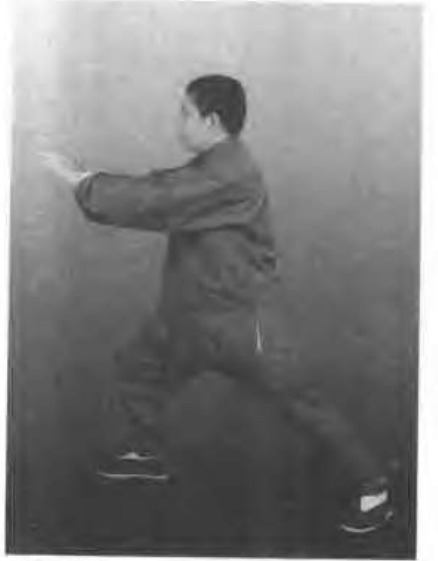
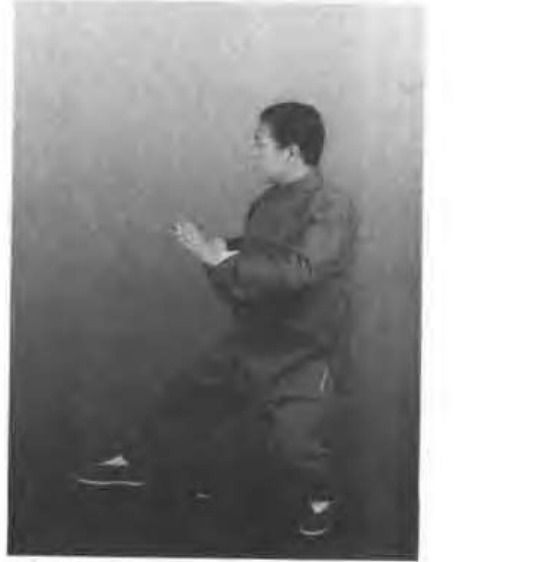
…side, the right palm sweeping forward and outward down to slightly above the hip, the centre of the palm down, the fingers pointing forward, the wrist sat, the knuckles turned slightly upward. The eyes look level to the front, the gaze attending to the left and right palms as they separate (see the first figure on this page).
All the other points are the same as Posture Three, Grasping the Bird's Tail, see the remaining figures on this page and on the next (the same as the second to the seventeenth figures).
1. The right hand drawing back and the left hand moving across, and the lifting of the left foot, must all accord with the turn of the waist.
2. In stepping the left leg, the right leg must sit solid, and the right leg must squat very slightly in order to "send" the left leg down.
Phần 115
Posture Fifty-One — Single Whip
All points are the same as Posture Four, Single Whip, see the figures on this page and the next (the same as the eighteenth to the twenty-third figures).
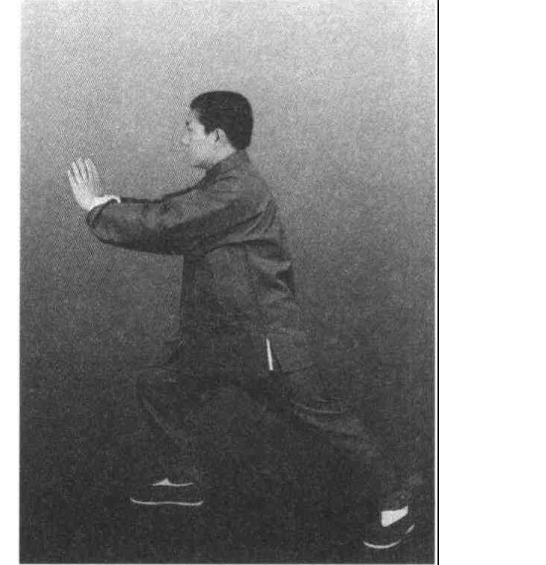
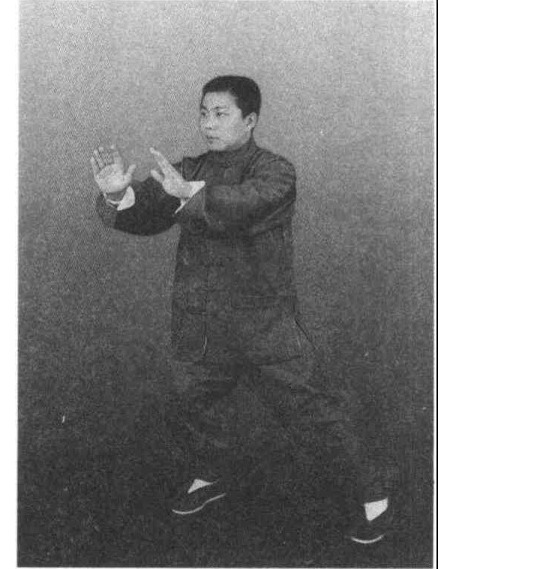
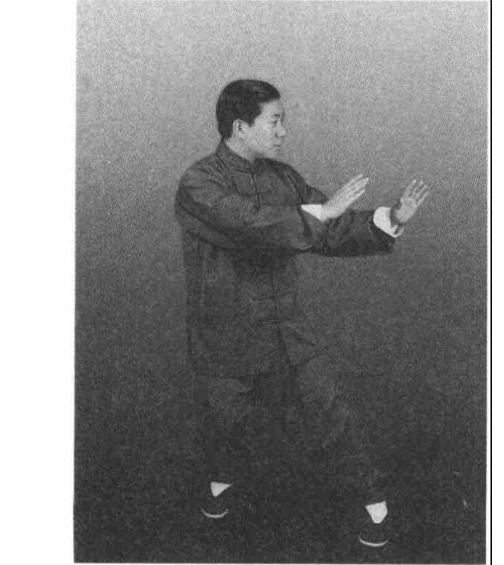
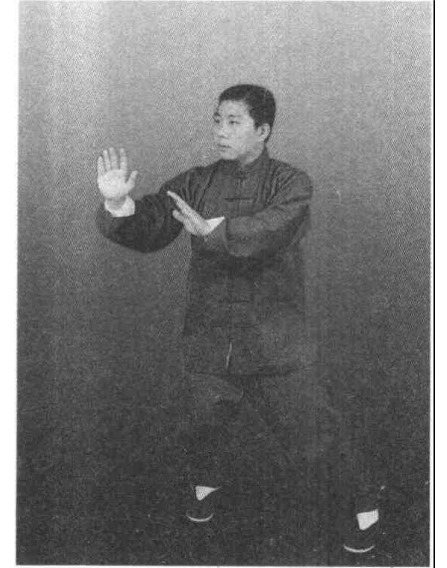
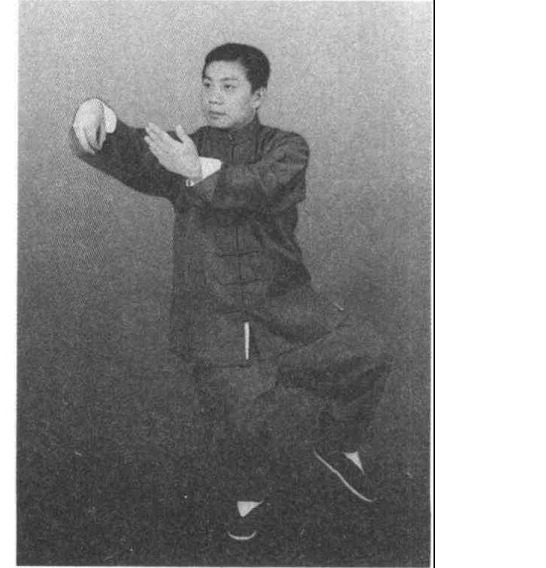
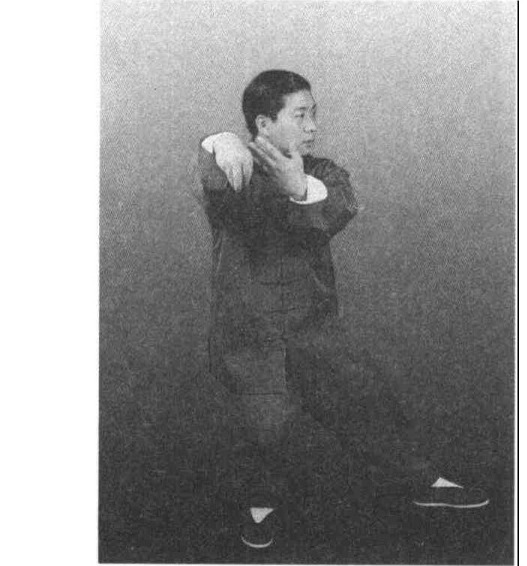
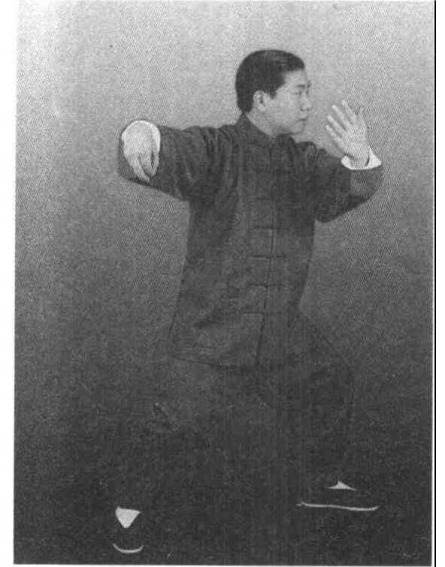
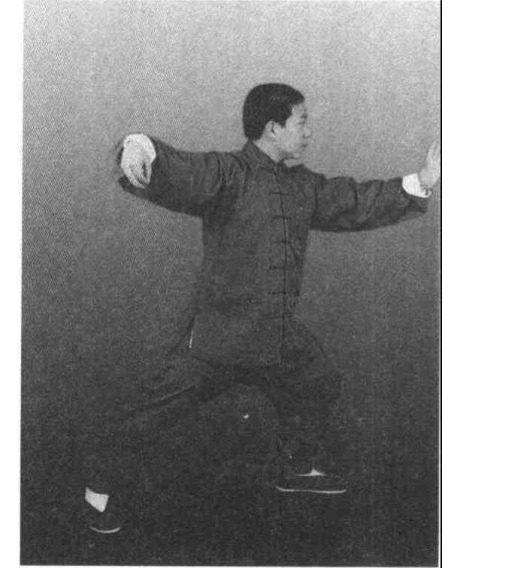
Phần 116
Posture Fifty-Two — the Jade Girl Works the Shuttle
(A) The Left Shuttle Following the Single Whip posture.
Should the opponent, from my right rear, strike down with his right hand from above, I immediately turn my body to the right as I turn my left foot in, and the right foot is thereupon lifted back and set down in front of the left foot, the toes turned to sit apart to the right. The left hand draws back and closes beneath the right hand, and following this guards around the right upper arm, threading through at the right elbow; that is, I ward (peng) it up and out to the left front corner, lifting the opponent's wrist, while the left foot simultaneously advances, the knee bent and sat solid, the right leg extended…
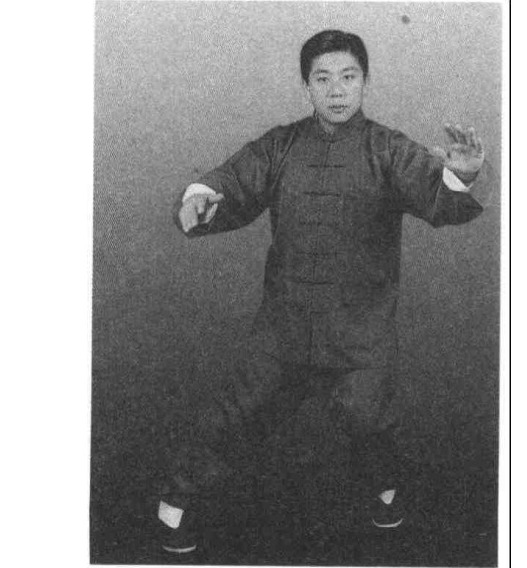
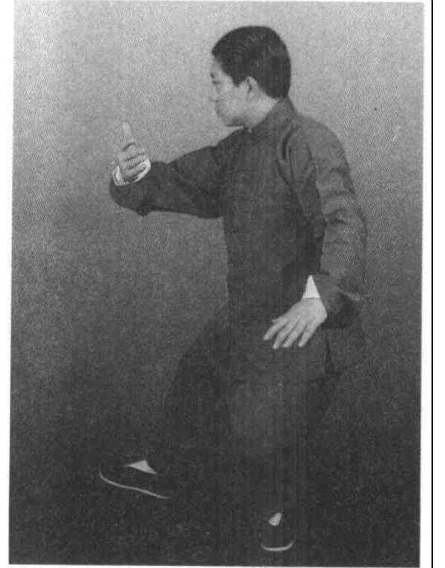
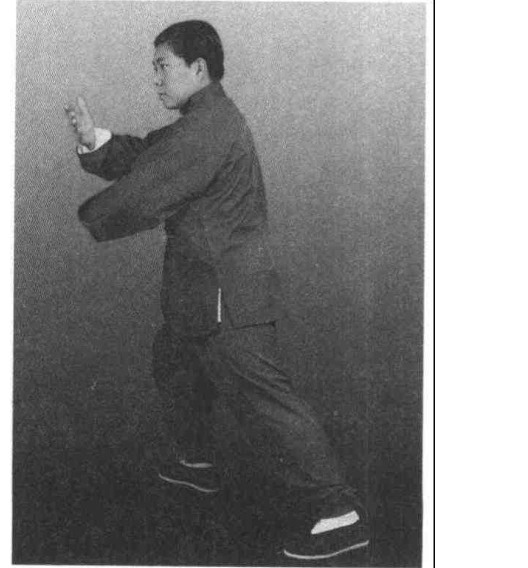
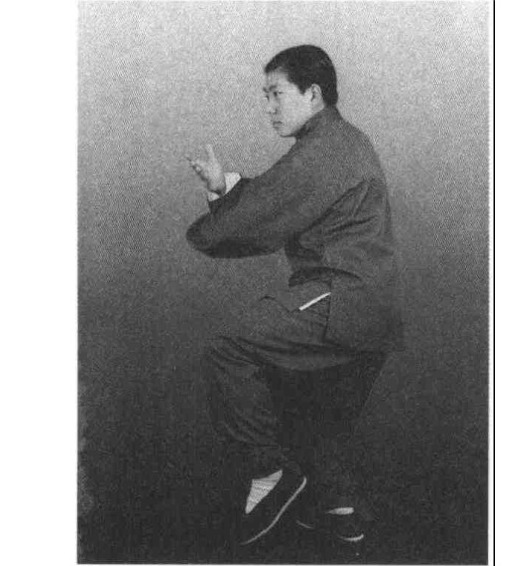
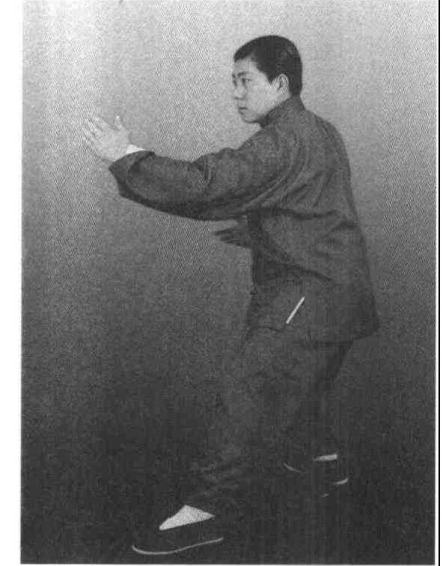
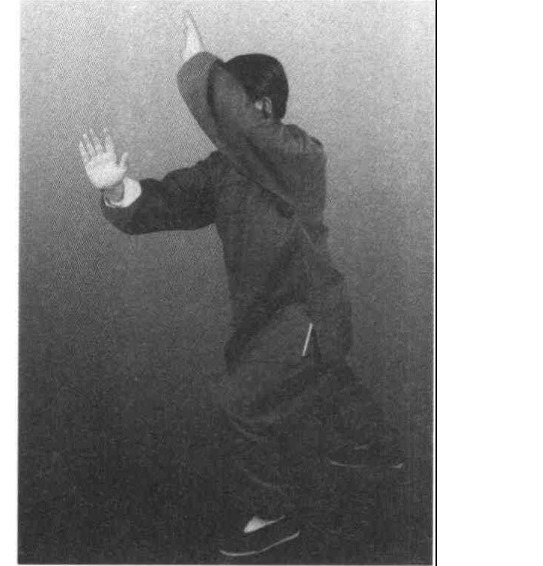
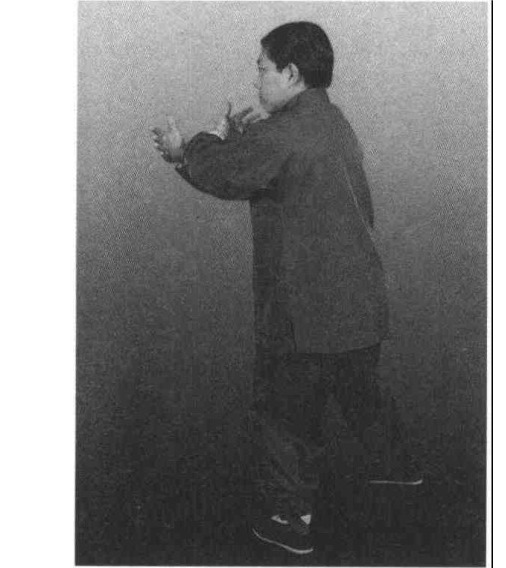
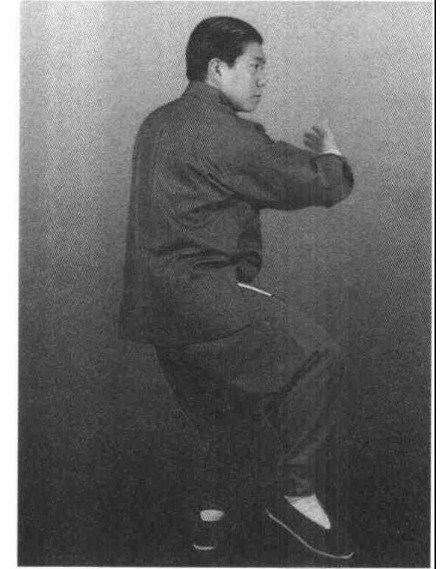
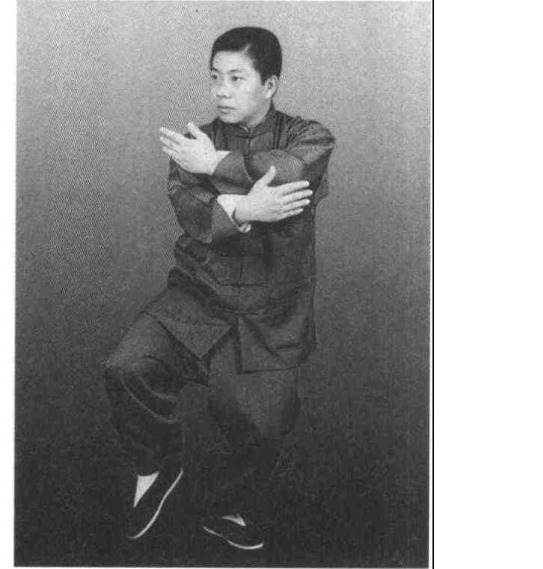
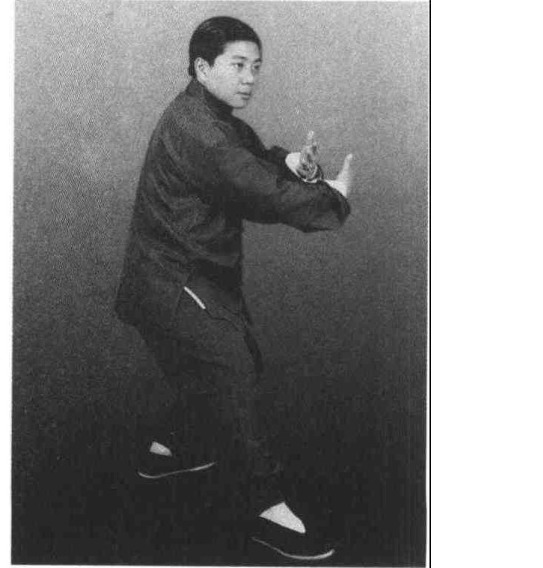
The right hand thereupon becomes a palm, and in haste threads out from beneath the left elbow, striking at the opponent's chest and ribs; thus the opponent has no one who does not fall. In this posture the left and right hands thread through one another, now hidden now appearing, elusive and unfixed, taking advantage of his emptiness to strike — and so it is called the Jade Girl Works the Shuttle, using this to liken this movement's nimbleness and agility (see the first six figures on this page).
(B) The Right Shuttle Following the previous posture.
Should the opponent strike from behind my right side with the head of his right fist, I immediately turn my left foot in, and at the same time the right foot steps one pace out to the right rear, the knee bent and sat solid, the body following this turning to the right, the left foot becoming empty; in haste I use my right forearm to stick to the outside of the opponent's right arm and lift it up to the right rear…
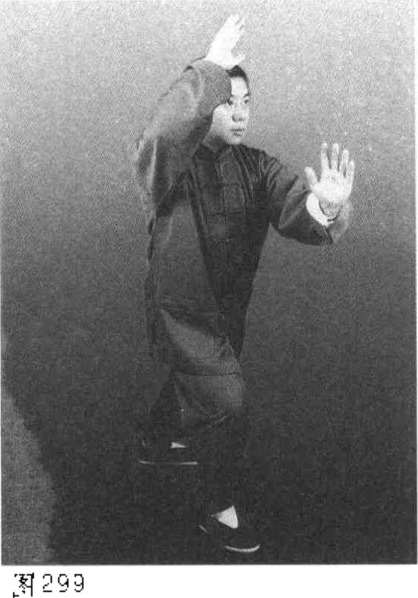
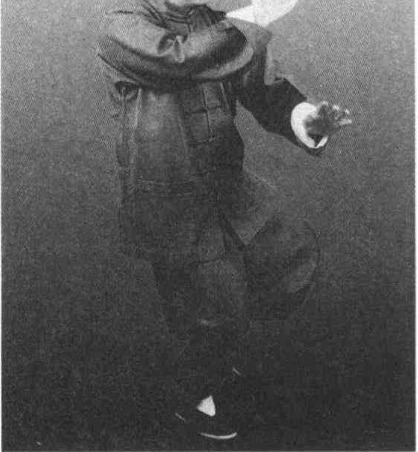
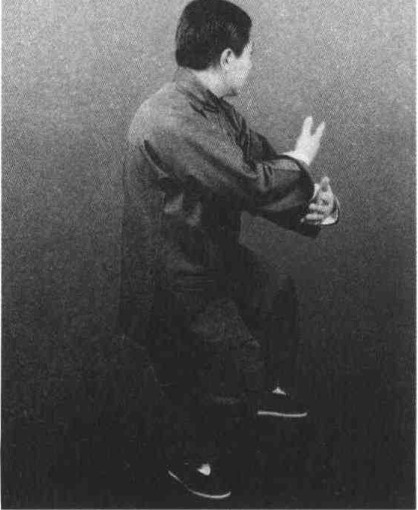
Following this the left hand is pressed down towards the opponent's right ribs; the rest is as in the previous posture (see the first figures on this page).
(C) The Left Shuttle Following the previous posture.
Should the opponent strike from my left side with his left hand, I immediately sit apart with my right toes turned to the right, and the left foot is lifted and steps out to the left corner to sit solid, the hand technique being the same as the previous Left Shuttle (see the figures at the foot of this page and on the next).
(D) The Right Shuttle This posture is the same as the previous Right Shuttle (see the figures on the next page). One must note that the correct directions of the Jade Girl Works the Shuttle are at the four corners; this point must on no account be mistaken.
(A) The Left Shuttle 1. The upper body turns slightly right, the left toes are turned in and sat solid; at the same time the right hand hangs and becomes a palm, arcing downward from the right front to the left, the left palm also gradually arcing downward and moving across, the gaze shifting level and attending to the direction of both hands.
2. The body continues to turn gradually right, the centre of gravity shifting entirely onto the left leg, the right foot lifted; at the same time the right palm, following the body's turning, arcs upward from below through the front of the left chest to the right, the left hand continuing to arc downward and lick across. The gaze attends to the right palm as it wards up to the right.
3. The body continues to turn right, the right foot stepping out to the right front (north-west), the heel touching first, the centre of gravity gradually shifting entirely onto the right leg and the whole sole settling flat; the left foot then lifted forward, the left palm passing through the abdomen and arcing to the lower side of the right forearm, the centre of the left palm facing down, the backs of the two hands obliquely opposing; the right palm also continues to ward right as the body turns, that is, the right elbow sinks, naturally carrying the right palm to shift downward and return.
4. The left foot steps out one pace to the left front diagonal (south-west), the heel touching first, the waist turning slightly left; at the same time the left forearm wards up and forward from the lower side of the right forearm; the right palm (with a sinking elbow) threads back through the upper side of the left forearm, and as it threads the arm rotates inward so that the centre of the palm turns obliquely to the lower front. The eyes look level to the left front, the gaze attending to the left forearm as it wards forward.
5. The body gradually turns left, the centre of gravity gradually shifting onto the left leg, the left foot settling flat, the left leg bent and the right leg extended forming the left bow stance; at the same time the left forearm moves up and round to the front, and as it moves the arm rotates inward so that the centre of the palm turns obliquely…
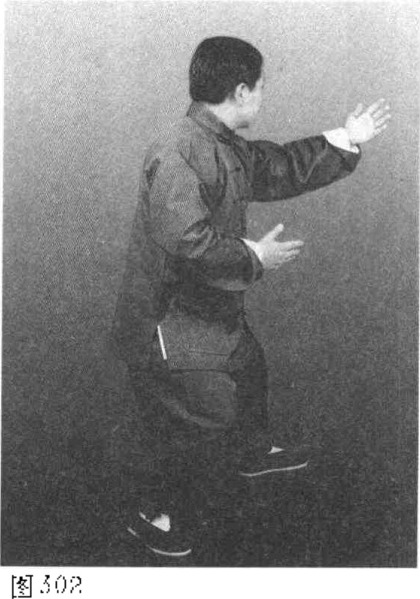
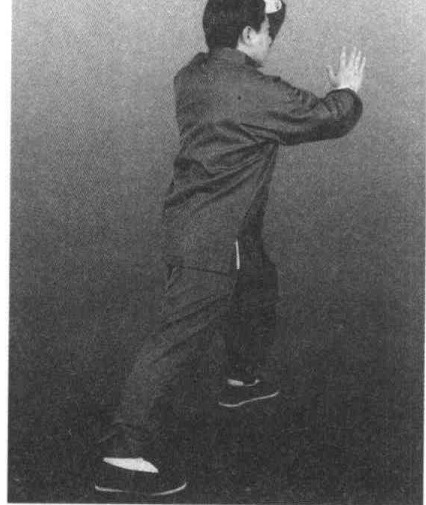
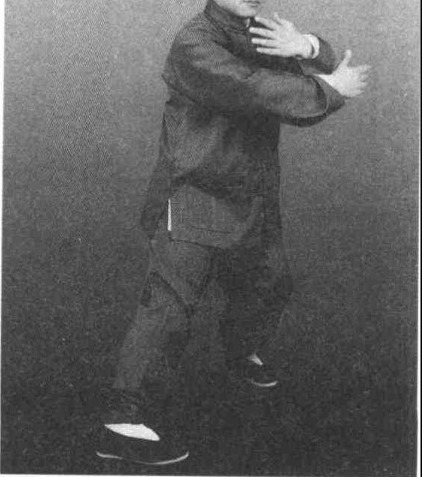
…to the upper front, the left palm stopping above in front of the forehead; at the same time the right palm threads out to the front, the eyes looking level to the front, the gaze attending to the right palm as it threads forward (see the third figure on this page).
(B) The Right Shuttle 1. The waist gradually turns right, the right toes turned in and sat solid. At the same time, the right palm, following the body's turning, bends the elbow and crosses the forearm (the arm forming an arc) shifting to the front of the chest, and as it shifts the arm rotates outward so that the centre of the palm gradually turns to face inward; the left arm rotates outward, and as it sinks and the left elbow drops the left palm is naturally carried to move down, the hand sinking with the back at the outer side and the palm facing inward, the two warding arms gradually forming a shape close to a crossed ten. The gaze attends to the left palm as it shifts back.
2. The body continues to turn right, the centre of gravity gradually shifting entirely onto the left leg, the right foot lifted; following the waist's turning right, at the same time the left arm, following the body's turning, sinks the elbow, passing through the lower side of the right forearm and shifting back down, the right arm gradually warding right, the gaze first attending to the left palm as it shifts down, then immediately turning to the right front (see the fifth figure on this page).
3. The waist continues to turn right, the right foot steps out to the right front diagonal (south-east), the heel touching first; at the same time, the right forearm wards up and forward from the lower side of the left forearm; the left palm sinks the elbow, threads back through the upper side of the right forearm, and as it threads the arm rotates inward so that the centre of the palm turns gradually to face the lower front. The eyes look level to the front, the gaze attending to the right forearm as it wards forward.
4. The centre of gravity gradually shifts onto the right leg, the right foot settling flat, the body gradually turning right, the right leg bent and the left leg extended forming the right bow stance. At the same time, the right forearm turns upward across the front, and as it turns the arm rotates inward so that the centre of the palm turns to face the upper front, the right palm stopping above in front of the forehead; the left palm simultaneously threads forward, the eyes looking level to the front, the gaze attending to the left palm as it pushes forward (see the first three figures on this page).
(C) The Left Shuttle 1. The waist turns slightly left, the whole centre of gravity gradually shifting onto the right leg, the left leg lifted forward; at the same time, the left arm, following the body's turning, bends the elbow and crosses the forearm (the arm forming an arc) shifting to the front of the chest, and as it shifts the arm rotates outward so that the centre of the palm gradually turns to face inward; the right arm rotates outward, and the sinking right elbow naturally carries the right palm to shift down, the palm facing inward, the left hand outside and the right hand within, gradually forming two warding arcs close to a crossed ten. The gaze attends to the right palm as it shifts down, then immediately turns to the left arm in front (see the seventh figure on this page).
2. 2 and 3. The movement is the same as steps 4 and 5 of the previous Left Shuttle.
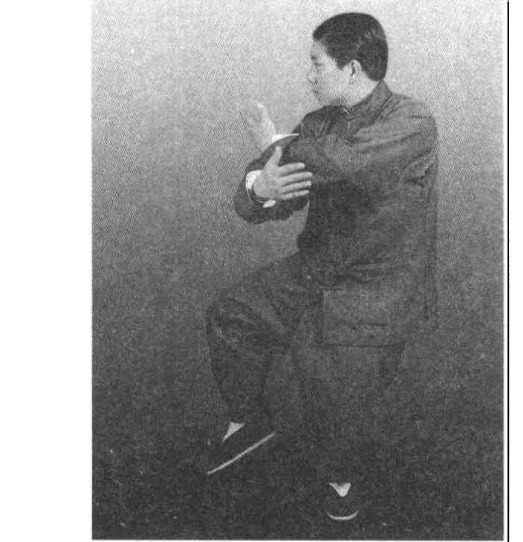
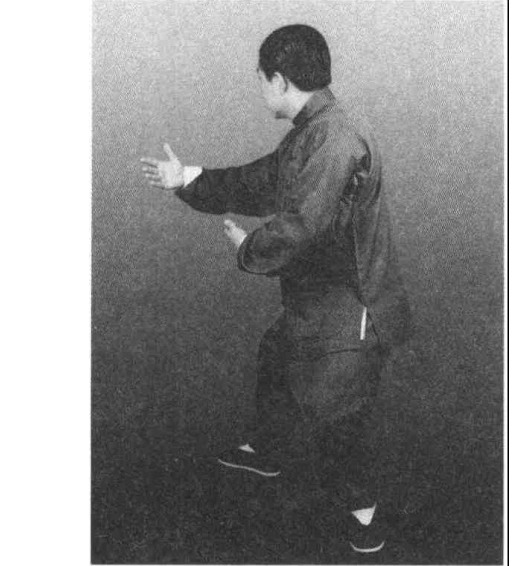
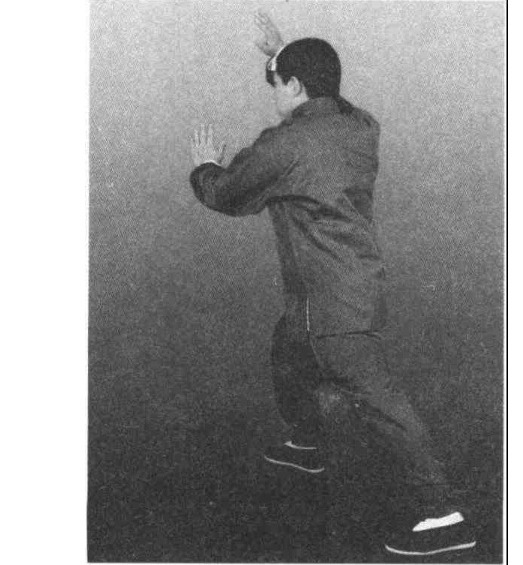
…are the same; what differs is that the previous Left Shuttle's direction is to the south-west, and this Left Shuttle's direction is the north-east diagonal (see the first three figures on this page).
(D) The Right Shuttle The movement is the same as the previous Right Shuttle; what differs is that the previous Right Shuttle's direction is the south-east, and this Right Shuttle's direction is the north-west (see the three figures on this page).
1. The Jade Girl Works the Shuttle has in all four threadings-through, the directions being towards the four diagonal corners (south-west, south-east, north-east, north-west).
2. In the four threadings the two hands each pass once through a shape resembling a crossed ten; the first has the left hand outside, the second the right hand outside, the third the left hand outside, the fourth the right hand outside.
3. At each turn of the body or step up, one must not rise up, so that the centre of gravity has no great fluctuation. In turning the body while stepping, because of the changes of direction and angle and the lack of coordination between the upper and lower, left and right, the beginner cannot avoid instability, swaying and rising and falling, which then affects the movement. Therefore one must first take care over the empty-full conversion of the stepping method, and make each step follow the body's turning.
4. In the movement the body must be kept upright, the chest contained and the back rounded; do not lower the head or bend the waist.
5. When warding up with one hand, guard against the shoulders rising or the elbows protruding; the pushing arm should not be straightened, but slightly bent — bent and not straight is what preserves the stored force.
6. When changing into the bow stance, one palm pushes forward, and the toes, knees, body, face and gaze must all be in the same direction as the push, all facing the diagonal corner.
1. The connecting movement from Single Whip to the Jade Girl Works the Shuttle is the easiest to overlook and the easiest to confuse; it requires a clear understanding. In my Single Whip posture I face east; now the opponent strikes down from above at my right rear. Therefore the transition for the first threading is: the upper body turns right, the right foot lifted back, set down in front of the left foot, the left foot stepping out at the south-west diagonal, performing the first threading (towards the south-west). This accords with the requirement of the method of use, and it also divides the transition movement clearly.
2. The upper and lower, left and right must mutually draw one another…
…turning over, one hand at the same time threads out to the front, one foot advances with the knee sat solid, one leg extended. In this way, between the two hands and between the two feet, the upper and lower, left and right mutually respond and have the sense of drawing and binding one another, so that the movement is expansive without being loose, the spirit gathered, and in the opening out the stored force is not lost. There must be no upper with no lower, no lower with no upper.
3. In the transition the right foot must turn over to the right with the body and be drawn back; otherwise one will not gain the advantage.
4. The movement must be centred, upright and comfortable. The body must be centred and not leaning; wherever the movement goes, the spine must point directly there — especially in going from the first threading to the second, and the third to the fourth, when the change of the body's direction reaches (180° + 90°) = 270°. If the turning-in of the foot is insufficient, the stance is unsteady, the upper body will then lean forward or backward or twist awkwardly, and this does not meet the requirement of being centred, upright and comfortable.
5. The turning of the two hands must not leave the centre line; they may not "scatter" — that is, the two hands may not leave the body.
6. When the two hands cross in a ten, the two hands must follow as the body turns (following the turn and closing).
7. The movement must be continuous and even.
Phần 117
V. Likely Errors, Their Causes, and Their Correction
1. Error: the direction is not correct. The main cause is a lack of understanding of the method of use, and insufficient turning-in of the foot. The first and second threadings have the opponent at my right rear, the third has him at the left, the fourth at the right rear — all are at diagonal (side) angles. Therefore the threading directions must all be diagonal. Correction: the key lies in the turning-in of the foot; the turning-in must be sufficient, and to turn the foot in well one must turn the waist and hips well.
2. Error: the buttocks protrude. The main causes are, first, using the shifting back of the buttocks to carry the turning of the body instead of turning the waist and hips to bring the body round; and second, in order to keep the balance easily, the buttocks are pushed back and the upper body leans forward. Correction: first one must tuck in the tailbone, then attend to sufficient turning-in of the foot.
3. Error: the movement pauses. The main cause is that the beginner, because he performs the movement while thinking, is always wanting to think of the hands and think of the feet, and so makes a slip and a pause; and further, the supporting foot is unsteady. If the movement is interrupted, then the old strength is spent and the new strength has not yet been born, and at this moment… …is the easiest for people to catch. Therefore the movement must not pause; it must be continuous and unbroken, revolving endlessly, as the Treatise says: "Like the great river and the sea, flowing on without cease." Correction: one form joined to the next, continuous and lively, rise, receive, turn and close threaded through; one breath, and the strength gradually enough, the spirit gathered — and the opportunity of the lower posture is born of itself. Therefore there must be no place of pause.
4. Error: the movement is awkward, especially when one hand wards up and the other threads forward. The main cause lies in the lower limbs not being smooth. Correction: after stepping out at the diagonal, one should in turning follow round to the rear foot, so that the body follows the foot and the foot follows the body.
5. Error: the transition from Single Whip to the threading is unclear, so that one often feels that the hands and feet have nowhere to be placed. The main cause is an incomplete understanding of the method of use. The transition and connecting movements are chiefly to prepare the conditions for the main movement. In my position of Single Whip the opponent strikes down from above at my right rear; if in turning the body I take the right leg as full, this must produce a passive situation, and it will be difficult to turn and difficult to advance. I must draw back the right leg…
At the foot of this page is a push-hands photograph, outdoors, in which the upper hand lifts the opponent's arm from below; it carries no number and no caption.
…falling in front of the left foot, and the left foot then advances at the diagonal — and the lower limbs are lively. "The hand follows the foot, the foot follows the hand", the upper and lower drawing one another. Because the left hand circles a small circle, driven by the waist's turning right and left; the right hand's falling is to prepare for threading out from beneath the left elbow, and therefore at this moment the two hands' movements are only preparatory. Correction: the left foot turns in and the body turns slightly right, and this brings the right hand to move right; the right hand falls and the right foot is drawn back, the left hand also being brought to move left, forming a small circle. The foot is set down, the right hand moves up, the left hand moves down, the body turns right, and the left leg is lifted as preparation for the threading.
6. Error: the threading hand is pulled back without sinking the elbow. The main cause is an unclear grasp of the method of use. Closing is issuing; without closing there is nothing to issue. Correction: after closing (crossing), one must sink the elbow and draw back, and only then thread out. And the threading hand must not cross out sideways away from the elbow of the warding arm.
Phần 118
VI. Teaching and Practice Methods
1. First make clear the directions and distinguish the four diagonal corners of the four threadings. Correct them one by one; the teacher may stand at the diagonal corner to guide the direction.
2. The transition at the beginning is the easiest for the beginner to muddle; therefore the teacher must divide this part of the movement clearly — that is, take steps 1–3 of the first Left Shuttle as the transition movement.
3. The graded method: learn the transition first, then consolidate one by one on this basis until all four threadings are learned.
4. Paired practice in accordance with the method of use: A — settled in the Single Whip posture, facing east. B — stands at A's right rear (south-west) and strikes down from above with his right hand. A — turns in the left foot, turns the body over, the right foot drawn back and set down, the left foot stepping out at the south-west diagonal, the left hand warding up, the right hand threading out to strike at B's chest and ribs. C — stands at A's right rear (south-east) and continues the practice as above; if there are only two people, B may move about to take the part.
5. After the movement is basically proficient, the practitioner should, with care, experience that the intention arrives, the eye arrives, the body arrives, the hand arrives and the step arrives, and that speaking of one brings all together; and should strive to achieve the union of spirit and form.
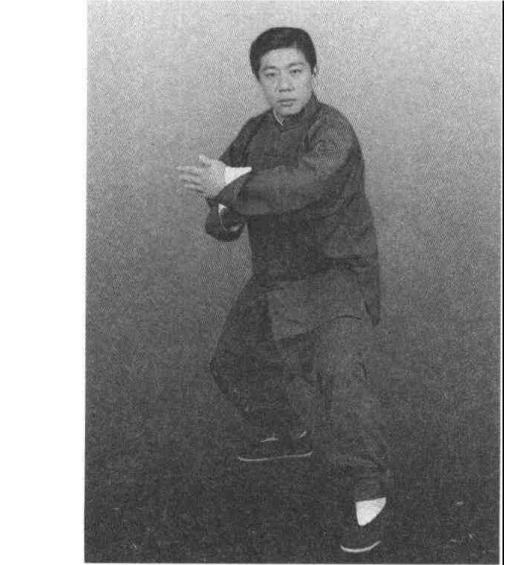
1. The Jade Girl Works the Shuttle changes direction without cease, and its continuous single-leg supporting steps are of great benefit to the growth of the legs' strength; and the repeated revolutions and changes of direction give the body's position-sense receptors a good training.
2. Every posture has its rise, receive, turn and close. Issuing is the rise, receiving is the receive, changing is the turn, and forming the posture is the close. In the Jade Girl Works the Shuttle, the four threadings make up one overall posture, and each threading must be threaded through, every place fitting together, the fitting together bringing together the whole spirit; the four limbs' upper and lower, left and right, front and rear must all unite naturally. Therefore between the movements there must be no place of pause; there must be "one breath threaded through".
3. The long-time practitioner of Tai Chi must attend to the union of internal and external. The traditional method of practice is "first the intention stirs, then the internal moves, then the form appears"; that is, the internal moves and the external form follows, the external form closes with the internal movement, from internal to external and from external drawing the internal, until at last internal and external become one (the internal and external join). Therefore the long-time practitioner should not stop at speaking only of external movement; the breath and blood must be harmonised and the channels and vessels made free. One must achieve "the mind calm and the intention present", "the body upright and relaxed". Therefore, when practising the Jade Girl Works the Shuttle, one must first settle in the mind the opponent's attack, position and movement; and then deepen the method: as the movement opens and closes, cause the internal organs to make slight upward and downward, left and right, and variously sized peristaltic movements and massaging, so that the breath and blood flow lively and smooth along the channels and blood vessels. Practising in this way is better than practising the external form alone.
Phần 119
Posture Fifty-Three — Grasping the Bird's Tail
Same as Posture Three, Grasping the Bird's Tail.
The centre of gravity gradually shifts onto the right leg, the left leg lifted forward; at the same time, the right palm, bending the elbow and sinking it, arcs from outside inward to close at the front of the chest; as it closes the arm rotates outward so that the centre of the palm turns down, the right elbow slightly lower than the wrist; the left palm likewise arcs to the right and downward to the front of the abdomen, and as it arcs the arm rotates outward so that the centre of the palm turns up. The two palms join, both arms forming arcs. The gaze attends to the right arm, see the figure at the foot of this page (the same as the first figure of the third posture). This page is taken up entirely by the posture photographs of the Grasping the Bird's Tail sequence, arranged in three rows of three; there is no running text. The plates continue the movement begun on the previous page and carry forward into the next.
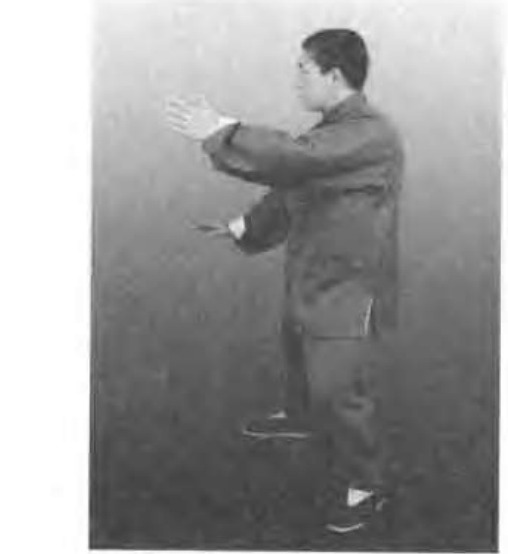
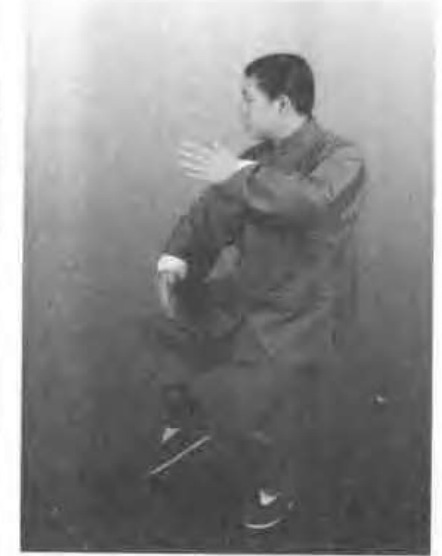
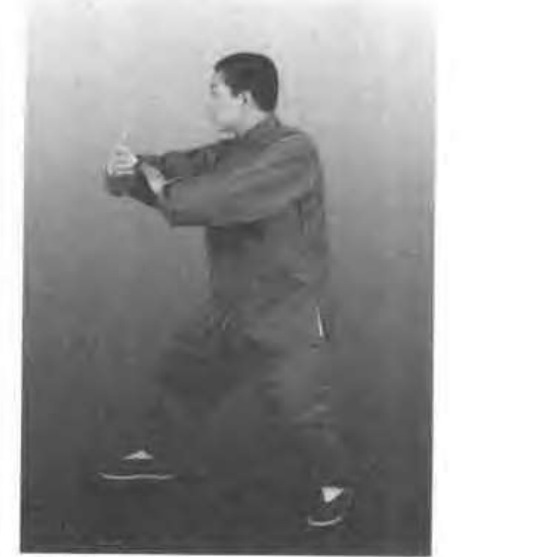
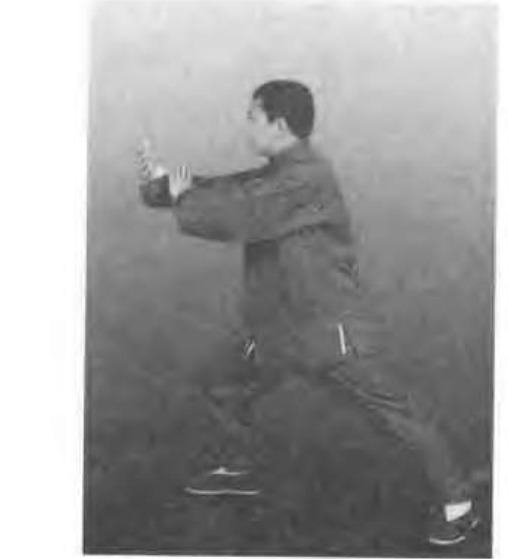
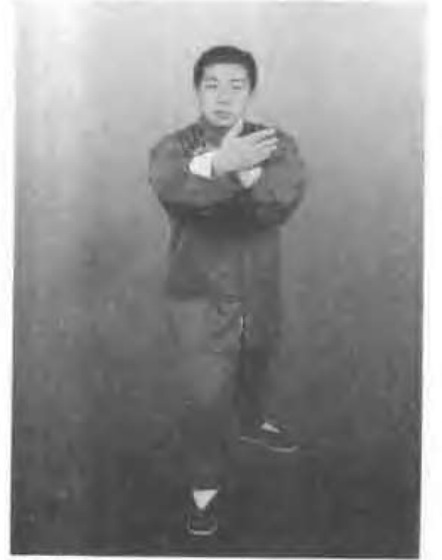
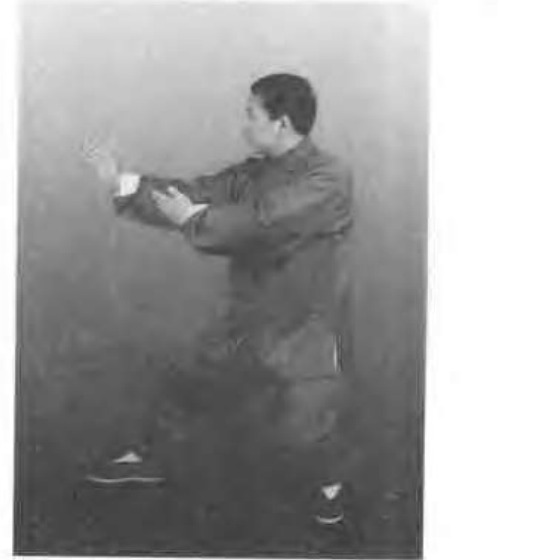
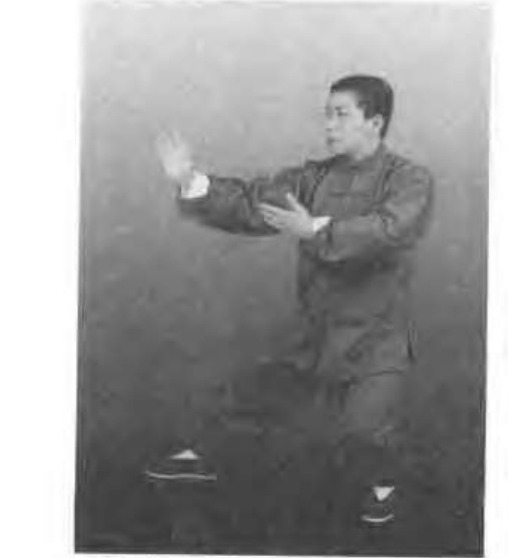
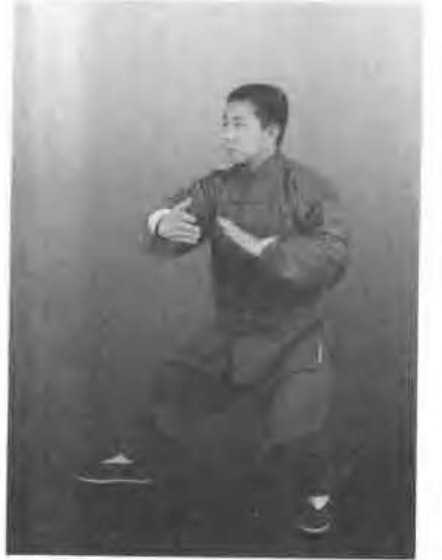
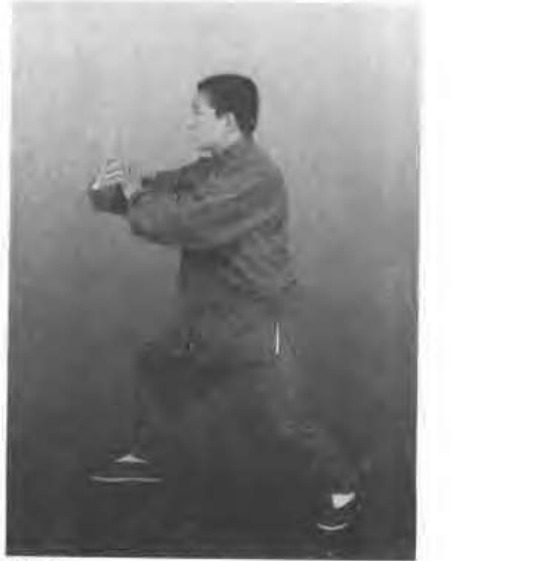
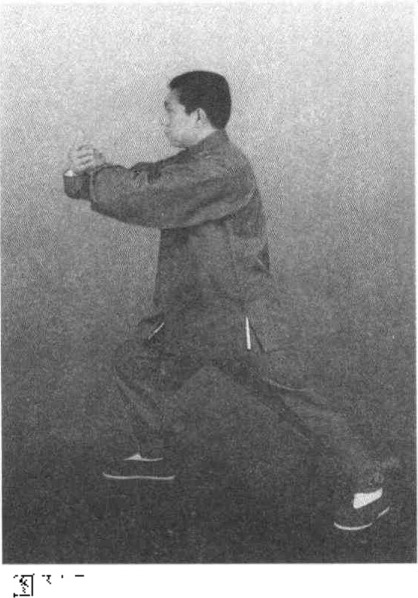
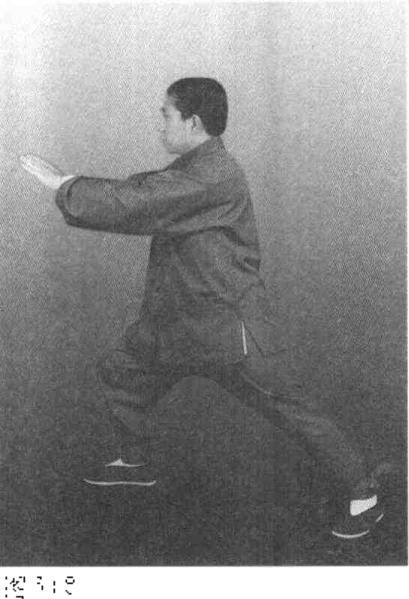
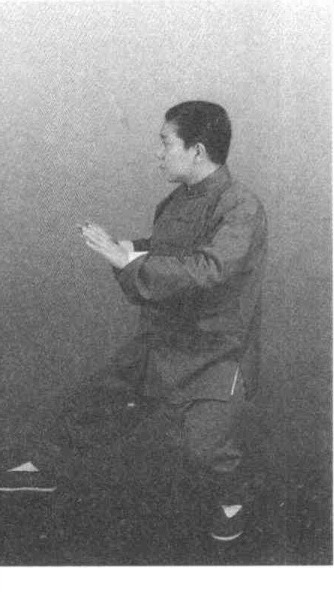
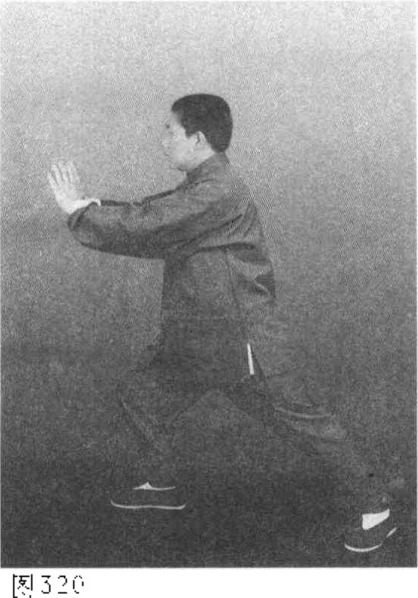
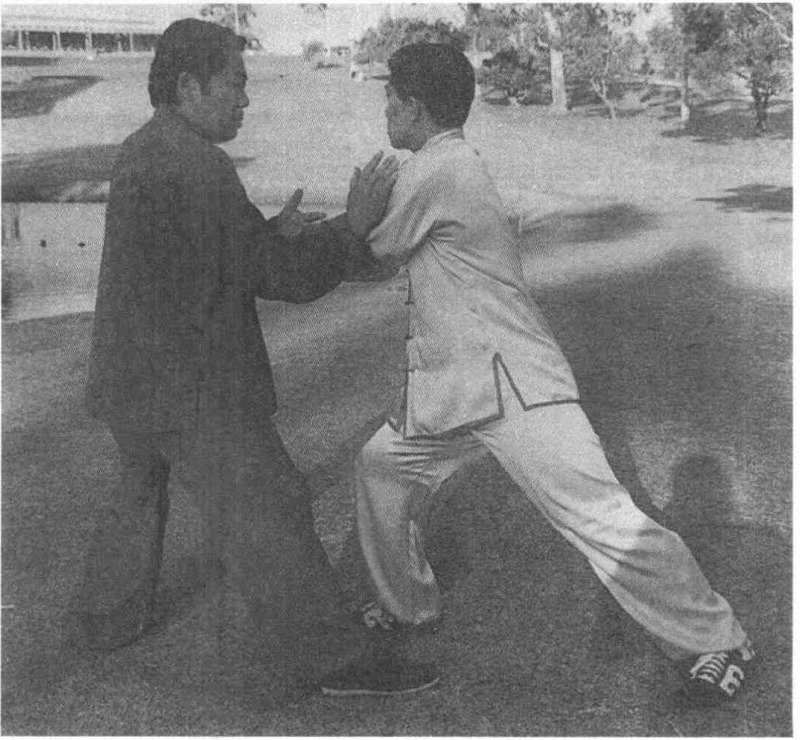
The later movements are the same as Posture Three, Grasping the Bird's Tail, see the first five figures on this page (the same as the second to the seventeenth figures).
Phần 120
Posture Fifty-Four — Single Whip
All points are the same as Posture Four, Single Whip, see the seven figures on this page (the same as the eighteenth to the twenty-third figures).
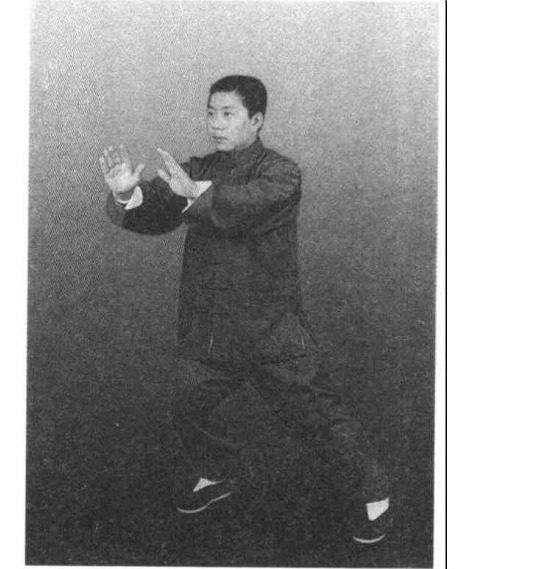
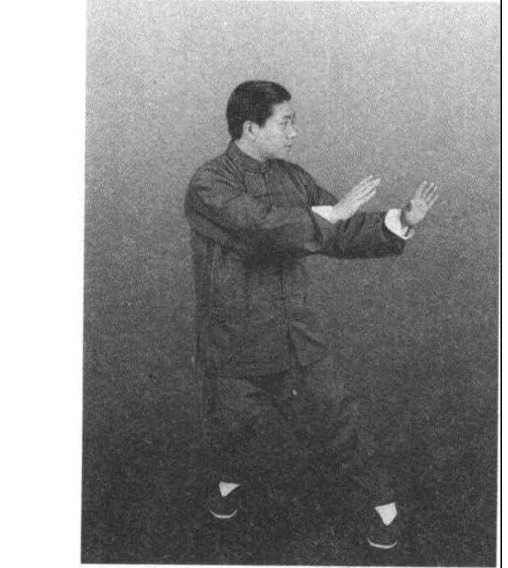
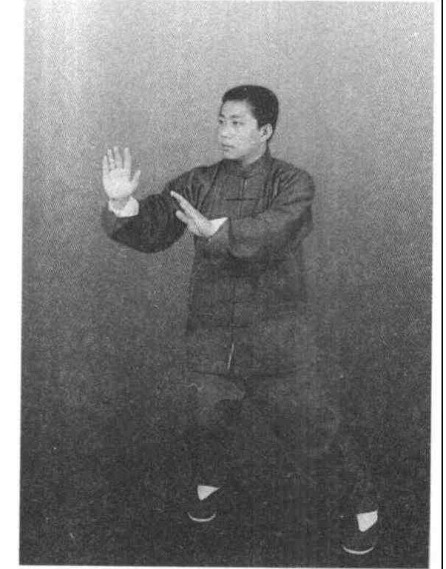
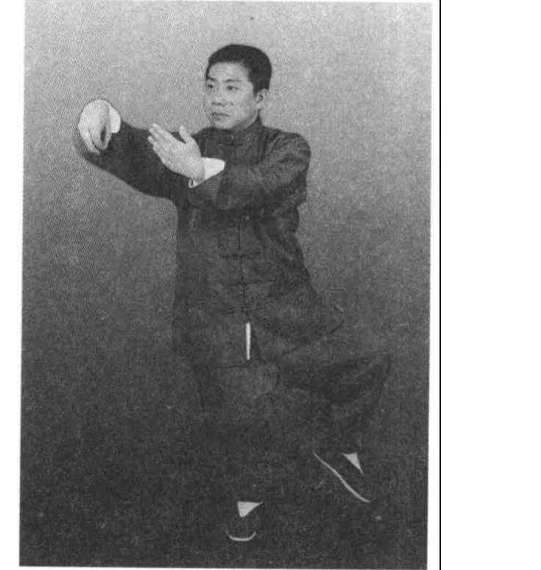
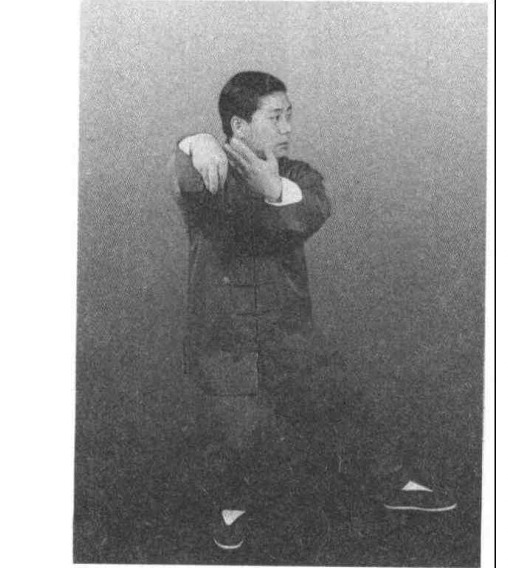
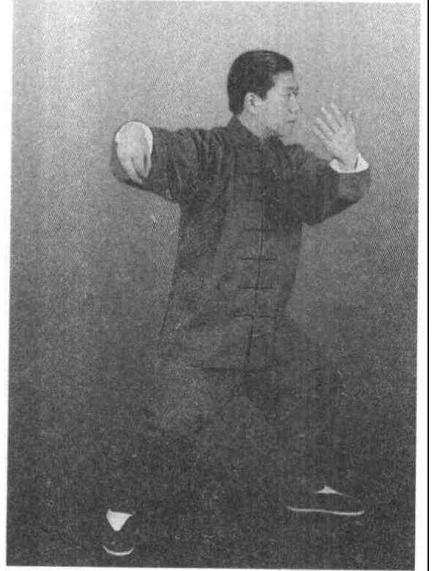
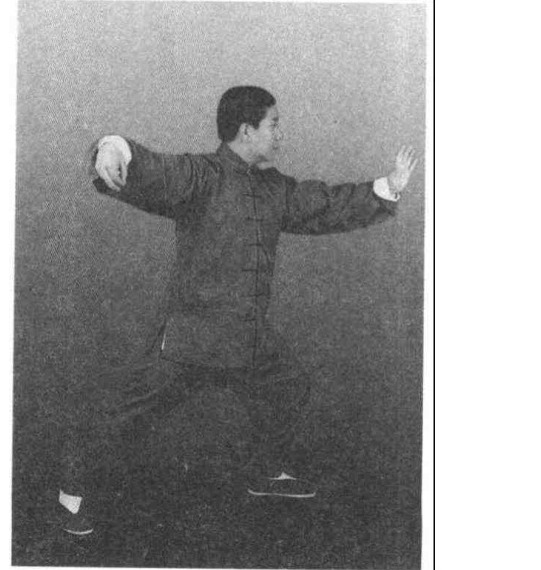
Phần 121
Posture Fifty-Five — Cloud Hands
All points are the same as Posture Twenty-Eight, Cloud Hands, see the first eight figures on this page and the figures on the next (the same as the hundred-and-forty-ninth to the hundred-and-fifty-sixth figures).
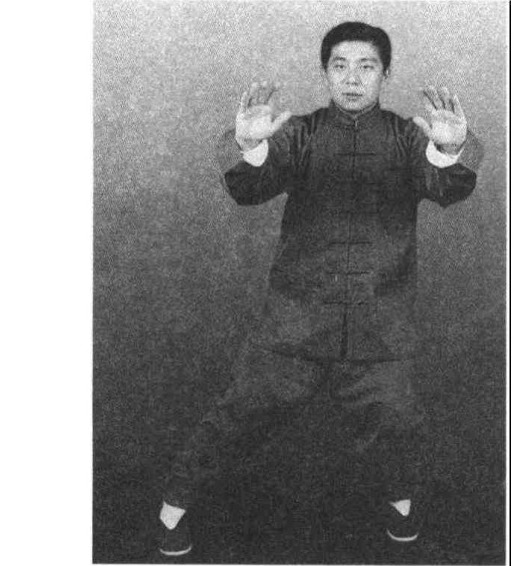
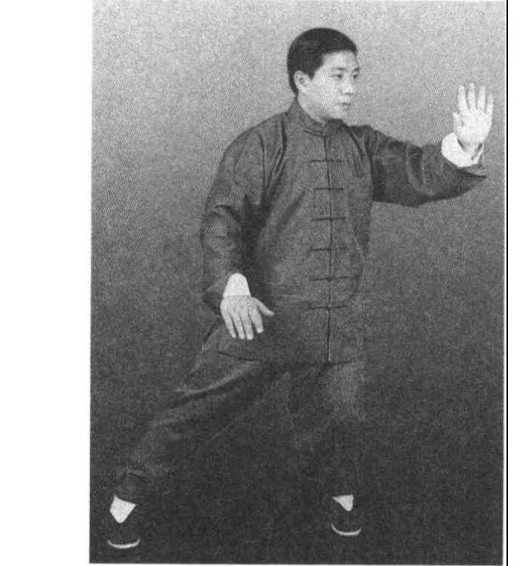
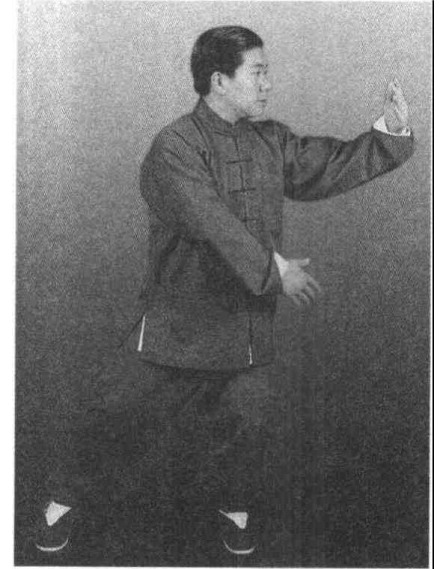
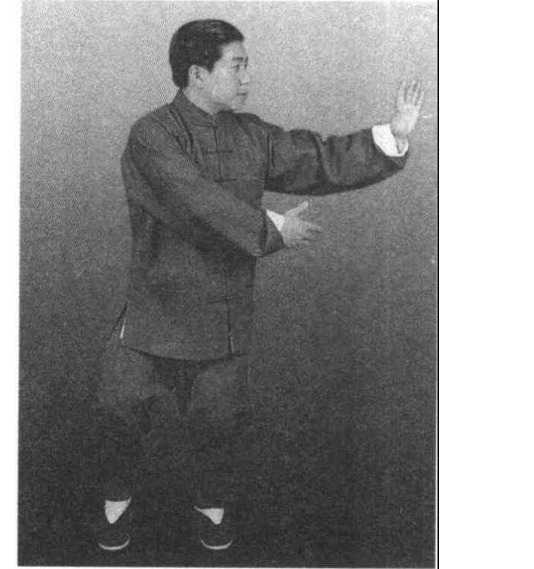
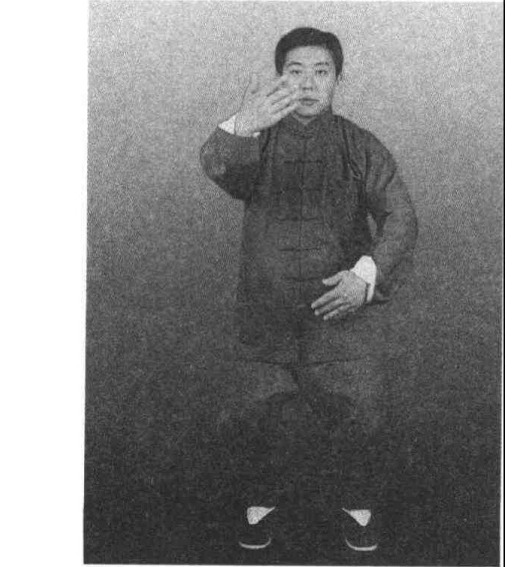
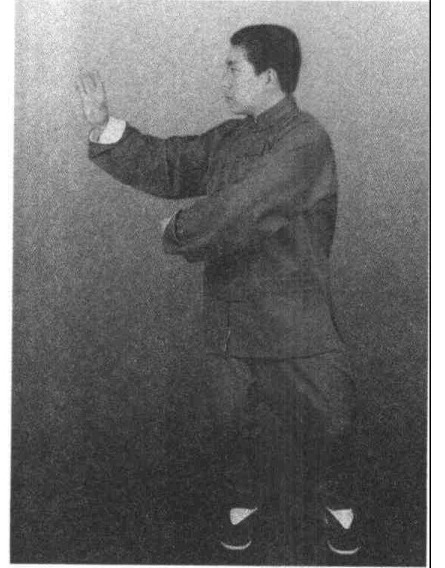
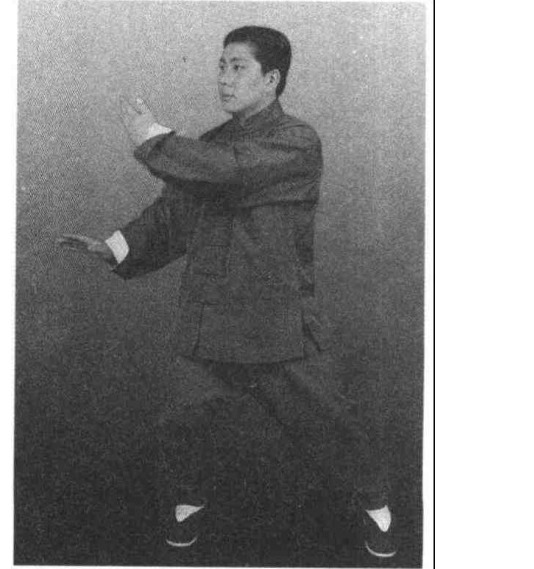
This page is taken up entirely by the posture photographs of the Cloud Hands sequence, arranged in three rows of three; there is no running text. The plates continue the movement from the previous page.
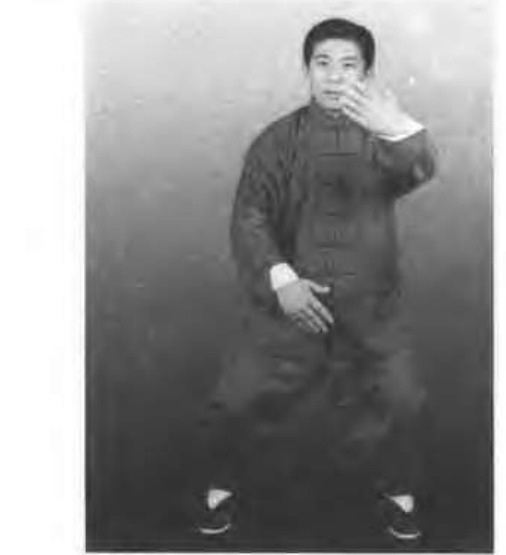
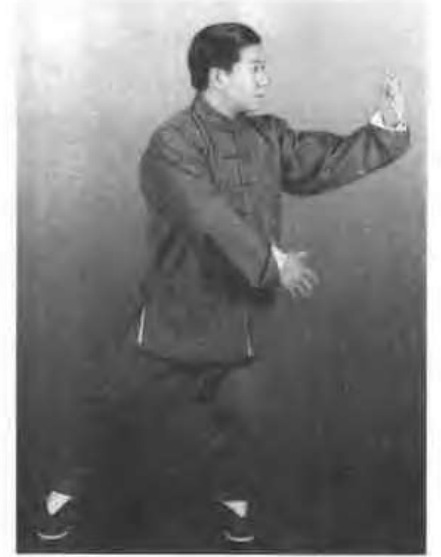
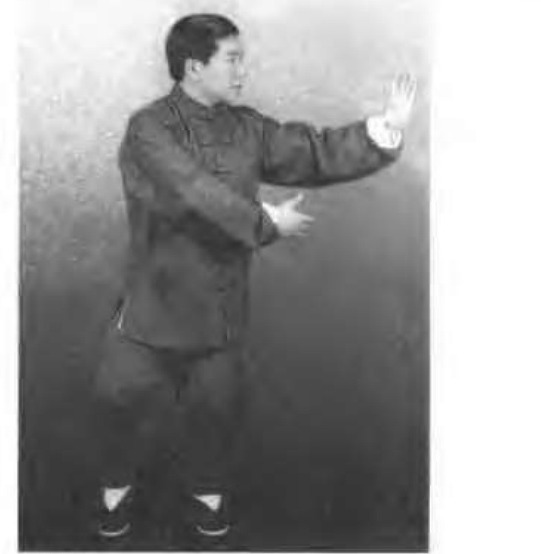
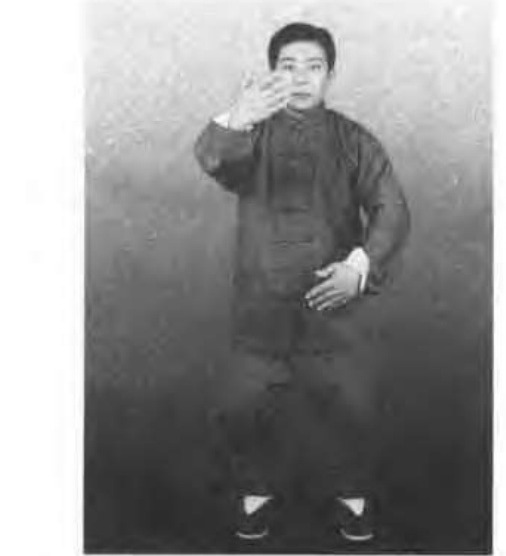
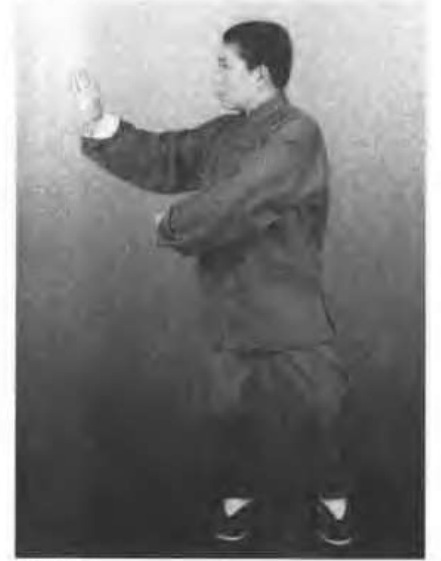
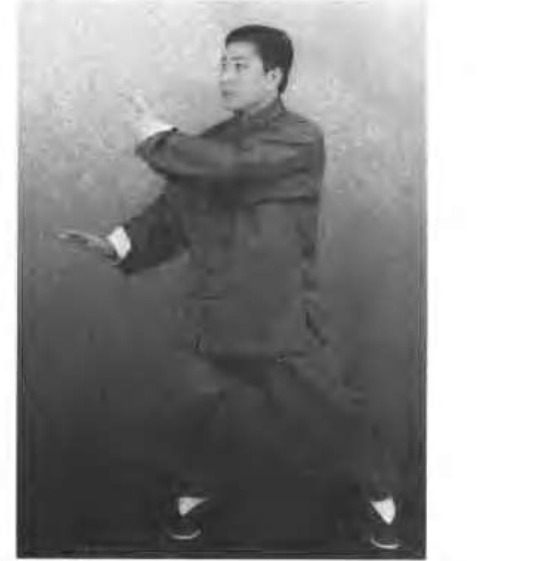
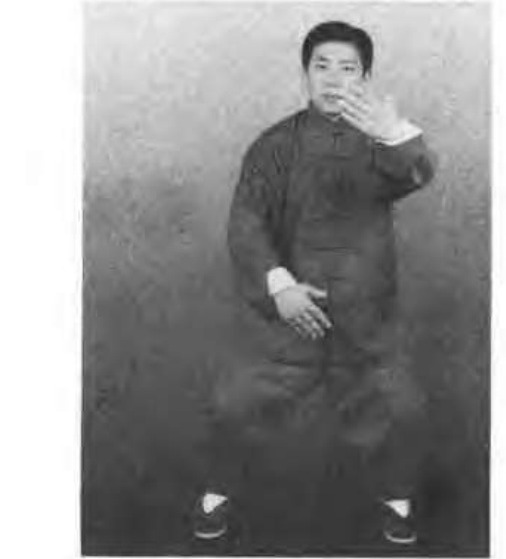
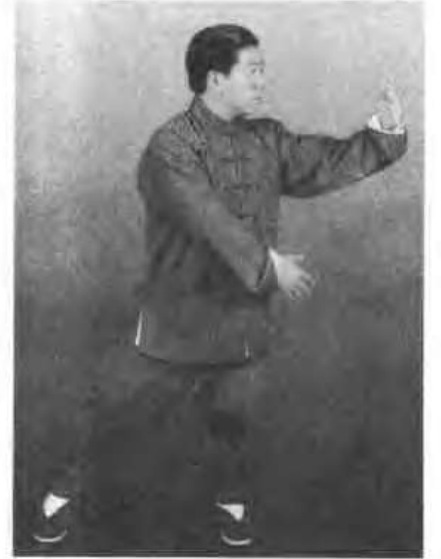
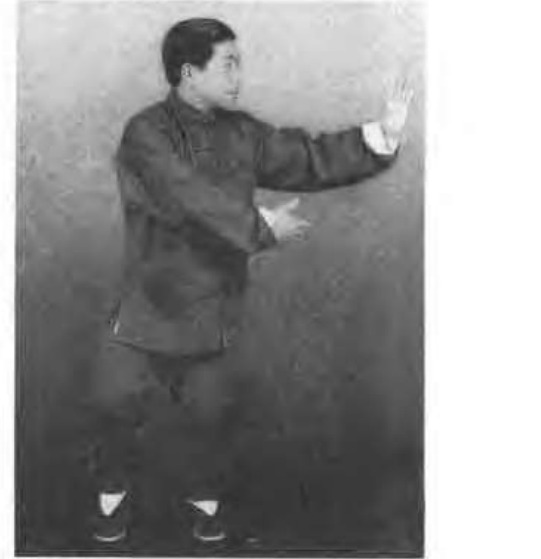
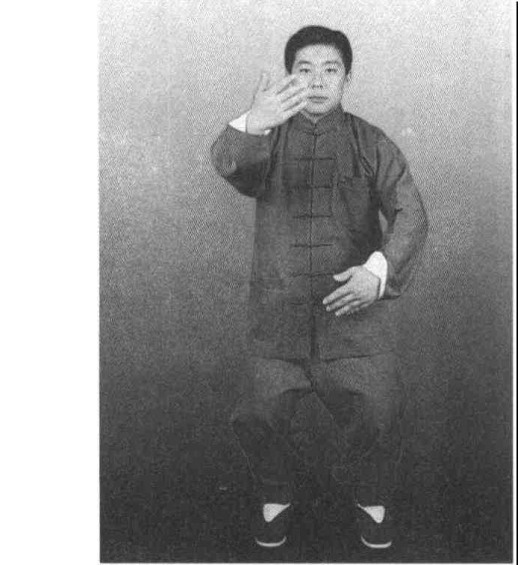
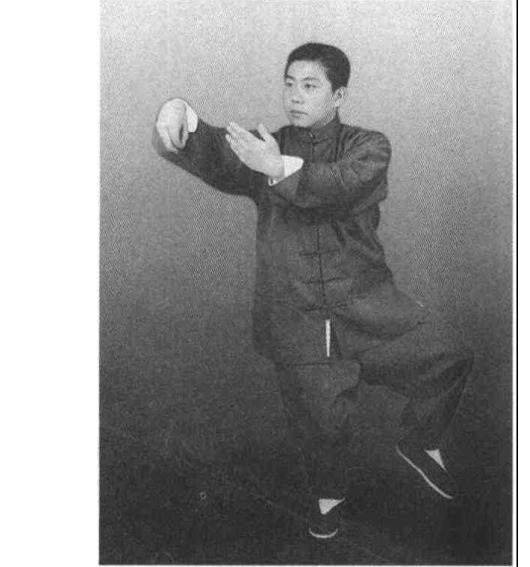
Phần 122
Posture Fifty-Six — Single Whip
All points are the same as Posture Twenty-Nine, Single Whip, see the remaining figures on this page (the same as the twenty-first to the twenty-third figures).
At the middle of this page, to the right of the plates, is an outdoor push-hands photograph in which the upper hand is lifted; it carries no number and no caption.
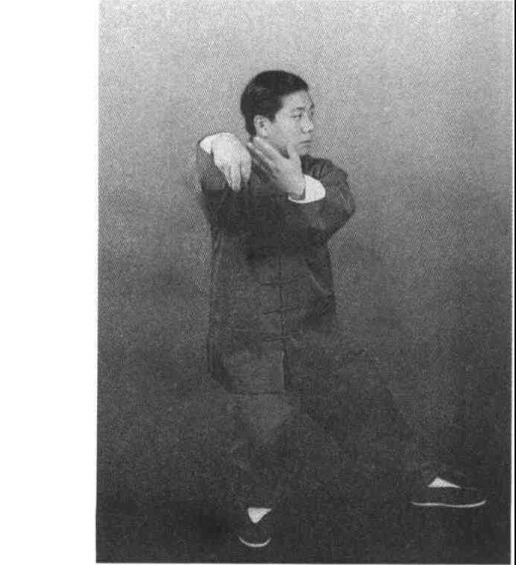
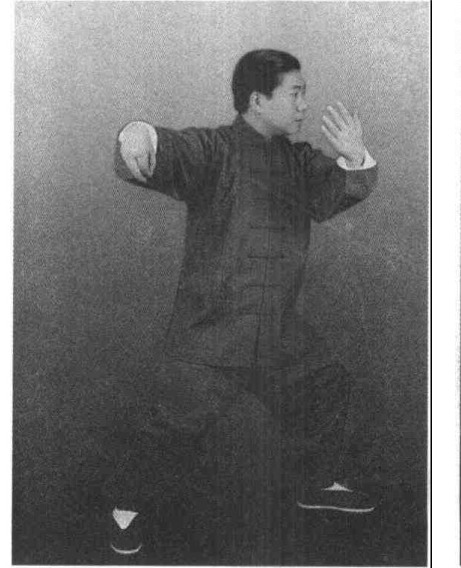
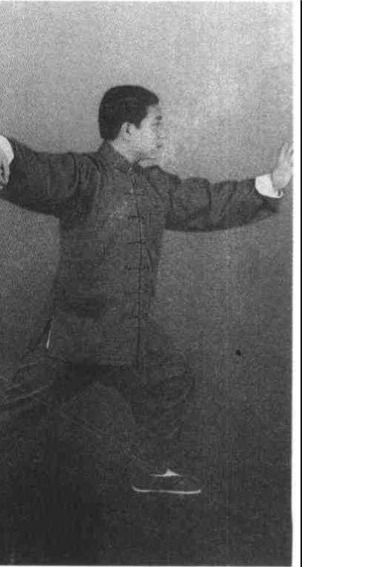
Phần 123
Posture Fifty-Seven — The Lower Posture
1. Following the previous posture. Should the opponent use his right hand to push my left hand outward or grip it with force, I immediately sit apart with the right leg turned slightly to the right and sit back down; at the same time the left hand is drawn back to the front of the chest in a lively circling movement, to await the opportunity to attack again.
2. Following the previous posture. Should the opponent strike with his left hand, I hastily grip his wrist with my left hand and pluck it down to the left, the right leg and the waist and hips sitting down at the same time, to borrow his strength and to store my own strength.
1. The waist turns slightly right, the right toes opened out and sat solid, the centre of gravity gradually shifting onto the right leg; the right leg slowly bends, the centre of gravity shifting back, the left leg slowly extending (keeping a bend in the knee). At the same time, the left hand is drawn back inward and curled, the fingers pointing forward (see the first figure on this page).
2. The right leg continues to squat down forming the left resting stance; at the same time, the left palm follows the centre of gravity back and down, bending the elbow and arcing down past the side of the chest, the left hand threading forward from the inner side of the left leg, the right leg at the same time rising slightly. The gaze attends to the left hand (see the second figure on this page).
1. When the left palm arcs inward and down, it must follow the shifting back of the body's centre of gravity, loosening the waist and hips and sinking the shoulders and dropping the elbows; only thus can it be threaded joint by joint, carrying the left palm to draw in and move down.
2. The left palm's movement from drawing in and down to threading forward must be lively, the fingers pointing forward (east), the centre of the palm facing south, the wrist sat.
3. Guard against the body leaning forward, the head lowered, or the buttocks protruding; the upper body should be kept upright — but note that one must not stick out the chest.
4. The gaze follows the left palm; but when the left palm threads from below forward, one may not lower the head — the eyes must look level.
1. The squatting down of the right leg must be slow.
2. The upper body must be straight and not bent. The Boxing Treatise says: "The hundred meetings, the central pole, one breath threaded through." Any place where the body leans forward, leans back, or is crooked does not meet the requirement.
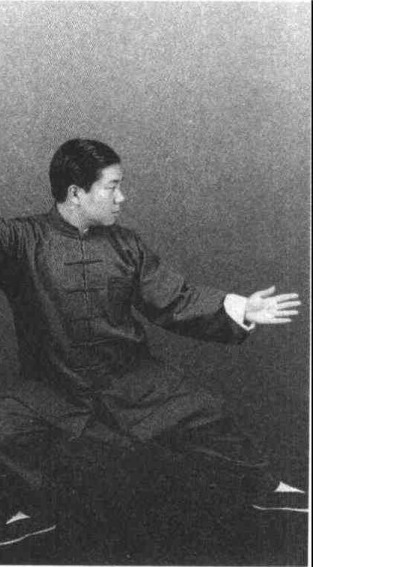
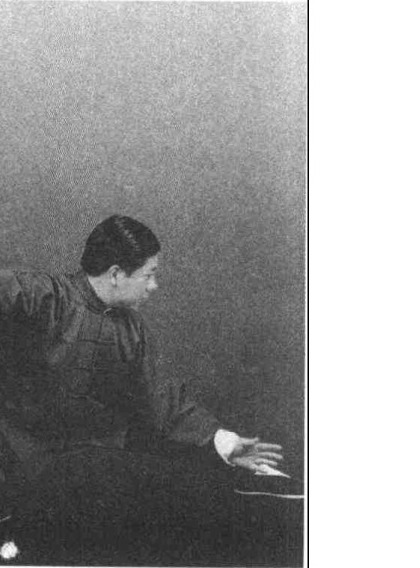
3. When squatting down, the left arm's drawing back must be greater than 90° and not too bent; and the drawing back of the hand must be carried by the waist.
Phần 124
V. Likely Errors, Their Causes, and Their Correction
1. Error: the two feet stand in one line and the person is unsteady. The main cause lies in the previous posture, Single Whip: the left foot was not shifted back far enough to the left and the lateral distance is too small. Correction: attend to the correct position of the two feet in the preceding Single Whip.
2. Error: the left arm is too straight or too bent. The main cause is a failure to sink the elbow, or making the palm's circle too large. Correction: the arm must be relaxed, lively, round and alive, and must be firm yet soft and springy; the rising, falling, extending and contracting must all follow arcs. The arm must avoid both stiffness, forming a straight arm, and looseness and slackness, with great rises and falls; generally the bend of the arm should be no more than about 100°.
3. Error: the upper body leans forward. The main cause is an inadequate understanding of the method of use. Because, whether in the plucking down or in drawing my left hand back to the front of the chest with a lively circle, what is used is the sitting down of the right leg and the waist and hips, borrowing his strength; and if the upper body leans forward, not only can one use only the strength of the arm, which is unfavourable for the plucking down and the freeing of the grip, but it also affects the gaze, which cannot observe the opponent well. Correction: the waist and hips must be relaxed, sunk and straight; only when the central pole is not bent can it support the eight directions.
4. Error: the resting stance is incorrect — some have the hip lower than the knee and it looks as though the posture is very low, but in fact the muscles of the front of the upper leg are in a relaxed state, and with the calf lifting the thigh it is an effort-saving movement, forming an over-softness and lifelessness. The main cause is an inadequate understanding of the requirements of the resting stance. Correction: the resting stance requires the supporting leg (the right leg) to have the hip higher than or level with the knee, the front of the foot lightly on the ground, the body straight, and the weight mostly on the right leg.
5. Error: when squatting down the buttocks protrude. The main cause is failing to "tuck in the buttocks" (also called retracting the buttocks); protruding buttocks easily cause the body to twist. Correction: the waist and hips must be relaxed, sunk, straight and vertical, and the buttocks must naturally be drawn in.
6. Error: raising the shoulders, causing the right arm to be stiff and the left arm not round and lively. The main cause is that the beginner often uses the muscles around the shoulder to make the arm's movement, and some think only of relaxation and not of…
…of "sinking". Hence some raise the shoulders and some are loose without sinking. Correction: the shoulders must be loosened before the shoulder muscles and ligaments can be stretched, and thus the arm's extending, contracting, wrapping and winding can follow the mind's wish.
7. Error: after the centre of gravity has shifted back and the resting stance formed, the movement pausing. The main cause is an insufficient grasp of continuity and liveliness. Correction: in the movement there must be no hollow and no protrusion, no defect, no sharp corners; one must understand that when the old strength is spent and the new strength has not yet been born, this is precisely the moment when one is most easily taken advantage of. For this reason Tai Chi requires continuity and liveliness, unbroken, revolving endlessly, with no pause.
Phần 125
VI. Teaching and Practice Methods
1. The emphasis of teaching is to be placed on the centre of gravity shifting onto the right leg, and sitting down with a straight body without sticking out the chest.
2. Use the method of comparison: A — performs the Single Whip posture. B — grips A's left hand with his right hand. A — ① first uses his left hand to break free downward (the mind not moving). ② then uses the shifting of the centre of gravity onto the right leg to sit the body straight down. The two compare and experience which method is more powerful, and which more easily plucks the opponent or frees the grip; naturally the shifting of the centre of gravity and sitting the body straight down is the more powerful.
3. The teacher observes the practitioner's movement from different angles: for example, whether the upper body is turned towards the east when seen from the front, whether the line of the hand's movement and whether the upper body is upright are correct when seen from the side; and corrects them one by one.
4. If the practitioner is weak or elderly, he may squat down less and make the frame higher.
The Lower Posture is the movement of changing from the left bow stance into the resting stance; it requires the centre of gravity to shift back and the right leg to sit down with the body straight. Its key lies in the sitting down, and whether the sitting down is good or not determines whether the whole movement is correct. If when sitting down the heel of the hip is lower than the knee, then a "shallow pit" is formed, making the foundation of the leg hollow and unsteady, and the empty-full conversion of the two legs becomes instead un-lively (making the rising movement un-lively); if the heel of the hip is higher than the knee, then the amount of exercise is very small, and the effect of training the body is not well obtained. When practising the Lower Posture, first shift the centre of gravity slowly back; at the same time turn the right toes out about 45°; at this moment the left and right toes form an outward-turned shape of the character eight. In the process of the centre of gravity shifting back…
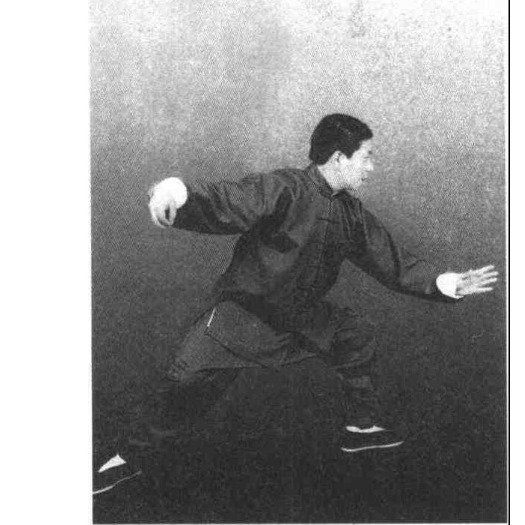
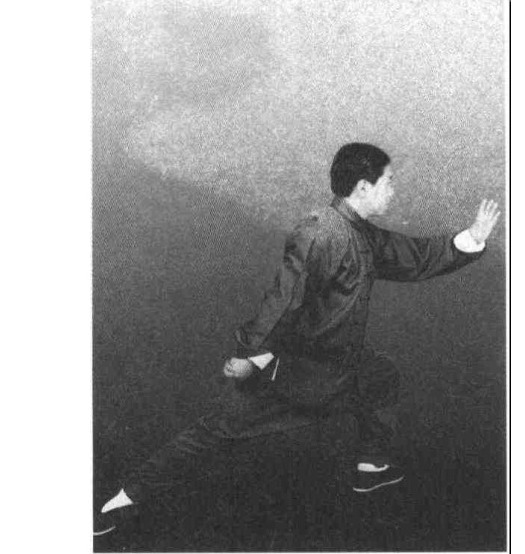
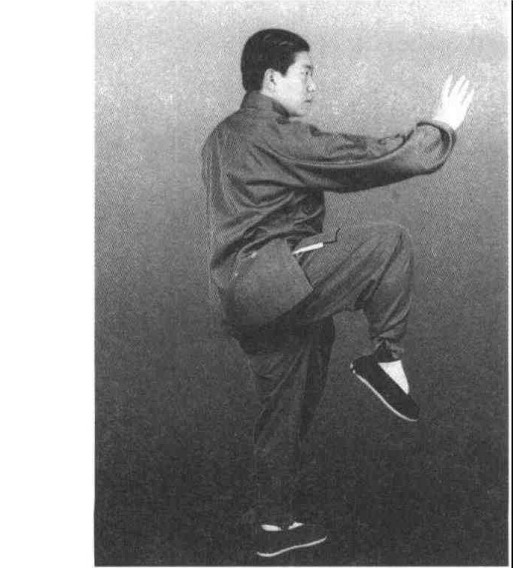
…in the process of the centre of gravity shifting back, one must "lift the top of the head", the centre of gravity gradually shifting onto the right leg, slowly bending the knee and loosening the hips; this is what is meant by the waist being relaxed, sunk, straight and vertical, and not a collapse forming the "lower posture".
Phần 126
Posture Fifty-Eight — The Golden Rooster Stands on One Leg
(A) The Golden Rooster Stands on One Leg, Left Style Following the previous posture.
Should the opponent lift upward with returning force, I take advantage of the situation to raise the body and lean forward, the right leg at the same time lifting and rising, striking the opponent's abdomen with the tip of the foot. The right hand follows and advances, bending the elbow, the tip of the index finger pointing upward, to close off the opponent's left hand; at this moment the left foot changes to empty and stands firm. The right hand may then follow and at any time control the opponent's left hand, and may also control the opponent's right hand — one need not be rigid about it.
Another method of use: after the right foot has been lifted and then immediately set down, the left foot steps forward, the two hands dividing the opponent's two hands, that is, using the two palms to press forward.
(B) The Golden Rooster Stands on One Leg, Right Style From the left style.
Should the opponent strike with his right fist, my right hand sinks down, and I quickly raise the left hand to support the opponent's elbow, lifting the left knee; the rest is the same as the right style.
(A) The Golden Rooster Stands on One Leg, Left Style 1. The body gradually turns left, the left toes opened out, the centre of gravity gradually shifting onto the left leg; the left leg bending the knee and bowing forward, the right leg extended, the upper body gradually rising; at the same time, as the centre of gravity shifts forward, the left palm threads forward and upward, the right hand slightly sinking (still a hanging hand). The gaze attends to the left palm (see the first and second figures on this page).
2. The body continues to turn left, the centre of gravity continuing to shift forward onto the left leg; the right leg lifted forward from the rear, the sole of the foot lifted, the left leg gradually standing up. At the same time, the left palm arcs down to the side of the left knee (the centre of the palm facing down); the right hanging hand becomes a palm and follows down from the rear; as the right leg lifts forward and raises the knee, the right hand passes the right side of the leg and, above the front of the right leg, wards upward with the right forearm in an arc, bending the elbow and placing it above the front of the right knee, the fingertip pointing upward, level with the eyebrows, the centre of the palm facing left, forming the left solitary stance. The gaze first attends to the left palm as it shifts before, and when the left palm reaches the left knee, then looks toward the right palm as it wards up…
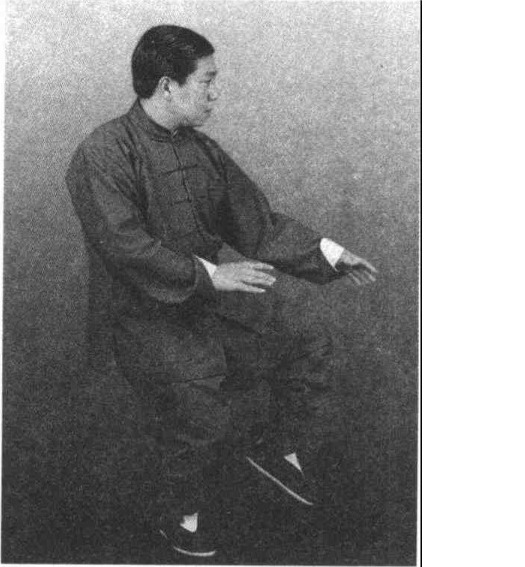
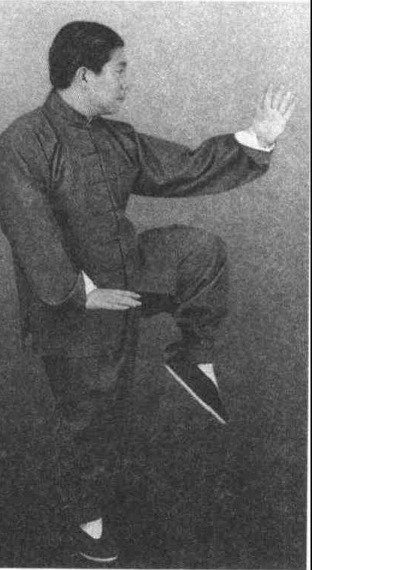
…and slightly arriving before the right palm; then, looking level forward past the right palm (see the first figure on this page).
(B) The Golden Rooster Stands on One Leg, Right Style 1. The body gradually turns right, the left leg gradually bending the knee and squatting down, "sending" the right foot down to fall behind and to the right of the left foot, the toes touching the ground first; as the centre of gravity gradually shifts onto the right leg and the whole sole settles flat, the right knee bends and the left leg becomes empty and lifted. At the same time, the right palm follows the right leg and arcs down to fall above the front of the knee, the centre of the palm facing obliquely down; the left palm first follows the bending of the left knee and the squatting down and sinks, then rises and lifts forward and upward following the lifting of the left knee. The gaze attends to the right palm as it falls, and then turns to the left palm as it lifts (see the second figure on this page).
2. The body continues to turn right, the right leg continuing to gradually stand up, the left knee continuing to lift. At the same time, the right palm arcs down and falls to the side of the hip, the centre of the palm facing down, the left palm from below going forward and upward; as the left leg lifts the knee forward, the left hand passes the side of the left leg and, above the front of the left leg, wards upward in an arc, bending the elbow and placing it before the face, the elbow placed above the front of the left knee, the fingertip pointing upward, level with the eyebrows, the centre of the palm facing right. The gaze first attends to the right palm as it falls, and then immediately turns to the left palm as it wards up, arriving slightly before the left palm does, and looks level forward past the left palm (see the second figure on this page).
1. In taking up the solitary stance from the Lower Posture after the left leg rests on the ground, first the left toes are opened out, then the centre of gravity slowly shifts forward: the left knee bows forward forming the left bow stance; then the right leg rises slightly, pushing the knee forward, and only then does one stand up — and this must not be done with the two legs straight.
2. In standing up, the left leg must first bend the knee and sit solid (taking the left solitary stance as the example), so that the lower frame is steady; then the right leg, led by the right knee, gradually lifts forward and upward, and at the same time the left leg gradually stands up. Guard against using the leaning forward of the upper body to make standing up easier; the upper body is still required to remain upright.
3. In the left solitary stance, when the right leg lifts the knee forward from the rear, the right hand must be placed to the side of the upper part of the right thigh and ward up together.
4. In going from the left solitary stance to the right solitary stance, attend to the fact that when the right foot falls, the left foot must at the same time squat down and "send" it down; it must not be that only the right leg falls while the left leg is still standing straight. When the left leg lifts the knee, the right leg must also gradually stand up accordingly. 5. When standing on one leg, you must "sink the shoulders and let the elbows hang", "sit the wrists", and "empty the collar and lift the crown"; the elbow must join with the knee, and the direction faced must be consistent. The leg that supports the body's weight should not be stiffened by force.
6. Every use of the word "lift" (tuo) in the explanations of the left and right standing-on-one-leg postures derives from the martial application of the movement. In practice, however, do not turn the palm upward merely because of the word "lift" — the fingers should point upward.
IV. Requirements 1. Rising from the crouching stance must be round, alive and nimble; there must be no pause or interruption, and the body must not sway.
2. In the settled standing-on-one-leg posture the centre of gravity must be stable; there must be no wavering.
3. The shoulders must join with the hips, and the elbows with the knees.
4. When rising, the rear foot must not be dragged forward along the ground, nor may it stamp hard against the ground.
5. The withdrawing of the foot must not change abruptly; it must accord with the body's movement and be drawn back slowly.
6. When the left and right standing-on-one-leg postures join, the one hand rising and the other descending must neither of them pause.
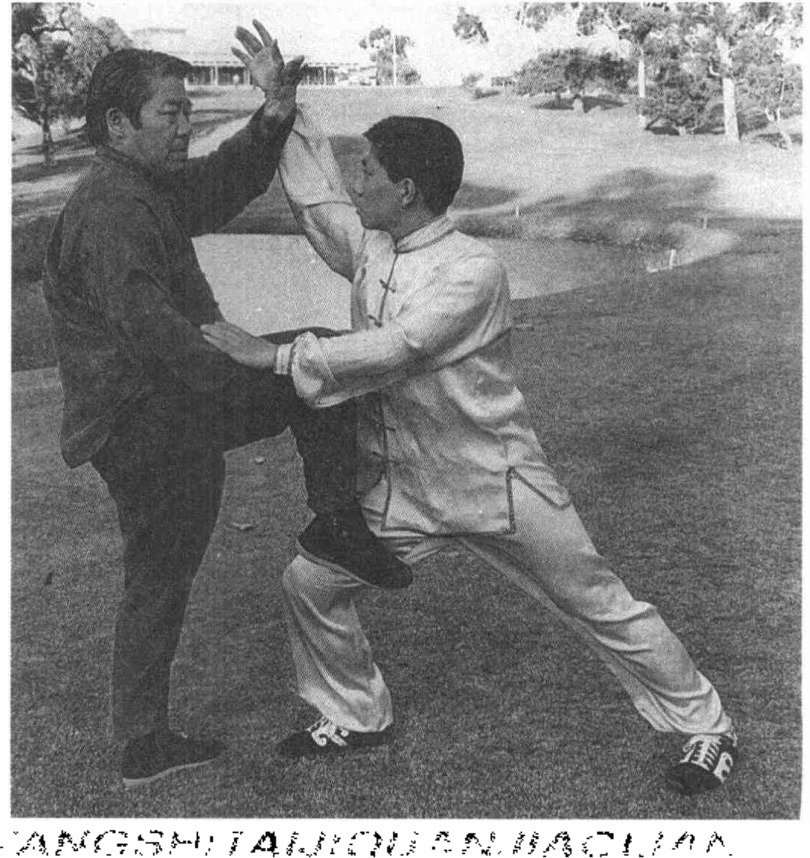
V. Common errors, their causes, and how to correct them 1. Error: you cannot crouch down, or having crouched you cannot rise. The main cause is weakness in the legs, so you must train diligently. Another cause is that the centre of gravity has not shifted forward sufficiently, which makes rising difficult. Correction: send the hips forward, shift the centre of gravity forward, settle the left leg firmly, then draw the right leg forward slowly — rising will then come easily.
2. Error: you stand unsteadily and the body sways. The main cause is likewise weakness in the muscles of the legs, waist and hips, so again you must train diligently. Another cause is that upper and lower do not coordinate, and the centre of gravity is not controlled. Correction: besides persisting in training, the upper and lower must follow one another.
3. Error: the elbow and the knee come apart — the knee lifts forward and up, but the lifting hand bends the elbow too much, bringing the elbow close to the chest. The main cause is insufficient understanding of the application: when the hand comes too close to the chest it loses its function of closing off the opponent's left hand or of propping up the opponent's elbow. Correction: move the elbow above the knee.
4. Error: the supporting leg stands straight and rigid. The main cause is insufficient understanding of the application. Correction: the two feet must be divided into empty and full — "the empty is not entirely without strength, the full is not entirely braced dead". If the supporting leg is braced dead and you yourself sway unsteadily, how can you kick forward with the raised toes, and how can you both attack and withdraw in defence? Therefore the supporting leg must be slightly bent.
VI. Teaching and practice methods 1. The emphasis should be placed on rising from the crouching stance. Practise repeatedly: train the rising from the crouching stance more to build leg strength, and pay attention to shifting the centre of gravity forward in order to improve technique. Therefore, in repeated practice the emphasis should be on improving the rising from the crouching stance.
2. In teaching, great importance must be attached to keeping the central axis unbent and the waist upright. On this basis, rise slowly from the crouching stance and hold to the requirement of "straightness".
3. In the joining of the left and right standing-on-one-leg postures, the "sending" must be practised well. As the supporting leg crouches, the teacher must remind the student not to let the descending leg touch the ground in haste.
VII. Technical analysis 1. There are two keys to the standing-on-one-leg posture: first, rising from the crouching stance; second, being able to stabilise the centre of gravity while the body is supported on one leg. This is "standing like a balance, moving like a wheel".
…like a wheel".
2. The application of the standing-on-one-leg posture is to lift the knee and kick at the opponent's abdomen with the toes, while the lifting hand closes off the opponent's hand. In practising the form the foot is not actually kicked out, but the intention should nonetheless be present. The uses of the knee and the foot are endlessly varied: sometimes in combat the foot is not used and the knee is used instead. The boxing treatises say, "when the foot comes, lift the knee" and "when close, add the knee" — this is the use of the knee. Therefore the lifted knee of the standing-on-one-leg posture has many and varied applications.
Phần 127
Posture Fifty-Nine — Step Back and Repulse the Monkey, Left and Right
I. Application Same as Posture Seventeen, Step Back and Repulse the Monkey, Left and Right.
II. Sequence of movement (a) Repulsing the Monkey to the Left The right leg gradually bends at the knee and crouches down, and the waist gradually turns to the right. At the same time, the left leg slowly descends. The right hand rotates outward, arcs backward and moves up obliquely to about shoulder level; the left palm extends and moves forward, sinking slightly downward. The eyes follow the right palm as it moves back, up and to the right. See the first figure on this page, the second figure on this page, the third to the eighth figures on this page (the same as the eighty-ninth to the ninety-fourth figures), and the ninth to the twelfth figures on this page (the same as the eighty-eighth to the ninety-first figures).
All the remaining sections are the same as Posture Seventeen, Step Back and Repulse the Monkey, Left and Right.
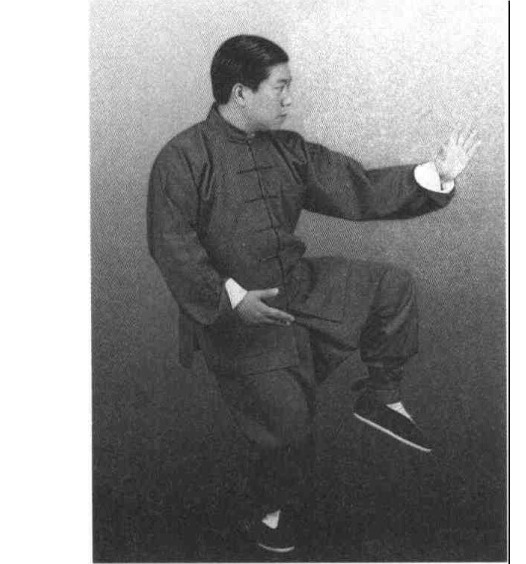
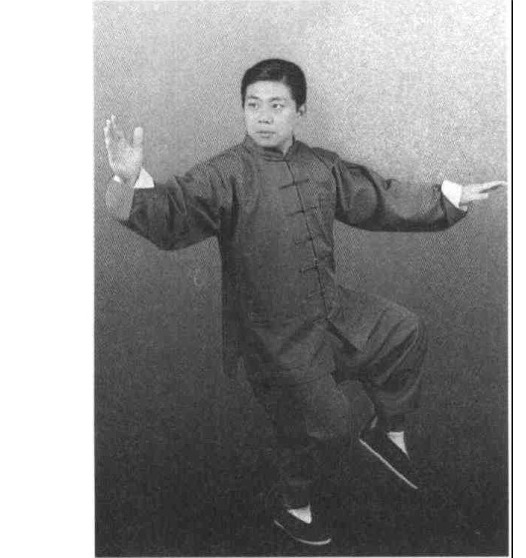
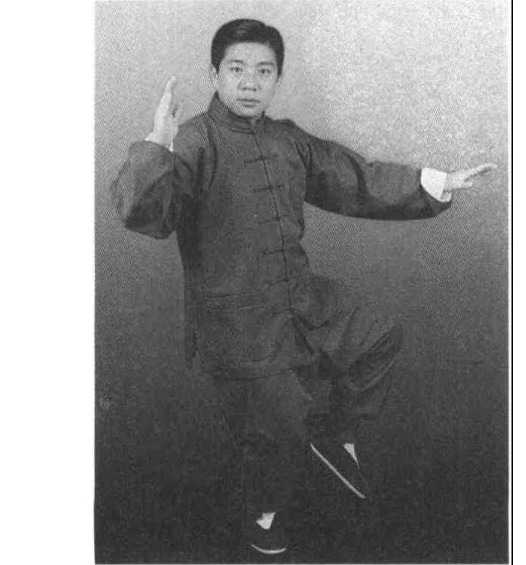
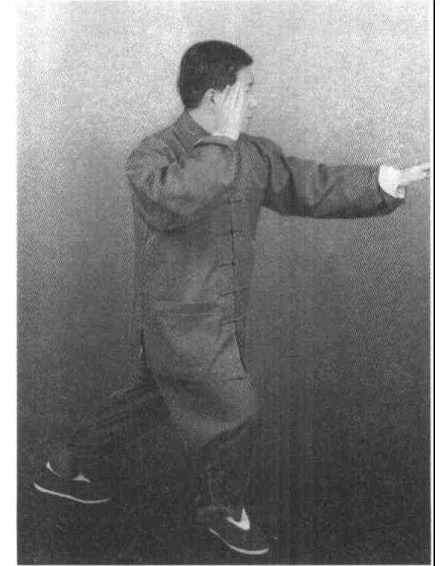
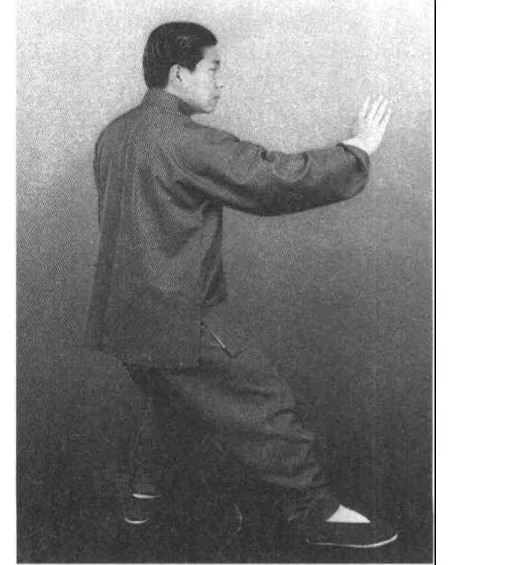
This page is a full-page sheet of movement plates with no running text. Figures 361 to 367 are the continuous movement sequence of Posture Fifty-Nine, Step Back and Repulse the Monkey, Left and Right, continuing on from the previous page's figures 358 to 360.
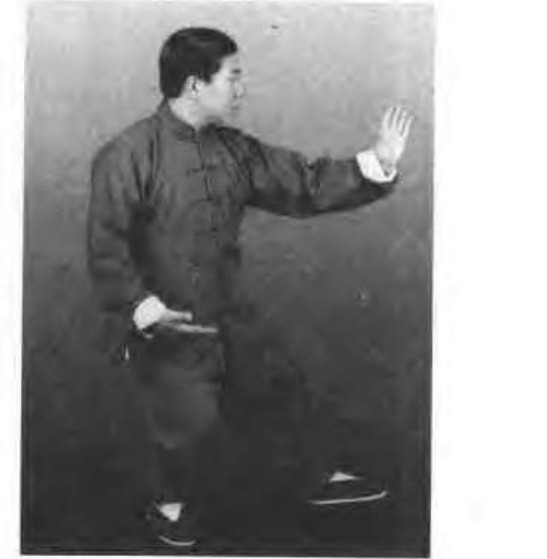
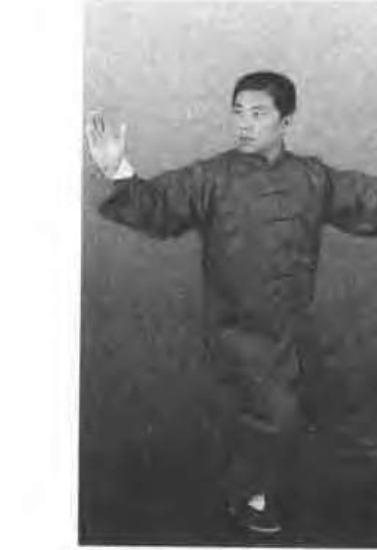
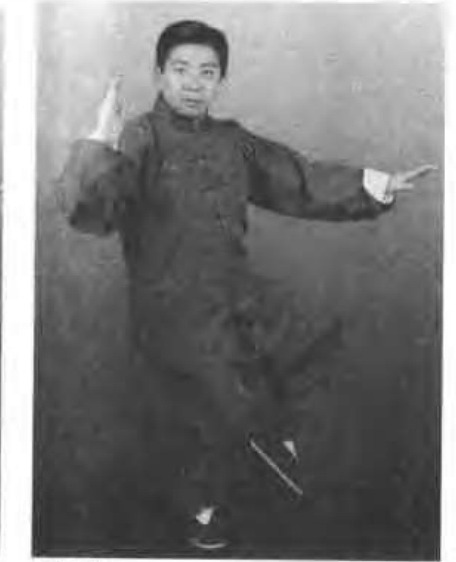
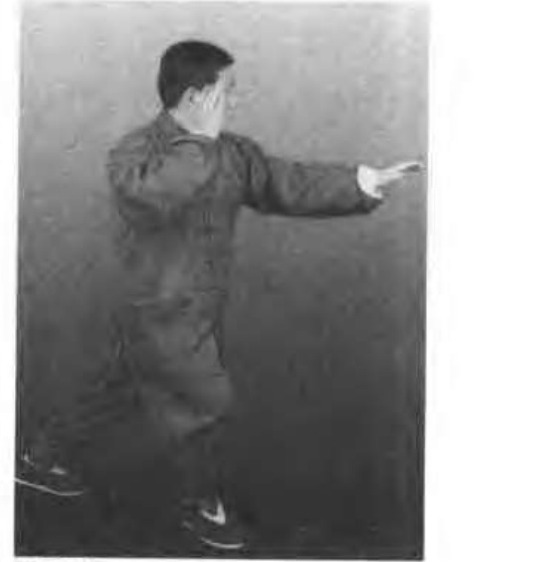
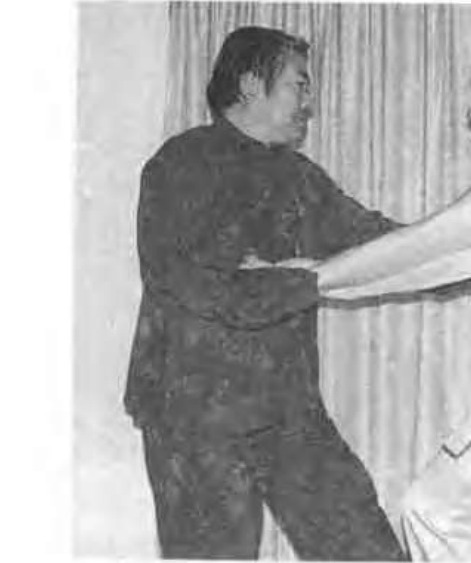
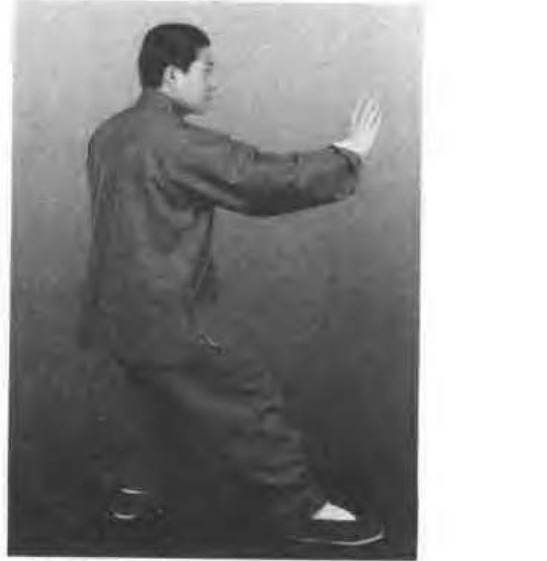
(At the lower left of figure 361 there is one unnumbered push-hands photograph: the two are joined at the hands, one pressing forward with the right palm while the other receives with the left hand and withdraws a step.)
Phần 128
Posture Sixty — Diagonal Flying
All sections are the same as Posture Eighteen, Raise the Hands. See the first three figures on this page (the same as the ninety-ninth to the hundred-and-first figures).
All sections are the same as Posture Nineteen, Raise the Hands. See the fourth to the sixth figures on this page (the same as the twenty-fourth to the twenty-sixth figures).
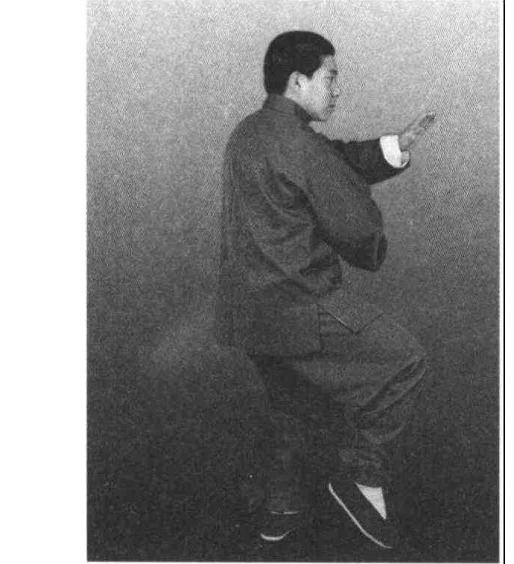
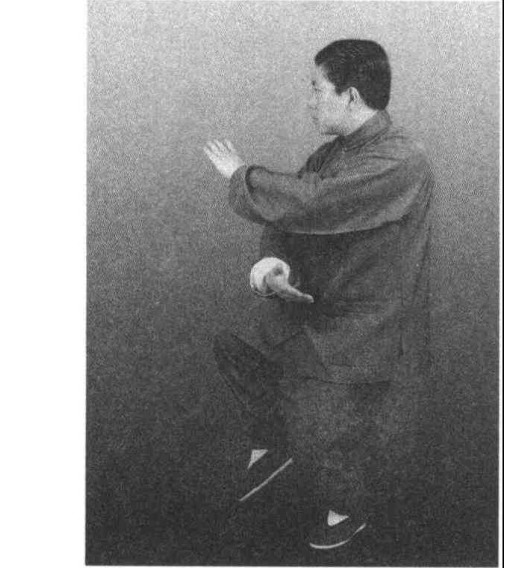
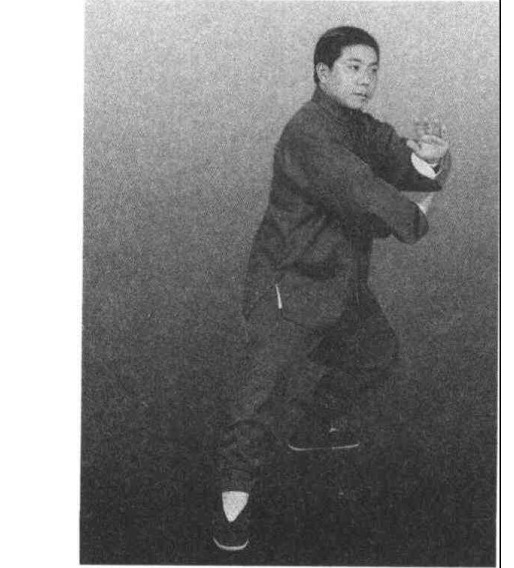
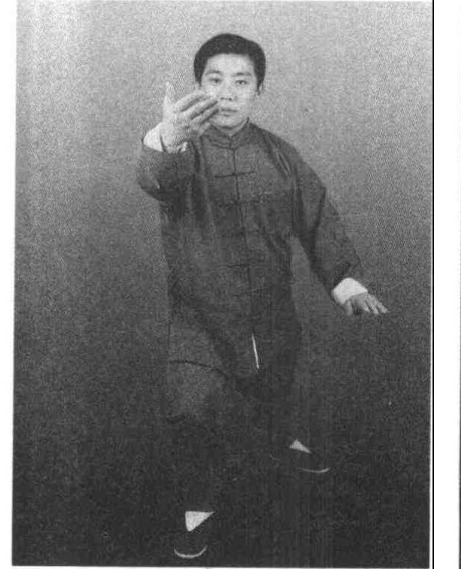
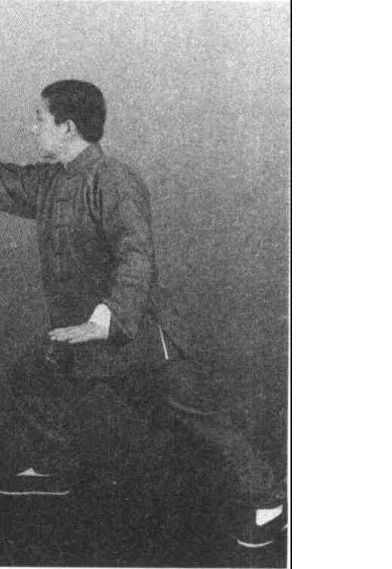
(Above figure 368B there is one unnumbered push-hands photograph: the two are joined at the hands, one lifting the other's right arm with both palms.)
The upper part of this page continues the plate sequence of Posture Sixty-One, Raise the Hands (figures 371 to 373); the lower part begins the plates of Posture Sixty-Two, the White Crane Spreads Its Wings.
Phần 129
Posture Sixty-Two — the White Crane Spreads Its Wings
All sections are the same as Posture Six, the White Crane Spreads Its Wings. See the fourth to the seventh figures on this page (the same as the twenty-seventh to the thirtieth figures).
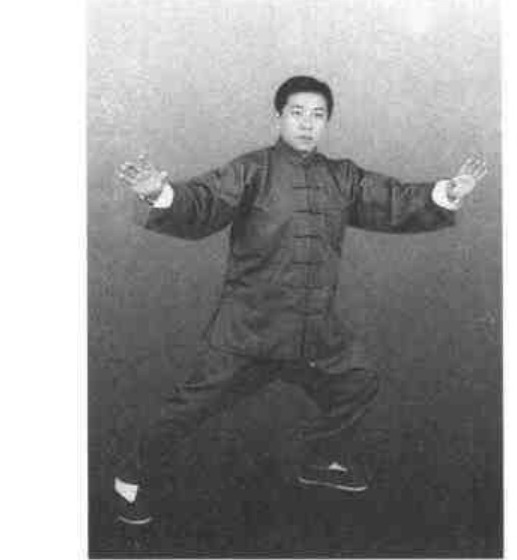
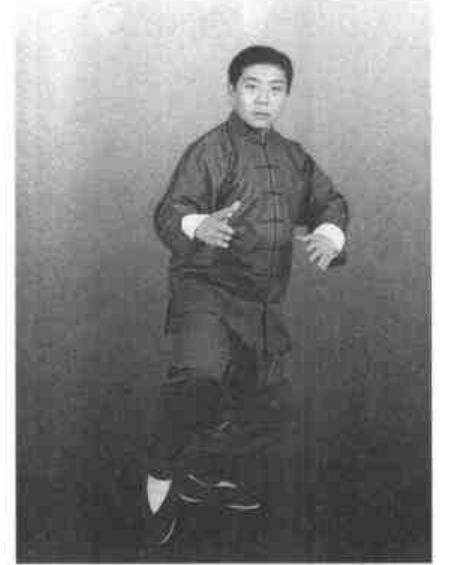
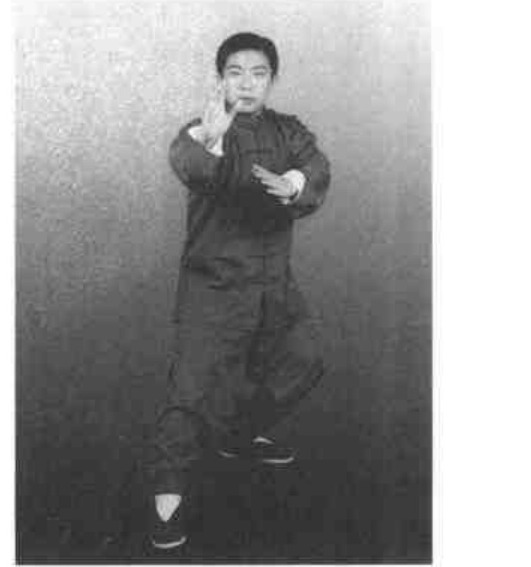
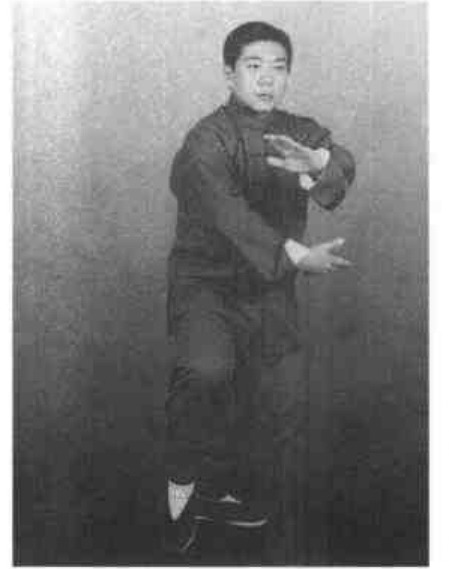
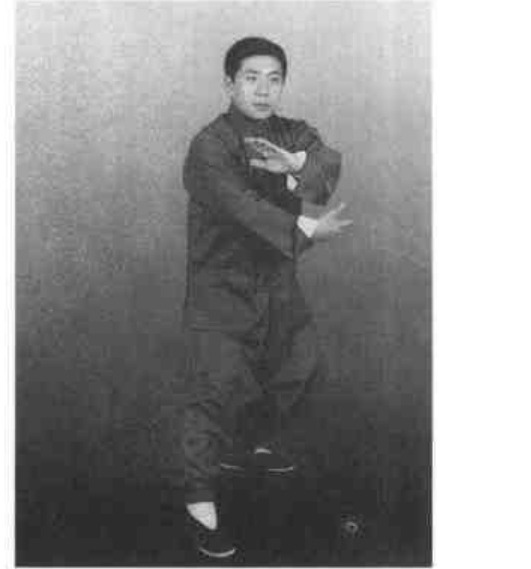
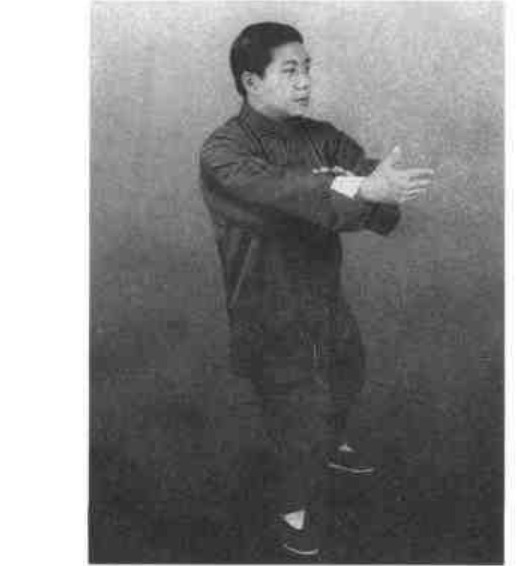
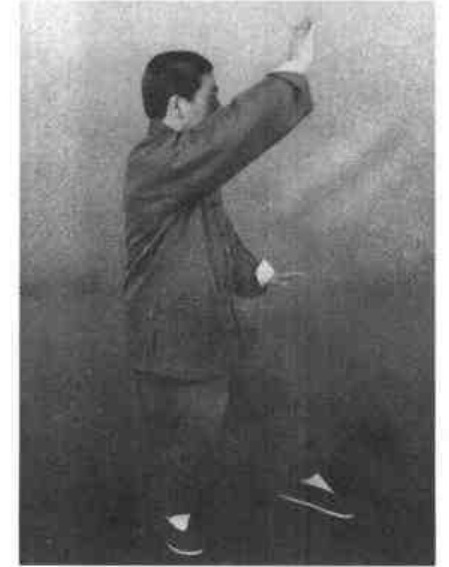
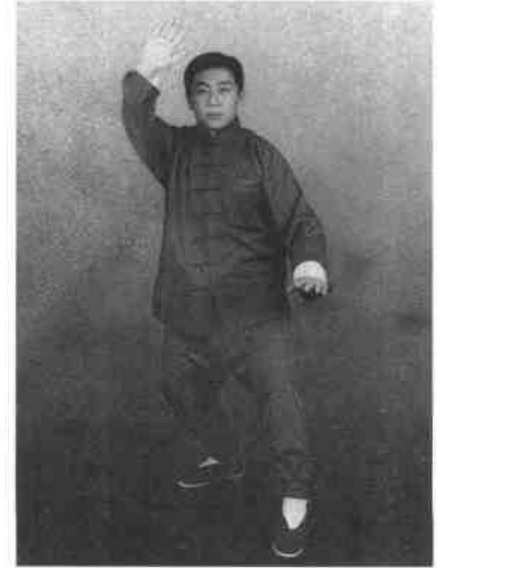
Phần 130
Posture Sixty-Three — Brush the Knee and Twist the Step, Left
All sections are the same as Posture Seven, Brush the Knee and Twist the Step, Left. See the first to the fifth figures on this page (the same as the thirty-first to the thirty-fifth figures).
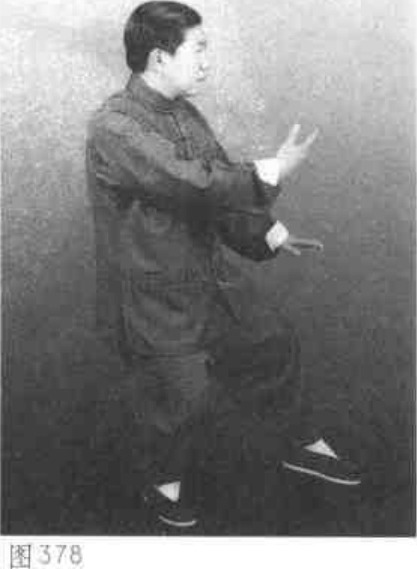
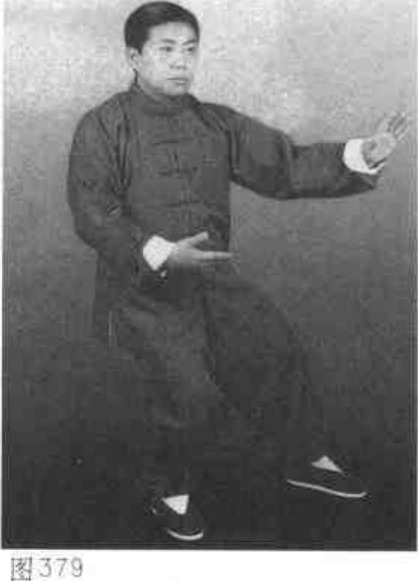
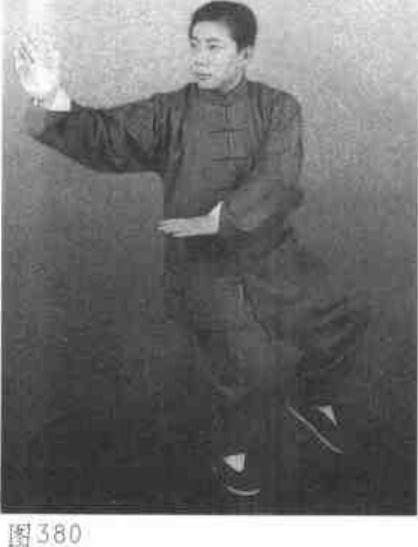
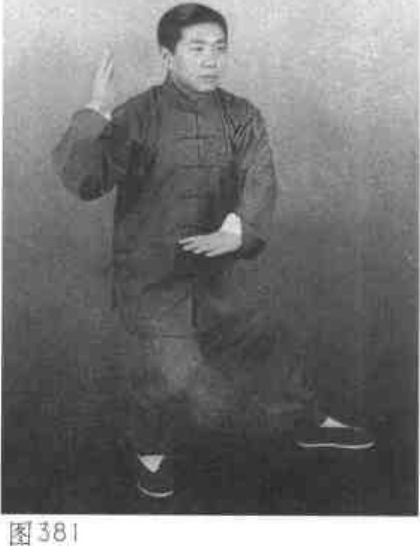
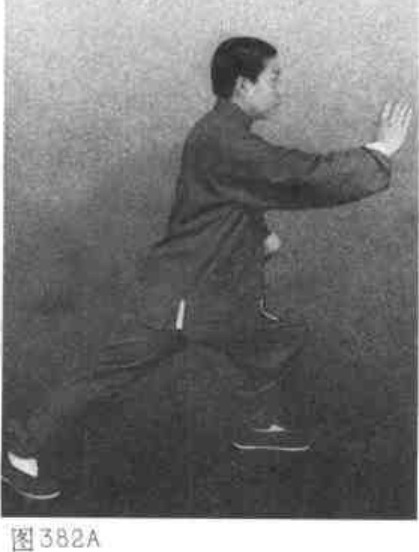
(At the middle lower part of this page there is one further unnumbered close-up photograph of the hand: the right palm pushing forward, the fingers pointing upward and the tiger's mouth open. It carries no figure number.)
Phần 131
Posture Sixty-Four — Needle at the Bottom of the Sea
All sections are the same as Posture Twenty-Two, Needle at the Bottom of the Sea. See the first to the fourth figures on this page (the same as the hundred-and-fourteenth to the hundred-and-seventeenth figures).
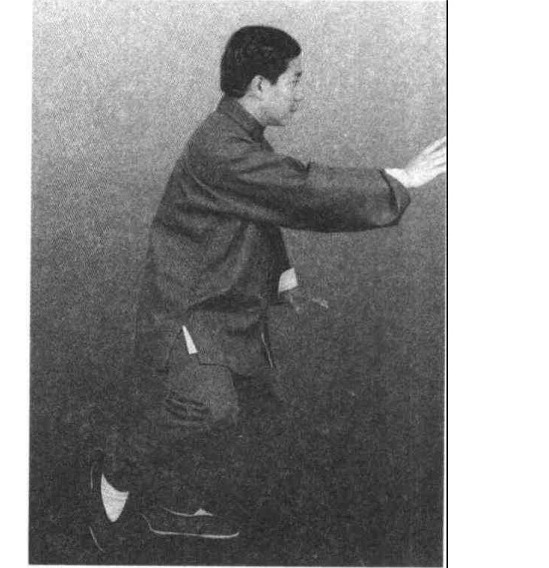
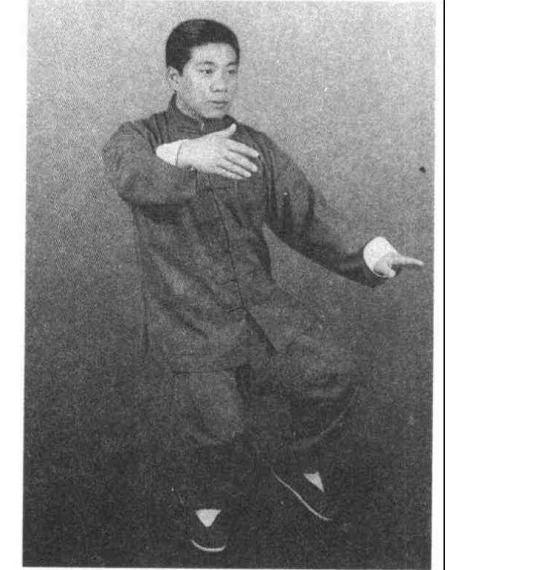
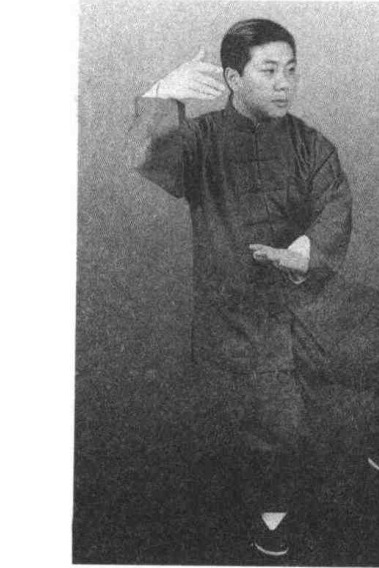
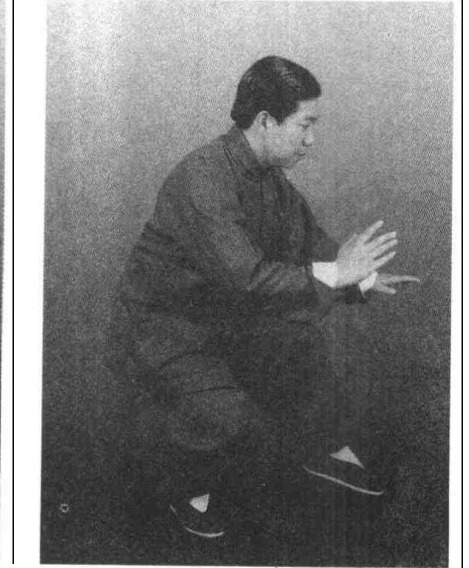
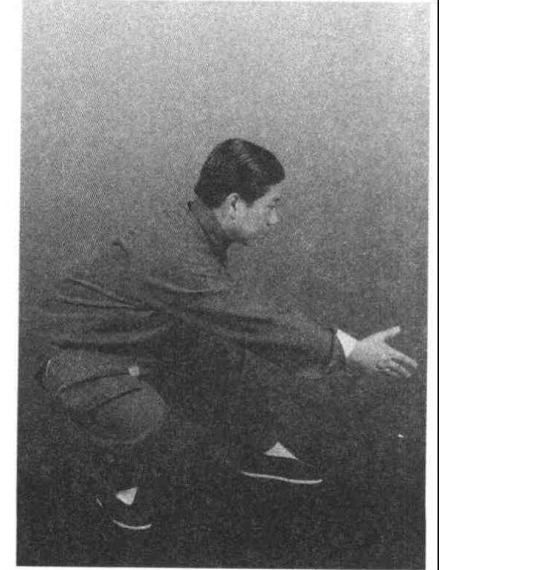
(At the middle upper part of this page there is one further unnumbered close-up photograph of the hand: the right palm thrusting down, the fingers pointing downward and the tiger's mouth open. It carries no figure number.)
Phần 132
Posture Sixty-Five — Spread the Back Like a Fan
All sections are the same as Posture Twenty-Three, Spread the Back Like a Fan. See the first and second figures on this page (the same as the hundred-and-eighteenth and hundred-and-nineteenth figures).
I. Application Turning the body and having the white snake put out its tongue is essentially the same as Parry and Punch, except that the fist is changed for the use of the palm, and the added point is that the palm must carry more sinking strength.
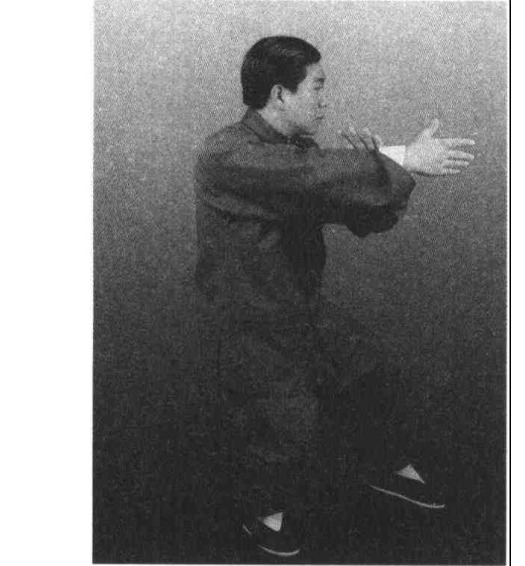
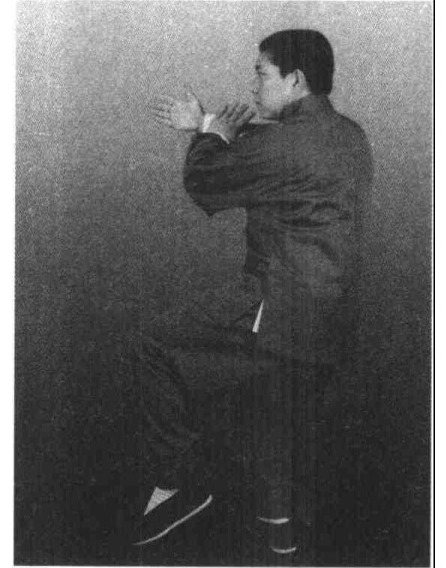
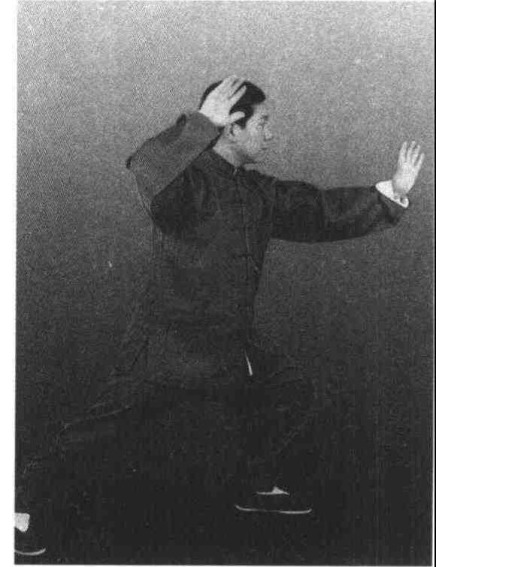
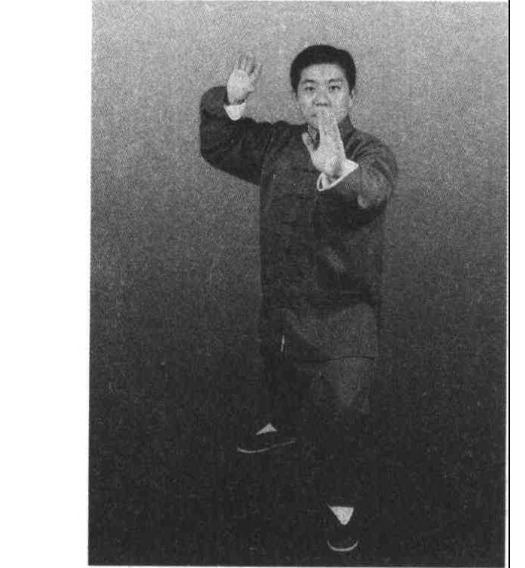
II. Sequence of movement 1. The body slowly turns right (toward the south); at the same time the left toes turn inward, the left leg settles firm, and the right foot becomes empty. As the trunk turns, the right palm is lowered in an arc and closes into a fist, which is placed for the moment in front of the left ribs, the elbow bent and the forearm horizontal, the centre of the fist facing down. The left palm is drawn back and raised in an arc to above and in front of the left brow. The gaze attends briefly to the right hand as it arcs, then looks level ahead. See the first figure on this page (the same as the hundred-and-twentieth figure).
2. The body continues to turn right (toward the west). The whole of the weight shifts onto the left leg, the right foot is lifted, and the left palm, following the turn, arcs down from the right and, passing along the outside of the right forearm, comes to rest outside the right elbow, while the right fist circles upward (a little higher than the left elbow). Follow the turn and look level ahead, attending also to the movement of the two hands. See the second figure on this page (the same as the hundred-and-twenty-first figure).
3. The right foot is set down forward (a little to the right), the heel touching first, and the body continues to turn right. At the same time the right fist continues forward with the turn and, at the farthest point, changes into a palm using sinking strength. The eyes look level ahead, attending also to the right fist (see the third figure on this page).
4. The body continues to turn right, and the right palm continues to pluck downward to the front of the waist, the centre of the palm facing up. The left palm arcs back to the front of the chest and pushes forward from above the inner side of the right forearm. At the same time the weight gradually shifts onto the right leg, the right leg bending and the left leg pressing out to form the right bow stance. The eyes look level ahead, and must attend also to the left palm as it pushes forward (see the fourth figure on this page).
Apart from the fact that the right fist becomes a palm which plucks forward and down with sinking strength, all the remaining sections of this posture are the same as Posture Twenty-Four, Parry and Punch.
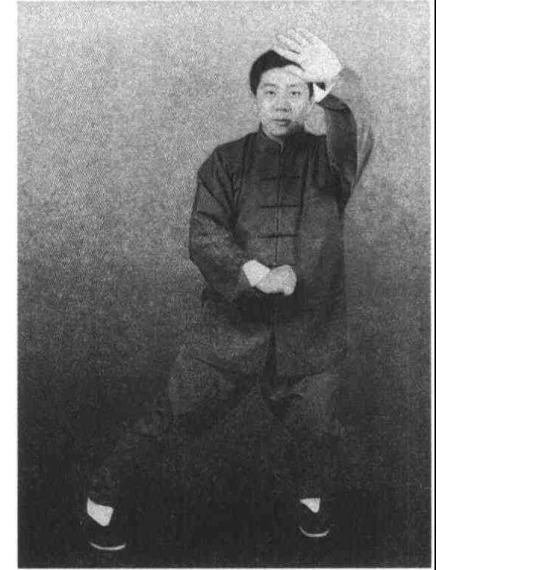
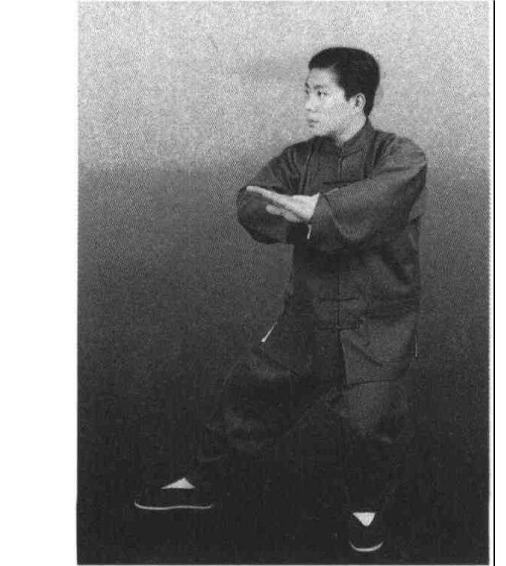
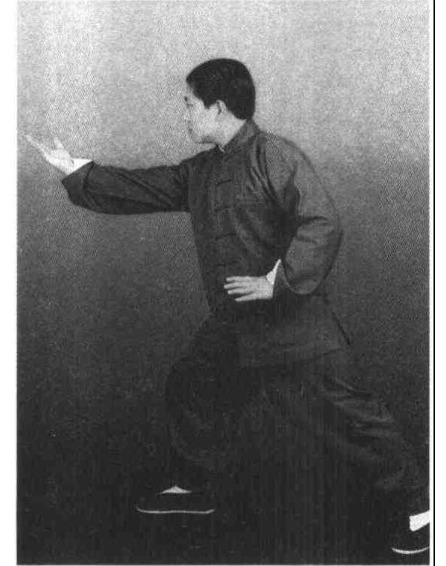
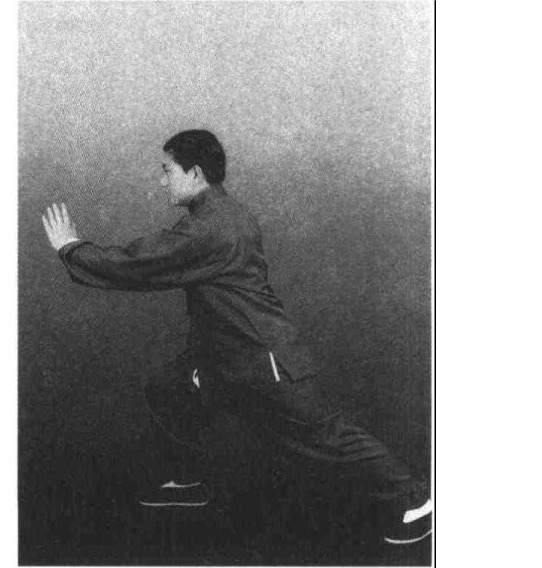
Phần 133
Posture Sixty-Seven — Step Forward, Parry, Block and Punch
I. Application Same as Posture Twenty-Five above, Step Forward, Parry, Block and Punch.
II. Sequence of movement The body gradually turns left, and the weight slowly shifts onto the left leg. At the same time the right palm sinks with the turn of the trunk, and the left arm rotates outward so that the centre of the palm gradually turns to face upward and is drawn in beside the right elbow in front of the chest; the right palm closes into a fist and extends forward and upward to the upper side of the left palm, rotating inward as the right arm extends so that the centre of the fist faces down. The gaze attends to the right fist as it extends forward.
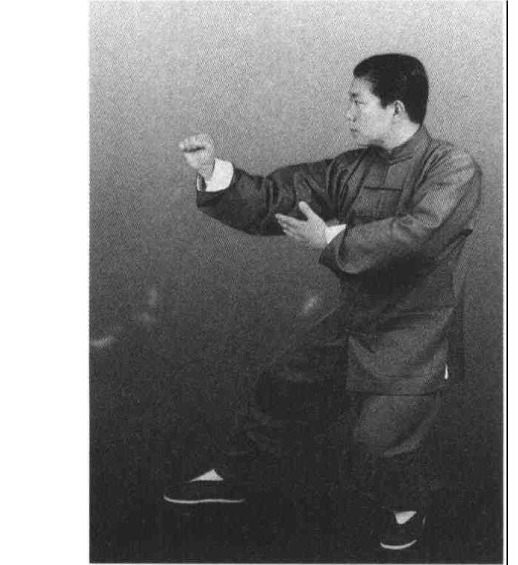
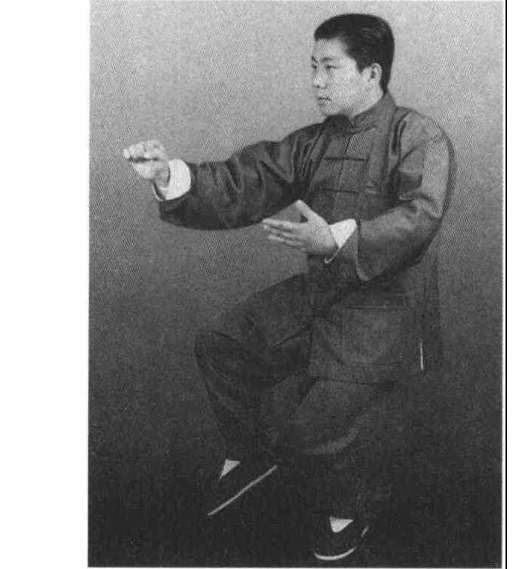
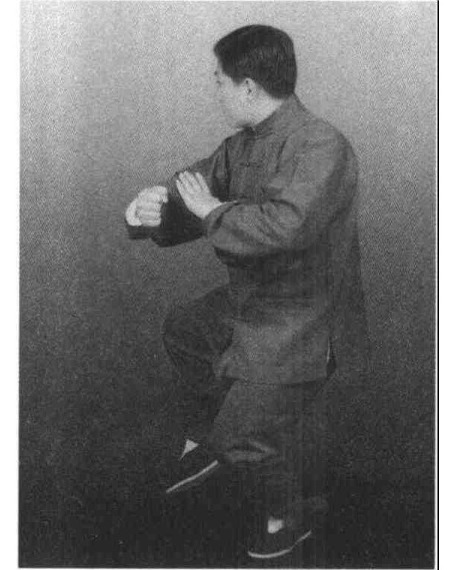
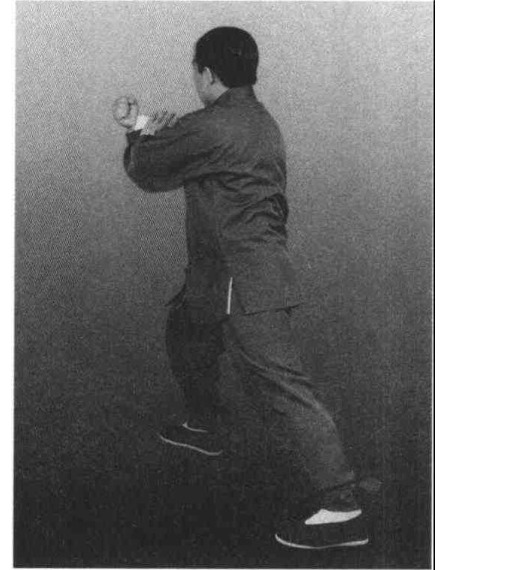
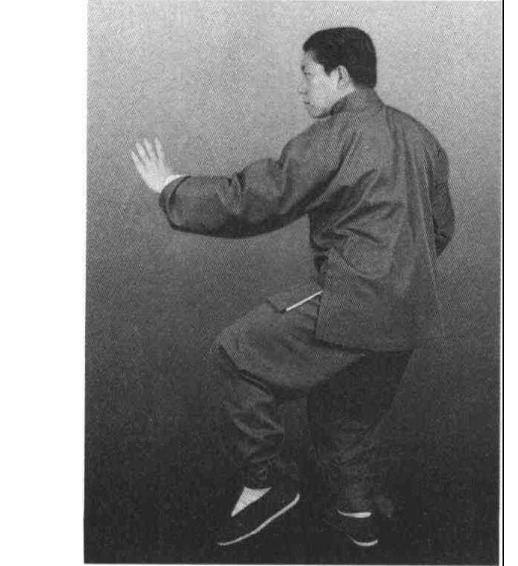
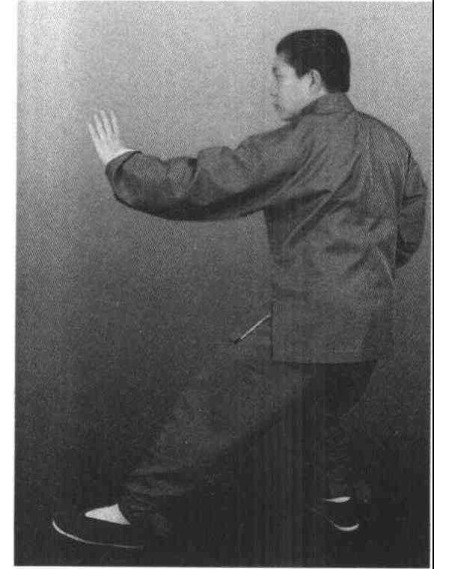
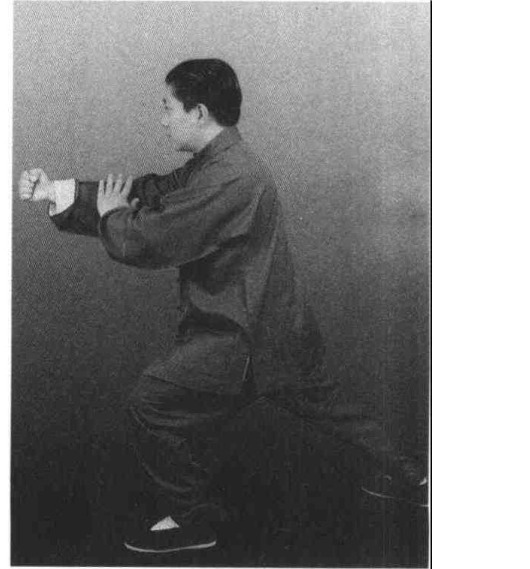
All the remaining sections are the same as Posture Twenty-Five, Parry, Block and Punch. See the first to the seventh figures on this page (the same as the hundred-and-twenty-fourth to the hundred-and-thirtieth figures).
Phần 134
Posture Sixty-Eight — Step Forward and Grasp the Bird's Tail
All sections are the same as Posture Twenty-Six, Grasp the Bird's Tail. See the eighth figure on this page (the same as the hundred-and-thirty-first figure) and the ninth to the fourteenth figures on this page (the same as the eighth to the thirteenth figures); the sequence continues on the next page.
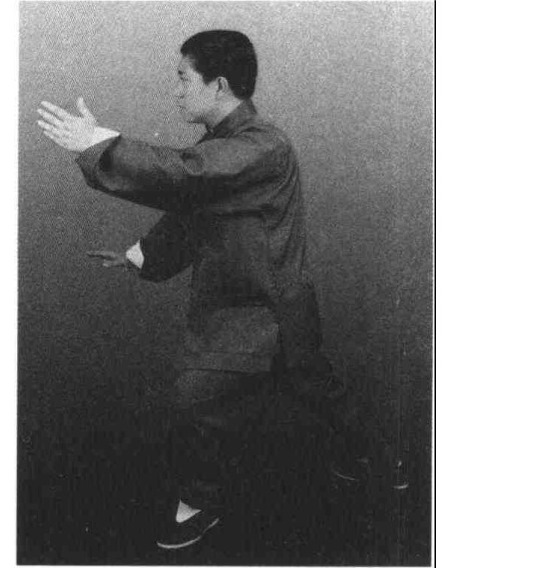
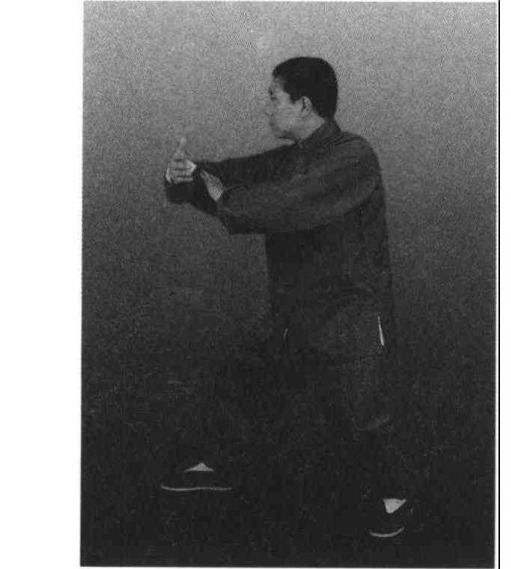
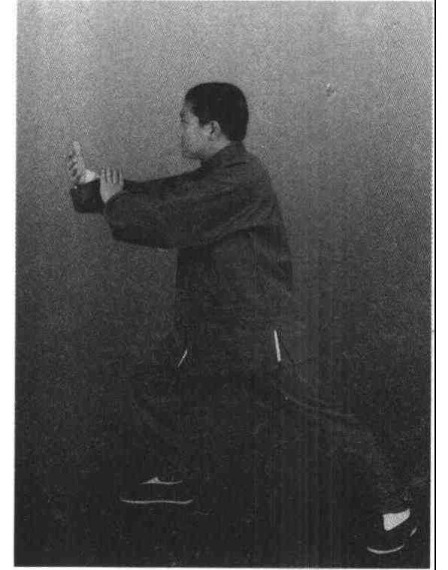
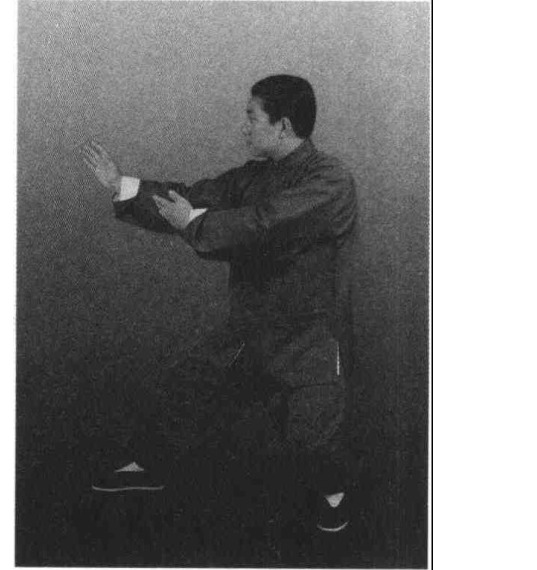
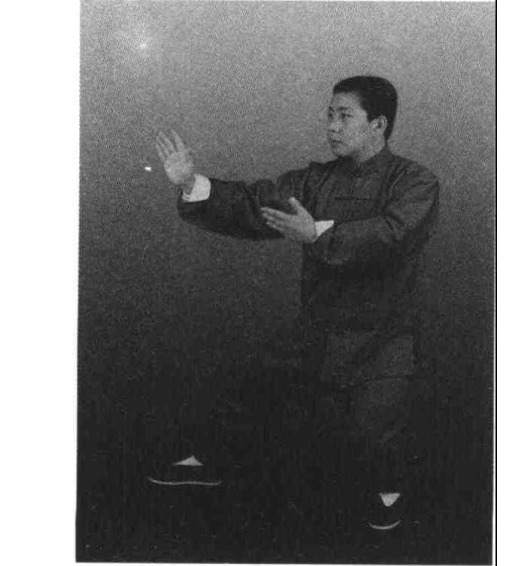
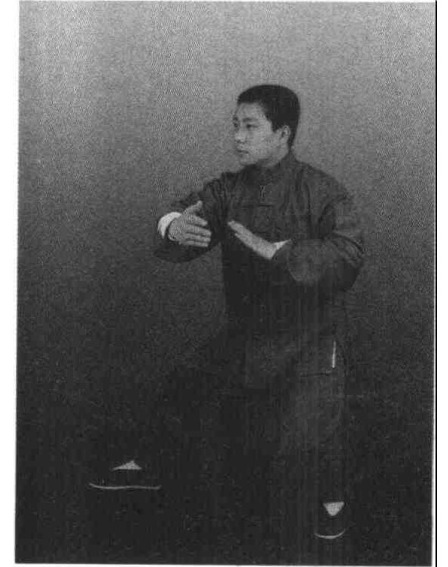
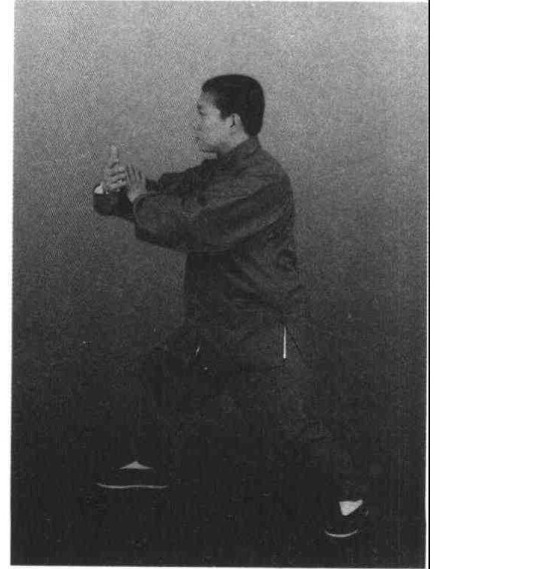
Phần 135
Posture Sixty-Nine — the Single Whip
All sections are the same as Posture Twenty-Seven, the Single Whip. See the fifth to the tenth figures on this page (the same as the eighteenth to the twenty-third figures); the sequence continues on the next page.
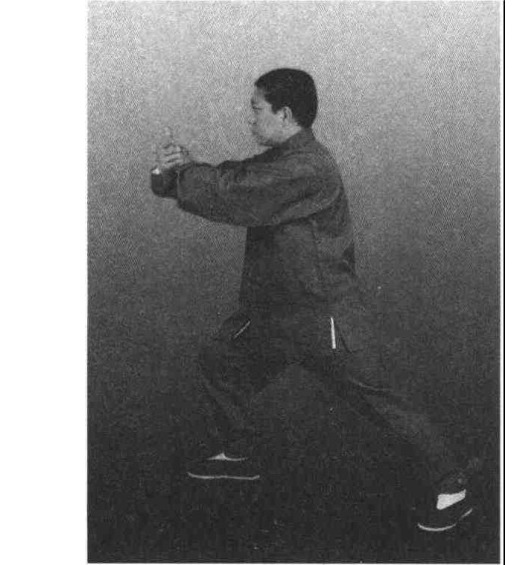
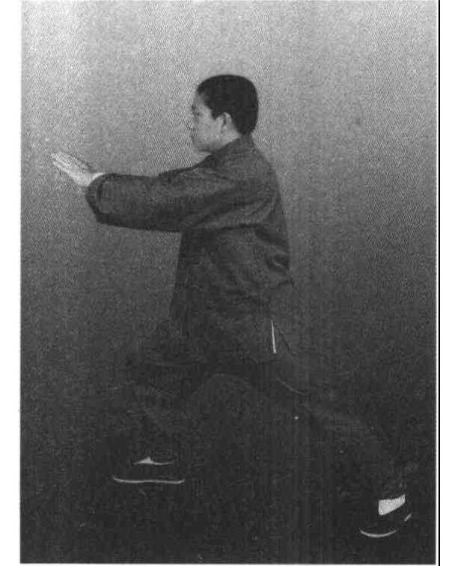
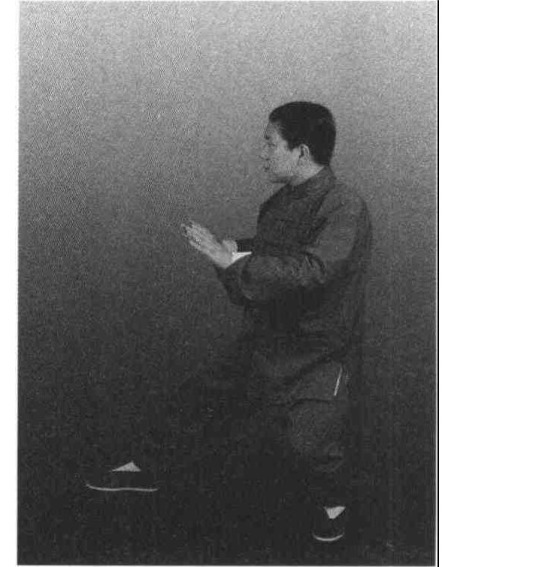
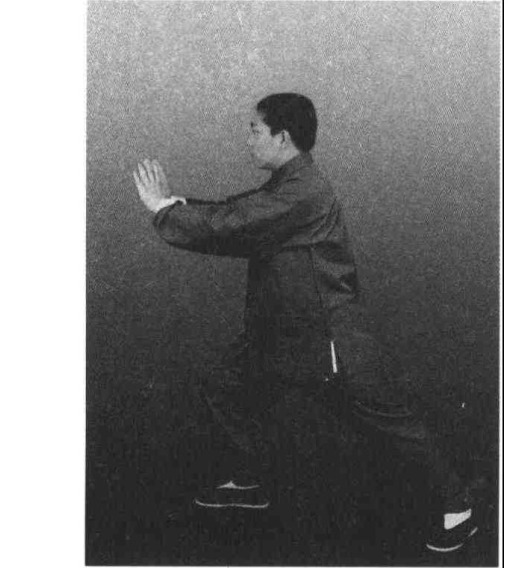
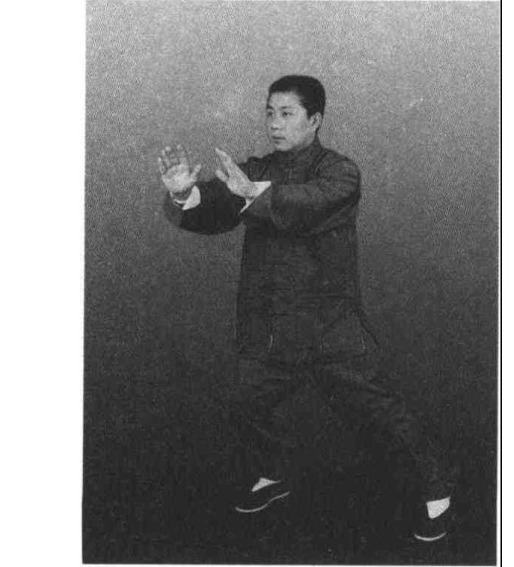
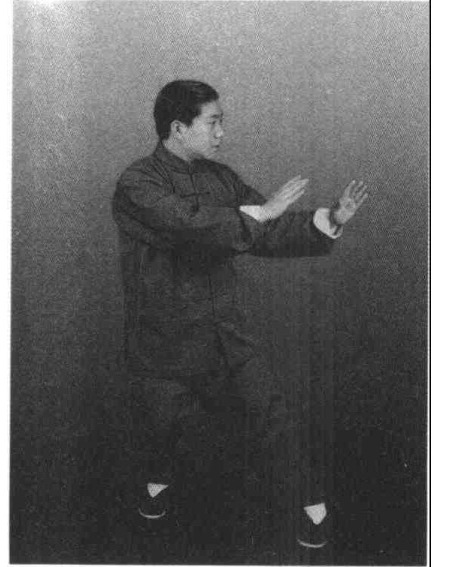
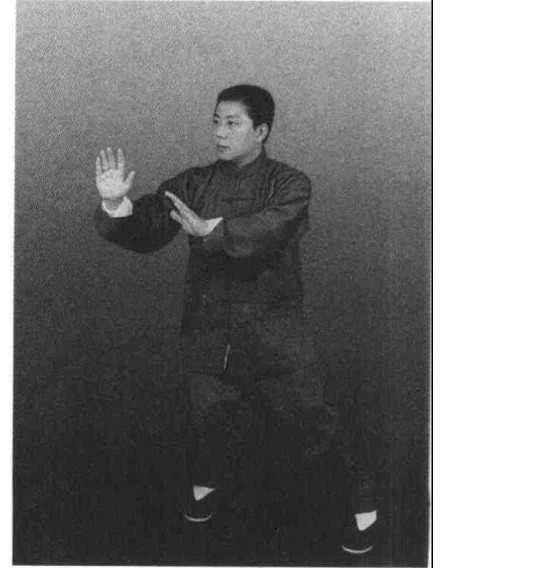
Phần 136
Posture Seventy — Wave Hands Like Clouds
All sections are the same as Posture Twenty-Eight, Wave Hands Like Clouds. See the fourth to the eleventh figures on this page (the same as the hundred-and-forty-ninth to the hundred-and-fifty-sixth figures), the twelfth to the seventeenth figures on this page (the same as the hundred-and-fifty-first to the hundred-and-fifty-sixth figures), and the eighteenth to the twentieth figures on this page (the same as the hundred-and-fifty-first to the hundred-and-fifty-third figures).
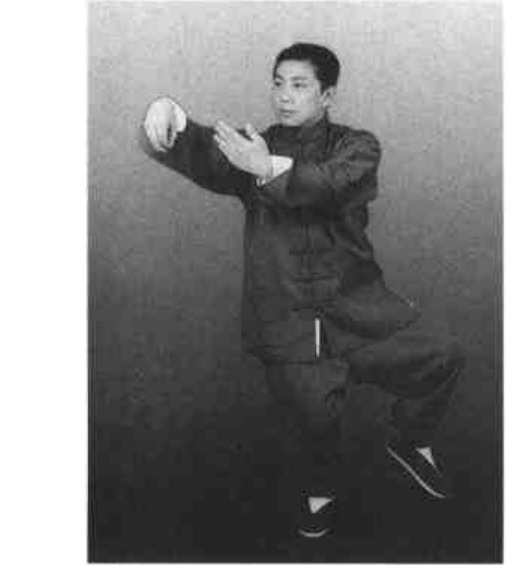
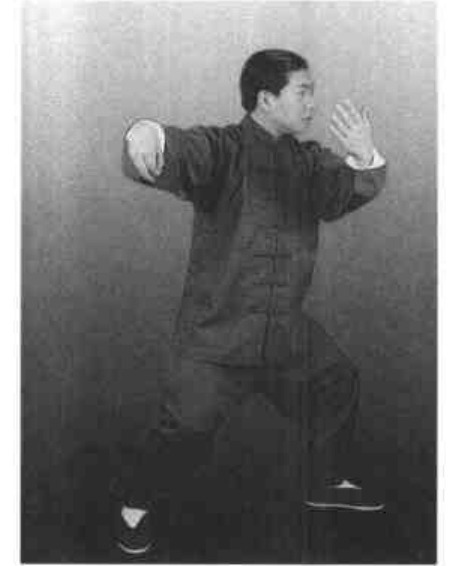
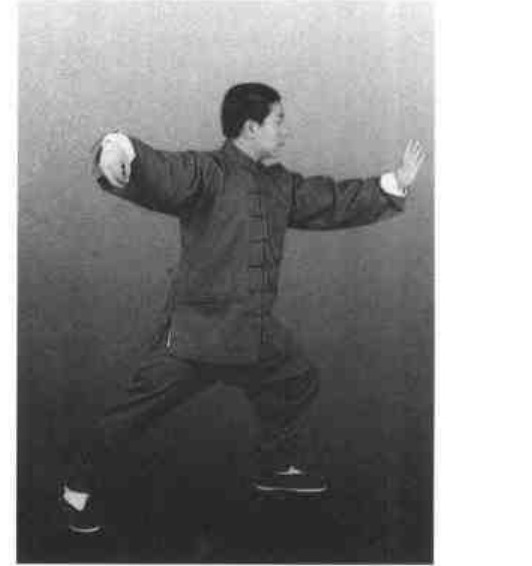
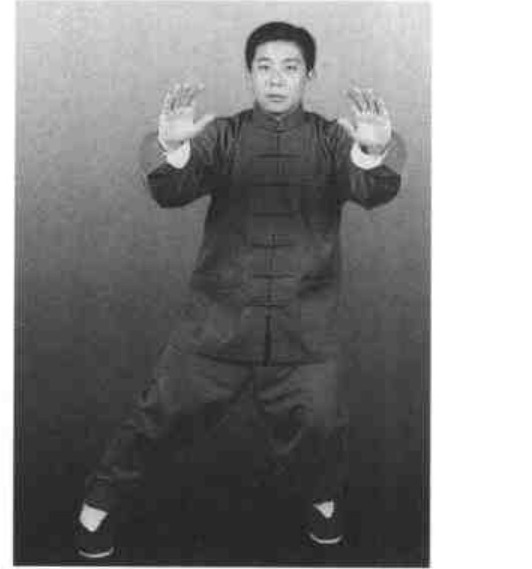
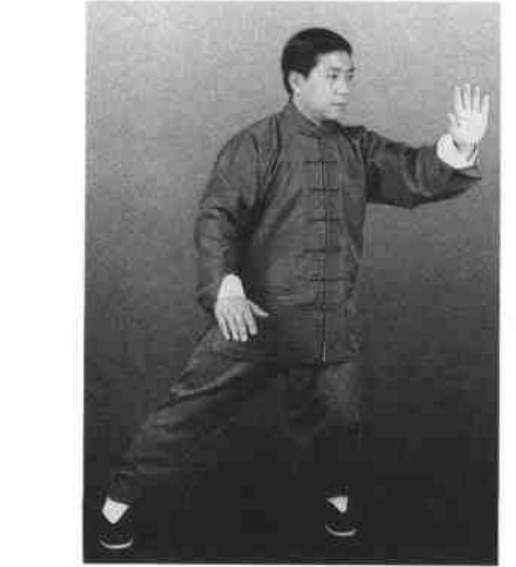
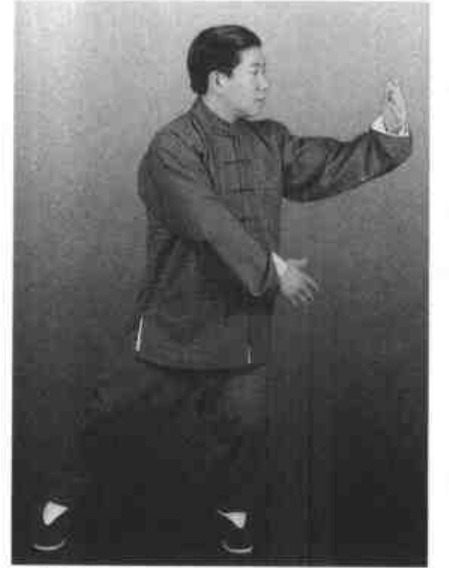
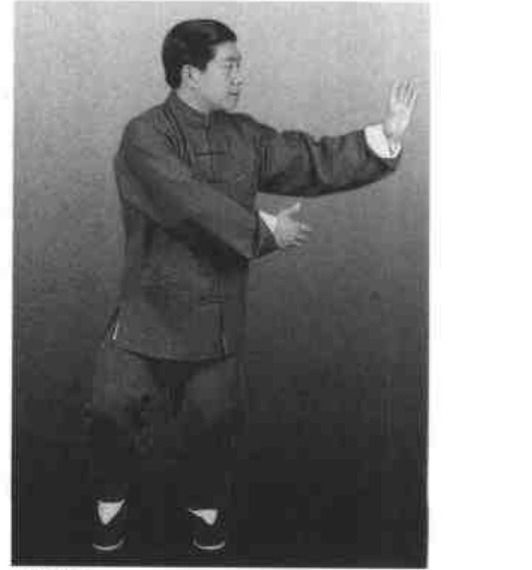
This page is a full-page sheet of movement plates with no running text. Figures 421 to 429 are the continuous movement sequence of Posture Seventy, Wave Hands Like Clouds, continuing on from the previous page's figures 417 to 420.
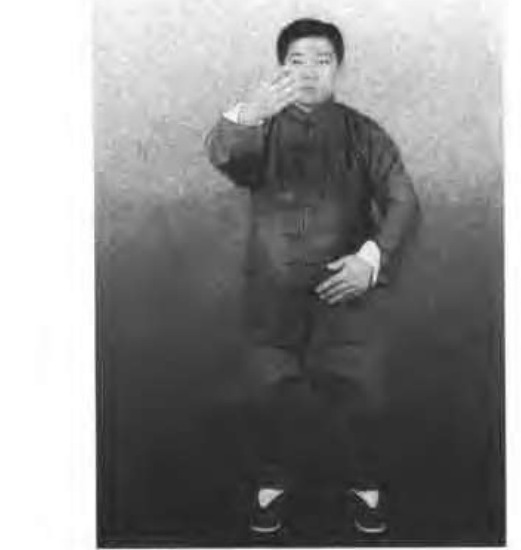
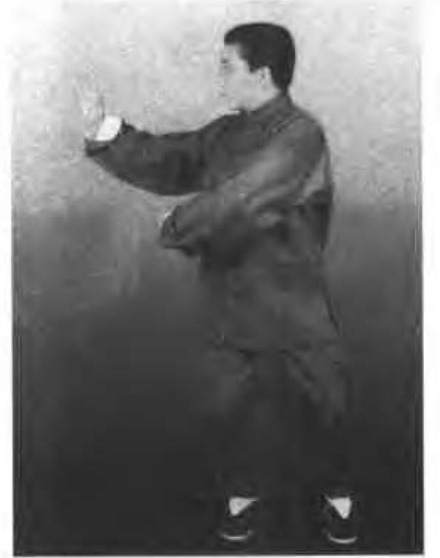
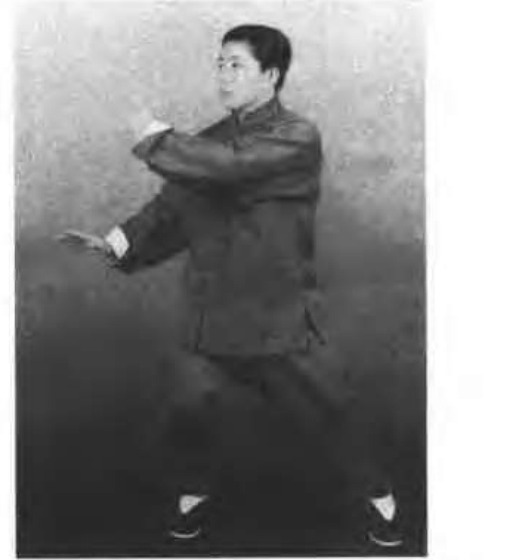
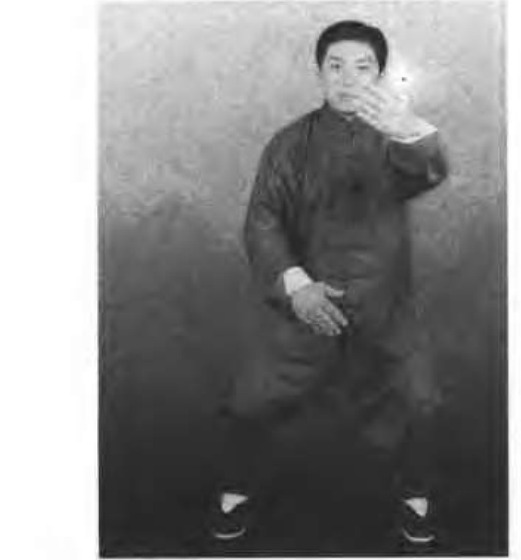
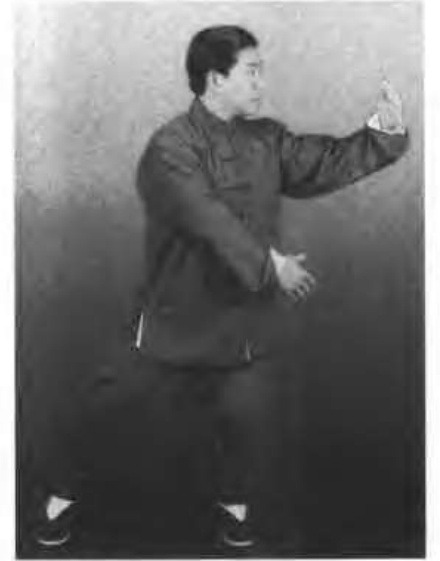
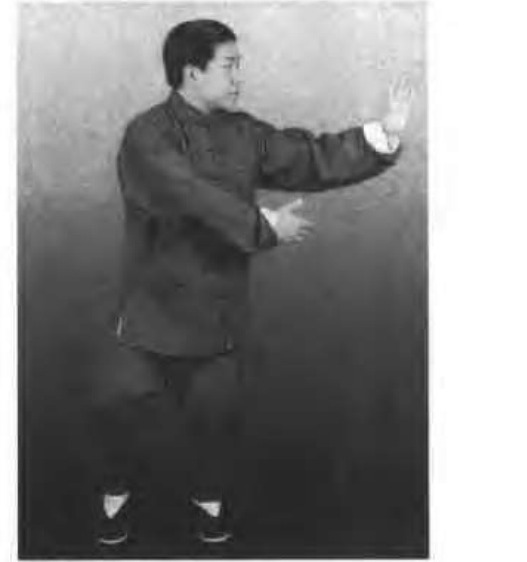
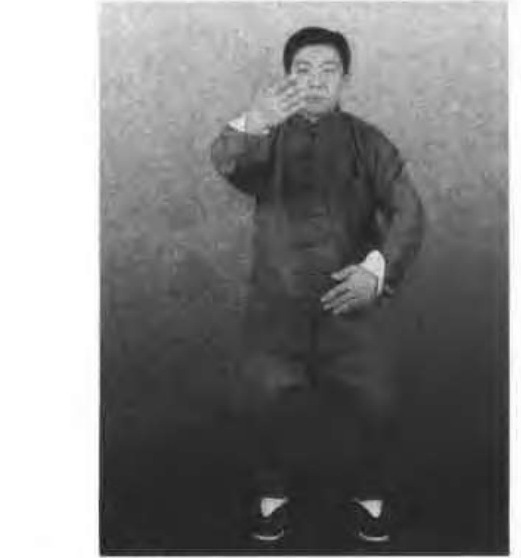
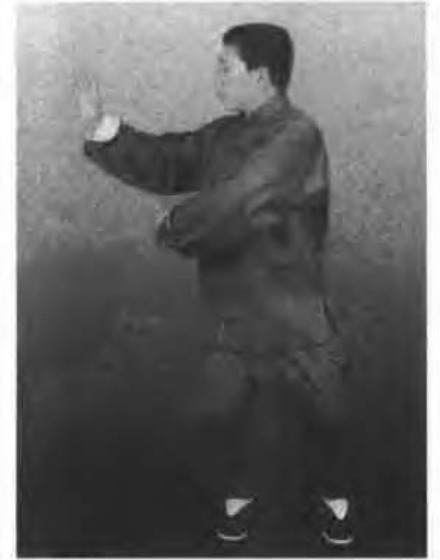
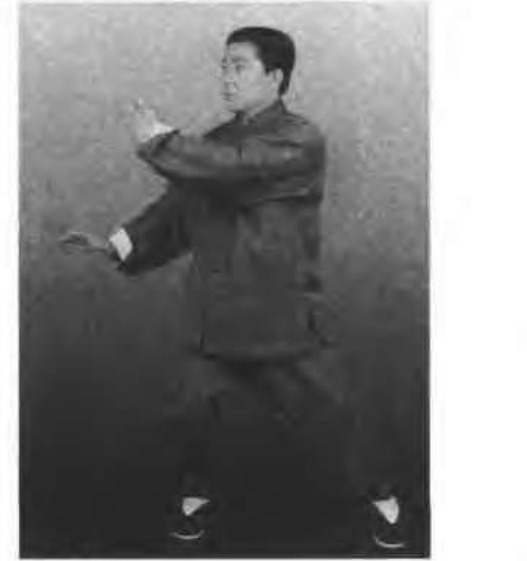
Phần 137
Posture Seventy-One — the Single Whip
All sections are the same as Posture Twenty-Nine, the Single Whip. See the fifth figure on this page (the same as the hundred-and-sixty-sixth figure) and the sixth to the eighth figures on this page (the same as the twenty-first to the twenty-third figures).
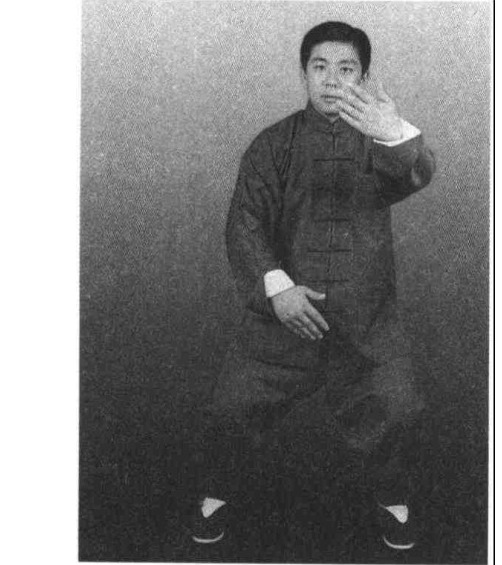
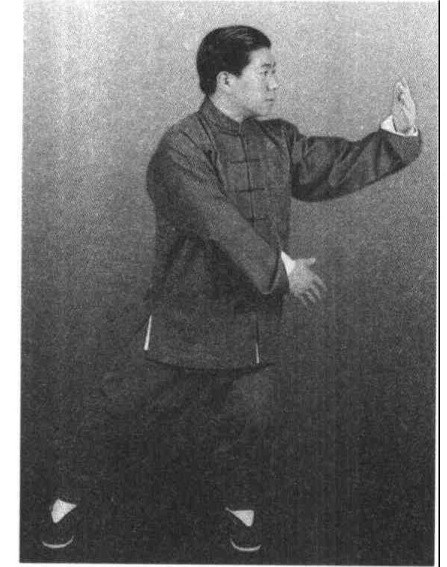
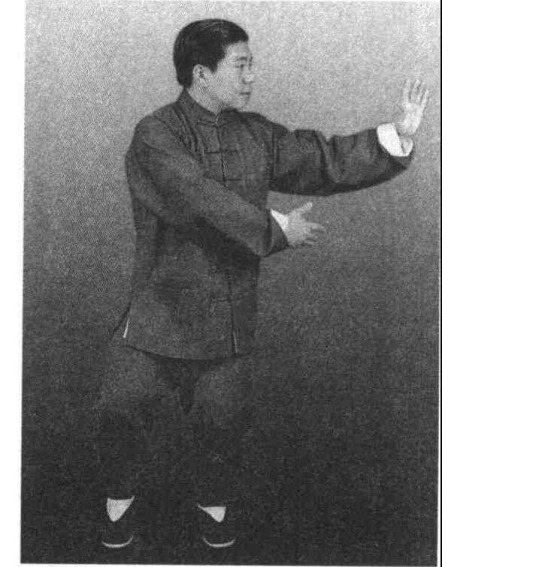
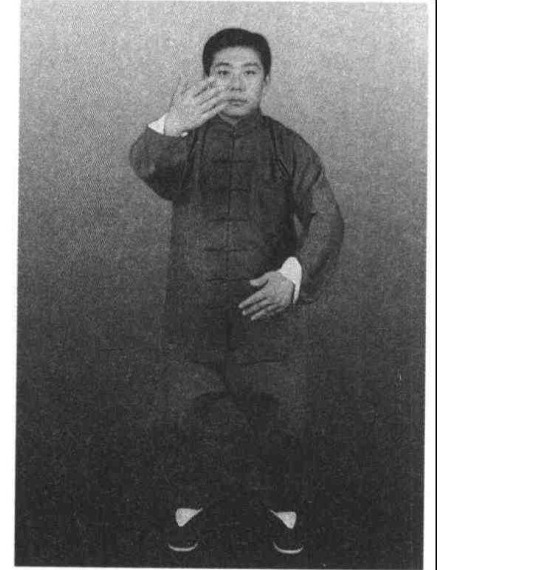
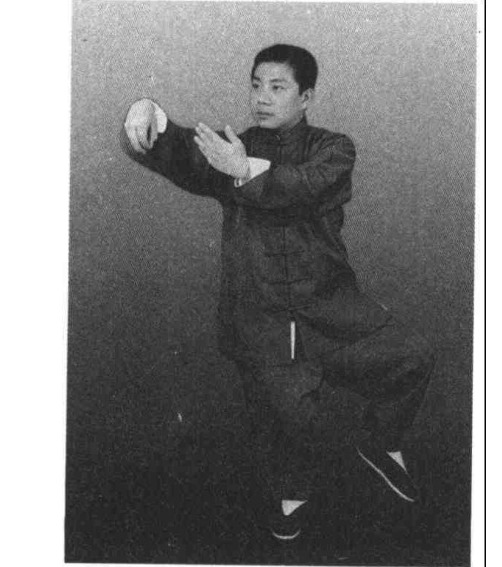
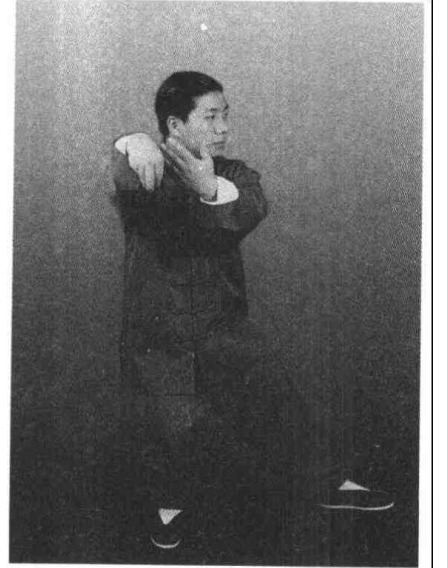
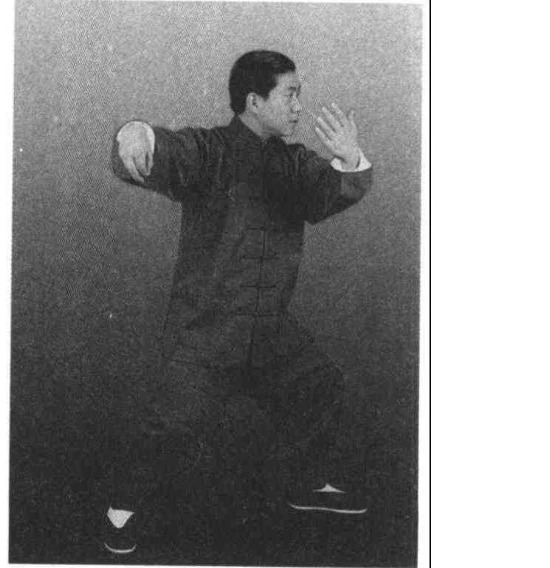
Phần 138
Posture Seventy-Two — High Pat on the Horse with Threading Palm
I. Application The application of the first part is the same as High Pat on the Horse. In the second part, while my extended right hand is being held by the opponent's left hand, I immediately draw the right hand back with the centre of the palm facing down, and the left hand, raised slightly, threads through with the palm and thrusts at the opponent's throat, while the right hand remains hidden below the left elbow, ready to meet any change.
II. Sequence of movement (a) The movement of High Pat on the Horse is the same as Posture Thirty, High Pat on the Horse. See the second to the fourth figures on this page (the same as the hundred-and-seventieth to the hundred-and-seventy-second figures).
(b) Threading Palm, Left 1. The right leg gradually crouches, and the left leg is lifted and drawn back. At the same time the right arm gradually bends at the elbow and lies across, the arm curved, and is drawn in with a downward-left arc; as it is drawn in the arm rotates outward so that the centre of the palm turns to face upward; the left palm gradually turns palm-upward and threads up above the right palm. The eyes look level ahead (see the fifth figure on this page).
2. The left foot steps forward one pace, the heel touching first; as the weight gradually shifts onto the left leg the whole of the sole presses down firmly, the left leg bends and the right leg presses out to form the left bow stance. At the same time the left hand continues to thread forward and upward; as the left forearm passes above the right palm, the right arm immediately rotates inward so that the centre of the palm turns to face down, and the right palm comes to rest below the upper left arm, while the left palm threads out above the right palm, its centre still facing up, at the height of the chin. The gaze attends to the right palm as it is drawn in, and then to the left palm as it threads forward (see the sixth figure on this page).
III. Key points 1. When the left leg steps forward the right leg must crouch, so that the left leg takes a somewhat larger step. This both achieves the martial effect and increases the amount of exercise.
2. As the left palm threads through and the bow stance is about to form, the body turns slightly right in coordination.
3. When stepping, the upper body must be centred and upright, not leaning forward. The body method of taijiquan must be nimble, relaxed and calm, but it is not permitted to drop the head forward or to bend the trunk forward.
4. The step must be set down nimbly; strive to "step as a cat walks". Therefore, as the left leg steps forward, the right leg must "sink" and "send" the left leg forward; otherwise the step will easily become tense.
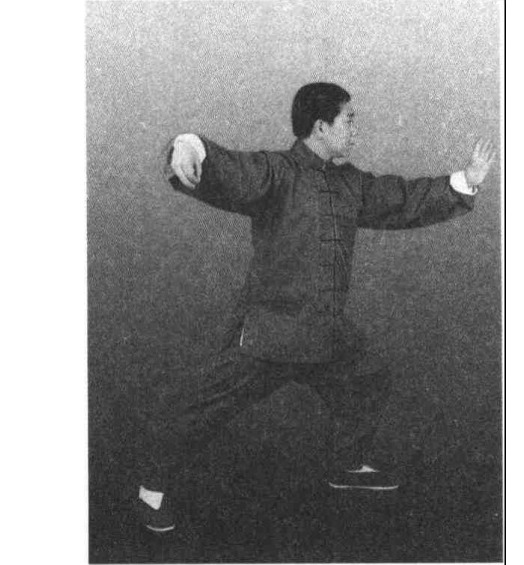
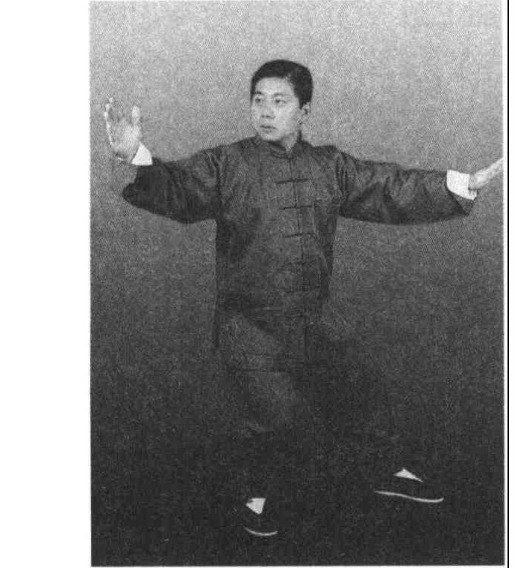
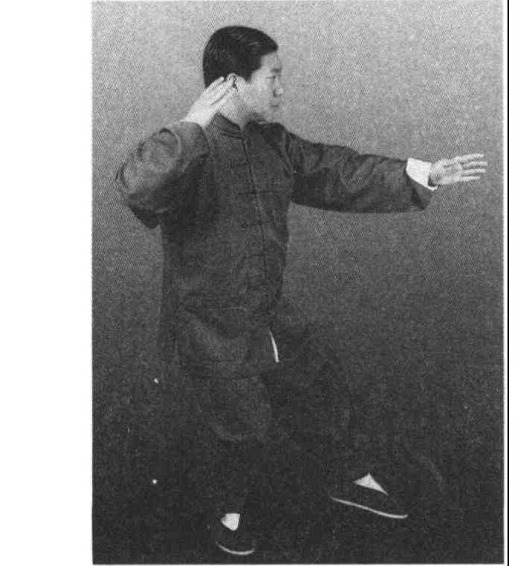
…forward; otherwise the step will easily become tense.
5. When the left palm threads out, the right arm must be curved and a space must be kept at the right armpit; it must not be clamped shut. Otherwise, on the one hand the posture will look awkward and fail to meet the requirement of roundness everywhere; on the other hand, the right hand under the armpit is there to meet changes, and if it is clamped shut it will lose its roundness and liveliness and its usefulness in meeting change will be reduced.
IV. Requirements 1. Although the lower limbs are changing step, "the hundred meetings and the central pole, one breath running through" must still be achieved; do not lean forward or backward.
2. The movements must be continuous without pause. When High Pat on the Horse has reached its position, immediately perform the threading palm; the two movements must not be separated but must be "unbroken as a thread".
V. Common errors, their causes, and how to correct them 1. Error: the threading arm is fully straightened. Straightening tenses the muscles, which makes the force excessive and the movement sluggish. The main cause is generally that the hand is thrust out with too much force, or that one subjectively wants the hand to reach farther, supposing that a thrust must strike home. The Boxing Treatises say that the principle is originally "give up yourself and follow others", but many mistakenly "give up the near and seek the far". The so-called difference of a hair's breadth leads to an error of a thousand miles. Therefore over-extending is harmful. Correction: leave a margin when the hand goes out, and keep the arm slightly curved when threading the palm.
2. Error: when the left foot steps, the right leg does not crouch, or crouches very little, and only the body's centre of gravity moves forward so that the left leg steps forward. The main cause is that the application is not deeply understood. Because the right hand I have extended is being held and gripped, a crouch gives the withdrawing right arm a sinking strength which can draw the opponent along, and I then thread the left palm straight through to the opponent's throat. Moreover, in form practice High Pat on the Horse is one of the few movements that bring the body to standing. For this reason, when threading the palm one should return to practising the form in the half-crouched state, so as to train and strengthen the legs. Correction: from the very start of the threading palm the right leg must crouch.
3. Error: upper and lower are disconnected, so that when threading the palm either the hand arrives first or the foot arrives first. The main cause is that the application is not deeply understood. For the issuing of strength there must be a root: the strength starts from the heel, is governed by the waist, is issued from the legs, and takes form in the fingers. If hand and foot are disconnected, from where will the strength start, and how will it reach? Correction: the thrust of the hand necessarily requires the supporting coordination of waist and legs; in practice strive to have the hand arrive when the foot arrives, and take particular care that the bowing leg does not move too fast.
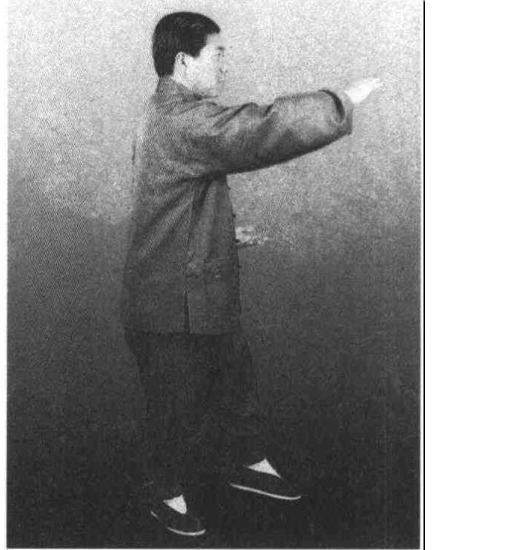
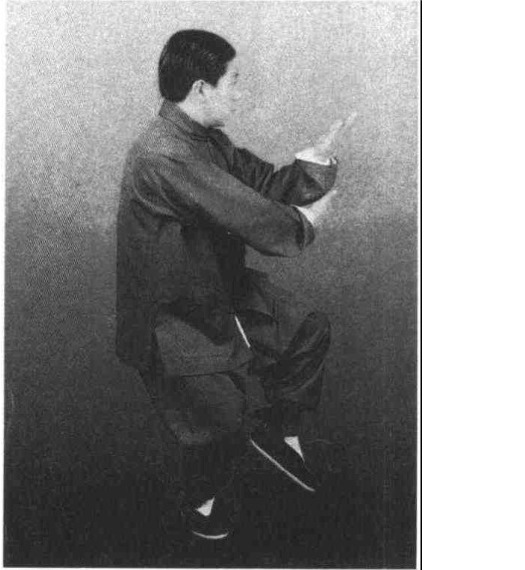
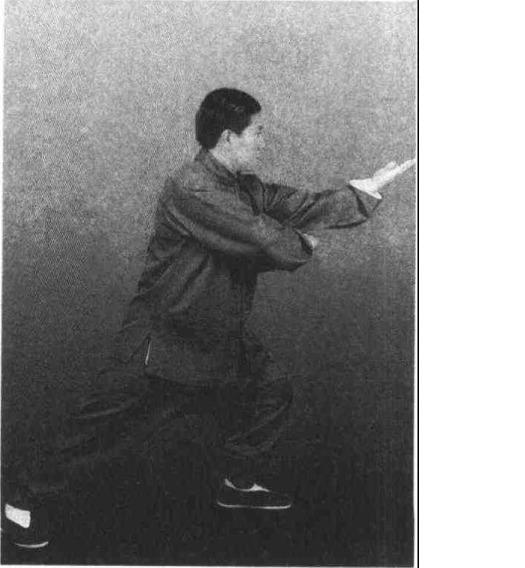
…coordination of waist and legs; in practice strive to have the hand arrive when the foot arrives, and take particular care that the bowing leg does not move too fast.
4. Error: threading and striking are not clearly distinguished, so that the left hand first goes up and then down. The main cause is a failure to understand the application. The threading palm thrusts at the opponent's throat; striking downward can only hit the chest. Correction: the palm must thread up along a downward-slanting line; it must not arc downward to strike.
VI. Teaching and practice methods 1. Mnemonic: at High Pat on the Horse the hand is held; bend the right leg and draw the right palm back; step the left leg nimbly forward; the left threading palm goes straight to the throat.
2. Constantly sharpen the distinction of empty and full. In the first half, when the Single Whip joins High Pat on the Horse, as the left foot is drawn back the right leg must be settled firm and the left leg lifted lightly; take care that the centre of gravity moves back, that the upper body does not lean forward, and that the left foot is not drawn back scraping the ground. When threading the palm, take care to settle the right leg firm so that the left leg steps forward nimbly. In teaching, observe and correct repeatedly so that the weight moves onto the supporting point and empty and full are clearly distinguished.
3. The learner should frequently and repeatedly practise the half-crouch position of the right leg, and the stepping forward and drawing back of the left leg, and may also alternate the legs, in order to feel empty and full and strengthen the legs.
4. Paired practice using the application: A — assumes the settled High Pat on the Horse; B — holds A's right hand with the left hand; A — crouches the right leg, draws the right hand back, steps the left leg forward and threads out the left palm; B — retreats slightly. In practice the teacher should explain the meaning and requirements of each detail of the movement, so that the learning becomes vivid.
5. So that beginners may simplify the movements while learning, they may learn with the hand still and the foot moving, or with the foot still and the hand moving, so that it is easier to watch and to imitate; but having once made clear the separate parts of hand and foot, they must immediately practise the hand and foot moving together. In this way they learn quickly and yet do not fall into disconnection and ruin of the movements.
VII. Technical analysis In High Pat on the Horse with Threading Palm, attention must be paid to nimbleness; if the body is sluggish one cannot advance or retreat at ease. Therefore the body must be nimble: no sooner has the opponent's force touched my skin than my intention has already entered his very bones.
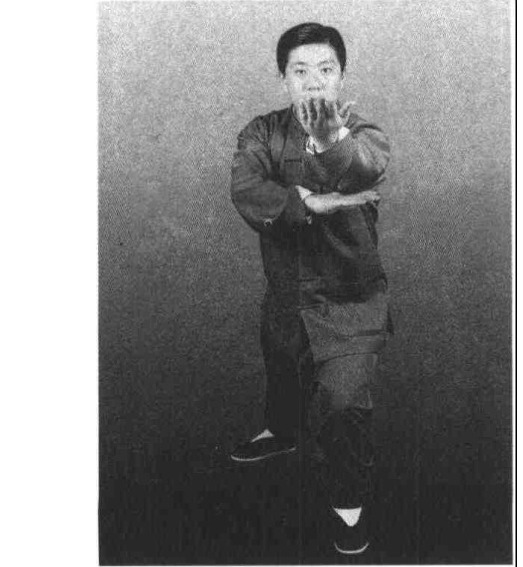
Phần 139
Posture Seventy-Three — the Cross-Shaped Leg
I. Application Continuing from the previous posture. If an opponent strikes across at me with his right hand from behind on my right, I quickly turn my body toward the right rear as I roll and turn, and at the same time the left arm turns up and bends back; as it embraces the right arm one above the other, I quickly separate the two hands forward and back to bar the opponent's hand. At the same time I quickly lift the right leg and thrust the heel at the opponent's right ribs; the opponent will then certainly fall back with the kick.
Note: In Master Yang Chengfu's book The Complete Book of Taijiquan: Substance and Application, Part One (1933 edition), only one plate of the settled Cross-Shaped Leg posture is given here; no sequence plates are listed, and the original way of practising it was the single swing-lotus leg. The method in this book is the form as finally revised and settled by Yang Chengfu, which has long been in wide circulation, and it is therefore taken as the final settled form of the present time. So that readers may understand something of the original way of practising it, it is described as follows:
After the left threading palm, the left toes turn inward and press down firmly, the body gradually turns right, and the weight gradually shifts entirely onto the left leg. At the same time the left palm, with the elbow bent, moves in an arc to the right past the face with the turn of the body, while the right palm remains below the upper left arm. The body continues to turn right, and the right foot is lifted and swings outward in an arc from left to upper right, the knee naturally slightly bent, the foot no higher than the shoulder, the instep turned somewhat to face right. At the same time the left palm strikes from above rightward and then leftward to meet the right foot.
Another method (a counter):
1. To counter the Cross-Shaped Leg, one may first brush the knee and then attack by other means.
2. To counter the Cross-Shaped Leg, one may also ward upward with the left hand, step the right foot forward, and use the right planting punch to counter it.
II. Sequence of movement 1. The body gradually turns right, the left toes turn inward and press down firmly, the weight gradually shifts entirely onto the left leg, and the right foot is lifted (the heel leaving the ground first). At the same time the left arm bends at the elbow and moves right, the centre of the palm facing inward, and the right palm, passing along the outside of the left arm, joins with the turn of the body to the right; as it joins, the arm rotates outward so that the centre of the palm turns to face inward, so that the two palms cross in front of the chest. The eyes follow the turn of the body and look level to the right, and the gaze must attend to the two palms embracing (see the first and second figures on this page).
2. The two palms separate to left and right. At the same time the right foot slowly…
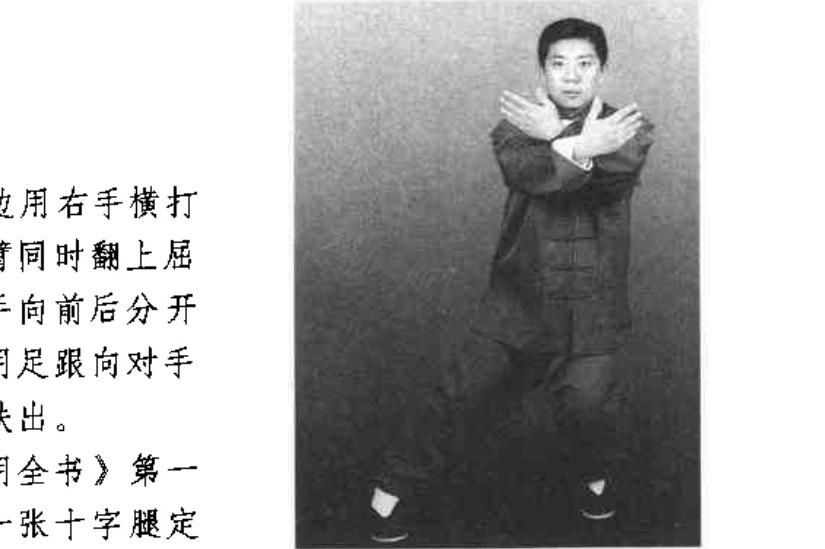
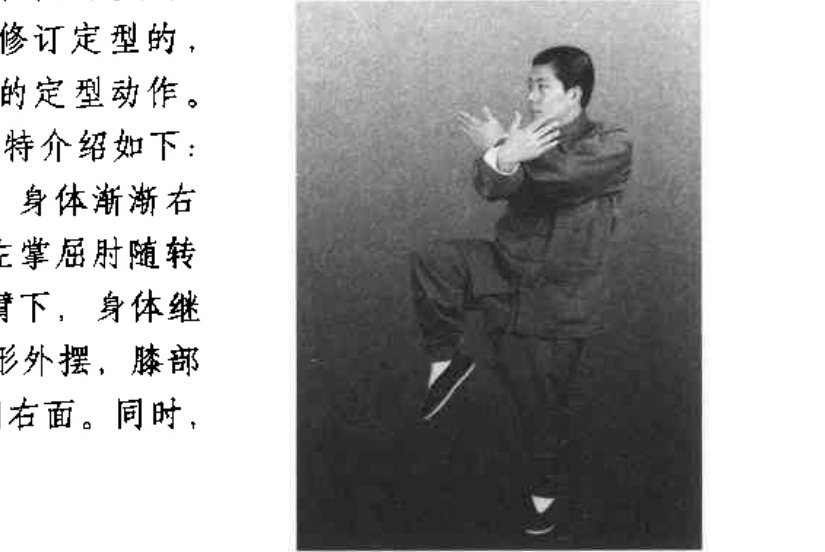
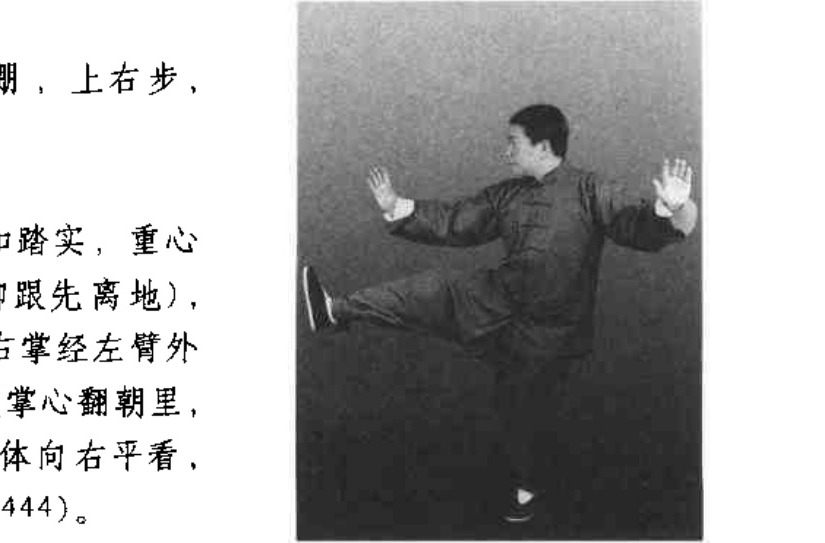
…slowly outward to the right, the toes pointing up; as the right leg thrusts out the left leg gradually straightens, though at the settled posture the knee is still slightly bent. The gaze attends to the right palm as it separates out, and looking level to the right past the right palm (see the first figure on this page, and compare the rear view in figure 210).
III. Key points 1. The waist and hips turn right and the left heel closes in, but the upper body must not lean forward or backward. The coccyx must be held centred, the central axis must not bend, and the turning must not sway, so that the inner strength can reach the nimble, lively use that supports all eight directions.
2. The left hand, following the right turn of waist and hips, moves from left to right in coordination, while the right hand arcs upward from below; the two hands cross and embrace in front of the chest, and must be full, neither loose and scattered nor shrunk.
3. To thrust out the right leg one must first lift the leg and concentrate the strength at the knee joint, stretching the ligaments of the hips (the lifted knee should generally be no lower than hip level); thus the leg can thrust to the ribs and meet the requirement of the application.
4. After the thrust, when the body is supported on the single leg, the body must be upright, with the upper and lower essentially in one line. Chen Xin says, "When the body method is correct the body's pillar is upright, leaning nowhere, containing emptiness and spirit within." Therefore at that moment, from the crown of the head to the perineum, there must always be a vertical line; leaning forward or backward, tilting left or right, all fail the requirement of the body method. This requires the whole body to relax so that the movement and the shifting of waist and legs become harmonious and coordinated.
IV. Requirements 1. The direction must be true. From High Pat on the Horse with Threading Palm facing east, turn the waist and hips and thrust out with the right leg. The direction of the thrust is due west, and the face is also toward the west.
2. The stance must be steady; when thrusting the leg one must not pull the body about and set it askew.
3. The foot must arrive and the hand must arrive.
4. Empty and full must be clear. From the moment the left toes turn inward, the weight shifts onto the left leg, so that the right leg may lift its knee nimbly.
V. Common errors, their causes, and how to correct them 1. Error: when the left foot turns inward, the weight shifts to the right. The main cause is that the application is not deeply understood. The opponent strikes across at me from behind my right; if I shift my weight right as I turn, my body leans right, and I thus deliver myself to be struck. At the same time this hinders a rapid turning of the body, and so increases…
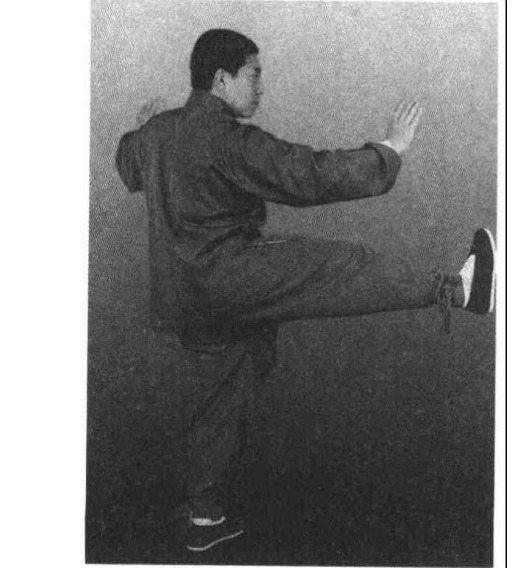
…increases the difficulty of observing the opponent's movements, which is unfavourable for meeting the attack quickly. Moreover, with the weight shifted right the two feet are double-weighted, which is unfavourable for both attack and defence, and because the load on the legs is reduced the benefit of the training is also reduced. Correction: the left foot turns inward, the weight remains on the left foot, the waist and hips turn, and the upper body turns toward the south-west; this then creates favourable conditions for the kick that follows.
2. Error: the two hands cross in front of the chest too tightly and too flat. The main causes are, first, that one attends only to the arcing movement of the left hand and neglects the movement of the right hand, and second, that the application is not sufficiently understood. Tightness and flatness both narrow the protective range of the two hands, making one easy to attack. Correction: attend to fullness, and the right hand must go outward and upward.
3. Error: the direction of the kick is not true. The main cause is generally that the left foot does not turn in enough, so that the direction of the kick leans toward the south-west; secondarily, a failure to understand the application. The opponent attacks from behind my right, so the main direction of my kick should be to the rear, that is, due west. Correction: the key is that the left foot must turn inward by more than 90 degrees; then the right foot's thrust will not only find the true direction easily but will not be awkward.
4. Error: the movement is uneven, sometimes fast and sometimes slow. The main cause is insufficient strength in the legs: the foot turns in quickly, the knee lifts slowly, the kick goes out quickly. Taijiquan is one of the internal martial arts, and it requires "from within to without" and "drawing the within out by the without" in order to raise the benefit of the training; under the guidance of intent it requires that the movements be light and unhurried, neither slow nor hurried. Therefore one must "let the form follow the movement of intent", striving to make inner and outer join, intent and breath link, and to leave no place of interruption or of fast and slow. Correction: the foot must turn in with the turning of the waist, the left foot settling firm, then lift the leg lightly and slowly, and as the left leg gradually rises slowly thrust out the right foot.
VI. Teaching and practice methods 1. The teacher observes the degree of the left foot's inward turn from the south, and the direction of the kick from the west.
2. The emphasis in teaching should be placed on the kicking leg: practise much and repeatedly supporting on the left foot alone and lifting the right leg to kick, in order to strengthen the legs and attain the requirements of steadiness and nimbleness.
VII. Technical analysis 1. In the Cross-Shaped Leg, what defends is the hand and what attacks is the leg; the hand merely bars, and the application lies chiefly in the leg.
2. If the kicking leg is not practised well it is easy to hold the breath. The breathing of Yang-style taijiquan is required to be entirely natural: one should adopt the natural method of breathing — long, even, fine, slow, neither hurried nor sluggish.
Phần 140
Posture Seventy-Four — Step Forward and Point at the Groin with the Fist
I. Application Continuing from the previous posture. If the opponent withdraws his hand, I immediately set the right foot down while the left foot advances and the knee bends and settles firm. At this moment, if the opponent again kicks up from below with his right foot, I quickly use my left hand to deflect the opponent's right foot outward past my left knee, and the right hand immediately closes into a fist and strikes (points) at the opponent's groin, the body leaning very slightly forward.
II. Sequence of movement 1. The left leg gradually crouches, the right foot is set down and held suspended, and the body gradually turns right. At the same time the right palm arcs from the right downward, passes in front of the upper abdomen and circles to the left; as it circles the arm rotates inward so that the centre of the palm turns downward; the left palm, too, sinks as the left leg crouches and the body turns right, and arcs forward and upward to the right (see the first figure on this page).
2. The body continues to turn right, and the right foot steps forward and to the right (west by north), the heel touching first; then the right toes swing outward 45 degrees, and as the weight gradually shifts onto the right leg the whole foot presses down firmly. With the turn of the body the right palm moves from the left upward and past the chest to the right; as it moves the arm rotates outward so that the centre of the palm gradually turns downward. The left palm arcs across to the front of the left chest (see the second figure on this page).
3. The weight gradually shifts entirely onto the right leg, and the left foot steps forward from the inner side of the right ankle, the heel touching first, while the body continues to turn slightly right. At the same time the right palm, following the turn, continues right, back and forward in an arc and is drawn in beside the right waist and closed into a fist, while the left palm brushes downward in an arc from front to right and then left. The eyes look level ahead, and the gaze must attend to the left palm (see the third and fourth figures on this page).
4. The body continues to turn gradually left, and the weight gradually shifts onto the left leg until the whole foot presses down firmly, the left leg bending and the right leg pressing out to form the left bow stance. At the same time the left palm brushes in an arc to the front of the left knee and comes to the side of the left knee, while the right fist is driven forward and down at the height of the abdomen, the body folding slightly at the waist. The eyes look level ahead, and the gaze must attend…
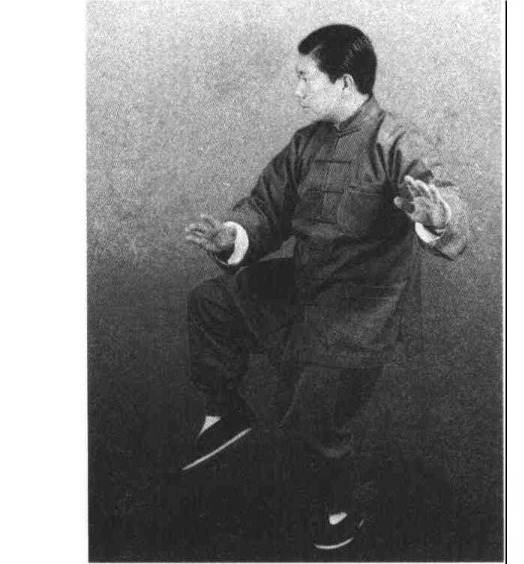
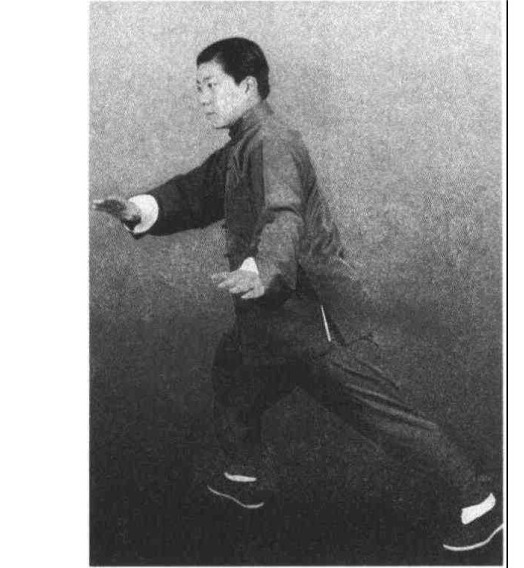
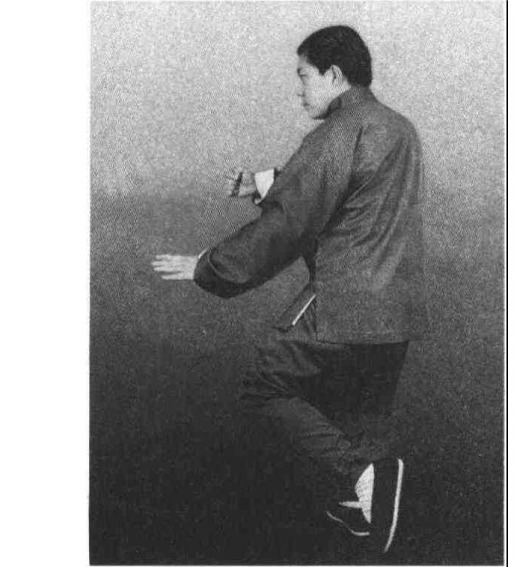
…and the left palm's brushing to the left and the right fist's striking out (see the fifth figure on this page).
III. Key points 1. As the right foot descends there must be a downward "sending" by the left leg (bending the left leg), and attention must be paid to keeping the upper body upright.
2. As the left foot advances, when the waist and hips turn left the left hand's brushing of the knee and the right fist's forward strike must be performed at the same time, with upper and lower, left and right mutually drawing and linking one another, so that the movement is not scattered. If the turn of the body is too great, it will overshoot.
3. The right fist's forward strike must be coordinated with the left leg's bending, the right leg's pressing out and the body's slight forward lean, so that body arrives, hand arrives and step arrives.
IV. Requirements 1. Empty and full must be clear: as the right foot descends the left leg must sink and settle firm.
2. The line of the fist's travel must be correct: it should be slightly curved, driven from the waist forward and slightly downward.
3. While brushing, the weight is on the right leg.
V. Common errors, their causes, and how to correct them 1. Error: the fist is closed too early. The main cause is that the application is not sufficiently understood. Correction: the strike follows immediately upon the brushing movement, so the fist should be closed at the moment when the left hand has finished brushing and the right hand has arced to the region of the waist; before that the fist should not be closed.
2. Error: the upper body does not lean slightly forward but instead drops the head and bends forward at the waist. The main cause is inattention to keeping the coccyx centred; this is a defect of the body method. Correction: although the body leans slightly forward, "the hundred meetings and the central pole, one breath running through" is required, forming a straight line from the crown of the head to the perineum.
3. Error: the two hands' movement pauses, especially as the right foot descends. The main cause is that the left leg has not sunk and settled firm; in order to keep the body balanced the hand movement is therefore stopped, causing upper and lower to be disconnected. Correction: settle the left leg firm, and let the two hands move in an arc with the turning of the waist.
VI. Teaching and practice methods 1. In this movement the linking movement must first be done well: repeatedly coach the sinking and slight bending of the left leg as the right leg descends, to lay a good foundation for the movements that follow.
2. Explain clearly that the upper body stays upright, and that as the right fist…
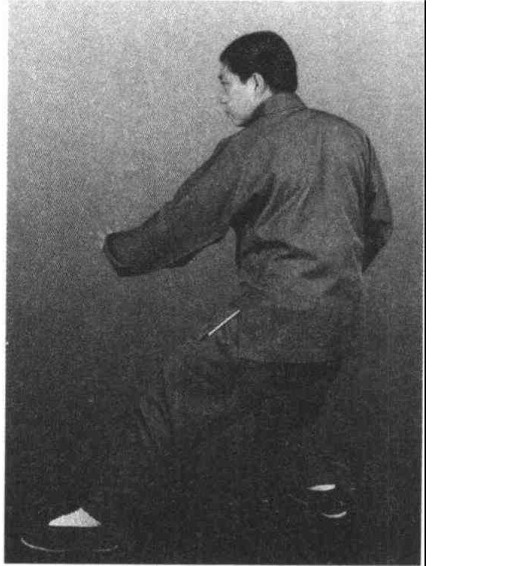
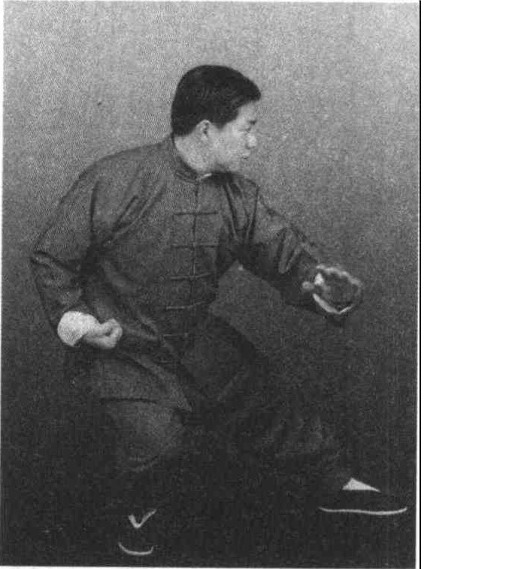
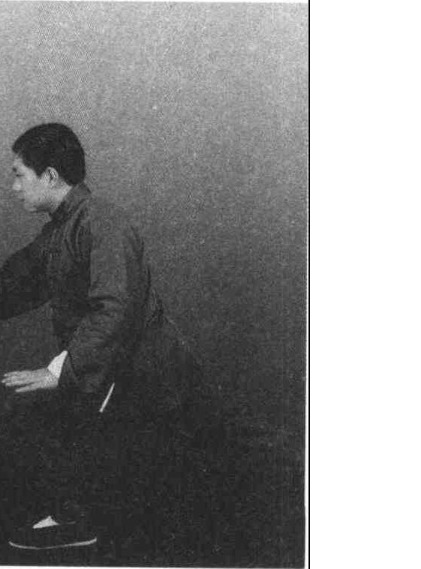
Striking forward, when the body turns into a slight forward lean, the head must not drop and the waist must not be curved — let the practitioner understand that a curved waist blocks the flow of qi and blood; explain and demonstrate this repeatedly.
3. The teacher must constantly correct the lateral distance of the stepping and the direction the foot points during practice, so that the hip-root and the limbs relate well to one another and the stance is consequently solid.
VII. Technical Analysis Advance Step and Strike Toward the Crotch has two movements: first, the parry of the left hand; second, the forward strike of the right hand — and two steps must be taken. This requires the movements to be continuous, upper and lower following one another. One must in particular train well the "calm mind and applied intent": before moving, dismiss all distracting thoughts, as if the ears heard nothing and the eyes saw nothing, so as to be in a state free of thought and worry. Once moving, concentrate the whole spirit on using intent to guide the performance of every movement. Therefore, in practising the form, mind comes first and body second, and one should use intent and not force, so that inner and outer become one.
Phần 141
Posture Seventy-Five — Step Up and Grasp the Bird's Tail
I. Application Same as Posture Three, Grasp the Bird's Tail: see the first figure on this page (the same as figure 131), and the next three figures (the same as figures 8 to 17); the sequence continues on the next page.
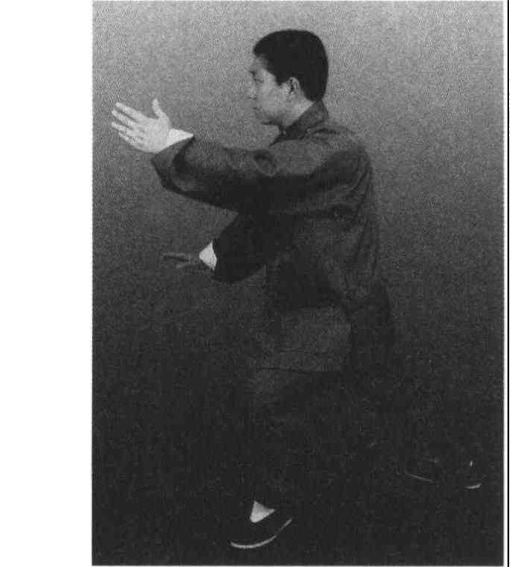
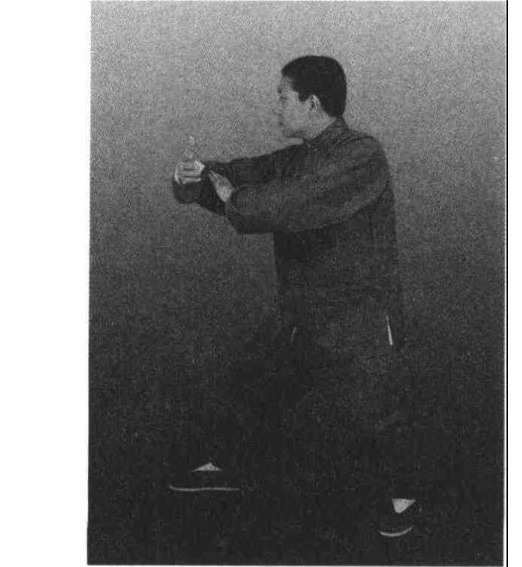
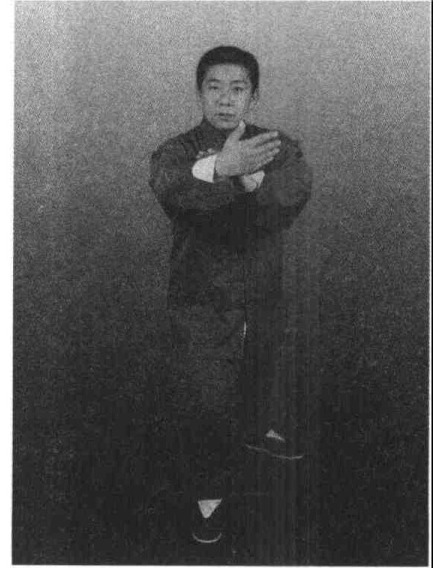
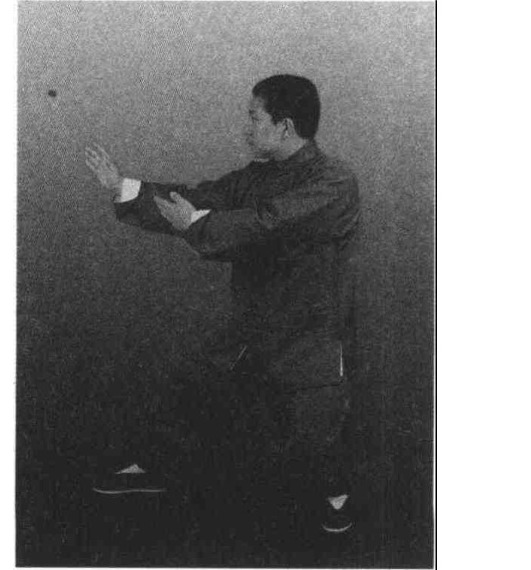
II. Course of Movement The body straightens and turns left, the left toe swings outward 45° and presses down firmly; the weight Gradually shift the whole weight onto the left leg and lift the right leg forward. At the same time, the left palm bends at the elbow and moves in an arc from the left upward to before the left chest, palm facing to the right; the right fist becomes a palm and scoops in an arc from the front toward the left to below the left forearm, and as it scoops, the arm turns outward so that the palm turns to face obliquely up-left and joins the left palm, both arms forming an arc. The eyes glance at the right palm, then turn to the left palm and look level to the front — see the first figure on the previous page (the same as figure 131).
All the other sections are the same as Posture Three, Grasp the Bird's Tail.
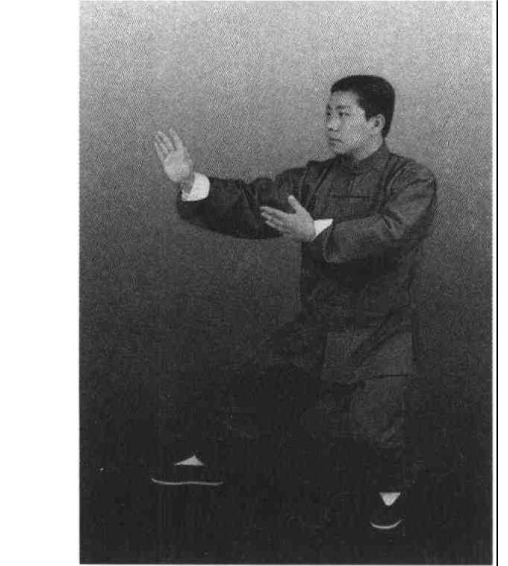
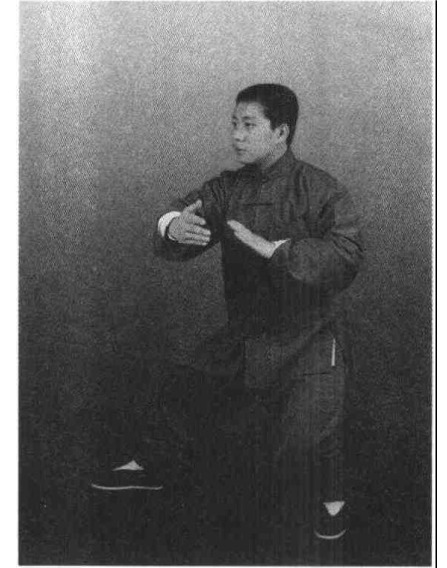
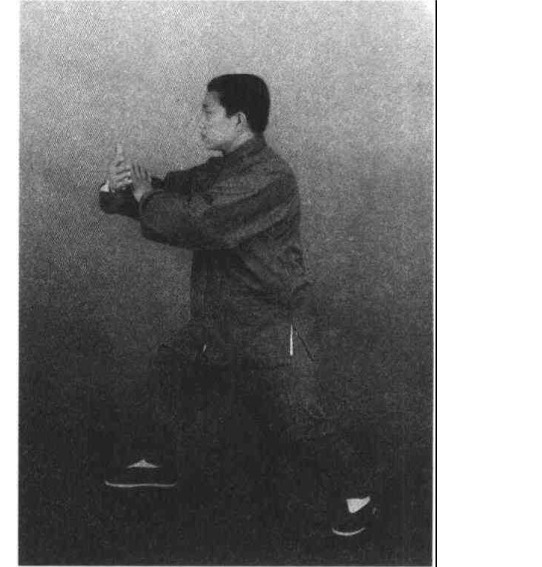
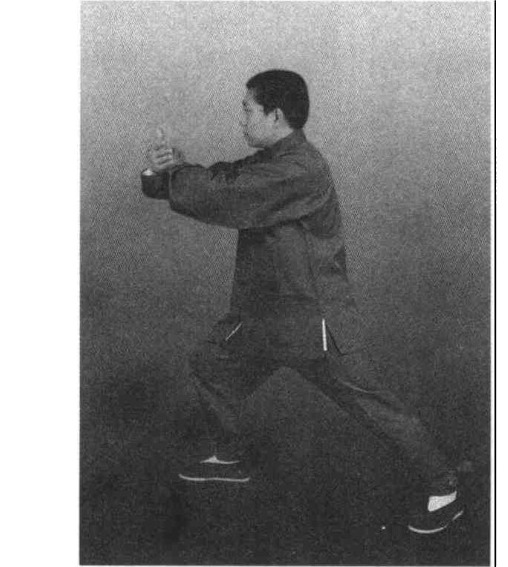
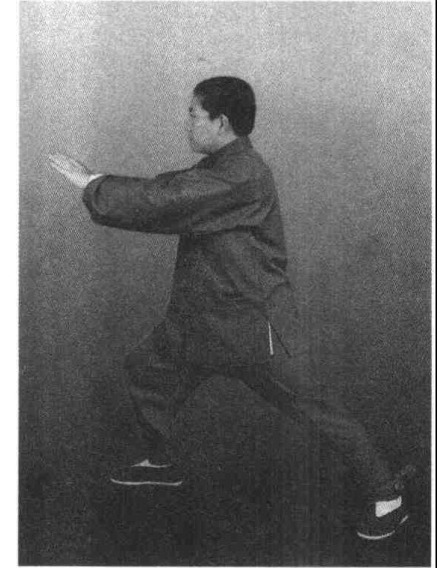
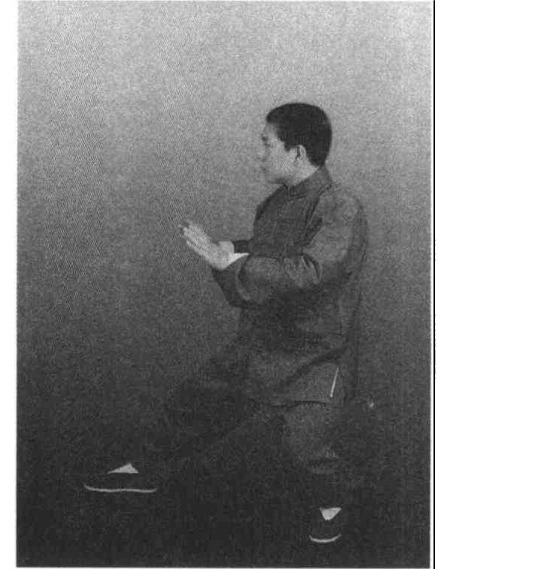
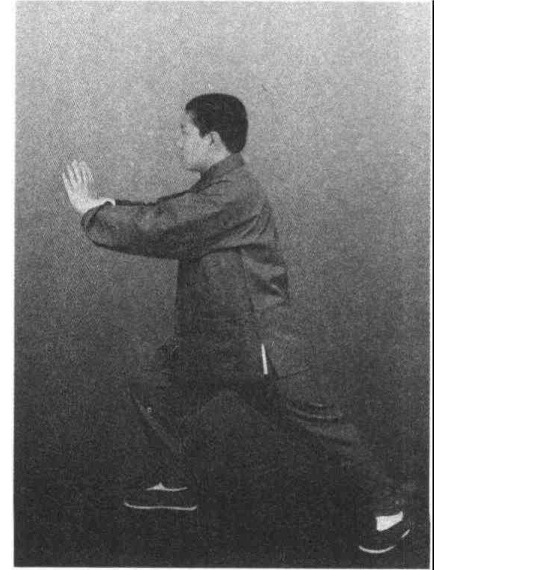
Phần 142
Posture Seventy-Six — Single Whip
The application, the course of movement and all the other sections are the same as Posture Four, Single Whip: see the first to the seventh figures on this page (the same as figures 18 to 23).
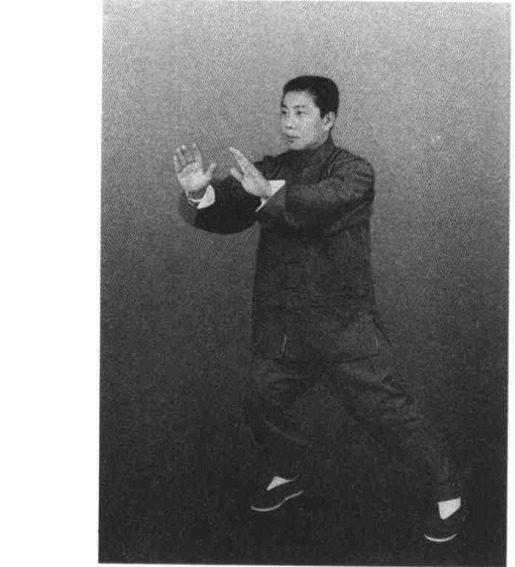
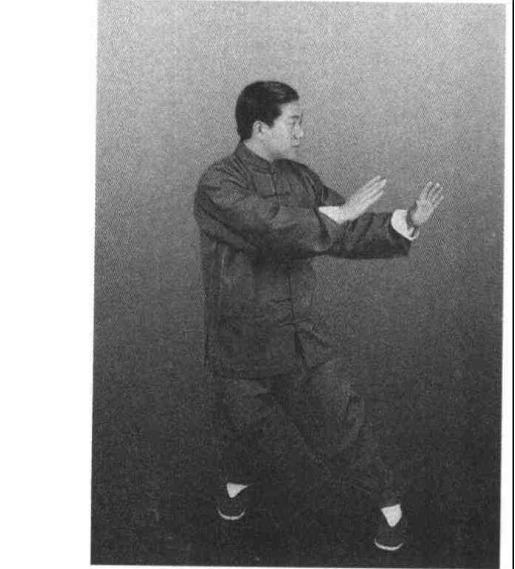
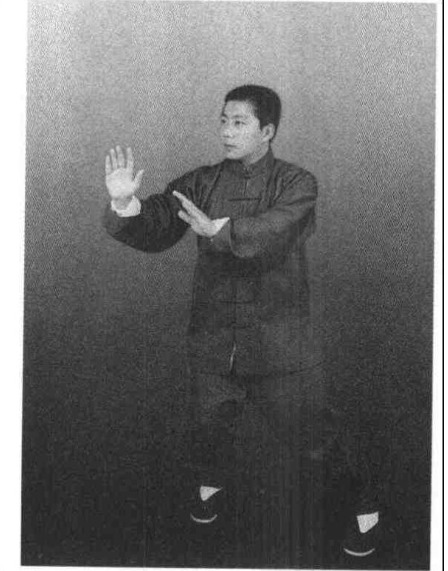
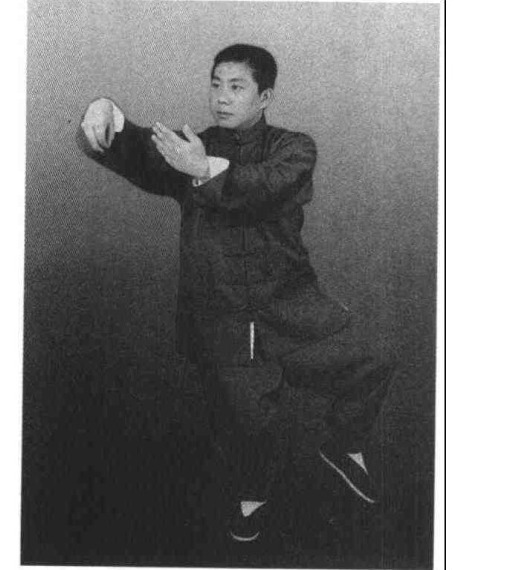
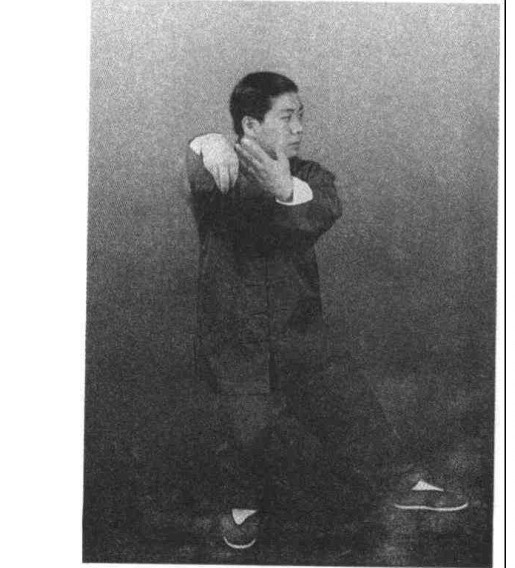
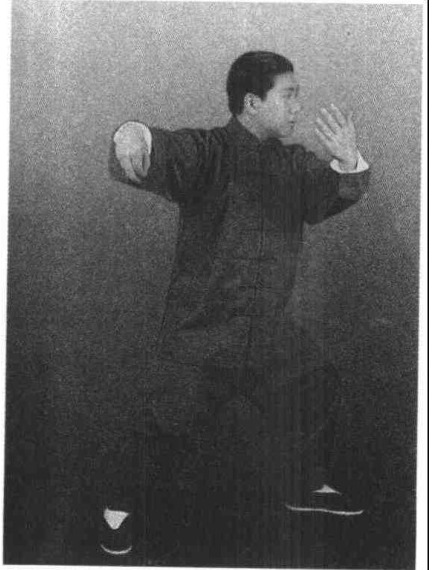
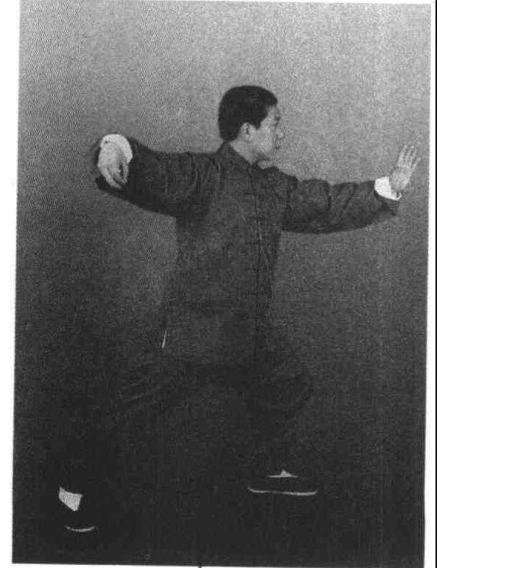
Phần 143
Posture Seventy-Seven — Push Down
The application, the course of movement and all the other sections are the same as Posture Fifty-Seven, Push Down: see the first figure on this page (the same as figure 349) and the second figure on this page (the same as figure 350).
I. Application Continuing from the previous posture. If the opponent chops downward with the right hand from above, I immediately rise, turn the body slightly left, step forward and advance, both hands become fists and at once gather and cross to form the character "seven," the eye of the fists facing obliquely inward to ward off. Striking straight at the opponent's chest with the fist is also permissible.
Another application is this:
The opponent strikes up and down with the right hand; I perform Step Up to Seven Stars and block with both hands. The opponent then drives straight at my chest and abdomen with the left fist; I at once change step, separate both hands (left hand up, right hand down) and immediately strike straight out with the press.
II. Course of Movement 1. The waist and hips gradually turn left, the weight moves forward, the body gradually rises forward and turns left, the left toe swings outward, the left leg bends at the knee and bows forward, the right leg presses; the weight gradually shifts forward onto the left leg. The left palm, warding with the fingers, gradually scoops upward, and the right hand drops slightly (see the third figure on this page).
2. The weight continues to move forward, the left leg bends at the knee and the whole body weight is supported by the left leg; the upper body continues to turn gradually left, the right heel leaves the ground first, the foot lifts forward past the inner side of the left ankle, and at the same time the left palm scoops up to before the chest while the right hand follows the right leg lifting forward and moves from back to front to before the waist (see the fourth figure on this page).
3. The right leg steps forward half a step and touches the ground with the ball of the foot, forming a right empty stance; at the same time the left palm continues to move forward, and as the two fists are about to meet they close. The right fist crosses forward below the left fist, and both ward off forward and up together. The two fists form the character "seven," level with the forehead, the eyes of the fists facing obliquely up. The eyes look level to the front, the gaze attending to the forward ward-off of the crossed fists (see the fifth figure on this page).
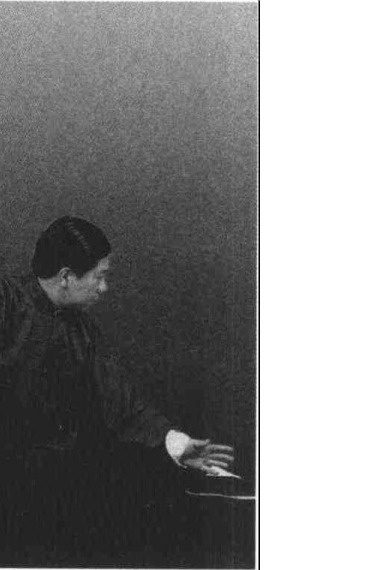
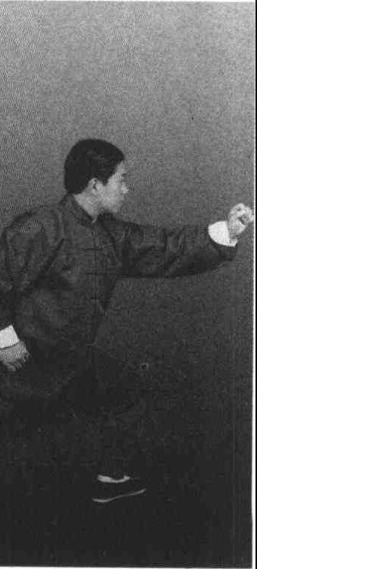
III. Key Points 1. In rising from the left drop stance, the movement must be led by the waist and hips: the left toe swings outward, the left leg gradually bends, the right leg gradually presses, the waist and hips relax, and the upper body moves level, forming a bow stance — do not rise by straightening both legs.
2. In passing from Push Down into the right empty stance, the body must not sway or lean forward; the upper body must stay upright and the waist and hips must be relaxed — do not stiffen the waist in order to keep balance.
3. When the two fists ward off forward and up, take care not to make it a forward flicking-up movement. The back of the fist follows the forearm; the whole back of the hand does not face outward.
4. When the two fists ward off forward, the shoulders must not rise or lock because the fists have crossed. The two arms must form an arc, attaining stored curvature and fullness.
5. One must be still altogether when still and move altogether when moving, and must change the inner force under the requirement of containing closure within opening and separation within closing; only thus can one train to the point of "touched, it turns freely, and never lacks power." The famous masters of Taijiquan in former times reached the technical state of "wherever it is leaned upon, there strike."
IV. Requirements 1. In passing from Push Down into this posture's right empty stance, each posture must carry through from the one before. When Push Down connects to Step Up to Seven Stars, the Push Down must not come to a dead stop — there must be "force broken but intent unbroken," "broken and then rejoined"; that is, the Push Down appears to pause, but in fact the intent is still focused and the inner force is still turning. Hence the requirement that the link and the transfer be nimble.
2. Rising from Push Down into the right empty stance of Step Up to Seven Stars, empty and full must be clearly distinguished, the step must not drag, and the body must not sway.
3. In the right empty stance, the waist and crotch must sink and be full — round and yet empty; the crotch must not be pinched into a pointed "inverted V."
4. In changing both hands into fists, the fists must close as they change.
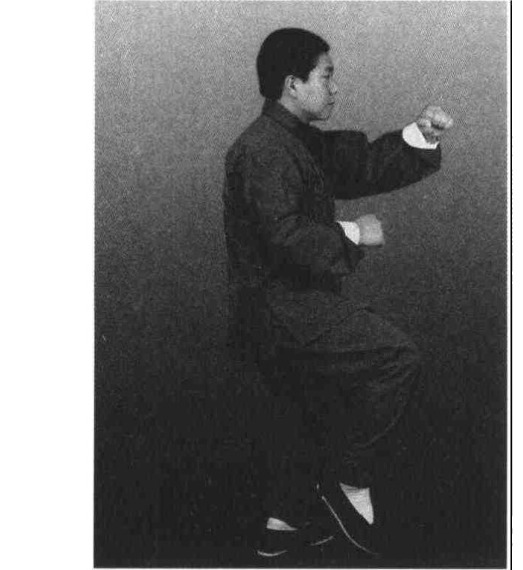
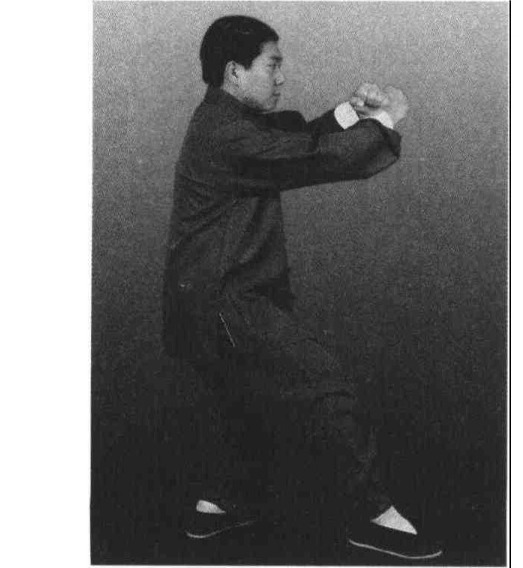
V. Errors, Causes, Corrections 1. Error: the crossed fists are too close to the chest, too far, too high or too low. The main cause is insufficient clarity about the application. One must know that the opponent chops down from above with the right hand: if I close the fists too close, the head is easily attacked. Since the opponent's attacking hand has already reached my head, if the fists are too far the arms straighten and the force is insufficient. If too high, my chest and abdomen are too "empty" and exposed to the opponent and easily attacked. Correction: repeatedly check and practise, and the fists are slightly higher than the shoulders and the two arms form an arc.
2. Error: in the right empty stance the right foot presses down firmly, producing double weighting. The main cause is that both legs are weak and the right foot shares the body weight in the hope of lightening the load on the left foot. A further cause is failure to understand the martial meaning. If both feet stand firm, then in advancing or retreating two movements are needed — first shift the weight, and only then can the right foot advance or retreat — and thus the moment is lost and one is beaten while passive. Correction: let the left leg bear the whole body weight, and repeatedly move the right leg forward and back, to strengthen the leg and experience empty and full.
3. Error: the upper body leans forward on rising. The main cause is that the left leg is weak, so one wants to use the forward lean of the upper body to lift the rear right leg. Correction: on rising, bow the left leg forward so that the weight shifts forward onto the left leg. But the fundamental method still lies in training the muscular strength of the legs: practise more the rising movement that connects Push Down to Step Up to Seven Stars. If elderly or weak, one may take a higher frame — that is, a larger angle of bend in the left leg — which lowers the difficulty and makes the movement easy to complete.
4. Error: when the two fists gather and cross into the character "seven," the position of the fists is wrong — some have the eye of the fist facing inward, some facing up. The main cause is shallow experience of the application. The opponent chops down from above with the right hand; I ward off forward and up with the two fists, and so the backs of the fists must follow the forearms and the eyes of the fists must face slightly obliquely up. If the eyes of the fists face up or the centres of the fists face inward, the former has no ward-off force and the latter causes the elbows to lift, so that one cannot relax the shoulders and drop the elbows. Correction: the eyes of the fists should face slightly obliquely up.
VI. Teaching and Practice Methods 1. The teacher observes from different angles the lateral distance between the legs, and the position and direction of the two fists, at the final position.
2. The emphasis should be placed on the rising from Push Down into Step Up to Seven Stars, because at this point the leg muscles bear the heaviest load. Above all one must train shifting the weight forward.
3. Teach so that the movement is even. Sudden speeding up is especially easy on rising. The forward movement of the two arms is also apt to speed up; one must be neither slow nor hurried, and within a single movement the hands and feet must move evenly, and throughout the whole Taijiquan set every posture must be even.
4. Paired practice combining the application: A — takes the final position of Push Down. B — stands directly in front and chops down from above with the right hand. A — bows the left leg, makes the right empty stance, both hands change to fists forward and up, gathering and crossing to ward off outward in the character "seven." The two then exchange and repeat.
VII. Technical Analysis 1. In the complete Yang-style Taijiquan set there are two "Push Down" postures: one follows "Golden Rooster Stands on One Leg," the other precedes this movement, "Step Up to Seven Stars." When the weight moves forward, "the tailbone centred and upright" is required, which means the two hip joints must be set straight and upright, advancing and retreating together, or exchanging evenly, striving to be neither leaning nor tilted, aligned above with the two shoulder joints and moving in the same direction — conforming to the requirement that "shoulders and hips unite."
2. In passing from Push Down into Step Up to Seven Stars, as the weight moves forward and one bows the left knee and lifts the right leg to rise, the body's centre of gravity moves far from the support point; if the frame is low, the amount of exercise grows even greater. Beginners may therefore take a higher frame, bringing the centre of gravity nearer, which also lightens the load on the legs and makes rising easier.
Phần 144
Posture Seventy-Nine — Retreat a Step and Ride the Tiger
I. Application Continuing from the previous posture. If the opponent presses in with both hands, I at once stick my two wrists to the inner sides of the opponent's two wrists; the left hand spreads open toward the lower left, the right hand sticks and rises past the upper right, and both my palms turn outward with it. The right foot then withdraws a step backward, comes down and sits firmly, the waist sinks and the force goes down, and the left foot lifts with it, the toe touching the ground, forming the ride-the-tiger shape, so that the whole strength of the opponent falls into emptiness. At this moment, fierce as a tiger though the opponent be, at the slightest turn he comes under my control.
II. Course of Movement 1. The waist turns right about 70° or more, the right foot withdraws a step to the right-rear, the weight gradually shifts onto the right leg; at the same time the two fists become palms and separate, both palms descending together, the right palm following the turn in an arc slightly downward and then, as the back of the hand turns outward, moving slightly upward to before the right chest, while the left palm follows the turn in an arc to a point near the crook of the right elbow (see the first figure on this page).
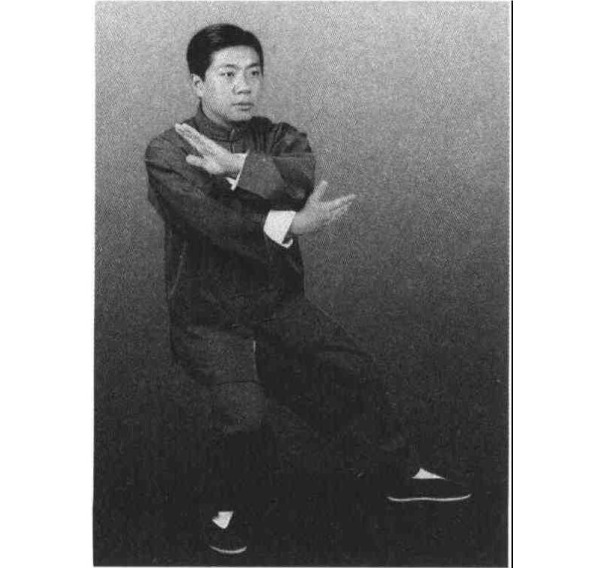
2. The waist turns back to the left, the body still faces forward (east); the left foot lifts slightly and comes down essentially in the same place, touching the ground with the toe, forming a left empty stance. At the same time both hands continue to separate left and right: the right palm, as the body turns right, goes from front to down, then as the body turns back to face forward rises and opens up to the upper right; as it lifts, the right arm rotates inward so that the palm faces front-right, the fingers obliquely up, slightly higher than the head, moving to the upper right of the body, while the left palm falls in an arc to the lower left beside the left hip, palm facing down, fingers pointing forward. The gaze first attends to the right palm and looks to the front-right past the right elbow, then, after attending to both palms lifting and tearing down, looks forward (see the second and third figures on this page).
III. Key Points 1. Turning the body and withdrawing the step, and separating the two hands, must be done at the same time. This is a process of neutralizing: the opponent presses in, I turn the waist and withdraw the step, so that the pressing force that came straight in falls into emptiness. The waist and crotch are the key to regulating the amount of movement and to strengthening the explosive force; hence the rotation of the waist is required to be relaxed and sinking, straight and upright, without swaying or swinging — otherwise the sticking and the tearing will lack force.
2. Do not separate the two hands too fast; at the start the separation is of small extent. While turning the waist and withdrawing the step, the left hand is still at the crook of the right elbow, and only when the opponent's pressing force begins to waver do I separate the two hands further — the left hand tearing down, the right hand sticking and lifting (the right upper arm essentially level with the shoulder, the right forearm slanting). Note that as the right hand pulls up, the waist must lower.
3. When withdrawing the step backward, note where the right foot lands — do not place it on the same line. The foot is the root of the stance and the stepping; if the root is unsteady, then at the slightest deviation the stance and the stepping must fall into disorder. Victory lies in advancing to seize position; freedom from defeat lies in retreating a step to avoid the point — so the correct placement of the foot when withdrawing is very important.
4. When the right foot retreats and sits firmly, the waist and hips must sink, for only thus can one seize the moment and the position and keep the lower body stable. On the basis of relaxation, attend to straightness and sinking — do not press down stiffly or pull up stiffly, which would impair the flexibility of the waist's rotation. Used properly, the power of the waist can concentrate the strength of the whole body at one point.
IV. Requirements 1. There must be "one movement and nothing unmoving": turning the waist, withdrawing the step and separating the hands move together, upper and lower following one another, neither first nor last.
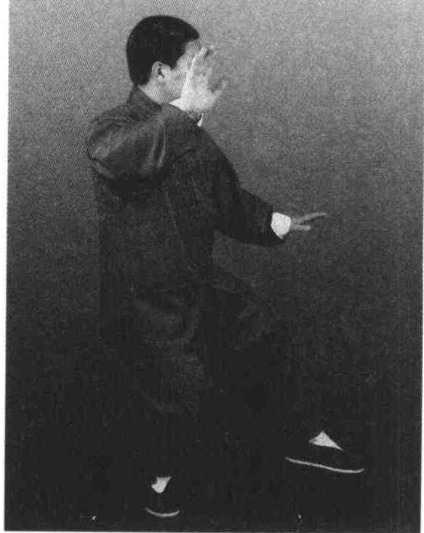
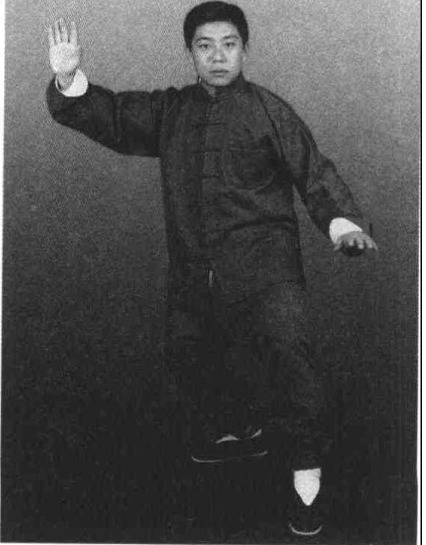
2. The chest must not be thrust out; one must contain the chest and raise the back. Thrusting the chest causes qi to crowd the chest, making the upper heavy and the lower light, so that the heels float up easily.
3. In withdrawing the step and forming the left empty stance, the weight must not fluctuate up and down.
4. The forward left empty leg and the right side of the chest have a tendency to attract and connect, so that the empty leg does not float off to one side and the upper and lower, left and right, are symmetrical and coordinated.
V. Errors, Causes, Corrections 1. Error: on retreating the step, empty and full are unclear and the weight is unsteady. The main cause is tension in the waist and hips, and the left leg not sitting firmly. Correction: the step should change with the body. The conversion of empty and full in the stepping must, along with the conversion of the body method, make the waist alternately draw and exchange left and right waist-gaps during the movement so as to divide empty and full; there must be "the two legs following one another below." Therefore, when the right leg descends to the right-rear with the turning of the waist, the right waist-gap must be empty and relaxed, and as the waist and hips relax and sink slightly, the stability of the weight is helped; moreover the right leg may retreat only slowly, and only after the left leg has sat firmly.
2. Error: after retreating, the two feet stand on the same line, causing the body to sway and be unsteady. The main cause is that the right leg wrongly goes back and to the left, so that the two feet stand on one line; with a small base the body will sway. This is unreasonable in terms of application: the opponent presses, the force coming in is straight forward; only if I step out to the right-rear and turn the waist can I use the neutralizing method and change the direction of the opponent's force. If I retreat straight back, that forms a clash; not only is the stance unsteady, but I cannot change the opponent's straight-forward pressing force, and I put myself at a passive disadvantage. Correction: the right foot, retreating, should go slightly to the right-rear.
3. Error: the two hands separate too early. The main cause is shallow understanding of the application. If the opponent's straight-forward pressing force is met by my two hands forcibly separating up and down, there is difficulty. One should first turn the waist and retreat the step, and only after his force has shifted and dispersed do I tear down and stick and lift, so as to make the whole strength of the opponent fall into emptiness. Correction: on retreating, first bring the left hand near the crook of the right arm so that the two wrists stick to the inner sides of the opponent's two wrists, and only then separate.
4. Error: the path of the two hands' movement is wrong — just one big circle drawn up and down. The main cause is insufficient understanding of the application, producing "scattering." Correction: in the mind, use my two wrists stick to the opponent's two wrists, and as I turn the waist right and retreat the step backward, my two hands first sink slightly, then move right with the turning waist; then the left palm, palm facing down, tears to the lower left, while the back of the right hand faces outward and sticks and lifts to the upper right. In this way there is both a vertical circle and a horizontal circle — it is not an unconscious random drawing of circles.
5. Error: the two hands stay rather close to the body, at essentially the same distance as in White Crane Spreads Its Wings. The main cause is shallow understanding of the application. The opponent is using the press; if my two hands are a small distance apart vertically and close to the body, not only can I not make the opponent's whole strength fall into emptiness, but it is very easy for him to take advantage of my position to attack at will.
VI. Teaching and Practice Methods 1. Broken-down practice: (1) the movement of the hands — first right, then separate up and down. (2) the movement of the feet — sit firmly on the left leg, the right leg retreats to the right-rear. (3) the complete movement.
2. Paired practice combining the application: A — presses with both hands on B. B — retreats the step and turns the waist, both hands sticking to the inner sides of A's two wrists, drawing back and to the right (neutralizing), then separates the two hands up and down, tearing left and lifting right, so that A's two-handed press falls into emptiness. In the paired practice the two exchange and repeat, and must experience the meaning of turning the body and retreating the step.
Phần 145
Posture Eighty — Turn the Body and Swing the Lotus
I. Application Continuing from the previous posture. If there is an opponent in front, and another opponent strikes from behind me with the right hand, then in this emergency where both front and rear must be guarded, I at once spin the right foot in place, the left foot hangs up behind and revolves with the body, and at the same time I use both hands and the left foot in the manner of a whirlwind, sweeping hands and foot together at the opponent's upper and lower parts. After revolving one full circle I return to the original position, and immediately stick to the right elbow and wrist of the opponent in front; then, going around to the opponent's inner wrist-gate, I ward, carry and tear back to the left, and at the same time swiftly kick with the back of the right foot at the opponent's chest and ribs using crosswise force. Where the foot passes it is like a fierce wind swaying lotus leaves — the so-called supple waist folding a hundred times as if boneless, and sweeping away, the whole body is hands. The subtlety of this skill is not something a beginner can grasp at once. II. Course of Movement 1. The movement begins: the right leg sinks slightly, the waist turns slightly right, the right palm comes down in an arc slightly to the right from above and pushes out past the chest, the palm slanting forward, the fingers slanting; at the same time the waist turns slightly left to face the front, the left palm rises in an arc slightly to the left from beside the left hip and guards up to before the left forehead, the fingers passing slightly above the head, the palm facing forward, the fingers slanting up. The eyes attend to the movement of the two hands, then look level to the front (see the first figure on this page).
2. Pivoting on the ball of the right foot, begin to revolve to the right-rear; the body must first sink down, the waist and hips relax, the right leg sinks, and then the waist and hips turn right-rear, the left foot with it rising slightly by pressing the ground, the left leg opening out and swinging to the right-rear with the turn. During the turn both palms face down and the two arms form an arc, the left hand high and the right low; as the turn proceeds the right palm rises level with the nose and the left palm level with the chest, the left palm slightly lower than the right elbow, the left palm still facing down and the right palm slanting forward. Because the "sweep" is done with both hands and the left foot at the same time, hands and foot swing around together with the turning of the body (see the second figure on this page).
3. Turning the waist and swinging the leg, the left foot swings toward the rear-left (northwest) obliquely; the toe turns in and touches the ground, the left toe pointing east-northeast, the left toe a little behind the right heel, the right toe pointing east-southeast. The waist and hips sink down, the weight gradually shifts onto the left foot until the whole foot is firm, and the left leg sits firmly with the knee bent. The right foot then slowly lifts, the body continues to turn right, and both palms shift rightward with the turn, the face toward the east, the hands toward the southeast corner diagonally; the right palm moves to the front-right diagonal of the body, and the left palm moves to the left of the right elbow, slightly lower than the right elbow. The gaze shifts with the direction of the hands (see the third and fourth figures on this page).
4. The waist turns slightly left, the left leg rises a little, the right foot lifts and goes left, and then the waist turns; the right leg swings outward in an arc from left to right and upward, the knee naturally slightly bent, the foot need not rise above the shoulder (because the instep kicks crosswise at the opponent's chest and ribs), the instep facing slightly to the right. At the same time hand and foot respond to one another — hand welcoming foot, foot welcoming hand — and both palms strike from right to left against the face of the right foot, the left hand slightly first and the right slightly after. The body continues to turn right and both hands swing with the momentum to the front-left diagonal, facing north-by-west. The gaze attends to the meeting of the two palms and the instep, then looks level forward (see the fifth and sixth figures on this page).
III. Key Points 1. The left hand guarding the forehead is oblique, not horizontal, otherwise would form a carried shoulder and a raised elbow. The right hand pushing forward must also be slightly oblique — it must not be horizontal or straight — and the fingers on the body's centreline, so that the fingers of the upper and lower hands cross slightly.
2. The revolving movement of Turn the Body and Swing the Lotus is comparatively difficult: one must "stand like the beam of a steelyard, move like a wheel." In revolving, the waist must be set straight and upright like a great banner and vertical, steady and roundly turning like the steelyard weight — not swaying, not collapsing. The turning must pivot on the ball of the right foot, the left foot pressing the ground slightly; first turn the waist and hips, and then the left leg swings to the right-rear with the momentum; only thus can the turn be round and lively. Hence the centre of gravity in the revolution must always be on the ball of the right foot, and must not deviate. The waist must not be stiffly held up, nor must it "fall apart."
3. After revolving, the left toe turns in and comes down, and the right foot at once becomes empty and lifts — only thus can empty and full be clearly distinguished.
4. After revolving, when the two hands move to the southeast they should not pause, but should continuously coordinate with the movement of the right foot and shift gradually to the left.
5. "Body shape and waist support — how could they be absent?" Therefore when the left foot comes down one must gradually squat, and then, as the waist turns from left to right and the right foot lifts and swings from left to right and up, the body must not only avoid leaning forward or back but must also have the intent of pressing up and stretching out.
6. After revolving, the right foot shifts left and then swings out to the right in a kick. This circle should not be too large; if it is large the movement "scatters," and the speed of movement slows and the time lengthens, so that the chance of kicking the opponent is reduced and the requirement of the application is not met.
7. Hand and foot meeting in the strike should pat lightly — the sound need not be loud. One must be relaxed, quiet and natural, because the substance of the movement is the two hands tearing to the lower left and the right leg swinging crosswise from left to right; the pat is only a form, and if the pat is heavy it actually interrupts the movement.
8. The right leg's swing is crosswise force: the turning of the waist must lead the swing of the right leg, and at the same time the hands and the foot move in opposite directions yet echo one another, which makes the movement of the leg more powerful.
9. In revolving, the two hands are before the chest and the left foot opens out and swings with the waist's revolution; at this moment hands and foot sweep at the opponent's upper and lower parts, so there must be the manner of a whirlwind, and it must be fast. The right foot kicks out with crosswise force, and where the foot passes is like a fierce wind swaying lotus leaves — this too must be fast. The boxing treatise says: "When the movement is urgent, respond urgently;
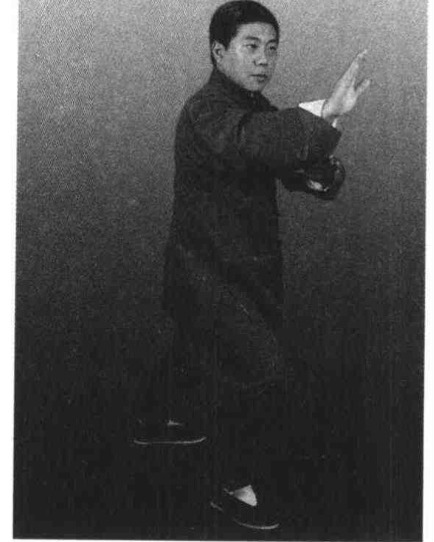
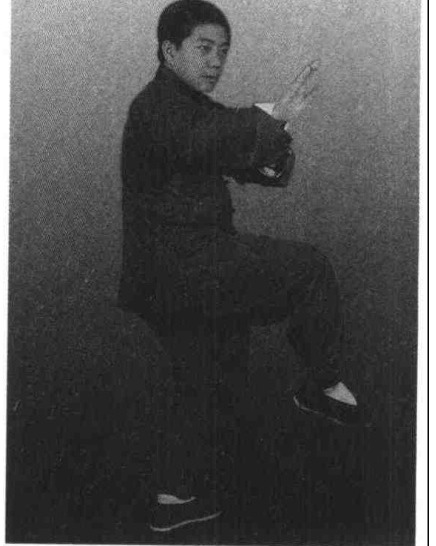
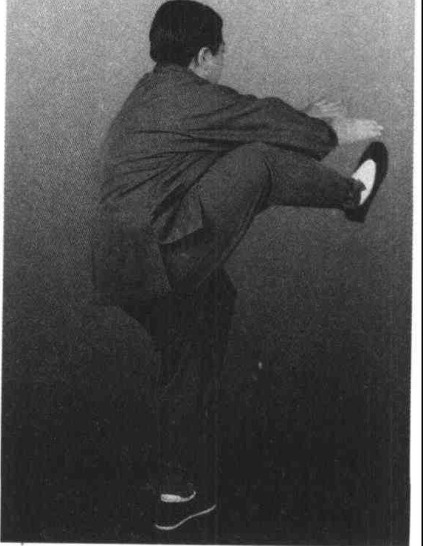
when the movement is slow, follow slowly"; "use stillness to master motion, strike later but arrive first." It can be seen that the application of Taijiquan is not simply a requirement of slowness — it requires the ability both to be slow and to be fast. Chen Xin said: "In slowness, be slow enough that others cannot keep up with me; in speed, be fast enough that others cannot keep up with me." So Taijiquan trains lightness and agility precisely in order to attain a later heaviness and speed, and in order that "in movement nothing, however small, is not reached." Relaxation and quietness must be stressed; therefore in practising Taijiquan, apart from a few individual movements, one should not be fast — one should be slow, light, agile and even, especially as a beginner.
IV. Requirements 1. Turn the Body and Swing the Lotus: first the turning of the body, second the swinging kick. The turn must be turned steadily, the body not swaying; the kick must be kicked roundly, with turning power and force.
2. The turning of the body should be led by the waist, and the swinging kick should also be led by the waist; one must not move only the leg without moving the waist — the principle "the master is in the waist" must be embodied.
3. After the right leg has swung and kicked, the left foot must still stand steady; the two hands swing left, and the right leg hangs rather than quickly coming to the ground — it hangs light, agile, steady and firm.
4. The positions of the two feet must be stood accurately.
V. Errors, Causes, Corrections 1. Error: at the start of the movement one attends only to the movement of the hands (left hand raising to the frame, right hand pushing forward) without attending to turning the waist and sinking, and after the body revolves one does not attend to sinking when the left foot lands, nor to the turning of the waist and hips. The main cause is neglect of "upper and lower following one another." Grandmaster Yang Chengfu's orally transmitted Ten Essentials of Taijiquan says: "When the hand moves, the waist moves, the foot moves, the eyes move with them — only thus can it be called upper and lower following one another. If one thing does not move, it is scattered." In terms of training the body, when hands, waist and feet all move the qi and blood of the whole body circulate and more muscular and other bodily tissues take part in the activity; this is a method of practice that stresses wholeness. As for the sinking of the body: in terms of application, a lowered centre of gravity makes the revolution steadier and gives the tearing and other hand movements a firm root. Correction: the waist should be the key to the turning of the upper and lower limbs, and one should use sinking to bring out the force of the crotch and hips, so that issuing force does not become floating and powerless and the movements remain agile.
2. Error: when the body revolves, the two hands suddenly change height, causing interruption. The main cause is that attention is focused on a part — if on the hands, then only the hands move; if on the foot, then only the foot moves. This is the error beginners most easily commit, one of the errors beginners most easily commit. If during the revolution the two hands do not move and only the revolution is done, then when the revolution is finished the height of the hands is suddenly corrected. Correction: from the very start of the revolution the two hands change height, going from left hand high and right hand low gradually to right hand high and left hand low. In this way there is no sudden change but a gradual one, which also conforms to the principle "one movement and nothing unmoving."
3. Error: after the revolution the direction of the body is incorrect. The left foot swings around too far and lands beyond northeast, so that the direction of the swinging kick goes beyond southeast. In terms of application, when the left foot has landed it is already close to the opponent, and the right leg's swinging kick has lost its effect. In some cases the revolution is insufficient and the left foot lands at the southeast, so that the direction of the right leg's swing is northeast, and then the right leg's swing cannot possibly reach the opponent. The main cause lies in not understanding the application. In Turn the Body and Swing the Lotus the enemy is front and rear — one opponent in front, one behind — and after the revolution one must still face the front (east) to deal with the attacking enemy. Correction: there must be control in the revolution; the left foot lands in a northwesterly direction, the right foot in front and the left foot behind.
4. Error: the revolution is poor and the swaying unsteady. The main cause is that the method has not been mastered. Correction: begin the revolution with the weight on the right foot, the left toe helping to keep balance, until the waist has turned so that the face is about to turn westward — only then lightly tap the left toe, lift the left leg, and swing it with the waist's revolution. Then, with one more slight turn of the waist, the left leg can swing around and come down with the momentum; the time spent on one leg is not long, and the body will not topple east and west. Moreover, in terms of application, the line along which the swinging force acts must be long, and then the sweeping power is greater.
5. Error: there is a pause in the middle of the movement — for example at the start, when the left hand raises to the frame and the right hand pushes forward; when preparing to revolve; and when the left foot lands after the revolution. All of these cause brief pauses. The main cause is shallow experience of unbroken continuity. Taijiquan masters most avoid having beginnings and endings, breaks and continuations, because when the old force is exhausted and the new force has not yet been born, this is the moment when one is most easily taken advantage of. Correction: Taijiquan uses intent and not force, unbroken from beginning to end, cycling round and beginning again, endless. Every posture must attend to rising, bearing, turning and closing, and must also attend to continuity in every movement; in the transitions of direction, the spirit must be gathered together, and only then can the opportunity and momentum for the next posture arise. There must absolutely be no pause anywhere in the movement. One must also attend to inner and outer, upper and lower, left and right, front and rear being coordinated and unified, and achieve "inner and outer united," "one qi running through," "done in one breath." For example: the moment the left foot lands, the right foot must lift with the waist's turn to the left — only thus can there be no pause.
VI. Teaching and Practice Methods 1. Explain the application, the direction of movement, the key points and so on.
2. Whole and sectional demonstration (left frame and forward push, revolution, swinging kick).
3. Mnemonic: left frame, right push, the body sinks slightly; the right foot is the axis, the waist turns right; the two hands and the left foot sweep behind the body; sweeping away, the whole body is hands. Left falls and right rises, the two hands oblique; stick the wrist, carry and tear, draw back; the crosswise force swings and kicks, moving the waist's force; it goes like a fierce wind swaying lotus leaves.
4. The difficulty lies in the revolution; the teaching method for the revolution lies in maintaining the centre of gravity, obtaining the motive force of the turn, and controlling direction: (1) To train well the maintenance of the centre of gravity, first let the practitioner attempt a revolution supported on one leg, watching one another. Most people, after the left leg has swung out, shift the weight forward, so that the left leg comes down (This page also carries one unnumbered push-hands demonstration photograph.) to the ground and cannot complete a full revolution. Therefore one uses the method of gradually increasing the angle of revolution, so that the learner can master it. Begin with a 90° revolution, after which the left foot swings from east to south; the second step increases it to turn from east to west; and after that it is increased to swing from east to north (the face still toward the east), completing the whole movement. (2) As for the motive force of the revolution: turning the waist and hips, together with the left foot pressing the ground and swinging, naturally carries the left leg swiftly swinging backward. If one relied only on the leg's swing, not only would the body be unsteady but the swing would be powerless, and could not meet the requirement of the martial art. (3) Directional control also requires repeated practice to raise the functional stability of the position sense receptors, gradually strengthening one's sense of the body's position and posture in space and the movement of each part of the body.
5. Progressive method: (1) left frame and right push. (2) As above, plus the revolution. (3) As above, plus the left foot descending, the right foot lifting to the left, the two hands going right. (4) As above, plus hand and foot meeting in the strike. (5) The complete movement.
Learn one part of the movement, then learn a new part, then add it to the old part, increasing gradually — consolidate one section, add one section, until the whole movement is learned.
6. Paired practice combining the application: A — (the principal practitioner) takes the final position of Retreat a Step and Ride the Tiger. B — (the partner) stands in front of A and strikes with the left fist. C — (the partner) stands behind A and strikes A with the right hand. A — immediately revolves, sweeping with both hands and the left foot at C behind him; then immediately carries and tears B's left wrist with both hands toward his own lower left, and at the same time kicks at B's chest and ribs with the instep of the right foot.
The main point is to experience the application and understand the meaning of the movement; one must on no account actually kick or strike, and must guard against injuring others. The three may take turns practising.
VII. Technical Analysis 1. The application is characterized by enemies front and rear. The movement is characterized in that the whole movement comprises the combination of two detailed movements.
2. During the revolution the point of support is the right foot; after the revolution it is the left foot; the transfer must be light and agile.
3. The right foot's kick with crosswise force must be controlled, otherwise the body's revolution will be out of control. To maintain the balance of the left-foot support, the two hands should shift to the left.
4. After the revolution the left leg sits firmly, so that one stands steady. The two hands moving to the front-right diagonal is the preparation for the swinging tear.
5. As for hand and foot meeting in the strike: if the hand pats the foot and the foot waits to be patted, that shows the hand to be the master, and it loses the meaning of the lotus-swinging foot. If the foot strikes the hand and the hand waits to be struck, that shows the foot to be the master, and it loses the meaning of the two hands' swinging tear. Therefore it should be the foot striking the hand and the hand patting the foot, but with the foot as master.
6. In practising this movement one easily exposes hardness of force: the revolution sways unsteadily, the foot lands heavily, and the right foot kicks stiffly with a loud patting sound. The movements of Taijiquan must be both light and agile and yet steady and settled; from relaxation one enters suppleness, and then one trains steadiness and settledness. The Yang-style Taijiquan elder Chen Xin said: "When the work of movement has lasted long, then hardness is transformed into suppleness, and suppleness is trained into hardness; when hard and soft attain the mean, then yin and yang appear. Hence this boxing cannot be named by hardness, nor can it be named by softness; it is simply named by the nameless name, the Supreme Ultimate." "The Supreme Ultimate means the perfect attainment of both hardness and softness, blended so as to leave no trace. Its work is much, and therefore its accomplishment is difficult." Grandmaster Yang Chengfu said: "Taijiquan is the art of containing hardness within suppleness, of hiding a needle in cotton." Many people have put in a great deal of effort, yet still find success difficult. If the qi shows outwardly and the movements are fierce, that leans toward hardness; if the outward appearance is excessively soft and gentle, that leans toward softness. One should attain "where yin and yang abide, no trace can be sought."
Phần 146
Posture Eighty-One — Bend the Bow and Shoot the Tiger
I. Application Continuing from the previous posture. If the opponent withdraws his body, I at once follow my left and right hands sticking to the opponent's hands, and going around the opponent's wrists revolve to the right; both hands close into fists and strike from the left corner. The left hand at the same time sinks at the opponent's right elbow and strikes forward again, and the right hand draws back and strikes again at the opponent's chest; at the same time the right leg comes down to the right-front and sits firmly, all storing its momentum, the waist having sinking force, rather like a riding-horse crotch, the left foot becoming empty, as if forming the shape of a bended bow shooting a tiger.
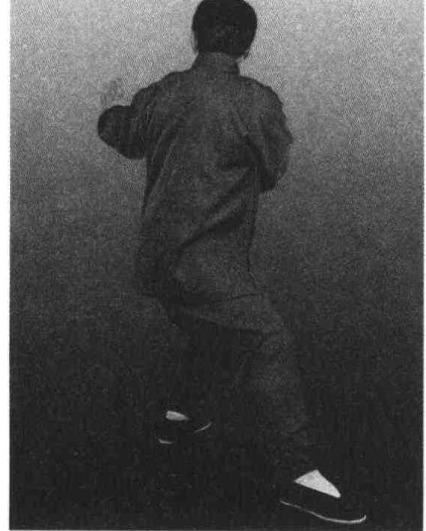
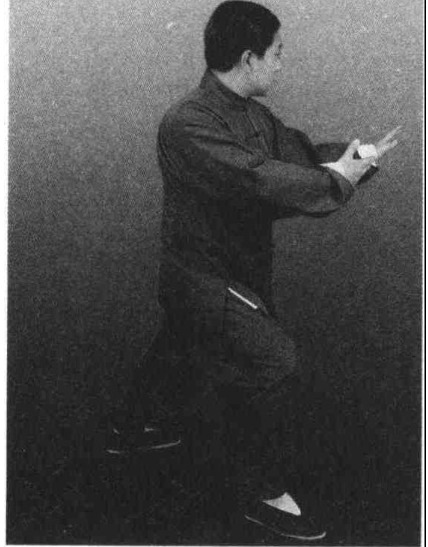
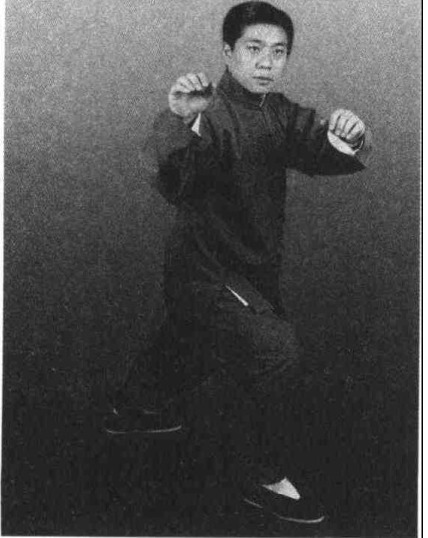
II. Course of Movement 1. The body turns slightly left with the swinging momentum, the left leg gradually squats and sits firmly, the right foot comes down in place, the toe pointing obliquely southeast, first with the heel touching the ground, and as the weight gradually shifts onto the right leg until the whole foot is firm; at the same time the upper body turns slightly right, the two palms shift right in an arc with the turn, the right palm rotating outward so that the palm turns to face up (the left palm still facing down). The gaze attends to the two palms shifting right (see the third figure on the previous page).
2. The body continues to turn right (facing south-southeast), bowing the right leg and pressing the left leg, forming a right bow stance. The two palms, with the turning of the body, go from left to down and, passing before the abdomen, arc up to the right; the left palm arcs from before the chest to the upper right, the right palm arcs up from the right shoulder, and as it goes the arm rotates inward so that the right palm slants downward. The body turns left to face northeast; the right fist passes the right side of the head, the left fist passes before the right chest, and both fists strike out together toward the front-left diagonal (northeast), the right fist placed beside the right forehead with the right arm forming an arc, the left fist level with the chest. The gaze first attends to the two hands arcing up to the right, and when the body turns left and the two fists are about to strike out toward the front-left diagonal, it turns to the front-left diagonal and looks level, attending to the left fist's strike (see the fourth and fifth figures on the previous page).
III. Key Points 1. The linking movements must be done well. Each posture has its own rising, bearing, turning and closing. The beginning of "Bend the Bow and Shoot the Tiger" must not pause after the end of "Turn the Body and Swing the Lotus" (the foot pat), but must be continuously unbroken, sinking and turning the waist, immediately performing "Bend the Bow and Shoot the Tiger."
2. The two hands must turn with the waist: "palm, wrist, elbow and shoulder, back, waist, crotch, knee and foot — nine joints above and below, joint by joint issued from the waist." Therefore the changes of the hands must rely on the waist: the waist turns right, the two hands go from up to down and, passing before the abdomen, to the right and up; when the right palm has moved to the right side of the head (becoming a fist) and the left palm has moved to before the right chest, the body turns left, and the two fists strike out toward the front-left diagonal with the waist's force.
3. The movement of the two hands must conform to the requirements of the application: when shifting right, the upper right hand must not be too far from the body so as to cause "scattering"; the left hand should be before the chest; and on the strike, the right fist need not rise above the head, nor the left fist above the shoulder.
4. At the instant of forming the final position, guard against the right elbow lifting, the shoulders rising, and the body leaning forward.
5. The front and rear feet are not on one line; the right foot is slightly forward.
6. The gaze must change with the fists, from southwest to northeast.
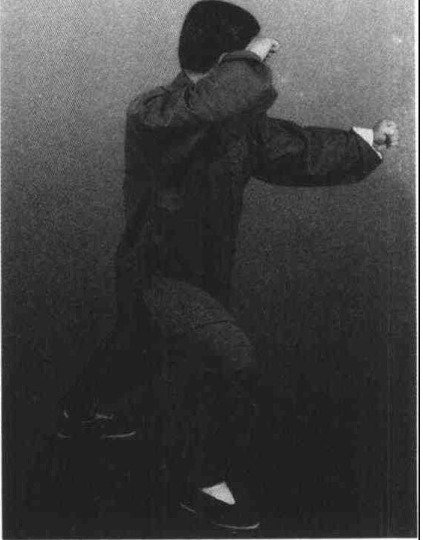
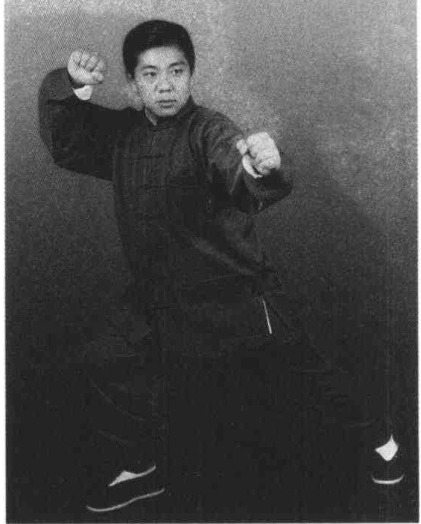
IV. Requirements 1. Both the upper and lower limbs must carry force through: "the source supports the waist and spine, the force runs through to the four tips." The upper limbs carry force through by intent, filling the whole arm; there must be both steadiness and settledness and relaxed quietness, and the arm movements are also required to be agile and unimpeded.
2. It is required that intent arrive, the eyes arrive, the body arrive, the hands arrive and the step arrive: when moving, all move together; when arriving, all arrive together. Therefore when the two fists strike out together at the end, the right knee must bow in and the two fists must arrive.
3. The direction of movement must be accurate: the waist turns right and faces southwest, the waist turns left and faces northeast.
4. In practising Taijiquan one must always be "relaxed and quiet," the attention concentrated, and the movements guided by intent. The movements must be relaxed and supple, and one must not use clumsy force. Training intent together with training the body enables inner and outer to become one; therefore practising Taijiquan can prevent and treat chronic illness and can strengthen the constitution.
V. Errors, Causes, Corrections 1. Error: the direction is wrong — the right leg steps not in front of the body (southeast) but to the right side. The main cause is failure to understand the application. Because after "Turn the Body and Swing the Lotus," the opponent withdraws his body and I at once follow the enemy's hands with my left and right hands sticking to them; if I step to the right, then (This page also carries one unnumbered push-hands demonstration photograph.) one cannot speak of "following." If I step forward to the right, advancing can meet the requirement of following, and retreating allows a left carry; if I then step forward once more I can close the fists and strike from the right corner — the left hand striking his right elbow, the right hand striking his chest. Correction: on the basis of understanding the application, attend to where the right foot is placed after the lotus swing — it should be placed to the right-front.
2. Error: the shoulder is carried when the fist strikes out. The main cause is failure to attend to sinking the shoulder and dropping the elbow, whence the elbow rises, and from the raised elbow the shoulder is carried. A carried shoulder brings a whole series of problems, such as impairing "containing the chest and raising the back" and hindering "sinking the qi to the elixir field." Correction: begin from the word "relax," and through experiencing the conversion of empty and full, achieve the sinking of the shoulder.
3. Error: instead of turning the waist and hips one merely sways the body left and right, violating the principle "the master is in the waist." The main cause is that the waist and hips are not relaxed. The waist is the key to the turning of the upper and lower; only if the central axis is unbent and uns waying can it be agile; only by using the waist's power in the movement can the force reach the four limbs. Correction: the waist must be relaxed, sinking and straight, so that its rotation is agile, so that one uses the waist's power and concentrates the strength of the whole body at one point — only then can the fist strike with force.
4. Error: the body leans forward after the fist strikes out. The Boxing Treatise says: "Stand like the beam of a steelyard, move like a wheel." If my body leans forward, the centre of gravity must shift forward, and at a slight push from another I must fall. Moreover, though one advances, one cannot retreat; hence "seeking the far by giving up the near" is wrong. The main cause is that one does not use the waist's power to strike, but uses the erroneous method of bending the waist and leaning forward. Correction: stress that when the fist strikes out the force is led from the spine to set the four limbs in motion; therefore there can only be rotation of the waist, and no leaning forward of the body.
5. Error: the right foot comes down too fast, reducing the amount of exercise. The main cause is that the left leg is weak: at a slight squat one feels the single leg cannot support, and so one can only bring the right foot down a little faster. Another cause is that during the lotus swing the right leg's rightward swing goes out of control, causing the body to turn and dragging the left foot, which is the root, so that the body sways and the right foot comes down too fast. Correction: (1) strengthen the legs and do more single-leg-support squatting practice, the squat going gradually from shallow to deep. (2) Hand and foot meeting in the strike must be controlled and must not favour one side; in particular attend to the swing amplitude of the right leg; with a stable centre of gravity, the left leg can squat slowly, "sending" the right leg down and out lightly.
6. Error: the method of holding the fist is poor — some hold the fist too tightly, some have the direction wrong. The main cause of the former is failure to understand the form of the closed fist. Taijiquan must contain hardness within suppleness, but one must enter by way of relaxation and suppleness; therefore the fist should not be held too tightly, but must have the intent of gathering its qi together, so that it cannot be opened when separated nor scattered when struck. One should also note Chen Xin's saying: "When going out, the hand is open; on meeting a person, it becomes a fist." The latter is that the direction of the fist is wrong: some have both fists' eye facing up, some have both fists' centre facing down — neither is right. The cause lies in failure to understand the application. The left fist strikes straight forward, using the upright fist, so its eye faces up (slightly oblique); the right hand is before the head, and it is correct for its eye to face obliquely down — this is called the "reverse fist." Correction: the fist must be held with appropriate tightness; the left fist in front and the right fist behind, the left low and the right high, the eyes of the two fists facing each other at a distance.
VI. Teaching and Practice Methods 1. Mnemonic: squat lightly and set the right leg down; stick and turn, revolving to the right; the waist sinks with force and the right foot is firm; the eyes of the fists face one another as they go out obliquely.
2. The difficulty lies in the linking: after the lotus swing one must do well the squatting of the left leg and the "sending" of the right foot out obliquely, which is generally not easy to do with ease and roundness, so it should be attacked as a difficulty, with much practice and much thought. First train control to make the centre of gravity stable, and then let the left leg squat.
3. Clarify the direction: (1) the right foot is placed at the southeast corner. (2) The face first turns to the northwest, then to the southwest, and finally to the northeast.
4. Progressive method: (1) the left leg squats, the right leg hangs. (2) As above, extend the right leg toward the southeast. (3) As above, both hands shift right in an arc. (4) As above, both hands continue to shift right, bow the right leg. (5) As above, both fists strike out.
Practise one detail, then add another detail, and gradually learn the whole movement.
5. Yang-style Taijiquan, as a means of preventing and treating illness, uses natural breathing. In teaching, no requirement is placed on the breathing; the practitioner need not fuss over the breathing, and simply lets it be natural, gradually training to "abdomen relaxed, qi gathered; mind quiet, spirit at ease."
VII. Technical Analysis 1. When I am smooth and the other is contrary, that is called sticking. Bend the Bow and Shoot the Tiger sticks first and strikes after: sticking to the other with oneself, one must know the other, and only thus can one be neither after nor before. Therefore the first half of the movement must stress sticking — sticking so that the two fists each strike where they should — and only then stress striking. Sticking makes it easy to listen to force.
2. When the left leg squats after the lotus swing, normal breathing is often affected; hence the abdomen is required to be relaxed and quiet — "with the abdomen relaxed and quiet, the qi rises of itself" — which also makes the lower body steady.
3. Two movements, four corners: Turn the Body and Swing the Lotus goes first to the southeast corner and then to the northwest corner; Bend the Bow and Shoot the Tiger goes first to the southwest corner and then to the northeast corner.
4. In practising Taijiquan one must "seek quiet within movement," "use quiet to govern movement, so that though moving one is as if still." Hence "the slower the form is practised the better; being slow, the breathing becomes deep and long, the qi sinks to the elixir field, and naturally there is no fault of the blood vessels swelling." Therefore in practising Taijiquan one's thoughts must be concentrated, the mind and spirit single, the breathing natural, the intent stored in the elixir field, distracting thoughts dismissed — hearing and yet not hearing, seeing and yet not seeing — being in a state free of thought and worry. In practising the form one concentrates wholly on using intent to guide each movement, "using intent to move the qi, using the qi to move the body." Naturally, a beginner remembers this movement and forgets that one, attends to the movement of the hands and forgets the movement of the feet, and is in a flurry, unable to be in that high state free of thought and worry. But after long practice, once the set is familiar, one can gradually train to "intent moves, form follows," and can even train to "in quiet there is movement, yet though moving one is still." In this way it can certainly play a good role in improving health, preventing and treating illness, and prolonging life.
Phần 147
Posture Eighty-Two — Advance, Deflect, Parry and Punch
I. Application Same as Posture Twelve above, Advance, Deflect, Parry and Punch.
II. Course of Movement 1. The body gradually shifts left, the weight gradually shifts onto the left leg; at the same time the left fist becomes a palm, which moves down in an arc to the rear-left with the turning of the body, the palm facing obliquely up, and the right fist, as before, arcs down and comes to rest at the front-upper right of the left palm, rotating outward as it descends so that the centre of the fist faces obliquely down (the right fist level with the shoulder)
(see the third figure on the previous page).
2. The weight continues to shift left, the left hand moves up and the right hand descends (see the first figure on this page).
3. The whole weight shifts onto the left leg, the right foot is drawn back; at the same time the right fist goes down and circles left past the front of the abdomen, the centre of the fist turning to face down; the left palm moves left and up (not rising above the ear) in an arc, and as it moves the arm rotates inward so that the palm turns to face the lower right. The gaze attends to the circling of the two hands, then gradually turns to look level forward (the second figure on this page, the same as figure 55; the third and fourth figures on this page, the same as figure 56; the fifth figure on this page, the same as figure 57; the sixth figure on this page, the same as figure 58; the seventh figure on this page, the same as figure 59).
All the other sections are the same as Posture Twelve, Advance, Deflect, Parry and Punch.
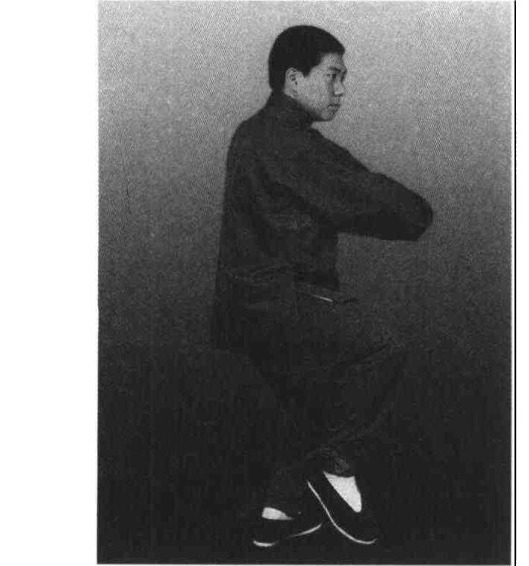
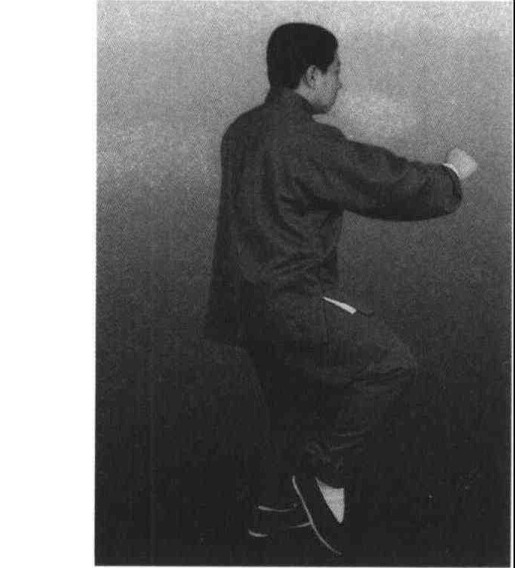
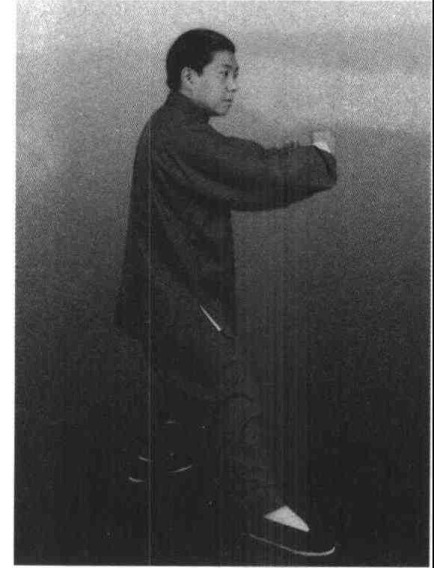
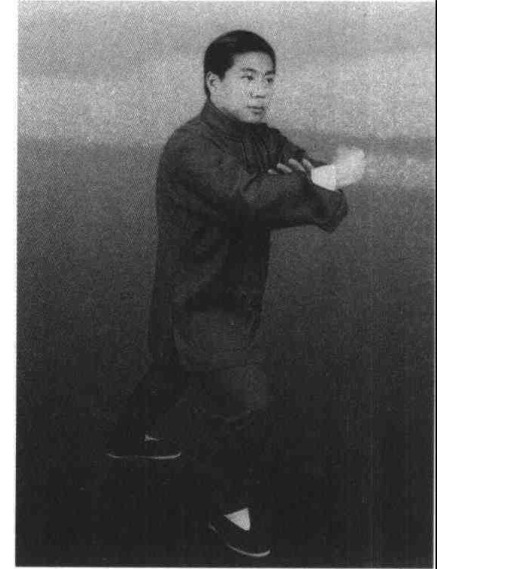
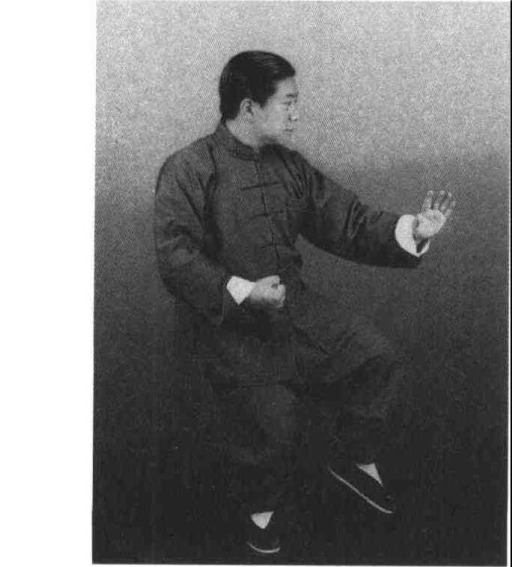
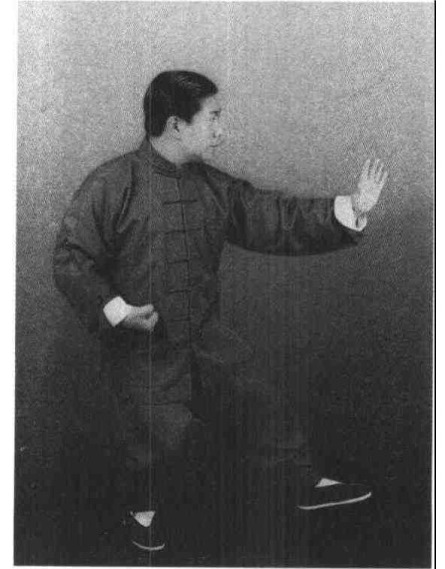
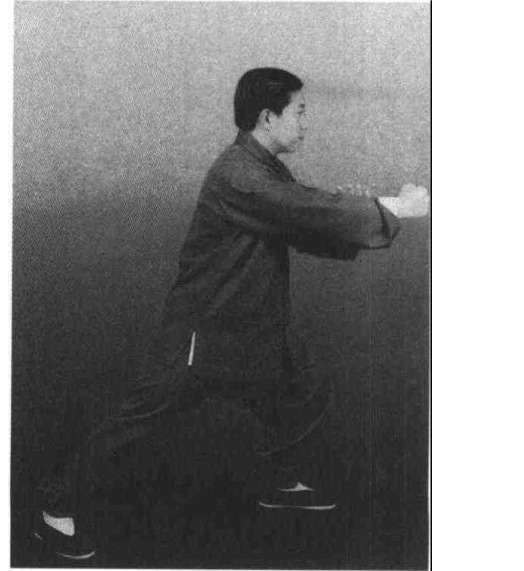
Phần 148
Posture Eighty-Three — Apparent Close-Up
All the sections are the same as Posture Thirteen, Apparent Close-Up: see the first to the sixth figures on this page (the same as figures 60 to 63).
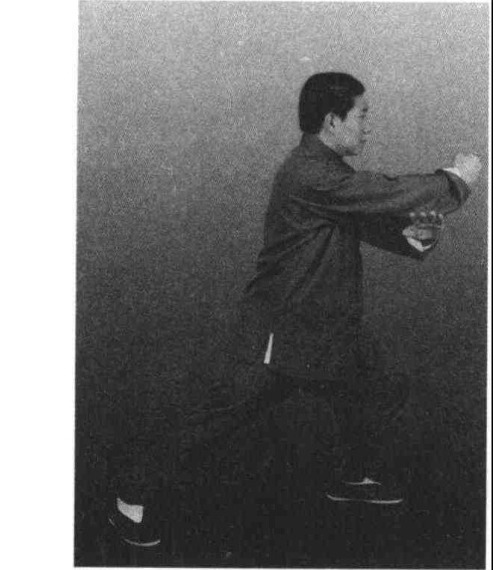
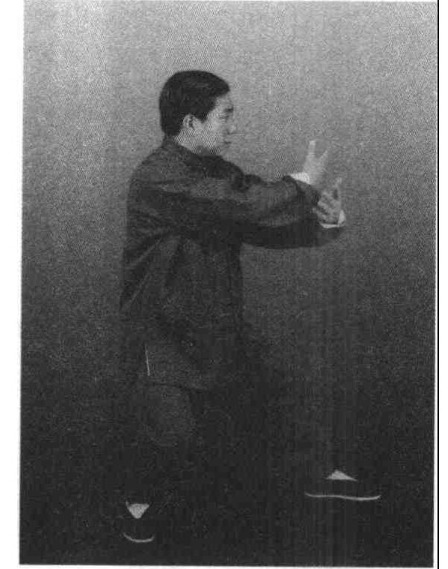
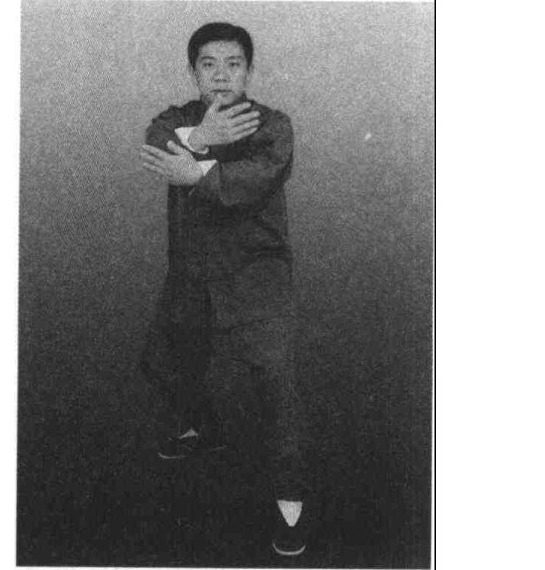
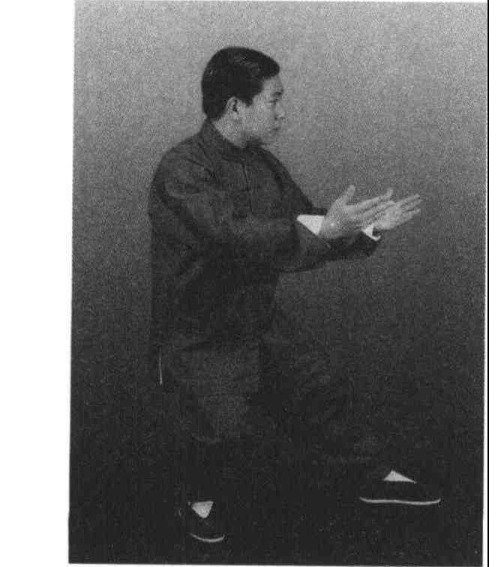
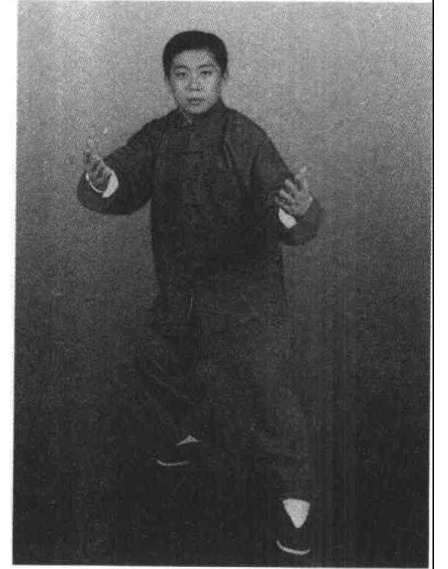
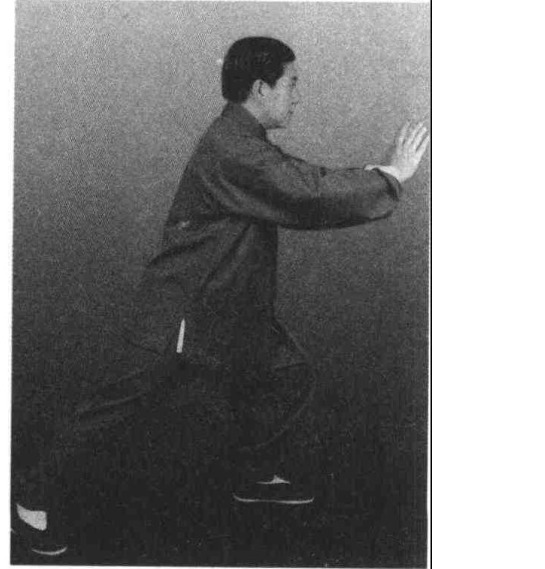
Phần 149
Posture Eighty-Four — Cross Hands
All the sections are the same as Posture Fourteen, Cross Hands: see the first to the fourth figures on this page (the same as figures 64 to 67).
I. Course of Movement 1. The two arms extend forward, and as they extend both arms rotate inward so that the two palms turn to face down, forming a rough cross with the right hand below and the left hand above — see the fifth figure on this page.
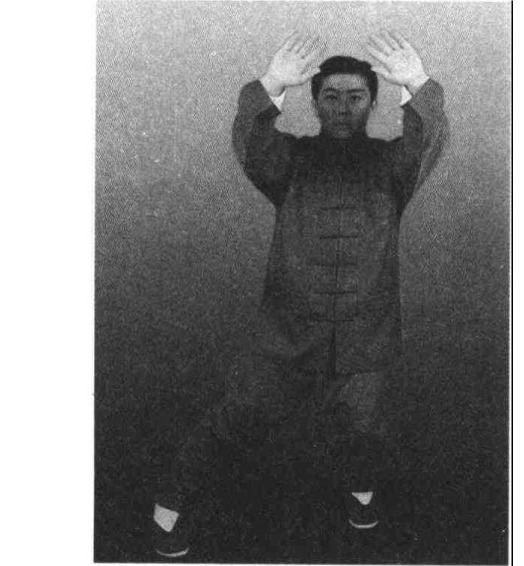
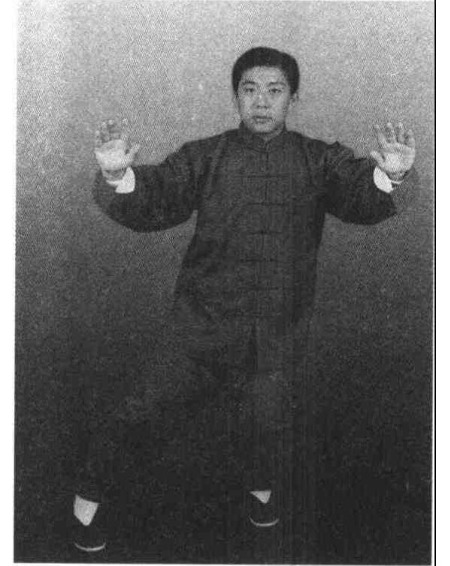
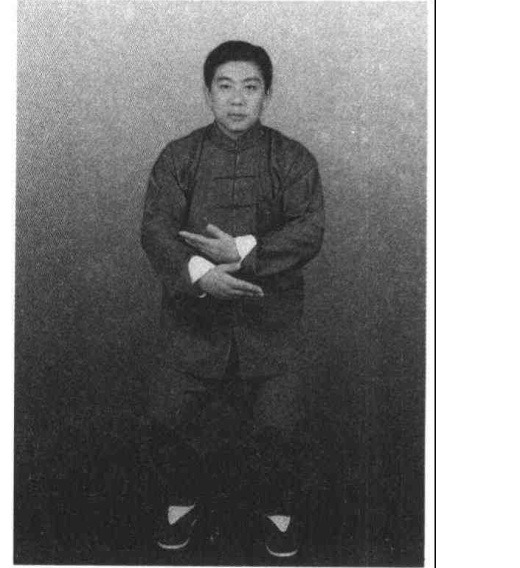
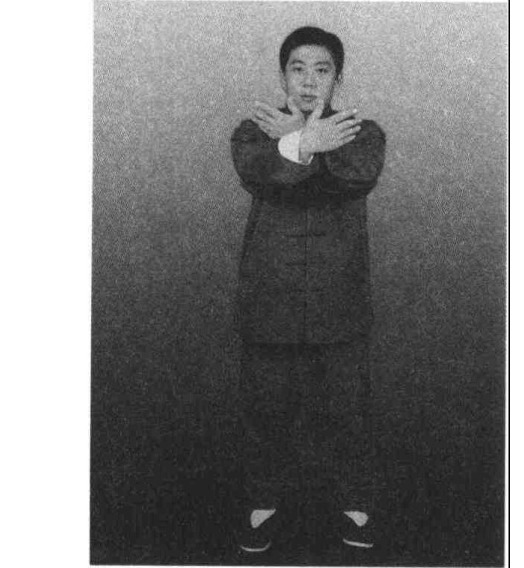
2. The two arms continue to separate until the distance between the two hands is the same as the shoulder width. Then the two elbows sink, naturally carrying the two palms gradually downward to press to beside the hips, the fingers pointing forward, the palms still facing down. The eyes look level forward — see the sixth figure on this page to the sixth figure on this page (the same as figures 2 to 4, and figure 1).
3. Finally the fingers of both hands hang naturally.
II. Technical Analysis The Closing is also called "closing Taijiquan." This is the ending posture of a whole set and the practitioner must not neglect it. Closing Taijiquan — closing the two modes, the four images, the eight trigrams and the sixty-four hexagrams — yet still returning to the Supreme Ultimate. That is to say, one gathers in one's mind and breath, brings them wholly back to the elixir field, concentrates the spirit, quiets the breath, knows where to stop and is settled, and must not let them disperse or finish carelessly.
When a set of the form is finished, at the Closing one must still return to the original place (that is, wherever the opening posture was at the start, there the Closing must still be at the end); the direction must be correct and the standing position must be right.
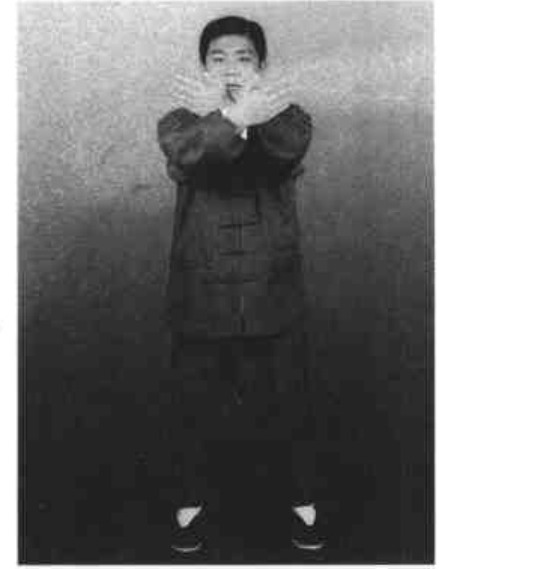
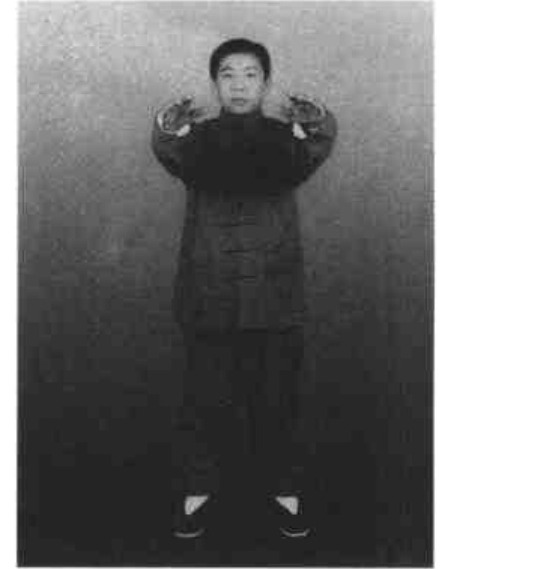
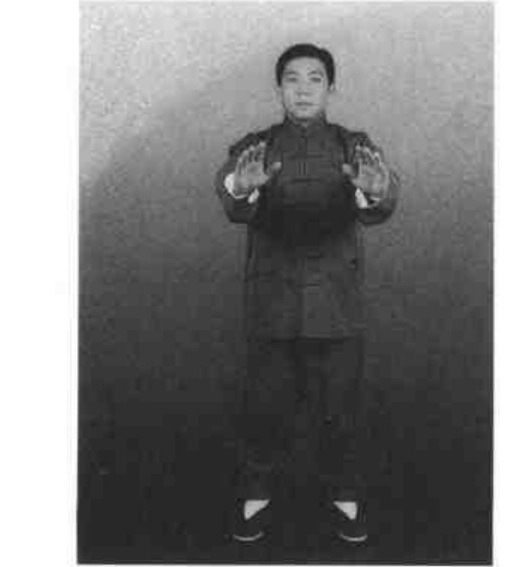
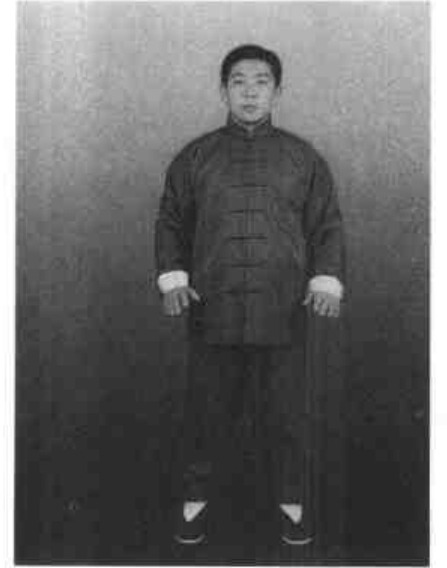
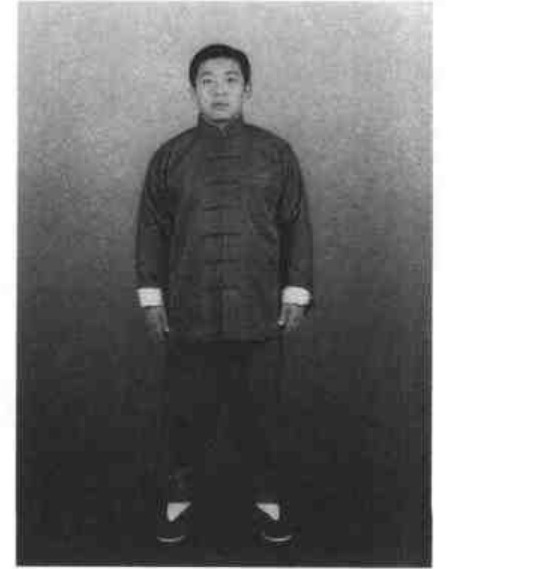
Phần 150
Route Map of the Yang-Style Taijiquan Sequence of Movements
(The whole page is the route map; there is no running text. The diagram marks the positions and facings of Postures One through Eighty-Five in boxes, with a compass at the lower right: north above, south below, west to the left and east to the right. As this diagram belongs to the section as a stand-alone schematic and is not a numbered text illustration, it carries no figure number.)
Chapter Three — Push Hands Yang-style Taijiquan push hands has three traditional pushing methods; a brief introduction to them is given here in passing (with the five-form push hands added).
Phần 151
Section One — Fixed-Step Push Hands
Fixed-hand push hands, also called the four cardinal push hands, is performed by two people in place using the four techniques of ward-off, roll-back, press and push against one another. Its movements are as follows:
1. A and B face one another and each steps out the right foot (for convenience of explanation the right foot is assumed for both; in practice the left and right feet may alternate in front). They each raise the left hand and join it (backs of the hands facing each other, wrists crossing), each holding ward-off force; then each raises the right hand and places it at the other's left elbow, becoming the double joining of hands with the left wrists crossed. B bends the right leg and bows forward, A bends the left leg and sits back; at the same time they turn left and press toward A with both hands; A receives the other's pressing with the left arm's ward-off, and at the same time A's upper body, following the momentum, begins to turn left (push-hands figure 504: the one in black is A, the one in white is B; A is warding off, B is pressing).
2. A, following the other's pressing momentum, turns the body left and, as he sits back, the left wrist still wards off the other's left-palm pressing force, while the right wrist sticks to the other's left elbow and wards out to the left; on warding off, the right arm rotates outward. B at once takes the right hand off the other's left elbow and moves it to the inner side of his own left elbow (push-hands figure 505: A in the ward-off form).
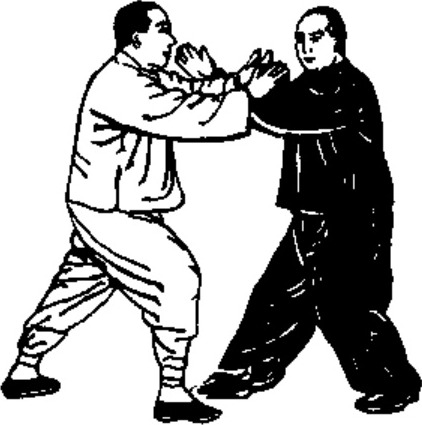
3. B, following the other's ward-off momentum, places the right palm on the inner side of his own left elbow and presses out toward A's chest, at the same time bowing the right leg; A, following B's pressing momentum, the waist turns right and both arms rotate inward (push-hands figure 506: B in the press form).
4. A, following the other's pressing momentum, continues to turn the waist right, turning the body until it squarely faces B; at the same time both arms continue to rotate inward, and the right hand presses down on B's right hand while the left hand sinks down to the other's forearm near the elbow; both hands press forward together, and the right leg bends and bows forward; B at once receives the other's pressing with the right arm's ward-off (push-hands figure 507: A presses, B wards off).
Then B turns the upper body right and sticks the left hand to A's right elbow to ward off to the right; A then places the left hand on the inner side of his own right elbow and presses forward; B at once changes to the pressing and A again receives it with the left arm's ward-off — and so they push against one another in this cycle. If the upper limbs revolve in the opposite direction (pushing against one another), the movement is as before, only the left and right directions are reversed.
Fixed-step push hands requires that when each has pressed fully it is exactly the moment the step has bowed fully, and when each has warded off fully it is exactly the moment of sitting back to the point (if one sits back when pressing and bows forward when warding off, both are wrong). Ward-off and press lie between the bow and the sit.
Beginners at push hands must on no account let the movements become rough, to prevent accidents and injury; at the same time the breathing must be free and the movements relaxed and open.
Phần 152
Section Two — Moving-Step Push Hands
Moving-step push hands is a circular practice performed by two people using the four techniques of ward-off, roll-back, press and push, coordinated with the stepping of advancing and retreating. There are two kinds of stepping: joined stepping and interlocking stepping.
1. Joined stepping: assume that A and B both have the left foot forward and begin with the double joining of hands (moving-step push hands figure 508, A's starting point).
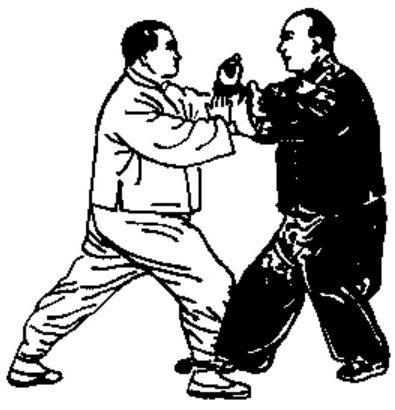
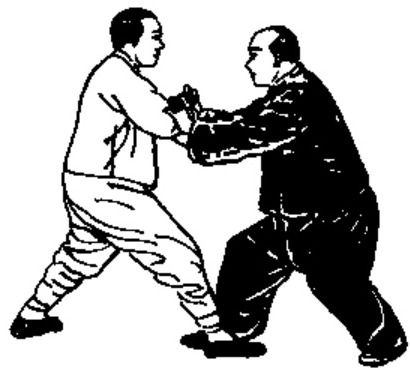
Suppose A retreats and B advances. A slightly lifts the right foot forward and then still sets it back in the same place, and B at the same time slightly lifts the left foot back and then still sets it down in the same place. Then A retreats the left foot, B advances the right foot; A retreats the right foot again, B advances the left foot (stepping figure 508, A). It looks as though A retreats three steps and B advances three steps, but in fact the first step is only a slight lift and then a setting down in the same place.
Then it changes to B retreating and A advancing (stepping figure 508, B's starting point — that is, the final footfall of both A and B in figure 508, A). When A has retreated three steps he lifts the left foot back and sets it forward in the same place (turning to advance), and B, having advanced three steps, lifts the right foot forward and sets it back in the same place (turning to retreat). Then A advances and B retreats two steps each (stepping figure 508, B).
Then it changes back to A retreating and B advancing, and so on in a cycle of one advancing and one retreating.
2. Interlocking stepping: A and B stand facing one another one step apart (stepping figure 509, A's starting point).
Suppose A retreats and B advances. B steps the left foot forward and inserts it on the inner side of A's right foot, while A retreats the left foot one step; then B steps the right foot forward and sets it on the outer side of A's left foot, while A retreats the right foot one step; then B steps the left foot again and still inserts it on the inner side of A's right foot, while A retreats the left foot one step (stepping figure 509, A).
Then it changes to B retreating and A advancing (stepping figure 509, B's starting point — that is, the final footfall of both A and B in figure 509, A). When A has retreated three steps, the right foot then passes from the outer side of B's left foot to the inner side (turning to advance); B at the same time slightly lifts the right foot forward and sets it back in the same place (turning to retreat). Then A advances and B retreats two steps each (stepping figure 509, B).
Then it changes back to A retreating and B advancing, and so on in a cycle of one advancing and one retreating.
In moving-step push hands, whether joined stepping or interlocking stepping, the upper limbs still use the four techniques of ward-off, roll-back, press and push; but when the stepping begins, the one retreating is necessarily rolling back and the one advancing necessarily pressing. Then the one retreating, as he retreats, changes to ward-off, and when the ward-off has reached its end the step has exactly retreated three steps; the one advancing, as he advances, changes to press, and when the press is full it is exactly the moment when the forward step is complete. Then when the one retreating changes to advancing, his upper limbs also change from ward-off to press; and when the one advancing changes to retreating, his upper limbs also change from press to ward-off.
In this way they perform the circular practice in coordination with the stepping.
Phần 153
Diagram of the Stepping of Moving-Step Push Hands
(The whole page is the stepping diagram; there is no running text. The diagram is in four groups — figure 508A, 508B, 509A and 509B — with black footprints representing A and white footprints representing B; the mark "0" on a footprint denotes the starting point and "1, 2, 3" the order of the advance and retreat steps; the arrow denotes the rise of that foot forward and its setting down in the same place. As this diagram belongs to the section as a stand-alone schematic and is not a numbered text illustration, it carries no figure number.)
Phần 154
Section Three — Five-Form Push Hands
1. Push hands with moving steps in place A and B stand and join hands in the manner of fixed-step push hands, and the movements of the hands likewise follow the four forms of ward-off, roll-back, press and push, cycling round without interruption. The only difference is that when A wards off B, the rear leg rises slightly and then at once comes down in the same place. Conversely, when B wards off A, B also moves the rear leg, and when A presses B he also first moves the front leg. In short, when A and B change techniques, they must follow the momentum and lift the empty step, echoing one another. They may also change hands and change steps in pushing. But when changing steps they must first bring the feet together — without bringing the feet together one cannot achieve the left-right alternating push.
2. Push hands with alternating left and right steps The upper-limb movements are as in the previous form. The only difference is that when A first steps up the right foot (leg), the rear leg (the left foot) rises slightly and comes down in the same place, and then the right step is at once withdrawn to stand together with the left foot; then he changes to stepping up the left foot (leg), and at this time A's right leg (that is, the rear leg) also rises slightly and comes down in the same place, and then the left step is withdrawn to stand together with the right foot, after which he steps up the right foot again — and so they push in alternation, repeatedly. B cooperates with A as in the first form: when A steps up the right foot, B retreats the right foot; when A withdraws the right step to stand together with the left foot, B draws back the right foot to stand together with the left foot. If A steps up the left foot, B retreats the left foot; if A withdraws the left step, B also draws back the left step to stand together with the right foot. In short, A and B must cooperate closely; when stepping up and changing steps they need only refer to the previous form. What differs is that the previous forms add a bringing-together of the feet so that the left and right steps can alternate with one another in a cycle. Note further: when stepping up, the stepping foot must be inserted into the opponent's crotch. For example, when A steps up the right foot, A's right foot is inserted into B's crotch and must stand together with B's right foot. When stepping up the left foot, A's left step must stand together with B's left foot.
3. Push hands with one step forward and one step back The upper-limb movements are the same. The lower-limb movements refer to the first form: on stepping up the right foot, the left foot is lifted and at once comes down in the same place, and then the right step is drawn back one step in retreat; after pressing down firmly the left foot is lifted, the left foot is raised and comes down in the same place, and then the right foot steps forward again — and so it continues, with only one step forward and one step back. Note only that when A steps up the right foot, B must retreat the left step, and when A retreats the right step, B must step up the left foot. If a bringing-together of the feet is added, then one may change hands and change feet (steps) in pushing. If in this way the left and right limbs can obtain balanced exercise.
4. Push hands with a step up and crotch insertion The movements refer to the previous; the difference is that when A steps up the right foot, B must retreat the right foot, and then A withdraws the right step and B must step up the right foot. At the same time, when B steps up, the foot must be inserted into the opponent's crotch, as in the second form, and they push in this way continuously. A bringing-together may also be added to change hands and change steps in pushing.
5. Push hands with left and right leaning The stepping is as in the second form. The only difference is that when A steps up the right foot and inserts into the crotch, the right side of his body leans toward B's chest, the left palm pressed into the hollow of the right elbow, and B retreats the right step and presses it full. After A withdraws the right step, he instead inserts the left step into B's crotch and leans the left side of his body toward B's chest, the right palm pressed into the hollow of the left elbow, and B retreats the left step and presses it full. Pushing continuously in this way feels very lively and spirited. A and B may also exchange in practice, provided only that they bring the feet together and change hands.
Phần 155
Section Four — Great Roll-Back
Because the great roll-back is coordinated with stepping, the extent of the roll-back is greater than the roll-back in fixed-step push hands, and so it is called the great roll-back. And because the direction of the great roll-back's stepping is toward the four oblique corners (see the overall tendency of the schematic of the directions of the great roll-back stepping), it is also called the four-corner push-hands method. And because its main movements are roll-back and lean, and in each cycle the two together perform four roll-backs and four leans, it is also called four roll-backs and four leans. Because the changes of direction are many and the movements are of large extent, it is very much liked by students of the form.
1. The two stand facing north and south: suppose A faces south and B faces north, and the two form the double joining of hands with the right wrists crossed; suppose further that A rolls back and B leans, A retreating and B advancing. B changes to pressing A's right forearm with both hands, and A wards it with the right forearm (great roll-back figure 510; in the movement description this is the right form, in the diagram it is the left form). A retreats the right foot toward the northwest obliquely, the body turning right; at the same time he turns over the right hand and plucks (loosely grips) B's right wrist, and uses the left forearm (the ulnar side near the wrist) to stick to B's right upper arm (near the elbow joint) and roll back to the right. While A retreats, B strides the left foot across to the west (slightly north), follows A's plucking and rolling momentum, and steps the right foot forward to insert it into A's crotch; at the same time the left palm moves to rest on the inner side of the right elbow and he leans shoulder-first toward A's chest. (For the stepping see the schematic of the directions of the great roll-back stepping, 510A; for the posture see great roll-back figure 513. In the diagram Yang Chengfu is B.) There are five reference diagrams of the great roll-back postures, all traced from original photographs of Grandmaster Yang Chengfu; because there are no diagrams of the transitional movements they are hard to link up, but the postures of rolling back and leaning on both sides are all present, and so they are appended for reference.
2. A sinks the left forearm with the waist to dissolve B's leaning force, and flashes the right hand at B's face. (Great roll-back figure 512; Yang is A here. In this diagram B's posture has not leaned fully; the stance should be the same as Yang Chengfu's in great roll-back figure 513.)
3. B then receives A's right wrist with his own right wrist, and at the same time moves the left hand to stick above A's right elbow, and the two of them again return to the original double joining of hands with the right wrists crossed. While receiving A's right wrist, B steps up the left foot and, pivoting on the sole of the left foot, turns the body to the right and retreats the right foot, standing parallel with the left foot, turning to face east. A at the same time slightly lifts the left foot back, turns the toe in toward the south and sets the foot down, turns the body right, brings the right foot alongside, and turns to face west. (Great roll-back stepping figure 510B.)
Each cycle of the great roll-back requires walking four oblique corners. In the above — A retreating and B advancing, A rolling back and B leaning — they have walked one oblique corner and completed the first leaning movement. Then the second roll-back and lean is B retreating and A advancing, B rolling back and A leaning (the movement is as above, only A and B exchange; B's retreating direction is southwest — great roll-back stepping figure 511A); B turns to face south and A faces north (great roll-back stepping figure 511B). The third is again A retreating and B advancing, A rolling back and B leaning, then turning to face east (the movement as in the first, only the direction differs — great roll-back stepping figure 512A and B). The fourth is again B retreating and A advancing, B rolling back and A leaning, returning again to A facing south and B facing north (the movement as in the second — great roll-back stepping figure 513A and B). And so they practise in repeated cycles.
The above movements begin from the double joining of hands with the right wrists crossed; therefore, whether A or B, the roll-back and the lean walked are all right roll-back and right lean. If one wishes to walk left roll-back and left lean, one may change to beginning from the double joining of hands with the left wrists crossed, and follow the movements described above with left and right reversed (great roll-back figures 511 and 514). In practice the left and right may alternate.
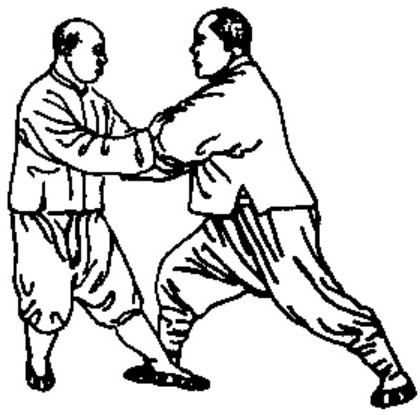
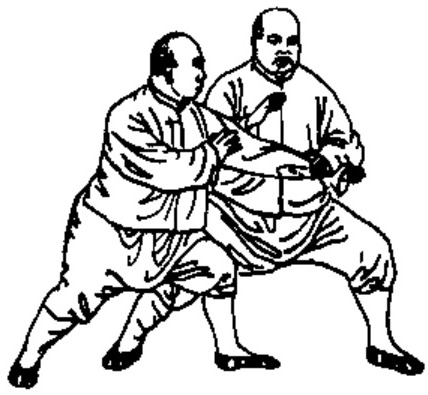
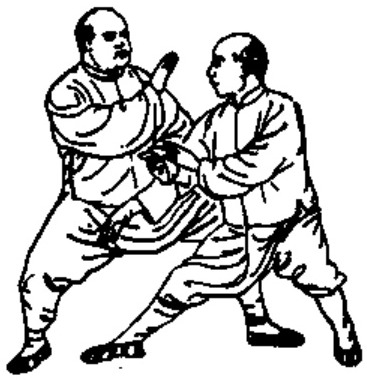
The techniques of the great roll-back are four: pluck, roll-back, elbow and lean. In practice the movements of pluck (together with roll-back) and of lean are very clearly displayed, while roll-back and elbow are not displayed, being used only in the variations.
The roll-back method — In Grandmaster Yang Chengfu's Complete Book of Taijiquan for Body and Use, in the explanation of the four-corner push hands of the great roll-back, "roll-back" is explained thus: "…taking hold of B's left wrist is plucking. If the right hand does not move, that is cutting off. As soon as it changes it becomes roll-back. Rolling back means sweeping aside B's left elbow, and striking obliquely at B's collar with the palm." This is explained in terms of A rolling back on the left and B leaning on the left. A plucks B's left wrist with the left hand, and at the same time uses the right forearm (the ulnar side near the wrist) to stick to B's left upper arm (slightly above the elbow joint) and roll back to the left; if "the right hand does not move," then the ulnar side "cuts off" B's left elbow joint; if "as soon as it changes it becomes roll-back," then the right hand "sweeps aside B's left elbow" and strikes obliquely at B's collar with the back of the hand on the thumb side. Hence the roll-back movement is not displayed in practice, and there is a roll-back movement only in the intent or in the variation. Thus the oblique strike with the back of the hand is taken as "roll-back." Besides this there are two other explanations: one takes the flash as the roll-back palm; the other takes it that, immediately after the left roll-back, the right elbow sinks and the right hand draws and dissolves B's leaning force — this being taken as the roll-back.
The elbow method — this too is an elbow movement in the intent or in the variation: when A rolls back on the left and cuts off B's left elbow with the right forearm, B then folds and stacks his left elbow onto the upper side of A's right forearm and drives the tip of the elbow toward the top of A's chest — this being the elbow movement. From the sentence in Complete Book of Taijiquan for Body and Use, "The plucking posture. A plucks on the left and changes to the flash. The right is still the cut-off. B blocks with the left elbow" (People's Sports Publishing House, first edition July 1957, p. 42), it appears that it is also the one being rolled back who uses the elbow method by bringing the elbow to bear. But there is another view that it is the one rolling back who uses the elbow method — namely, when A rolls back on the left and B leans on the left, A uses the right elbow sinking to dissolve B's leaning force, this movement being taken as the elbow movement. Although the great roll-back is said to have the four techniques of pluck, roll-back, elbow and lean, it actually also includes the techniques of ward-off, press and push. For ward-off, roll-back and push, see in detail the movement descriptions of the great roll-back above. The press, before the one being rolled back uses the lean, contains the intent of pressing. In the variations, moreover, the one pressing also uses the press method: after A's left roll-back he still sticks the right forearm to B's left upper arm, releases the left hand from the lower pluck and moves it to rest at the right wrist, and this becomes the press form.
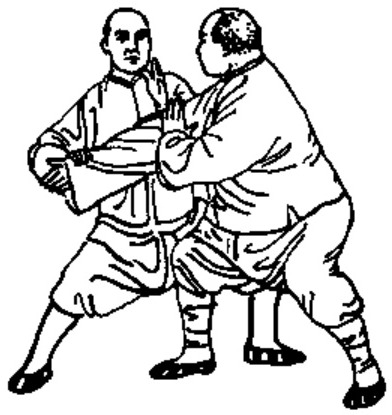
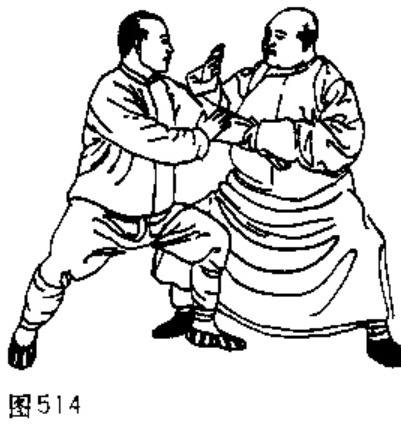
Phần 156
Diagram of the Directions of the Great Roll-Back Stepping
(The whole page is the diagram of the stepping directions; there is no running text. The diagram is in eight panels, all using black and white footprints to show the direction of the footfalls, with a compass in the middle: north above, south below, west to the left and east to the right. The panels run down the left column as 510A, 511A, 512A and 513A, and down the right column as 510B, 511B, 512B and 513B. As this diagram belongs to the section as a stand-alone schematic and is not a numbered text illustration, it carries no figure number.)
Phần 157
Photographs of Push Hands and the Great Roll-Back
Demonstrators: Fu Zhongwen, Fu Shengyuan Single push hands (photos 1 to 3)
Four cardinal push hands (photos 4 to 7)
(This page is a plate of photographs; there is no running text. The photographs are numbered in the book's own photo series, not in the figure series used for the numbered text illustrations, and so no separate figure note is made.)
Phần 158
Great Roll-Back
(photos 8 to 16)
(This page is a plate of photographs; there is no running text. The photographs are numbered in the book's own photo series, not in the figure series used for the numbered text illustrations, and so no separate figure note is made.) (Photos 17 to 20, continuing the great roll-back photographs from the previous page. Besides the four photographs, this page also carries one decorative taiji yin-yang graphic; it is not a numbered text illustration and carries no figure number.)
(This page is a plate of photographs; there is no running text. With this, Chapter Three, Push Hands, is entirely concluded.)
Chapter Four — Important Writings of Famous Taijiquan Masters
Phần 159
I. A Talk on the Practice of Taijiquan
Orally related by Yang Chengfu Recorded by Zhang Hongkui Among the martial arts of China, though the schools are many and varied, one should know that all of them are techniques embodying philosophical principle. Throughout the ages there have been men of old who exhausted the energies of a whole lifetime and still could not exhaust the profundities — such cases are everywhere. If a student spends a single day's effort, he gains a single day's result; by daily accumulation and monthly increase, when the water arrives the channel is formed.
Taijiquan is the art of containing hardness within suppleness, of hiding a needle in cotton; in technique, in physiology and in mechanics it holds a considerable philosophical principle. Therefore one who studies this way must pass through a definite procedure and a considerable time. Though the guidance of a good teacher and the mutual sharpening of good friends are certainly indispensable, the most essential thing is daily training of oneself. Otherwise, though one talks all day and yearns for years, on the day one joins hands there is emptiness and nothing there, and one remains an outsider — for there is nothing but daily work. This is what the ancients meant by "vain thought all day is not as good as study." If one can be unremitting morning and evening, unmoved by cold and heat, and the moment a thought arises take up the form and train, then whether old or young, male or female, the success is one and the same.
Recently, students of Taijiquan have spread from north to south, and like-minded people increase day by day; one cannot but rejoice for the future of the martial art. Yet among these people, though there is certainly no lack of those who train hard with single-minded devotion and sincerely seek learning, whose future is immeasurable, the ordinary run cannot avoid falling into one of two paths. The first: a man is naturally gifted, of strong years and strength, who from one instance infers three, whose intelligence stands out from the crowd — but alas, at a slight success he is content, and at once stops halfway, unable to receive the greater. The second: he is hasty in seeking quick results, and attains his form by neglect; before a year is out he has already learned boxing, sword, broadsword and spear — yet though he copies the gourd's shape, in reality he has not got the secret flavour of it. Once one examines his directions and movements, upper and lower, inner and outer, none of them accord with measure; if he wishes to correct them, then every form must be revised, and what is corrected in the morning is already forgotten by evening. Hence one often hears it said: "Learning the form is easy; correcting the form is hard." This saying arises entirely from hastening to completion. Such people, passing error on as error, come to mislead themselves and mislead others, and are the greatest cause for anxiety about the future of the art.
In beginning Taijiquan, one first practises the form frame. What is called the form frame is this: following the names of the forms in the boxing manual, form by form is taught by the teacher, and the student, with whole heart and quiet spirit, silently memorises and studies it, and performs it accordingly — this is called practising the frame. At this time the student should attend to inner and outer, upper and lower. What belongs to the inner is the so-called "use intent and not force": below, the qi sinks to the elixir field; above, the crown is suspended from the top. What belongs to the
Phần 160
A Talk on the Practice of Taijiquan (continued)
As for what shows outwardly: the whole body is light and nimble, and every joint is threaded through — from the feet to the legs, to the waist, letting the shoulders sink and the elbows bend. When first learning, take these few phrases and ponder them morning and evening, and taste them for yourself; for each posture and each hand, always examine carefully and probe. In moving and practising, strive above all for correctness. Once the practice has become pure, then take up the second posture, and in this way gradually work through to the end of the form; if you do so, there will be nothing to go back and correct, and in time you will no longer need to be reminded of the key points.
In practising and moving, all the joints of the whole body must be relaxed and natural. First, the mouth and abdomen must not hold the breath; second, the four limbs, waist and legs must not put forth stiff force. These two sentences — students of the internal martial arts can all recite them; yet the moment they make one movement, turn one body, or kick a leg and swing the waist, their breath gasps and their body sways, and the fault lies precisely in holding the breath and putting forth stiff force.
1. In practising, the head must not tilt to the side nor tip forward or back; this is what is meant by "suspending the crown of the head" — as though something were held up on top of the head. Above all, beware of stiffening it straight; this is the meaning of the word "suspend." Though the eyes look level ahead, at times they must follow the movement of the body, and though the line of sight is empty, it is nonetheless a movement of key importance within the changes, supplementing what the body method and the hand method lack. The mouth is as if open, yet not open; as if closed, yet not closed; breathe out through the mouth and in through the nose, letting it be natural. If moisture forms beneath the tongue, swallow it with the body and do not spit it away.
2. The trunk should be centred and upright, not leaning; the spine and the coccyx should be vertical and not off-centre. But when meeting with the changes of opening and closing, there is the activity of "hollowing the chest and rounding the back," "sinking the shoulders and turning the waist"; at the time of first learning one must take note of this, otherwise in time it will be difficult to change, and one will surely fall into rigidity and stagnation, so that however deep one's skill, it will be hard to gain benefit and put it to use.
3. All the joints of the two arms must be relaxed and open. The shoulders should hang down, the elbows should bend downward, the palms should stretch slightly, and the fingertips should curve slightly. Move the arms with intent and thread the fingers with qi; as days and months accumulate, the internal power becomes penetrating and numinous, and its marvel quietly arises of itself.
4. The two legs should distinguish substantial and insubstantial, rising and falling like the walk of a cat. When the weight shifts to the left, the left is substantial and the right leg is called insubstantial; when it shifts to the right, the right is substantial and the left is called insubstantial. What is called insubstantial is not empty — its momentum is still unbroken, and it retains a reserve of intent for lengthening, shortening and changing. What is called substantial is simply solid, and does not mean that excessive force or violent strength is used. Thus the leg is bent to vertical as the standard; beyond this it is called overreaching in force, the body plunges forward, and the centred and upright posture is lost.
5. The sole of the foot should distinguish two forms — the kick (the left and right separate-foot or left and right raise-foot in the form) and the heel-push. In the kick, attend to the toe; in the heel-push, attend to the whole sole. When the intent arrives, the qi arrives; when the qi arrives, the power arrives of itself. But the joints of the leg must all be relaxed and steady as it goes out. At this moment one most easily puts forth stiff force, the body lurches this way and that, and the leg is issued without power.
As for the sequence of Taijiquan: first practise the form (which belongs to the bare-hand work), such as the Taijiquan and the Taiji Long Fist; next, single-hand push, in-place push-hands, moving-step push-hands, the Great Roll-back, and free-hand sparring; after that come the weapons, such as the Taiji Sword, the Taiji Sabre, the Taiji Spear (the Thirteen-Spear), and so on.
As for practice times: twice each day after rising; if there is no time in the morning, then twice before sleeping. Within a single day one should practise seven or eight times, and at the very least once at dawn and once at dusk. But after drunkenness and after a full meal, both should be avoided.
As for the place of practice: a courtyard and a hall that can let air through and that has plenty of light are suitable. Avoid places with harsh wind blowing directly upon one and places with damp, mouldy air; for once the body is set in motion the breathing is sure to become deep and long, and so if harsh wind and mouldy air penetrate deep into the abdomen they harm the organs and easily bring on illness. As for the clothing for practice, a wide cut of Chinese short jacket and broad-toed cloth shoes are suitable. When practising over a long stretch, if you come to sweat, on no account wipe yourself with cold water, otherwise there is none who will not fall ill.
Phần 161
II. Ten Essentials of Taijiquan
Orally related by Yang Chengfu Recorded by Chen Weiming 1. Suspend the crown and lift the energy to the top — "Lifting the energy to the top" means the head is held upright, with the spirit threaded to the crown of the head. One must not use force; if force is used the neck becomes stiff and the blood and qi cannot flow. There must be the sense of an empty, numinous naturalness. Without suspending the crown and lifting the energy to the top, the spirit cannot be raised.
2. Hollow the chest and round the back — "Hollowing the chest" means the chest is slightly drawn in, so that the qi sinks to the cinnabar field. The chest must not be thrust out; if thrust out, the qi crowds at the chest, the upper is heavy and the lower light, and the heels easily float up. "Rounding the back" means the qi clings to the back. If one can hollow the chest one can naturally round the back; if one can round the back, the power can issue from the spine, and there is nothing one faces that one cannot overcome.
3. Relax the waist — The waist is the sovereign of the whole body. Only if the waist can relax will the two feet have strength and the lower base be steady; all the changes of substantial and insubstantial come from the turning of the waist. Hence it is said: "The source of life and intent lies in the hollow of the waist." Whenever one cannot get power, one must seek it from the waist and legs.
4. Distinguish substantial and insubstantial — Taijiquan takes the distinguishing of substantial and insubstantial as its first essential meaning. If the whole body sits on the right leg, then the right leg is substantial and the left leg is insubstantial; if the whole body sits on the left leg, then the left leg is substantial and the right leg is insubstantial. If substantial and insubstantial can be distinguished, then turning is light and nimble, with no effort at all; if they cannot be distinguished, then stepping is heavy and sluggish, one stands unstably, and one is easily pulled about by another.
5. Sink the shoulders and drop the elbows — "Sinking the shoulders" means the shoulders loosen and hang down. If they cannot loosen and hang, the two shoulders rise up, and the qi follows them up with it, so that the whole body loses its power. "Dropping the elbows" means the sense of the elbows loosening and dropping downward; if the elbows are held suspended, the shoulders cannot sink, one cannot send a person far, and one comes near to the broken power of the external schools.
6. Use intent and not force — The Taijiquan Treatise says: this is entirely a matter of using intent and not force. In practising Taijiquan the whole body loosens and opens; not the slightest clumsy force is allowed to linger between the sinews, bones and blood vessels so as to bind oneself — only then can one be light, nimble and changing, turning round and freely as one wishes. Some may doubt: if one does not use force, how can force grow? Now, the body has its channels and collaterals as the earth has its ditches and channels: if the ditches and channels are not blocked the water flows, and if the channels and collaterals are not closed the qi passes through. If the whole body is full of stiff force throughout the channels and collaterals, then the blood and qi stagnate, turning is not nimble, and pulling one hair moves the whole body. But if one does not use force and uses intent instead, then where the intent arrives the qi arrives with it; and so the blood and qi flow and pour in, day by day infusing, circulating through the whole body with no moment of stagnation. Practise long and long, and one gains the true internal power — which is what the Taijiquan Treatise calls "supremely soft, and then supremely firm and hard." For one whose Taijiquan skill has ripened, the arm is like cotton wrapped around iron, and its weight is exceedingly heavy; whereas one who practises an external-school boxing shows force when he uses force, and when he does not use force he is very light and buoyant — from which one can see that his force is the outward, surface force of external power. To use force and not intent is what most easily stirs one into motion, and is not to be prized.
7. Upper and lower follow one another — This is what the Taijiquan Treatise says: "Its root is in the feet, it issues from the legs, it is governed by the waist, and it takes shape in the fingers; from the feet to the legs to the waist, there must always be one complete qi." The hand moves, the foot moves, the leg moves, and the gaze follows and moves with them; only thus can it be called upper and lower following one another. If one thing does not move, then it is scattered and disordered.
8. Inner and outer unite — What Taijiquan practises lies in the spirit; hence it is said: "The spirit is the commander-in-chief, the body is the one driven." If the spirit can be raised, then naturally the movement is light and nimble. The frame is nothing other than the opening and closing of substantial and insubstantial. What is called opening is not only the hands and feet opening — the mind and intent open along with them; what is called closing is not only the hands and feet closing — the mind and intent close along with them. If one can unite inner and outer into one qi, then all is one seamless whole.
Phần 162
II. Ten Essentials of Taijiquan (continued)
9. Linked without interruption — In the external schools of boxing, the power is the acquired, clumsy power, and so it has a beginning and an ending, times of continuation and times of break: the old power is spent and the new power not yet born, and at such a moment one is most easily taken advantage of. Taijiquan uses intent and not force; from first to last it is unbroken and continuous, going round and beginning again, cycling without end. The original treatise's words "like the great Yangtze and the sea, rolling on without cease," and again "in movement like drawing silk," both speak of its being threaded through as one qi.
10. Seek stillness within movement — In the external schools of boxing, leaping and bounding are taken as the skill, and all one's strength is used up, so that after practice there is none who is not out of breath. Taijiquan governs movement with a still mind; though it moves, it is as if still — hence the slower one practises the frame, the better. When slow, the breathing is deep and long, the qi sinks to the cinnabar field, and there is naturally none of the fault of blood and pulse swelling. Students who taste this with care may perhaps grasp its meaning.
Wang Zongyue Taijiquan is born of the Ultimateless, and is the mother of yin and yang. In movement they separate, in stillness they join; without excess and without shortfall, following the bend and yielding to the stretch. When the other is hard and I am soft, this is called "yielding"; when I am in accord and the other is contrary, this is called "sticking." If the other moves urgently I respond urgently; if the other moves slowly I follow slowly. Though the changes are of ten thousand kinds, the principle runs through as one. From familiarity with the postures one gradually awakens to understanding power; from understanding power one ascends step by step to the numinous. Yet without long practice of the work, one cannot break through with sudden insight. Suspend the crown and lift the energy to the top, sink the qi to the cinnabar field; do not lean and do not tilt; now hidden, now revealed. Where the left is heavy, then the left is insubstantial; where the right is heavy, then the right vanishes. Raise it and it grows higher; press it down and it grows deeper; advance it and it grows longer; retreat it and it grows more urgent. A single feather cannot be added; a fly or an insect cannot alight. The other does not know me, while I alone know the other — that the hero finds nothing he faces that he cannot overcome follows from this. This art has many side doors. Though the postures differ, they come to no more than the strong bullying the weak, the slow giving way to the fast, the powerless struck by the powerful, and the slow hand yielding to the fast hand. These are all innate natural capacities, not a matter of acquired learning and deliberate effort. Observe the phrase "four ounces deflect a thousand catties" — plainly it is not victory by force. See the form in which a man of eighty or ninety can hold off a crowd — what use is speed there? Stand like a balance scale, move like a wheel; if one side is heavy it follows, if it is double-heavy it stagnates. One constantly sees those of several years of pure practice who cannot transform, and are invariably taken in hand by others: they have not awakened to the fault of double-heaviness. To avoid this fault one must know yin and yang. Sticking is yielding, and yielding is sticking. Yang does not leave yin, yin does not leave yang. Only when yin and yang aid one another is there understanding of power. After understanding power, the more one practises the finer one becomes. Silently and wordlessly pondering, one gradually arrives at doing as one's heart desires. This is at root "giving up oneself and following the other"; many go wrong by giving up the near and seeking the far. As it is said, "a hair's breadth of difference, and the error is a thousand miles." Students must not fail to distinguish this most carefully — this is the treatise.
As for the Long Fist: it is like the great Yangtze and the sea, rolling on without cease. Ward-off, roll-back, press and push, pluck, split, elbow and shoulder — these are the eight trigrams. Advancing step, retreating step, looking left, gazing right, and central equilibrium — these are the five elements. Ward-off, roll-back, press and push are the four cardinal directions, Qian, Kun, Kan and Li. Pluck, split, elbow and shoulder are Xun, Zhen, Dui and Gen, the four diagonal corners. Advance, retreat, look, gaze and equilibrium are metal, wood, water, fire and earth. Joined together they make the thirteen postures.
Phần 163
IV. Song of the Thirteen Postures
(Author unknown)
The thirteen overall postures are not to be made light of; the source of life and intent lies in the hollow of the waist; in changing and turning, substantial and insubstantial, one must take care, and the qi must spread through the body without the least stagnation. Struck within stillness, moving yet still; showing the marvellous according to the enemy's changes. Posture by posture keep it in mind and weigh its intent; what you gain, you will not feel to have cost you effort. Moment by moment keep your mind on the waist; within the belly, loose and still, the qi rises. The coccyx is centred and the spirit threads to the crown; the whole body is light and agile, the crown of the head suspended. Carefully keep your mind on pushing and seeking; in bending and stretching, opening and closing, let it be free. To enter the gate and be led on the way, one must be taught by word of mouth; the work never ceases, and the method one cultivates oneself. If you ask what is the standard for substance and function — intent and qi are the ruler, bone and flesh the minister; think: what after all is the aim of this intent? To lengthen life and prolong the years, an unaging spring. Sing it, sing it — the hundred and forty; every word is true and its meaning loses nothing. If you do not push and seek in this direction, you waste your effort and are left with sighs.
Wu Yuxiang Use the mind to move the qi, and be sure to make it calm and settled. Only then can it gather and enter the bones, and use the qi to move the body. Be sure to make it smooth and compliant; only then can it be easy and follow the mind. If the spirit can be raised, there is no fear of sluggishness and heaviness — this is what is meant by "suspending the crown of the head." Intent and qi must be changed with agility; only then is there the delight of roundness and liveliness — this is what is meant by "changing and turning, substantial and insubstantial." In issuing power one must be calm, loose and clean, concentrating on one direction. In standing the body one must be centred, upright, at ease and comfortable, bracing in eight directions. Moving the qi is like a pearl of nine turnings, going everywhere without obstruction (this means the qi spreads through the body). Moving is like steel tempered a hundred times, crushing everything hard. In form like a falcon striking a rabbit, in spirit like a cat catching a mouse. Still as a mountain peak, moving as rivers and streams. Storing power like drawing a bow, issuing power like loosing an arrow. Seek the straight within the curved, store and then issue. Power issues from the spine, the step changes with the body. Gathering is issuing, broken and again joined. In going and returning there must be folding; in advancing and retreating there must be turning and exchange. Supremely soft, and then supremely firm and hard. Able to breathe, and then able to be nimble. The qi is nourished by straightness and takes no harm; the power is stored by curving and has surplus. The mind is the command, the qi is the banner; the waist is the great standard. First seek expansion, then seek compactness — only then can one attain to fine exactness.
It is also said: if the other does not move, I do not move; if the other moves slightly, I move first. The power is as if loose yet not loose, about to extend yet not extended. The power breaks but the intent does not break. It is also said: the mind comes first, the body after. The belly is loose, the qi gathers into the bones; the spirit is at ease, the body is still. Moment by moment keep it in mind. Remember firmly: if one thing moves, nothing does not move; if one thing is still, nothing is not still. Drawing and sending to and fro, the qi clings to the back and gathers into the spine. Within, solidify the spirit; without, show ease and calm. Step like the walk of a cat, move the power like drawing silk. The whole body's intent is in the spirit, not in the qi — if it is in the qi, then it stagnates. One who has qi has no power; one who has no qi is purely firm. The qi is like a cartwheel, the waist like the axle.
Phần 164
VI. A Treatise on Taijiquan
Wu Yuxiang In every movement the whole body must be light and nimble, and above all threaded through. The qi should be roused and stirred, the spirit should be gathered within. Let there be no place of deficiency, no place of concavity or convexity, no place of break or interruption. Its root is in the feet and it issues from the legs; it is governed by the waist and takes shape in the fingers. From the feet to the legs to the waist, there must always be one complete qi. Only then, advancing and retreating, can one gain the moment and gain the position. Where one fails to gain the moment and the position, the body becomes scattered and disordered, and the fault must be sought in the waist and legs — this holds for above and below, front and back, left and right. All of this is intent, and is not on the outside. Where there is above there is below; where there is front there is back; where there is left there is right. If the intent wants to go up, it lodges a downward intent. If you lift a thing up and add to it the force of a check, then its root breaks of itself — there is no doubt that this destroys it quickly. Substantial and insubstantial should be clearly distinguished: every place has its own substantial and insubstantial. Everywhere it is always this one substantial and insubstantial, and the whole body is threaded through joint by joint. Do not let there be the least interruption.
Revised by Wang Zongyue Ward-off, roll-back, press and push must be done in earnest; upper and lower following one another, the opponent finds it hard to enter. Let him come at me with giant force — drawing him out, four ounces deflect a thousand catties. Lure him in, let him fall into emptiness, join and issue; stick, connect, adhere and follow, neither letting go nor resisting.
Fu Zhongwen In recent years Taijiquan has become a sport loved by the broad masses of the people. And the theory of Taijiquan has developed from a purely technical standpoint into an exploration grounded in science. This is something to be glad about.
I loved Taijiquan from the time I was a boy. Under the enlightenment and teaching of my teacher Yang Chengfu, I would not presume to say how much I have understood — only that in seventy years I have never once broken off. Precisely because I have persevered without slackening and practised Taijiquan earnestly, my constitution has been strengthened.
Taijiquan possesses a high degree of artistry and scientific content: it is subtle and fine, and its theory is profound. If one can, in accordance with the theory
Phần 165
VIII. A Brief Talk on Practising Taijiquan (continued)
…to train, then once one has real skill one can better grasp the inner delight of Taijiquan. To practise Taijiquan well, besides following the theoretical guidance of the sages of old and the pointers to the essentials, I hold that one must attend to several aspects.
First, one must grasp the meaning of "power" (jin). When one has practised Taijiquan earnestly to the appropriate stage, one will develop power. This power is a kind of "undifferentiated power," and it is the foundation of entry into Taijiquan. Hence it is said, "after understanding power, the more one practises the finer one becomes." By my own experience, this power is like a whole stretch of autumn reeds by a lake, blown down by a great wind and rising again — tough and not broken, supple yet with resilience. It is also like the rolling waves of the ocean: the substance of the water is soft, yet it holds a very deep and mighty force. Once the undifferentiated power has been developed, one goes on further, to develop from that undifferentiated power a "light and nimble power." The undifferentiated power is a deep, rich strength hidden and not displayed, so that one attains "firmness within softness." The light and nimble power means both possessing the feeling of lightness and nimbleness and being able to turn round and move with liveliness. Only by binding these two powers tightly together so that they serve one another can one reconcile firm and soft, and wrap a needle in cotton; and only when one can further transform and break them down into ward-off, roll-back, press and push, and can apply these powers with agility, can one reach the goal of thorough comprehension and doing as one's hands and heart desire, and so enter a realm of high artistry.
If one would develop power in Taijiquan, it cannot be done by mere brute courage and crude practice, without tasting its meaning and studying its frame. Beyond bitter practice of one's own, one must practise so that everything accords with the principles and requirements and squares with reality. This calls for attending to the following four points in daily practice.
One: the gaze is level, and must be concentrated and lively; when each posture changes, the line of sight must follow the movement of the body. Above all, avoid a wooden stare or looking wildly about.
Two: the waist is the sovereign of the whole body, and in practising one must "raise the waist." A mnemonic verse has it: "How can body shape and raised waist ever be absent?" In postures such as Cloud Hands, Brush Knee and Twist Step, the Diagonal Flying Posture, Needle at the Bottom of the Sea, and High Pat on Horse, the waist must be lifted and upright, like a pivot turning, and in the turning it never leaves the axis. It is also like a compass needle: the needle moves but the needle's axis does not leave its original position. What the martial artists call "holding the central earth" means precisely that the central earth does not leave its original position. To cite mechanics, this is the action of the centre of gravity. Therefore in practising one must study "the coccyx centred." The spirit threads to the crown; only when the coccyx is centred can one maintain the centre of gravity, without the faults of a tilted posture or a frame that overreaches or falls short. If, in practising, one lowers the head and hunches the shoulders, and the waist is not lifted, then the centre of gravity is lost — that is what is called a "sunken waist." As the saying goes, "head lowered, waist sunken, the skill is not high." For when the waist sinks the breathing is not free, the qi cannot sink, the crown cannot be empty and void, substantial and insubstantial are indistinct, and upper and lower cannot be threaded through as one qi — in the end one never practises to a high and luminous degree.
Three: the four limbs. On the movement of the four limbs in Taijiquan there is a saying: "arms like ruyi, legs like a winnowing basket rim." That is, both the arms and the legs must have a slight sense of bending and holding in reserve, and must not be stretched out too straight. "Power has surplus by holding in reserve" refers precisely to this. In postures such as Single Whip and Part the Wild Horse's Mane, the rear leg is slightly bent and rounded outward. Only so can one achieve the front bow and rear push, with the force issuing from the heel, like a tree rooted in the earth so that the whole body is steady — and not, instead, thrusting too straight backward. In general, the four limbs must be round and smooth, nimble and alive, steady and solid; above all, avoid stiff straightness.
Let me now set out the several joints one by one:
(1) One should sit the wrist and stand the palm upright, but the centre of the palm should be slightly concave and must not be flat — this is essential.
(2) The fingers should not be too straight, and the gaps between the fingers should not be closed tight; they should be as if open yet not open, and after long practice the power arises of itself.
(3) The shoulders must be loose, lively and sunken; one must not use stiff strength or have the sense of raising them up.
Phần 166
VIII. A Brief Talk on Practising Taijiquan (continued)
(4) The elbows must hang down. In a posture such as White Crane Spreads Its Wings, though the arms are lifted upward, the tip of the elbow must have a downward intent.
(5) The shoulder should lead the elbow, and the elbow should lead the wrist; and again, the fingers should lead the palm, and the palm should carry the arm while the elbow sinks and the shoulder relaxes. One should also use the intent of the waist and legs to match the hand, elbow and shoulder, so that upper and lower are linked through. Though there may be a slight order of before and after, the movement must be coordinated and threaded through joint by joint. One must not overreach in power; overreaching in power makes one stiff.
(6) In stepping, the heel must touch ground first, and then one settles it firmly, little by little — this is what is meant by "stepping like the walk of a cat." The image of a cat's walk is a marvellous one: the step is both light and nimble and steady and solid, while the body is lively. At the same time the knee follows forward, but in the bow stance one must not overreach in power (meaning that the knee should not pass beyond the toes), so that advancing and retreating can be nimble. The rear foot should hold a ward-off power, and must on no account be tilted over.
(7) The lifting and setting of the feet, as in the Cloud Hands posture: in the crossing step one must first lift the heel, and then lift the toes. After the crossing step, when the foot comes down, the toes must touch ground first, and then one settles it firmly, little by little. If one can do this, then left and right, substantial and insubstantial, are naturally clearly distinguished.
(8) One must hollow the chest. Hollowing the chest is not the same as a sunken waist or a caved-in chest; rather, all the joints of the two arms must be relaxed and open, the elbows hanging down, and the breathing natural.
(9) Open the crotch. Opening the crotch does not mean a wide step; it really means relaxing the hips — when the hips are relaxed, the crotch opens of itself.
(10) The crotch must be level, and when the crotch is level the lower base is steady. At the same time, on the basis of a level crotch the intent must also lift upward: lift the crotch and thread it to the crown. This must be done naturally, and then the head is naturally centred and upright, the breathing free and easy, the bearing calm and comfortable; and thereby one can have upper and lower following one another, every posture even, and can grasp for oneself the delight of a whole body light, nimble, round and lively.
(1) The mind must be still while the spirit must be roused; avoid lowering the brows and downcast eyes, listless and dispirited, lacking vitality. But one must also avoid glaring with knitted brows and a thrust-out chest and bared teeth. The whole body must be threaded through joint by joint; do not let there be the least interruption.
(2) Value the experience accumulated by those who came before, and train earnestly in accordance with the classic frames. But one must practise so as to be natural, loose and clean, so that every movement makes the whole body light and nimble. One must "follow the rules, become familiar with the rules, transform the rules — yet never leave the rules." With this resolute spirit, only then can one practise to gaining the moment and gaining the position.
In sum, every frame in Taijiquan has its own essential meaning, and one must ponder it with all one's heart and grasp it with care. In raising the hand and setting the foot, one must not be too clumsy; if too clumsy, then the waist and legs do not follow and the whole body easily becomes stiff. The step must change with the body, and in advancing and retreating there must be folding. In posture one must first seek expansion, and afterwards seek compactness. Pay attention at all times, work on every posture, keep every posture clear and not vague; it must be linked through, completed in one breath. As days and months accumulate, when the work is complete it comes of itself.
Fu Zhongwen Our country's martial arts have a very early origin; examine the history and truly their source is distant and their stream long. From the relevant materials, masters of deep martial skill and transcendent art are also many, too many to enumerate. To speak of Yang-style Taijiquan alone,
Phần 167
IX. Theoretical Research in Taijiquan Is an Important Subject (continued)
The details cannot all be told at once; let me speak of what I know, and of my own experience.
I was born in my home town on South Street inside the city of Yongnian, a place that loved Taijiquan. From childhood I had my ears and eyes steeped in it, and quite naturally I came to love this boxing art as well.
Our founding master, Yang Lukchan, was a man of the South Gate of Yongnian. Because Taijiquan was then current in our county, many people studied the art under Lukchan, and students revered him as the founding master of Yang-style Taijiquan.
Yang-style Taijiquan, seen from its outward form, is soft and yielding as one practises the frame, and so in the north it is also called "cotton boxing." In fact the power within it is out of the ordinary: one must move as if drawing silk, continuous and unbroken, and yet must attain the requirement of "a needle wrapped in cotton"; and when one issues power, it is truly majestic and mighty indeed.
I hold that to practise this art of Taijiquan well one must put in bitter effort, for skill is produced by solid, honest practice. One must learn earnestly and practise assiduously. The masters of the older generations all produced their skill through long years and a tenacious, peerless will. When the skill is deep and the attainment high, reaching a certain realm, it is sublimated into theory; and so the sages of old summed up much precious experience. Works such as Wang Zongyue's Treatise on Taijiquan and Master Yang Chengfu's A Talk on Practising Taijiquan and others are all famous documents that set a model for later generations, so that those who come after have something to follow and take fewer crooked roads.
In the past there were also many relevant works on Taijiquan. Some authors wrote with great plausibility, but when you follow their talk round and round, most of it is copied back and forth from other writings, with little real skill behind it — truly a case of idle boasting. I myself have not practised hard enough either, so I can only speak of my own experience.
I hold that the skill of Taijiquan did not begin with theory; rather, the men of old practised over the long term, and through much time many masters gradually accumulated experience, and then deepened their understanding, put it into practice, and gradually produced a rich body of writing. This is the sublimation of skill, and also the guide to skill. Take calligraphy: at first people simply practised writing characters, and there was very little written exposition of method. Later, masters such as Wang Xizhi summed up the way to hold the brush and the requirements of writing, and thereafter many famous calligraphers appeared, and at the same time the content of the art of calligraphy was enriched. Practising Taijiquan is like the art of calligraphy: the frame must be practised until it is light, nimble and round, free and natural, yet upright and generous; the spirit must be full yet held within, and the bearing must be upright and lifted, avoiding listlessness. In the joining of one frame to the next, in the course of the movement, one must be like the calligrapher's "hiding the head and guarding the tail," turning round and smooth yet with reserve — and yet posture must be clear and not vague. Though there are fixed postures, one must not be wooden and stagnant; every posture must be linked through, moved with lightness and nimbleness. One must combine expansion with compactness, guarding against scattering and against stiffness. Know that "light and nimble" is not flightiness, and that calmness is not woodenness; one must make the practising of a whole set of frames turn round freely, every posture complete, finished in one breath. For the one practising, there is the sense of "the heart apprehending, the spirit understanding"; for the one watching, there is a feeling of peace and ease and comfort. Thus Taijiquan is indeed a method of exercise that can bring a person health and long life.
At present, judging by the momentum of Taijiquan's development, its prospects are indeed bright. But in order to carry forward and magnify this martial art, we must dig out the experience of the older generations, and take the profound and essential meanings within it, its true substance, and through practice and more practice advance our technique, so that the art of "a needle wrapped in cotton" may bloom in more brilliant flowers and bear more abundant fruit. And so, how to take the theory of those who came before and again put it in the service of those who come after — to study its essential spirit…
Phần 168
IX. Theoretical Research in Taijiquan Is an Important Subject (continued)
…its essential spirit, to advance the skill of Taijiquan and raise its artistic level — this is in truth a subject of the greatest importance.
Fu Zhongwen Taijiquan is a precious martial-arts heritage of our country. Because it has a tremendous effect in promoting people's health and in casting off illness and prolonging life, it is deeply loved by the people.
I loved Taijiquan from childhood, and at the age of nine I became a student of Yang Chengfu of the Yang family gate of Taijiquan. Over seventy years I have kept up my practice without a single break; and though I have now reached a great age, I am still strong of body, clear of ear and eye, and whole in tooth. How should one practise to attain the best result, and what problems should one watch out for? Let me now speak of my own experience to my friends in the martial world.
Taijiquan divides into substantial and insubstantial (that is, yin and yang). In practising Taijiquan there is the insubstantial and the substantial, and firm and soft aid one another; hence the method of practising Taijiquan is required to accord with dialectics. In practising, one must first be still of mind — that is, concentrate one's thought and clear away distracting notions. Taijiquan requires stillness within movement: the mind must be still while the spirit must be roused; one must above all avoid lowering the brows and downcast eyes, listless and dispirited, lacking vitality. But one must also avoid glaring angrily with wide eyes and a thrust-out chest and bared teeth.
Second, the key to practising lies in correct posture, and it is required that every posture be even. Whether one's practice is correct can be seen from the practitioner's waist and body, because the waist is the sovereign of the whole body. In practising one must raise the waist — in postures such as Cloud Hands, Brush Knee and Twist Step, the Diagonal Flying Posture, Needle at the Bottom of the Sea, and High Pat on Horse, the waist must be lifted and upright, like a pivot turning, and in turning it never leaves the axis. It is also like a compass needle: the needle moves but the needle's axis does not leave its original position. If in practising the waist is not lifted and the centre of gravity is lost, that is what is called a "sunken waist." As the saying goes, "head lowered, waist sunken, the skill is not high." For when the waist sinks the breathing is not free, the qi cannot sink, the crown cannot be empty and void, substantial and insubstantial are indistinct, and upper and lower cannot be threaded through as one qi — in the end one cannot reach a high and luminous level. Many beginners are prone to the disease of impatience, hoping to finish learning the whole set of postures in a short time. In fact, "haste does not bring success." If at the start one does not demand correct posture, then later it will be hard to correct the frame. Incorrect posture will affect the efficacy of one's practice. In sum, one must "follow the rules, transform the rules, yet never leave the rules."
Again, in practising the gaze must be level, and must be concentrated and lively. As each posture of Taiji changes, the line of sight must follow the movement of the body; above all, avoid a wooden stare. In practising there are definite requirements for the movement of the four limbs. There is a saying: "arms like ruyi, legs like a winnowing basket rim." That is, the arms and legs must be slightly bent and must not be stretched too straight; both overreaching and falling short are improper. "Power has surplus by bending and storing" refers precisely to this. In postures such as Single Whip and Part the Wild Horse's Mane, with the right leg slightly bent and turned outward, one can achieve the front bow and the right push, with the force issuing from the heel. In general, the four limbs must be round and smooth, nimble and alive, steady and solid; above all, avoid stiff straightness.
In addition, in practising the shoulders must be loose, lively and sunken; one must not use stiff strength or have the intent of raising the shoulders, and the elbows must hang down. As in the White Crane…
Phần 169
X. The Essentials of Practising Taijiquan and What to Avoid (continued)
…Spread Its Wings, though the arms are lifted upward, the tip of the elbow must have a downward intent. At the same time attend to hollowing the chest; all the joints of the two arms must be opened apart, and the breathing natural.
One who practises must also give attention to the way of nourishing life, and should achieve "diligence, constancy, courtesy and sincerity." Diligence means industriousness and frugality: in material life one should be tranquil and indifferent to fame or gain, and on no account give oneself up to pleasure. Constancy means a steady heart: practising the martial art and the boxing is not the work of a single day; it requires persistence — above all avoid one day of exposure and ten days of cold, and avoid stopping as soon as one has had a taste. Courtesy means politeness: in dealing with people and handling things one should be open and generous, tolerant and forbearing, and not haggle over small matters. Sincerity means being genuine: whether in practising the boxing or in conducting oneself, one must be open-hearted and aboveboard, whole-hearted and true, modest and prudent. As the saying goes, "when the heart is sincere, it works." Sincerity of heart is the foundation of success in every undertaking.
Fu Zhongwen For the elderly to exercise the body there are many and various forms of movement — taking a walk, kicking the legs, bending the waist and so on — but the comparatively correct and comparatively systematic form of exercise is still the sport of Taijiquan.
I have taught Yang-style Taijiquan at Tongji University for more than ten years. Many comrades of weak health have, through practising Yang-style Taijiquan, gradually recovered their health. There was one teacher who had suffered from stomach trouble for many years, with more than ten major haemorrhages over three years, so that he could not even eat rice gruel. After a year of practising the boxing his condition improved, and he led students out to do fieldwork. Comrade Li Guohao, honorary president of Tongji University and chairman of the municipal Political Consultative Conference, also kept up his daily practice, and many times led the staff Taijiquan team to take part in the university's athletics meet, where they even won the team championship.
According to many years of scientific measurement at Tongji University, the sport of Taijiquan effectively improves the function of the cardiovascular system. It can lower cholesterol, triglycerides and free fatty acids, strengthen the activity of the anticoagulant system in the blood, and lower the level of uric acid in the blood, and thereby help resist platelet aggregation and prevent the formation of blood clots. This is of great benefit in preventing and treating cardiovascular disease in the elderly. The physiological functions of the elderly gradually decline with age; the cardiac output falls as age increases, and in addition the arteries readily harden, so that the blood supply to the internal organs is insufficient, and the heart, brain, kidneys and other important organs are especially liable to disease. But if one persists in practising Taijiquan, it can increase the blood circulation of the heart and raise the blood and oxygen supply to the organs of the whole body. It has been measured that after practising, both the systolic and diastolic blood pressure of the human body can fall by about ten millimetres of mercury. In addition it has good effects on the respiratory system, the bones, the joints, the muscles, and the metabolism of substances within the body.
After Liberation, the sport of Taijiquan was spread abroad, and in hospitals and sanatoria it has been listed as an important part of comprehensive therapy. That Taijiquan prevents illness, treats illness and prolongs life is already acknowledged by all.
Phần 170
XII. On the Method of Practising Yang-Style Taijiquan
Fu Shengyuan The movements of Taijiquan are movements of the whole body, not of a part; they are gentle movements, not violent movements. And its movement of the whole body and its gentle movement are precisely the Taiji movement that is continuous and unbroken, with firm and soft aiding one another: it is a spontaneous tendency, not something mysterious; it takes the natural movement of the body, with no forcing or contrivance anywhere in it. As for what Taiji means — using the principle of Taijiquan's movements to explain the meaning of the name "Taijiquan," without the least far-fetched attachment to mysterious talk, and without resorting to the fashionable jargon or mnemonic formulas of the boxing world for vague and impressionistic talk.
Consider the two characters "Tai Ji," which appear in the Xici commentary of the Zhouyi. The Xici says: "In the Yi there is the Supreme Ultimate, which gives birth to the two modes; the two modes give birth to the four images; the four images give birth to the eight trigrams." Let us explain this sentence in plain words: the two modes, the four images and the eight trigrams are all born of the Supreme Ultimate. The Supreme Ultimate is the primordial motive force of everything. The movement of the two modes, four images and eight trigrams is entirely the movement of the Supreme Ultimate. The cosmos is one Supreme Ultimate, and the human body is also one Supreme Ultimate. The belly of the human body (that is, the cinnabar field) is the Supreme Ultimate; the two flanks are the two modes; the two hands and two feet are the four images; and the two hands and two feet, each having two joints, make the eight trigrams.
The primordial motive force of the cosmos lies in the Supreme Ultimate; the primordial motive force of the human body also lies in the Supreme Ultimate. The movements of Taijiquan take the belly as their master. The belly is the most central place of the human body; when this place moves, there is nothing in the whole body that does not move. In the sport of Taijiquan, if one does not move, then nothing moves; but when one moves, the whole body moves. Hence a movement in which the whole body does not move is not Taiji. The belly is the most central place of the whole body; when the belly moves, the two flanks, the two hands and the two feet move swiftly without haste. The movements of Taijiquan take their origin from the belly (that is, the cinnabar field) as their master; without using violent force, there is no movement of the whole body that is not reached — outwardly exceedingly soft and gentle, inwardly a force continuous and unbroken, growing breath by breath.
In learning Taijiquan one must understand the importance of the three characters "loose," "solid" and "gathered." What is "loose"? The body must be loose. What is "solid"? The qi must be solid. What is "gathered"? The spirit must be gathered. Body loose, qi solid, spirit gathered — and one can gradually reach the realm of Taiji! But the reason why this is so can only be grasped by oneself once the student has practised to a certain degree.
(One) The body must be loose. The plain explanation of the character "loose" is simply not using force (not using stiff force), for as soon as one uses force, the movement cannot be natural. In the part where one deliberately applies force, the other parts are sure to be out of balance. Without using stiff force the movement is natural, spreading through the whole body, reaching everywhere without exception, and even and uniform throughout — and looseness is not the same as emptiness. To force the use of strength is hard: that is what is called clumsy force; and though clumsy force is great, it is the force of a part and does not hit the mark. Not using force is soft: that is what is called sinking power; and though sinking power is light and small, it is the force of the whole and can hit the mark.
(Two) The qi must be solid. The plain explanation of the character "solid" is simply not scattering, the body loose while the qi is solid. Though the body does not use force, the qi is nevertheless not scattered; if the qi is not scattered, then the movements can begin to be not scattered; if the movements are not scattered, then the whole body can begin to be one. How can one make the qi solid? Simply sink the qi into the belly and do not let it float on top. But this differs from deliberately deepening the breath and expanding the lungs to the utmost and pressing the diaphragm downward. In practising, the shoulders must hang, the elbows must drop, the waist must be settled down, and after a long time the qi naturally sinks — this is what is called the heart empty and the belly solid. When the belly is solid then the qi is solid, and the body has a centre of gravity; however the hands and feet move, the centre of gravity is always in the belly. Gaining that centre of gravity, the movements are as one wishes — hence it is said: when the qi is solid the body is steady of itself.
Phần 171
XII. On the Method of Practising Yang-Style Taijiquan (continued)
(Three) The spirit must be gathered. The plain explanation of the character "gathered" is simply that inner and outer unite, and so one can be gathered and settled. Though the body is loose and the qi solid, if inner and outer do not unite, one can in no way reach with the body wherever the mind goes. Only when inner and outer unite are body and mind one qi. Shoulder unites with hip, elbow unites with knee, hand unites with foot — this is called the outer three unities. Mind unites with intent, intent unites with qi, qi unites with power — this is called the inner three unities. These six unities are what is meant by inner and outer uniting; with the six unities the body is centred and upright, and when the body is centred and upright the spirit can be raised.
Fu Shengyuan Nowadays there are many people practising Taijiquan, and not a few practising Yang-style Taijiquan; but what is regrettable is that many people, for various reasons, let their postures go out of shape in practice.
Some say that letting the postures go out of shape may even be a kind of innovation. I hold that this question is already stated most clearly in the prefatory notes to The Complete Book of Taijiquan: Substance and Function written by the Grand Master of Yang-style Taijiquan, my maternal great-grandfather Mr. Yang Chengfu. He said: "Taijiquan has only one school and no second method; one must not dazzle oneself with cleverness and recklessly add or subtract. As for the established methods of the former worthies, if there were anywhere to be altered — from the Yuan and Ming down to the present it is several hundred years, and if there were anything that could be changed, men of old would already have done it before us; why should they wait for our generation? May the students who come after not scramble only after the outward, but seek only the inward; if you would advance to purity and richness, the day may be awaited. In short, in the fine details of the boxing postures, do not seize upon outward form; one must seek the union of intent. I fear only that private notions will recklessly alter them, and error be passed on as error, so that the true transmission of substance and function is easily lost, and the original meaning of the former worthies buried." Therefore I hold that if one has not yet reached the point of practising Taijiquan without distortion, and has no deep attainment in the work, one had better not set about innovating the postures. And even if one wishes to innovate, one should not call it Yang-style Taijiquan, but should call it some other style of Taijiquan, so as to avoid misleading students and confusing people's eyes and ears.
Furthermore, I hold that in both learning and practising one must not be impatient; if one is in a hurry, I fear that haste defeats the purpose, and learning in front and forgetting behind is of no use. Taking Yang-style Taijiquan as the case: each set takes about twenty minutes to practise, and one should practise at least three sets a day, and further must practise according to the requirements. The frame one has learned must be corrected from time to time to raise one's own level; the longer one learns the higher the requirements, and the more one practises the more one feels it is not easy — only thus can there be progress.
In practising, one must gather one's spirit, and must not let one's thoughts wander; one must think about the movements, and imagine that an enemy is right beside one. Only thus can one use the postures freely, without appearing affected — this is what is called using intent and not force.
At the same time, in practising Taijiquan every lift of a hand and set of a foot must have spirit; Taijiquan is loose and not empty, and one must not practise it limp and yielding, going from looseness to emptiness.
Yang-style Taijiquan sets store by "sitting the wrist": the hand must sit the wrist, the wrist must have power, just as when tap water flows out of a rubber hose — with a little pressure the water's driving force is stronger and it shoots farther. But the fingers, the shoulder and elbow, and the arm must all be loose, and must not be stiff.
Phần 172
XIII. Key Points in Practising Yang-Style Taijiquan (continued)
As for the breathing, it must certainly be natural; I hold that a person's breathing should be like a refrigerator, able to adjust itself automatically.
People often ask: "Why does the frame of Yang-style Taijiquan always turn about the root on the substantial foot?" I think this is a good question, because Yang-style Taijiquan's turning on the substantial foot is for the sake of the training, and is extremely rich in martial application. In the past this point was not made clear, and so in general, when practising, people used the insubstantial foot to turn the heel and shift the centre; this reduced the practice of Taijiquan to a mere general exercise and lowered its martial effectiveness. If one wants to restore the martial effectiveness of Taijiquan, then in practising one must take particular care to use the substantial foot to turn the root and shift the centre. For a frame that uses the insubstantial foot to change the centre of gravity has the foot only just set down when the centre is already shifting, and the foot is released the moment it takes the weight — so the training effect will not be as good as turning the root on the substantial foot. And the distinguishing feature of turning the root on the substantial foot is that the power is unbroken, and the power can keep on being carried forward unceasingly.
Some also worry whether turning the root on the substantial foot will break the power. I hold that so long as substantial and insubstantial are clearly distinguished, the root is not easily broken, because the substantial foot turning its root is a living pillar, and not a dead one.
In addition, one must also attend to this: turning the root must be coordinated with relaxing the hip, and in turning the toes must be slightly lifted, using the heel to turn. And in practising, from the Beginning Posture to the Closing Posture, the whole body must sink and must not float; only when loose can one sink, and the root must turn downward like turning a screw.
Of course, using the substantial foot to turn the root comes down from the old teaching method and is a little more difficult; the whole set of postures is one link clasping another. The number of repetitions should be set according to one's own physical strength; those in good health should train beyond their normal capacity — only then can they develop real skill.
I myself have followed my father Fu Zhongwen in practising from the age of nine. What I have said above is only some of my own experience over many years, and is not necessarily correct. I offer a brick to draw forth jade, and hope that the broad community of fellow practitioners will not stint their instruction.
Phần 173
Postscript One
Over more than twenty years I have read through in detail the works on Yang-style Taijiquan published at home and abroad, and have found that the fixed-posture photographs of the various schools are much alike, while the course of the movements differs considerably. During my travels away from home (to Chengdu, Harbin, Shenzhen and elsewhere), I saw that the Yang-style Taijiquan practised in different places was not quite the same either; and at international Taijiquan gatherings, the Yang-style Taijiquan demonstrated by the various well-known masters and by the delegates of different regions was again not entirely uniform. So then, what frame should one take as the standard? And which method of practice is the fitting one?
To be sure, the Yang-style Taijiquan most widely current today was given its definitive form by the Grand Master Yang Chengfu, the representative figure of the third generation of transmission. But we should further recognize that Master Yang's Taijiquan can be divided into two periods, earlier and later (conveniently taking about 1928 as the dividing line). This can be known from the two books Master Yang published in succession: namely The Art of Taijiquan, written in 1925 by Master Yang's disciple Mr. Chen Weiming, and The Complete Book of Taijiquan: Substance and Function, written in 1934 by Mr. Zheng Manqing. In them, Master Yang's photographs from before and after differ somewhat.
Furthermore, analysing a little the many books, periodicals, video recordings and demonstrations of Yang-style Taijiquan, one can also find this situation: the methods of Master Yang's earlier disciples, or of their disciples, are for the most part similar to one another, while the methods of his later disciples are again basically the same among themselves. Though the methods before and after differ, they were all transmitted directly or indirectly by Master Yang, and are all Yang-style Taijiquan; one cannot and should not say who is right and who is wrong. This is because Master Yang's Taijiquan was continually being improved (for example, in the earlier period the fixed posture of the left ward-off faced due south, while in the later period it was changed to face due west, and so on). Master Yang's Taijiquan differed before and after, so what a learner acquired was naturally different; add to this that each person's temperament differs and their comprehension differs, and one arrives at the present situation of divergent methods.
Then should we, in practising Yang-style Taijiquan, take the earlier or the later period as our standard? A study of Master Yang's photographs from the two periods shows that in the later period the body shape and the step shapes and so on are more regular and more reasonable than in the earlier. As Master Yang indeed points out in The Complete Book of Taijiquan: Substance and Function: "Reviewing the frames of my work of a dozen years past, they again do not come up to those of recent days." For a boxer, continually raising his art and improving his technique is an entirely normal phenomenon, and one that accords with the laws of the development of things. Therefore Yang-style Taijiquan should take Master Yang's frame of his later years as its standard.
That the fixed postures of the various forms of traditional Yang-style Taijiquan should take Master Yang Chengfu's photographs of his later years as their standard admits of no dispute. Yet as to the course of the movements, which method of practice is the fitting one?
Only by comparison can one discriminate. Surveying the photographs of the various schools of Yang-style Taijiquan that have been published, one does not find it hard to see that the photographs most resembling Master Yang's later ones are those of the late Master Fu Zhongwen. As the famous Taiji master, my uncle Master Chen Weiming, said, "Fu
Phần 174
Postscript One (continued)
Zhongwen was a junior relative of the Grand Master Yang Chengfu of Yongnian. He received the master's transmission, and in the rule and the plumb-line he was not off by a hair; hence people called him the orthodox line of Taijiquan." And again, the senior Yang Zhenji, a direct fourth-generation transmitter of Yang-style Taijiquan, said: "Fu Zhongwen loved the martial arts from childhood, and studied boxing with my father and elder brother. Under their meticulous teaching, through many years of hammering and whetting, he at last grasped the essence and profound purport of Yang-style Taijiquan, and became a Yang-style Taijiquan expert of weight at home and abroad." "'In the book Yang-Style Taijiquan, compiled and written by Mr. Fu Zhongwen, every posture in the book is compiled according to the frame the old gentleman taught in the past, and the fixed posture of each form has not been altered.'" Indeed, Teacher Fu studied boxing with Master Yang from childhood; and when Master Yang went south from Beijing in 1928 to teach boxing (in Shanghai, Nanjing, Wuhu, Guangzhou and elsewhere), up until Master Yang's death from illness in Shanghai in 1936 (at the age of fifty-three), Teacher Fu stayed at his side throughout, together morning and evening, receiving Master Yang's strict and devoted guidance, and practising hard himself. Teacher Fu was thoroughly versed in Master Yang's frames of his later years, and was much valued; he often spoke on the spot in Master Yang's place, taught and demonstrated the boxing, and went out to compete, and thus deeply received Master Yang's true transmission. As Teacher Fu himself said with modesty: "Though my skill has not reached the point where the fire is purest blue, yet when it comes to the Yang family's Taijiquan, I dare assert that within the country there is no second person who understands it as clearly as I do." "Every one of my postures I learned from Master Yang, and I have not altered the least bit." And analysed again from the principles of boxing, Teacher Fu's manner of practice is comparatively scientific and reasonable — for example his emphasis on turning the body on the substantial foot, on sitting the leg and turning the waist, and on sitting the wrist; for this can not only raise the effect on health, but also make the lower base steady, the power unbroken, the body method nimble, rich in martial effectiveness, and conducive to developing real skill.
In sum, I hold that the frames (fixed postures) of traditional Yang-style Taijiquan must take as their standard the photographs of the Grand Master Yang Chengfu in his later period (published in 1934), while the course of its movements should follow the practice method of the late Master Fu Zhongwen.
This short piece is respectfully offered in place of a postscript.
Respectfully written as a postscript at Shanghai by Xi Guizhong
Phần 175
Postscript Two
The book Yang-Style Taijiquan: Method of Teaching and Method of Practice, compiled and written by the great Teacher Fu Zhongwen and the Master Fu Shengyuan, had scarcely been published by Tongji University Press at the end of 1989 when it became so sought-after that paper grew dear in Luoyang and the printing was snapped up clean. Of all lovers of Taijiquan there was none who did not revere that book as a model.
The one small blemish on the book was that, owing to the paper and the printing, Teacher Fu Zhongwen's photographs in it were not clear, and the pictures were very small, so that there was no lover of Taijiquan who did not consider it a matter for regret. Everyone wished to strive to glimpse the splendour of Master Fu's boxing photographs, and to take them as the standard of the orthodox line.
Now The Directly Transmitted Yang-Style Taijiquan Coaching Method, after careful revision, is to be published anew — a matter of real significance. The boxing photographs have been replaced with photographs of Master Fu Zhongwen's beloved grandson, my senior fellow-disciple Fu Qingquan. Senior Fu Qingquan once won the championship of Taijiquan and Taiji Sword within China, and over the long term received the instruction of his grandfather and his father, deeply awakening to the essence of Yang-style Taijiquan.
The three generations — the great Teacher Fu Zhongwen, the Master Fu Shengyuan and senior Fu Qingquan — have all their lives done their utmost for the promotion of Yang-style Taijiquan, and have won the admiration and respect of the world.
In 1987 I had the good fortune, together with other senior and junior fellow-disciples, to study in Singapore the traditional eighty-five-form Yang-style Taijiquan under the Master Fu Shengyuan, and with my fellow-disciples I founded the Yongnian Taijiquan Society at Johor Bahru in Malaysia, to promote this eighty-five-form Yang-style Taijiquan given its definitive form by the famous Taijiquan master Yang Chengfu.
The founding master Yang Lukchan, who enjoyed the name "Yang the Invincible," had a martial art beyond compare, and the anecdotes handed down about him are exceedingly many, filling us with amazement and admiration; but regrettably, in those years the camera had not yet been invented, and we have no way to glimpse the frame and the spirit with which he practised.
The late Master Yang Chengfu is acclaimed as the one who gave Yang-style Taijiquan its definitive form. He fixed the positions of Yang-style Taijiquan, and left his later photographs as a model: settled and expansive, easy and generous, of great bearing and fine appearance, as a model for later generations.
The late great Teacher Fu Zhongwen, who stayed at the side of the late Master Yang Chengfu, fully inherited the frame given its definitive form in the late Master Yang Chengfu's later years; year in and year out, without the least carelessness, he trained, and in 1944 he founded the Yongnian Taijiquan Society in Shanghai. At that time the Grand Master Chen Weiming praised the great Teacher Fu's frame as the orthodox line of Taijiquan. This "orthodox line" refers to the frame given its definitive form by the late Master Yang Chengfu. The great Teacher Fu Zhongwen was the husband of the granddaughter of the sister of the late Taiji Master Yang Chengfu, and was one of the representative figures of contemporary Chinese Yang-style Taijiquan. From early childhood he followed at the side of the late Master Yang Chengfu, deeply probing and bitterly practising Taijiquan. At that time, if someone, admiring Master Yang's fame, offered to compare skills, Master Yang would always have the great Teacher Fu take the field, and there was none whom he did not bring to submission. Hence the great Teacher Fu enjoyed a lofty reputation in the martial world, of high virtue and great prestige.
Phần 176
Postscript Two (continued)
The Master Fu Shengyuan practised the martial art with his father from childhood, was deeply influenced by his father, and, carrying on the family teaching, travelled north and south within China and overseas, invited to every part of the world to carry forward this traditional set of the orthodox Yang-style Taijiquan. He is humble as a valley, does not care for fame or gain, and teaches earnestly. Before retiring he taught at the Shanghai Mechanical and Electrical Workers' University and concurrently taught at Tongji University, the Shanghai Institute of Chemical Technology and the Shanghai Institute of Finance and Economics. In 1986 he carried his art south, and successively taught Taijiquan in Australia, Singapore, Malaysia, Thailand and elsewhere. In recent years he has many times visited more than twenty countries in Europe and America to teach and to exchange, and is deeply welcomed by lovers of Taijiquan; he may be called the first to spread the orthodox Yang-style Taijiquan in the countries of Southeast Asia.
In Taijiquan, between one lift of the hand and one set of the foot there is substance and spirit; when one thing moves nothing does not move, when one thing is still nothing is not still; the whole set must have upper and lower following one another, continuous and unbroken — all of which embodies a serious pursuit of the frame. At the same time each stage has its different levels of requirement, and the most important of all is the training method of changing on the substantial foot, which fully carries through the spirit of the late Master Yang Chengfu's Ten Essentials of Taijiquan. In this book there are also special examples pointing out the errors easily committed in every posture and every form, the causes that produce them, and the methods of correcting them — to fellow students who love the sport of Taijiquan this is undoubtedly a reference book of great value.
We are deeply convinced that with the publication of this Directly Transmitted Yang-Style Taijiquan Coaching Method it will surely make its contribution in spreading and raising the art of Taijiquan, and in the sport of Taijiquan, where the schools are in confusion, it will clear the source and rectify the root for Yang-style Taijiquan.
What made me, a student, feel overwhelmed by the honour is that the Master Fu Shengyuan asked his student to write a short piece for this work, so that I, as his student, feel deeply the honour.
Finally, it is worth mentioning that in 1987, when the Master Fu Shengyuan came south to Singapore to teach boxing, he carried with him the draft manuscript of the Yang-Style Taijiquan: Method of Teaching and Method of Practice, which he had taken such pains to compile, and solemnly entrusted us to find a way to publish it in Malaysia. In the end, in 1993, after many twists and turns, we succeeded in publishing this book of his in Malaysia, under the title Yongnian Yang-Style Taijiquan. The boxing photographs in the book are of the Master Fu Shengyuan's own frame, and the photographs are clearly and beautifully printed.
I believe that with the publication of The Directly Transmitted Yang-Style Taijiquan Coaching Method, lovers of Taijiquan will have the chance to glimpse the frame style transmitted in a single line through three generations of the Fu family. This is a matter of great significance, for it keeps those who come after from straying into byways, enables them to distinguish what is the orthodox road of Yang-style Taijiquan, saves them from walking crooked roads, and lets them take directly the true marrow of Master Yang's Yang-style Taijiquan.
This is offered as a postscript.
Student: Huang Jiancheng The postscript writer is: Veteran journalist of the China Press of Malaysia Founder of the Yongnian Taijiquan Society of Johor Bahru, Malaysia President of the Malaysian Taijiquan Theory Research Association